From "wearable" to "indispensable": The inevitable battle for smart glasses
How popular are smart glasses nowadays? Two phenomena, two answers.
Heavy enthusiast Lsit wears smart glasses for up to 5 hours a day. She uses them to unlock car doors, navigate while running, and have conversations. It's like having an additional virtual assistant.
On the other hand, Smit has absolutely no interest. She thinks the products are too flashy, and some functions are also available on mobile phones. Spending thousands of yuan to buy a pair of glasses for taking photos and recording sounds seems redundant.
The two people have different attitudes towards the "new thing." Judging from the market feedback, there are more and more consumers like Lsit. According to the latest report from IDC, it is predicted that the shipment volume of smart glasses in the Chinese market will reach 2.75 million units in 2025, with a year-on-year increase of up to 107%, which also confirms the high prosperity of the market.
The popularity of the market is also reflected in the excitement of the industry.
Leading brands in the industry, represented by Rokid and Thunderbird Innovation, have now occupied key positions in the global market. Tech giants are also eager to get involved and are betting on the smart glasses market: Google has restarted its Glass project, Alibaba has launched six new products in a month, and the collaborative product between Meta and Ray-Ban is selling well. Baidu, Huawei, Xiaomi, and even cross - border players like Li Auto have joined the fray. The "battle of a hundred glasses" is about to break out.
But a question arises: Why are tech giants and cross - border players willing to pour into this "niche" market with an annual shipment volume that is still less than a fraction of that of smartphones?
Under the surface, the answer may be more profound.
Big companies are collectively betting, but not just for money
IDC data shows that the global shipment volume of smart glasses will be 14.505 million units in 2025, a year - on - year increase of 41.6%, and the Chinese market will remain the largest in the world. iResearch Consulting Group predicts that the market size of smart glasses in China is expected to reach 119.11 billion yuan by 2029.
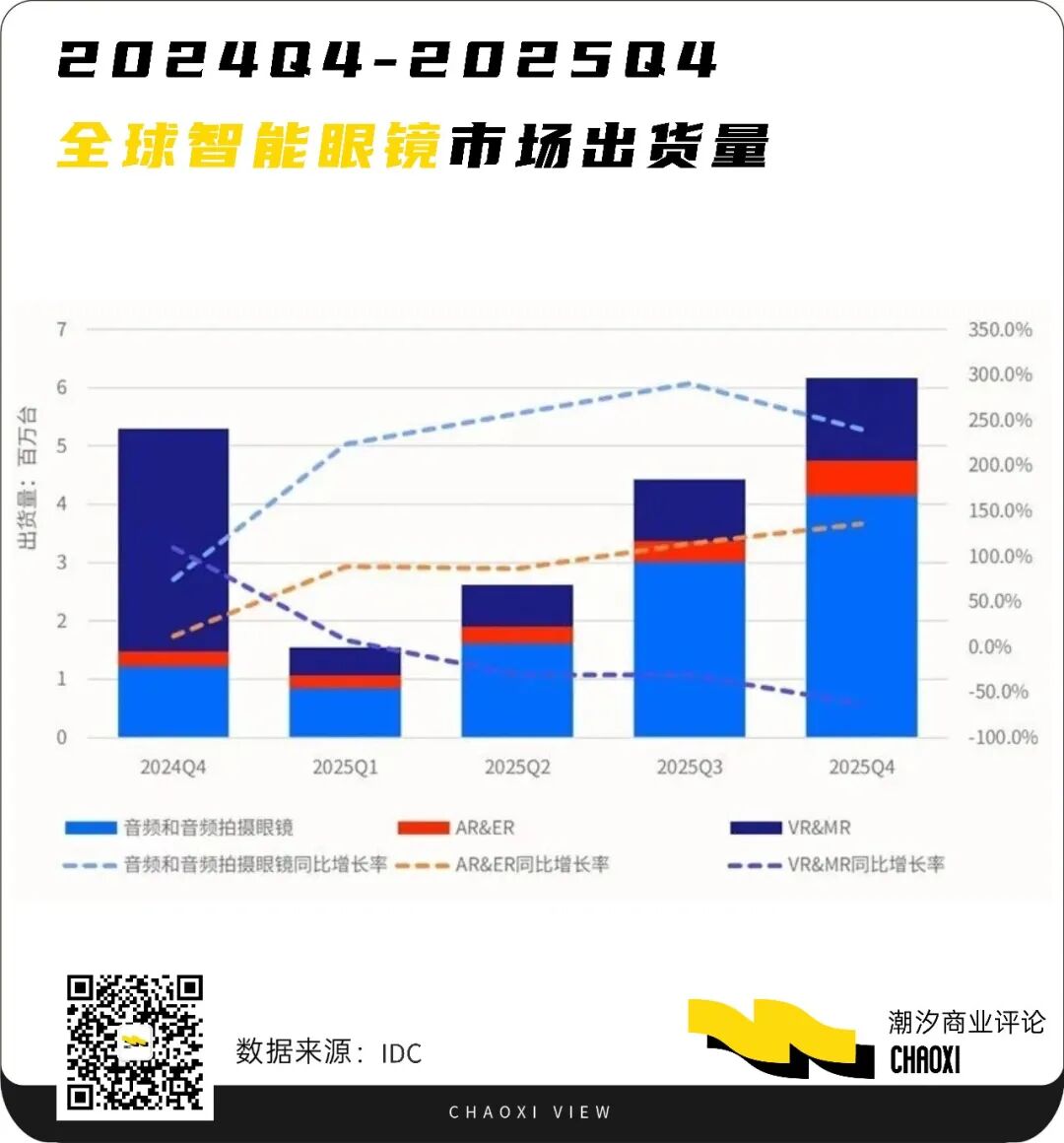
The shipment data is hot, but the tech giants' plans are far more than just "selling glasses."
In the view of Wang Ran, who has been in the consumer electronics industry for many years, there are two misunderstandings about smart glasses in the outside world:
First, the "next - generation human - machine interaction interface" is just the surface. The real intention of the giants may be to use glasses as a fulcrum to enhance their AI capabilities and core business competitiveness.
Second, the so - called "battle of a hundred glasses" is not a disorderly melee. At this stage, each company is actually fighting independently within certain boundaries. Glasses are not independent hardware but more like "close - range weapons" to consolidate existing businesses.
For example, Huawei's smart glasses are likely to be deeply integrated into the HarmonyOS ecosystem, enabling seamless linkage with mobile phones, watches, and computers. This not only strengthens users' dependence on the Huawei ecosystem but also makes the application scenarios of the HarmonyOS more three - dimensional. The commercial value of the HarmonyOS ecosystem is in the trillions.
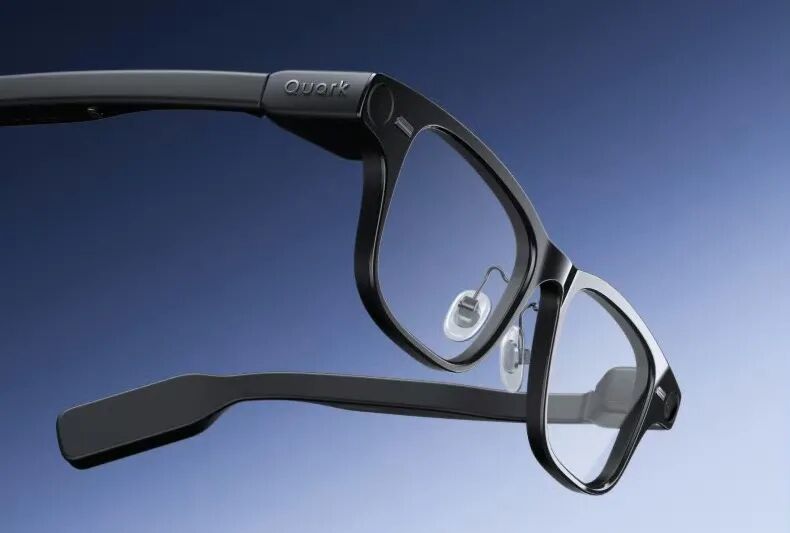
The same goes for Alibaba. The Quark Smart Glasses S1 cooperate with core scenarios such as Alipay and Gaode Map, integrating local life services into the "visible at a glance" scenarios. In fact, the commercial dividends of the Alibaba ecosystem are also in the trillions.
Even Li Auto, a cross - border player, can make smart glasses an extension of the in - car ecosystem. By realizing functions such as navigation projection and voice - controlled cars, it adds new chips to the intelligentization of cars and promotes the growth of its core business. Li Auto's sales volume decreased by 24.38% year - on - year last year. Among the consumers who bought out the glasses recently, 12% are non - Li Auto owners, and these users may be converted into potential car customers.
The real intention of the giants may not be to make money by selling glasses. If calculated at an average price of 2,000 yuan, the shipment volume of less than ten million units in the domestic market will result in meager profits for each company. The core logic is to use glasses as a link to lock users in their own ecosystems and consolidate their basic businesses. For example, large - model manufacturers are continuously investing in the multi - modal field. In a sense, smart glasses can be a "touchstone" and a "billboard" to test and display these capabilities. Betting on smart glasses can provide a concrete carrier for their AI.
Whether it is to strengthen the ecological moat or find a carrier for AI, no matter how well - thought - out the plans are, they ultimately have to return to reality - how to make the products, whether users will buy them, and how to compete.
These questions are more difficult and more crucial than "why enter the market."
Smart glasses: The "Martial Arts Contest on Mount Hua"
With the collective entry of players from all walks of life, the smart glasses market is witnessing a "Martial Arts Contest on Mount Hua."
Now, the market has bid farewell to the early stage of concept exploration and entered the "deep - water area" competition centered on practicality, mass - production capabilities, and ecological construction. The industry has entered the real - combat stage.
To get a clear picture of this "Martial Arts Contest on Mount Hua," we need to dissect the industry in detail.
As a general term, "smart glasses" hides two "slightly overlapping but not completely identical" tracks. One is AI, and the other is AR.
AI glasses mainly feature functions such as voice interaction, taking photos, and real - time translation. They are more like "smart assistants that can be worn on the face." Representative players include Meta, Rokid, Xiaomi, etc. On this basis, AI glasses have evolved into "AI + AR glasses" that integrate optical display technology and can visually present information on the lenses. Rokid Glasses, Meta Ray - Ban Display, Quark AI Glasses S1, etc. are the mainstream "AI + AR glasses" on the market.
AR glasses focus on overlaying virtual images on the real field of view, emphasizing display technology and spatial interaction, bringing an immersive spatial visual experience. Representative players include Thunderbird Innovation, XREAL, Inmo, etc.
Their technical routes and core scenarios are different, but they are often confused under the general framework of "smart glasses."
However, as more and more players enter the market, the choice of different product routes also deeply reflects the players' genes, resources, and strategic intentions. Under the seemingly chaotic pattern of the "battle of a hundred glasses," players are choosing the tracks that can best leverage their core advantages to gain a foothold, thus building differentiated barriers in the deep - water area of competition.
First, AI glasses have a relatively simple hardware structure, making them easier to achieve lightweight and low - cost. They have become the preferred path for Internet giants and cross - border players to quickly enter the market and verify the implementation ability of the AI ecosystem. They do not pursue complex display technology but focus on the integration of large - model capabilities, voice - interaction experience, and life - service ecosystem. For example, companies like Alibaba and Huawei are actively deploying based on their ecological, large - model, and traffic advantages, aiming to make glasses a new AI service entry point.
The high requirements of AR glasses for optical display and spatial - computing technology have become the moat for vertical players and hardware manufacturers in the industry with profound hardware skills and supply - chain resources. They have been deeply involved in display technology, heat dissipation, and structural design for a long time, committed to overcoming the "impossible triangle" of "weight, battery life, and performance," and have established a first - mover advantage in niche scenarios with higher requirements for visual experience, such as movie - watching and in - car use.
The current competition in the smart glasses industry is essentially a parallel competition between "soft power" and "hard skills," and a direct confrontation between "ecological traffic" and "supply - chain depth."
Players are not using the same "weapons" on the same stage but have each chosen the most suitable weapon. On the two tracks of AI and AR, they are moving towards the ultimate goal of the "next - generation computing terminal."
Waiting for an answer to "wearable"
No matter which path is chosen and what technology is adopted, all players will eventually face the same problem. This problem is not in the laboratory or the supply chain but on users' faces - most people don't have the habit of wearing glasses.
For people who don't wear glasses, adding a device to their face for a few functions is a threshold that needs to be carefully evaluated. Weight, battery life, heat generation, privacy concerns, and the sense of disharmony in appearance are all objective factors that affect decision - making.
This is the core proposition of the smart glasses industry: The premise of all business stories is that users wear the glasses first. And the industry is still exploring this.
So, what problems do smart glasses need to solve? Is it to replace some functions of mobile phones or create scenarios that mobile phones cannot achieve? The answers on the market currently vary - some focus on taking photos, some on translation, some on navigation, and some on AR display. Without a consensus, it also means that there has not been a real blockbuster product.
Establishing users' mental perception is another key dimension. Smart glasses are not facing a specific competitor but a more fundamental question: Whether users are willing to add a device to their face. This is both an engineering problem and a product - philosophy problem - whether to add functions or simplify the experience.
In this competition of "who can make users wear the glasses first," vertical players have taken the lead in giving their answers.
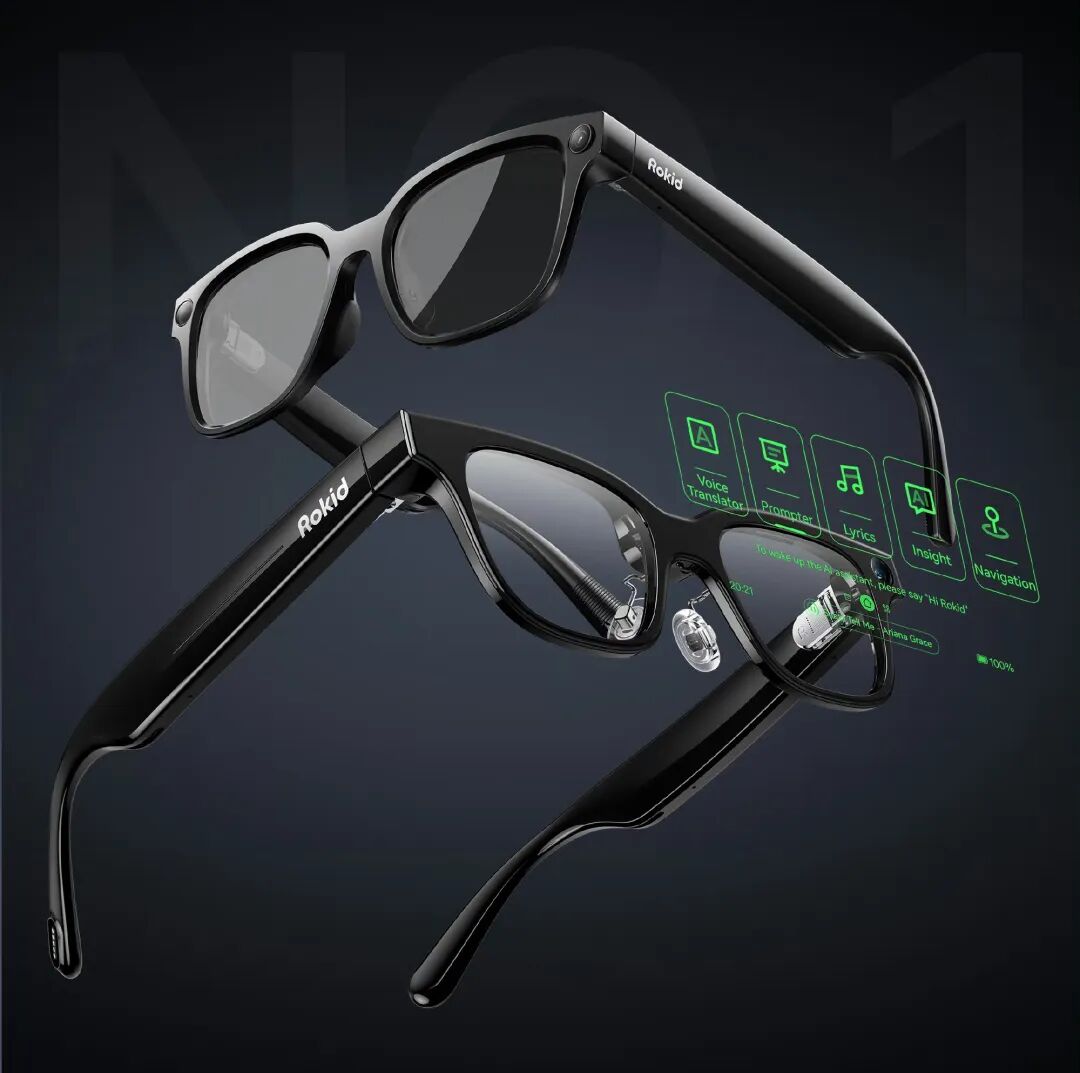
Rokid shared a key piece of data: Before Rokid Glasses, nearly 50% of smart - glasses users were general technology practitioners; among the users of Rokid Glasses, this proportion dropped to 16%. This is the first time that smart glasses have truly stepped out of the technology circle, and users' occupations are evenly distributed in various fields such as the Internet, government affairs, agriculture, education, construction, and retail, rather than being highly concentrated.
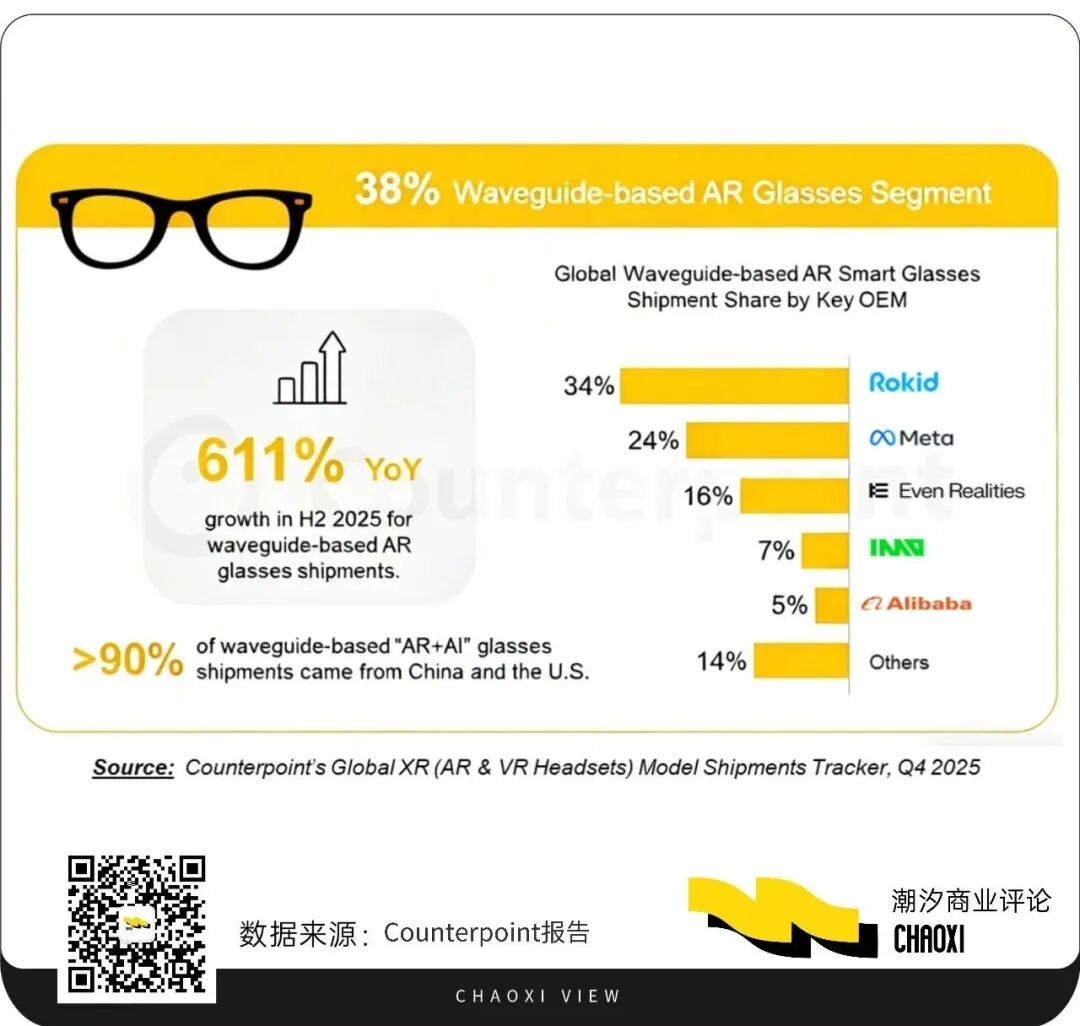
This "breaking out of the circle" is not accidental. The collaborative product between Rokid and BOLON plays two cards: "fashionable design" and "powerful functions" - making the glasses look like real glasses first. This idea exactly hits the most core pain point of the industry: If the product is not good - looking, users are not willing to wear it, and no matter how powerful the functions are, it's all in vain. Last year, the annual order volume of Rokid's AI glasses exceeded 350,000 units. According to a Counterpoint report, in the second half of 2025, more than 90% of the global shipments of "AR + AI" glasses came from China and the United States. Among them, Rokid's shipments accounted for 34% of the global market share, ranking first, ahead of competitors such as Meta and Even Realities.
Thunderbird has chosen another path: building a barrier in core technology. Its X3 Pro is equipped with a self - developed MicroLED light engine with a peak brightness of 6000 nits, which is still clearly visible in strong outdoor light. At the beginning of 2026, Thunderbird launched the world's first AR glasses supporting the eSIM function, which can make independent calls and conduct AI interactions without relying on a mobile phone, achieving a leap from a "mobile - phone accessory" to an "independent terminal." It has ranked first in the global AR smart - glasses market for two consecutive quarters, and its products cover more than 25 countries and regions.
The two paths point to the same goal: to make users willing to wear the glasses and unable to do without them.
Now, Apple has also entered the fray. According to Bloomberg, Apple's first smart glasses, the N50, have entered the final design stage and are expected to be released in 2027. Different from Meta, Apple chooses to develop both software and hardware independently and prioritizes design - four types of frames, weighing less than 50g, and seamless linkage with iPhones. This approach is familiar: This is how the iPhone started in 2007. Can Apple replicate the "iPhone moment" in the smart - glasses market? The answer lies not in the technology itself but in whether it can make users wear the glasses willingly and not want to take them off.
Before that, all the rankings, financing news, and ecological stories are just the prelude to this long - term battle.
Lsit is planning to buy a new pair of smart glasses recently. She said that it's like Bluetooth earphones back then; once you use them, you can't go back. But Smit remains unmoved: "I don't think I look good wearing glasses, and it's not comfortable either. But if there is a pair that suits my face shape, it might be okay."
The two attitudes are a real microcosm of the smart - glasses market. Who will be the final winner? The answer doesn't lie in whose glasses are lighter or thinner but in who can make people like Smit wear the glasses willingly and not want to take them off.
You see, that's how business works.
This article is from the WeChat official account “florayang01” (ID: daily - case), author: Donald. It is published by 36Kr with authorization.