AI glasses: We're afraid that Xiaomi will enter the market, and we're also afraid that it won't.
In the past year, AI glasses have seen a flurry of product launches. From consumer electronics brands to internet giants, from new energy vehicle manufacturers to startups, the relatively small market has been crowded with various players.
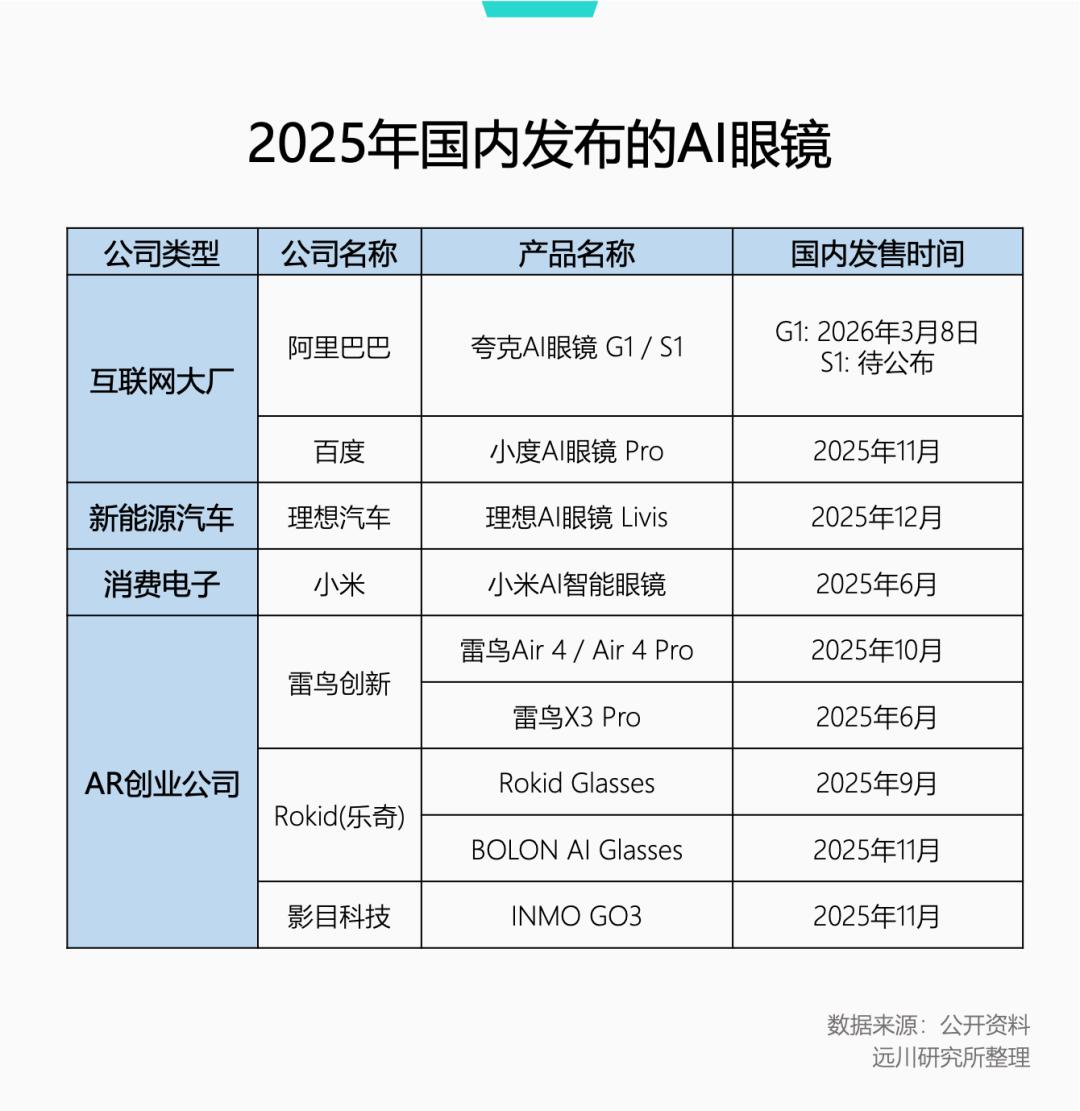
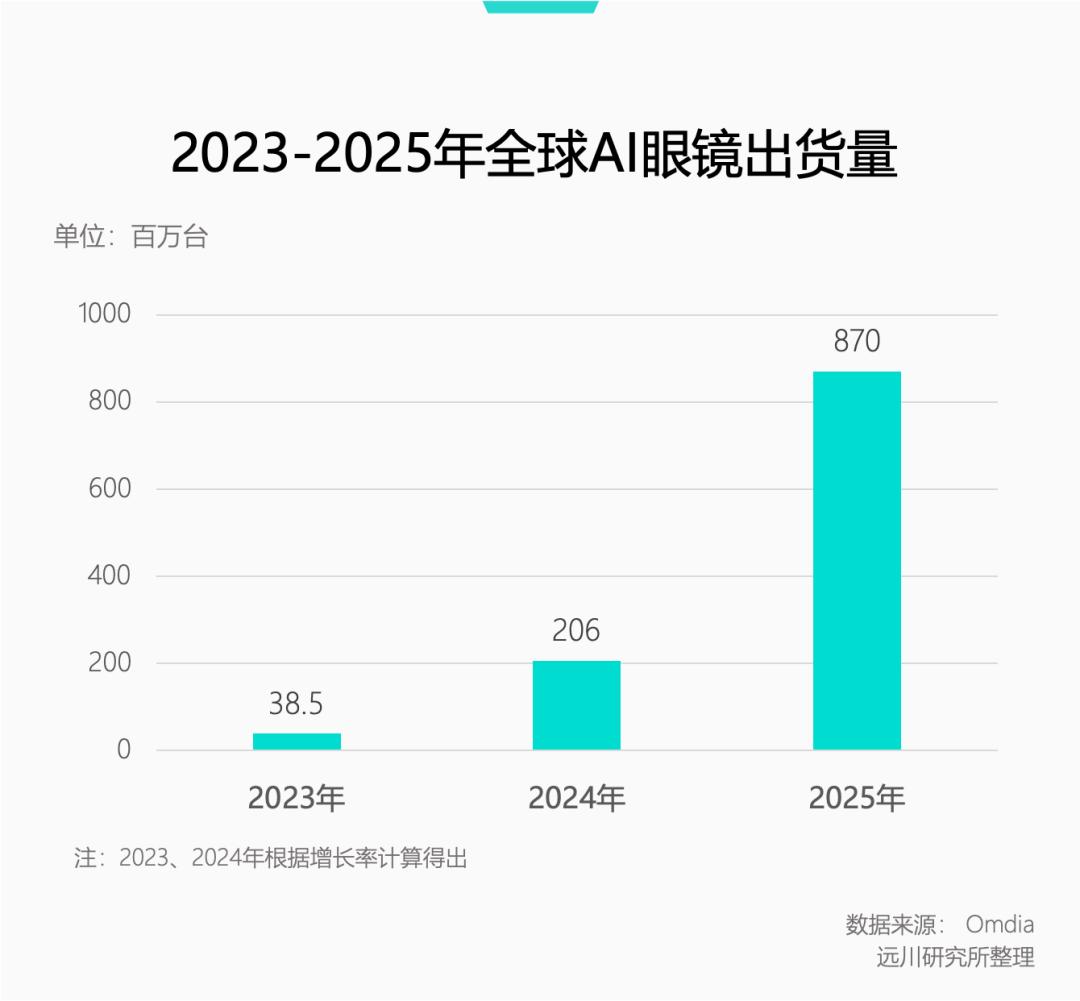
According to Omdia, the global shipments of AI glasses skyrocketed by 322% last year, and those in mainland China increased by more than 30 times. Two Chinese brands, Xiaomi and Rokid, ranked among the top three globally [1].
Meanwhile, there have been continuous rumors that Google and Apple are preparing to re - enter the AI glasses market.
After a wave of trial - and - error attempts, it's time to compete seriously for the market and showcase strength.
Fear Xiaomi's entry, but also fear its non - entry
For a long time, the AI glasses market has been in a delicate situation of "fear Xiaomi's entry, but also fear its non - entry".
Here, "Xiaomi" doesn't just refer to the Xiaomi company, but generally to consumer electronics companies similar to Xiaomi: having a stable core product line and corresponding technological accumulation, strong supply - chain management capabilities, and extensive channels and brand influence.
Xiaomi is the most typical representative of such companies. In the past decade, Xiaomi's business has expanded from mobile phones to AIoT products and large home appliances, and it has also achieved successive victories in the cross - border automotive industry.
Therefore, it's easy to understand the fear of "Xiaomi's entry".
Large consumer electronics companies have been operating in the industrial chain for many years, and it's difficult for startups to match them in supply - chain management. Coupled with channel and brand advantages, they can quickly spread costs through high shipments and squeeze out small and medium - sized companies.
For example, Xiaomi has high - unit - price mobile phones and cars in its offline channels, and the online Xiaomi Mall is an e - commerce platform with considerable GMV and user scale. Therefore, Xiaomi can accept a lower gross profit margin for marginal product categories such as electric toothbrushes, power banks, and routers, which is difficult for other brands to achieve.
So, large companies usually enter new product categories during the "technological convergence stage" of the corresponding categories, that is, when the innovation cycle ends, the technological route is fixed, and the competition enters the supply - chain and channel stages, which is also the comfort zone for large companies.
But for startups, what's more terrifying than "Xiaomi's entry" is "Xiaomi's non - entry".
If large companies compete with them for business, it at least proves that the category is profitable. If large companies show little interest, there are probably two situations: one is that the market is too small; the other is that the profit margin is too low.
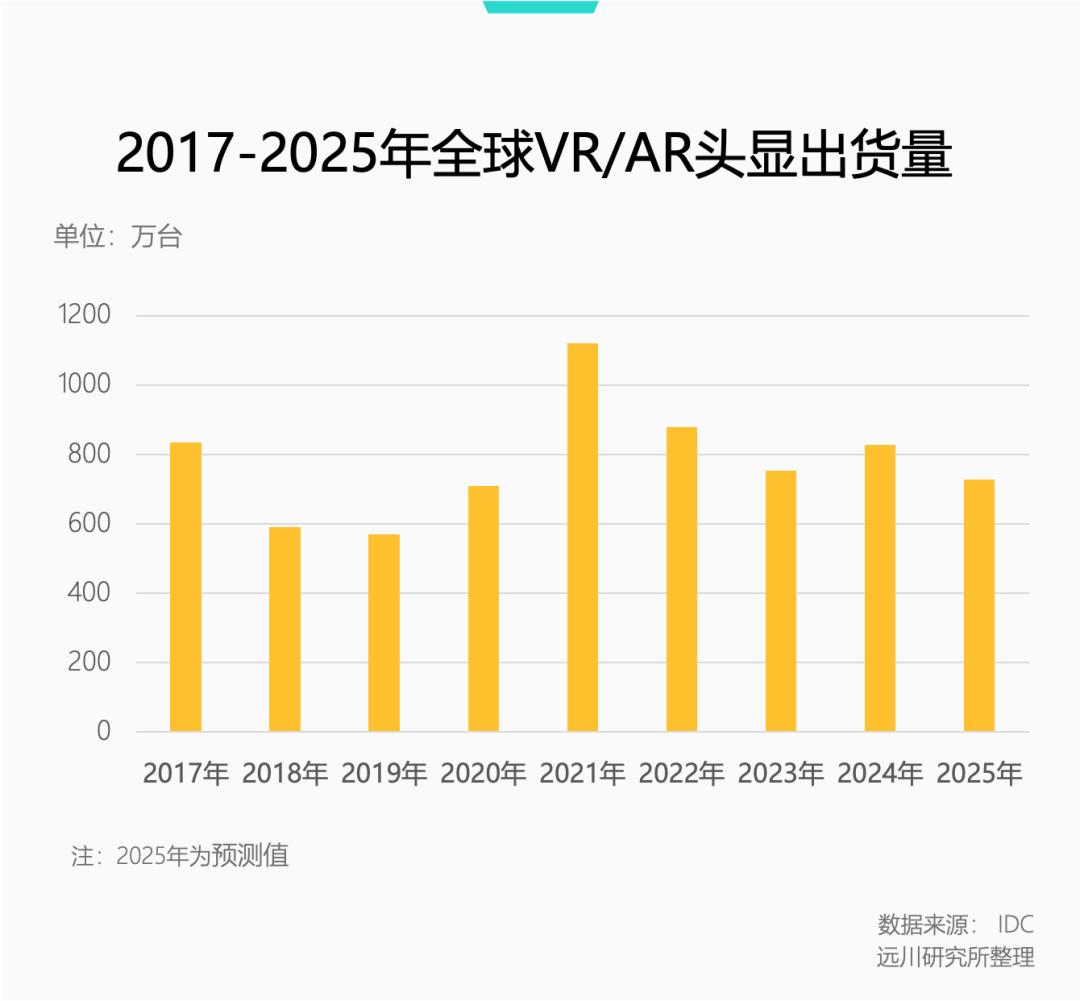
An example of a small market is VR headsets. During the peak years (2016 - 2020), although Samsung, Huawei, and Xiaomi launched products, they all gave up after a brief attempt.
Only Apple, with extremely strong strategic determination, spent many years and launched the Vision Pro in 2023, a technological masterpiece. However, the high supply - chain cost led to a high price and dismal sales.
Facts have proved that VR is indeed a struggling track. In 2025, the global shipments of VR headsets dropped to 4.97 million units, which is hardly inspiring for investment.
An example of a low - profit - margin category is laptops. The PC architecture is highly open (except for Apple), and the product definition power is actually in the hands of component companies such as Intel and NVIDIA, resulting in very limited profit margins for laptop manufacturers.
Among mobile phone brands, OV has always kept a distance from laptops, and Huawei and Xiaomi have not invested many resources. The reason is that this market is highly competitive and has little profit, with such a low gross profit that even Xiaomi is not interested.
Currently, the state of the AI glasses market can be described as "Xiaomi has entered but not whole - heartedly".
In June last year, Xiaomi launched its first AI glasses. Compared with Rokid, which started selling at 2,499 yuan at the same time, Xiaomi set the price at 1,999 yuan right from the start and won the sales championship of domestic AI glasses last year.
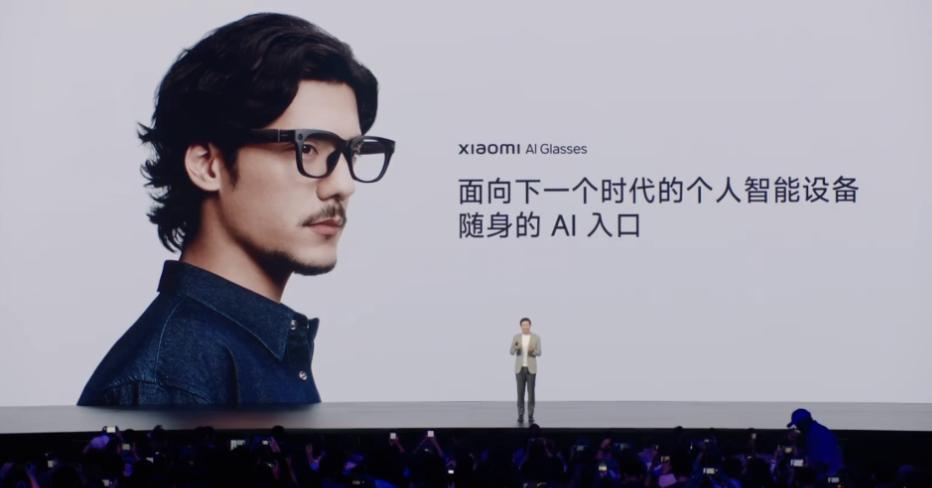
In 2025, Xiaomi launched its first AI glasses
On the other hand, Xiaomi's current attitude towards AI glasses is more of a trial. It only made a cameo appearance at the press conference and did not pour in many resources. In terms of revenue contribution, it probably accounts for very little in the AIoT segment, let alone competing with mobile phones.
Other large companies such as Alibaba and Li Auto have a similar positioning for AI glasses - to stake a claim first.
Therefore, "entered but not whole - heartedly" means that large companies have taken action but not aggressively. It shows that the AI glasses market has a certain space, but it's not worth their full - scale effort.
For small and medium - sized manufacturers, this is the most comfortable state.
A precious window period
Looking at the development of the consumer electronics industry, the most effective way for small companies to establish a sufficient presence in new product categories is to build sufficient technological barriers during the period when large companies "go from looking down on to fully investing".
Although large companies seem to have a large business and rich resources, it's not necessarily easier for them to enter new product categories like AI glasses than small companies. There are three reasons:
First, they can't solve the uncertainty of investment.
Categories such as VR headsets, AI glasses, and smart earphones have two common characteristics: the product definition is not formed, and the market scale is uncertain. Although large companies have considerable financial resources, they have more places to spend money. Objectively, resources will be invested in the main business with stronger certainty.
Take Xiaomi as an example. Xiaomi's automotive business has not reached the harvest stage, and it also has to invest heavily in multiple tracks such as autonomous driving, chip design, and operating systems. It's probably not optimistic about how much budget the glasses team can get.
It's only necessary to build a moat for a castle that can generate revenue. For large companies, after experiencing the pleasure of billions of shipments in the mobile phone market in a year, it's hard for them to look favorably on the millions of shipments of new product categories.
In this situation, large companies either adopt a trial - or - defense mentality with limited technological investment, or wait for small companies to complete the product definition and then copy the ready - made model. Small and medium - sized companies with new product categories as their main business are more motivated to invest regardless of cost.
Second, large companies often have expectations far beyond the product itself when it comes to new product categories.
The larger the investment, the greater the expectation. Once large companies roll up their sleeves to start, they often don't aim for just the small profits from selling products. Without using words like "entry point", "era", and "disruption", the R & D team can't get the budget.
A typical case is the VR headset PICO under ByteDance. To catch the metaverse trend, ByteDance acquired PICO for 9 billion yuan. The team size expanded from a few hundred to 2,000 people, and then a subsidy war was launched after the release of PICO 4. At its peak, the annual sales volume once exceeded one million [3].
For small companies, a million - unit sales volume is already an extraordinary achievement. But ByteDance's positioning of VR headsets is clearly aimed at being the "next - generation personal computing terminal" after mobile phones. Does ByteDance care about the profit from a million - unit sales volume?
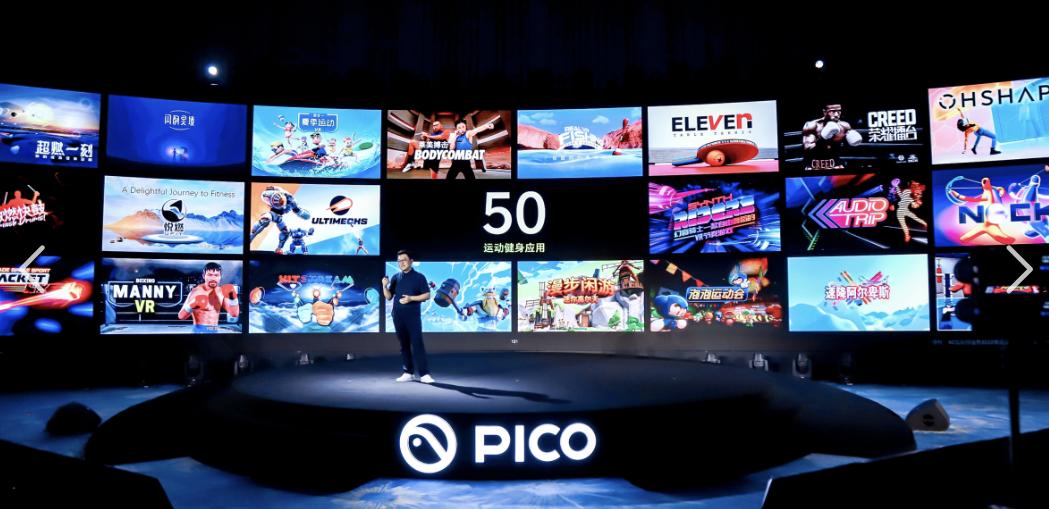
In 2022, PICO launched PICO 4
As the domestic VR market cooled down and the overall shipments declined, PICO was unable to reverse the situation.
Third, there are coordination problems in the internal business systems of large companies.
Developing new product categories is both a technological decision and a business decision. For "marginal products" within the system, large companies either tie them to the business requirements of other internal sectors or worry that competitors will take advantage through API interfaces, which will restrict product development.
Moreover, the business of large companies is intertwined. A new project requires resource coordination among different departments, but there are also interest conflicts. It's not easy for different departments to work together, and internal strife often occurs.
If you don't believe this, please remember: as the world's top CIS chip manufacturer, Sony would rather supply top - level CIS chips to Apple than use them in its own mobile phones because it's worried about affecting the sales of Sony cameras [5].
The so - called "big - company disease" is, in short, being afraid of one's own hardship and jealous of others' success. The value of Lei Jun personally leading the automotive business is still increasing.
Currently, there is still a debate in the industry about whether AI glasses can play the role of the "next - generation personal computing terminal". It's also undetermined whether the surge in AI glasses shipments last year was a short - term phenomenon or a substantial expansion of the market scale.
It's precisely this uncertain expectation that has led large companies to make only tentative attempts in the AI glasses market and has left a window period for small and medium - sized manufacturers to build technological barriers.
This window period won't be very short, but it won't be very long either.
Where is the next DJI?
Breaking through the cracks between large companies is not uncommon in the consumer electronics industry, and the most typical example is DJI.
In the early days of drones, they were not equipped with cameras, which needed to be purchased separately and used after complex modifications, so the application scenarios were limited. A few scattered manufacturers survived by relying on the "stability", that is, anti - shake technology.
In its early days, DJI was famous for its self - developed gimbal anti - shake technology. First, it installed a detachable camera interface on its drones and equipped them with GoPro cameras. Later, it directly developed its own cameras and installed them on drones, completely opening up the consumer - grade market and rapidly expanding the market scale of drones.
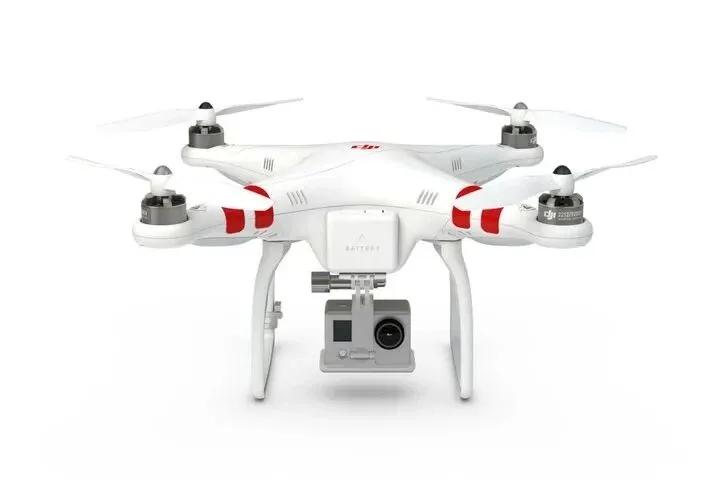
Phamton 1 with an external GoPro HERO
During this process, DJI gradually built technological barriers based on gimbal technology, flight control algorithms, and image transmission stability. By this time, it was already too late for Xiaomi to enter the market.
Among the new consumer electronics product categories formed in the past decade, Dreame's sweeping robots, DJI's gimbal cameras, Insta360's panoramic cameras, and Tofu 3D printers basically follow the narrative of "building technological barriers before large companies enter the market".
The counter - example is the small home appliance category. It's not that small home appliance brands don't work hard, but there is indeed little room for technological R & D in this category. Large companies with greater advantages in channels and supply chains can quickly grab market share after the market expands.
The premise of technological R & D is the existence of R & D space. If the competition in a category focuses on channels and supply chains, it's easy for large companies to dominate, such as electric toothbrushes and razors.
Based on the current technological layouts of various manufacturers and institutional judgments, display technology is likely to be the first dividing line for AI glasses.
AI glasses without a screen rely entirely on voice for interaction. In scenarios such as complex route navigation and schedule viewing, where quick information browsing and screening are required, the interaction efficiency will decrease, and users also have to overcome the embarrassment of voice commands in public places.
In some recognized AI glasses - suitable scenarios (such as first - person perspective shooting), the advantages cannot be maximized due to the lack of a display function.
Although the principle is well - understood, whether it can be realized is another matter.
Meta launched a prototype of the AI glasses Orion with a display screen in 2024, but the first and second generations of Ray - Ban Meta on the market currently do not have a display screen.
Putting a screen into glasses currently faces an "impossible triangle": while providing high - quality display functions, maintaining sufficient thinness (for daily wearing) and controlling power consumption and heat generation at the same time.
It's like a factory trying to increase production capacity without expanding the factory area or increasing electricity costs, which tests the quality of employees (component performance) and organizational adjustment (product design). Moreover, even if the technology can be realized, the cost and selling price need to be balanced.
Currently, startups such as Rokid and Thunderbird Innovation are the most aggressive in this regard.
All the products of the two companies are currently equipped with display screens, and they both adopt the diffractive waveguide + MicroLED route, which is the most difficult to implement but theoretically offers the best experience.
Although Meta launched its first AI glasses with a screen, Meta Ray - Ban Display, in September last year, it adopted the conservative geometric waveguide + LCoS optical engine solution. The advantage is that the technology is mature and the cost is low, but the disadvantage is that it's difficult to make the lens thin and the field of view (FOV) large. It's more of a makeshift solution.
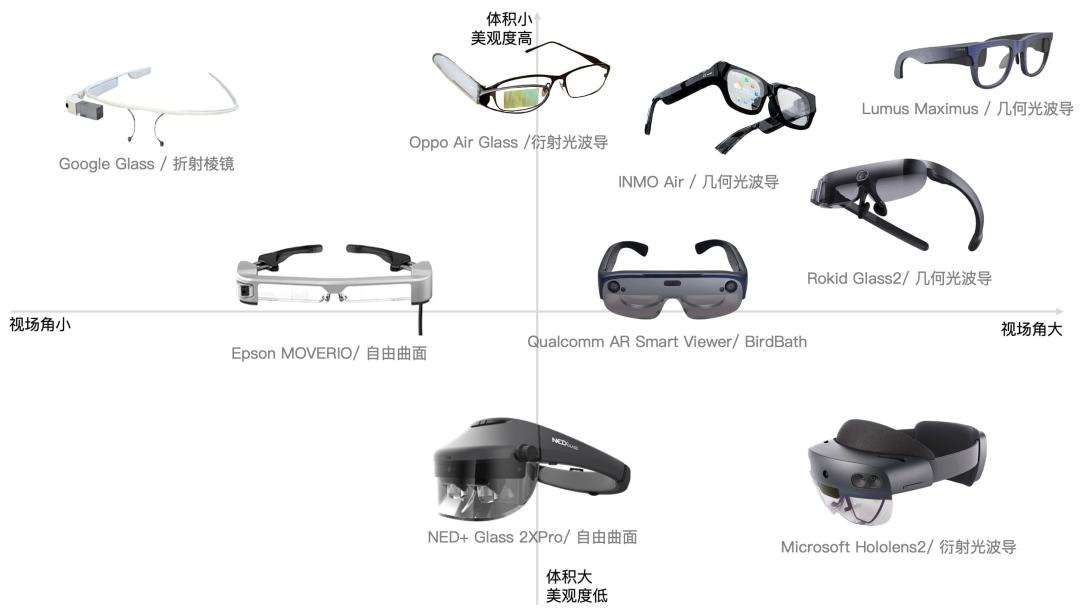
Some display solutions for AI glasses; Source: Yivian
According to the latest rumors, the first AI glasses of Google and Apple do not have a display screen.
From the latest solutions, both Rokid and Thunderbird have achieved binocular full - color display