Chinese new energy vehicles have seized this once-in-a-lifetime opportunity.
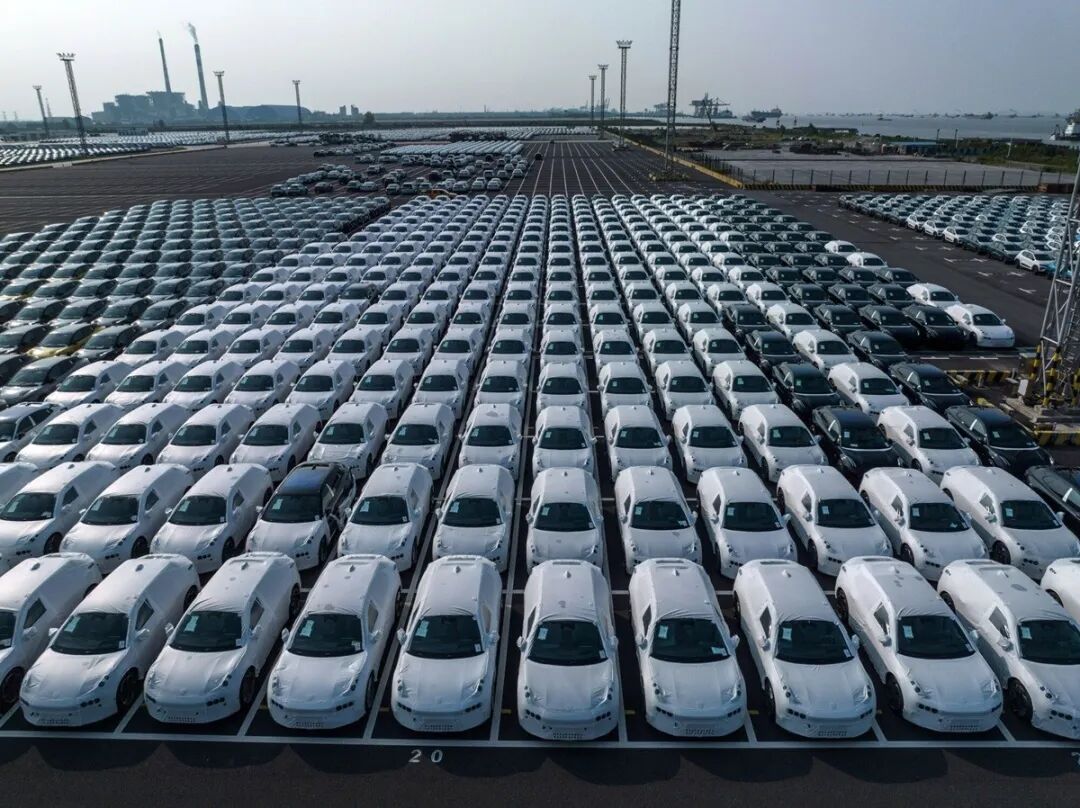
According to the latest data released by the China Passenger Car Association (CPCA) last Thursday (April 9), in the past March, the total overseas export volume of Chinese automobiles, including complete vehicles and CKD, reached 695,000 units, a year-on-year increase of as high as 74.3%. Particularly eye-catching are the data of new energy vehicles -
The total number of complete vehicles + CKD was 349,000 units, accounting for 50.2% of the total exports.
Among them, there are 8 companies with exports exceeding 10,000 units, ranked by export volume: BYD, Geely, Chery, Tesla China, SAIC, Leapmotor, Changan, and Dongfeng. The top three, BYD (116,900 units), Geely (52,200 units), and Chery (40,800 units), accounted for more than 60% of the total new energy vehicle exports.
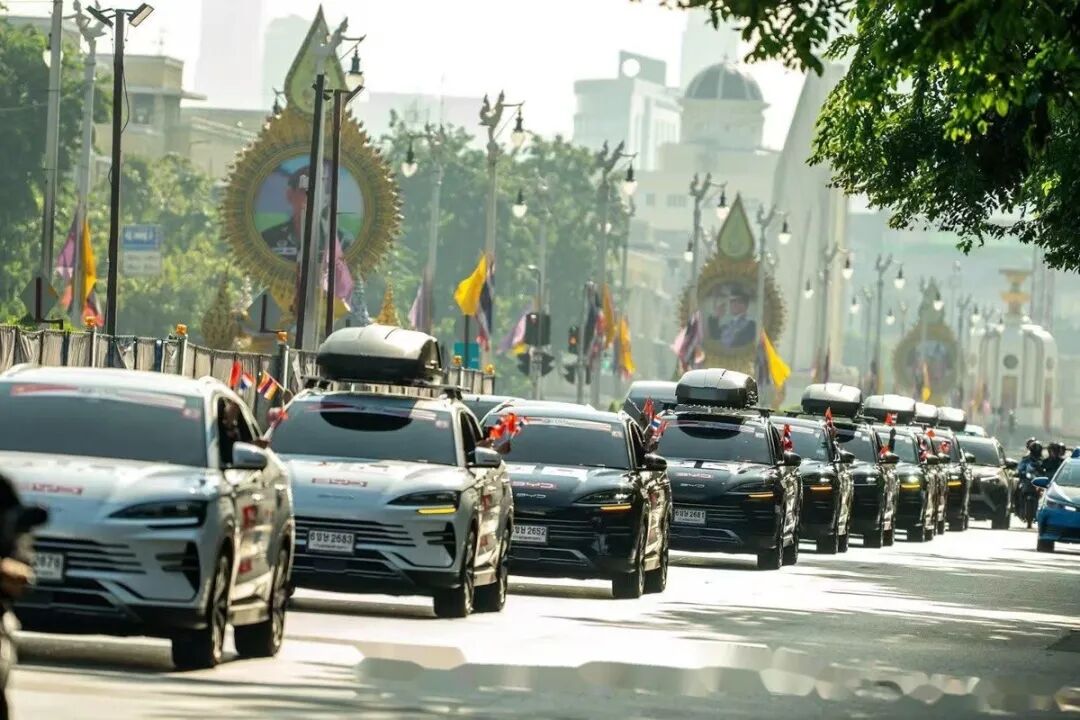
In contrast, in March last year, the total export volume of new energy vehicles of all domestic brands was 145,500 units. BYD, Chery, and Geely ranked in the top three, with export figures of 67,300 units, 16,400 units, and 8,800 units respectively. In comparison, the year-on-year growth rate of new energy vehicle exports in March was as high as 139.9%. The growth rates of BYD, Geely, and Chery were as high as 116.20%, 493.18%, and 148.78% respectively.
In fact, the export situation of new energy vehicles this year was not originally so optimistic. Because before the Spring Festival, an authoritative institution comprehensively analyzed the market trends of various countries and found that since the end of the third quarter of last year, the growth rate of new energy demand in many major global automotive markets has begun to decline. It was thus predicted that the global demand growth for new energy vehicles this year would drop from 20% in 2025 to 13 - 15.7%. However, predictions can never keep up with changes. The sudden geopolitical crisis has fundamentally changed all this.
At the end of February, the military strikes by the US and Israel against Iran led to the de facto shutdown of the Strait of Hormuz, which plays a "throat" role in the global energy supply system, and it remains shut down to this day. Considering that it supplies more than 20% of the world's crude oil and a larger proportion of liquefied gas/natural gas resources, international oil and gas prices soared immediately. Brent crude oil broke through the psychological threshold of $100 per barrel in a very short time.

The world, especially the Asia-Pacific region, which is highly dependent on energy supplies from the Persian Gulf, instantly fell into a high level of energy supply anxiety. The disruption of fuel oil supply has prompted many car consumers to turn to new energy alternative products, and new energy vehicles have become one of the few effective solutions other than giving up driving.
01
From the Prime Minister's Car to People's Rush to Buy: The Asia-Pacific Market Begins to Turn Collectively
On the morning of the 25th of last month, Thai Prime Minister Anutin Charnvirakul drove to the Parliament Building on Sam Sen Road in Bangkok's Dusit District to attend an emergency meeting of the Parliament that day, which aimed to discuss how to deal with the current Strait of Hormuz crisis.
However, different from the previous practice, on the way from the prime minister's residence to the Parliament Building, Anutin did not arrange escort and accompanying vehicles. He even did not take his usual Rolls-Royce Phantom with the license plate "3333 Bangkok". Instead, he chose a Haishi 07EV produced by a Chinese enterprise. Apart from the driver, he only brought two accompanying personnel. The four of them squeezed into one car for a low-key trip.
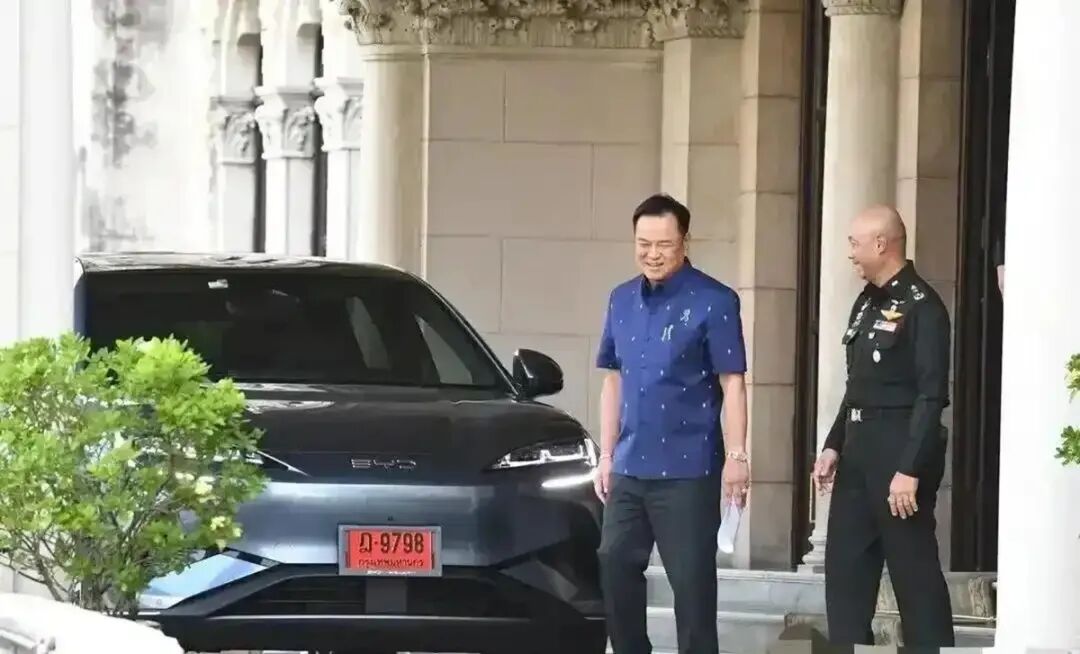
Later, when asked about this by the media, Prime Minister Anutin replied, "There is no other meaning. This time, I switched to an electric vehicle to show my attitude as the Prime Minister of Thailand to stand together with all the people."
One of the measures taken by the Thai government to deal with the current fuel crisis caused by the blockade of the Strait of Hormuz is to call on the public to use new energy vehicles as much as possible to save the increasingly expensive fuel. Just a few days later, at the 47th Bangkok International Motor Show, Anutin even visited the show in person. He walked around the booths of many Chinese new energy enterprises and was photographed by reporters communicating with several staff members of Chinese enterprise booths. The message conveyed was clear.

Don't think this is just a show by politicians to deal with the crisis. In fact, the sales growth brought about by the Thai Prime Minister's personal endorsement was immediate -
As of the end of the auto show on April 5, according to official news, the auto show achieved more than 130,000 vehicle reservations. Especially Chinese brands achieved an overall breakthrough at this Thai auto show, and the total number of reservations historically exceeded that of Japanese brands. Among them, BYD, which was promoted by the prime minister, had a reservation volume of up to 17,000, exceeding Toyota's reservation volume of 15,800. Moreover, among the top 10 in the reservation volume ranking, Chinese brands accounted for 7 seats, mainly with new energy models.
In Oceania, although there is no situation of politicians personally endorsing, Chinese new energy vehicles are really being highly regarded and even snapped up.
According to the latest data from the local Motor Industry Association (MIA), the total number of new vehicle registrations in New Zealand in March was 14,908. The growth in passenger car sales mainly came from electric vehicles: the monthly sales volume of pure electric vehicles was 2,275, and the monthly sales volume of plug-in hybrid vehicles was 1,107. The combined market share of the two exceeded 33%, while the market share of traditional fuel-powered passenger cars fell below 50% for the first time, dropping to 36.6%.

In the sales list released by the MIA, the top three brands in terms of sales volume were Tesla (from the Lingang Super Factory), BYD, and Dongfeng. In addition, car companies such as Leapmotor, Zeekr, GAC, and MG also achieved sales growth.
It is particularly worth mentioning that due to the hot sales of the products, there was even a situation where 80 cars were sold in one day, and the inventory was quickly cleared. This situation led the person in charge of the local dealer to fly directly to China, approach the manufacturer to request supply, and even put forward a requirement such as a "90-day guaranteed delivery deadline".
Australia, across the sea from New Zealand, also witnessed a peak in electric vehicle sales.
The latest sales data from the Federal Chamber of Automotive Industries (FCAI) in Australia shows that the total number of vehicle sales in the country in March was about 105,100. Although it decreased by 3.3% year-on-year, the sales volume of new energy vehicles increased against the trend, reaching 15,839, and its proportion in the total sales volume increased from 7.5% in March last year to 14.6% in March this year.

Riding on the wave of hot sales of new energy vehicles, BYD also squeezed into the top three in Australian vehicle sales for the first time, ranking third after Toyota and Kia. Two stores under a Chinese new energy vehicle dealer in Melbourne sold a total of nearly 740 cars in March, "setting a monthly sales record for the entire Australian automotive sales industry".
The CEO of the FCAI said in an interview with local media at the beginning of the month that in view of the strong growth in demand for electric vehicles in Australia in March, the local automotive industry has invested a large amount of funds, and it is expected that more than 100 electric vehicle models will be introduced into the Australian market this year.
Similar scenes also appeared in other parts of the Asia-Pacific region throughout March. In Singapore, local dealers responsible for selling Chinese new energy vehicles faced a situation of having no cars to sell in the last week. In Manila, several Chinese new energy brands that entered the Philippine market sold as many cars in two weeks as they did in a month before.
02
The Ultimate Answer to Energy Security and Diversification
At present, the fundamental change in the automobile sales market mainly occurs in the Asia-Pacific region. But since the end of last month, the situation in the markets of some European countries has also been changing.
At the beginning of this month, a report from the European Federation for Transport and Environment stated that when the crude oil price exceeds $100 per barrel, the additional cost of filling up a tank of fuel is expected to be five times that of charging an electric vehicle. At the same time, the cost per 100 kilometers of a fuel-powered vehicle will reach 14.2 euros, an increase of 3.8 euros compared with the beginning of the year, while the cost per 100 kilometers of charging an electric vehicle is only 6.5 euros, an increase of only 0.7 euros. Economic pressure is forcing European car owners to follow the lead of their Asia-Pacific counterparts and make the switch.
Even if the current US-Iran negotiations can achieve positive results, the crisis that has occurred will surely have a profound impact on the subsequent choices of car owners around the world.
So, why is the new energy vehicle the optimal solution when the traditional oil and gas supply channels are blocked? Presumably, many friends also know that in many countries, the price difference between electricity and oil is not as large as in China.
But the answer actually lies in the fundamental difference in the energy structure. The power source of electric vehicles - electricity - can be obtained through various means. It can come from traditional thermal power plants, using coal, gas, and fuel oil, or from renewable energy sources such as hydropower, wind power, and photovoltaics, and even from atomic energy. When a real crisis occurs, price increases are just a minor issue. The real disaster is the complete loss of supply.
As of 2026, the global low-carbon and emission-reduction movement has been in full swing for more than a decade. A large number of renewable power generation facilities such as photovoltaic, wind, and even tidal power have been deployed in the power supply networks of various countries. This diversification of sources makes the power supply less susceptible to the impact of a single geopolitical event, providing a buffer for national energy security and also making the choices for new energy vehicles very wide.
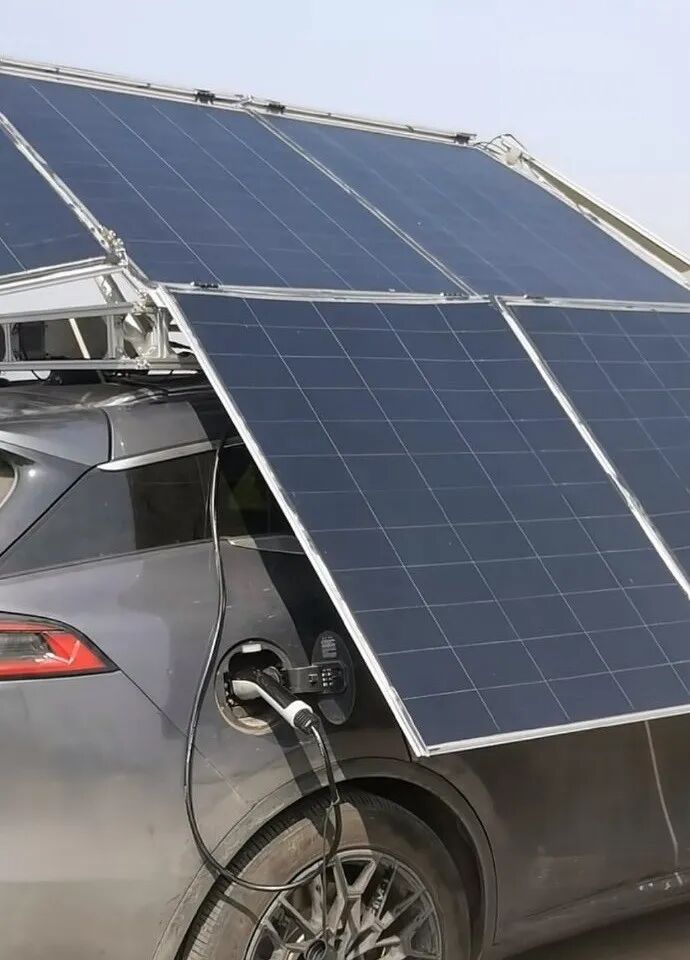
Even in the most extreme situation, that is, when the external energy supply is completely cut off, as long as the car owner has a set of photovoltaic or wind power generation equipment with sufficient power and is equipped with an inverter, he can still power his vehicle and, in turn, provide basic energy for his house. In fact, in the past few years, there have been news reports in various countries about electric and hybrid vehicles providing emergency energy for households affected by power outages in disaster areas, helping the sick in the family survive until power supply and roads are restored.
Looking at a deeper level, the value of new energy vehicles goes far beyond "not using gasoline". The large-capacity power battery installed in them can serve as a "mobile power bank" in a household setting, supplying power to household appliances through the V2L (Vehicle-to-Load) function and providing emergency power in case of power outages and other emergencies.
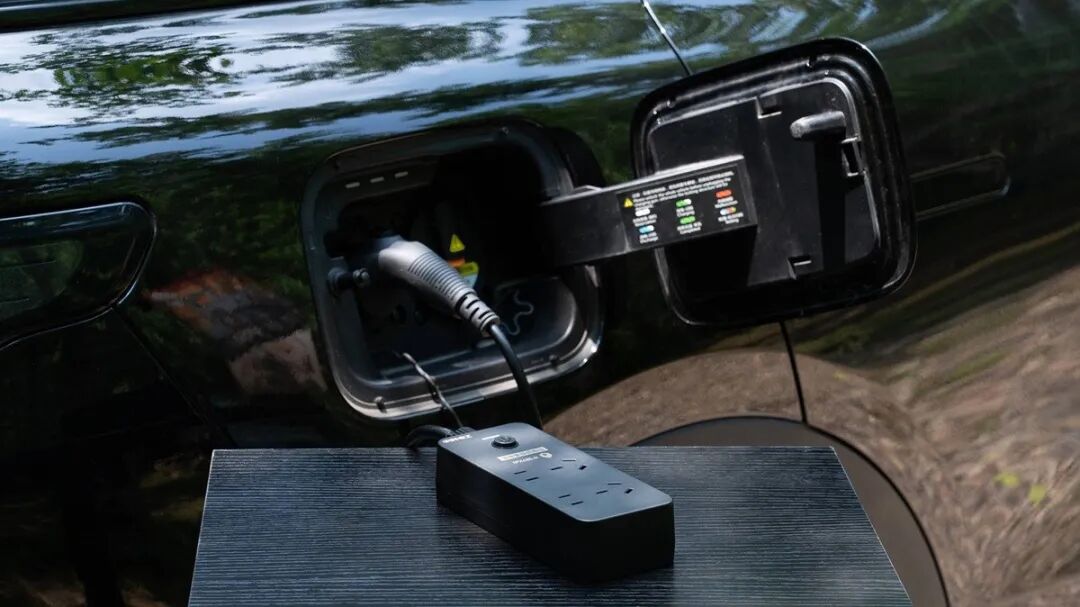
In fact, even if the area where you live completely loses power supply, due to the existence of the large-capacity on-board battery and the V2L function, the new energy vehicle itself can be connected to the above-mentioned photovoltaic or wind power generation equipment to serve as an energy storage device.
As for plug-in hybrid or extended-range models, they even have the dual guarantee of "using either gasoline or electricity" and can even be used as a small generator in extreme situations. And if combined with bidirectional charging pile technology, it can greatly improve the disaster prevention and emergency response capabilities of a region or even an entire country.
Imagine an extreme disaster like the Wenchuan earthquake back then. If new energy vehicles, whether pure electric or hybrid, had been popularized in Yingxiu Town, the epicenter of the earthquake, the former could be connected to photovoltaic equipment, and the latter could start the engine immediately to supply power to the remaining public facilities in the disaster area. How much convenience could the restored mobile communication network provide for the disaster area, and how many lives could the early activation of medical equipment save from the hands of death?
