The auto market declined by 17% in the first quarter. Please continue to carry out radical reforms.
At the beginning of 2026, the Chinese auto market didn't see the usual "mini spring" as in previous years.
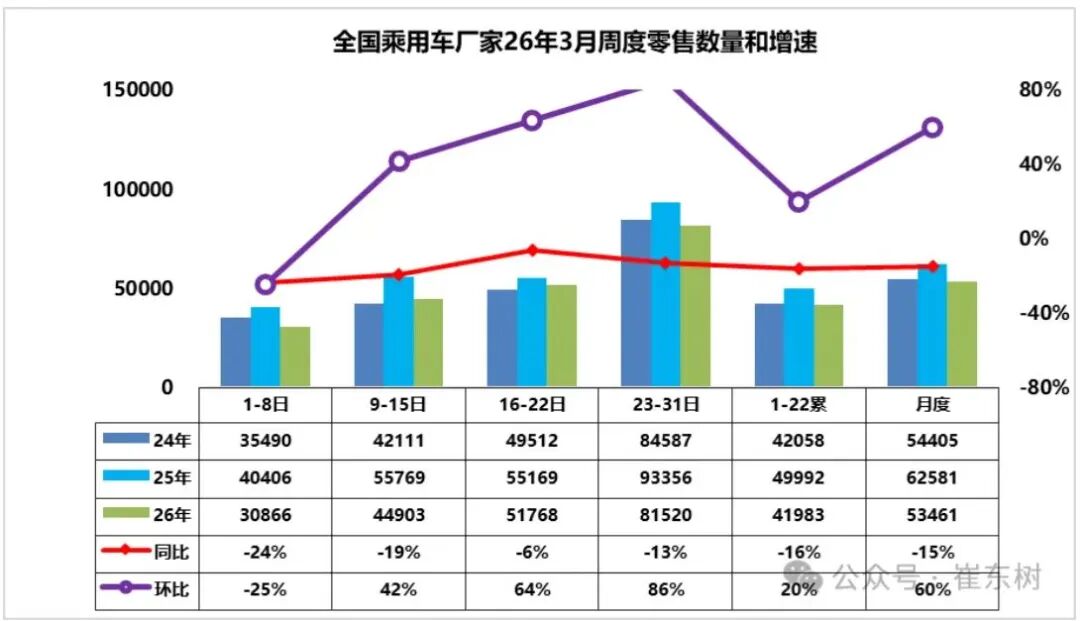
Data from the Passenger Car Association shows that the cumulative retail sales in the first quarter reached 4.236 million units, a year-on-year decline of 17%. This is the most dismal quarterly report card in the past decade, excluding the black swan event of the pandemic in 2020.
New energy vehicles have even encountered a "late spring cold" - the cumulative retail sales reached 1.844 million units, a sharp year-on-year decline of 24%, and the penetration rate dropped from the high point in the fourth quarter of last year to 47.3%.
It's very easy to emotionally sing down the market, but it's meaningful to explore the essence behind the curve and find the way out for the industry.
No matter how cold the numbers are, they won't cover up the hot logic behind them. Instead of saying that the auto market has collapsed, it's more like a thorough cleansing like scraping the bone to remove the poison.
In the past two years, the Chinese auto market has been overdrawn too much by price wars, and the industry's profit margin has dropped to as low as 2.9%, less than half of the average level of industrial enterprises. Everyone knows that this kind of prosperity maintained by blood transfusion is unsustainable.
On the one hand, policies and discount strategies are used to maintain the sales volume, and on the other hand, market competition and consumers' choices are used to maintain the natural ecological balance. Both extreme left and extreme right lead to decline. Only by constantly adjusting the balance between the two can we truly find a bright way out.
The policies have been phased out, but not completely. Although the goal is to get rid of the crutches, they can't be completely discarded before recovery. The price bubbles have been squeezed out, and the market is starting to repair itself.
On the one hand, the sales volume is dropping, while on the other hand, the price is stable and the quality is improving. In the first quarter, the average revenue per vehicle in the auto industry increased from 333,000 yuan in the same period last year to 369,000 yuan. The terminal discount rate has rarely narrowed, and the number of price-cut models has decreased by 70% year-on-year.
The pain is inevitable, but scraping the bone to remove the poison is imperative. The intense pain actually signals the optimization of the structure and the dawn of anti-involution.
The coldest Q1 in a decade
According to the latest weekly analysis released by the Passenger Car Association, in the first quarter of 2026, the retail sales of the Chinese auto market reached 4.236 million units, a year-on-year decline of 17.4%.
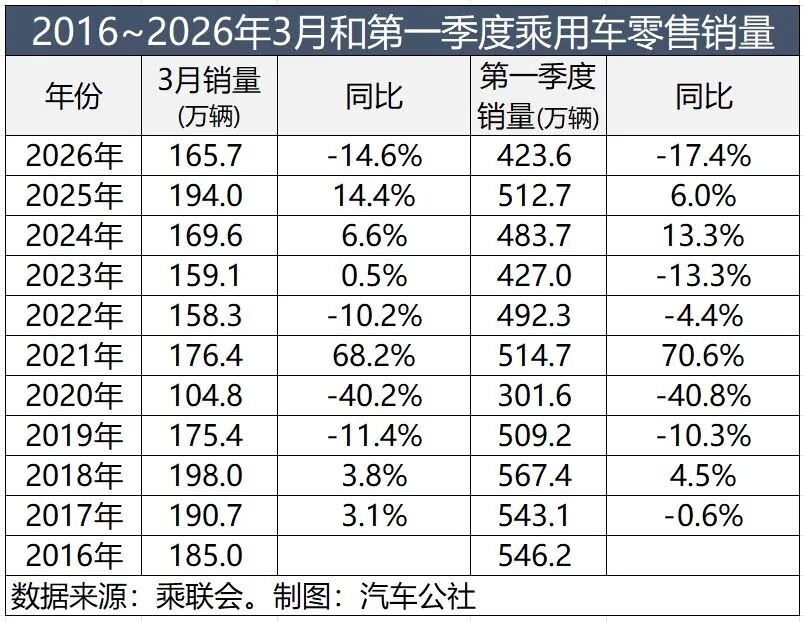
How serious is this decline? The Auto Commune sorted out the retail sales of passenger cars in March and the first quarter over the years (different from the wholesale sales including exports and those delivered to dealers, as well as the overall sales including commercial vehicles), and found that this can be regarded as the coldest first quarter in a decade (excluding 2020 affected by the pandemic).
Overall, the sales volume in the first quarter of this year is relatively close to the 4.27 million units in the first quarter of 2023. At that time, due to the recent lifting of restrictions, all aspects were affected, and it was only higher than the 3.016 million units in 2020. Before the pandemic, the sales volume was generally over 5 million units.
Dialectically speaking, March is a bit more comforting compared to the entire first quarter. Although it didn't reach the Passenger Car Association's expected value of 1.7 million units, it was higher than those in 2020, 2022, and 2023, and was close to that in 2024.
Why did the decline in January and February be faster, while it eased in March?
On the one hand, local subsidy policies were successively introduced from February to March. On the other hand, it has something to do with the replacement of fuel vehicles by new energy vehicles.
Traditionally, January and February are the Spring Festival months. The car - buying boom used to match the old saying of "buying a car to go home for the Spring Festival", and people preferred fuel vehicles in cold seasons. After new energy vehicles occupied half of the market, the car - buying boom during the Spring Festival months naturally declined.
Specifically, the retail sales of new energy vehicles in March reached 784,000 units, a year-on-year decline of 21%. The cumulative sales in the first quarter were 1.844 million units, a sharp year-on-year decline of 24%. Obviously, the decline rate in January and February was higher than that in March.
The penetration rate of new energy vehicles was 47.3%, significantly lower than the high point of over 50% in the fourth quarter of last year. This means that after the vehicle purchase tax exemption policy officially expired at the end of 2025, the pre - overdraw effect of consumers was much more intense than expected. In February, the retail sales of pure - electric vehicles decreased by 35% year-on-year, plug - in hybrids by 31%, and extended - range vehicles by 16%, a full - scale retreat.
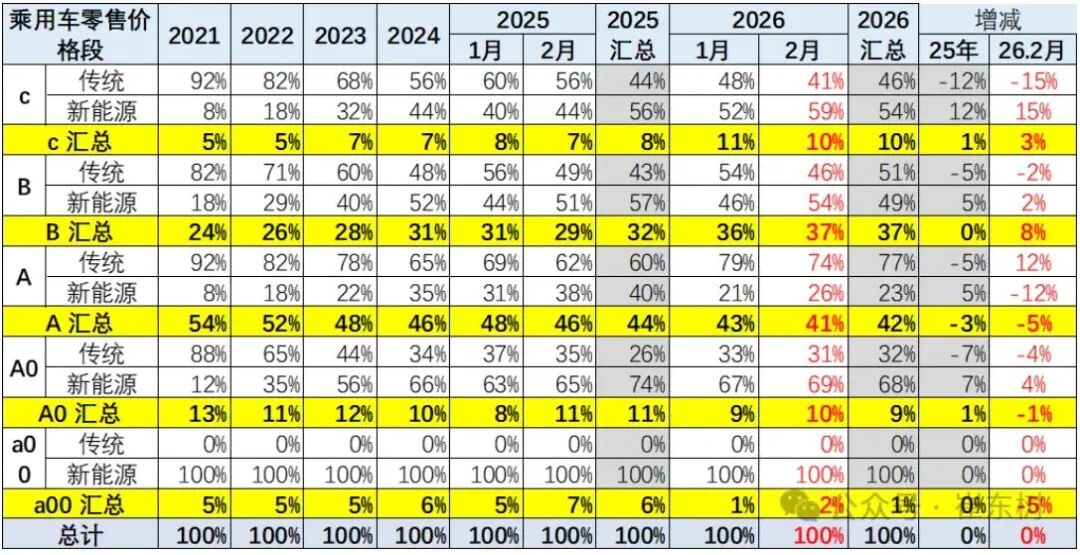
For major manufacturers, many of the "sales mainstays" have encountered the rhythm of product replacement and adjustment.
BYD, which often won the championship in the past five years, postponed its product replacement in 2026 compared to previous years, aiming to accumulate the momentum of "flash charging" and second - generation blade batteries. For high - end new energy brands empowered by Huawei, there are also a large number of potential buyers waiting for the mass production of 896 - line lidar.
The wholesale side is also not optimistic. The cumulative wholesale sales in the first quarter were 5.813 million units, a year-on-year decline of 8%. The wholesale sales in March were 2.32 million units, a year-on-year decline of 4%. Although the wholesale sales in the last week increased by 6% year-on-year, it was more the result of the end - of - quarter sales rush, not a reversal of demand.
What's more alarming is that this decline is not limited to China but is a microcosm of the global auto market's weakness.
From January to February 2026, the world's auto sales only increased by 0.1%, while China's auto sales decreased by 9%. China's share in the world's auto market dropped from 35.4% in 2025 to 29.7%. Although exports are still strong - 1.55 million vehicles were exported from January to February, a significant increase of 61% - the hole in domestic demand can't be filled for the time being.
Don't be afraid of scraping the bone to remove the poison. Look at the pain of profit
However, if we only focus on the sales figures, we will miss the real meaning of this adjustment. The keyword for the auto market in the first quarter is not "collapse" but "blood replacement".
First, is it structural optimization or passive price increase when the sales volume drops and the price rises?
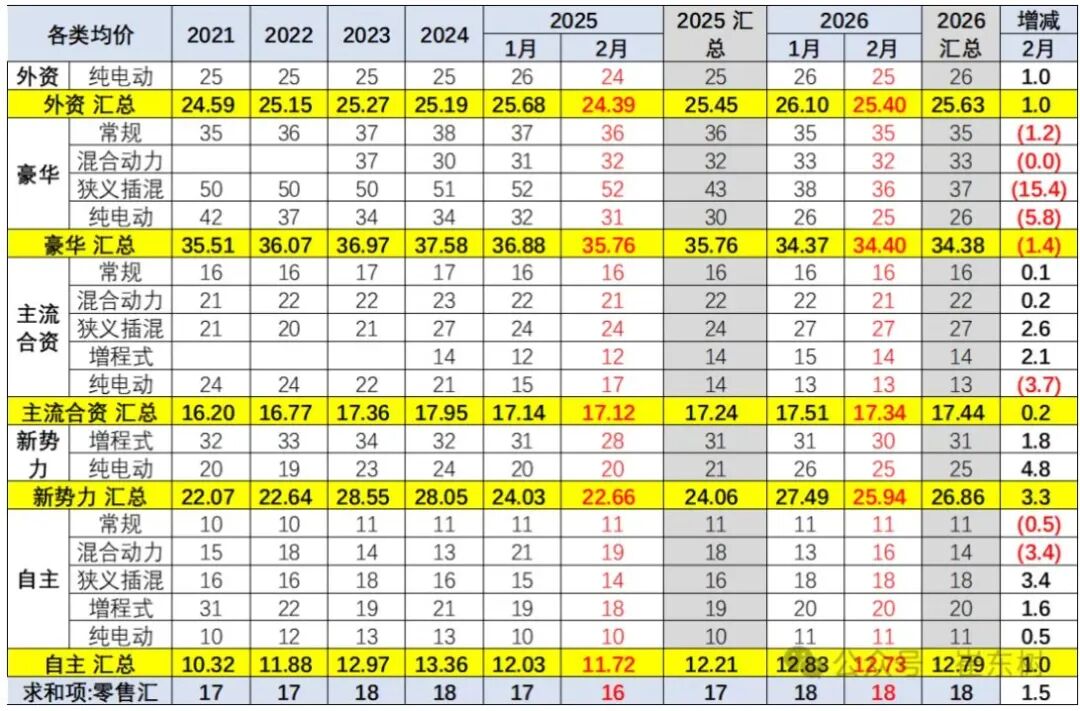
A set of contrasting data is worth pondering: the retail sales volume in the first quarter dropped by 17%, but the average revenue per vehicle in the auto industry increased from 333,000 yuan in the same period last year to 369,000 yuan, an increase of 36,000 yuan. The cost per vehicle increased by 35,000 yuan, and the tax per vehicle increased by 4,000 yuan. The gross profit per vehicle in the industrial chain was 11,000 yuan, although it decreased by 3,000 yuan year-on-year, the overall price center has significantly shifted upwards.
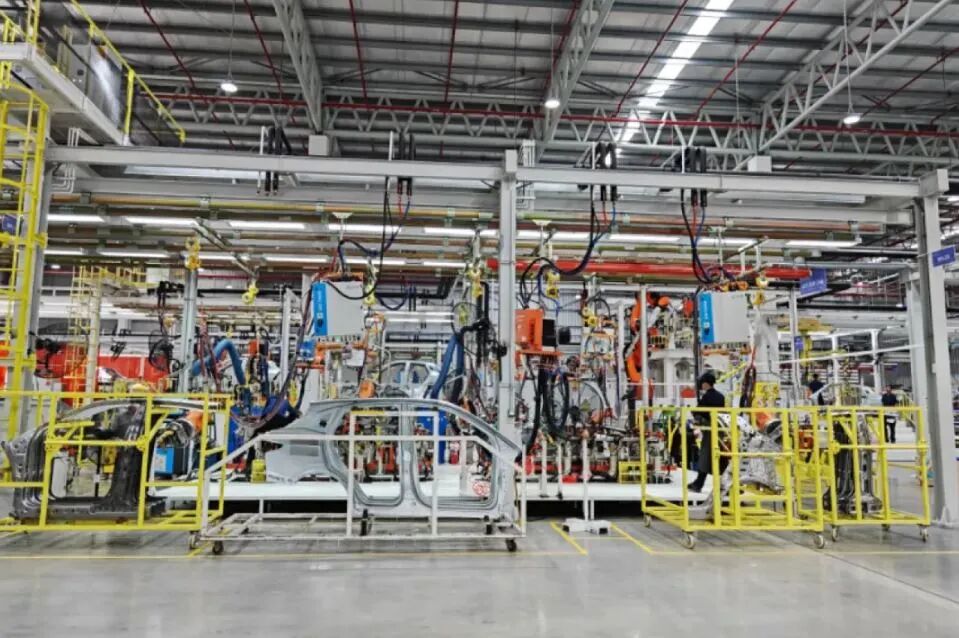
What does this mean? It means that the cars sold are more expensive.
This is not that manufacturers are raising prices against the trend, but that the market structure is spontaneously optimizing. In 2025, the policy incentives were unprecedented, and the discount range of manufacturers reached a record high. Especially, the sales of low - priced small cars soared under the wave of "trading in the old for the new".
That was a typical "policy - driven market" - the prosperity driven by subsidies is essentially an overdraw of future demand. In the first quarter of this year, with the withdrawal of policies, the sales of these low - priced cars dropped sharply, while the relative proportion of mid - and high - end models increased. So although the overall sales volume decreased, the average price increased.
This is like a person losing the excess fat. Although the remaining muscle is less, it is more solid.
On the other hand, the narrowing of discounts means that the price war can't go on anymore.
Another positive signal is that the terminal discount rate is decreasing. In 2025, the price war was extremely fierce. The promotion of fuel vehicles once reached a record high of 24%, and that of new energy vehicles also hovered above 10%.
But in 2026, the number of price - cut models has decreased sharply. In February, only 6 models had price cuts, while there were 21 in the same period last year. The promotion of new energy vehicles has stabilized at around 10.4%, and the promotion of fuel vehicles has even slightly dropped from 23.5% to 23.3%.
This is not that manufacturers have suddenly become kind - hearted, but that the consensus of "anti - involution" is forming. When everyone realizes that an endless price war will only lead the entire industry into an abyss, the return to rationality becomes the only way out.
In February, the average price of new energy vehicle models with price cuts was 354,000 yuan, the average price cut was 48,000 yuan, and the cut rate was 13.5%. The average price of fuel vehicle models with price cuts was 371,000 yuan, the price cut was 46,000 yuan, and the cut rate was 12.5%. Although the cut figures are not small, they are more the result of the return of the guiding price to rationality, rather than vicious competition.
Thinking carefully about the driving force behind it, it is inseparable from a figure - the 2.9% profit margin.
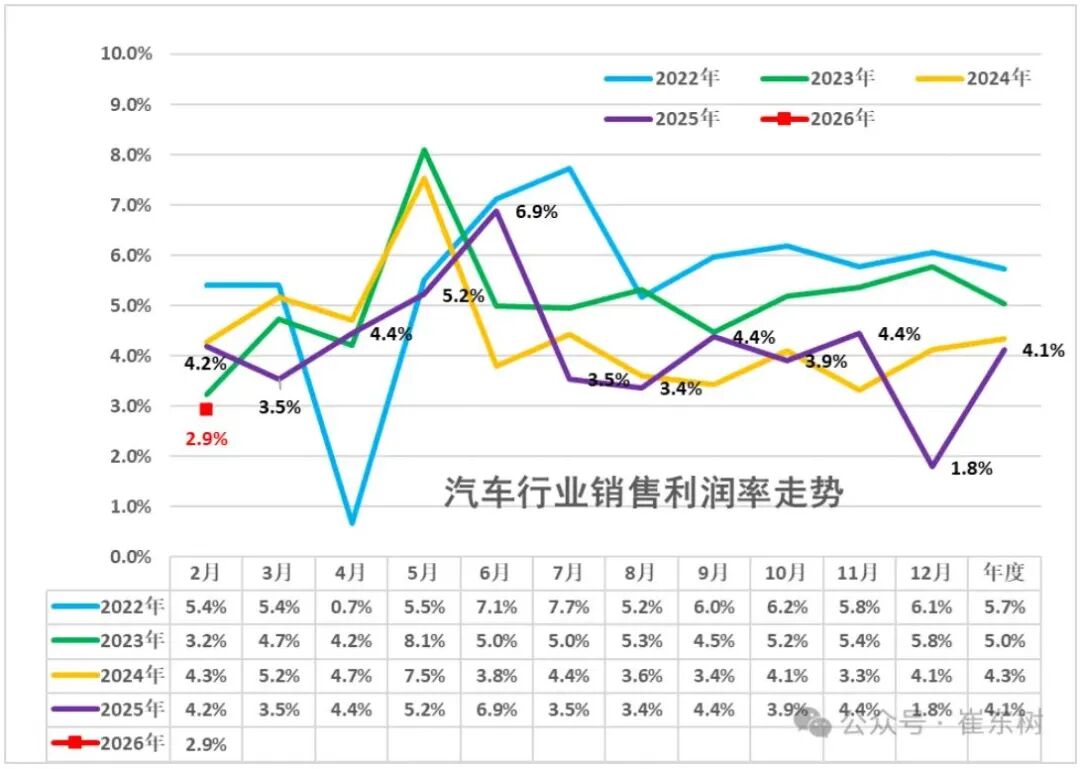
From January to February 2026, the revenue of the auto industry was 1.4824 trillion yuan, a slight year-on-year decrease of 0.9%. The cost was 1.3147 trillion yuan, a year-on-year increase of 0.2%. The profit was only 43.5 billion yuan, a sharp year-on-year decline of 30%. The industry's profit margin dropped to 2.9%, while the average level of downstream industrial enterprises is 5.8%.
What does 2.9% mean? The interest rate of a bank fixed - deposit is higher than this. The profit margin of the non - ferrous metal mining industry is 39.4%, and that of oil extraction is 30.2%. For the same real economy, the profit margins of those selling minerals and extracting oil are more than ten times that of car - making.
What's more worrying is the trend. In 2024, the sales profit margin of the auto industry was 4.3%, in 2025 it dropped to 4.1%, and at the beginning of 2026, it directly dropped to 2.9%. The price of lithium carbonate has doubled, and bulk commodities are at a high level. The cost pressure on mid - and downstream enterprises continues to increase. Car manufacturers are struggling in a tight spot - being squeezed by rising raw material prices upstream, suppressed by consumers' wait - and - see attitude downstream, and having to deal with the survival crisis of dealers in the middle.
This is no longer a problem of "small profits but quick turnover", but a dilemma of "even with large sales volume, it's hard to make a profit". When the profit from selling a car is less than that from selling a mobile phone, can the ecosystem of this industry be healthy?
The "three - step" route
So, how long will this "debt - repaying" last? Is there still hope for the auto market in the second half of the year?
The answer is: in the short term, rely on policy support; in the medium term, rely on product innovation; in the long term, rely on market clearing.
Short - term strategy - local policies are taking over.
Actually, according to media reports, local governments have successively provided subsidies ranging from several thousand to 15,000 yuan from January to February. And in the second half of March, the intensity is still increasing.
On March 21, several cities in Jiangsu Province simultaneously launched a new round of auto subsidies. Nanjing, Suzhou, Wuxi and other places have issued detailed rules, giving subsidies ranging from 3,000 yuan to 7,000 yuan to car buyers.
This is not an isolated case. Guangdong, Hunan, Sichuan and other places are also brewing similar policies. It is foreseeable