A Bitten World: The 50-Year Madness and Miracles of Apple
Editor's Note: We will regularly select high-quality articles from Matrix to showcase the most authentic experiences and opinions from users. The articles represent the personal views of the authors, and SSPAI only makes minor modifications to the titles and layouts.
From the first Apple computer to the Mac, from iPod to iPhone, iPad to Apple Watch and AirPods, as well as the services we use every day — the App Store, Apple Music, Apple Pay, iCloud, and Apple TV — we've spent five decades rethinking what's possible and putting powerful tools into people's hands. Through every breakthrough, one idea has guided us — that the world is moved forward by people who think different.
From the first Apple computer to the Mac, from the iPod to the iPhone, from the iPad to the Apple Watch and AirPods, and to the services we use every day — the App Store, Apple Music, Apple Pay, iCloud, and Apple TV — for five decades, we have redefined "what is possible" time and time again and put powerful tools into everyone's hands. Behind all these breakthroughs, there has always been a belief guiding us — the world has always been propelled forward by those who refuse to be the same.
In the spring of 1976, in an ordinary garage in California, USA, everything was extremely simple. There were no sufficient resources, and the future was far from clear. No one could be sure where the things they were doing would lead, and few people even believed that what they were doing was meaningful. They just vaguely felt that computers shouldn't be confined to laboratories, enterprises, or just for geeks.
That year, they named their company "Apple", a very simple name.
This scene has been retold repeatedly and has almost become a symbol: it seems that all great technological revolutions should be born in small, messy, and unpromising places.
Today, 50 years later, it has become one of the most influential technology companies in the world. It has experienced glory and also hit rock bottom; it has created products that changed the world and also made some puzzling attempts. But regardless of success or failure, this company has always been trying to answer the same question — how exactly should technology change human life?
▍The Origin of Everything
Before all this happened, the story still only belonged to two Steves: Steve Jobs and Steve Wozniak.
On April 1, 1976, they founded a company in the garage with Ronald Wayne. To raise funds, Jobs sold his car, and Wozniak sold his HP calculator. After many twists and turns, they finally managed to gather $1,300. After careful consideration on the naming issue, a name was determined — Apple Computer Company (renamed Apple Computer, Inc. in 1977).
The name "Apple" seemed rather unconventional yet reasonable among technology companies at that time. It had a bit of a non - mainstream natural flavor and was very down - to - earth.
Apple's first product was called the Apple I, a kit - style computer for enthusiasts made by Wozniak. From today's perspective, this machine was extremely rudimentary — it was just a circuit board without essential peripherals such as a keyboard and a monitor, like a Gundam model that needed to be assembled by oneself. But precisely in this incompleteness, it unleashed a new possibility: computers no longer had to exist in a large and closed form; they could be smaller, cheaper, and closer to individuals.
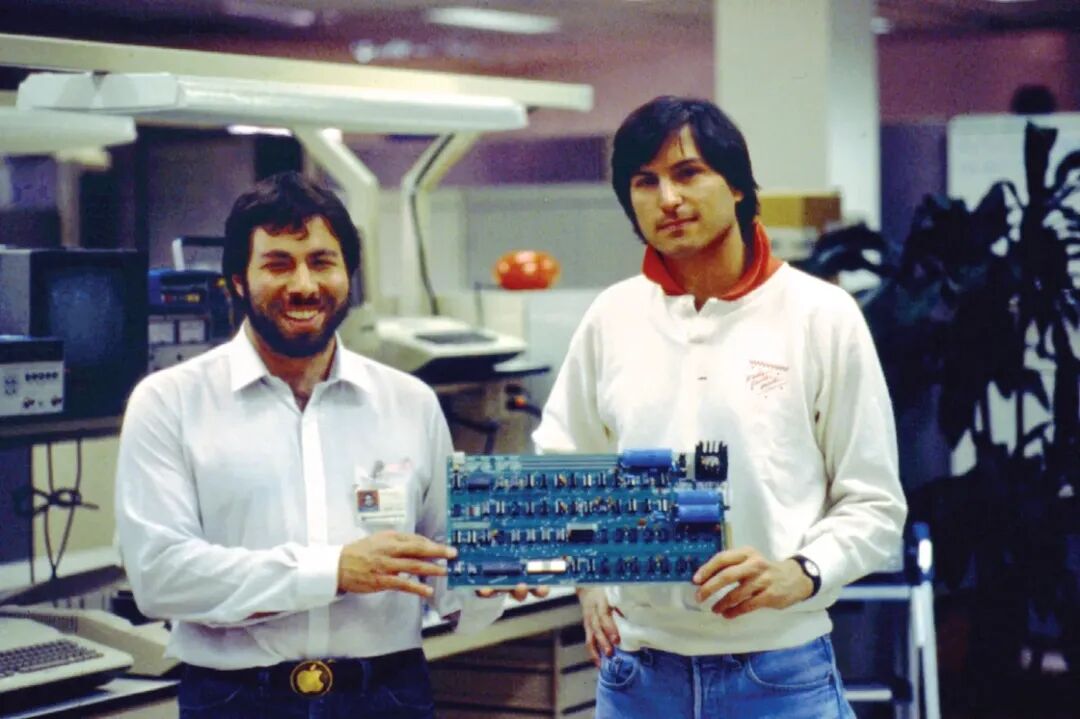
Steve Wozniak (left) and Steve Jobs (right) show the Apple I circuit board
A total of 200 Apple I computers were produced during its lifecycle (from April 1976 to September 1977), and currently, only a few dozen are confirmed to exist, and even fewer are verified to be still in working condition. That's why this computer, which was only sold for $666.66 back then, has fetched sky - high prices of hundreds of thousands of dollars at auctions in recent years.
The Apple I brought Apple its first pot of gold, but obviously, they weren't satisfied. They decided to further improve it on this basis. One year later, in April 1977, its successor, the Apple II, made its debut at the West Coast Computer Faire and was launched two months later. It became Apple's first consumer - grade computer for the general public and was also widely regarded as one of the earliest commercially successful home computers and an 8 - bit microcomputer.
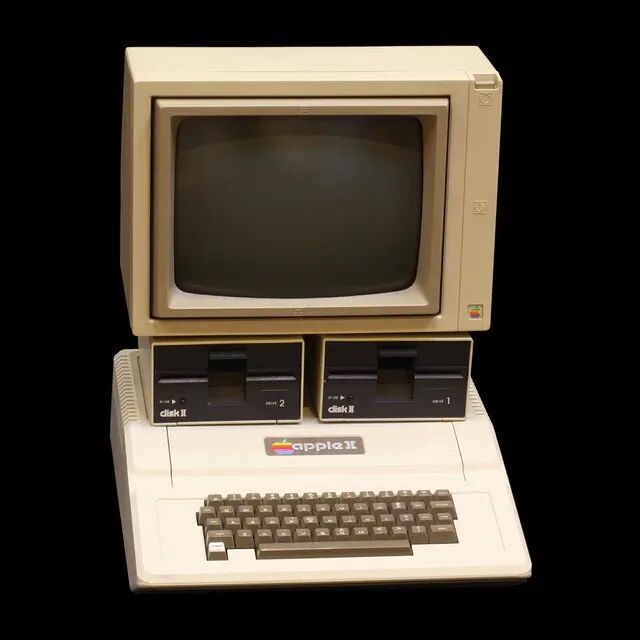
Apple II
The Apple II was built - in with Microsoft's BASIC programming language. The whole machine included a casing, a keyboard, a power supply, and was equipped with a monitor, with a much higher degree of completion than the Apple I. The Apple II sold millions of units in the 1980s. Later, many improved models were launched, such as the Apple II Plus, Apple IIe, and Apple IIGS. It was also widely purchased by the US education system as a standard computer. Until the late 1990s, the Apple II series was still a standard in many schools, truly a classic among personal computers.
If the appearance of the Apple II marked the beginning of personal computers entering the mass market, then looking at the entire year of 1977, this year can almost be regarded as the "Year One of PCs". Because in addition to the Apple II, two other representative personal computers were also born in this rather magical year: the Commodore PET 2001 and the Tandy / RadioShack TRS - 80. These three are collectively known as the "Three Heroes of 1977".
▍The Birth of Light
Before the Macintosh, Apple had actually made two important attempts.
In 1980, the Apple III tried to enter the commercial market and get closer to the established order — it was more stable, more professional, and closer to the needs of enterprises. However, design flaws soon emerged: abandoning the mature Apple II architecture, having an imperfect operating system ecosystem, and an extremely poor cooling system forced this path to be interrupted before it even started.
Three years later, in 1983, the Lisa completely turned to another direction. It was the first to bring the graphical interface and the mouse into reality in a complete form, creating a way of communication between humans and computers that no longer relied on commands. However, the high price and the immature environment made all this seem too far - ahead, like a letter that was sent but had no recipient for a long time.
If the Apple III was an exploration in the wrong direction, then the Lisa was more like a delayed prophecy — and the Macintosh was the moment when this delay was reopened.
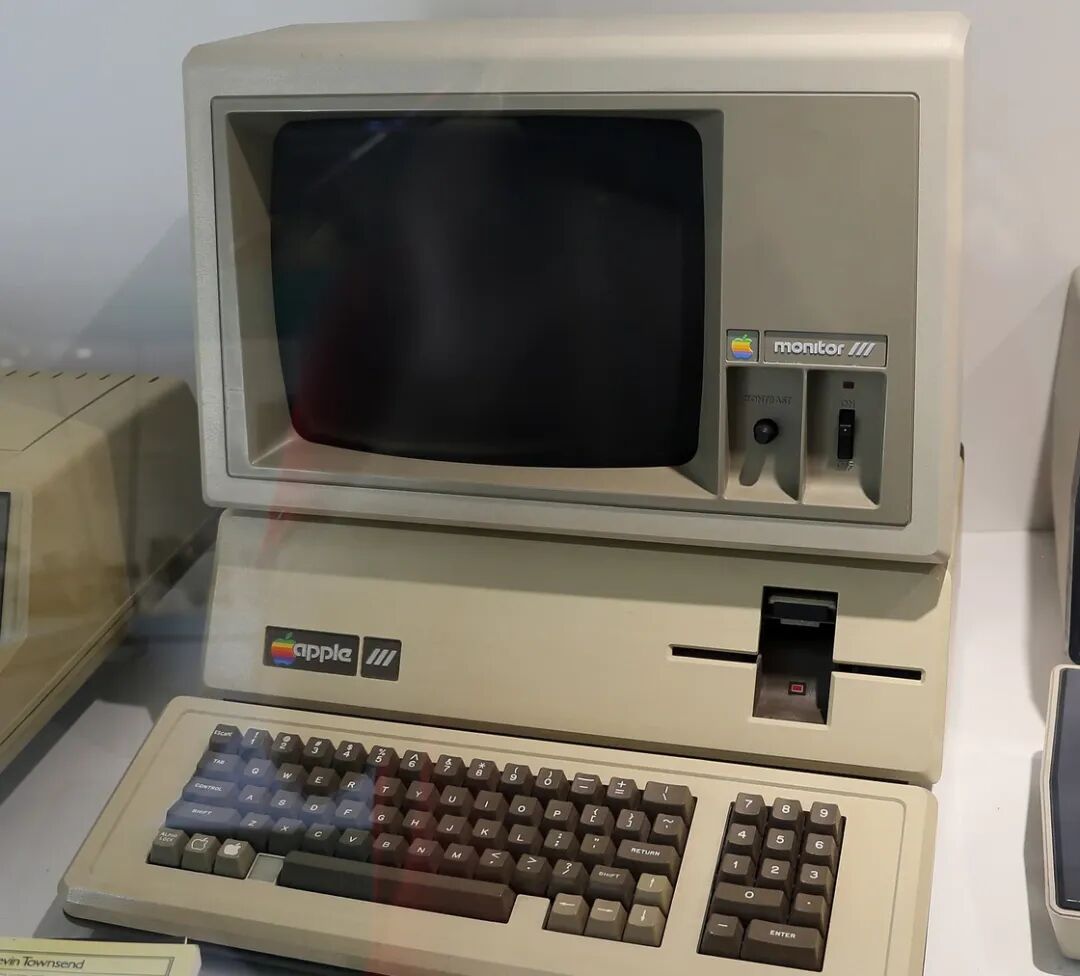
Apple III
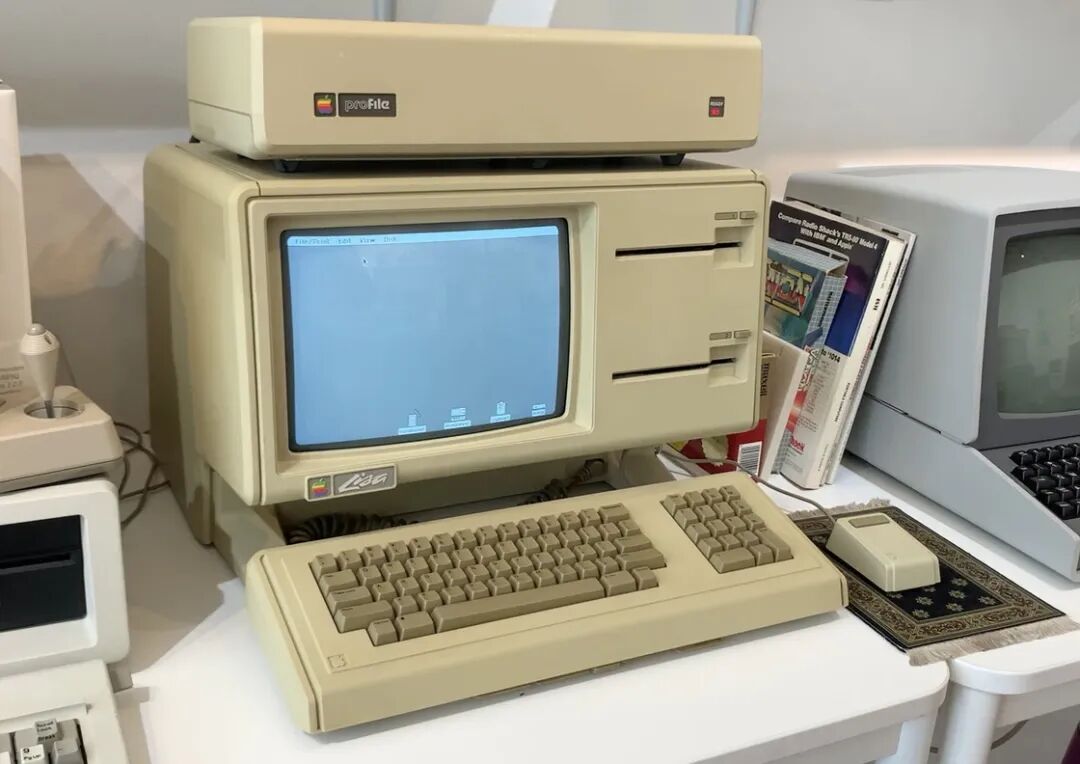
Apple Lisa
The Macintosh (later simply called the Mac) was born under the direct promotion of Jobs and was officially launched in 1984. It was Apple's second computer to use a Graphical User Interface (GUI) after the Lisa. It inherited the core concept of the Lisa but made compressions in scale and cost, enabling the graphical interface to move beyond the concept verification stage and enter the context of a wider range of personal computers for the first time.
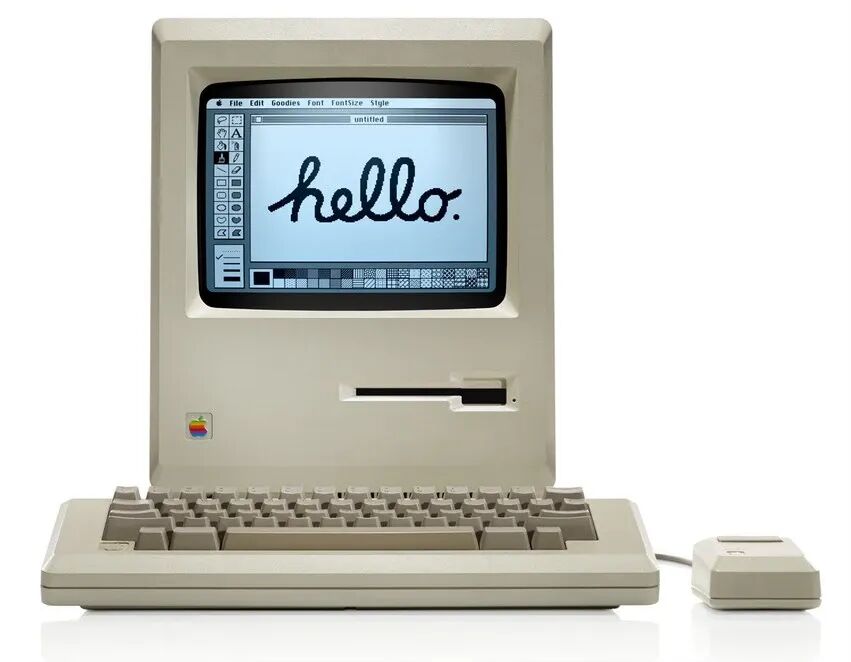
Macintosh
Computers began to try to understand users' intuitions: commands were replaced by clicks, and memory was replaced by visuals. The relationship between humans and machines gradually shifted from "operation" to "communication". Devices were no longer just tools for executing commands but became media that could be directly used by ordinary people.
However, this change did not immediately translate into success. Performance limitations, price pressure, and the yet - to - be - established operating system software ecosystem made the Macintosh have a mediocre commercial response.
When a technology requires users to change their habits, but the environment is not ready to accept this change, it often seems out of place.
This is exactly the kind of misalignment that the Macintosh faced. The usage methods depicted by Apple at that time did not match most of the real - world scenarios in the 1980s, so they could not be understood by the vast majority of users and were difficult to replicate widely. But precisely in this "unaccepted" state, this computer fulfilled another function — it provided a paradigm, a basic imagination of how computers should be used. This imagination will not take effect immediately. It will be ignored, questioned, and constantly revised, but once it is put forward, it will not truly disappear.
Today, when the graphical interface has become the standard, when the interaction has shifted from the keyboard to the screen, and when users no longer need to systematically learn about computers but can use them right out of the box, people gradually realize that those seemingly sudden changes were actually put forward prospectively and completely in the past.
People hardly ever ask where they came from, just as it is difficult to trace how the earliest human languages were formed.
The Macintosh was not a failure; it just failed to be understood in its own era. It left behind a path that seemed premature at that time but was ultimately proven to be correct.
And Apple itself would eventually pay the price for this "premature correctness".
▍The Long Night Descends
The light didn't last long. Before the shock brought by the Macintosh could really spread, reality began to tighten. The sales volume didn't explode as expected, the software ecosystem of the System Software (the predecessor of Mac OS) couldn't be improved for a long time, and internal differences gradually emerged. In the mid - 1980s, Jobs was leading the Macintosh project, which was later regarded as an important turning point in computer history. At the same time, Apple was looking for a leader who could handle the company's scale expansion to serve as the CEO. It was in this context that John Sculley became a part of Apple — this marketing director from Pepsi - Cola was convinced by Jobs with the famous question: "Do you want to sell sugar - water for the rest of your life, or do you want to change the world?"
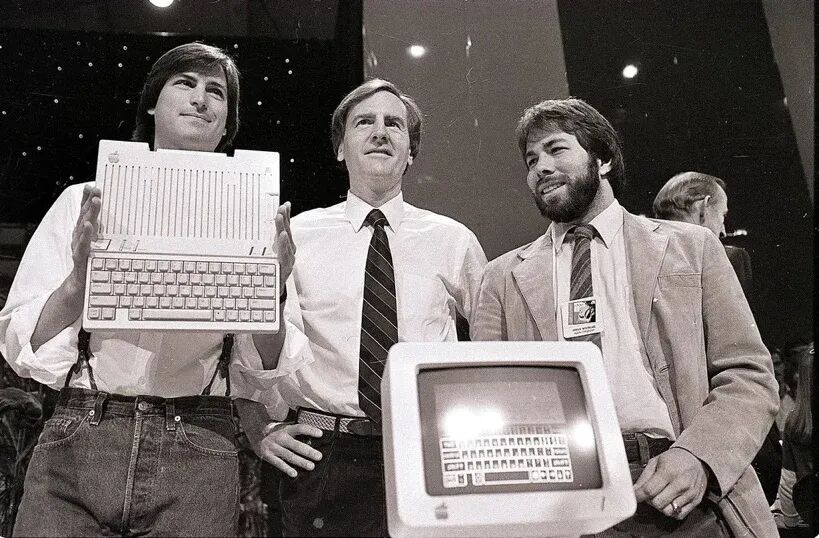
Steve Jobs (left), John Sculley (middle), and Steve Wozniak (right)
Initially, it seemed that they were moving on the same track: trying to reshape the future with products and hoping to define success with the market. However, this short - lived consensus was soon eroded by reality. As the Macintosh's commercial performance fell short of expectations, the rift began to widen. Jobs became more and more radical. He firmly believed that the problem was not with the product itself but that the world was not ready to accept it. He pushed the team to approach the limit, demanding faster, better, and purer, trying to offset all the real - world deficiencies with an ultimate experience. In Sculley's view, this way was making the company out of control. What he faced was not a small team supported by ideals but a company that needed to make a profit, be stable, and be responsible to shareholders. Costs, channels, and product structure — these issues that were almost insignificant in Jobs' eyes were real problems that had to be dealt with first for him.
Two logics began to conflict head - on: one believed that the product itself would define the market, while the other thought that the market would screen products. By 1985, this tense relationship could no longer be maintained, and the board of directors began to question Jobs' leadership ability. In May, Jobs decided to fight for control of the company and planned to stage a boardroom coup while Sculley was off - guard. Unfortunately, at the last moment, someone leaked the news to Sculley, which directly led to a face - to - face confrontation between the two. In the subsequent board vote, the choice became extremely clear — the company unanimously stood on Sculley's side. Finally, under Sculley's push, the board of directors unanimously decided to deprive Jobs of control of the Macintosh division and only symbolically retain his position as chairman. This decision was not just an organizational adjustment but a clear statement: between risk and control, Apple chose the latter.
In September 1985, Jobs angrily left the company he founded and started NeXT from scratch, taking his unfinished ideals away from Apple. Although NeXT's technology didn't win the market, it left a mark in another dimension. In 1990, at the CERN (European Organization for Nuclear Research) laboratory in Switzerland, Tim Berners - Lee built the prototype of the World Wide Web with a NeXT Cube workstation.
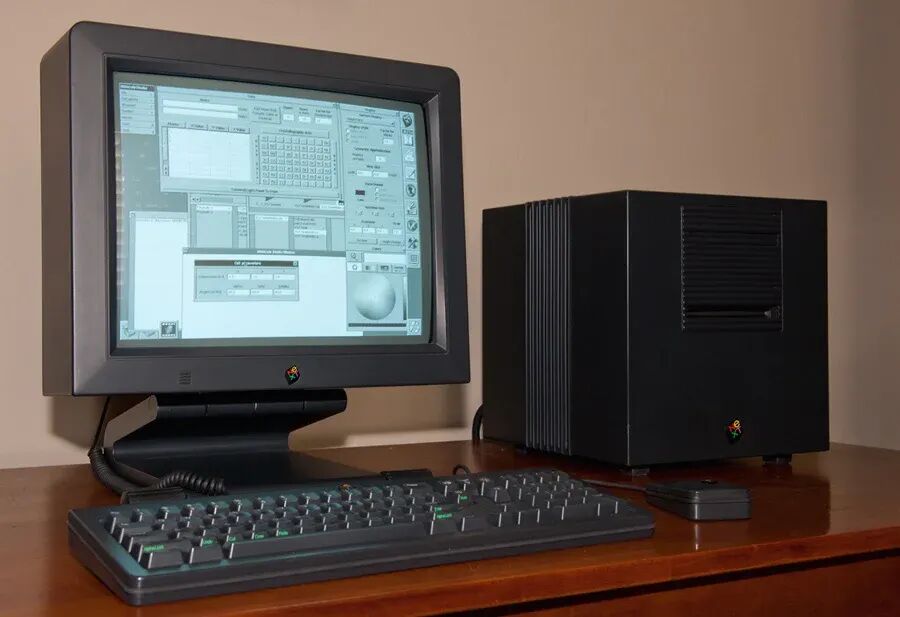
NeXT Cube
Apple chose an easier way to survive but also gave up a more difficult - to - achieve but potentially future - changing possibility.
The consequences of this choice would not be immediately apparent. It would gradually become clear in the next decade in a slower and more profound way.
▍Return to the World
The long night was not without an end; it's just that people at that time couldn't see the light.
In the mid - 1990s, Apple was no longer the pioneer in defining personal computers. Its product line was expanding but lacked a core, the system architecture was outdated, and the internal direction was constantly wavering. The official popularization of Microsoft Windows PCs once made this company gradually lose its former edge, and even the answer to the question "who exactly are we" became blurred. The losses continued to expand, the market value declined year after year, the market confidence quickly eroded, and the company was sliding towards the edge of collapse step by step.
What they needed was no longer just a product but a new "starting point". At that time, Apple was less than 90 days away from bankruptcy. The media had already written their conclusions, and the industry's judgment was also unanimous: this company was at the end of its rope. It was in this context that a person who had been driven out of the company re - entered its fate.
In December 1996, Apple announced that it would acquire NeXT for approximately $400 million. Jobs, the then - chairman and CEO of NeXT, was given the new identity of "temporary advisor". The nominal restraint couldn't hide the real weight of this acquisition.
After the development of Copland (the originally planned System/Mac OS 8) was cancelled, Apple needed a new operating system to replace the outdated Mac OS, and they chose NEXTSTEP — almost everyone understood that the real