The "Three-Kingdom Struggle" of In-vehicle "Thousand-Line" LiDAR
"Thousand-line" lidar is becoming the new marketing buzzword in the field of intelligent driving sensors.
Meanwhile, as more and more automakers set their sights on ultra-high line count lidars, Hesai, Huawei, and RoboSense, the three leading suppliers that account for over 90% of the market share, officially entered the "thousand-line" competition era in 2026.
The battle for "thousand-line" lidars in 2026 started with Huawei Qiankun.
The confidence for competition: Who will be profitable first?
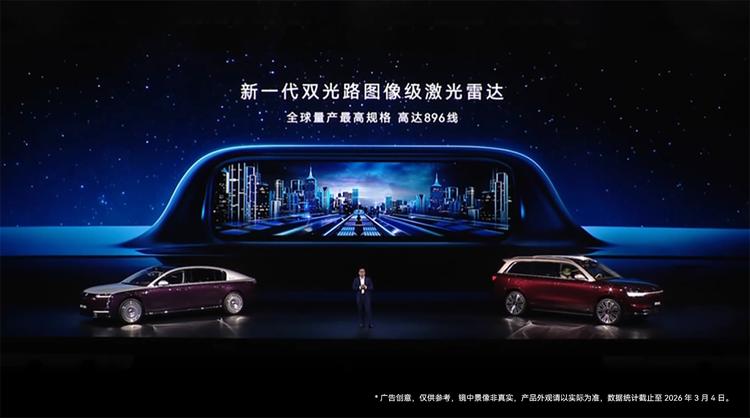
In early March, Huawei Qiankun launched a new generation of dual-optical path image-level 896-line lidar. With its "high-definition picture-in-picture" imaging effect and the status of "the highest specification in global mass production", it officially pushed the perception ability of intelligent vehicles from the "point cloud level" to the "image level".
The ability to "identify a 14 cm obstacle at a distance of 120 meters" is one of the important selling points promoted by Huawei. In addition, two models were announced to be the first to be equipped with this lidar at the press conference. One is the million-level Zunjie S800, and the other is the 500,000-yuan-level Wenjie M9. From the models, it can be seen that the cost of this lidar is still an order of magnitude higher (10,000 - 20,000 yuan higher than the 192-line lidar), and it can only be used in models worth at least 500,000 yuan.
Then, on March 12, RoboSense announced that it had won the exclusive pre-installation contract from Baidu's autonomous driving mobility service platform "Luobo Kuaipao". It will provide the "thousand-line level EM4 + all-solid-state blind-spot filling E1" digital lidar combination for its new generation of pre-installed mass-produced Robotaxi models to achieve 360° all-round accurate perception without blind spots.
This also marks that Luobo Kuaipao will for the first time realize the on-vehicle application of thousand-line level lidars. Moreover, each Didi vehicle will be equipped with 10 lidars of this combination.
It is worth mentioning that Goldman Sachs predicts that the number of autonomous taxis in China will reach 500,000 in 2030, and the market size is expected to reach $47 billion in 2035. By then, equipping each vehicle with 6 - 10 lidars may become the mainstream configuration for Robotaxis.
However, it should be noted that the EM4 was released in 2025. At that time, RoboSense said that it could flexibly customize various implementation plans such as 520-line, 720-line, 1080-line, and 2160-line according to the needs of automakers. This plan is based on the SPAD-SoC + VCSEL area array chip architecture, with a high degree of hardware integration. Of course, for customization, there must be a buyer.
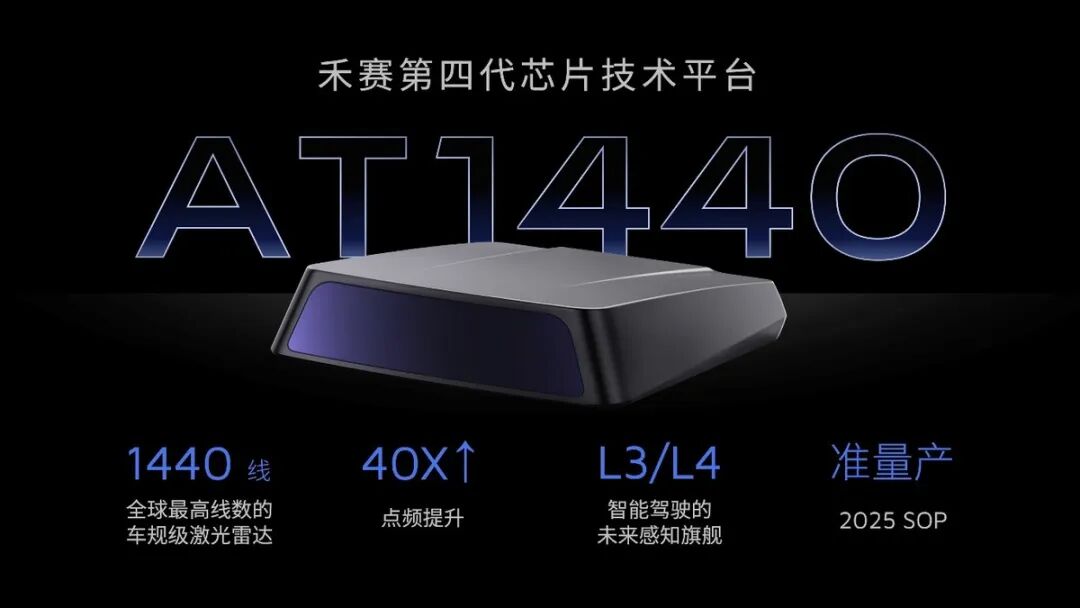
Earlier, in early 2025, Hesai Technology officially released the 1440-line lidar AT1440. It is officially defined as the world's first ultra-long-range lidar with the highest line count. According to industry understanding, this is a real hardware implementation.
In addition, Hesai also released a vehicle-grade 800-line ultra-long-range lidar ETX, which can be installed behind the windshield in the cabin and can achieve an ultra-long ranging distance of 400 meters (10% reflectivity). However, mass production and delivery are expected to start at the earliest by the end of this year.
As the three leading lidar companies successively "showed their swords", RoboSense's thousand-line level lidar was selected for on-vehicle installation, Huawei's new generation of dual-optical path image-level 896-line lidar was also announced for on-vehicle installation, and Hesai Technology's AT1440 lidar before, the battle for "thousand-line level lidars" officially began in 2026.
In other words, in the high-value market segment of 200,000 - 400,000 yuan, the situation where lidar products with 500 lines and above were dominant has been upgraded in advance to a battle for the consumer's perception of "thousand-line" lidars. Can "thousand-line" become the new benchmark for market performance?
Favorably, lidars have transformed from the core intelligent hardware of vehicles to essential safety components, so the sales volume has increased. However, as a result, the competition in the on-vehicle pre-installed lidar market in 2026 has officially entered the deep water zone.
On the other hand, urban NOA will become the mainstream configuration in the new car function planning of automakers this year. Since the end of last year, various automakers have successively obtained the permits for L3 on-road testing, and 2026 will be the implementation period.
We can infer that the high line count lidar solution will become the benchmark threshold for the all-round perception ability of L3/L4 level autonomous driving of mainstream automakers. For example, when the Geely ZEEKR 9X was released last year, its intelligent driving assistance solution already had L3 level capabilities.
However, this "three-way battle" that tests the technical strength, mass production ability, and scenario adaptation of lidar companies also fully kicked off in 2026. Because at the "thousand-line" level, only Huawei, Hesai, and RoboSense are left in the game, and other players can't keep up.
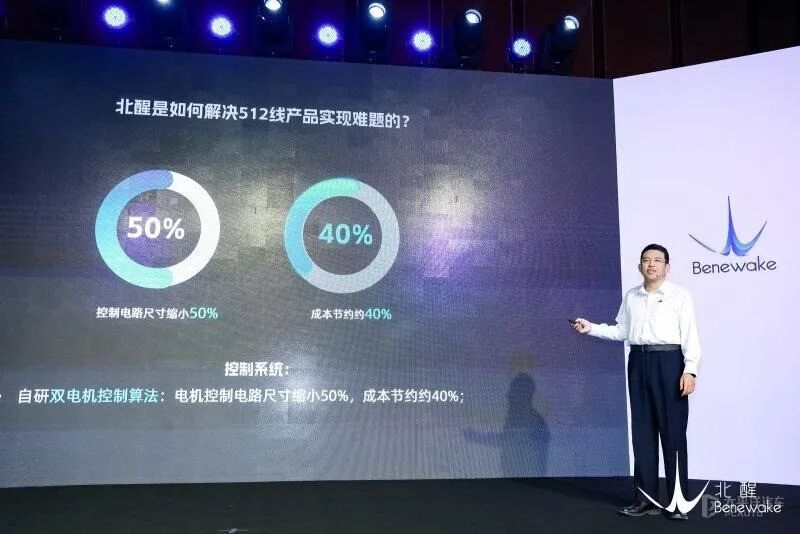
In fact, as early as 2022, some companies in the industry had launched lidars with more than 500 lines. For example, Benewake released the 512-line lidar AD2 in 2022, and this product was also exhibited at CES 2023. In addition, Lightin also launched the world's first 1024-line long-distance large-field-of-view hybrid solid-state lidar GM1024 that year. However, neither of these two companies made much of an impact.
Ultimately, the engineering ability to achieve large-scale mass production is decisive. In addition, even for manufacturers with mass production capabilities, it usually takes about two years from the launch of a lidar product to mass production and then to the implementation of the selected models. Whether they can survive until the spring is a question.
Therefore, as Hesai and RoboSense have successively announced profitability, it will be difficult for the remaining unprofitable companies to survive in this competition.
The "thousand-line" arms race
Although the competition for "thousand-line" lidars has begun, we still need to analyze it calmly. Is the real "thousand-line" lidar really here? Or is it like the all-solid-state battery, where we only hear the footsteps but don't see anyone coming?
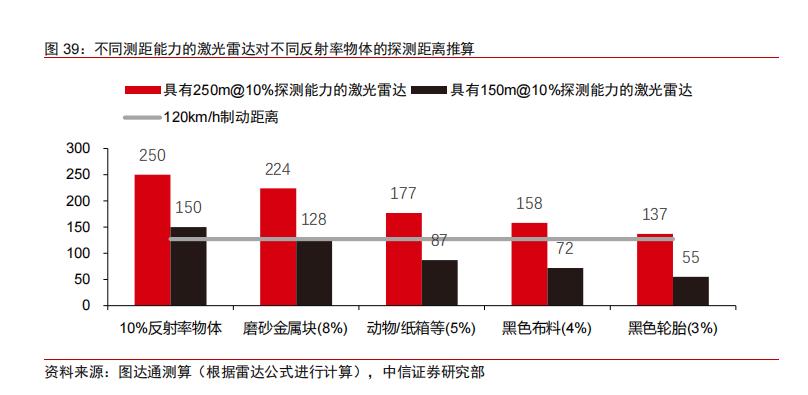
Here, let's first talk about the technical indicator of "detection distance at 10% reflectivity", which is one of the key standards for measuring the performance of lidars.
Reflectivity refers to the degree to which the surface of a target reflects laser light. 100% reflectivity means the target reflects completely, while 0% reflectivity means it absorbs completely. Of course, in the real world, the reflectivity of objects such as roads, trees, and pedestrians is much lower than 100%. Therefore, 10% reflectivity is regarded as a standard test condition.
The "detection distance at 10% reflectivity" of a lidar refers to the maximum distance at which the lidar can still reliably detect a target when the target's reflectivity is 10%. This is also an important basis for measuring the safety guarantee, all-weather adaptability, and technological advancement of the lidar.
According to the existing data, the mainstream mass-produced 192-line on-vehicle lidars in the industry have a maximum detection distance of less than 300 meters, and the detection distance at 10% reflectivity is about 200 meters. For example, the main pre-installed products of Hesai Technology are close to these data. For the upgraded version of the ATX series with 256 lines, the ranging distance has been increased from 200 meters to 230 meters (10% reflectivity), and delivery is expected to start in April this year.
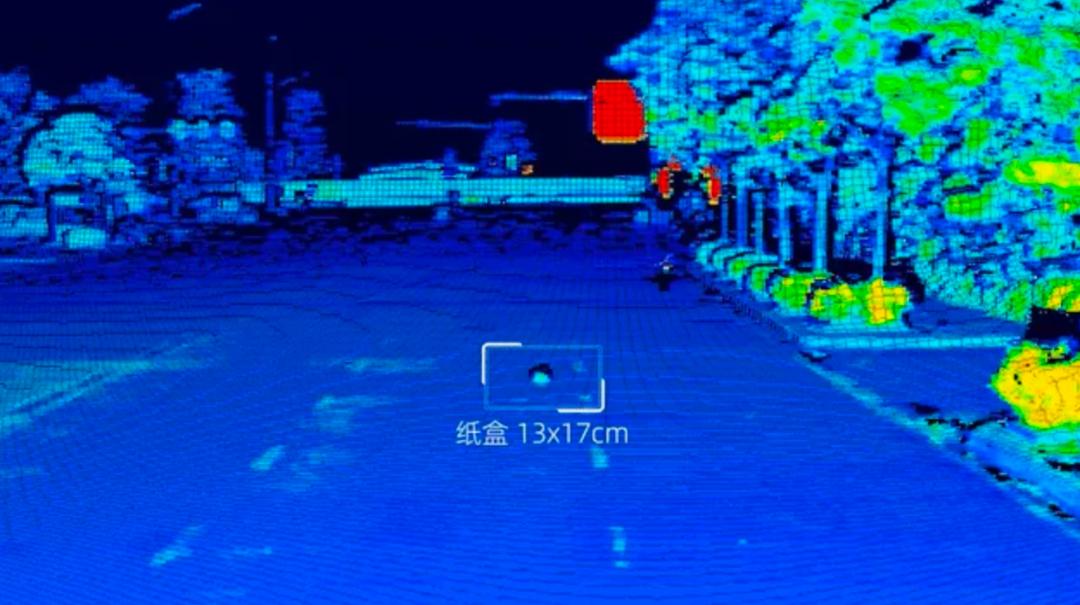
The data of the RoboSense's mass-produced EM4, which has a faster data improvement, shows that its maximum detection distance reaches 600 meters, and the detection distance at 10% reflectivity is 300 meters. In addition, the detection distance at 10% reflectivity of Huawei's 896-line lidar is 260 meters.
Another important indicator is the ability to identify small objects. RoboSense's EM4 can clearly detect targets such as tires 180 meters away, black cartons 250 meters away, and traffic cones within 300 meters. In actual tests, it can identify a small carton of 13×17 cm at about 130 meters and maintain centimeter-level positioning stability in harsh conditions such as rain and fog.
The 896-line lidar released by Huawei has reduced the minimum identifiable target height from 30 cm to 14 cm, increased the maximum identifiable distance from 100 meters to 162 meters, and increased the maximum identifiable distance of low-reflectivity targets in a dark environment from 42 meters to 122 meters. This is also very close to RoboSense's level.
Of course, there are still objections to Huawei's 896-line lidar. For example, two top bloggers on Douyin, "XXXX Solution" and "Is it XX yet?", have disassembled this lidar, and the conclusions are roughly the same. This lidar is based on a 128-line VCSEL array at the hardware transmitting end, and is combined into 896 lines through the dual-optical path at the receiving end. This is the power of algorithms, but the cost is indeed high.
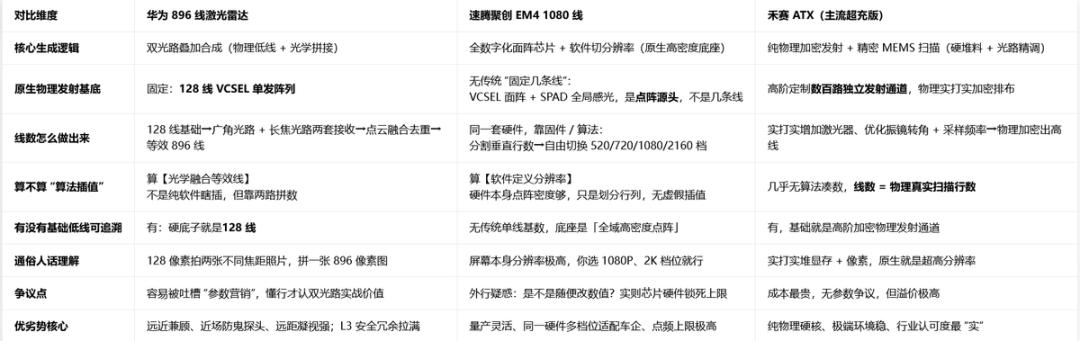
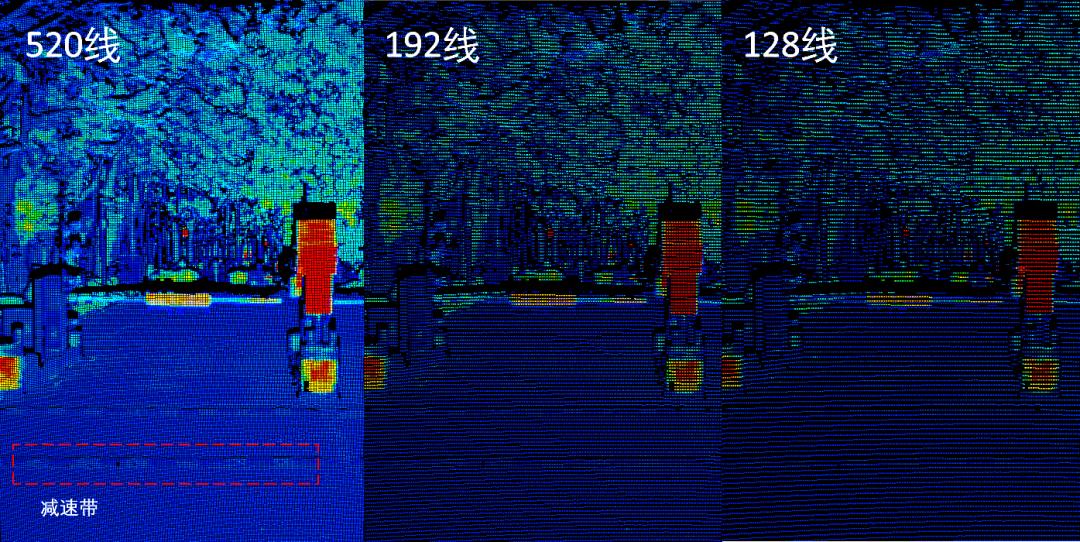
As is well known, the more lines a lidar has, the higher the vertical resolution of the point cloud, and the more environmental details it can capture. Especially the improvement in the perception ability of small targets, low-reflectivity, and irregular obstacles can effectively help the intelligent driving system make earlier decisions, reduce risks, and improve the comfort of the driving experience. In this regard, the three companies are closely competing.
However, we still need to analyze it calmly. After all, it is inevitable for automakers, Huawei, Hesai, and RoboSense to compete in the field of thousand-line lidars. But does it mean that the higher the line count, the better? Not necessarily.
After all, as lidars enter the "thousand-line" era, the computing resources they occupy are also increasing. For example, it is estimated that the data volume generated per second by a 2160-line radar is more than 11 times that of a 192-line radar.
The intelligent driving chips installed in current mainstream models, such as NVIDIA Orin or Huawei MDC, already have limited single-domain controller processing capabilities. One radar may occupy most of the computing resources. If a car like XPeng is equipped with three radars, the computing pressure can be imagined. Therefore, Horizon's HSD intelligent driving solution based on J6P largely uses the vision route, and lidars are only optional.
In addition, as lidars evolve towards the "four highs" of high frame rate, high line count, high integration, and high computing power, the heat flux density of the core chips has increased sharply, and the heat dissipation problem has become more prominent. The combination of hardware miniaturization and high power consumption has led to a sharp increase in heat flux density, and the temperature of local hot spots may reach over 120°C, exceeding the tolerance threshold of electronic components.
Moreover, high temperature will cause the wavelength of the laser to drift, directly reducing the ranging accuracy, and even causing target miss-detection and false detection. At the same time, it will lead to a decrease in reliability. At high temperatures, the signal processing chip may cause calculation errors, shortened lifespan, or permanent damage. This is also an urgent problem to be solved.
Of course, the market demand for lidars is still growing. According to the monitoring data of Gaogong Intelligent Automotive Research Institute, in 2025, the new car delivery volume of passenger cars in the 200,000 - 400,000 yuan segment with standard lidars accounted for 70% of the overall market. Gaogong predicts that the delivery volume of lidars in the Chinese market (excluding imports and exports) is expected to exceed 4.4 million vehicles in 2026.
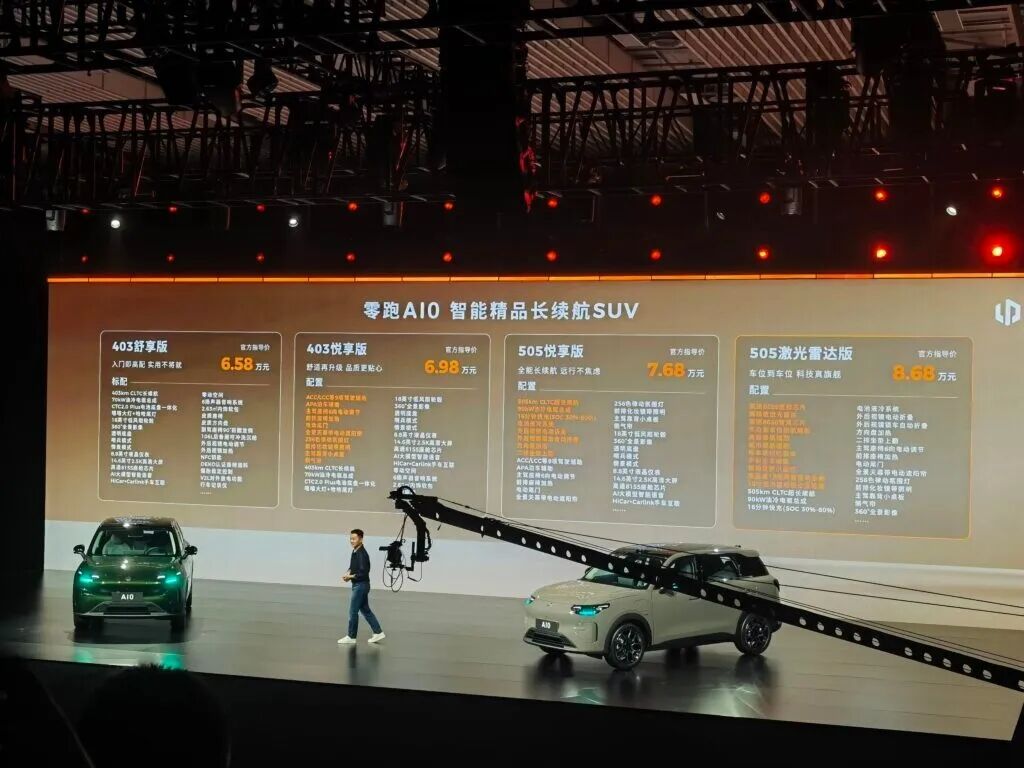
In addition, it is expected that in 2026, models in the 150,000 - 250,000 yuan price range will become the main force for lidar installation, and it will further penetrate into models in the 100,000 yuan range. For example, the A10 lidar of Leapmotor has already been installed in vehicles. Undoubtedly, the demand for high-performance lidars with more than 500 lines in the high-end vehicle market in 2026 will continue to grow. High-performance product solutions and multi-lidar configurations may become the new main lines in the market.