Breaking through from the "upstream", Proya's competition logic has changed
The Chinese beauty industry has passed the stage where it was easiest to tell stories.
For a long time in the past, international beauty groups established their advantages in the Chinese market not just by virtue of their brand histories. They also had mature retail systems, brand assets accumulated over the years, as well as core raw materials, formula R & D, and evaluation systems. The combination of these three systems meant that for a long time, domestic brands could only follow and look for opportunities.
However, the environment has changed now. In the past few years, channel expansion, traffic investment, and price strategies have continuously overlapped, driving the rapid growth of the industry. Now, the effectiveness of this approach is weakening. Although the market is still growing, from $54.23 billion in 2018 to $69.41 billion in 2024, the average annual compound growth rate is only 4.2%, and it is expected to further decline to 3.8% in the future.
This indicates that the Chinese beauty market has entered the "incremental stage of structural adjustment." From the demand side, this change is also clearly visible. According to data from iiMedia Research, 58.8% of beauty consumers are most concerned about ingredients, and 41.4% are concerned about efficacy. Consumers' judgment logic is shifting from brand and price to ingredients, mechanisms, and verification paths.
In this context, the changes of Proya are worthy of discussion. What it has experienced and is experiencing is not just the growth stage of a leading brand, but also a process in which a Chinese beauty enterprise attempts to move from product competition to standard and system competition.
01. Under the growth plateau, the reshuffle of the industry structure and the path changes of leading enterprises
The growth of the beauty industry has indeed reached a plateau.
Its manifestation is not an obvious contraction, but rather a structural change. Firstly, at the market level, online channels are still active, but the promotion's ability to stimulate demand is weakening. Although price strategies are still being used, it is becoming increasingly difficult to form a continuous stimulus. Consumers are becoming less interested in "low price + full - reduction" promotions, and the decision - making time for purchasing behavior is getting longer.
Meanwhile, the role of offline channels is also changing, and they are further transforming towards refined operations. After all, the pressure on offline channels is significantly increasing, but they also carry new functions such as offline touchpoints, brand windows, and urban cloud warehouses.
"Online prosperity and offline pressure" has become a common industry state at present.
Deeper changes are reflected in the industry structure itself. Overall, growth still exists, but the distribution method has changed. In the first half of 2025, the average year - on - year growth of the overall revenue of beauty enterprises was 5.2%.
This figure itself is not low, but in fact, the differentiation has significantly intensified. Medium - sized enterprises grew by 9.2%, large - scale enterprises (with a revenue of over 10 billion) by 4.9%, and small - scale enterprises by only 1.0%. The growth data is concentrated in a group of enterprises with stronger capabilities, while the other group of enterprises is gradually being marginalized.
This means that the industry is undergoing a new round of growth redistribution.
The changes on the consumption side make this process clearer. Consumers are beginning to pay more attention to ingredients and efficacy, such as understanding the product's function and the source of its effectiveness. Traffic can bring exposure, and price can promote conversion. Both are still important, but consumers' core judgment of products is gradually shifting to the product itself and whether it has verifiable effects and stable experiences.
In such an environment, enterprises need to change their thinking to continue to achieve growth.
Proya clearly saw the trend and the problems in advance.
Looking back at its development path, a relatively clear transformation trajectory can be seen. In the early stage, Proya completed scale accumulation through channel and marketing efficiency and occupied a leading position in the industry. Then, after efficacy - based skincare became a consumer consensus, it quickly shifted to the product logic of "efficacy - based skincare + scientific research and innovation," established core product lines such as the Ruby and Dual - Antioxidant series around high - frequency needs such as anti - aging and repair, and completed the transformation from "being seen" to "being verified."
In the current stage, Proya is extending towards long - termism.
Specifically, the company is accelerating structural optimization and gradually forming a coordinated system of multiple brands, multiple products, and multiple channels. The main brand continues to deepen in efficacy - based skincare and extends to more segmented consumer groups and usage scenarios, such as men's care and repair products, making the products move from general needs to specific situations. Its sub - brands such as Caitang and Off&Relax have entered the makeup and scalp care markets respectively, and their growth is obvious, forming a complementary relationship with the main brand.
Different brands cover different needs, and different products correspond to different scenarios, further opening up the enterprise's incremental space. When one product reaches the end of its cycle, other products can still provide support. When one type of demand fluctuates, other demands can fill the gap.
It is worth mentioning that this structure has begun to be reflected in Proya's business results. According to Proya's disclosed financial report data, in the first three quarters of 2025, its revenue was 7.098 billion yuan, a year - on - year increase of 1.89%, and its net profit attributable to shareholders was 1.026 billion yuan, a year - on - year increase of 2.65%. The revenue and profit continued to grow, and the profit growth rate was higher than the revenue growth rate, indicating that the enterprise's efficiency at the same scale was improving.
More importantly, this change is still ongoing.
Overall, Proya's layout in men's care, repair products, sunscreen, and scalp care is still in the process of continuous segmentation. Consumers' needs are shifting from "general categories" to "specific scenarios." These needs will not burst out all at once but will be released in a more dispersed and continuous way. Enterprises that can cover these segmented scenarios will have stronger growth stability.
Growth still exists, but it is no longer determined by speed. Competition is still fierce, but it is no longer centered around scale. The stage of the industry pursuing high - speed growth has ended, and it has entered a new supply era of pursuing quality.
02. From product competition to scientific research system, capabilities enter the "irreplaceable zone"
Meanwhile, the image that beauty enterprises present to the outside world is also changing.
After efficacy - based skincare became a consumer consensus, "talking about science" has almost become the main communication axis that all beauty enterprises cannot avoid.
Initially, brands would introduce products to consumers around ingredients, concentrations, and efficacy, and they could establish a sense of professionalism in a short time. However, as the information density increased, all brands were talking about similar content, and the expression itself gradually lost its differentiating power.
Ingredients can be reused, concepts can be copied, and experimental terms can be repeatedly mentioned. Consumers are starting to dig deeper and seek the scientific research basis behind marketing terms.
This is also a key turning point in the industry's communication path.
When consumers become "capable buyers" who actively seek information, the standards of beauty products such as ingredients, mechanisms, and experiments gradually enter the consumers' decision - making process.
This means that beauty brands themselves must have the ability to continuously output scientific research results.
Proya's scientific research construction is carried out in this context. Its current R & D system is not a relatively basic and simple single - project, but a three - core driving structure of "independent R & D, industry - university - research - medical cooperation, and international collaboration."
Specifically, Proya has established R & D centers in Longwu, Hangzhou, Shanghai, and Europe. According to publicly disclosed cooperation information, in March this year, Proya and Shanghai Skin Disease Hospital jointly established a "Skin Clinical Science and Innovation Laboratory," and the cooperation scope covers multiple links such as the R & D of efficacy - based skincare products, basic research in dermatology, and result transformation.
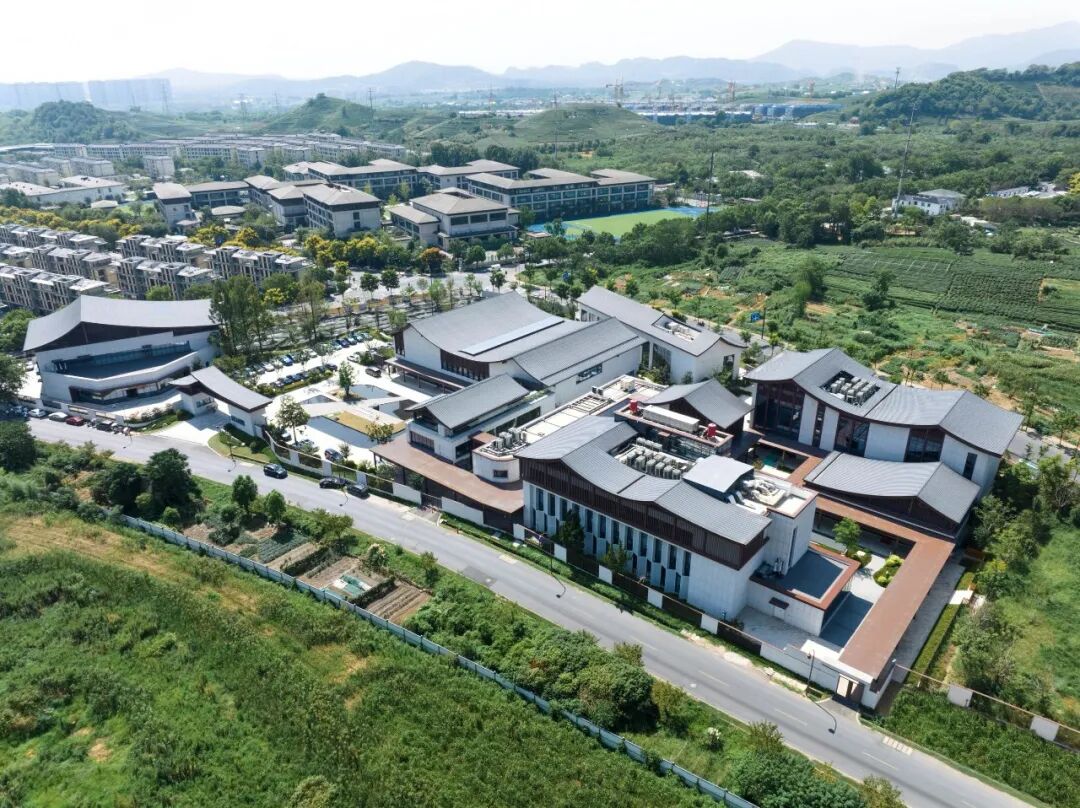
Proya's R & D center in Longwu, Hangzhou
Looking back, in 2025, Proya jointly established a laboratory with the School of Pharmaceutical Sciences of Zhejiang University, continuing to deepen ingredient research and extending to more fundamental directions such as the aging mechanism of special parts of the skin and mitochondrial regulation. Through interdisciplinary collaboration, it connected basic research with product transformation. In the same year, Proya also signed a cooperation agreement with West China Hospital of Sichuan University, focusing on the core topic of "mitochondrial anti - aging" and expanding to real - world usage scenarios in combination with the clinical research resources of West China Hospital.
The key to this system lies in connecting the originally scattered R & D links. Basic research advances towards more fundamental mechanisms, clinical resources supplement the verification path, and the application end undertakes product transformation. This makes R & D no longer rely on a single institution or a single link but operate in a complete chain, gradually having the ability to continuously produce results.
This has been reflected in the results.
In 2025, Proya won the top ten basic research awards of IFSCC for its mitochondrial anti - aging research, becoming the only Chinese cosmetics enterprise in IFSCC history to receive this award. Meanwhile, research on recombinant type XVII collagen, andrographolide and its compositions has also formed a corresponding relationship through SCI papers and product applications, providing theoretical support for products such as the Yuanli series.
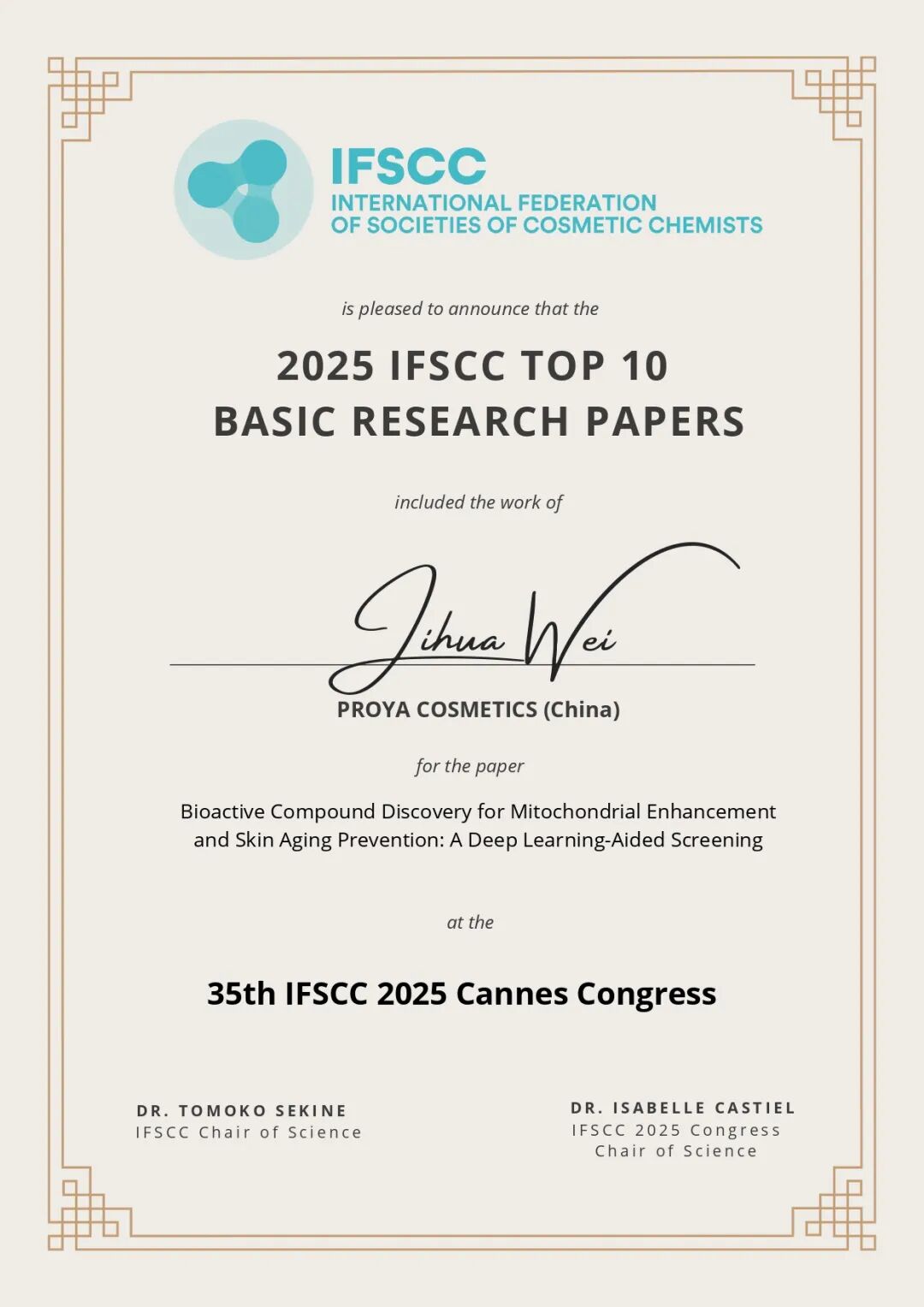
Proya won the "Top Ten Basic Research Awards of IFSCC 2025"
This is sufficient to prove that Proya has achieved a breakthrough in the most fundamental fields of the industry such as raw materials and mechanisms.
In the past, core raw materials and evaluation systems were long dominated by international brands, and domestic enterprises were more involved in the application and product development layers. With the accumulation of scientific research capabilities, some enterprises have begun to move to more upstream positions and participate in the discussion of raw material research and evaluation paths.
This can also be seen from the change in Proya's position in the international industry system. Before, it participated in the Paris Cosmetic 360 exhibition as a judge of the Open Innovation competition, which itself represents a shift from a result - exhibitor to a rule - discussant.

Proya's brand product booth at the 57th Cosmoprof Bologna International Beauty Exhibition in Italy
When scientific research can be continuously transformed into product capabilities and user trust is continuously accumulated, this link will form a stable cycle. In the context of rational consumption, the value of this cycle will be magnified.
03. AI enters the industrial chain, the future evolution of Chinese beauty
The key leap from R & D to products is also reflected in the production and delivery links.
This is especially true in the beauty industry. Although scientific research breakthroughs are exciting, the key to whether laboratory results can be stably scaled up and continuously reproduced on a larger scale ultimately lies in manufacturing and the supply chain.
In the context of stricter supervision, this is particularly crucial. Policies such as the "Administrative Measures for the Monitoring and Evaluation of Cosmetics Safety Risks" promote pre - supervision, which objectively requires enterprises to have stronger system capabilities.
Obviously, Proya is well - prepared. Proya's Huzhou production base was recognized as an "advanced - level intelligent factory" and entered the national - level intelligent factory cultivation echelon. As the first project in the Chinese cosmetics industry to fully deploy Industry 4.0, it covers an area of 261,800 square meters and has previously received multiple recognitions such as a national - level "green factory," a Zhejiang - level intelligent factory, a green and low - carbon factory, and a "future factory."
Behind these labels lies the change in the production organization method, which has achieved a leap from manufacturing to intelligent manufacturing. In addition to scale expansion, it is more about the reorganization around efficiency, quality, and low - carbon.
In this process, new technologies represented by AI have become a driving engine different from the traditional model in the past.
This driving force is integrated into the specific links of the manufacturing system. Taking Proya's Huzhou production base as an example, since its intelligent transformation and upgrading was launched in 2013, on the one hand, it has gradually introduced globally leading equipment and maintained close contact with domestic manufacturers, gradually introducing or even co - creating equipment with independent intellectual property rights, walking on two legs. On the other hand, it has introduced AI visual inspection technology into the actual production end. For example, the online visual inspection instrument put into use at the end of 2024 can achieve 360 - degree recognition of transparent and semi - transparent products and capture tiny foreign objects, converting quality problems that were originally difficult to quantify into verifiable indicators. In addition, the manual sampling inspection of key processes such as code spraying has also been upgraded with AI, which can perform high - precision recognition of code spraying and packaging quality, thereby capturing deviations in real - time during the production process and automatically eliminating unqualified products, greatly improving production stability. This case was selected as a typical example of artificial intelligence empowering the manufacturing industry in Zhejiang Province last year.
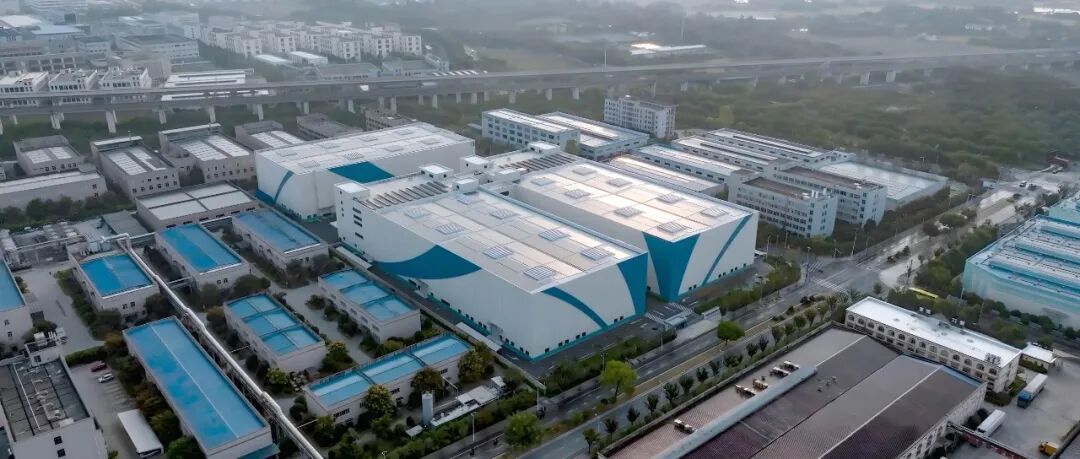
Proya's Huzhou production base
The changes in the production end do not work alone. They need to form a closed - loop with the supply chain capabilities.
The investment in Proya's intelligent logistics center provides a foundation for this closed - loop to operate. Automated equipment and robot dispatching systems take over most of the warehousing and sorting processes. Inventory and outbound are uniformly dispatched by the system, and more than 90% of the operations are unmanned. While the storage density and turnover efficiency are improved, the error rate is reduced, and the supply chain begins to have a higher response ability.
This kind of ability is particularly crucial in an environment with more frequent demand fluctuations. How to dispatch inventory and fulfill orders quickly is no longer just an operational issue but a direct variable affecting product conversion efficiency. After production and logistics are integrated into the same system, R & D results can enter the market in a more stable way.
On this basis, Proya's exploration of new technologies such as AI further extends into the R & D chain.
Public information shows that Proya has reached a strategic cooperation with Enhe Biotech around SAION AI, introducing AI into the biological manufacturing process to screen potential active ingredients and improve the success rate of experiments, shifting the screening process that originally relied on experience to a more efficient verification process, thereby reducing the time cost between R & D and industrialization.
In cooperation with Zhejiang University, Proya is also jointly researching how to embed AI capabilities into the biological research level, promoting basic research in directions such as skin aging mechanisms and mitochondrial regulation, so that scientific research results can more directly enter the product development chain.
It is worth noting that Proya's attempt at AI capabilities also extends to demand identification, knowledge processing, and product transformation. At present, Proya is exploring how to use digital capabilities such as AI to penetrate the links of consumer insight, scientific research literature processing, and formula implementation, so that the logic of "industry - university - research - medical" still holds in the AI era.
"Scientific research ability" is gradually changing from