Hu Yilin of Niu Technologies: A two-wheeled electric vehicle manufacturer established for 12 years decides to transform into AI, "all in or nothing"
Text by | Qiu Xiaofen
Edited by | Su Jianxun
A two - wheeled electric vehicle manufacturer that has been established for 12 years, after successfully experiencing the lithium - electrification and intelligentization tides in China and going public on the NASDAQ, has decided to join the new competition in the AI era. Building intelligent two - wheeled electric vehicles in the AI era is what Niu Technologies calls "the moat for the next decade."
At Niu Technologies' recent press conference, they showed preliminary results - the newly released electric vehicles NXT2 and NX2 are equipped with the self - developed Niu Lingxi AIOS and the first AI intelligent agent for riding.
When you ride on the road, the combination of Niu Lingxi AIOS and the intelligent agent will turn your electric vehicle into a riding partner that "can see the road and understand speech."
For example, when you turn in the rain, the AI will recognize the riding state and automatically turn on the anti - skid function; you can also ask it to "find a nearby coffee shop with few people," and the electric vehicle can understand and navigate...
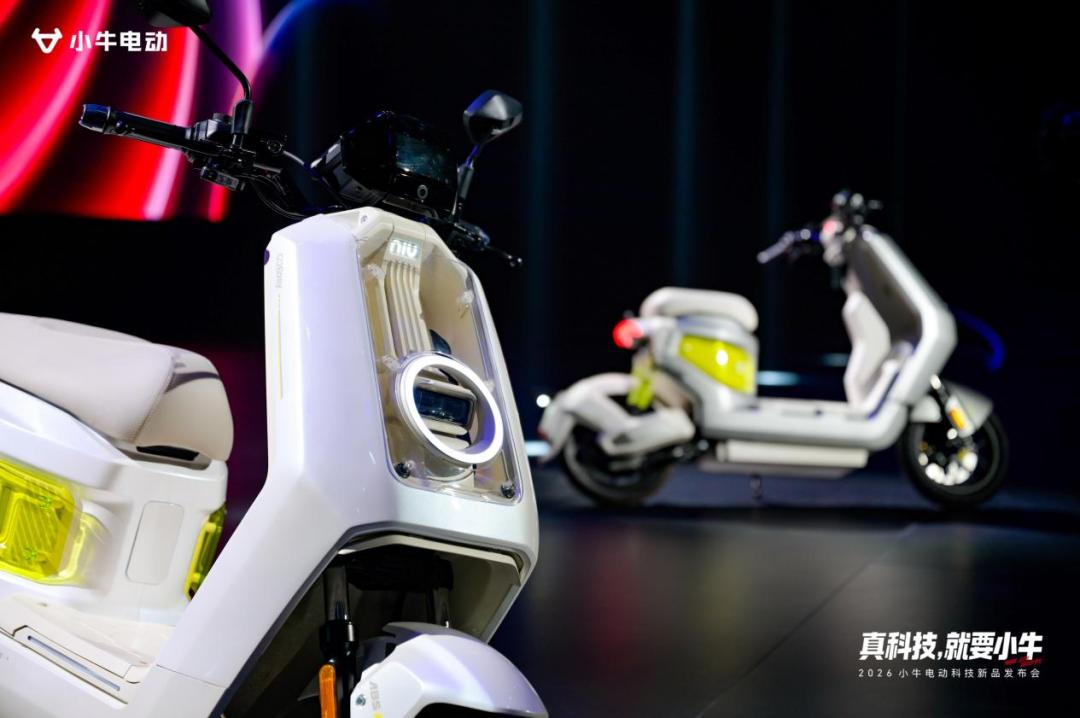
△ Niu AI Electric Motorcycle NX2
In mid - March, "Intelligent Emergence" had an exchange with Hu Yilin, the founder of Niu Technologies. He is also the most "unique" founder we have interviewed.
His past experiences can be called legendary. He lists "tinkering" and "paranoia" as his life creeds. With his excellent self - learning ability and design talent, and with limited English skills, he managed to enter Microsoft as a formal employee when he was young. Before founding Niu Technologies, he also ran an animation studio and once founded a shoe brand out of anger because he bought ill - fitting shoes.
In the process of leading the company's transformation towards AI, the same sense of "paranoia" pervades.
"Through extreme tests, we hope to figure out the boundaries of AI, find the most efficient models and workflows, and verify the feasibility for the company," Hu Yilin said. This also ensures that Niu Technologies, a mature company established for 12 years, still has the gene for innovation and can generate seeds for new technologies, including the aforementioned AIOS and intelligent agent.
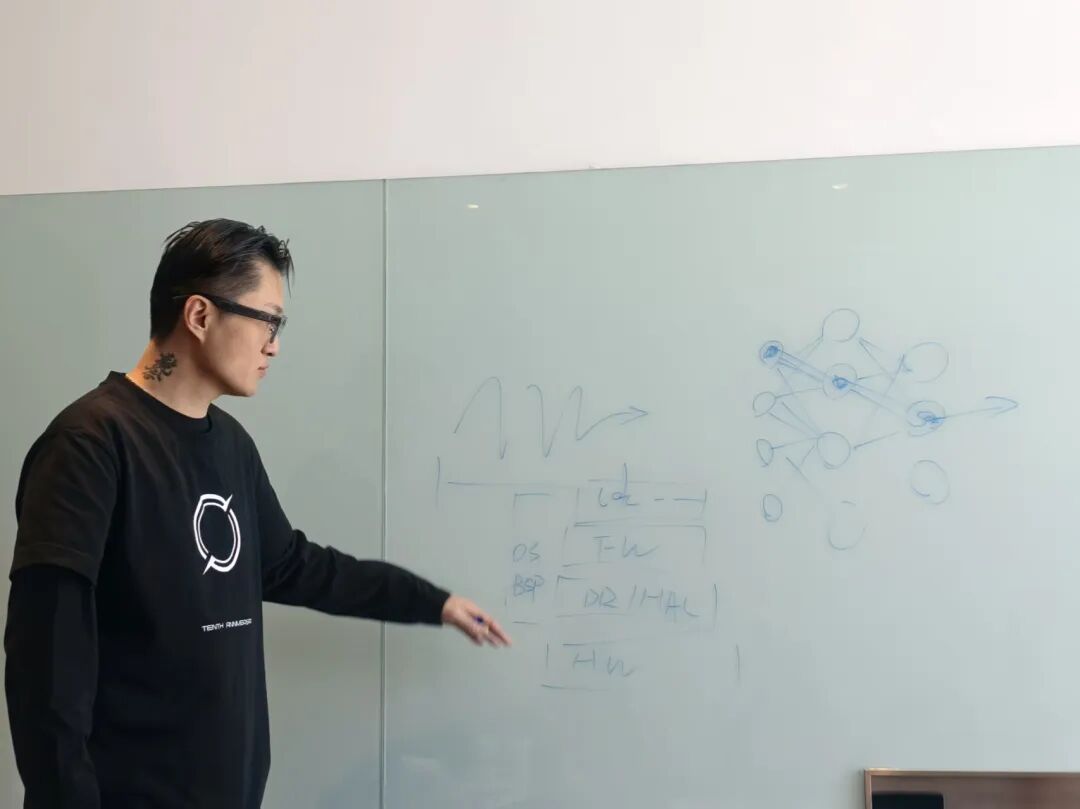
△ Hu Yilin, photographed by "Intelligent Emergence"
However, besides "paranoia," Hu Yilin now also has a sense of balance. Or, in his own words, he is a "contradictory being."
As the founder of a listed company, he has a very pragmatic side. To keep his "cognition and state at the age of 22" and stay close to Niu's users, he insists on riding a two - wheeled electric vehicle for travel, with an annual mileage of over 4000 kilometers.
Now, although AI is listed as an important strategy, Niu Technologies remains cautious. Hu Yilin said bluntly that they will not create a brand - new AI category, nor will they do things beyond the boundaries of travel. "Niu is a very restrained company. AI cannot create new products. It must be the existing business + AI," Hu Yilin said.
AIOS and the intelligent agent are just a starting point for their shift towards AI. Their advantage over other manufacturers lies in the 35 billion kilometers of user data accumulated over the past decade and the already complete scenarios and terminals.
"All in or nothing," this advertising slogan was tattooed on his arm when he was young and has never been erased.
The following is the transcript of the interview between "Intelligent Emergence" and Hu Yilin (slightly edited)
A two - wheeled electric vehicle manufacturer decides to transform towards AI
"Intelligent Emergence": What does AI mean to Niu Technologies?
Hu Yilin: It means a change in thinking mode. Financially, it means improved efficiency. From the perspective of product logic, it means being able to quickly test and adjust directions. We don't develop underlying large models but follow the open - source trend and make contributions and gains in the open - source ecosystem. Our moat is the vertical model trained with ten - year data and the AIOS that is deeply integrated with hardware based on this model.
The future competition is about technology. I think "intelligentization" is a false proposition because all intelligentization is based on technological progress. Technological progress is from 0 to 1 (such as lithium - ion batteries and 5G), and intelligentization is packaging technology into user - perceivable functions (such as BMS and OTA). What Niu Technologies needs to do is to make micro - innovations in each link. All these micro - innovations accumulate to bring about a change in the comprehensive experience that users can feel.
"Intelligent Emergence": At the level of the company's core business, how do you promote the combination of AI and the business?
Hu Yilin: More than a decade ago when we just started the business, someone asked me why I wanted to do Niu Technologies. I said, "I just want to restore what an electric vehicle should be like." At that time, we brought in lithium - ion batteries and intelligent central controls from the automotive and mobile phone industries, and were regarded as an outlier by traditional manufacturers.
Today, the industry is talking about intelligentization and piling up parameters. But I think the real inflection point is not "connectivity" but "AI." Today, I want to talk about Niu's vision for AI R & D, or how we understand the concept of "AI - enabled good vehicles."
We reject "PPT intelligence" and want AI to serve every trip. Niu's late - comer advantage lies in standing on the shoulders of mature automotive AI technologies and cracking the space for two - wheeled vehicles through customized adaptation.
At the 2026 Niu Technologies' new technology product launch event, through in - depth collaboration with top global technology partners such as Qualcomm, Hisilicon, Zebra Intelligence, HCT Intelligent Driving Continental, Hesai, and AutoNavi, we want to show a fundamental industrial shift: the competition is upgrading from a single hardware parameter comparison to a full - stack intelligent ecological competition centered on user experience, integrating chips, systems, algorithms, and connection capabilities. Niu's cooperation with its "technology circle of friends" aims to jointly promote the standardization of two - wheeled AI travel technology and product implementation, and for the first time, build a complete industry solution of "hardware + software + communication + ecosystem," providing a clear model for the industry to upgrade value through ecological collaboration.
"Intelligent Emergence": If you were to summarize Niu Technologies' intelligentization strategy over the past decade from your personal perspective, what would you say?
In the past decade, Niu Technologies hasn't invented anything completely new. What we did was to apply relatively mature technologies from industries such as the Internet of Things, automotive, and mobile phones to two - wheeled vehicles through strong product integration capabilities to provide users with the best experience. From the early lithium - electrification to the later intelligentization, we have been doing "technology transfer." Today, AI large models and L2 - level intelligent driving are very mature in the automotive field. It would be stupid not to use them now.
We have an internal "753 strategy": look forward 7 years, prepare and test for 5 years, and mass - produce and launch in 3 years. The millimeter - wave radar you see on the NXT2 and NX2 today cost over a thousand yuan in cars seven or eight years ago, and we started paying attention to it at that time; when preparing for installation, the price dropped to seven or eight hundred yuan, and by three years ago before mass production, the cost was only over 200 yuan. This is not a last - minute effort but a seed sown seven years ago.
Niu Technologies hopes to promote a safer, more convenient, and more interesting AI travel experience from today's "benchmark products" to "universal popularity" in the future, and contribute Chinese wisdom and strength to the global intelligentization process of inclusive travel.
"Intelligent Emergence": You once mentioned that you "burned 100 million TOKENs." Can you elaborate?
Hu Yilin: That data is more related to the company level, but it's common for me to use tens of millions of TOKENs in one night. As a listed company, we purchased 10 H100 graphics cards through formal channels for model training and testing a long time ago, and the investment in this area is in the tens of millions.
"Intelligent Emergence": What AI - related tests has Niu Technologies recently conducted?
Hu Yilin: For example, we conduct some "extreme" tests. For instance, we require a group consisting of front - end, back - end, Android, and iOS engineers not to write a single line of code by hand within two weeks, and not to manually modify any bugs. All coding, debugging, and modification must be completed by describing requirements to AI programming tools.
Meanwhile, they can freely switch and use any models (GLM, Tongyi, Claude, GPT, etc.). Our goal is to figure out the boundaries of AI and find the most efficient models and workflows. Only when a small team verifies that a certain process has 70% feasibility will we promote it to a larger team.
"Intelligent Emergence": How exactly is the AI transformation being promoted?
Hu Yilin: I have the API keys of almost all mainstream large models at home and abroad. If I had a product idea before, the process would be: I draw a framework diagram, make a mock - up, and then hand it over to the team for design, development, and database connection. But since last May or June, this process has been completely subverted. More often, I use AI tools to quickly implement it myself.
Take the production of an electronic invitation for a press conference as an example. I spent six or seven hours developing a system with AI - assisted coding (Vibe coding) myself. I input the names of core partners in the technology circle, and the system automatically generated invitations with names and QR codes. After the other party scans the QR code and fills in the information, the data will be automatically synchronized to my Feishu multi - dimensional table.
Throughout the process, I only spent about 10 minutes writing prompts to tell the AI what style I wanted and provided two material pictures. The AI Agent would automatically complete the front - end and back - end code writing, and then I let another AI audit this code. Finally, I just need to test it, and a usable tool is born.
"Intelligent Emergence": Then how do you decide what things should be replaced by AI and what should still be handed over to humans?
Hu Yilin: For me, the underlying logic of using AI is that it must meet both the conditions of "important" and "complex." The invitation list for the press conference is very important and involves cross - departmental collaboration, program development, and data verification. The process is cumbersome and error - prone. Using AI to do it is the fastest, most accurate, and most controllable way.
In essence, this is to solve an "important and complex" problem and minimize communication costs, human coordination costs, and error rates. I think human power should handle more delicate and judgment - required things.
"Intelligent Emergence": What do you think a two - wheeled electric vehicle in the AI era might look like?
Hu Yilin: Maybe it can go to charge by itself when the owner is not around. But we should always remember that AI is to liberate people. A vehicle only accounts for less than 10% of a person's daily life. We should not try to solve problems on the vehicle that users can solve better through other means.
Niu is a very restrained company. Moreover, the development path and speed of AI have exceeded the imagination of 80 - 90% of people, including me.
But I think the overall trend of AI in China is better than the global market because we have a large amount of content and open - source products. In the future, the system layer, code layer, and logic layer will all develop very fast. All core teams should pay attention to this early enough and be brave enough to make mistakes.
AI makes the data accumulated in the past decade useful
"Intelligent Emergence": You mentioned that Niu has accumulated a large amount of data in the past decade, but you didn't know how to use it well before the emergence of large models. Why? Is it mainly because it was "too expensive to use"?
Hu Yilin: Yes, mainly because the computing power cost was too high. In the past, when doing data analysis, each piece of data needed to be calculated separately, and complex algorithm formulas had to be written to get the results. Now, with the Transformer architecture, we can directly throw roughly classified data to the model and let it discover the potential associations and logics between the data by itself.
Let me give an example of a battery. In the early years, we used the best battery cells, such as Sony and Sanyo's 18650. The single - cell cycle life measured in the laboratory was 800 - 1000 times, but after making it into a battery pack, it might only be 600 times. Assuming users charge every two days, the theoretical lifespan is only one and a half years. This made us very anxious, and we desperately wanted to find battery cells with a cycle life of 2000 times.
But when we obtained real - user data, we found that it was completely different. In the laboratory, it was "fully charged and fully discharged," but users might unplug the charger when the battery was only charged to 95% when they got home, or they might charge when there was still 50% of the battery left. This "shallow charging and shallow discharging" usage habit makes the actual cycle times of the battery far exceed the laboratory data, and a battery can be used for seven or eight years.
This conclusion cannot be obtained through user interviews but is a law discovered through real data. This, in turn, guides our product definition. We don't need to blindly pursue battery cells with extremely high cycles but can launch smaller and lighter battery packs according to users' real travel distances. The significance of AI is that it increases the efficiency of discovering the truth from data by more than ten times.
"Intelligent Emergence": How does the data accumulated in the past decade specifically help with today's AI and AIOS development?
Hu Yilin: The most crucial thing is that we know what users' most frequent needs are. For electric two - wheeled vehicles, the most frequent scenario is navigation. However, users' navigation needs are different from those of cars. For example, two - wheeled vehicles can ride on the curb to take a shortcut, but car navigation won't plan such a route. When a large number of users pass through an unrecorded small path, our system can discover this "hidden path" and feed it back to the map partner to ultimately optimize the routes for all users.
Therefore, based on navigation, we have done three core things in combination with AI:
1. AI Navigation: Combining the computing power of the cloud and the vehicle, on the basis of the original map, integrating the vehicle's real - time battery level and the user's riding habits for dynamic planning, with the goal of allowing users to "ride slower but arrive faster." For example, if you only have 15% of the battery left, the system will calculate and suggest an economic speed that can ensure a safe arrival at the destination while avoiding red lights and congestion.
2. AI FOC (Motor Control): Establish a personalized power curve profile for each user. Some people like the rapid response of "immediate power," while others like a gentle and linear experience. The AI will learn the user's control habits and automatically match and fine - tune the motor's output curve to make the vehicle more in line with the user's personal "feeling."
3. AI BMS (Battery Management): Battery management is the biggest black box because battery manufacturers don't know the state of each battery cell in a real and complex environment. But through