Kimi, the IPO is coming.
Following Zhipu and MiniMax, the secondary market is about to welcome the third big model stock.
On March 26, according to Bloomberg, Moonshot Al (hereinafter referred to as: Kimi), a provider of general multi-modal large model R & D and application services, is in the early stage of considering an initial public offering in Hong Kong and has contacted China International Capital Corporation and Goldman Sachs regarding potential listing matters.
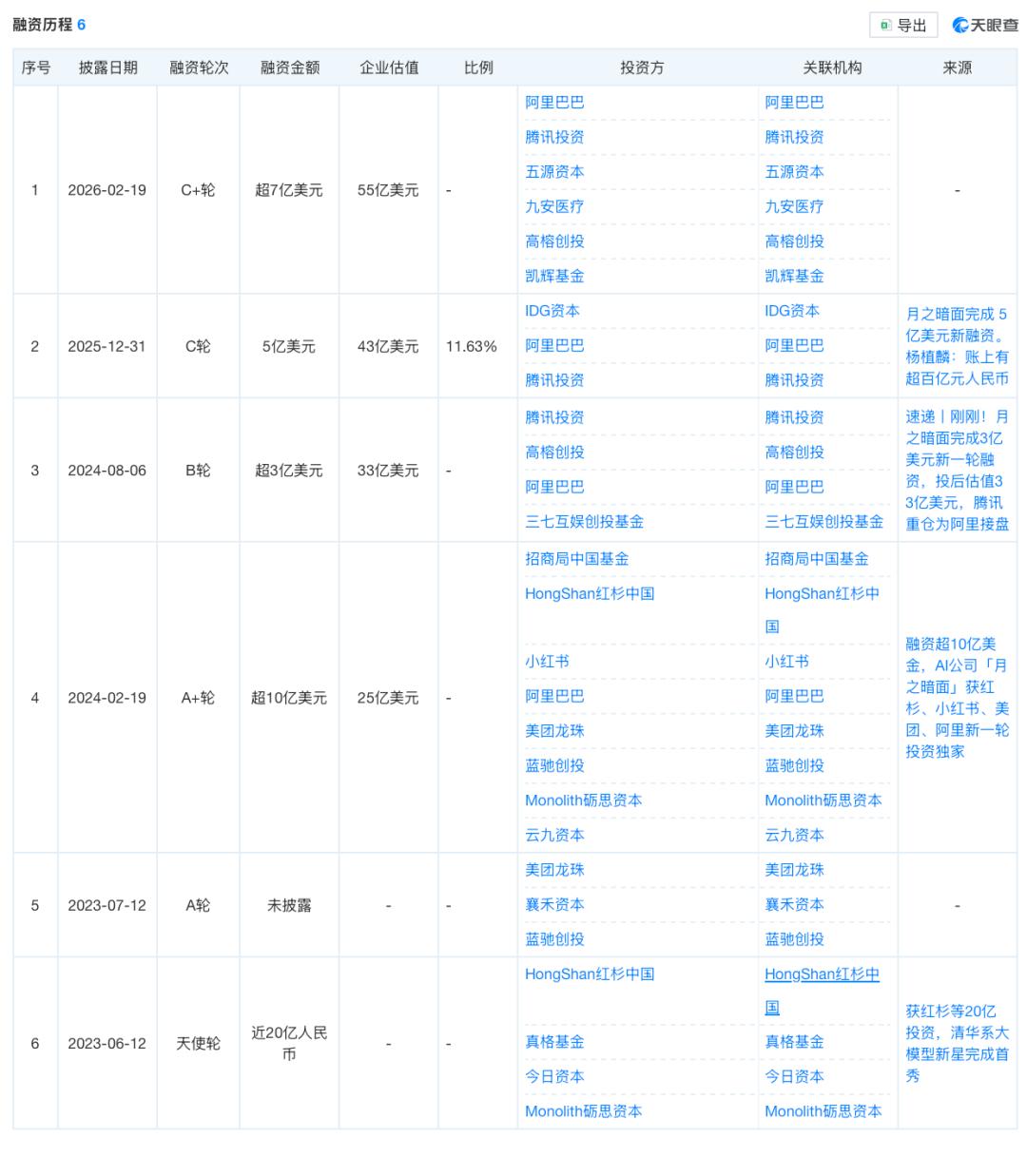
It is worth mentioning that Kimi was just reported to have completed a $500 million Series C financing at the end of 2025. Then, in February this year, it completed a financing of over $700 million, and recently, it is conducting a new round of $1 billion financing.
In less than three months, Kimi has conducted three rounds of financing intensively, and its valuation has quadrupled: $4.3 billion, $10 billion, and $18 billion (approximately 124.3 billion yuan). This not only enables it to become a "decacorn" (valued at over $10 billion) at the fastest speed but also sets a record for the most consecutive financings of domestic large model companies, with the amount exceeding the IPO fundraising of large model companies in the same period.
The pre - investment valuation of 124.3 billion yuan has also exceeded the market values of Zhipu and MiniMax on their listing days. Zhipu's opening market value was HK$52.827 billion (approximately 46.7 billion yuan), and MiniMax's opening market value was HK$71.902 billion (approximately 63.5 billion yuan).
As of today's close, Zhipu's total market value is HK$305 billion, and MiniMax's total market value is HK$309.2 billion. In just less than three months, the market values of these two companies have increased by 3 - 5 times. The enthusiastic sentiment in the secondary market may also be one of the major reasons for Kimi to accelerate its listing process.
Analysts believe that advancing financing and IPO simultaneously means that Kimi's current capital actions are not just about simply replenishing funds but also about preparing for the next stage of marketization and large - scale expansion.
Entrepreneurship by Tsinghua elites, investments from Meituan, Alibaba, and Tencent, latest valuation reaches $18 billion
Kimi is led by Professor Yang Zhilin from the Institute for Interdisciplinary Information Sciences at Tsinghua University and a young scientist of Beijing Academy of Artificial Intelligence. He ranks among the top 10 Chinese scholars in the NLP field in terms of citations in the past five years and ranks first among scholars under 40. The two co - founders, Zhou Xinyu and Wu Yuxin, also graduated from Tsinghua University. The team has also successfully attracted overseas talents from leading global technology companies such as Google, Meta, and Amazon.
In February 2023, when the large model craze was just emerging, there were rumors in the market that "Yang Zhilin was highly expected and received incubation - style support from the top domestic VCs."
Two months later, Beijing Moonshot Al Technology Co., Ltd. was officially registered. Initially, the overseas talents from leading global technology companies such as Google, Meta, and Amazon gathered around the Tsinghua - affiliated founding team.
Just two months after its establishment, Kimi was reported to have completed its first - round financing. In October 2023, the company launched its first large model, moonshot, which supports an input of 200,000 Chinese characters, and an intelligent assistant product, Kimi Chat. Yang Zhilin confirmed at this communication meeting that the company received nearly 2 billion yuan in investment from well - known institutions such as Sequoia Capital China, Capital Today, and Lishi Capital.
In 2024, Zhipu completed four rounds of financing intensively, while MiniMax and Kimi both completed two rounds of financing, showing comparable performance. The similarity is that through the two rounds of financing in 2024, Kimi attracted investments from Meituan Longzhu, Alibaba, and Tencent, slightly later than the other two companies.
Zhipu, MiniMax, and Kimi are the large model companies jointly invested by Tencent, Alibaba, and Meituan that are publicly available for inquiry so far.
In August 2024, when it was reported to have completed a new round of $300 million financing, its post - investment valuation was $3.3 billion. In 2025, Kimi only completed a $500 million Series C financing at the end of the year, and its valuation slightly increased to $4.3 billion. At that time, Yang Zhilin issued an internal letter stating that the company had a cash reserve of over 10 billion yuan.
This scale is comparable to that of Zhipu and MiniMax after their IPOs. As of June 2025, Zhipu had 2.55 billion yuan in cash, and as of September 2025, MiniMax had 7.35 billion yuan in cash. Including the net proceeds from the IPO, Zhipu raised approximately HK$4.173 billion, and MiniMax raised approximately HK$5.293 billion. The cumulative amount of the former is approximately 6.2 billion yuan, and that of the latter is approximately 12 billion yuan.
At the beginning of 2026, Kimi's financing and valuation have been increasing with each round, like a rocket taking off. During the Spring Festival, the company completed a financing of over $700 million, and its valuation reached $10 billion. The ongoing $1 billion financing in March this year has pushed its pre - investment valuation up to $18 billion.
Source: Tianyancha
Currently, in addition to Tencent, Alibaba, and Meituan, Kimi has already attracted well - known investors such as Sequoia Capital China, Capital Today, Lishi Capital, BlueRun Ventures, Xianghe Capital, Yunjiu Capital, Xiaohongshu, China Merchants China Investment Management, 37 Interactive Entertainment Venture Capital Fund, Gaorong Venture Capital, IDG Capital, Cathay Capital, Jiuan Medical, and Wuyuan Capital.
According to the information on the Tianyancha App, Kimi has not yet announced the shareholding ratios of its investors. Currently, the founder and CEO, Yang Zhilin, holds 78.968% of the shares and has absolute control; Zhou Xinyu holds 10%, and Wu Yuxin holds 5.957%. In addition, Yang Zhilin's senior fellow - student, Zhang Yutao, holds 5%, and the remaining 0.075% of the shares are held by Wang Zhen.
Booming again under the "lobster - raising" craze, orders soar 80 times, and 20 - day revenue exceeds that of the whole year of 2025
Behind the intensive financing and soaring valuation, there is a close relationship with Kimi's own strength.
In October 2023, Yang Zhilin mentioned at this communication meeting that the current situation of the generally low input length of large models has greatly restricted the implementation of its technology. For example, in the currently popular virtual character scenarios, due to the lack of long - text capabilities, virtual characters easily forget important information. In the Character AI community, users often complain that "because the character forgets its identity after multiple rounds of dialogue, they have to start a new dialogue," and other similar problems.
Kimi also noticed the "application difficulties caused by the limited input length of large models." According to Yang Zhilin, in response to this, the company has achieved "the longest input length in the world, supporting an ultra - long input of 200,000 characters, and its large - model products have entered the long - text era."
While making a stunning debut with its technology, Yang Zhilin also released the intelligent assistant product Kimi Chat (the early name of Kimi). In March 2024, Kimi supported the expansion of the lossless context length from 200,000 characters to 2 million characters and launched an internal test. Due to the surge in traffic, the system crashed, and it was dealt with through five emergency expansions. Its ranking on the free list jumped from 436th in January 2024 to 11th in March, driving up the "Kimi concept stocks."
It should be noted that in 2025, with the popularity of DeepSeek, the rise of Doubao, and the strong promotion of products like Yuanbao, to some extent, users' attention was diverted. In December 2025, Kimi's weekly active user count dropped to 4.5 million, and its ranking fell to 7th in the industry.
However, Kimi made a strong comeback with its excellent strength. At the end of January this year, Kimi officially released its new - generation open - source model, K2.5. As Kimi's most intelligent model at present, K2.5 has achieved the best results among global open - source models in multiple Agent (intelligent agent) evaluations such as HLE (Human's Last Exam), BrowseComp (Web retrieval - based large - model benchmark test), and DeepSearchQA (High - difficulty benchmark test).
Kimi K2.5 is an all - around model designed based on a native multi - modal architecture, supporting visual and text input, and integrating all capabilities such as visual understanding and reasoning, programming, and Agent into one model. Yang Zhilin said, "We have reconstructed the infrastructure of reinforcement learning and specifically optimized the training algorithm to ensure it can achieve extreme efficiency and performance."
Chamath Palihapitiya, a well - known venture capitalist and entrepreneur in Silicon Valley, regards this as the "Kimi K2.5 moment" - the first time an open - source model has truly shaken the closed - source system built by OpenAI, Anthropic, and Google in terms of comprehensive capabilities. Looking back at history, technological inflection points are often the starting points of business explosions.
Users also chose to return. According to data from global payment giant Stripe, the number of payment orders of Kimi's individual subscription users increased by 8280% month - on - month in January and another 123.8% in February. On its global payment list, Kimi's ranking soared from outside the top 100 to 9th in just two months. In the domestic market, the website traffic of Kimi.com also reached a historical peak in February this year.
Meanwhile, in the current craze of the open - source AI intelligent agent OpenClaw (lobster), it unexpectedly became a boost for Kimi to boom again. At the beginning of February this year, OpenClaw announced that it would set Kimi K2.5 as its official main model, directly leading to an explosive growth of Kimi.
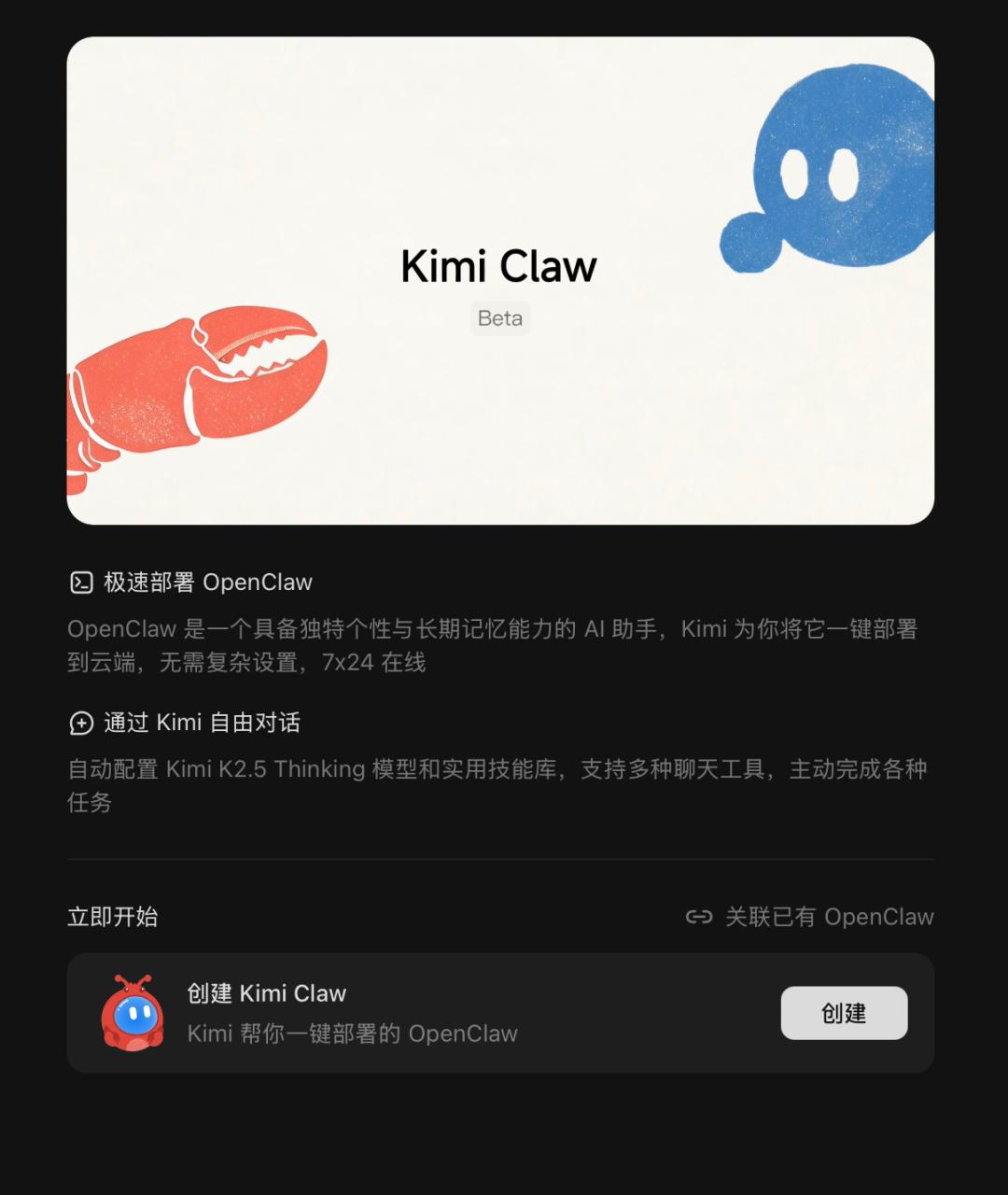
Moreover, Kimi launched the cloud - based OpenClaw product Kimi Claw as early as February 18, which supports direct deployment within Kimi. Its main features include low usage costs and technical thresholds. It is not an independent new product but a cloud - hosted service based on the open - source framework OpenClaw, mainly simplifying the deployment process.
Source: Screenshot from the official website
Since the end of January, affected by the popularity of both the Kimi K2.5 model and Kimi Claw, Kimi was reported to have accumulated revenue in the past 20 days exceeding that of the whole year of 2025.
Regarding the development goal for 2026, Yang Zhilin also mentioned in an open letter at the end of 2025 that "the revenue scale will achieve an order - of - magnitude growth. In terms of products and commercialization, the focus will be on Agent. Instead of aiming for an absolute number of users, the goal is to pursue the upper limit of intelligence and create greater productivity value." Whether it can be achieved remains to be tested by time.
This article is from the WeChat official account "Lieyun Selection", author: Wang Fei, published by 36Kr with authorization.