The end of new energy vehicles is MPV.
It is said that Chinese automobile brands have achieved a overtaking on the curve by leveraging the new energy vehicle market. However, after the "overtaking", what awaits the players is not a peaceful situation, but more intense involution and fiercer competition.
Recall that since the new - force brands sprouted like mushrooms after rain in 2016, in just a few years, close - quarter battles have been staged in various market segments one after another. From entry - level models to the mid - to high - end market, from sedans to SUVs, every segment is crowded with competitors. Subsequently, price wars, technology wars, and configuration wars have been escalating, pushing the competition in the auto market to new heights.
As part of the automotive industry, especially after witnessing this transformation, we can't help but wonder about the end - game of this competition. Where is the focus of the competition in the new energy vehicle market?
Take the recent battle in a specific market segment as an example. In 2025, the large six - seat SUVs experienced a wild growth. Not only did their sales exceed one million units, but they also grabbed a significant share from other market segments. With the sudden rise of large six - seat SUVs in 2025, a new question has started to spread in the industry: Could the end of the new energy vehicle competition be MPVs?
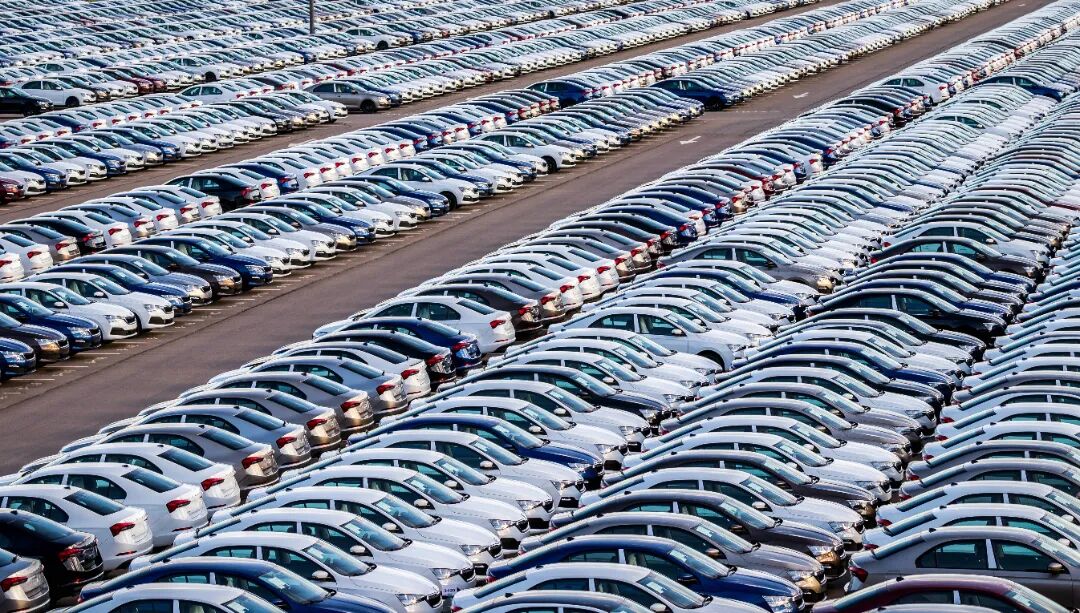
Looking back at the development of new energy vehicles, the competition path is both cruel and clear. Almost every market segment has gone through a cycle of opening up a blue ocean, being swarmed by numerous players, and then engaging in a red - ocean battle. From the initial A00 - class micro - electric vehicles, to A0 - class small electric vehicles, then to A - class and B - class cars, and the large six - seat SUVs that became popular in 2025 as described above...
The competition logic in each segment is highly similar: The first entrants seize the market dividends. Then, leading automakers follow suit and make strategic layouts. The prices drop, configurations are upgraded, and technologies are iterated. Eventually, the blue ocean is completely turned into a red ocean, forcing small and medium - sized players to exit. Then, a brand - new market segment is opened up as the main battlefield for a certain stage, and the battle continues.
As the "big guys" in the passenger car market, MPVs represent the "end" in terms of passenger car size. Therefore, many people believe that the end of the new energy vehicle competition will be a dazzling display of various MPVs in the future auto market. So, will it be the case?
Fierce Competition Across All Market Segments
In terms of vehicle size, the competition in the new energy vehicle market started with the most entry - level A00 - class micro - electric vehicles, which was also the first segment where Chinese brands achieved a breakthrough.
Years ago, Hongguang MINIEV was the first to enter the market. With its affordable price and flexible body, it opened up the blue - ocean market for micro - electric vehicles. Positioned as a "commuting artifact", it quickly became popular and has maintained the top sales position in the micro - car segment for years.
After seeing the market dividends, automakers such as Changan, Chery, and Geely entered the market one after another, launching multiple micro - electric vehicle models. For a while, the A00 - class market was filled with players, and the original blue ocean quickly turned into a red ocean. The prices of some models dropped to the 30,000 - yuan range, squeezing the profit margins to the extreme. Small and medium - sized automakers were gradually eliminated, and the market concentration continued to increase.
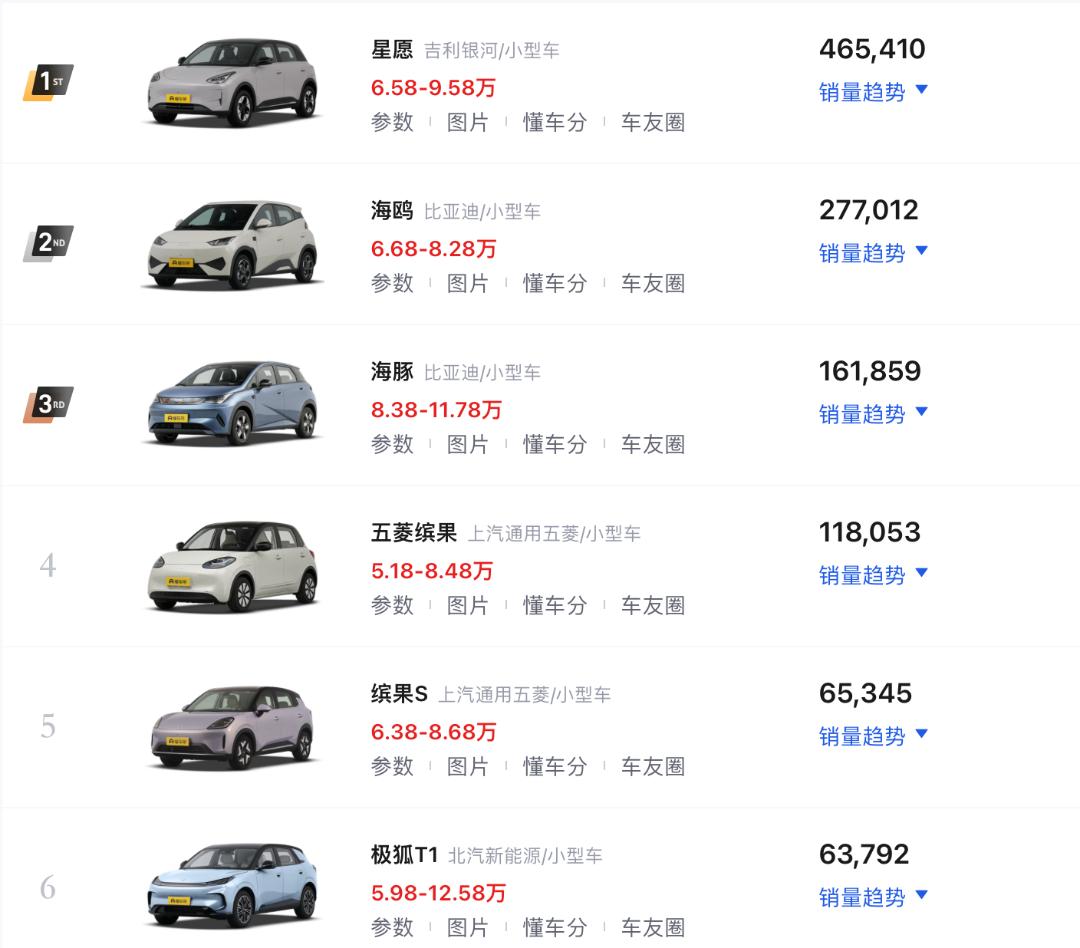
Before the battle in the A00 - class market ended, the competition in the A0 - class small electric vehicle market had already begun. BYD took the lead and launched two popular models, Dolphin and Seagull. Among them, Seagull's sales exceeded 450,000 units in 2024, a year - on - year increase of 89.6%, winning the annual sales championship in the small - car segment. Dolphin's cumulative sales exceeded one million units in four years after its launch, becoming the fastest A0 - class sedan in China to reach one - million - unit sales. In 2025, its sales reached 160,500 units, a slight year - on - year increase of 0.01%.
Following that, Geely Xingyuan and Wuling Bingo entered the market one after another, forming a tripartite competition pattern. In 2025, Geely Xingyuan led the pure - electric vehicle sales list with 459,500 units, further intensifying the involution in the A0 - class market. The vehicle configurations were continuously upgraded, transforming from basic commuting to high - quality and intelligent models, completely replacing the market position of traditional fuel - powered small cars.
If the A00 - class/A0 - class is the stepping - stone to the new energy market, then the A - class family sedan is the main battlefield that determines the survival of automakers.
As is well - known, there has always been a saying in the industry that "whoever wins the A - class sedan market wins the world". This market segment has always had the widest audience and the strongest demand, and it was also the advantageous area for joint - venture cars. However, with the advancement of the new energy transformation, models such as BYD Qin, XPeng M03, AION S, and Seal 06 have all made efforts. With lower usage costs, more abundant configurations, and smarter experiences, they have gradually squeezed the market space of joint - venture cars.
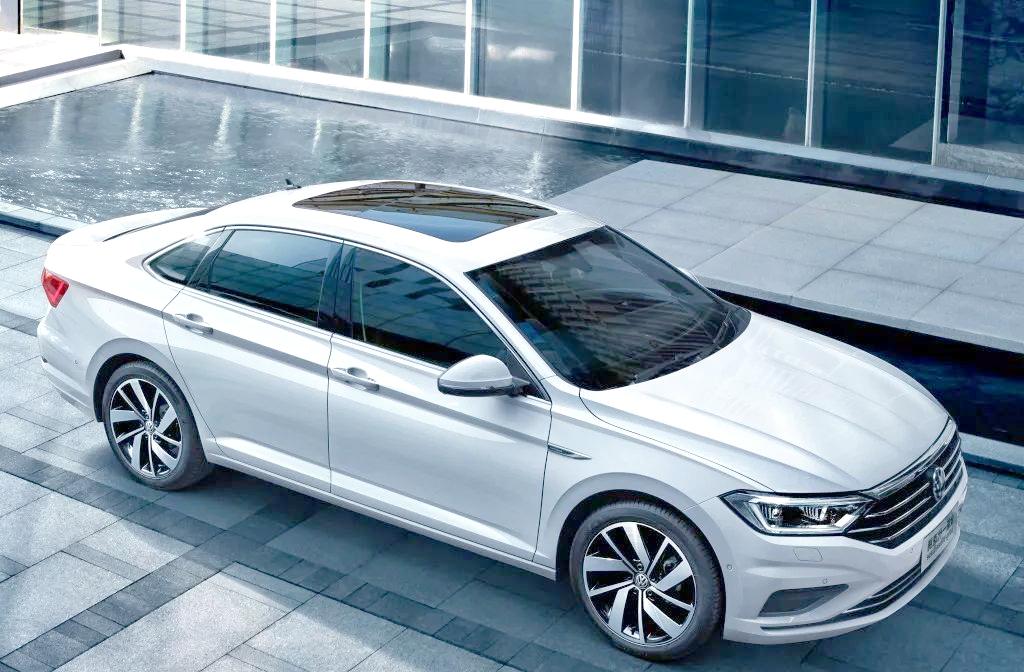
Today, the market share of A - class new energy sedans continues to rise. Chinese brands have completely taken the leading position from joint - venture cars, forming a competition pattern dominated by Chinese brands. Price wars, technology wars, and service wars have all been upgraded. Each model iteration is accompanied by an improvement in configuration and an optimization of price. The degree of involution is unprecedented in the industry.
When the competition in the A - class market reaches a white - hot stage, the mid - to large - sized sedan and large - sized sedan markets have become the must - fight areas for automakers to target the high - end market.
Models such as BYD Han EV, Xiaomi SU7, Galaxy Xingyao 8 PHEV, and XPeng P7+ have successively entered the market, forming a siege on Tesla Model 3. Data from 2025 shows that Xiaomi SU7 topped the list of pure - electric sedans priced over 200,000 yuan with sales of 258,200 units, surpassing Tesla Model 3. The competitiveness of Chinese brands in the high - end sedan market has become prominent. While breaking Tesla's monopoly, Chinese new energy vehicles have also successfully transformed from cost - effectiveness to high - quality.
In 2025, large six - seat SUVs became a new trend in the new energy market and an important option on the car - buying list of family users. From 100,000 - yuan - level family models to 500,000 - yuan - level high - end models, the price range is fully covered. Popular models such as Geely Galaxy M9, NIO ES8, and Denza N9 have emerged one after another. Among them, NIO ES8's sales reached 46,700 units in 2025, a year - on - year increase of 408.6%, topping the list of pure - electric vehicles priced over 300,000 yuan.
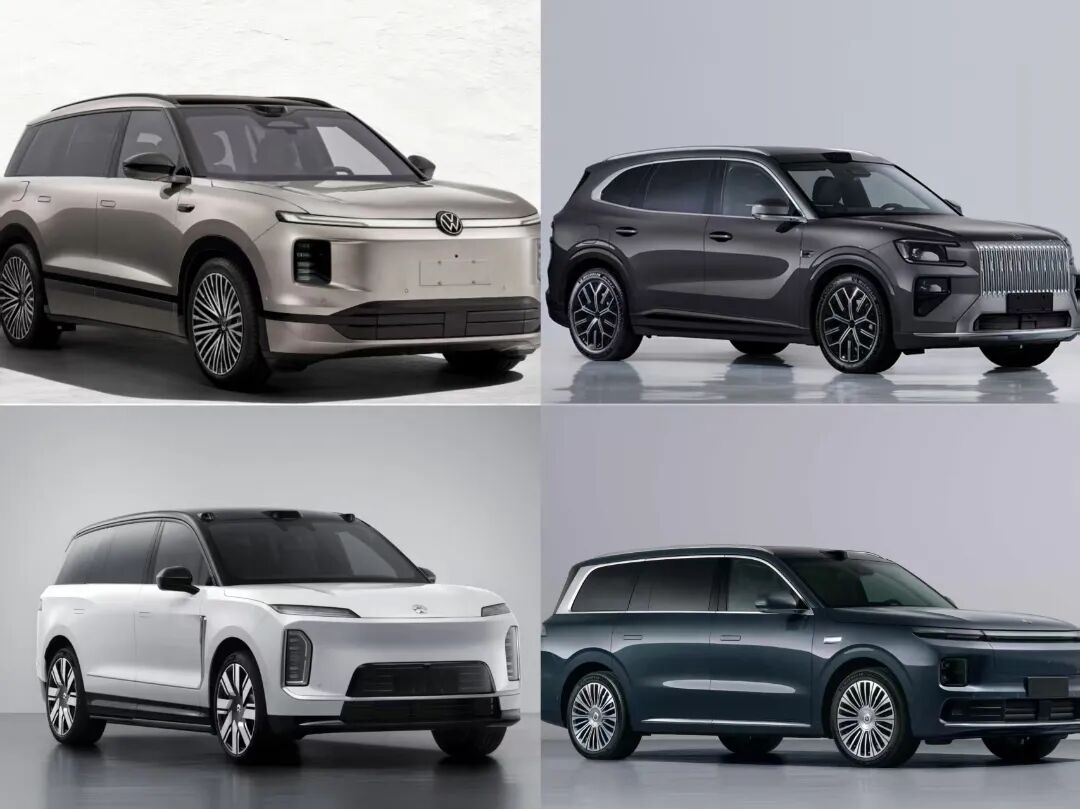
With their flexible space layout and comfortable riding experience, large six - seat SUVs meet both family travel and high - end needs. They have once grabbed a part of the MPV market share and become one of the preferred models for family users.
However, even so, MPVs, as a market with a larger size and a more extreme positioning, still have irreplaceable advantages. With the further development of the market, the competition potential of MPVs is gradually being released, giving more practical basis to the speculation that "the end of new energy vehicles is MPVs". After all, when all markets tend to be saturated, MPVs may be the ultimate battlefield of competition.
The End - Game of New Energy Vehicle Competition
So, the question is, will the end of the new energy vehicle competition really be MPVs?
This speculation is not groundless. The current MPV market has long bid farewell to the era of utility vehicles and entered a new cycle of value competition centered on technology, brand, and service. The degree of involution is no less than that in the sedan and SUV segments. From the younger and sportier exterior designs, breaking the traditional business sense of MPVs, to the more luxurious and refined interiors, with aviation seats, panoramic sunroofs, and rear - seat entertainment screens becoming standard in mid - to high - end MPVs; from the popularization of sliding doors to the comprehensive upgrade of intelligence, functions such as voice control and autonomous driving assistance are gradually being implemented. MPVs are getting rid of the label of "exclusively for business use" and transforming towards family - oriented and diversified models.
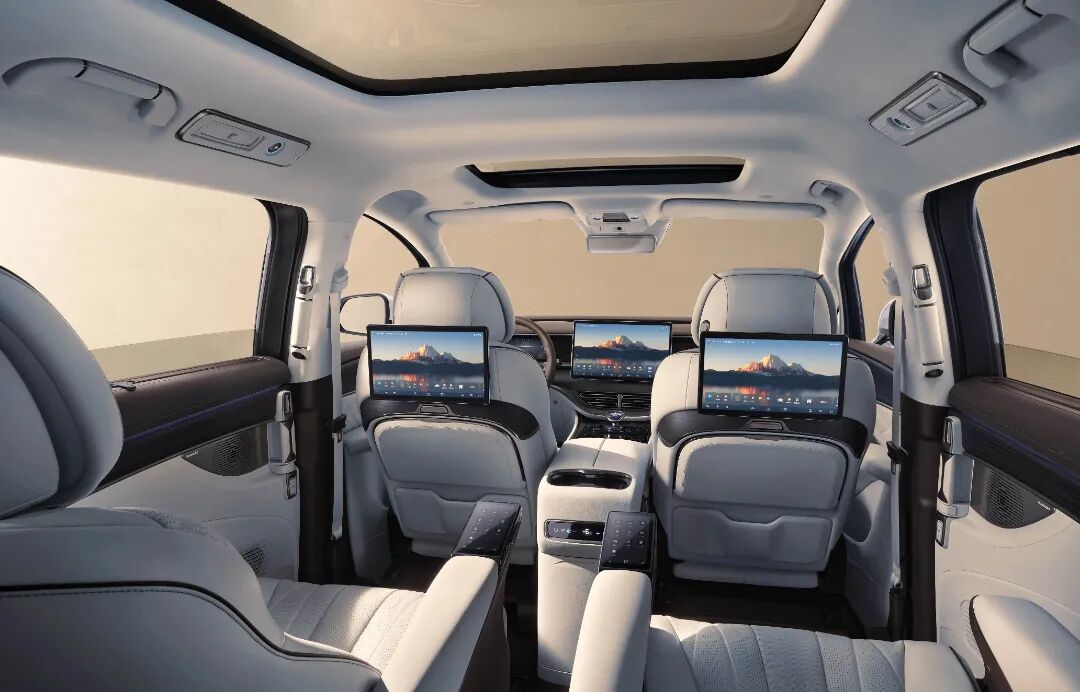
More importantly, the change in the user structure is injecting new vitality into MPVs. In the past, MPV users were mainly business people, but now, young families have become the core consumer group. The user profiles of many MPV models show that the proportion of post - 90s users is increasing, and the proportion of individual user deliveries is also rising. These young users value both space and comfort, and also pursue intelligence and personalization. The product features of MPVs happen to meet these needs.
At the same time, technological breakthroughs are the key driving force for MPVs to become the ultimate battlefield.
In December 2025, the Ministry of Industry and Information Technology officially issued the first batch of access permits for L3 - level autonomous driving vehicles in China, indicating that 2026 will see a wave of mass - production of L3 - level vehicles. Many automakers have planned to launch flagship MPVs equipped with L3 - level autonomous driving hardware to further strengthen their product advantages. In addition, MPVs have a natural space advantage, and their riding comfort far exceeds that of sedans and SUVs. Once L3 - level autonomous driving is fully implemented, MPVs will further release the potential of mobile space.
It is also worth noting that in 2026, multiple new MPV models have been intensively unveiled, covering the price range from 100,000 yuan to 500,000 yuan. Domestic, joint - venture, and new - force automakers have all entered the market, and a comprehensive - dimension game has begun. As the involution deepens, the supply in the MPV market will become more diversified and high - end. The penetration of new energy technology has also solved the pain points of high fuel consumption and low intelligence of traditional fuel - powered MPVs, further magnifying the advantages of MPVs.
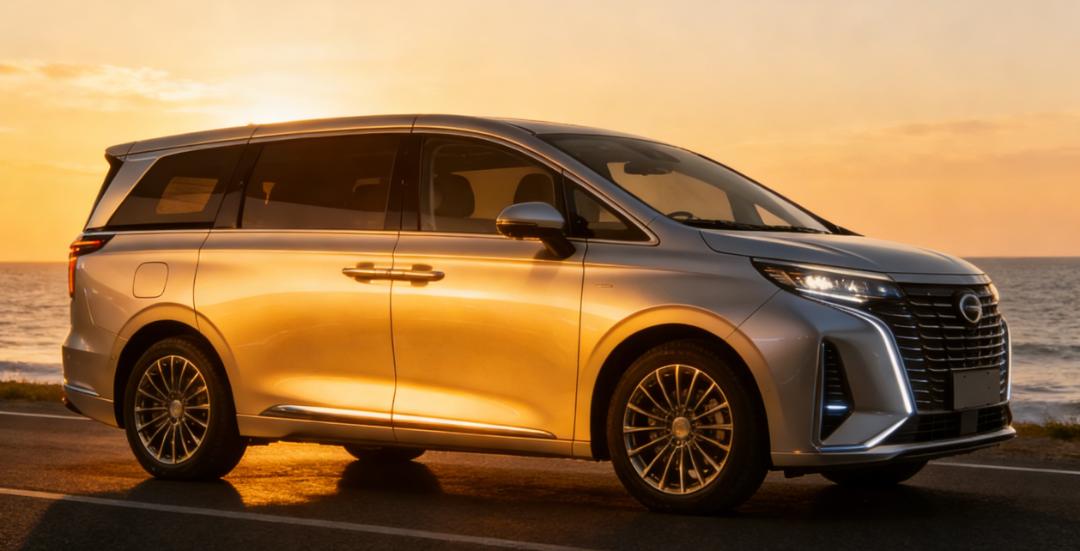
From A00 - class micro - cars to MPVs, the involution of Chinese new energy vehicles is essentially an iterative battle to meet the higher needs of users. Now, when all segments of sedans and SUVs are approaching saturation and the competition has reached a bottleneck, MPVs, which are larger in size and have more potential than these segments, are starting to attract the industry's attention.
Some people speculate that with the continuous evolution of MPV models, combined with the implementation of technology and the upgrading of consumer demand, this market segment, which was once mainly for business use, may become the ultimate battlefield of new energy vehicle competition and the next strategic high - ground for all automakers to compete for. Currently, this competition from small - sized to large - sized vehicles seems to be moving in the direction of MPVs.
Maybe it won't be long before we see MPVs become the end - game of the involution in the new energy vehicle market. Even if it's not the end - game, it will become an important battlefield for the new round of competition.
This article is from the WeChat official account "Automobile Commune" (ID: iAUTO2010), author: Li Sijia. It is published by 36Kr with authorization.