In 2026, the AI company that collapsed the fastest has emerged.
In 2026, the AI startup that collapsed the fastest has emerged.
The protagonist of this story is an emerging AI interactive game platform called "Mujian". At the beginning of March, the company officially announced the completion of two rounds of financing in the tens of millions of US dollars.
Like most AI startup projects, they have a founder with an impressive resume, and the investors are all well - known figures in the gaming industry, such as the vice - president of NetEase and the former CEO of Mobile Premier League, etc.
As usual, after the release of the financing news, there will inevitably be a series of reports, promotions, and hype to capitalize on the momentum for the next round of financing. These are all normal operations in the investment and financing circle.
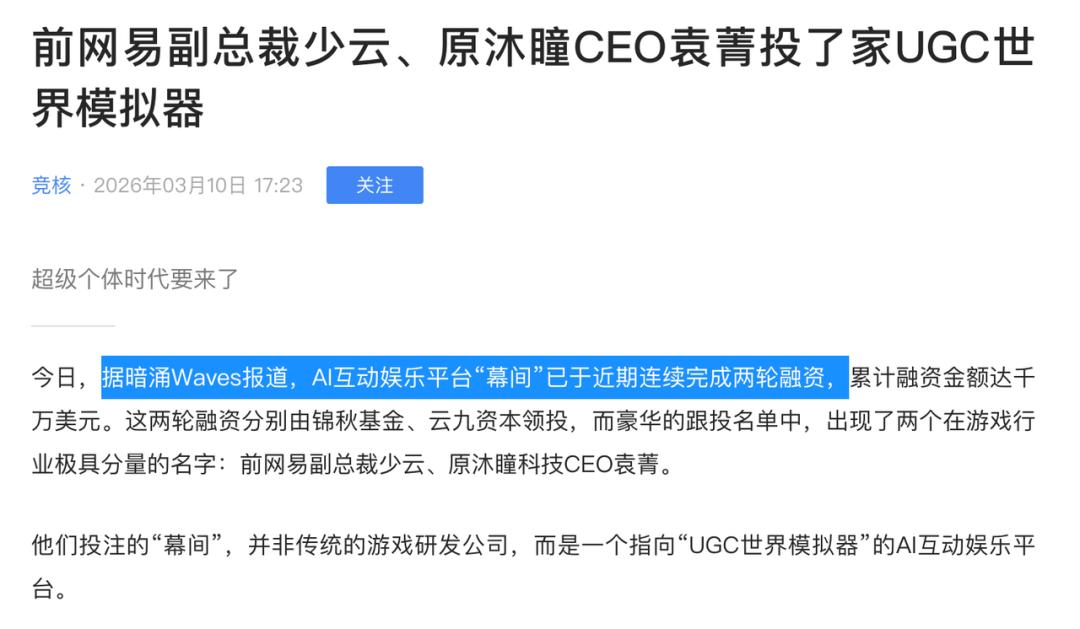
▲ Media reports on the news that "Mujian" has received financing
However, what no one expected was that just one week after the official announcement of the financing, this promising startup star experienced a 180 - degree turn.
Starting around the 16th, a large number of posts attacking "Mujian" and calling on people to avoid it appeared on the Xiaohongshu platform. The posters were the platform's creators and users.
They questioned "Mujian" about issues such as plagiarism, exploiting creators for free, and potential security risks on the platform. Under the huge public opinion storm, a large number of players and creators followed the trend and left.
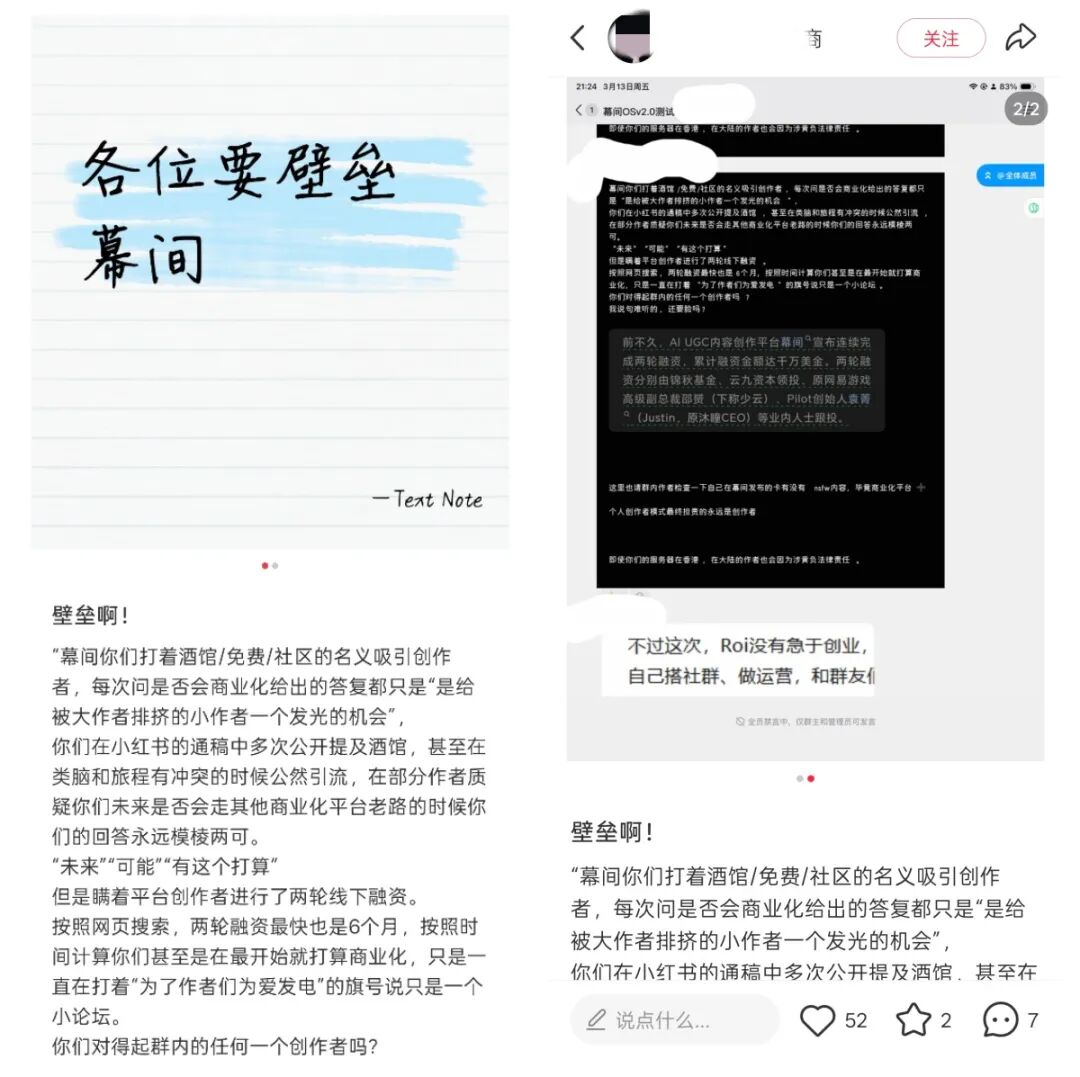
▲ Players on Xiaohongshu call on people to avoid "Mujian"
Out of curiosity, we began to explore what exactly caused such a huge rift between a startup platform and its players?
The result really made us silent because the mistakes made by "Mujian" are quite common in the entire AI startup wave. Even large companies and giants are involved, and "Mujian" is just a small wave in the rough sea.
Financing, Deception, and Backstabbing
To understand why players have such strong resistance to "Mujian", we have to start with the platform's positioning.
In the official statement, this is an AI interactive content community platform. Simply put, users can create games on this platform with the help of AI tools and then share them with other users for experience.
Its core gameplay originated from an overseas community called SillyTavern (commonly known as the "Tavern" in China). It is a completely open - source front - end tool. Users can create their favorite character roles with the help of SillyTavern (Tavern), connect to large models to bring these characters to life, and then have chat interactions with them.
In essence, this is a game play similar to virtual lovers, role - playing, or interactive storytelling.
Moreover, because SillyTavern (Tavern) is completely open - source and supports private - domain terminal deployment, it has very high playability and a relatively large content scale. Players share and contribute out of love on this platform, which has formed a very stable and large player group.
There are also quite a few such players in China, but they face several problems.
First of all, playing SillyTavern (Tavern) requires a certain technical threshold. The official itself emphasizes that it is for power users. As a result, only a small number of players in China can play SillyTavern (Tavern).
Secondly, although there are many alternative platforms for SillyTavern in China, due to issues such as content scale, the survival cycle of these platforms is often short. For those with a long survival cycle, either the price is not cheap, or the content scale is restricted.
So, for the SillyTavern group in China, they have always lacked a stable base, and "Mujian" targeted this problem.
When "Mujian" was first promoted in China, it mainly used the label of "Tavern - like". Even in the early days, to gather players, the name of the community they established was "Tavern Learning Group".
At the same time, in order to encourage creators to produce games and stabilize the player group, "Mujian"'s promotion strategy has always been community - oriented and a free platform.
These two points also laid the hidden danger for the later confrontation between players and "Mujian".
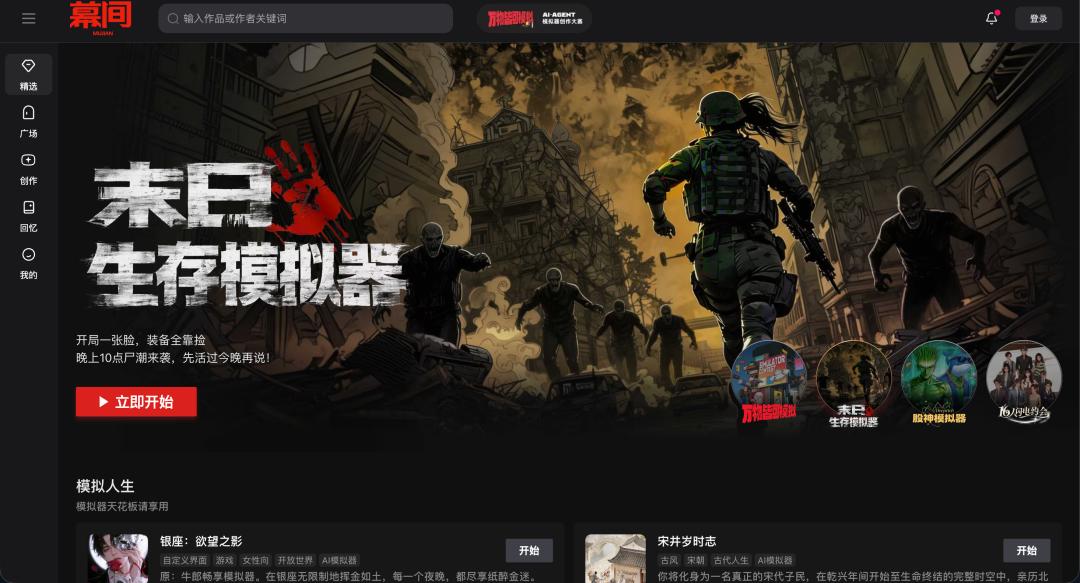
▲ The official website of "Mujian"
Naturally, the fuse was the disclosure of the financing news. After many players saw this news, what they felt was not joy for the platform, but betrayal and uneasiness.
There are two key points here:
Firstly, since it is a UGC community (user - generated content), like SillyTavern, most of the content on "Mujian" basically comes from players. "Mujian" then uses this content to attract new players and creators.
The reason why players are so active in contributing content to the platform is that they thought "Mujian" was an open - source platform like SillyTavern, so they were willing to contribute out of love.
However, when the news of "Mujian"'s financing spread, the situation changed. Creators believed that "Mujian" used the content they had painstakingly created as assets and then cashed it in with investors. So, this was regarded as a betrayal by the creators.
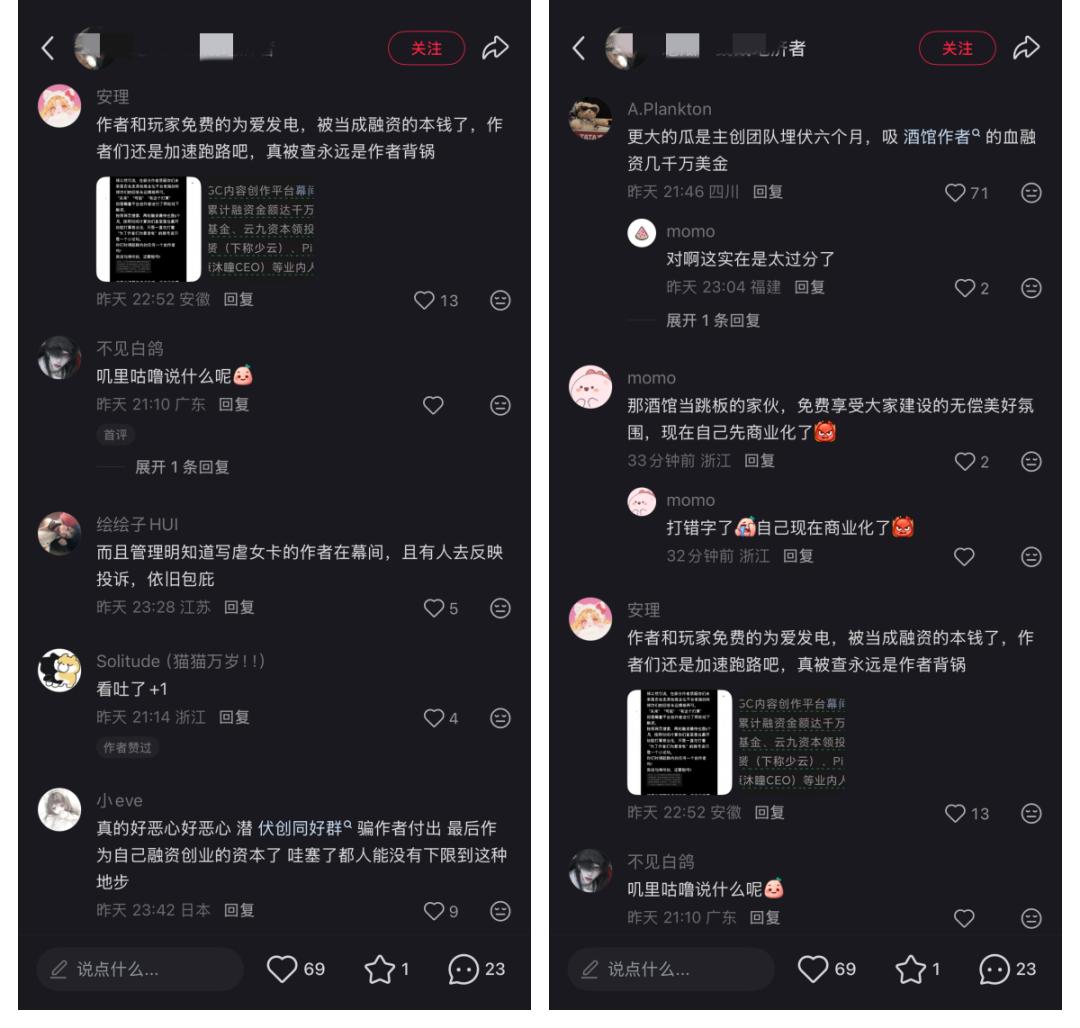
▲ Players on Xiaohongshu complain about their dissatisfaction with "Mujian"'s financing
Especially, when players began to express their dissatisfaction with "Mujian", "Mujian" deleted posts, dissolved player groups and other ways to eliminate evidence and cut off players' communication, which further angered everyone.
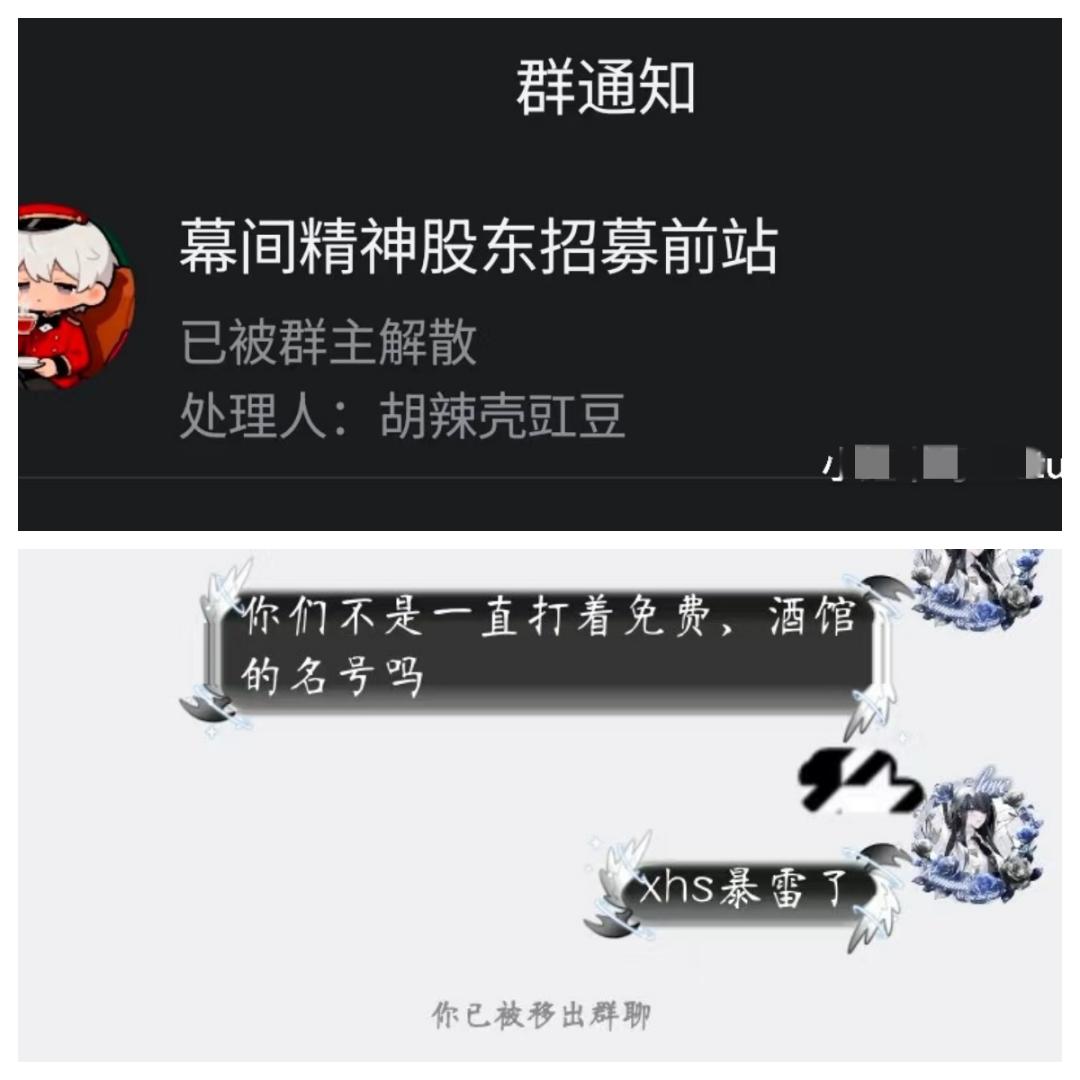
▲ Players show that "Mujian" dissolved the group chat
Many users of "Mujian" repeatedly emphasized in Xiaohongshu posts that they had repeatedly asked "Mujian" whether it had any commercialization plans, but "Mujian" always had an ambiguous attitude, neither admitting nor denying. Even "Mujian" charged creators for the API. Creators described it as "having to bring their own fodder while pulling the mill".
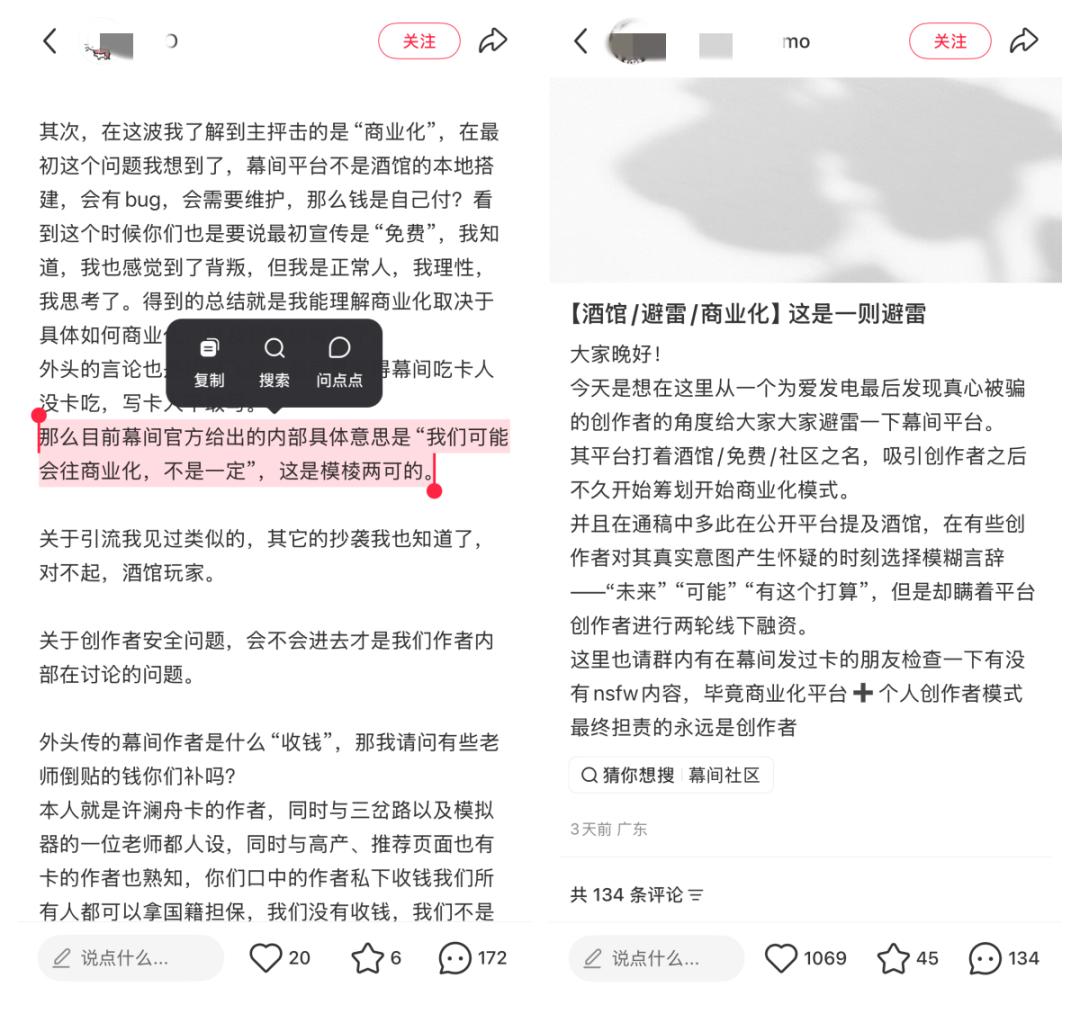
▲ Users show "Mujian"'s ambiguous commercialization attitude before financing
Secondly, as we mentioned earlier, a lot of content on SillyTavern involves borderline or even pornographic situations. The commercialization of the platform makes the platform's creators worry that content review will expose them to legal risks.
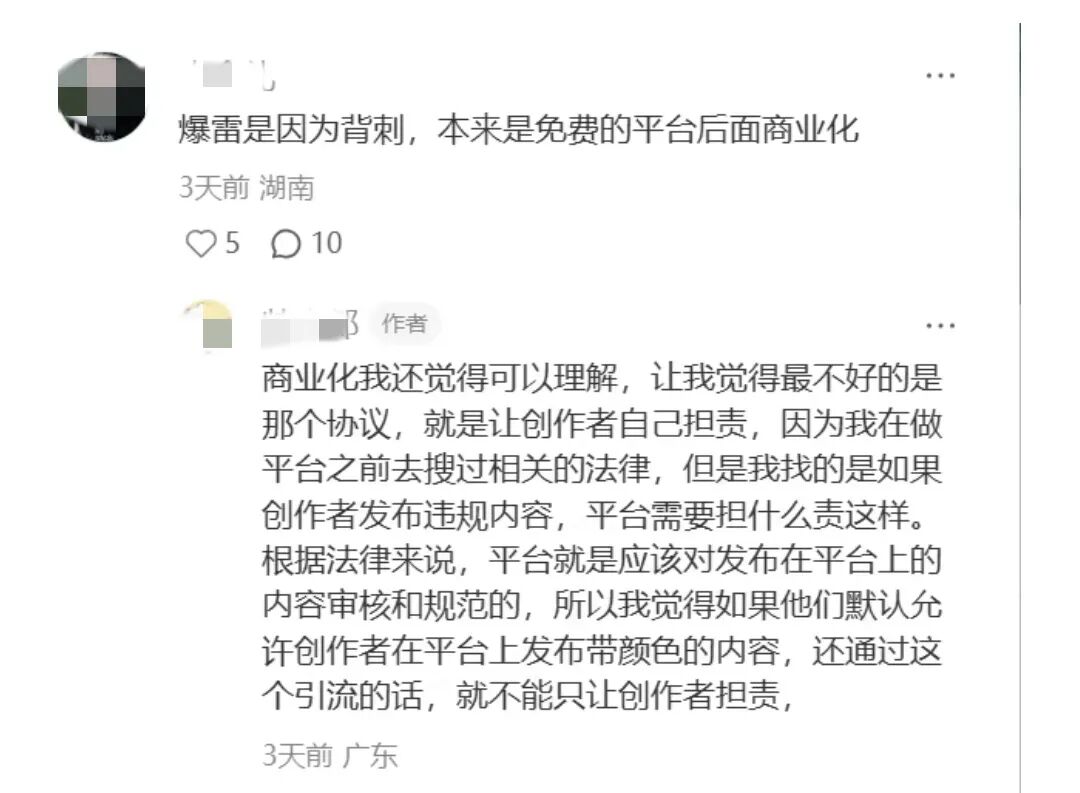
▲ Players complain that "Mujian" makes creators bear the consequences of content violations
Especially, some creators said that "Mujian" asked creators to sign a disclaimer agreement, stating that the platform was not responsible for any borderline or pornographic situations. On the other hand, "Mujian" still used this content to attract new players.
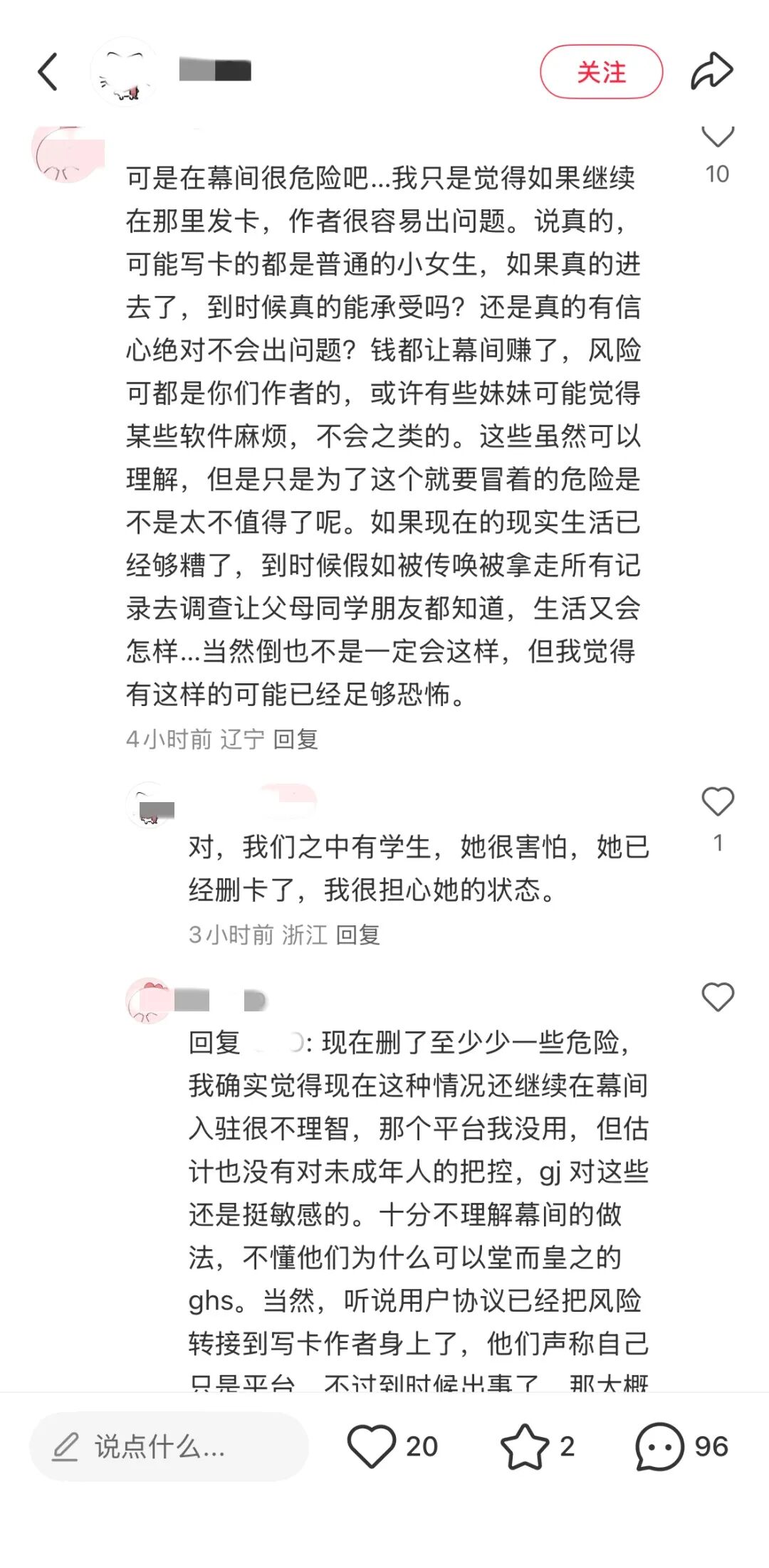
▲ Players complain that "Mujian" transfers risks to creators
These actions further exacerbated the rift between the platform and players.
Especially recently, some netizens accused "Mujian" of plagiarizing the underlying code of SillyTavern and scraping content from the Tavern platform in various ways. Although it is difficult to determine the authenticity of these accusations, when the public opinion rises, few people really care about the truth.
Is Plagiarism the Underlying Color of AI Startups?
To be honest, looking back on the whole process of "Mujian"'s collapse, some people may find it absurd. After all, the original intention of a business is to make money, and it seems unreasonable for players to prevent the platform from commercializing.
But surely some people can understand because "Mujian" has always maintained an ambiguous attitude from the beginning, which has brought misunderstandings to many players. So, it is understandable that it has been criticized.
However, these are not what we want to discuss. What we really want to discuss is: Behind the "Mujian" incident, it reveals the irreconcilable contradiction between technological open - source and commercialization in the AI era; it also reflects the indifference of business behaviors (entrepreneurs) to copyright and the labor achievements of content creators.
This is not an isolated case. It has almost become a characteristic of startups in the AI era.
As an example from the past, OpenAI changed from open - source to closed - source, and its lawsuit with Elon Musk has been going on for many years without a result.
More recently, the departure of Lin Junyang, the former head of Alibaba's Qianwen large - model, also triggered intense discussions in the open - source community about whether Qwen would become more closed - source and more commercialized. After all, Qwen's rapid growth is inseparable from the calls and fine - tuning of global developers in the open - source community.
This matter was only calmed down to a certain extent after Alibaba's senior management clearly stated that Qwen would continue to adhere to the open - source route.
Similarly, not long ago, when OpenClaw (Lobster) was popular, Tencent launched nearly ten different - flavored lobster - themed products at once. This also led Peter Steinberger, the founder of OpenClaw, to publicly accuse Tencent's AI platform SkillHub of "plagiarizing" its open - source project ClawHub, saying that the other party scraped a large amount of data without providing any support, resulting in a sky - high server cost of five - digit dollars.
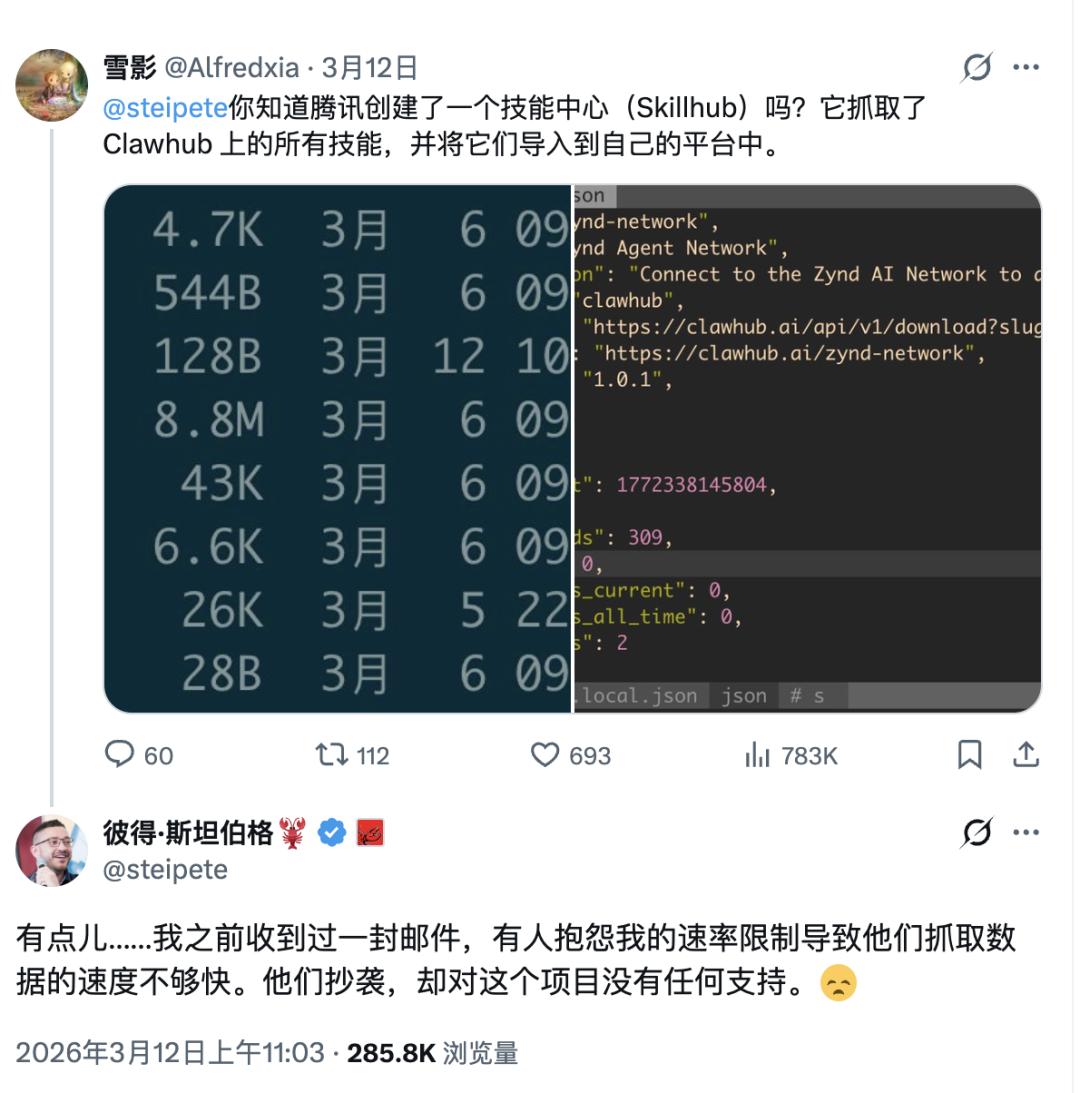
▲ Peter Steinberger complains about Tencent's plagiarism of the open - source project on X
To calm the public opinion, Tencent quickly sponsored OpenClaw overnight.
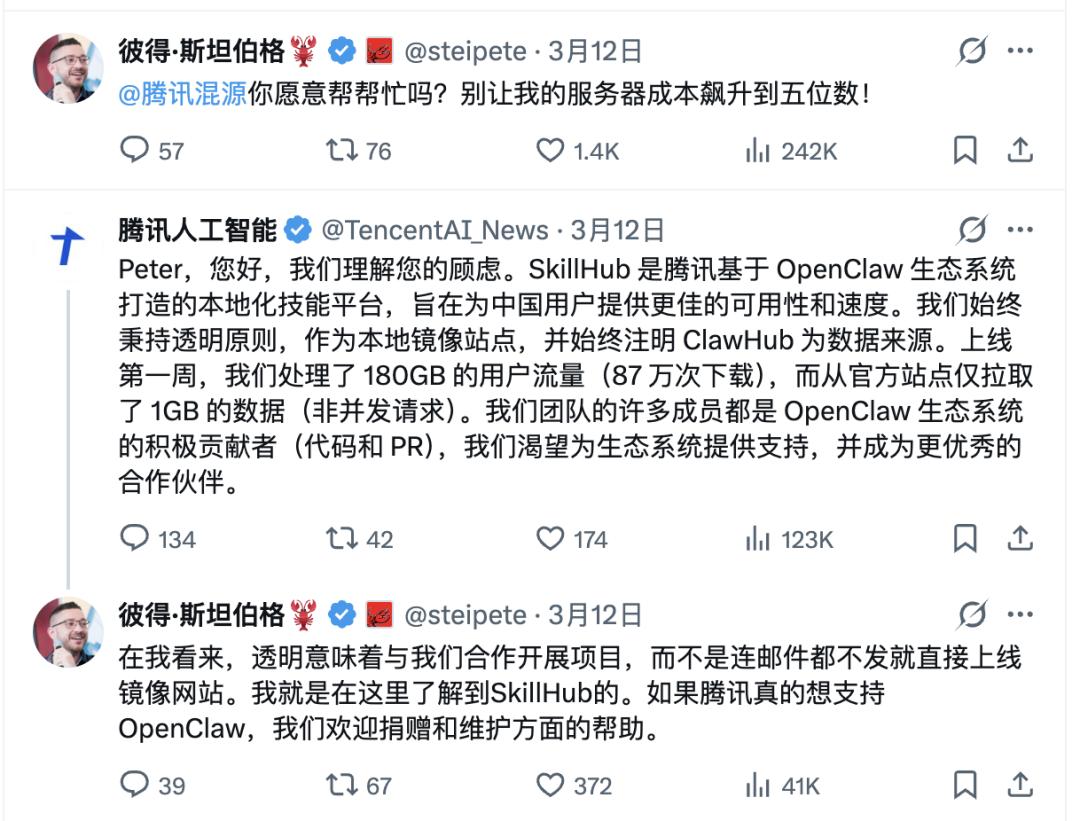
These are well - known large enterprises and companies around the world. If we look below the surface, there are countless cases of plagiarism, scraping source code, ghostwriting, and data crawling.
For example, recently in the media circle, a well - known AI blogger plagiarized the code of an open - source project, presented it as his own original project, and participated in a paid commercial live - broadcast of a large enterprise. It was not until the original project author discovered it and made a statement online that people knew who the real author of the project was.
In fact, the AI era is almost the era with the strongest open - source and sharing spirit since the development of Internet technology. So far, many great technologies and world - influencing applications have emerged from the open - source community.
Behind this atmosphere is the joint effort of many enterprises and developers. They unconditionally open their technologies, models, and applications, creating an inclusive technological atmosphere.
However, in this process, there are many people who don't think about how to create value, but how to take others' achievements; they no longer care about their own contributions, but about how to package others' labor as their own assets.
So, what really makes people angry is not plagiarism because for the creators of open - source projects, they don't mind it. Otherwise, they wouldn't have chosen to open - source.
What really makes people angry is that after plagiarism, they are not willing to admit others' achievements, erase others' traces, and present