The educational puzzles in the era of artificial intelligence: A 19-year-old school dropout has provided the answers.
On March 12th in London, the night had just fallen along the banks of the Thames.
The venue next to the O2 Millennium Dome was brightly lit. The annual awards ceremony hosted by edie, a UK-based sustainable development media outlet, was underway. Sustainability leaders from companies such as Google, BBC, and Shell, climate tech entrepreneurs, and policymakers were successively entering the venue. This award, known in the industry as the "Oscars of the sustainability world," brings together important figures in the global sustainable development field every year.
When the host announced the shortlist for the Rising Sustainability Star, a name appeared on the big screen:
Tang Yingxi, 19 years old, from China.
Among this year's finalists, he is the only young person from China.
As a 19-year-old, Tang Yingxi has many contradictory labels.
He was once a depressed teenager who took a break from school in the fifth grade of primary school to "play games full-time" at home. He was the "underachiever" who ranked at the bottom in the Beijing high school entrance examination in his district. He was also the "problem student" who always interrupted the teacher in class and made the whole class laugh.
With these characteristics of a "bad student" in the eyes of the public, Tang Yingxi embarked on a less-traveled path and, at the age of 16, experienced a social reversal.
At 16, he won the Computer Excellence Award in Tencent's Science Talent Program and was admitted to Minerva University, which has a lower acceptance rate than Harvard. At 17, he won the "Zayed Sustainability Prize" at the 28th United Nations Climate Change Conference, becoming the only Chinese high school student to win the award since its establishment 17 years ago. At 18, he donated $150,000 to renovate the experimental building of his alma mater and was honored with a commemorative plaque.
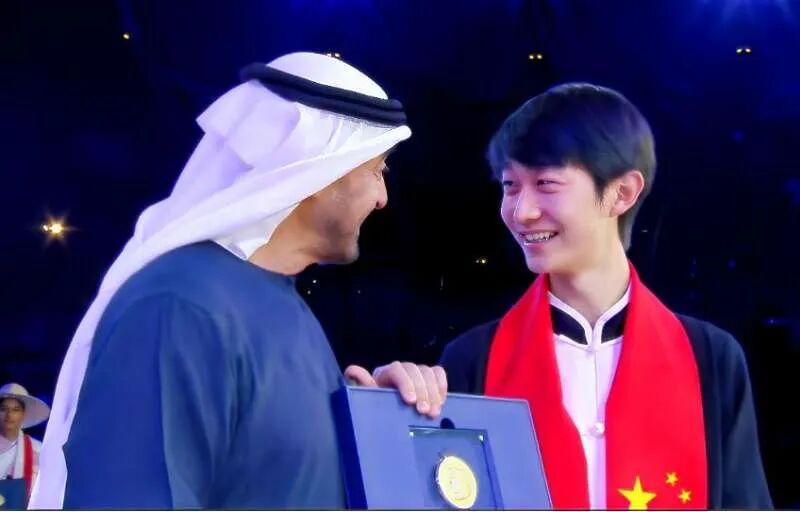
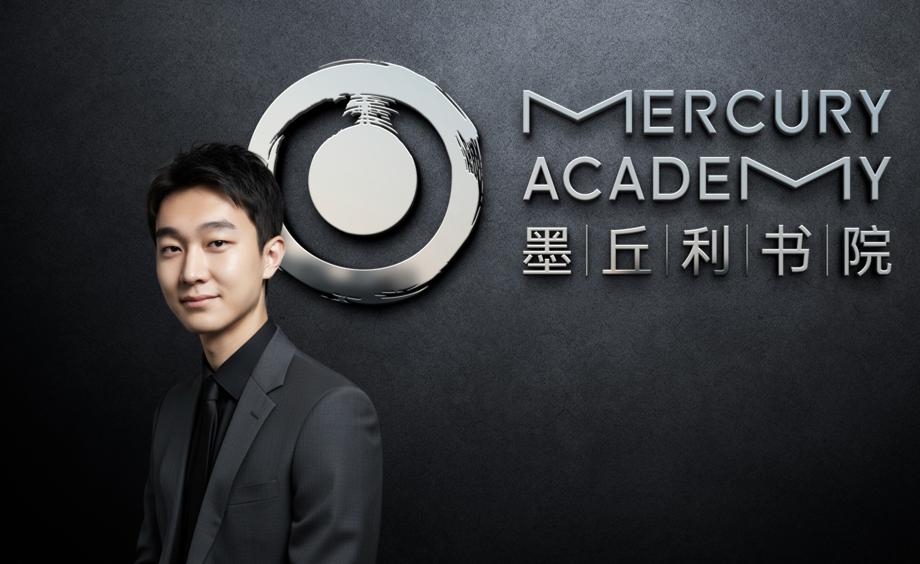
After studying at Minerva University for one year, Tang Yingxi made a surprising decision - to take a break from school and launch the Mercury Academy. Half a year later, at 19, he became an influential figure in Forbes China's international education list, the youngest person to be included since the award was established.
If we only look at the result, it seems like a typical "underdog's comeback story." But when 36Kr tried to carefully trace the trajectory behind this dramatic contrast, we found that it hides an educational proposition that is being redefined in the era of artificial intelligence.
01
From a school-dropout internet addict to a United Nations award winner
"I'm not a good student in the mainstream sense, nor am I a genius. I just set my sights a little farther," Tang Yingxi described himself. In his view, the real luck is not the awards he won later, but the worldview of life he developed from a young age and a different way of education, which gradually gave him a clear sense of purpose and empathy. His growth path clearly breaks away from the traditional narrative of good students. Instead, relying on intuition, empathy, and a highly flexible learning method, he searches for his place in a broader world.
Since the age of 8 or 9, Tang Yingxi has been exposed to traditional Chinese culture. In his first year of high school, he systematically learned how to understand the Chinese philosophy of life from traditional arts such as martial arts, music, and calligraphy. His father, who has been an overseas returnee entrepreneur for many years, cultivated his international perspective from a young age.
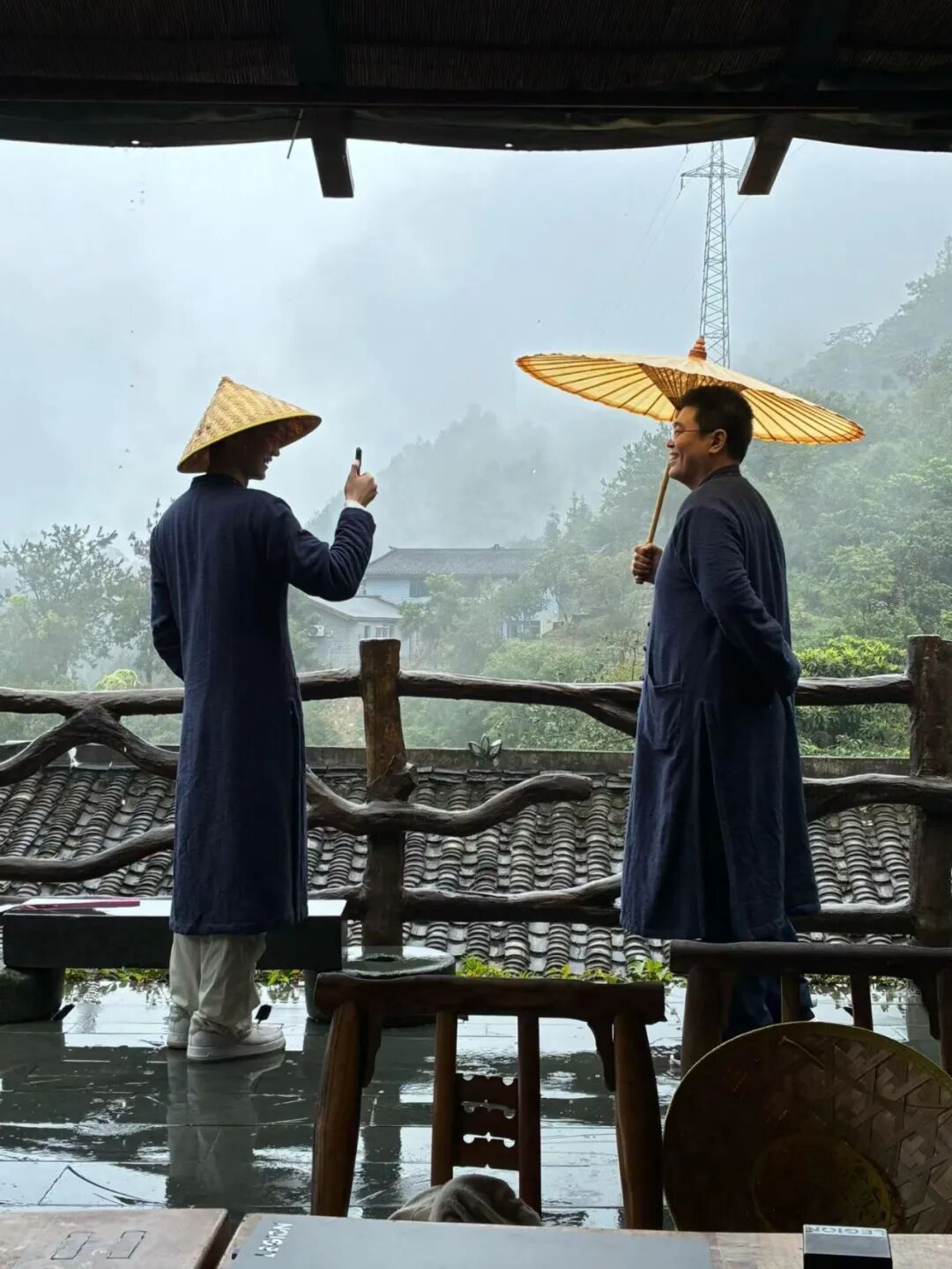
Standing at the intersection of Chinese and Western cultures, a goal gradually emerged in Tang Yingxi's heart: "To promote traditional Chinese culture and values to the world from a new perspective of natural science and take them to a new height."
However, this goal didn't make Tang Yingxi a good student in the traditional classroom, nor did it make his grades soar. During the high school entrance examination, Tang Yingxi was full of frustration due to his poor grades and was in a low mood for a while.
In the logic of traditional education, grades are the only indicator to measure a student's ability. Its essence is to select "standard talents" with the least error, while unmeasurable talents, whether it's insight, creativity, or empathy, are often ignored.
Once a student has poor exam results, it's very likely to make them feel useless.
Fortunately, his father chose to stand by him and took him to participate in an educational experiment called "Future Preparatory Course." Thus, Tang Yingxi embarked on the path of project-based learning, and a completely different learning logic began to operate within him.
"The world is changing dramatically. The future may be completely beyond our cognition. All we can do is to make ourselves more flexible. Maybe it's the only solution to survive in the era of AI," Tang Yingxi said.
At the beginning of his senior year in high school, with a photovoltaic vacuum power generation glass project he had been preparing for two years, he stood on the podium at the United Nations COP28.
In the following year, he entered the "dropout" state again.
Recalling the dropout in primary school, he admitted that he was actually very uneasy at that time. "Although my father was calm, I still 'played with a sense of unease'." But the situation was completely different during his senior year in high school.
During that time, he got up at four o'clock every morning and went to bed at eight o'clock in the evening. His life was regular, and his study schedule was intense. He preferred to call this experience "taking time off from formal study."
"I'm very sure about what I'm doing. I know that in the future, having a calculus textbook or a high school diploma is far less important than being able to stand firm in a rapidly changing world."
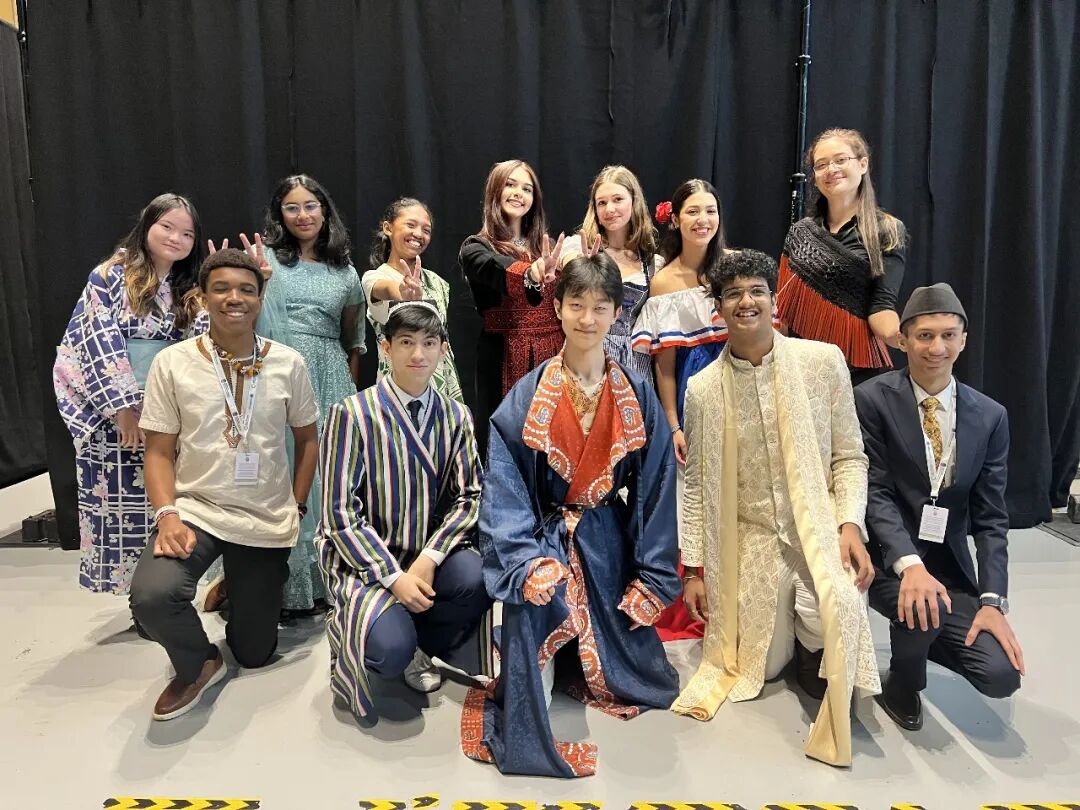
At the Abu Dhabi Sustainability Week in 2026, Tang Yingxi could already discuss global sustainable development issues on the same stage as the former president of Iceland, the chairman of IUCN, and the senior vice president of the Rockefeller Foundation's African region. From a school-dropout internet addict to a United Nations award winner, he verified a different learning path with his own experience. If the traditional classroom is like a race - everyone is staring at the back of the person in front and thinking about how to overtake; the new path Tang Yingxi took is more like a jungle adventure. In the process of looking for water, building shelters, and communicating and cooperating with others, one automatically masters the survival skills and finds the coordinates suitable for oneself.
02
From one person to a group of people
After graduating from high school, Tang Yingxi went to Minerva University in San Francisco. It is a unique innovative university without a campus and no subject restrictions. Over four years, students rotate around the world and master thinking habits and practical skills through seminar-style teaching.
Here, Tang Yingxi felt unprecedented freedom and comfort. For the first time, he directly saw that a classroom can be anywhere, and problems can come from the real world. He immersed himself in absorbing the different perspectives, practical spirit, and critical thinking brought by Minerva.
If this were a traditional inspirational story, this might already be the ending.
But the story didn't end.
During the summer vacation after one year of enrollment, Tang Yingxi returned to China from Minerva University. He found that his childhood friend who used to study at a well - known high school in Haidian, Beijing, was still on a break from school and had nowhere to go.
Memories came flooding back. His past depression, school dropout, being PUA'd, and the shame of low grades were mixed and clashed with the new educational experience he felt at Minerva.
Looking at his childhood friend's mental state, Tang Yingxi seemed to see himself a few years ago. He was too familiar with the shame and helplessness brought by grades. What's more cruel is that there are still many teenagers trapped in this systematic wall.
A strong thought came to his mind: Could he bring the Minerva logic back? Could he open up a new path for these peers struggling on the margins?
He believes that as someone who has experienced it, no one knows better than him what his peers are thinking and what they need. He can't wait to use his own experience and thinking to make some changes that can promote "sustainable development in education" in the field of education. So he made a decision to take a third break from school, this time to ensure that more students who dropped out can go back to school.
03
An educational innovation model in the AI era
In the autumn of 2025, the Mercury Academy welcomed its first batch of students. A group of teenagers aged from 13 to 18 were like seeds that didn't adapt well before, falling into the soil of this innovative education.
Initially, it was hard to see emotions and vitality in them. They were used to hiding in the hoods of their sweatshirts, twirling the corners of their clothes with their fingers and keeping silent. It was a self - protection state under a long - term negative evaluation system.
But changes soon appeared.
During the National Day holiday one month later, a child who was once criticized by his parents as "good for nothing" went home and actively asked to learn English.
During the rotation in Wudang Mountain, a child who was once labeled as a school - hater played a card game with his peers. According to the rules of the game, he needed to describe the words on the cards with language so that his peers could guess.
"This is something I used to hate but now like very much," the child described it.
The card was flipped, and the answer was revealed. The word on it was: learning.
At the Mercury Academy, learning starts from real - world problems.
For example, inspired by the outer porch of the Mogao Caves, the children at the academy transformed the abandoned earth caves in the countryside due to the aging population into a new - style Jin - style building complex that combines community and modern residential functions. Moreover, they managed to increase the indoor temperature by about 20 degrees Celsius in winter without relying on external energy, meeting the German passive house standard.

So, Xiao Cui, who used to fill his days and nights with games, started to teach himself modeling and became the most reliable "chief engineer" in the team; Xiao Pan no longer just stared at the test papers and began to think about the presentation of materials and data from the perspective of international judges; and Pin Xi, who was once troubled by insomnia, found long - lost concentration in repeatedly polishing the accuracy of material expressions... They are taking this project to compete for the world - class Terra Architecture Award.
At Mercury, each child will undergo a complex personality and talent assessment, with up to 15,000 different types. This almost obsessive - compulsive level of detail is to ensure that every child's talent is respected and magnified.
The tutors are the hub of the entire system. The tutor team here has a complex cross - border background, from business school professors to Wall Street bankers. They don't have the air of authority like those on the podium. Instead, they arrange different tasks according to the talents of the group members. They will accompany the group members continuously, encourage them to define real problems with empathy, and judge what each person should learn with AI at each time point.
When a group member encounters a problem, the tutor may "give a timely hand" or "let them fall into a pit and then climb out by themselves at the right time."
Facing the real world rather than abstract exam questions, the answers are no longer rote - learned knowledge points. The natural curiosity of life will drive young minds to explore the essence, and their potential will be stimulated.
The project - based learning of hardcore science and technology innovation in the AI era is the framework of the entire system. It is a learning method that starts with real tasks, aims to solve problems, and reversely drives knowledge acquisition and information understanding. It breaks the long - term learning path in the traditional education system of first building a foundation layer by layer, learning theories, and then talking about applications. Learning from top - to - bottom based on artificial intelligence tools has become the key to completing many projects, including the sustainable development and activation of cultural heritage.
This learning method, which once helped Tang Yingxi "make a comeback," aims to cultivate children's "ability to solve unknown and complex problems," which is precisely the rarest ability in the AI era.
The projects are not concentrated in one place, and the students at Mercury also rotate around different places with the projects. The Shanxi Farming and Reading Center, Zhoushan Ideal Island, Hebei internship factory... At the six rotation places of the academy, students immerse themselves in different cultural and industrial scenarios, experiencing the real social and industrial ecosystems.
The classroom learning outside the teaching center is mainly completed through the Mercury Forum online classroom, which is inspired by the Forum system of Minerva University. It can ensure that students who rotate around different places or even study at home can participate in learning and interaction in real - time.
The core curriculum system is jointly constructed by a team of practical tutors from Cheung Kong Graduate School of Business, Tsinghua University, Minerva University, and GREG GREEN, the father of the "flipped classroom." It includes innovative courses such as "Future Preparatory Course" (Future Literacy), "Global Thinking" (Global Thinking), and Ambitious Project - Based Learning (Passion Project).
In Tang Yingxi's view, the end - goal of education is happiness, and the foundation of happiness is independence. This is not only non - conformity psychologically but also economic independence after seeing through the operating logic of the business society. "Education should teach people to face difficulties bravely and also teach them how to live in harmony in this complex real world."
The design of all projects and courses at the Mercury Academy always revolves around this goal - teaching the operating rules and underlying logic of the business society and also telling everyone how to face difficulties bravely.
In this process, the formal rules are weakened, the mental constraints are loosened, and the evaluation system is reconstructed.
A student named Tan Xi said in the end - of - term performance that in an environment without punishment, without urging, without negative labels, and with respect instead of pressure, he is "moving from a confused past to a new future."
Curiosity grows naturally like an instinct of life.
04
From a manager to a "life partner"
More than 1,000 years ago, the imperial examination system was established, and the Four Books and Five Classics became the orthodox classics of the era. Education first took on the function of talent selection.
At the end of the 18th century, schools in the modern sense appeared in Prussia, and compulsory education gradually became