NIO has finally turned the corner.
At the beginning of 2026, Li Bin, the founder of NIO, referred to the competition in the new year as the "final stage" in a letter to all employees.
This final stage has two meanings.
One is that the new energy vehicle industry entered a new stage in 2026, and the other is that Li Bin promised to achieve the profit target in the fourth quarter of 2025.
The importance of the latter is self - evident. It concerns the capital's patience with NIO's long - term strategy and also determines the sustainability of NIO's battery - swapping model.
Three months later, the story took a turn with the release of NIO's Q4 2025 financial report. Data shows that NIO achieved an operating profit of 1.25 billion yuan in the fourth quarter of 2025, which was NIO's first quarterly profit.
In the 11 - year long - distance race, NIO built a moat with extreme user service and a large battery - swapping network, but also bore huge profit pressure for it.
Image source: NIO official website
The significance of this profit lies not only in the figures themselves, but also in the industry context in which it was achieved.
In 2025, the Chinese new energy vehicle market witnessed a historic turning point. The annual production and sales both exceeded 16 million units, and the penetration rate crossed the 50% mark for the first time. The market officially shifted from policy - driven to consumption - driven.
However, behind the scale expansion, there was unprecedented differentiation and shock. The price war lasted from the beginning to the end of the year, and the average profit margin of the industry dropped to a low of 4.5%. The monthly sales of some new - force brands hovered around the 1,000 - unit mark for a long time, and the elimination race accelerated.
In this reshuffle of extreme contrasts, NIO achieved its first quarterly profit through the implementation of a multi - brand strategy, an increase in the proportion of high - margin models, and the service and community business. This also indicates that NIO has entered a mature stage of pursuing operational efficiency from the pioneering stage of burning money for the future.
Li Bin regarded this profit as the starting point of NIO's third development stage in the earnings conference call, thus kicking off a new cycle of high - speed growth. Whether this profit, based on a specific window period, can be sustained in a long - term and normalized way requires NIO to provide an answer.
After 11 years of losses, NIO finally made a profit
Li Bin fulfilled his promise.
On March 10, NIO released its Q4 and full - year financial reports for 2025. In the fourth quarter of 2025, its revenue reached 34.65 billion yuan, a year - on - year increase of 75.9% and a quarter - on - quarter increase of 59%, setting a new record. The gross profit totaled 6.07 billion yuan, a year - on - year increase of 163.1% and a quarter - on - quarter increase of 100.8%. The gross profit margin of vehicles was 18.1%, a year - on - year increase of 5 percentage points and a quarter - on - quarter increase of 3.4 percentage points.
The most eye - catching figure was the net profit. In the fourth quarter, NIO's net profit was 282.7 million yuan, achieving quarterly profit for the first time since its listing.
From losing money on each vehicle sold to making a profit of about 10,015 yuan per vehicle (under non - GAAP), NIO's profit was not accidental but the result of the combined effect of several core factors.
The most intuitive manifestation came from the increase in sales volume. In the fourth quarter, NIO delivered 125,000 new vehicles, a year - on - year increase of 71.7% and a quarter - on - quarter increase of 43.3%, setting a new record.
Li Bin mentioned in the 2026 letter to all employees that NIO delivered 48,000 new vehicles in December 2025, setting a new record. With the joint efforts of the three brands, NIO delivered a total of 326,000 new vehicles in 2025, a year - on - year increase of 46.9%.

The three brands under NIO. Image source: NIO official website
It is undeniable that NIO's Q4 profit was based on a specific window period. The fourth quarter is usually the peak season for car sales, and with the continuation of consumption - stimulating policies at the national and local levels in 2025, the industry as a whole witnessed a wave of delivery peaks.
The real test lies in the profit indicators, which rely on the optimization of NIO's product structure.
In the fourth quarter of 2025, the concentrated release of high - price models became the core engine for turning losses into profits. Among them, the new ES8 delivered about 39,700 units in a single quarter, accounting for about 31.8% of the total sales volume, becoming the pillar model. In December alone, the ES8 delivered 22,000 units, breaking the monthly sales record of pure - electric vehicles priced over 400,000 yuan.
On the other hand, the LeDao L90, targeting the 200,000 - 300,000 - yuan family market, also performed well. In the fourth quarter, the LeDao L90 delivered about 21,800 units, contributing about 17.5% of the group's sales volume and becoming the sales champion of pure - electric large SUVs in 2025.
These two SUVs almost accounted for half of NIO's sales in this quarter, boosting the vehicle gross profit margin in Q4 to 18.1%, a year - on - year increase of 5% and a quarter - on - quarter increase of 3.4%, setting a new high in three years. According to Li Bin's introduction in the conference call, the gross profit margin per ES8 vehicle was close to 25%, becoming the key factor for NIO to cross the break - even point.
During the same period, the Firefly brand also contributed 19,100 units in sales. Li Bin said that Firefly occupied a very high share in the high - end small - car market. After the Spring Festival holiday, the demand for this model recovered quickly, and Firefly was confident of achieving a 40% - 50% sales growth target for the whole year.
It is worth noting that a vehicle gross profit margin of 20% is regarded as the healthy red line for the industry, which means that NIO is on the path of healthy development.
Under the business logic, turning losses into profits means increasing revenue on one hand and cutting costs on the other. In addition to the revenue growth, NIO also learned to save money.
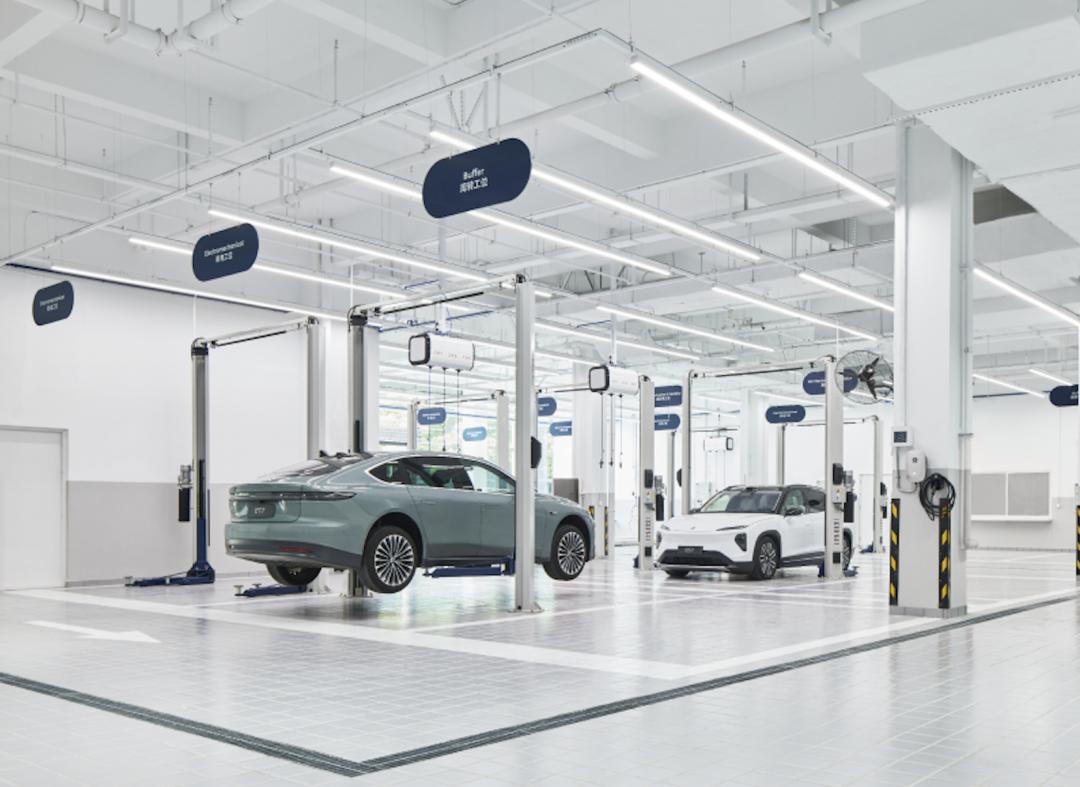
Image source: NIO official website
Cost reduction through technology is being continuously realized. In Q4 2025, NIO's R & D expenses dropped to 2 billion yuan, lower than the market expectation of 2.5 billion yuan and a quarter - on - quarter decrease of 360 million yuan.
NIO's self - developed "Shenji NX9031" chip has a single - chip computing power equivalent to four industry flagship chips, reducing the cost per vehicle by more than 10,000 yuan. Self - developed technologies such as the 900V high - voltage architecture and the full - line control intelligent chassis have also spread the R & D costs after large - scale application.
The financial report shows that NIO's cost per vehicle decreased from 230,200 yuan in 2024 to 201,400 yuan in 2025, a decrease of 12.5%. This idea of using technology to reduce costs allows NIO to improve its profitability while maintaining its full - stack self - development ability.
Strategically, NIO no longer blindly emphasizes high - end positioning but turns to cost - effectiveness. In terms of tactics, NIO has begun to enjoy the dividends brought by the multi - brand strategy under the compound interest of technology, but the battery - swapping model remains unchanged.
NIO's battery - swapping: from a burden to an asset
In essence, the Q4 profit is a touchstone for NIO's transformation, not the finish line. The real test lies in whether NIO can transform short - term dividends into a long - term and sustainable profit model, and the answer may lie in the reconstruction of NIO's battery - swapping network and business model.
The battery - swapping model is NIO's most unique and controversial asset. In the current new energy vehicle market, NIO is the only automaker that adheres to the battery - swapping model. From the construction of the battery - swapping network to the unlimited battery - swapping service, every expense is real money, which is NIO's biggest cost.
As of now, NIO has deployed a total of 3,815 battery - swapping stations globally, with a total investment of over 18 billion yuan, and built more than 28,000 super - charging piles and destination charging piles. NIO's goal is to have more than 10,000 charging and battery - swapping stations each by 2030.
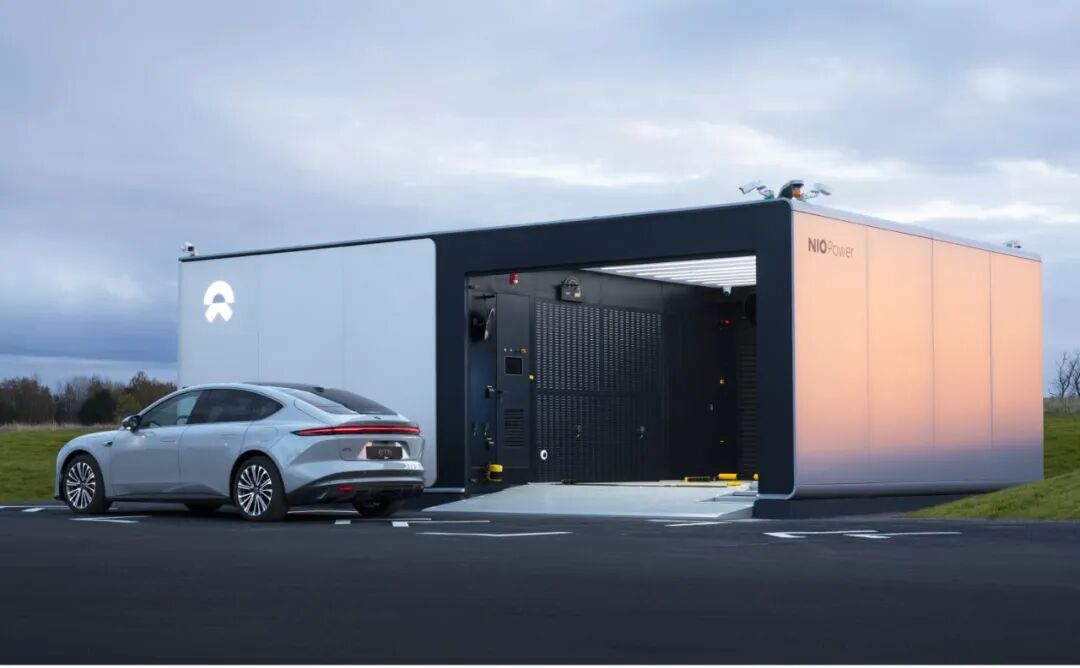
Image source: NIO official website
Li Bin has explained the importance of NIO's battery - swapping system more than once. He believes that it is an important foundation for NIO's growth. The change in 2025 is that NIO began to calculate the return on this investment.
Since last year, NIO has changed its investment strategy for battery - swapping stations by launching the "Power Partner Program" and leveraging social resources to build the battery - swapping network. "Most of the money for building battery - swapping stations this year doesn't need to come from us. We cooperate with power partners and rent the stations from them. In this way, they make money, and we save capital expenditure. Everyone can give full play to their own advantages," Li Bin said at that time.
This careful calculation is reflected in the financial report. In 2025, the annual revenue of NIO's service and community business exceeded 10 billion yuan, accounting for more than 13% of the total revenue, and it has achieved annual profit. This means that NIO's battery - swapping business has changed from a heavy - asset business to a living asset and started to contribute to the financial report.
Actually, in addition to the battery - swapping model, NIO has made a lot of innovative explorations around the battery itself. In 2019, NIO proposed the BaaS concept in its car - purchasing plan, that is, car owners do not bear the cost of the battery when buying a car but rent the battery on a monthly basis.
The battery, as the largest single - item cost of a new energy vehicle, accounts for a large part of the selling price of a new energy vehicle.
For users, the BaaS service is based on the vehicle - battery separation model, which not only lowers the threshold for users to buy a car but also alleviates users' anxiety about battery performance.
The popularity of the ES8 verifies the correctness of BaaS. Compared with the second - generation ES8, the starting price of the new ES8 dropped from 498,000 yuan to 406,800 yuan. If combined with the BaaS plan, the price even reaches the 290,000 - yuan range, making the ES8 enter the mid - to - high - end market of 300,000 - yuan level and expanding the target audience.
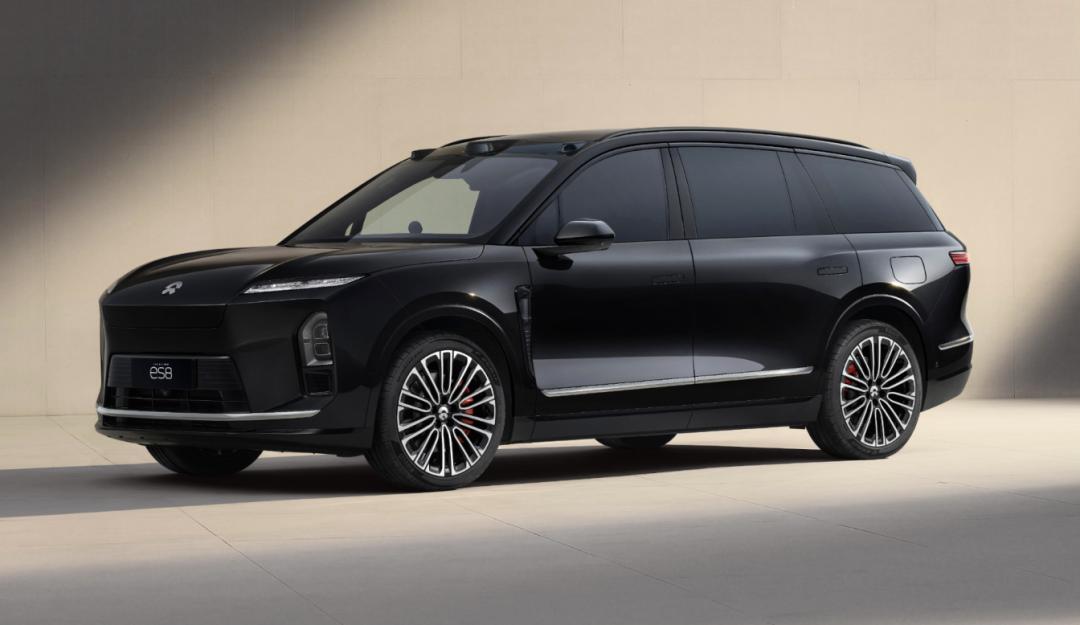
Image source: NIO official website
It can be said that NIO's battery strategy over the years has made the battery ownership belong to WENENG. NIO can continuously realize the value through battery leasing and battery - swapping services, further magnifying the value of the battery - swapping network.
According to the plan, NIO plans to add 1,000 battery - swapping stations in 2026, and the total number will reach about 4,700 by the end of the year. Although the business is still in the red, other revenues can cover the cost of building stations.
Not only calculating the cost of the battery - swapping model, but also in 2025, NIO controlled costs by streamlining the organizational structure and implementing the CBU mechanism.
In the past, NIO used one R & D team and one sales network to serve a single brand, resulting in high marginal costs. Now, LeDao and Firefly share NIO's battery - swapping network and some intelligent technologies, and every penny of investment is reused.
This change in thinking of "everyone calculating costs" has led to a significant optimization of the sales and management expense ratio. In Q4 2025, NIO's sales and management expenses were 3.5 billion yuan, a further decrease of 650 million yuan compared with 4.2 billion yuan in the third quarter and lower than the guidance of 4 billion yuan.
"Currently, we have established exclusive teams for each model, which are responsible for balancing the sales volume, gross profit, and final operating results of a single model. The positive effects of this adjustment have been reflected in the operating performance in the fourth quarter of 2025 and the first quarter of 2026," NIO CFO Qu Yu emphasized in the earnings conference.
From the sales leverage of BaaS, to the operational realization of the battery - swapping network, and then to the efficiency revolution under the CBU mechanism, NIO completed a key transformation in 2025. NIO's "heavy - model" of car - making remains unchanged, but it has begun to contribute positive value to the financial statements.
Can NIO achieve full - year profit in 2026?
"Making a profit is not just for others to hear. We know that at this point in time, we need to do this to prove ourselves."
At the Q2 2025 earnings conference, Li Bin reiterated the quarterly profit target. Now, the quarterly profit has verified the feasibility of NIO's strategy, and Li Bin has set a bigger goal. At the all - employee mobilization meeting in February, Li Bin said that the goal for 2026 is to achieve Non - GAAP profit.
At this earnings conference