Cybercab, Tesla's mobile "money printer"
In February this year, the first Tesla Cybercab rolled off the production line.
Most people are focused on the unconventional design of this vehicle. It has no steering wheel or pedals, and all driving tasks are handed over to FSD, with a remote monitoring system as a backup.
However, they have overlooked a crucial point: the Cybercab essentially has a strong financial attribute.
According to the plan, this vehicle will be sold to individual users at a price of less than $30,000. Car owners can connect their vehicles to Tesla's Robotaxi network and automatically accept orders during idle hours.
This can be regarded as the Cybercab becoming a financial asset that can generate cash flow.
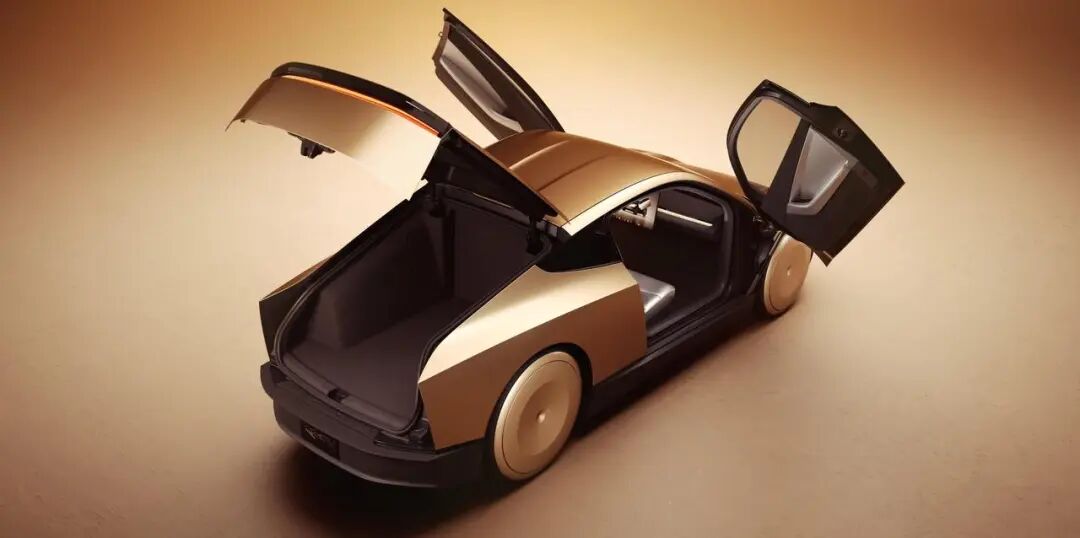
To support the logic of "automobile financial management," the vehicle itself must also be remanufactured.
Thus, 100 years after Ford invented the automobile industry assembly line, Elon Musk dismantled it.
It is reported that the Cybercab adopts a new Unboxed modular manufacturing system. Different modules are produced in parallel in different areas, and finally, the whole vehicle is assembled. The advantage lies in efficiency, with the goal of producing one vehicle every 10 seconds. Currently, it takes at least 30 - 40 seconds to produce a Model Y, so 10 seconds means tripling the efficiency.
Taking the "unconventional" to the extreme, there is a bigger proposition behind the Cybercab:
If cars start to make money on their own, what will the product form, production method, and business model of the automobile industry become?
We can find the first answer in the Cybercab.
Cybercab, a New Type of "Financial Product"
Two years ago, ARK Invest, under the leadership of Cathie Wood, made a highly controversial prediction: By 2029, the Robotaxi business will contribute approximately 90% of Tesla's market value, with a total value of up to $7.2 trillion.
Many people thought this was a typical "Cathie Wood - style imagination." However, Elon Musk himself responded that it was challenging but achievable.
The confidence was revealed a few months later. At the Tesla Robotaxi press conference, a Cybercab with an extremely avant - garde shape and design was introduced.
Elon Musk also emphasized two figures: The single - vehicle selling price is $30,000, and the operating cost is $0.2 per mile.
At that time, many people were keen to calculate for him. According to the traditional Robotaxi operating logic, Tesla's payback period would take at least six years.
But this is obviously not Elon Musk's answer.
Elon Musk, who is keen on being unconventional and going against the consensus, is destined to make the Cybercab break the rules.
The biggest Easter egg he arranged for the Cybercab is not the FSD itself, but to turn this vehicle into a money - making tool that everyone can participate in.
Simply put, car owners are equivalent to individual taxi companies.
Tesla provides the platform, algorithms, dispatching, and supervision, and users only need to own a vehicle.
There are two specific ways to participate:
First, buy a car for operation.
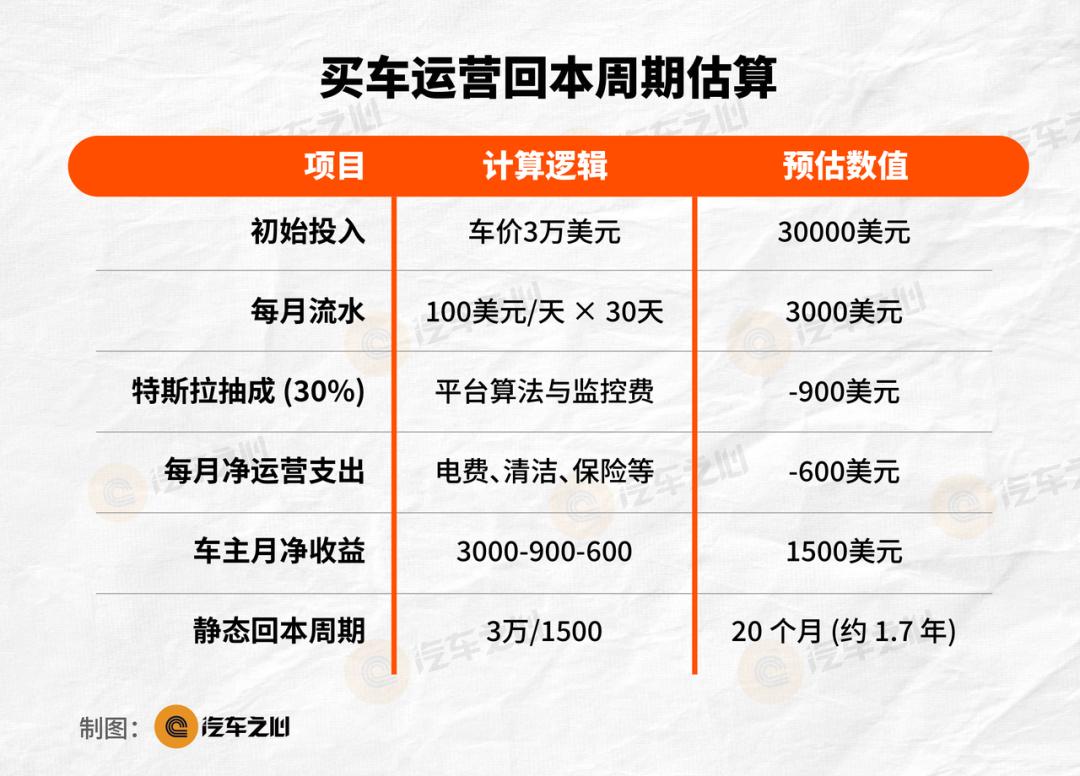
Users spend less than $30,000 to buy a Cybercab. The vehicle automatically enters the Robotaxi network to accept orders and operate. Tesla will provide basic services such as algorithms, remote supervision, insurance, dispatching, and charging systems. The revenue is divided at a ratio of 7:3 (Tesla).
Based on a monthly turnover of $3,000 and necessary costs such as cleaning, insurance, and electricity, the car owner's monthly income can be $1,500. The static payback period is about 20 months, less than two years.
There is also an overlooked variable. If the scale of the Robotaxi network expands and the demand increases, the income per vehicle may continue to rise. At that time, the second - hand residual value of the vehicle itself may also increase.
That is to say, once the vehicle has earned back its cost, its value retention rate will still be rising.
Second, rent a car for operation.
For those with insufficient funds, Tesla offers another option: rent a car with zero down payment. The vehicle is provided by Tesla, and the income is divided at a ratio of 6:4. Operators still only need to do basic cleaning and maintenance. After the lease term ends, they can choose to buy the car or continue renting.
Similarly, by simply doing the math, after paying the necessary fees such as rent, even with a 40% revenue share, the operator can still achieve a considerable monthly income.

This is a typical cash - flow arbitrage model. The operator earns the difference, while Tesla bears all the risks of vehicle depreciation, battery degradation, and residual value.
When many domestic people discuss Robotaxi, they like to focus on one indicator: The single - vehicle profit model.
However, they don't realize that Tesla is calculating another account: Selling/renting cars + long - term service fees.
At the same time, if the vehicle is sold to the user, the risks of vehicle depreciation and idle time are actually transferred to the car owner. Even in the leasing model, Tesla can transfer part of the operation and maintenance costs because it doesn't need to do daily maintenance.
Moreover, Tesla can stably take 30% - 40% of the commission.
These revenues also have typical platform attributes, and the larger the scale, the lower the marginal cost.
For example, the cost of cloud - based autonomous driving training will be gradually diluted by scale, and the efficiency of remote supervision will also increase with AI automation.
But Tesla's plan doesn't stop there. It also has a clear idea about how to build a Robotaxi with a low enough cost and how to minimize the operating labor cost.
Build the Cybercab Like Building an iPhone
An important part of supporting the Cybercab's business model is the vehicle price.
A low enough price can, on the one hand, lower the purchase threshold for users; on the other hand, it can also leave more room for Tesla's operation and platform profit.
Elon Musk has set the price of the Cybercab at less than $30,000, which is approximately 216,000 yuan.
So far, this is the cheapest Tesla you can buy. And in the entire Robotaxi industry, this price is very impactful.
For a long time, the cost of Robotaxi has been high. In addition to the cost of the whole vehicle, it also needs to add a dual - redundant system, sensor suite, computing platform, and safety modifications. In the early days, the comprehensive cost of an unmanned vehicle often reached the level of one million yuan.
In recent years, the industry has started to shift to cost - reduction competition.
For example, Pony.ai disclosed in its financial report that the cost of its new - generation autonomous driving kit has decreased by about 70% compared with the previous generation. And the cost of the sixth - generation unmanned vehicle of Luobo Kuaipao is about 250,000 yuan, with the cost halved (including sensors and computing platform).
In contrast, the Cybercab has brought the cost of the whole vehicle down to 216,000 yuan right from the start.
Behind the gap, there are actually two completely different cost - reduction paths.
Domestic Robotaxi players rely more on technological cost - reduction. They reduce the hardware cost through the price reduction of domestic lidar and the mature electric vehicle supply chain.
Tesla's idea is systematic cost - reduction. It doesn't simply compress the price of individual components but reconstructs the way of building cars from the bottom up.
As early as 2023, Tesla was promoting a new process at its Texas factory: the Unboxed Process (disassembly - style assembly).
This idea is completely different from the traditional assembly line.
Traditional automobile manufacturing uses a "serial" process: the vehicle body moves along the production line in sequence, and each process is completed in order.
The Unboxed process has a "parallel" structure: multiple modules are produced simultaneously, and the internal assembly is completed in advance. Finally, the whole vehicle is assembled like building blocks.
It is more like the modularization often mentioned by domestic players. For example, unmanned logistics players all use "dual - element" modular manufacturing, that is, splicing two main bodies, the chassis and the cargo compartment, and then adding a perception suite for overall armament.
However, Tesla's Unboxed process for the Cybercab is more thoroughly modularized.
According to public patent information, the structure of the Cybercab is divided into modules such as the front structure, rear structure, floor (integrated with the battery and seats), and side panels. Each module is assembled in an independent area, the wiring harness and interior are integrated in advance, and finally, they are assembled together.
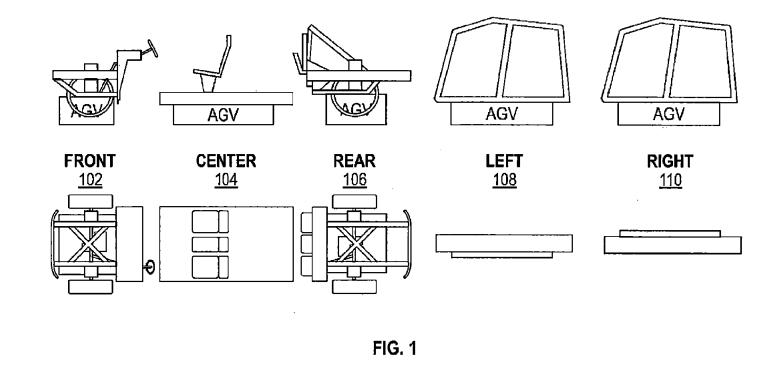
To support this system, Tesla has renovated its Texas factory - planning to build 12 Unboxed production lines. The annual production capacity of a single production line is about 200,000 vehicles, and the total production capacity can reach 2.4 million vehicles.
Tesla has done the math. This process can cut the production cost in half and save 40% of the factory area.
The efficiency improvement comes from several key changes:
First, reduce ineffective handling and repeated disassembly and assembly. The side panels, front, and rear structures can be painted and the interior assembled in independent areas, instead of repeatedly working inside the closed vehicle body like in a traditional factory.
Second, replace a large number of stamped parts with integrated die - casting, reducing the number of welding robots and the inventory of components.
Third, the production space is more open, and the modules work in parallel, increasing the operation density per unit area.
In addition, in terms of material selection, the Cybercab also follows the idea of the Cybertruck, using colored molded plastic or stainless - steel bodies. Some structural parts can be directly processed without painting, further compressing the painting process - and painting is often one of the most costly and space - consuming processes in automobile manufacturing.
From this perspective, the Unboxed process is not just an ordinary process upgrade. It is more like introducing the manufacturing logic of consumer electronics into the automobile industry: modular design + high - level automation + production line standardization.
Elon Musk has also publicly stated that this method is closer to the production system of consumer electronic products.
If this model works, in the future, not only the Cybercab will adopt this system, but also main models like the Model Y may gradually switch to a similar production structure.
Intelligent Manufacturing and Intelligence Complete a Closed - Loop in the Cybercab
If we only look at Tesla's current Robotaxi business supported by the Model Y, the results are obviously not very impressive.
In Texas, its home base, it is still difficult to find a truly fully unmanned vehicle among hundreds of test cars. In California, where regulations are strict, Tesla is also struggling.
Compared with the conventional track, as a latecomer, Tesla has indeed been left behind by pioneers such as Waymo.
But Elon Musk never intends to compete on others' tracks. As the new species Cybercab moves from the drawing board to reality, Tesla is achieving a dimensionality - reduction strike by "redefining the automobile."
According to the established schedule, the first vehicle rolled off the production line in February, large - scale production will start in April, and in the first quarter of 2027, the Cybercab will start paid operations in Austin, Los Angeles, and San Francisco.
As for the regulatory approval, once regarded as a "fatal weakness," the situation has quietly changed. In August 2025, Zoox's steering - wheel - less vehicles under Amazon were approved to provide services in specific areas. This means that it's only a matter of time before the Cybercab gets the green light.
Tesla doesn't just want to finish the game of the Cybercab; it wants to win in an unexpected way.
So far, Tesla has stacked two strong Buffs that are enough to change the industry's landscape:
At the bottom is the Unboxed process. It breaks the manufacturing paradigm of the century - old automobile assembly line. Through modular reconstruction and process simplification, it solves the industrial basic problem of "whether it is possible to build cars at low cost and on a large scale."
The leap in manufacturing ability makes production capacity no longer a bottleneck and large - scale deployment possible.
At the top is the evolution of FSD. After the FSD V14.2 version completed a zero - takeover cross - North - America test, the system can now recognize human gestures, understand traffic police instructions, and make dynamic decisions in complex road conditions.
This evolution is not just an improvement in intelligence for the Cybercab. In essence, it is a qualitative change in "transport capacity reliability." Understanding gestures means it reduces misjudgments in intersection interactions, reduces the stagnation rate in complex scenarios, and naturally improves the transport capacity turnover rate.
And "transport capacity" is the core of the business that Elon Musk reveals after peeling off all the technological shells.
From a system perspective, the logic of the Cybercab is completely opposite to that of traditional automobiles.
Traditional automobiles are closed industrial products, and their value lies in the tool attribute "when in use."
The Cybercab is more like an edge - computing node deployed in the urban network. As long as it is connected to the network and the FSD is activated, it is a mobile unit that outputs output value 24 hours a day.
It participates in dispatching, executes tasks, transmits data back, and iterates algorithms, forming a dynamically operating intelligent network.
To ensure the continuous output of this transport capacity, Tesla has even carried out a "de - manual" technological transformation in the charging process.
In February this year, the US FCC officially approved Tesla to use UWB (Ultra - Wideband) technology to achieve high - precision wireless positioning and charging alignment.
This process is extremely efficient: Bluetooth is used for preliminary pre - judgment and positioning, UWB achieves centimeter - level precise locking, the position is calibrated within 150 milliseconds, and then inductive charging starts automatically.

Why is Tesla so persistent in wireless charging? The reason is