Tsinghua University reveals graduates' destinations: Only 8.5% go abroad, and Huawei and ByteDance are the biggest winners.
Tingyu, from Aofeisi, QbitAI | WeChat official account QbitAI
Where do graduates from Tsinghua University go?
Tsinghua University has responded with the latest data.
There are several key data points worthy of attention:
First, the proportion of students going abroad (or to Hong Kong, Macao, and Taiwan) for further studies is 8.5%, lower than the average of the past decade.
Among them, the proportion of undergraduates going abroad (or to Hong Kong, Macao, and Taiwan) for further studies is 17.3%, and that of postgraduate students is 6.6%. The average proportion of Tsinghua graduates going abroad (or to Hong Kong, Macao, and Taiwan) for further studies in the past decade is 10%.
The doubts targeted by these data conclusions are self - evident.
Second, the employment rate in key units in important domestic fields exceeds 86%, and it has remained above 80% for 16 consecutive years.
The top companies in terms of the number of signed contracts this year include Huawei, BYD, ByteDance, Tencent, State Grid, Meituan, Alibaba, China National Nuclear Corporation, China North Industries Group, etc.
It has to be said that Tsinghua graduates' footprints are almost all over the most important large companies in the leading domestic industries.
Third, the off - Beijing employment rate of the Class of 2025 from Tsinghua University is 56.3%, and it has exceeded 50% for 11 consecutive years.
That is to say, most Tsinghua graduates do not stay in Beijing as people think, and they do not all flow to the developed coastal areas. Data shows that the number of graduates going to work in the western and northeastern regions has been increasing for five consecutive years.
Let's take a look at these points one by one.
Large companies like Huawei, ByteDance, and BYD have recruited many students
From an industry perspective, there are two main career paths for Tsinghua graduates: one is leading digital technology companies, such as Huawei, ByteDance, Tencent, Alibaba, Meituan, etc.
These companies almost set up special recruitment talks and technical job channels on the Tsinghua campus every year, and systematically recruit Tsinghua graduates in a targeted manner.
Huawei, which ranks first in the number of recruited students, launched the recruitment for the Class of 2025, the "Brave New World" recruitment, in August 2024. At that time, it opened more than 60 types of positions such as software development engineers and hardware technology engineers, and planned to recruit thousands of outstanding fresh graduates.
By checking Huawei's recruitment information, it can be found that it held a special recruitment talk for the Class of 2025 at Tsinghua University on September 24, 2024. In the collection of on - site photos of Huawei's recruitment fair, a Tsinghua student said, "Huawei is very aggressive and enterprising in technological innovation."
Tencent has always had close cooperation with Tsinghua University in fields such as AI, cloud computing, and games. For example, there are many scientific research or internship projects between Tencent's Hunyuan Laboratory, Tencent Games, and Tsinghua University, providing many recruitment opportunities for Tsinghua students. In July 2025, Tencent and the Shenzhen International Graduate School of Tsinghua University jointly launched the first "Large Model Science and Engineering" postgraduate program in the country.
Another equally important career path for Tsinghua graduates is advanced manufacturing and energy/defense - related enterprises, such as BYD, State Grid, and national key engineering units like China National Nuclear Corporation and China North Industries Group.
The latest data shows that the number of the Class of 2025 going to work in manufacturing and energy industries has increased by 11% year - on - year, and it has been increasing for five consecutive years. This also shows that Tsinghua graduates do not only flow to the "light - asset, quick - return" directions.
△
Further research shows that Tsinghua University plays an important guiding role in this.
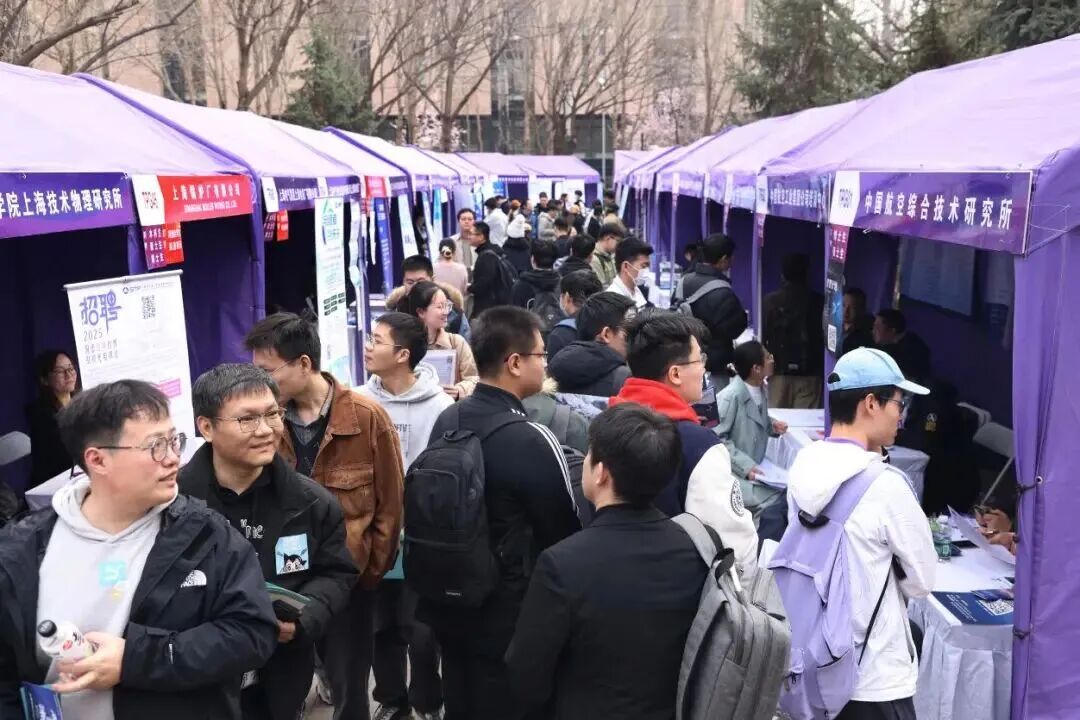
In the employment negotiation meetings for graduates, Tsinghua University has set up a special session for "Major National Projects" for many consecutive years. The special session for the Class of 2025 invited more than 140 national defense science and technology industry units to recruit on campus.
At the same time, Tsinghua University organized a series of activities called "National Defense Science and Technology Talent Month", inviting more than 190 units, including ten major military industrial groups and their subordinate units, to come to the campus for recruitment talks. More than 5,000 students participated. It also organized a series of activities called "Visiting the Manufacturing and Energy Industries" for graduates to help them understand the industry development and strengthen their determination to devote themselves to key fields.
It can be seen that Tsinghua University is deliberately promoting the optimization of the employment industry structure and transporting talents to key national industries such as manufacturing and energy.
More graduates are leaving Beijing, but fewer are going abroad
Different from what people imagine, off - Beijing employment of Tsinghua graduates has become the norm.
The off - Beijing employment rate of the Class of 2025 from Tsinghua University is 56.3%, and this data has exceeded 50% for 11 consecutive years.
Developed coastal cities are not their only choice. In the official publicity information, many graduates choose to return to their hometowns (such as Ningxia, Hunan, Xinjiang, Sichuan, etc.) or devote themselves to the western border areas.
The latest data shows that the number of Tsinghua graduates going to work in the western and northeastern regions has been increasing for five consecutive years. In the Class of 2024, this number increased by 16.5% year - on - year, doubling compared with 2020.
The western and northeastern regions often correspond to energy projects, hydropower, nuclear power, national defense, and major infrastructure. For example, Zhao Jinhan, a doctoral graduate from the Department of Civil Engineering in the Class of 2025, came up with the idea of rooting in and building the northwest during his social practice. After graduation, he plans to work in the Xinjiang Production and Construction Corps. Also, three doctoral students from the Institute of Nuclear and New Energy Technology resolutely chose to go to the northwest after graduation and joined China National Nuclear Corporation.
There is also the optimizing effect of the school on the employment geographical distribution. The official said that increasing the talent delivery to key regions is one of the focuses of Tsinghua University's employment guidance work in recent years.
△
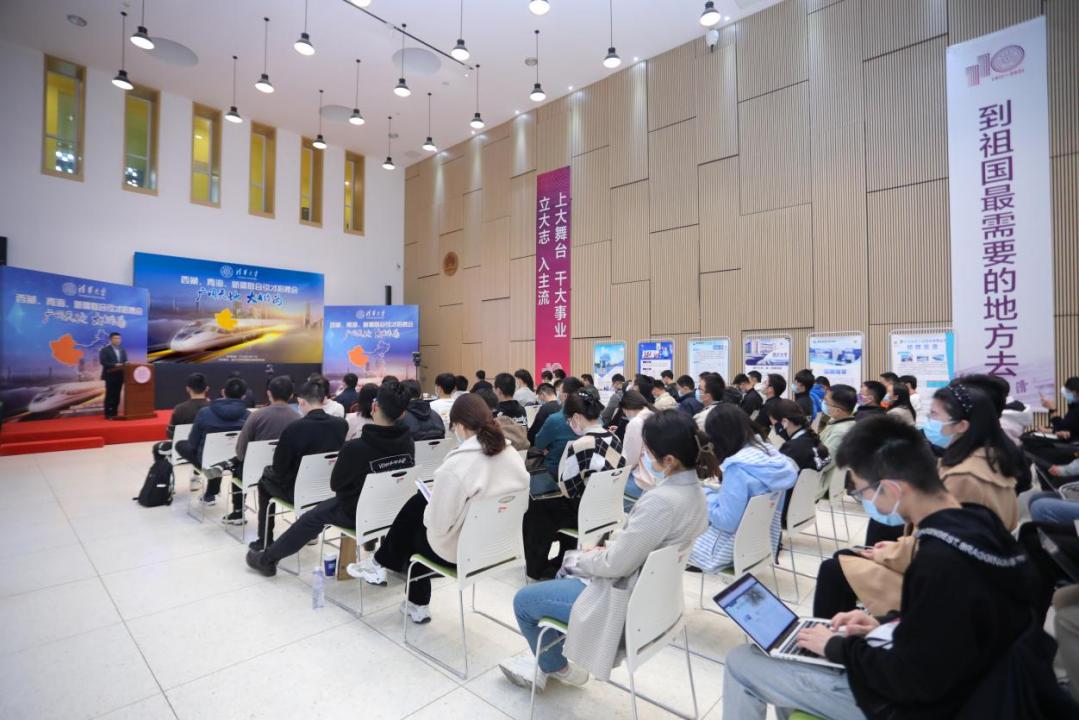
Tsinghua University set up a special session for "Western and Northeastern Regions" at the employment negotiation meeting for graduates, inviting nearly 160 units from the western and northeastern regions to recruit on campus. It also held a series of activities called "Western and Northeastern Talent Month", actively inviting key provinces in the western and northeastern regions to come to the campus for group recruitment.
Data shows that in 2024, nearly a thousand units from the western and northeastern regions came to Tsinghua University for recruitment, 2.4 times the number in 2021.
In addition, it is worth noting that the proportion of Tsinghua graduates going abroad is decreasing.
The proportion of the Class of 2025 going abroad (or to Hong Kong, Macao, and Taiwan) for further studies is 8.5%, lower than the average of the past decade.
Among them, the proportion of undergraduates is higher, while that of postgraduate students is significantly lower: the proportion of undergraduates going abroad (or to Hong Kong, Macao, and Taiwan) for further studies is 17.3%, and that of postgraduate students is 6.6%. This also shows that those who really enter the deep - water area of the scientific research, engineering, and industrial systems are more likely to stay.
△
In the data of the Class of 2024, nearly 70% of the graduates going abroad (or to Hong Kong, Macao, and Taiwan) for further studies went to the world's top 50 universities, including Stanford University, Oxford University, Yale University, Purdue University, the University of Toronto, etc.
According to the registration information on the "Tsinghua People" mini - program of the Tsinghua Alumni Association, most of the alumni who went abroad to study in the past 20 years have returned to work in China after completing their studies and are playing a key role in various industries.
Technical positions have become the absolute main force, and AI is the top priority
In the campus recruitment in 2025, technical positions have become the absolute main force. Positions such as software development, algorithm engineers, and technical support are very popular, and the number of such positions is also the largest.
Even many large companies will set up an early batch for technical R & D recruitment in campus recruitment. ByteDance's campus recruitment in 2026 also clearly stated that the demand for R & D positions is increasing year by year, and it will increase by 23% this year.
Arts students are really sad (joking).
However, the popularity of technical positions has been around for a while. The latest trend is that the demand for AI positions has soared sharply.
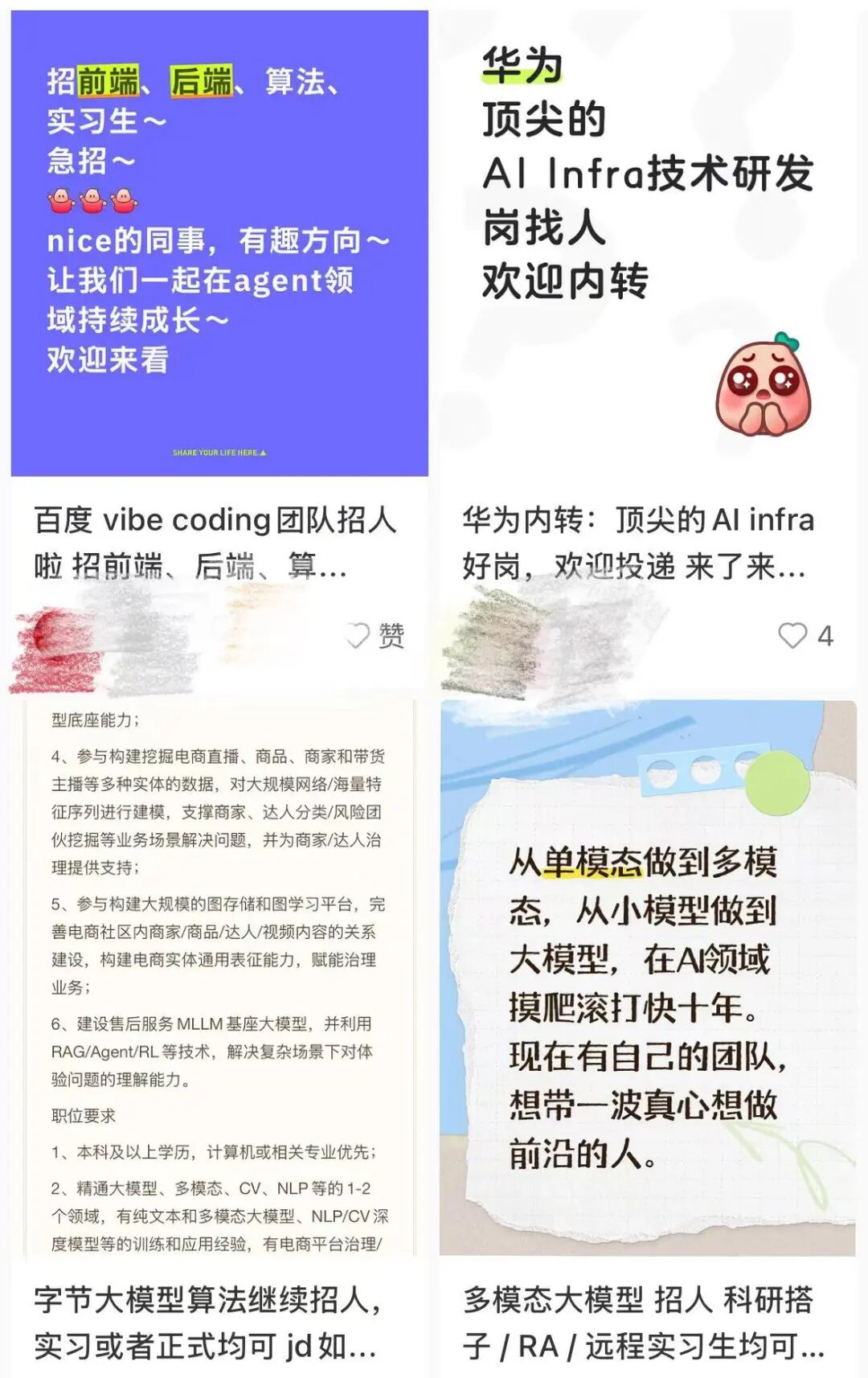
The large - model teams of various large companies will open targeted recruitment, such as Tencent's Hunyuan Laboratory and ByteDance's Top Seed Talent Program. Even on some social media platforms, many bigwigs from large - model laboratories are scouting for talents on the spot.
Screenshot from social media
It can be clearly seen from the number of positions released by each company: among the thousands of positions opened by Alibaba, nearly half are AI - related; among the 5,000 campus recruitment quotas of Meituan, 60% clearly require "AI R & D talents" and "digital retail talents"; in Tencent's campus recruitment for interns in 2025, the quota reached 10,000, and 60% of them are for technical positions such as AI.
The industries with the largest number of Tsinghua graduates in previous years are: information transmission, software, and information technology services, education, scientific research, and technical services, which have sent a large number of top - notch technical talents to society.
In the field of AI, "Tsinghua Yao Class" is an unavoidable topic. There are many well - known AI experts from the "Yao Class":
For example, Yao Shunyu, who went from Tsinghua's Yao Class to OpenAI, has now returned to China to serve as Tencent's chief AI scientist, concurrently in charge of the AI Infra Department and the Large Language Model Department.

Yao Shunyu
Some students from the Yao Class have also plunged into the AI entrepreneurship wave: Lou Tiancheng, the founder of Pony.ai, is a graduate of the first class of the Yao Class. Yin Qi, Tang Wenbin, and Yang Mu, the co - founders of Megvii Technology, also all graduated from the Yao Class.
Back to the question at the beginning: Where do Tsinghua graduates go?
This latest report actually breaks the outside world's previous imagination of Tsinghua:
They don't go abroad in large numbers, nor do they only stay in Beijing. More of them have entered the front - line of industries, the technological forefront, and national key projects.
When going abroad is no longer the default option, when more and more graduates enter the manufacturing, energy, and national defense systems, and when the western and northeastern regions become new growth poles -
The career paths of Tsinghua graduates actually reflect a larger trend:
The talents from the top university are going to the places where they are most needed.
This article is from the WeChat official account "QbitAI". Author: Focus on cutting - edge technology. Republished by 36Kr with permission.