Xibei on the Brink: Jia Guolong Steps Down as CEO, Drastically Closes Stores and Lays Off Staff | Exclusive
Author | Ren Cairu, Li Xiaoxia, Xiao Sijia
Editor | Qiao Qian, Yang Xuan
Jia Guolong, who has always been at the forefront, is now trying to survive by taking a step back.
36Kr has exclusively learned that before the Spring Festival, Jia Guolong stepped down as the CEO of Xibei's main brand, and the former CEO Dong Junyi returned to the position. The latter joined Xibei in 1992 and grew from an apprentice to a store manager, a branch manager, and finally the CEO of Xibei's business division. A Xibei employee said, "Dong Junyi knows the front line better, and people's hearts will be more stable." In addition to Dong Junyi, Zhang Zhongqi, another veteran of Xibei who rose from a chef to a "branch boss," also returned to the headquarters to save the situation.
It has been less than two years since Jia Guolong's last high - profile "return to take charge."
And this veteran in the catering industry's self - rescue actions don't stop there. Recently, Xibei announced internally that "due to a significant decline in the company's business volume," many headquarters employees need to be on furlough (implemented according to the minimum wage standard) or leave.
A headquarters employee who was asked to leave told 36Kr that the company offered three options: first, taking unpaid leave; second, the company would issue part of the performance bonus for 2025, and the employees would leave voluntarily after receiving it; third, being dismissed with an "N" - times compensation, but the compensation would be paid in installments over a year and might also be resolved in the form of "converting to shares."
According to 36Kr, originally there were more than 500 employees at Xibei's headquarters. After this round of layoffs, "this number will drop to about more than 200."
Below the headquarters, the closure of stores and layoffs are also advancing rapidly. As early as mid - January 2026, Jia Guolong held an internal meeting in Hohhot and announced the closure of 102 stores.
But according to 36Kr, the actual situation of store closures is far more severe than this.
Before the public opinion storm caused by Luo Yonghao, Xibei had about 350 stores. A Xibei store employee told 36Kr that so far, 150 stores have been closed. Another former senior executive of Xibei said, "The number of stores closed that you see now is not even the beginning. What's being discussed internally is how many stores should be left open." In other words, "if some important strategic stores are losing money, they won't be renewed either. They will keep closing until they can survive."
A clerk at a Xibei store in a second - tier city told 36Kr that Xibei's dismissal of store employees is roughly divided into three steps: first, appealing to emotions, persuading employees to leave voluntarily on the grounds that "the company has been very good to you." Then, "threatening" by transferring employees to other stores. If they don't report to the new position within three days, they will be regarded as absent from work and forced to leave. Finally, "luring" by asking employees to go through the resignation process first, and after leaving, the company may give a compensation of 2,000 yuan at its discretion.
The large - scale layoffs at the headquarters, store closures, and layoffs are Jia Guolong's last resort. Many insiders believe that if Xibei's cash flow still cannot turn positive by April this year, or if the self - rescue efforts don't show obvious results, "it will be very dangerous."
In 2025, an unexpected public opinion war pushed the 37 - year - old Xibei to the edge of a cliff. On the surface, it's 180 days of desperate self - rescue for Jia Guolong, but behind it is six years of misalignment for Xibei.
180 Days of Strenuous Self - Rescue
So far, Xibei's new developments can be summarized into three directions:
First, cost - cutting.
In addition to reducing employee salary expenditures, Xibei is also "saving money" on its office space.
In 2020, Xibei's headquarters moved to Beijing Shougang Sports Building for office. The decoration was luxurious, spacious, and bright. 36Kr found during a visit that this office area's lease expired at the end of 2025 and was returned. The area on the first floor has now become an "exhibition hall." A "2026 Tibetan Culture New Year Special Exhibition" was just held from January 15th to January 31st, and it is currently idle.
And Xibei's original office on the 20th floor is now empty. The only traces left are the words "Xibei" on the door and an announcement of "Xibei's Integrity Reporting Hotline" on the wall.
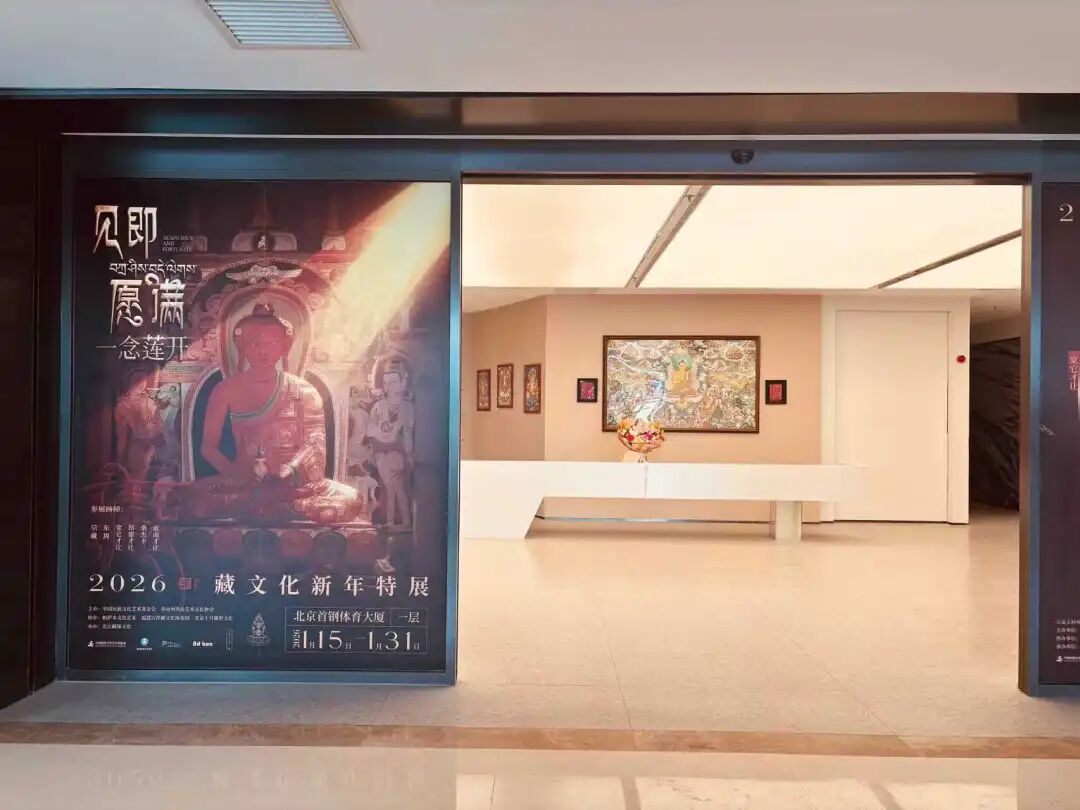
Xibei's original office on the first floor of Beijing Shougang Sports Building, where a Tibetan culture New Year special exhibition was held in January (Photo by the author)
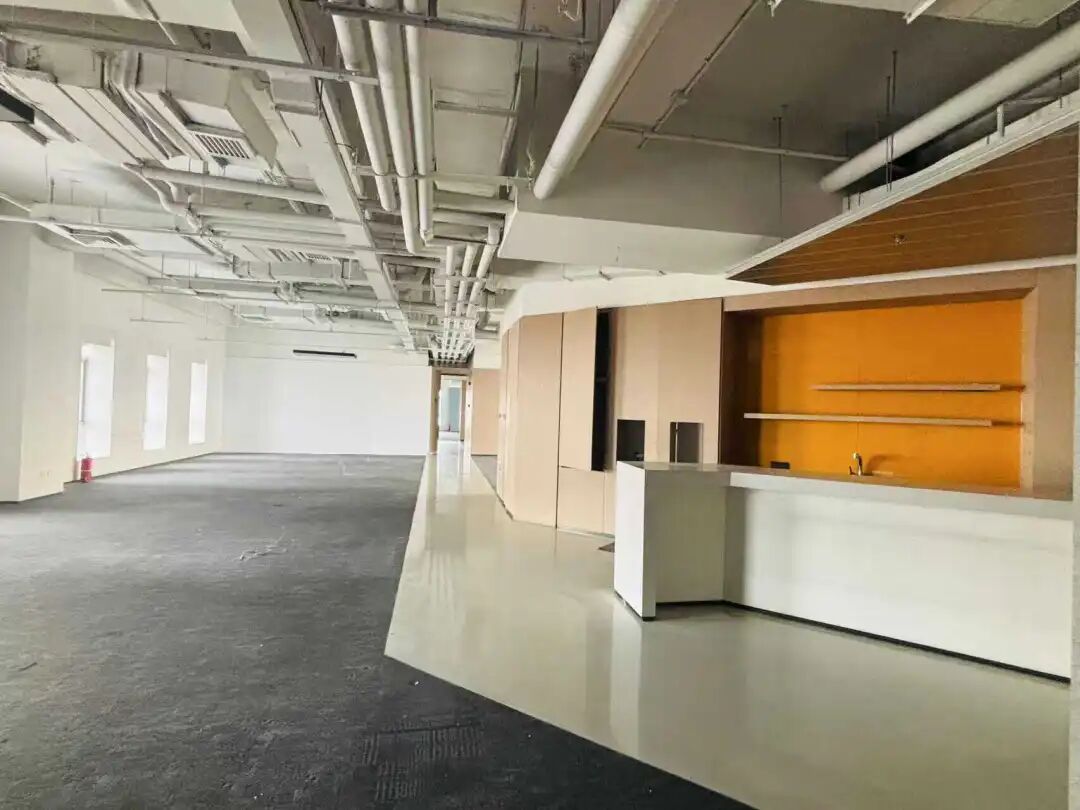
Xibei's original office on the 20th floor of Beijing Shougang Sports Building has been vacated (Photo by the author)
Now, a large number of employees have left either voluntarily or involuntarily. The remaining Xibei employees are scattered on the 4th floor of the Liuliqiao flagship store in Beijing, in a courtyard inside the former "Ninety - Nine Yurts (Fushi Road Store)" under Xibei, and some have moved to Hohhot for work.
Second, raising funds.
Rarely, Jia Guolong has shown a "welcoming" attitude towards first - tier market investors. A consumer investor who had communicated with Xibei a few months ago told 36Kr, "Its next adjustment requires more funds to be raised." Jia Guolong hopes that investors will believe in him and tide over the difficulties with Xibei, and "the valuation he offers is much more 'favorable' than before."
Employees are also given the same expectation. 36Kr learned that at the end of 2025, Xibei raised funds from all city managers and headquarters employees and gave dividends according to the corresponding proportion. Since the dividend amount is linked to the company's net profit, Jia Guolong and his wife promised that if the annual net profit rate is less than 6%, they will make up the difference by themselves at 6% to distribute dividends to the investing employees.
The last time Xibei opened an investment window for the first - tier market was around 2020 to stockpile ammunition for its new business "Jia Guolong's Kung Pao Dishes." Jia Guolong recalled in an interview before, "At that time, everyone wanted to invest in Xibei and tried to make an appointment with me in various ways."
He also met Shen Nanpeng of Sequoia and Zhang Lei of Hillhouse in person, but that round of external financing didn't succeed in the end. Jia Guolong was whole - heartedly devoted to the unproven new business and at the same time hoped to be unconditionally trusted.
By May 2021, this "investment opportunity" was digested within the company. At that time, Xibei launched an "equity incentive" for internal employees. The incentivized employees invested in the employee shareholding platform through the partnership they were in and indirectly held the company's equity. The document stated, "Jointly practice the company's core values of 'My Xibei - sharing responsibilities and risks, and sharing power and results'."
Employees could choose whether to "buy" shares, but at that time, it was hardly a choice. "Everyone was very enthusiastic and confident. The company was expected to go public in the first half of 2026, and some people even borrowed money to invest." Weng Yang, a former Xibei employee, told 36Kr.
In later development, Xibei didn't follow the "mainstream" financing route of the first - tier market. At the beginning of 2025, Xibei received an investment from Xinchao Media, which currently holds 1% of the shares of Xibei Catering Group. According to 36Kr, this investment was completed in the form of "exchanging shares for elevator advertising resources."
Now, Xibei is facing challenges in its operation. Just the issuance of "consumer vouchers" after the public opinion storm cost 300 million yuan. The cash on the books is constantly flowing out. Coupled with the expenditures related to business adjustment and the refund of prepaid cards due to store closures, Xibei needs more funds, and employees' enthusiasm for investment is not the same as before.
In the Series A financing completed by Xibei in January this year, Zhang Yong, the founder of Xinrongji, and Hu Xiaoming, a former Alibaba partner, were both involved. "The two of them have a good personal relationship with Jia Guolong. Xibei also had supply - chain cooperation with Hu Xiaoming's '1.8 - meter Agricultural Technology' before. This financing is more like friends lending a helping hand in a dangerous moment." A person familiar with the matter said.
Third, in the continuous organizational upheaval, readjust the business thinking of Xibei's main brand.
Some backbones left before the Luo Yonghao incident. According to 36Kr, since around April 2025, Xibei's former "branch bosses" have successively left or been transferred to other positions. These people had fought side by side with Jia Guolong and expanded Xibei's territory. The branch system that incorporated trust, empowerment, tolerance for mistakes, and loyalty no longer exists, and instead, it has moved towards "centralized power at the headquarters."
Jia Guolong, who is fighting a desperate battle, has publicly talked about the adjustment direction several times - reducing the average customer price by 20%, curbing the desire for expansion, moving more food - making processes from the central kitchen to the stores, and continuing to develop children's meals and birthday parties in depth by assigning dedicated store staff. But after all the efforts, "the stores still don't see much hope of improvement." A front - line Xibei employee said. Now, the responsibility of the CEO has been handed back to Dong Junyi, and everything may change again.
The Crisis Lurks
Luo Yonghao's dining experience brought Xibei to the forefront of public opinion. But the real crisis started much earlier than what the public saw.
According to 36Kr, more than half of the 102 stores originally planned to be closed were already in a state of loss or poor operation. Among these stores, some were located in areas where Xibei didn't have many stores and its brand influence was limited, while others' lease contracts expired and they didn't renew due to the high rent increase pressure.
A former middle - level employee of Xibei felt that since 2019, Xibei had gradually shown signs of decline. A few years ago, when the lease of a Xibei store expired, the mall property where it was located clearly stated that they didn't want to renew the lease. "They directly said that Xibei's brand was too old."
From 2015 to 2018, the "third - generation Xibei stores" with an area of about 300 square meters and an all - open kitchen surrounding the front hall were highly sought after by first - tier business districts in first - and second - tier cities, and rent - free situations were not uncommon. The founder of a grilled fish brand told 36Kr, "Even today, when talking about the catering brands that thrived during the shopping - mall era, Xibei is still the most typical one."
Li Ni, who used to be a store manager at Xibei, recalled to 36Kr, "Around 2018, the mall had a monthly turnover competition, and many Xibei stores had the highest turnover in their respective malls."
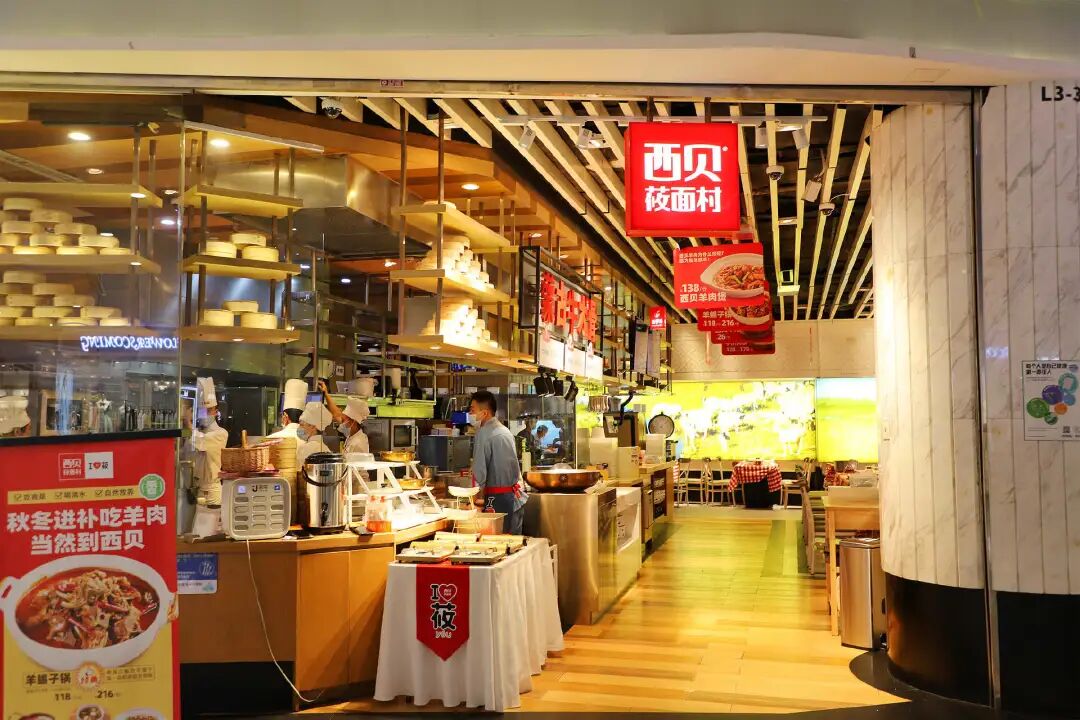
A Xibei Youmian Village store in Shenzhen in 2021 (Source: Visual China)
At its best, Xibei opened 110 stores in 2018, 10 more than originally planned. At that year's annual meeting, Xibei issued 80 million yuan in bonuses and "stockpiled a lot of goods, ready to make a big move." However, the pandemic came, and Xibei's cash flow was under pressure, and it even couldn't pay employees' salaries.
Coupled with the trend of consumption downgrade, Xibei became less and less adaptable to the environment. "The decrease in customer flow in some stores is very obvious." Since around 2024, the number of loss - making stores has been gradually increasing.
Jia Guolong also publicly stated that after the Spring Festival in 2024, the business started to decline. He said that "we should resolutely close the stores that are not making money and have negative cash flow. It's more important to protect the profit margin than the growth rate." At its peak, Xibei had more than 400 stores, and before this round of public opinion, there were about 350 stores left.
Most of Xibei's lease contracts are for 5 - 8 years. In the past few years after the pandemic, it happened to be the period when a large number of lease contracts expired and there was pressure for rent increase and lease renewal. With increasing expenses and decreasing revenue, "It's not that Luo Yonghao caused the closure of more than a hundred stores. He just accelerated the process." Weng Yang said.
However, in the eyes of old employees, the "turning point" for Xibei to see a glimmer of hope had originally begun to appear.
The most important change was that at the beginning of 2025, Jia Guolong resumed the position of CEO of the main brand, focused on the main business, and shifted his attention from endless new businesses to the main business "Xibei Youmian Village."
Jia Guolong's core idea after his return was to stabilize Xibei's mid - end brand positioning through service and "emotional value." In his New Year's message in 2025, he summarized, "Whoever can turn catering into the entertainment industry and meet customers' spiritual needs will achieve great success." When being interviewed in December 2024, he mentioned that "blindly competing on price is not advisable" and hoped that Xibei should first "do well" among "doing well, doing for a long time, and doing big."
The above - mentioned old employee told 36Kr that originally Xibei had the opportunity to adjust itself step by step and find a more suitable position in the market - for example, the children's meal strategy was about to be further developed. "There was a strategy for what children at the ages of 3, 6, and 9 should eat respectively. A battle line was about to be drawn, but it stopped abruptly. It's a great pity."
In this employee's view, if Jia Guolong had still been "obsessed" with new businesses, Xibei might have gradually faded away on a downward curve. "But when Mr. Jia decided to return to Xibei to take charge, there was a possibility of turning the situation around. An unexpected public opinion broke the situation and made it look like a continuously falling stock."
However, from a more objective perspective, the public opinion incident may just be the last straw before the avalanche.
Chivalrous Spirit in the Business World and Business Misalignment
In