BYD Gears Up, Geely Bucks the Trend: How Big is the "Temperature Difference" in the Auto Market in February?
January is the regular "resting period" for the annual auto market, and February is a very stable sales adjustment period due to the Spring Festival. The overall sales performance of the Chinese auto market from January to February this year did not exceed expectations. The changes in everyone's book figures are not significant, but what lies behind the figures are the signs of various companies gearing up for the upcoming "Golden March and Silver April." The impact brought by the tightening of the purchase tax preferential policy and the further reduction of new energy subsidies in 2026 is still spreading. The tightened consumption budgets of consumers during the Spring Festival holiday have also led to more wait - and - see attitudes. Standing at the current time point, the more vigorously everyone rushed at the end of last year, the more they need to gradually pay the price in the first quarter of this year.
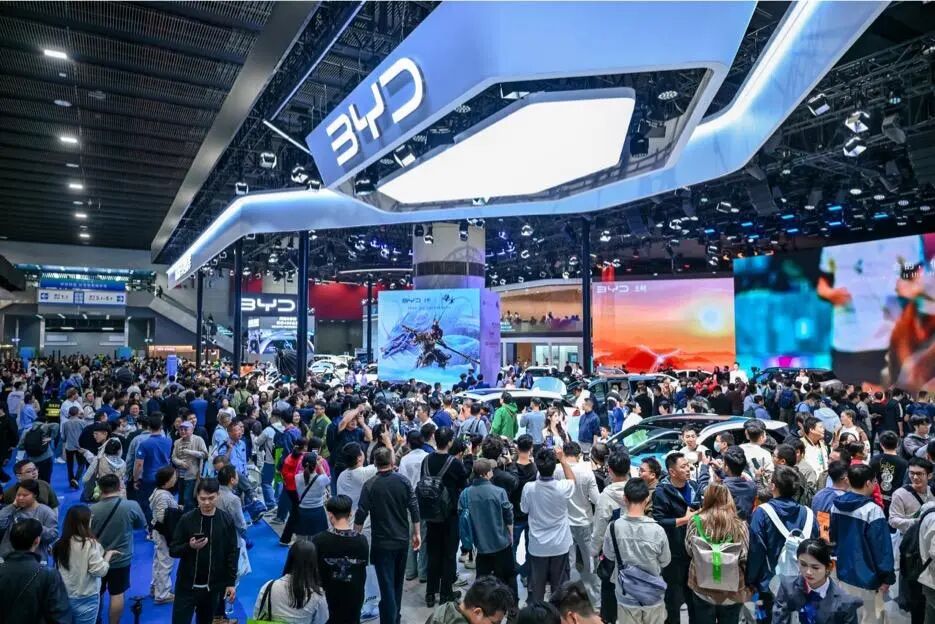
Therefore, a general month - on - month decline was the main theme of February just passed. However, even in these cold reports, we can still see completely different survival postures: some are happy while others are sad. But no matter what the current situation is, everyone is waiting for an opportunity to burst out again. This is the real current situation of the Chinese auto market.
Weathervanes: BYD's "Building Up Strength" and Geely's "Going Against the Trend"
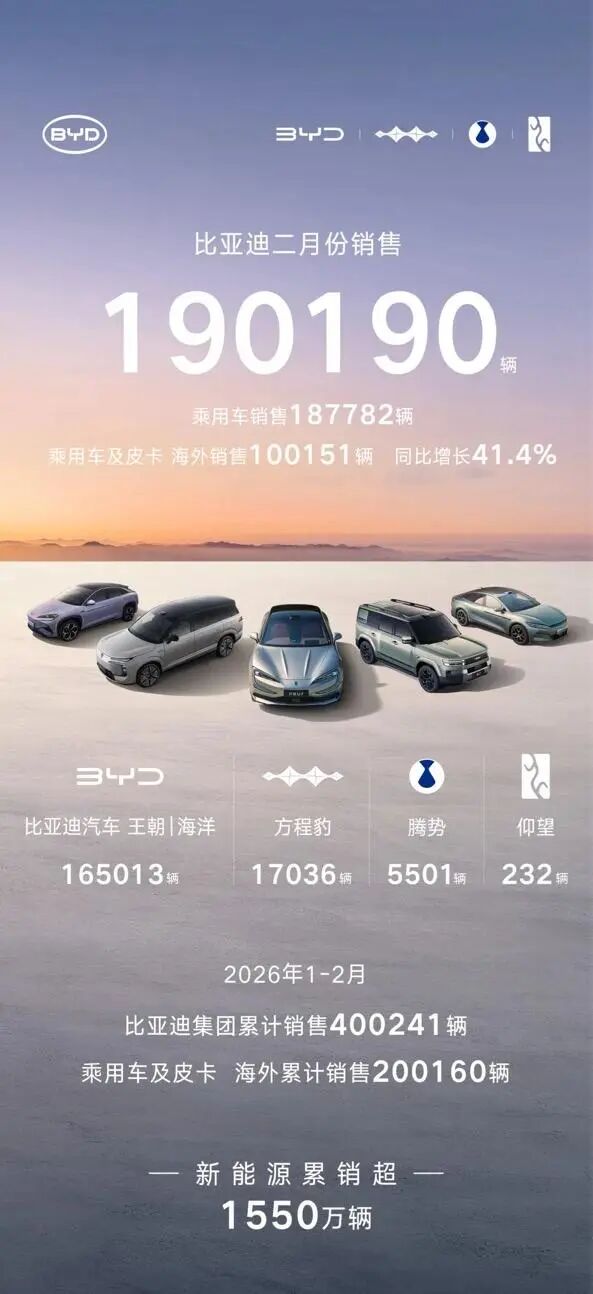
When judging the sales enthusiasm of the auto market, we are already accustomed to first looking at the performance of BYD and Geely, two giants. They have achievements in both the domestic and overseas markets and can, to a certain extent, serve as weathervanes for the Chinese auto market. It can be said that in the long period of "stock competition" now and in the future, their defensive capabilities determine the lower limit of the overall market. BYD delivered 190,000 vehicles in February, including 189,000 passenger cars (79,539 pure - electric vehicles and 108,243 plug - in hybrid vehicles), and overseas sales also reached 100,151 vehicles. Thus, BYD's sales this year have exceeded 400,000. This scale effect not only brings absolute bargaining power at the supply chain end but also gives BYD the cards to continue squeezing the living space of its competitors in all aspects in 2026. The large user base of the Dynasty and Ocean networks, and the full - price - range brands of BYD, Denza, Fangchengbao, and Yangwang. This complete series of layouts firmly controls the traffic entrance of the market, bringing more strategic options for them to cope with competition.
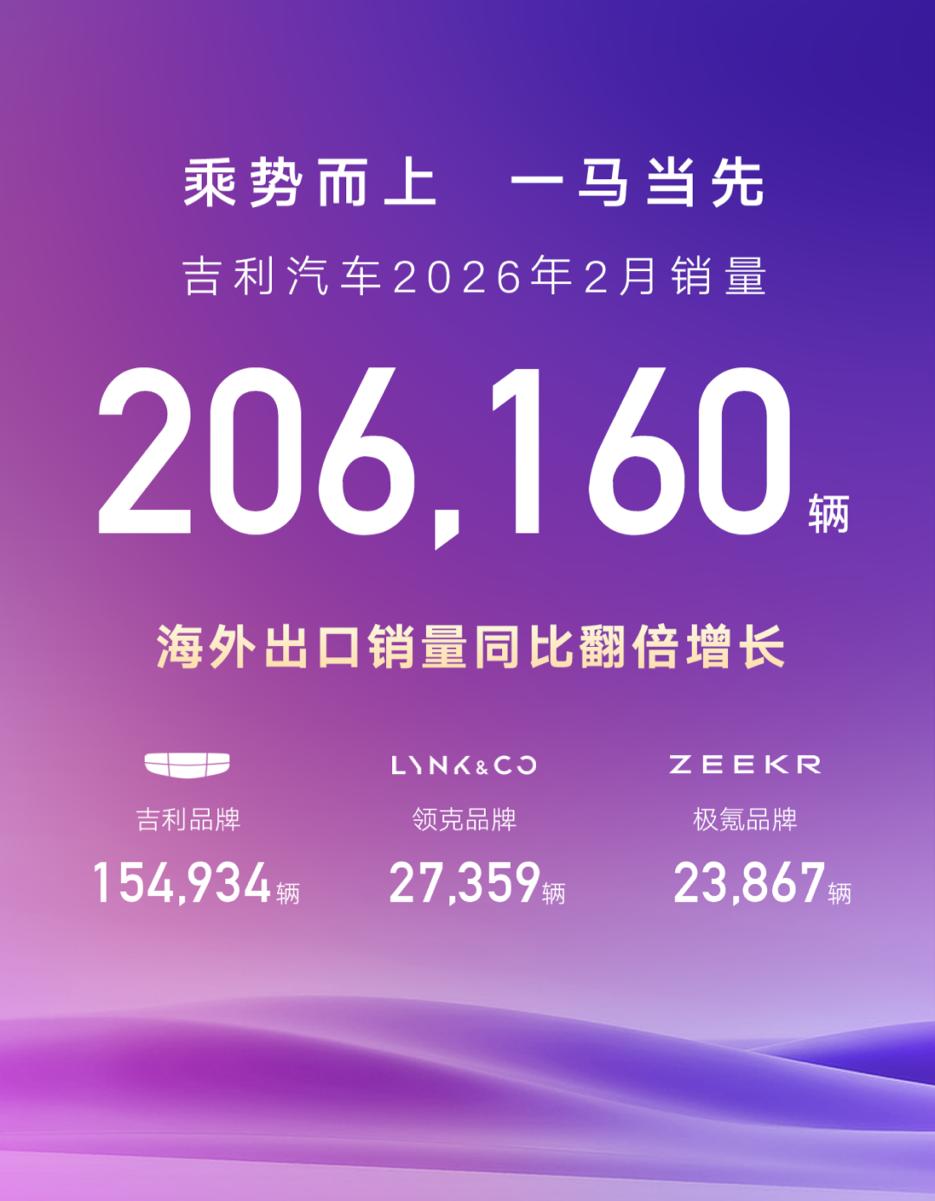
Meanwhile, Geely achieved sales of 206,000 vehicles in February. Among them, the proportion of new energy vehicles has exceeded 56%, basically realizing Geely's smooth transformation from relying on fuel vehicles to electric - drive vehicles. In such a report card, the sub - brand Zeekr deserves great credit. They went against the trend in February, achieving both year - on - year and month - on - month growth, with nearly 23,900 vehicles delivered. In addition, Galaxy, which became the pillar of Geely's sales last year, still performs strongly. Moreover, the global debut of Geely Galaxy M7 and the continuous increase in sales of Galaxy V900 indicate that Geely is trying to further expand the mainstream family car market in the 200,000 - yuan range, using a multi - brand matrix to counter the periodic weakness of single models.
Weathervanes: BYD's "Building Up Strength" and Geely's "Going Against the Trend"
Compared with the fierce competition in the domestic market, Chery showed a completely different global survival wisdom in February. In the just - passed February, the total sales of Chery Group exceeded 160,000 vehicles, of which overseas exports reached as high as 125,000 vehicles, a year - on - year increase of 41.5%. This means that Chery has achieved a monthly export breakthrough of 100,000 vehicles for 10 consecutive months. For Chery, the overseas market is no longer an additional increment but a basic market and a major shield for them to cope with competition in the domestic market. When the domestic market fluctuates violently due to seasonal and policy factors, Chery successfully hedges the systematic risks of a single market by taking root in the global market. This "walking on two legs" model allows Chery to move forward more calmly.
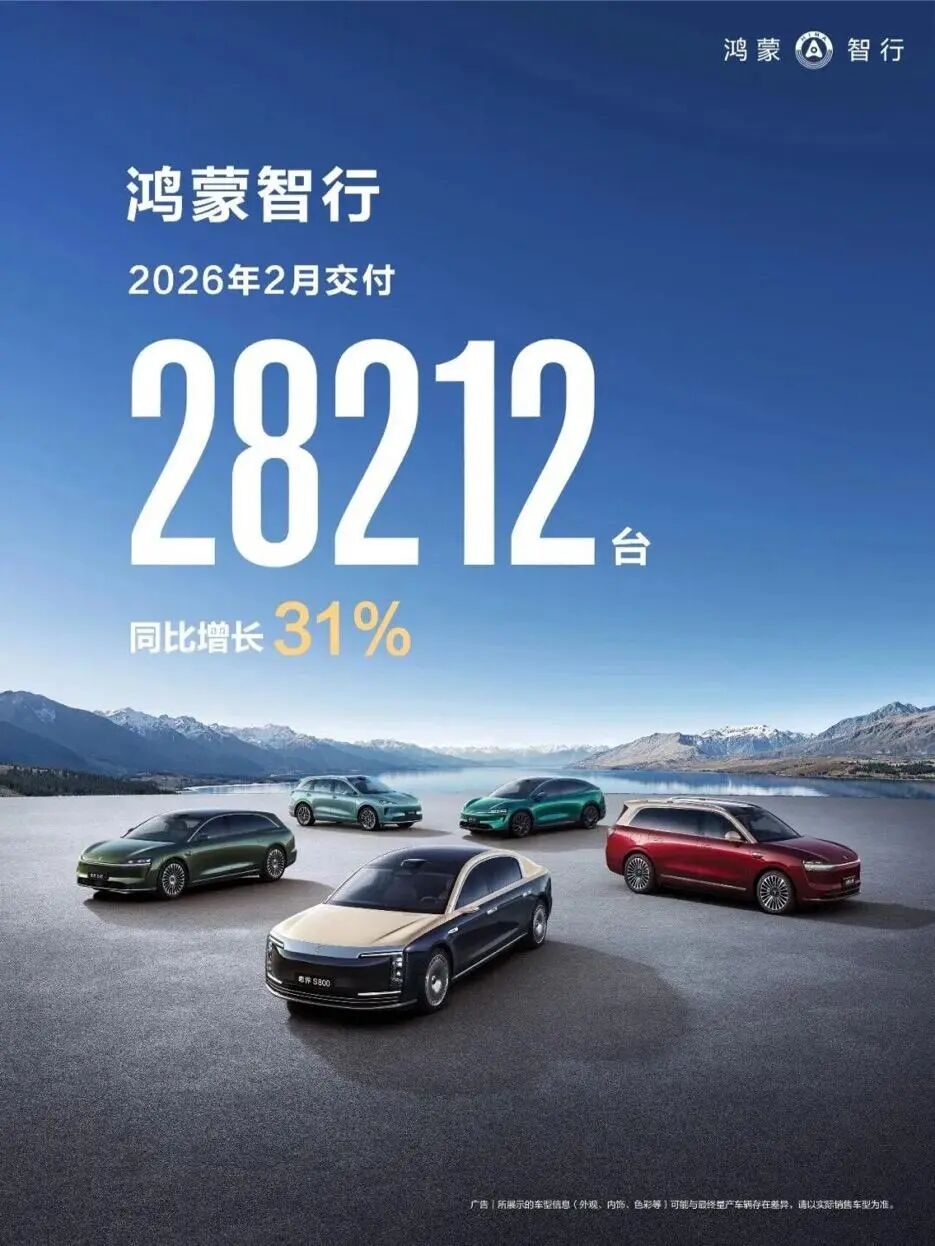
Similarly, Hongmeng Zhixing has found its own moat at the product end. They (including Wenjie, Zhijie, Xiangjie, Zunjie, and Shangjie) delivered a total of 28,000 vehicles in February, a year - on - year increase of 31%. Although the absolute number is not particularly outstanding, Hongmeng Zhixing's dominance in the high - end market is still strong. Among them, the position of the Wenjie M9 in the 500,000 - yuan market is stable, which also shows that Hongmeng Zhixing has achieved mental recognition among consumers. In future market competition, this position will become even more unshakable. The situation in February can be regarded as building up strength for the upcoming new products: with the filling of brands such as Zhijie and Xiangjie in different niche markets and the scheduling of a new product line in 2026, the intelligent driving ecosystem covering the entire price range built by Hongmeng Zhixing has initially taken shape. For it, the short - term sales decline is not a problem at all. The high - barrier ecosystem they have built through the Hongmeng cockpit and Qiankun intelligent driving will continue to force all competitors to re - benchmark.
Camp Differentiation: Some Are Happy While Some Are Anxious
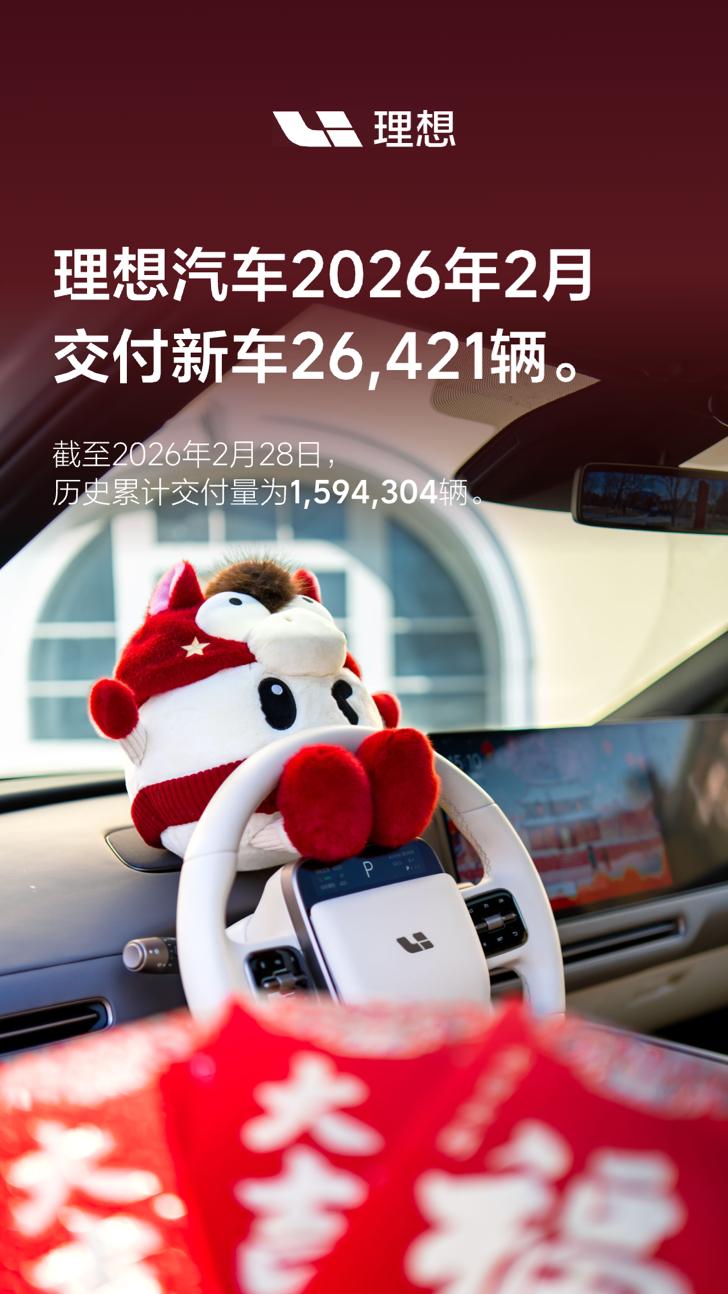
In the auto industry, the scale undoubtedly determines the enterprise's fault - tolerance rate and strategic determination. Now, it seems that all this will become clearer this year. For example, Li Auto and Leapmotor, which have been on the offensive and trying to break through the circle, are currently in a delicate and typical "game." Li Auto delivered 26,400 vehicles in February. Although there was a slight month - on - month decline, Li Auto's cumulative historical deliveries are approaching 1.57 million. Firmly targeting high - end user groups, they already have the capital to "not cut prices and not get flustered" in the off - season thanks to their stable scale. The Li L9 Livis is about to be launched. The price of 559,800 yuan is essentially using the "technological premium" of the top - of - the - line model to stabilize the profit margin boundary of the high - end market. Their intention to build up strength tactically for the full - series replacement of the L9 in the second quarter is actually very obvious. Through continuous AI strategy and intelligent driving R & D, their pace shows no sign of chaos.
Meanwhile, Leapmotor, which was very aggressive in the past year, achieved 28,000 vehicle sales in February, a year - on - year increase of 11%. Different from last year's pursuit of breakthroughs, Leapmotor has become the target for others to benchmark this year. The relatively stable increase in February proves that they are passing through a crucial stage in their development. It also shows that Leapmotor's route of "full - domain self - R & D + technological equality" still precisely hits the pain points of consumers. Leapmotor is trying to lock in the 100,000 - yuan intelligent driving market with the A10 model, using lidar to outperform competitors in the same class; at the same time, the D19 model, as the flagship for brand upgrading, will try to break into the high - end market in Q2. As long as they can maintain a monthly delivery base of more than 25,000 vehicles, Leapmotor will have enough financial accumulation to support their intensive product launch period this year.
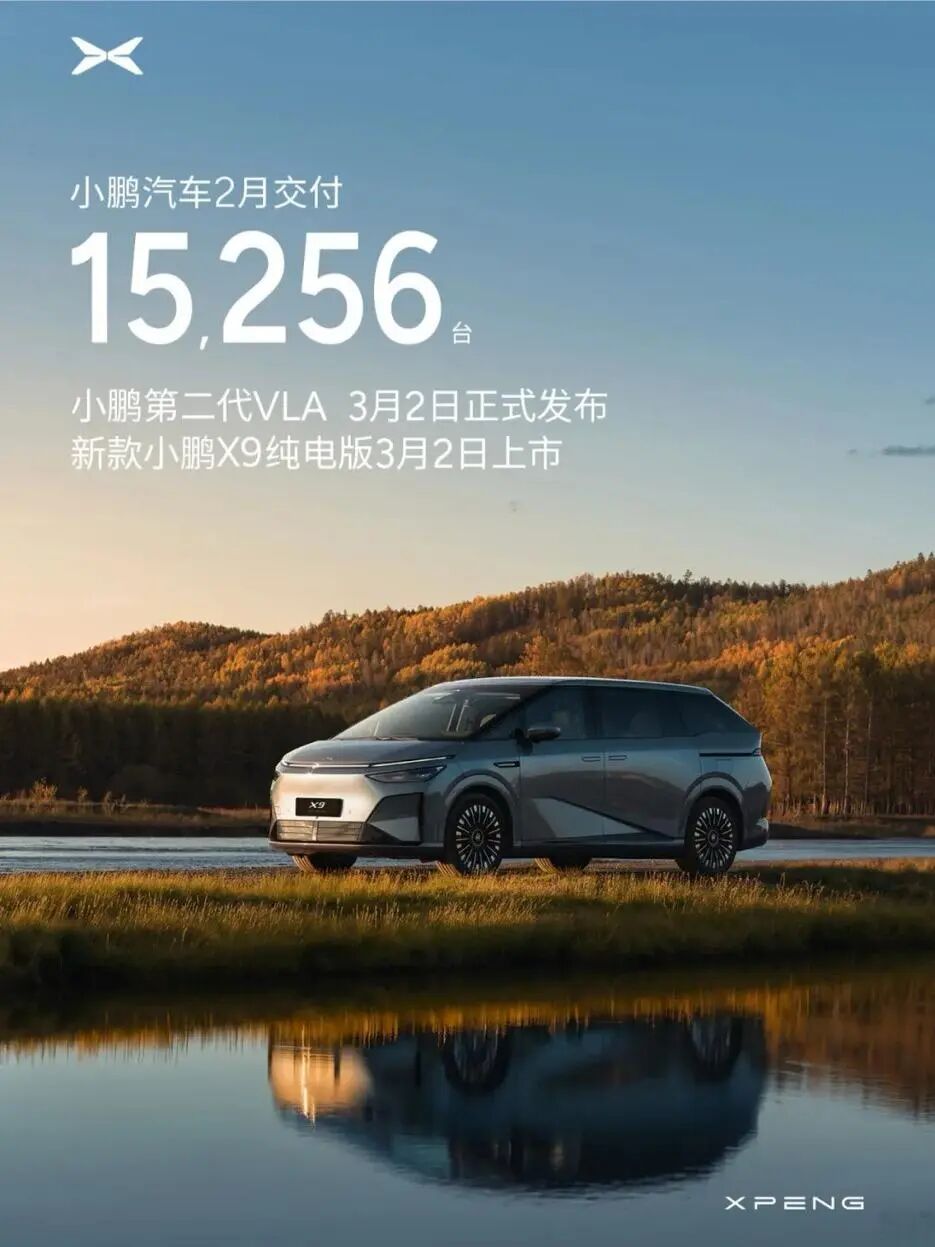
In sharp contrast, XPeng and NIO, with no improvement or even a decline in data, will undoubtedly be filled with a growing sense of anxiety. XPeng's deliveries in February this year fell below the 20,000 - vehicle mark, with only 15,000 vehicles, almost halving year - on - year. Coupled with their poor sales in January, this sluggish start seems extremely tense in the face of the high - expected annual target of 550,000 - 600,000 vehicles this year. The newly launched 2026 XPeng X9 pure - electric version is XPeng's only chip to maintain its voice in the high - end pure - electric market. Whether it can make a comeback in the "Golden March and Silver April" may be related to XPeng's fate this year.
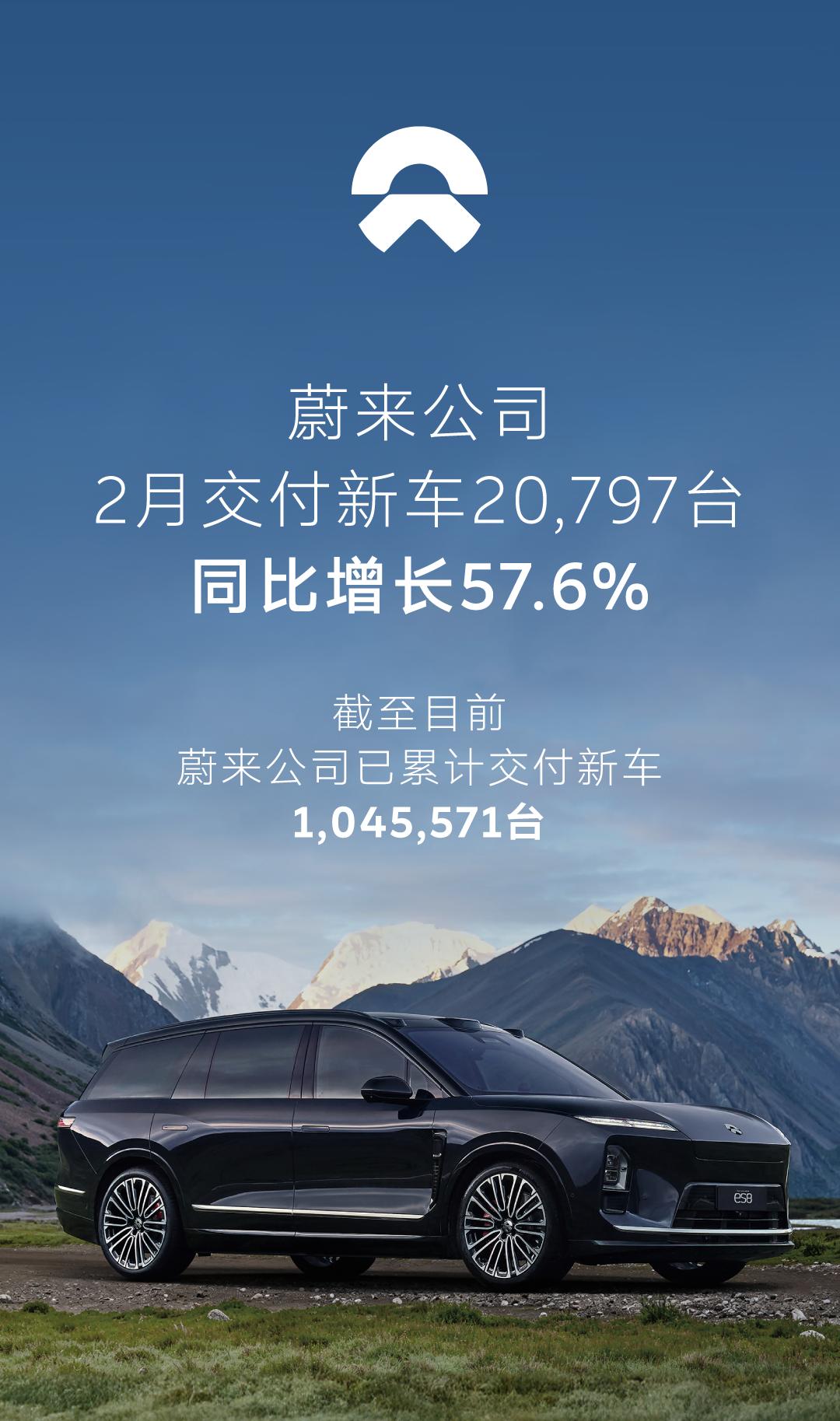
NIO, on the other hand, presents a different situation. Their monthly sales are close to 21,000 vehicles. Although there is still year - on - year growth, this is related to NIO's consistently sluggish sales before Q2 last year, when there was neither the addition of the Firefly model nor the sales increase brought by NIO's "price cuts." This year - on - year growth is just a result of the too - low standard. It is foreseeable that NIO's intention to try various policies to break through the annual sales scale threshold of 500,000 vehicles will not change, and the strategy of sacrificing profits for scale will still be their mainstream choice. However, the financial pressure brought by this series of actions is self - evident.
Waiting for the Right Time: Model Upgrade Games and Data Adjustments of Various Brands
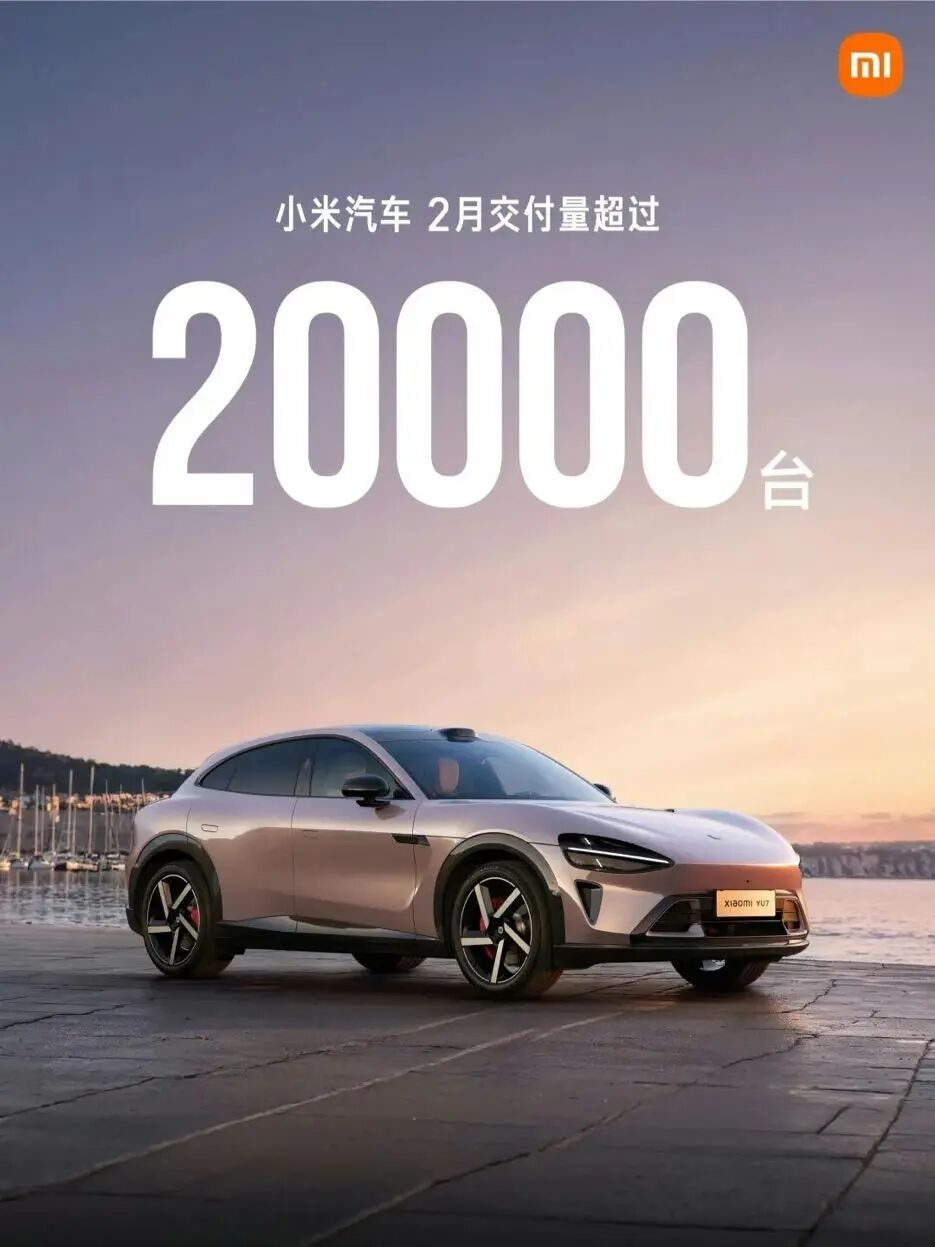
Among other brands, the trend of co - existing happiness and anxiety is also very obvious. Xiaomi Auto also experienced pain in February. Compared with the delivery volume of more than 39,000 vehicles in January 2026, although Xiaomi did not announce the specific figure in February, the official said that the delivery volume just exceeded 20,000, a month - on - month decline of about 48%; compared with the same period last year, the year - on - year decline was also about 15.7%. This is surely due to factory capacity adjustment and seasonal factors, but more because of the large - scale "waiting with money in hand" caused by the market's expectation for the upgrade of the new - generation SU7. For Lei Jun, Xiaomi Auto has completed the survival battle from 0 to 1. But how to achieve a balance between inventory, production, and expectations during the product upgrade period and avoid falling into the "new - old replacement crisis" like traditional large manufacturers is the second core test of Xiaomi's organizational evolution ability.
Among the new brands incubated by traditional automakers, Dongfeng Yipai showed strong dark - horse potential. The result of nearly 15,000 vehicles in February has exceeded that of its sister brand Voyah. This shows that in the most competitive and most practical red - ocean market segment of 150,000 - 200,000 yuan, once the manufacturing ability of state - owned enterprises combines with precise market pricing and channel sinking, it can still form a powerful flanking attack on new car - making forces. Voyah is trying to find a new high - end growth pole through the pre - sale of the Dreamer Champion Edition. In the fierce competition of MPVs over 300,000 yuan, with the continuous games among the XPeng X9, Li Auto MEGA, and Zeekr 009, Voyah still achieved a good result of 8,358 vehicles, which also shows the continuous progress of state - owned enterprises on the high - end path.
In terms of other brands and groups, Great Wall Motors sold a total of 72,594 vehicles, a year - on - year decrease of 6.79%. Among them, there were 12,744 new - energy vehicles and 42,675 overseas sales. SAIC Group's vehicle sales in February were about 269,500, a year - on - year decrease of 8.64%. The cumulative sales from January to February this year were about 600,000, a year - on - year increase of 6.76%. As of now, a considerable number of automakers have not announced their February data, which is not uncommon for a month widely regarded as an off - season.
Summary by Cheyun
The "Spring Final" is about to begin, or perhaps it is the final battlefield. It should be said that the data in February is just a prelude. In the extreme test of policy changes, it gradually shows the most real immunity and anti - risk background of each automaker.
Of course, with the arrival of March, the first "Spring Final" in 2026 will officially start. This is no longer just a simple price war but a systematic war integrating delivery capabilities, algorithm iteration speed, and capital resilience. In such a fierce market environment, no automaker can afford to fail in a peak season. After the inertial adjustment in February, we will witness a real "war."