10 billion yuan is being invested in humanoid robots.
Two months have passed on the 2026 calendar, but the aftermath of the just - passed Spring Festival in the robotics industry is far from over.
After the Spring Festival Gala, the sales of the group - appearing robots skyrocketed, which also made capital see the commercialization potential. In this most influential communication feast in China, robotics companies completed a thrilling leap from niche upstarts to national brands.

However, beyond the spotlight, another sense of urgency is spreading in the industry.
Players who failed to make it onto the Spring Festival Gala stage are launching a more fierce financing competition. Their goal is very clear: to stockpile as many resources as possible before the upcoming "delivery battle" begins.
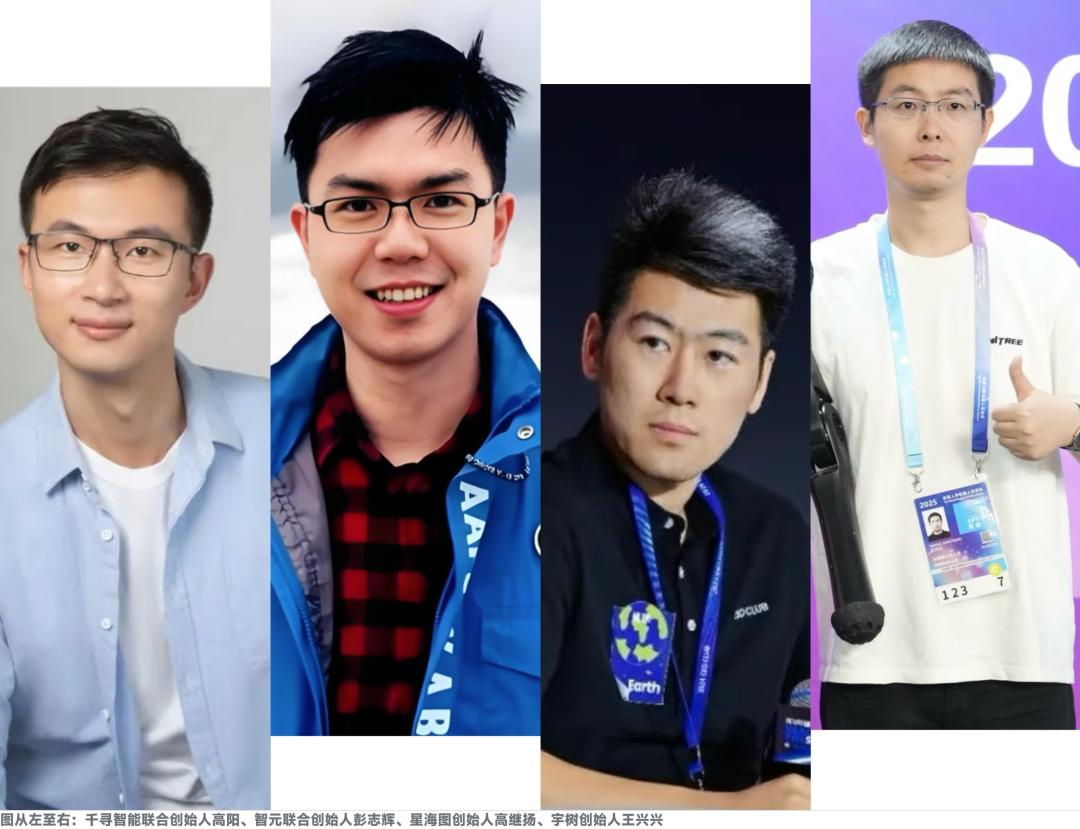
According to incomplete statistics from Phoenix Tech, recently, three new billion - dollar unicorns have emerged in the humanoid robot track, namely Xinghaitu, Zhipingfang, and Qianxun Intelligence.
On February 24th, Qianxun Intelligence secured a huge single - round financing of over 2 billion yuan. The day before, Zhipingfang completed a Series B financing of over 1 billion yuan. On February 11th, Xinghaitu completed a nearly 1 - billion - yuan Series B financing. These three companies, together with Unitree Robotics, Galaxy General, and Zhipu Robotics, have joined the ranks of billion - dollar unicorns.
Under the revelry, it often comes with bubbles.
GGII data shows that in the past three years, the number of domestic humanoid robot companies has soared from more than 120 to more than 320, and the industry financing has exceeded 58 billion yuan. In 2025 alone, the financing amount reached a staggering 38 billion yuan.
Yesterday, Galaxy General, which had appeared on the Spring Festival Gala, and Songyan Power also simultaneously announced a new round of financing, and the popularity of the track continued to rise. Among them, Galaxy General completed a new round of financing of 2.5 billion yuan, the largest single - round financing for embodied intelligence at the beginning of 2026. In this round of financing, the state - owned large - scale funds made their first investment in an embodied intelligence company, and the "national team of embodied large - models" was officially born.
Songyan Power also announced the completion of a Series B financing, with a total financing of nearly 1 billion yuan in this round.
Since the beginning of 2026 alone, more than 10 billion yuan in financing has poured into the Chinese robotics field, and more than 20 companies have received capital support.
This is a race for survival.
Just two months into the new year, the financing has exceeded 10 billion yuan
The communication dividend of the Spring Festival Gala is obvious to the naked eye.
Among the four companies that appeared on the stage, Unitree Robotics has been on the Spring Festival Gala three times. A research report by Morgan Stanley at the end of 2025 directly pointed out that Unitree had a clear lead in brand exposure and media influence.
According to Wang Xingxing, by the end of 2025, Unitree's actual shipments of humanoid robots exceeded 5,500 units, making it the company with the largest shipments of humanoid robots globally.
Galaxy General, the most highly valued company in the industry, filled the gap in public perception, letting the outside world know that "not only dancing machines are robots, but also those that can do work are robots". And Songyan Power and Magic Atom, which were established only two years ago, completed a brand leap and entered the first - tier camp.
But on the other side of the coin, more companies failed to make it in.
This has made the capital competition outside the "table" extremely fierce. In the past month, the robotics track has suddenly entered a "financing sprint period".
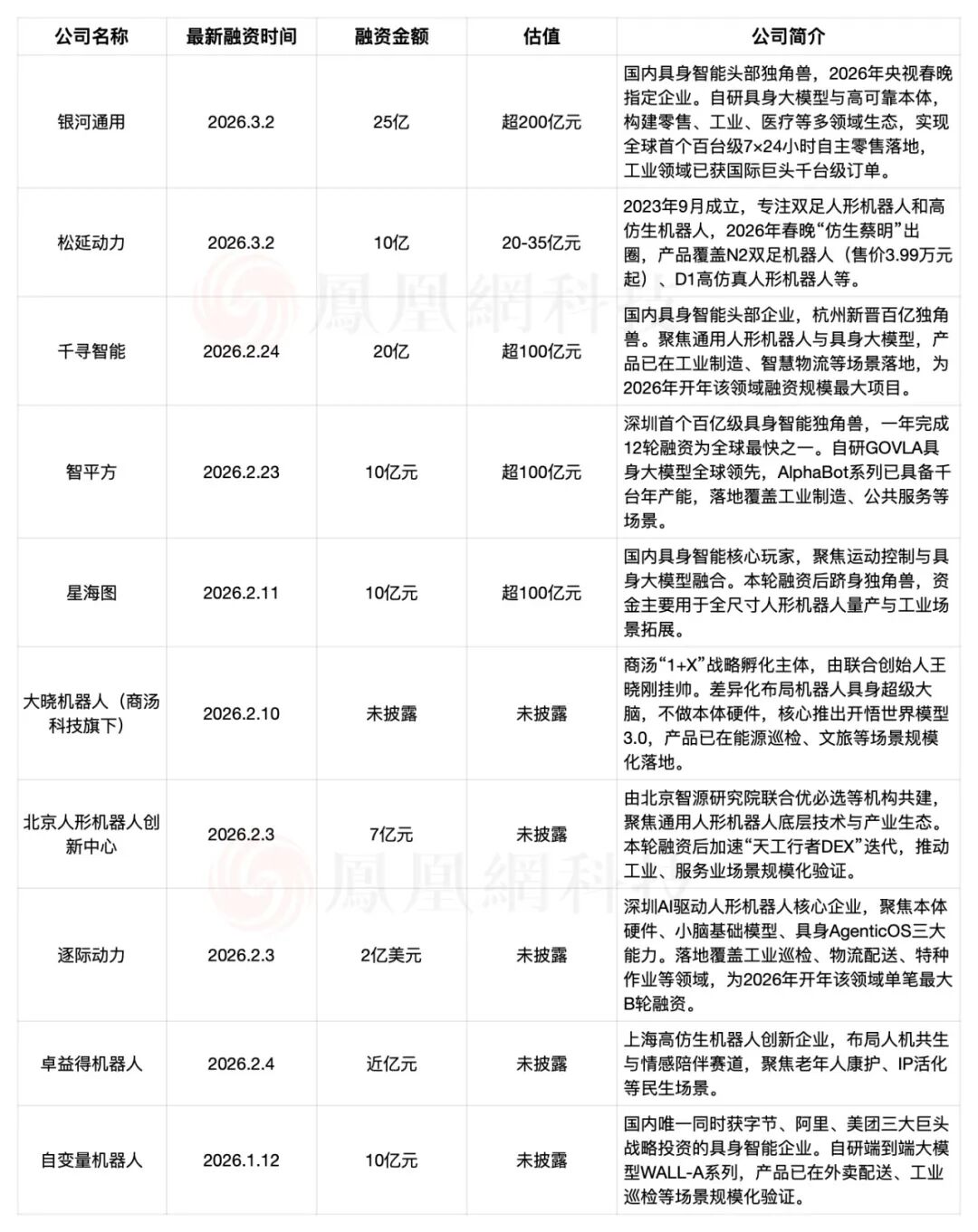
Picture | Financing situation of robotics companies since the beginning of 2026, compiled by Phoenix Tech
Take Zhipingfang as an example. It is known as the Chinese version of the Tesla robot team and completed 12 rounds of financing in one year, the fastest in the world. Different from many companies focusing on motion control, Zhipingfang is betting on the end - to - end VLA large - model, trying to enable robots to make autonomous decisions through massive data training, just like self - driving cars. More importantly, it has cooperated with car manufacturers such as Geely and Mercedes - Benz to introduce robots into the assembly and quality inspection processes of automobile factories.
The financing list of Qianxun Intelligence is an "all - star" lineup, including Yunfeng Capital, Ge Weidong, Sequoia China, TCL, and Alibaba - affiliated companies. With nearly 2 billion yuan in funds, it completed consecutive Pre - A and A rounds of financing, and its valuation directly exceeded the 10 - billion - yuan mark. The special feature of this company lies in its "dual - wheel drive". On the one hand, it self - develops the VLA large - model; on the other hand, it deeply cooperates with manufacturing giants such as TCL to lock in the demand for automation transformation of home appliance and 3C production lines. Its logic is clear: first bind the scenarios, then iterate the intelligence; first get orders, then pursue dreams.
The Zhiyuan Research Institute divides current companies into three tiers. In the first tier, companies such as Unitree, Zhipu, and Galaxy General have concept - verification orders approaching 1 billion yuan and are preparing for listing. In the second tier, companies such as Xinghaitu and Zhujidongli have cumulative orders of only hundreds of millions of yuan. The third - tier companies include XPeng, etc., which either enter the industry across sectors or have wavering paths, with limited order volumes and insufficient technological differentiation.
Capital is pouring in at an unprecedented density. But looking closely at the flow of funds, a dangerous signal has emerged. According to statistics from ChinaVenture, the top 10 companies accounted for about 40% of the total financing in the past year, and large - scale financing is almost entirely concentrated in a few leading companies. The financing window for mid - tier and small projects has significantly narrowed.
The logic of capital is undergoing a fundamental transformation. Money is still flowing into the industry, but there is an obvious "head effect". The revelry only belongs to a few. It will be increasingly difficult for mid - tier and start - up companies to raise funds, and the capital will concentrate on the top. Small and medium - sized players that cannot get funds will soon be out of the game.
The Zhiyuan Research Institute predicts that more than 230 domestic robotics - related companies will face contraction and adjustment in 2026. Xinding Capital bluntly said that among the more than 100 domestic robotics companies that received financing in 2025, only about 10 - 20 may remain in 2026, and the industry elimination rate will reach 80% - 90%.
As an analogy, during the "hundred - model battle" in 2023, China released at least more than 200 large - models. But as of now, there are less than 10 companies still researching the base large - models, among which companies such as Zhipu and Minimax have successively gone public.
The great escape has quietly begun
Why exactly now?
A core judgment is becoming an industry consensus: in 2026, the robotics industry will enter the critical year of "commercialization verification" from "technology verification".
Jiang Lei, the chief scientist of the National Humanoid Robot Innovation Center, previously said in an interview with The Paper that 2026 will be a watershed for the industry. About 80% of domestic complete - machine companies are still in the "platform - building" stage, and companies lacking data sets and large - model capabilities will face huge risks.
Phoenix Tech also obtained a similar view from another industry veteran. In 2026, the embodied intelligence industry may start to show an 80/20 split. 20% of the leading companies will gather most of the industry's resources and talents, while the remaining 80% of the companies will face the outcome of restructuring or elimination.
In the past two years, robotics companies have been competing in the amazingness of Demo videos and the imagination of technological routes. But starting from 2026, the competition will be on the yield rate on the production line, the stability at the customer site, and the cost after large - scale delivery.
This transformation requires an exponential increase in funds. Building production lines and hiring a large number of engineers both mean a significant increase in costs. The prospectuses of several robotics companies recently rushing for IPOs show that the vast majority of companies are in a long - term loss state. In addition to R & D, building a brand also requires costs.
It can be seen that the leading companies favored by capital all have the same characteristics: they have the ability to independently control core technologies, have clear commercialization scenarios, have achieved small - batch delivery and formed positive cash flow. More importantly, they are accumulating high - quality data sets through mass - production closed - loops to build algorithmic moats.
IDC data shows that the global shipments of humanoid robots in 2025 were about 18,000 units, a year - on - year increase of about 508%. This means that the actual global market delivery volume is not even enough for each company to get 100 units.
Although Chinese manufacturers dominate the global market, Zhipu Robotics shipped about 5,200 units and Unitree Robotics shipped more than 5,500 units, accounting for nearly 60% of the global market share together. However, the shipments of the vast majority of companies are still at the level of hundreds or even dozens of units.
Currently, the number of domestic humanoid robot companies has exceeded 300, and the problems of repeated R & D and product homogenization in the industry are becoming more and more prominent.
The vast majority of companies are still concentrated in the motion control track, and they are still far from truly solving scenarios such as industrial handling and high - risk operations.
For small and medium - sized enterprises, the key to survival lies in differentiation. The implementation of industrial segmented scenarios, vertical - field applications, and the domestic substitution of core components may not be as popular in the market as general humanoid robots, but they are real - demand markets.
The robotics industry in 2026 is standing at a historical turning point.
For robotics companies, capital has never left, but it will never blindly pursue. Companies that cannot achieve commercial implementation as soon as possible will have a hard time surviving in the market, while those that can adhere to core technologies, focus on scenario implementation, and achieve commercial self - sufficiency will stand out in the elimination round.
This article is from the WeChat public account "Phoenix Tech", author: Shang Zhifang, published by 36Kr with authorization.