Charge by suction, take photos also by suction: Transsion released a "assembled phone"
In the past two years, people have always said that the form of smartphones has reached a bottleneck of high convergence.
This is true - after all, when the "functionality" is basically fixed, "form convergence" is just the most intuitive manifestation.
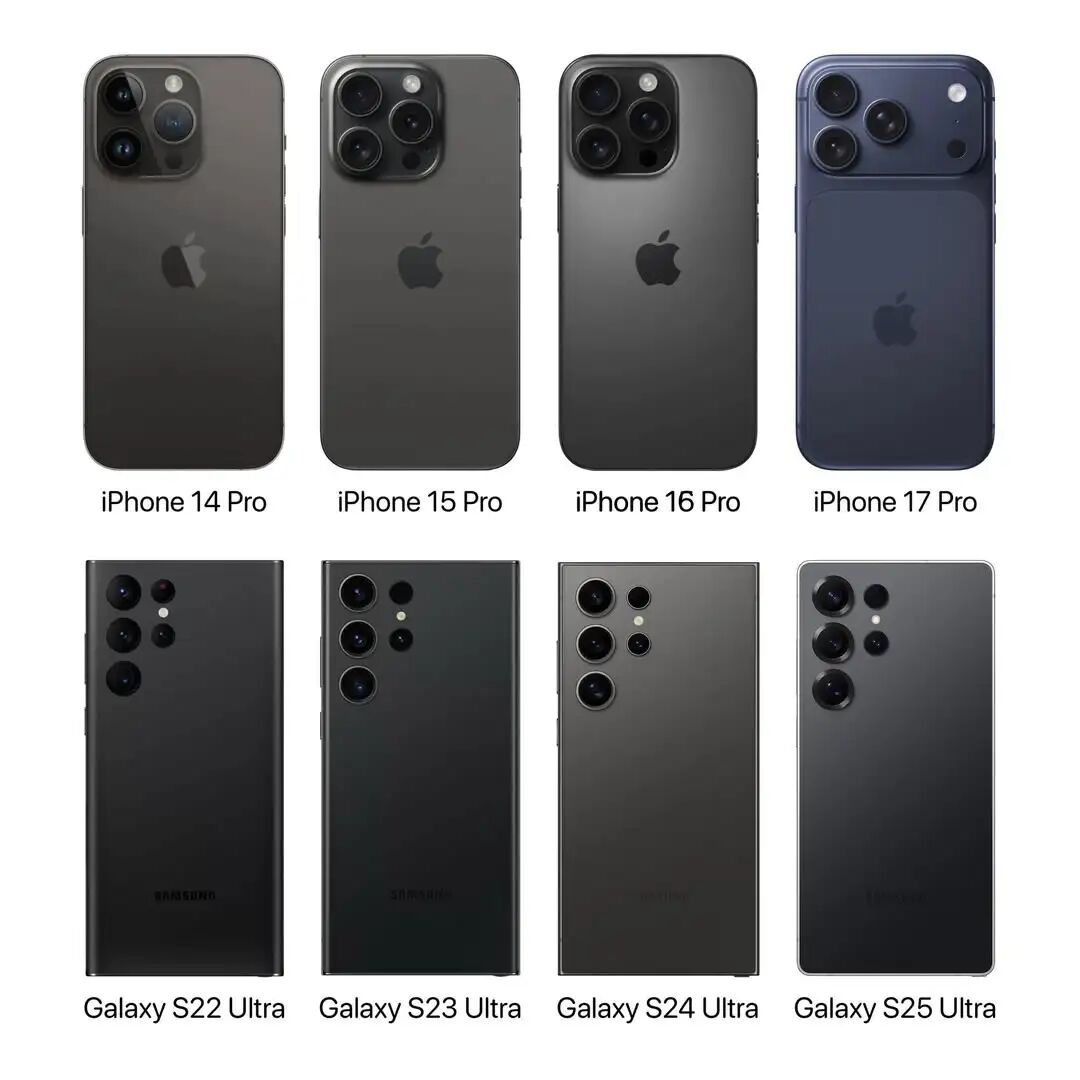
▲ Image | Facebook @Apple Hub
However, it is precisely on these straight - edged phones with the same form that Transsion, once known as the "King of Africa", has stepped forward to do something different.
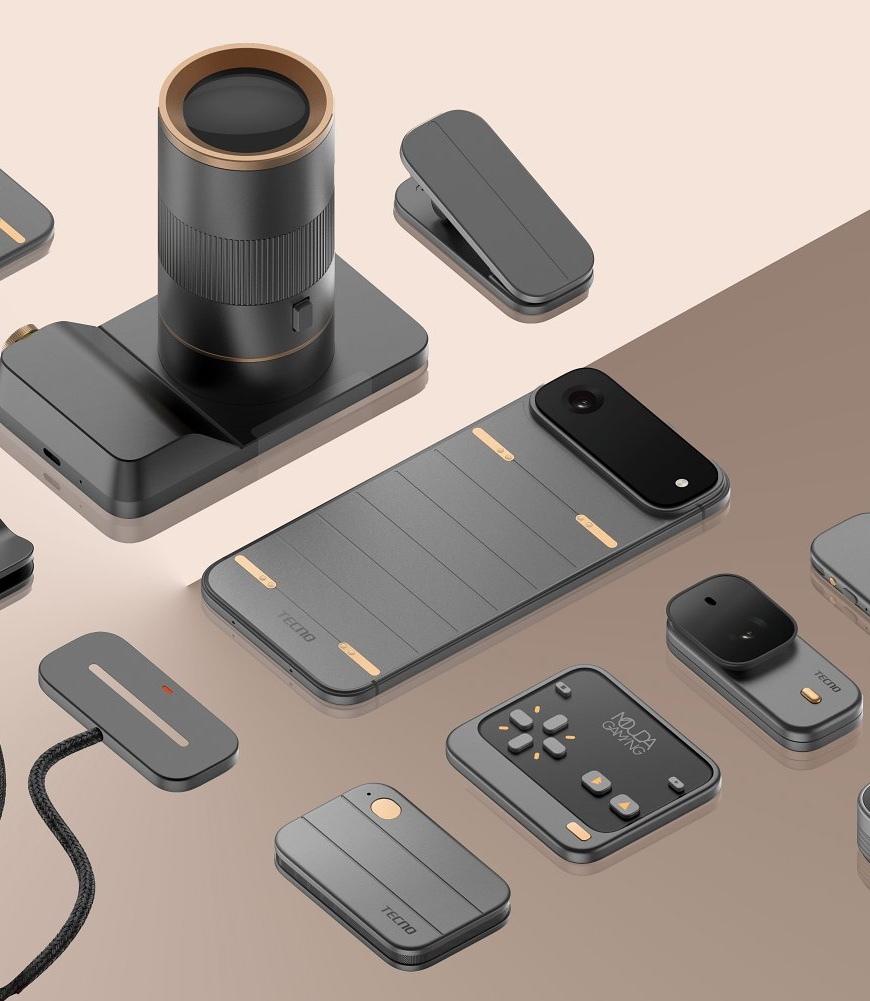
At the ongoing 2026 Mobile World Congress (MWC), Transsion showcased a series of concept phones with very attractive designs.
In addition to last year's ultra - thin model, Tecno SPARK, there is also a new modular phone:
▲ Image | Engadget
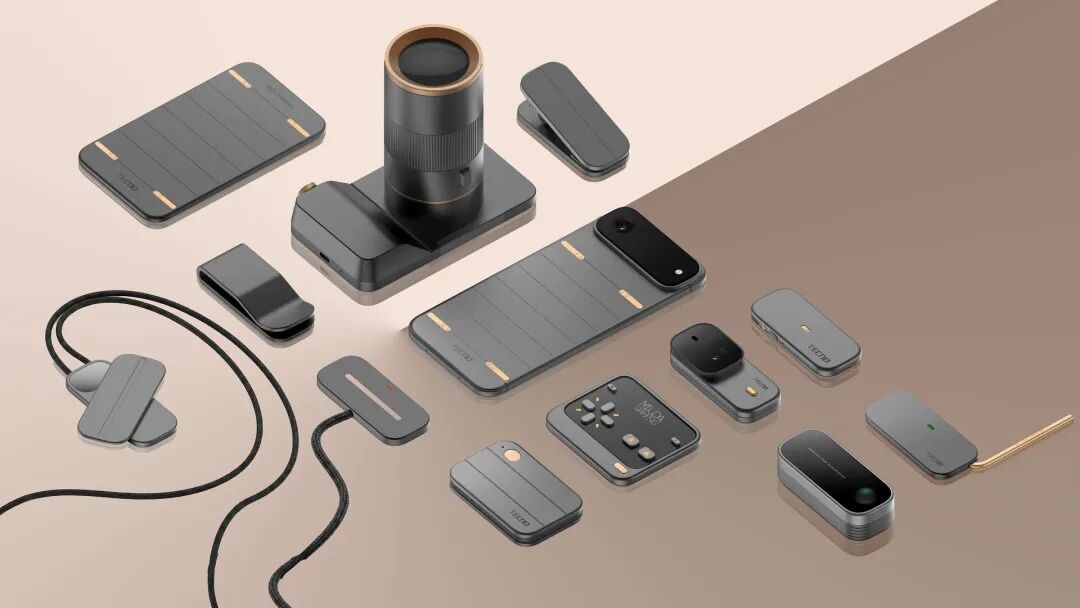
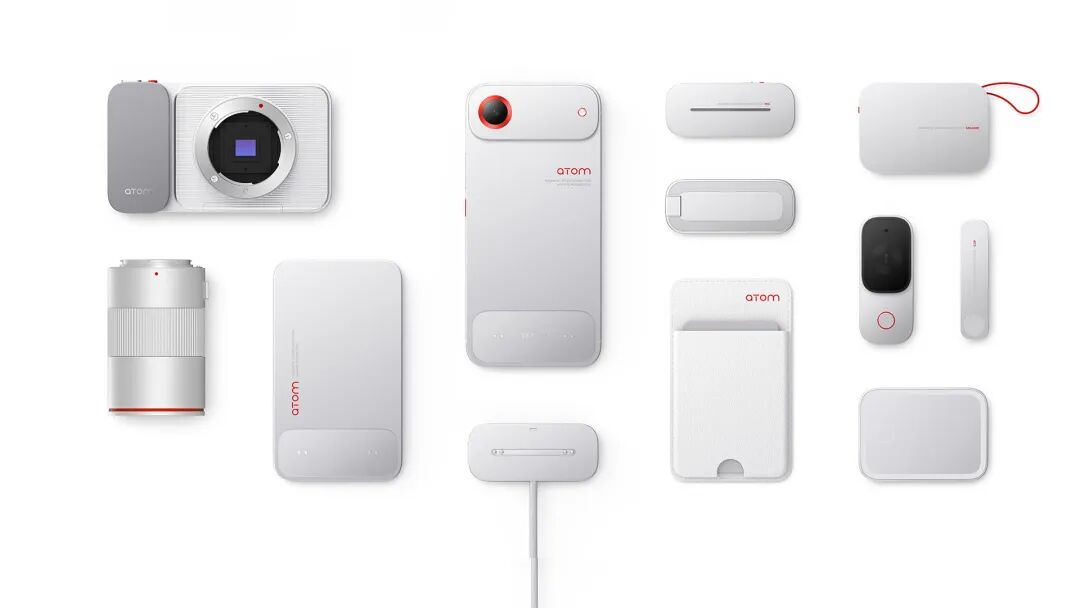
Transsion calls this hardware system "Modular Magnetic Interconnection Technology". It comes in two body colors: ATOM (silver and red) and MODA (gray and gold):

▲ Image | GadgetMatch
The most striking features of this modular phone are its 4.9 - millimeter thickness and the design concept of eliminating the USB - C charging port on the body.
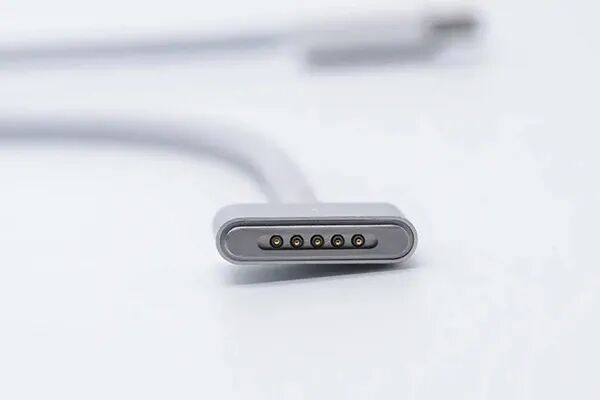
Its "main body" is very much like a flattened iPhone Air. Behind its over - 6 - inch large screen, there is only a very basic camera, and the rest is a set of four - pin magnetic connectors:
▲ Image | GadgetMatch
In order to achieve such an aggressive body thickness, Transsion removed the USB - C port on the bezel and changed the main charging method to magnetic connection, which has a similar principle to MagSafe on the MacBook:
▲ Image | ByteCable
The elimination of the interface is not just about thickness and visual aesthetics but also serves a precise and efficient "modular accessory system".
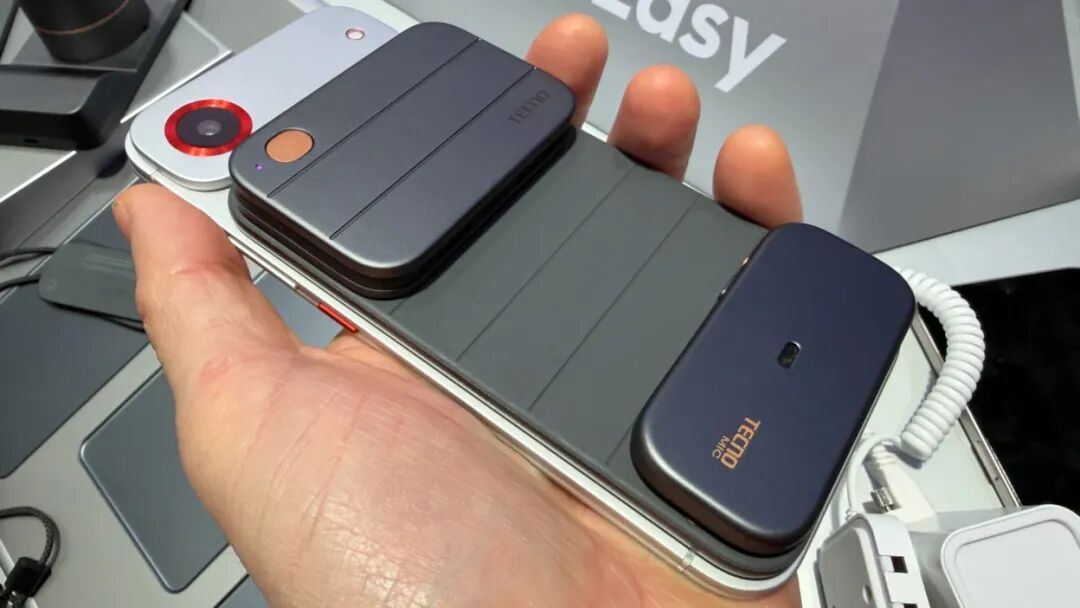
According to the demonstration at the MWC site, the modules shown by Transsion include an external speaker module with independent symmetrical high and low - frequency units, an independent microphone module with stronger directivity and better sound pickup, a magnetic power bank that matches the phone, a stand, and a card holder.
▲ Image | Mashable
However, if it were just these modules, there wouldn't be much technical content -
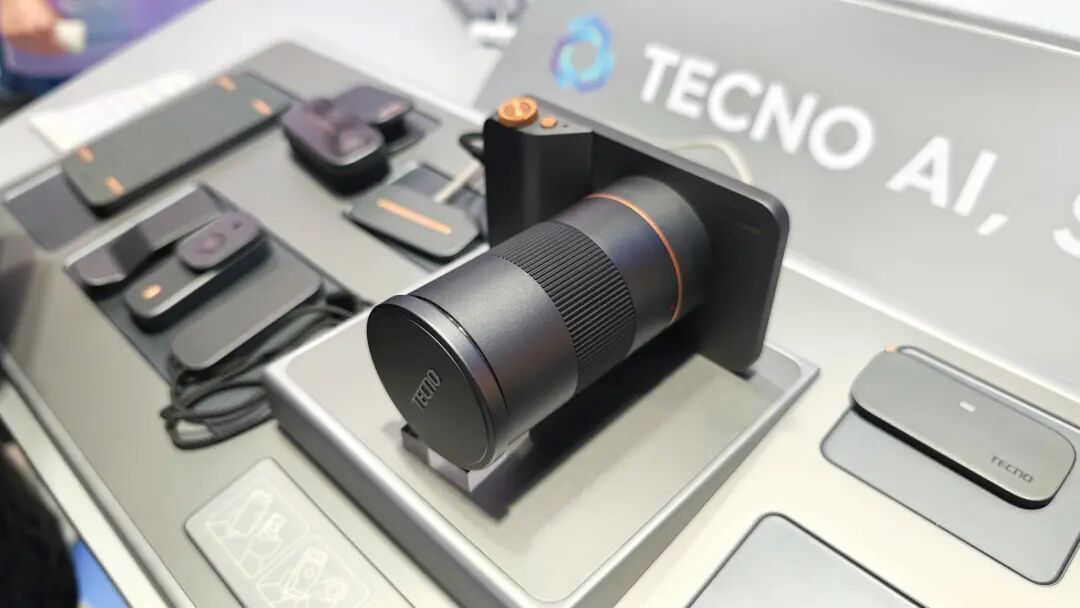
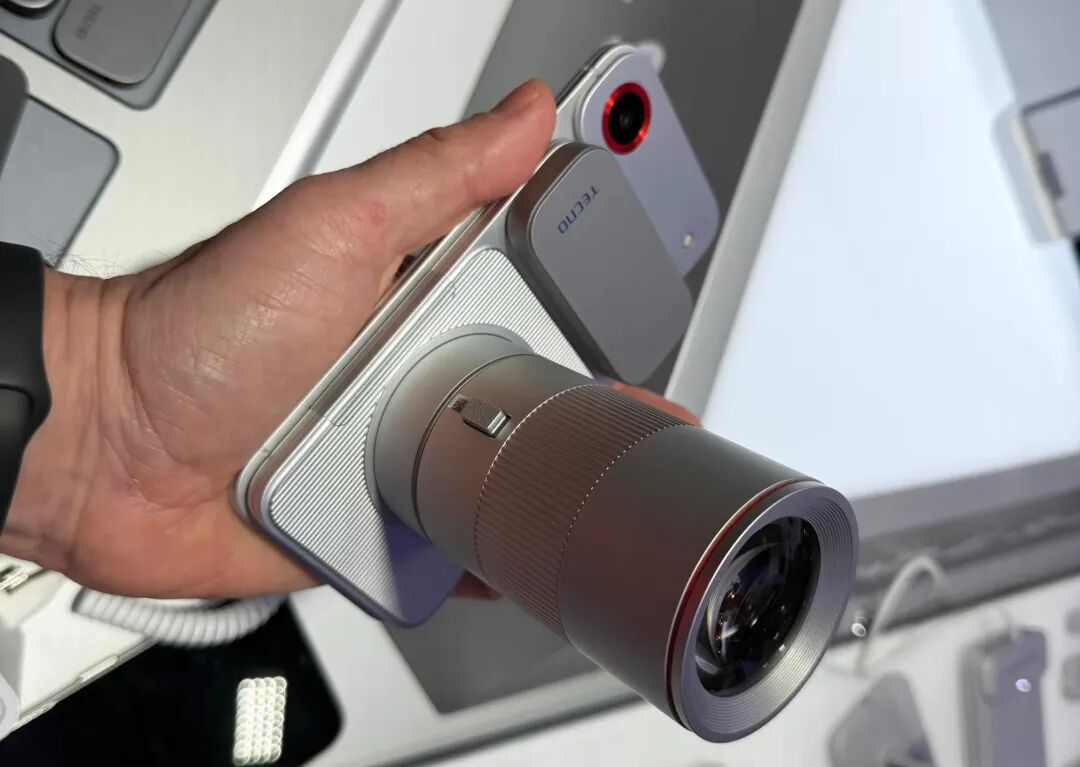
But Transsion didn't stop there. Perhaps referring to Xiaomi 15's concept phone with an external M43 camera, this Transsion phone also supports connecting lenses through a "camera module" with a (presumably) one - inch sensor:
▲ Image | Mashable
Even besides professional cameras, there is also an action camera. Transsion also showed an external action camera module with a more useful ultra - wide - angle lens and microphone built - in.
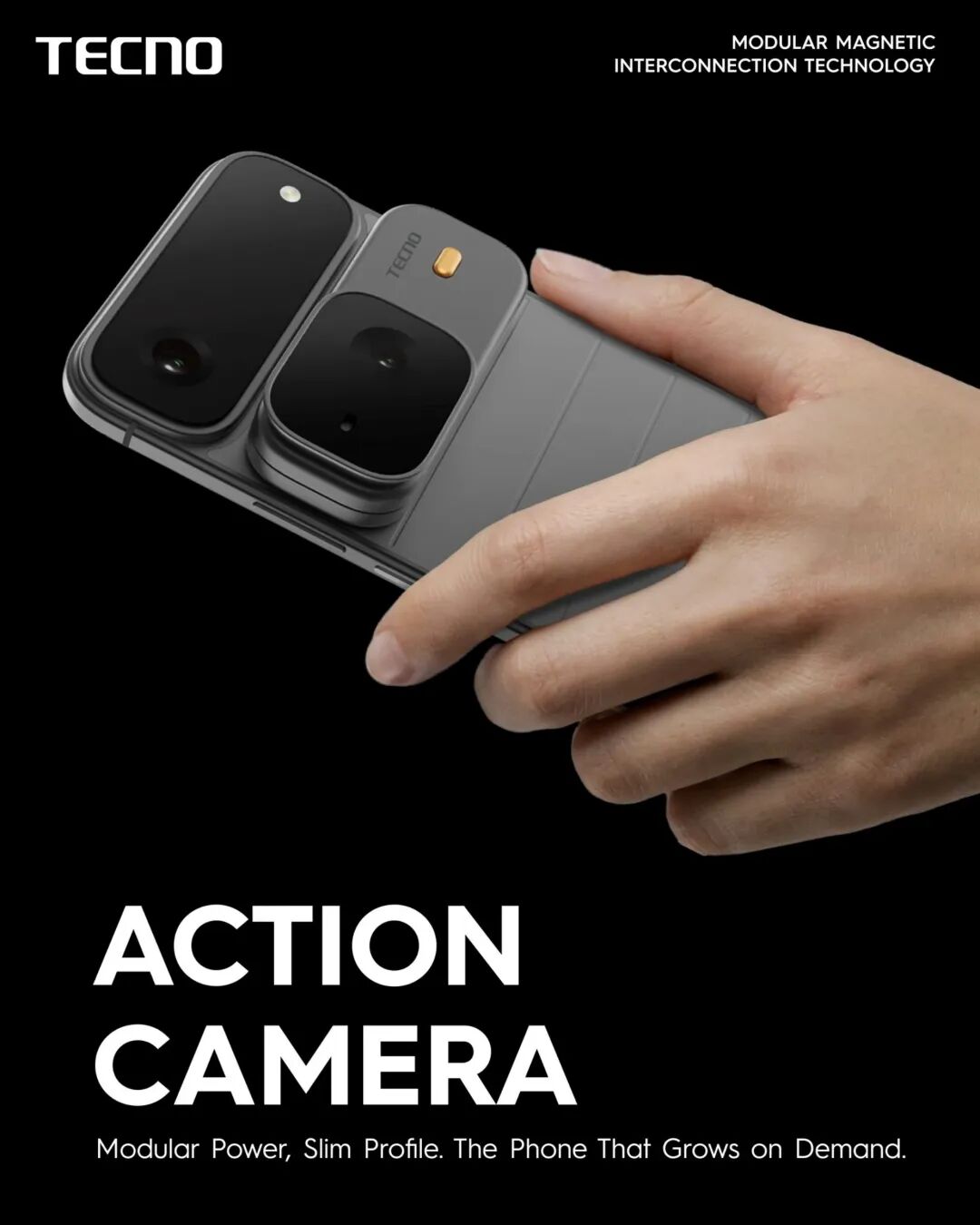
▲ Image | TECNO
To be honest, in 2026 when the integration of mobile phone hardware is getting higher and higher, suddenly seeing this modular design concept is quite refreshing.

▲ Image | Mashable
However, although the concept and the prototype are very exciting, Transsion did not announce a clear launch time at the MWC -
In fact, Transsion didn't even announce a mass production plan for this "modular phone".
Considering the fates of Transsion's previous ultra - thin concept phones, triple - fold concept phones, surround - screen concept phones, and other various concept phones, this result is not surprising.
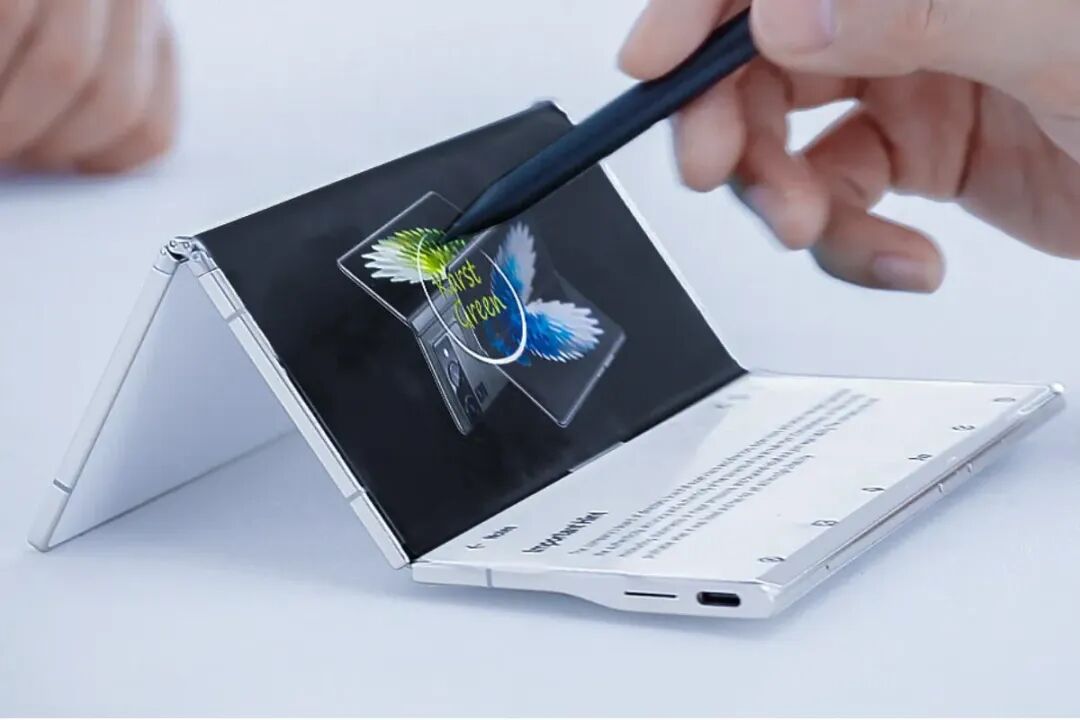
▲ Transsion Phantom Ultimate 2 concept phone | CNET
However, looking back, modular phones are not something new.
As a utopia in the hearts of countless engineers and geeks, the core concept of modular phones is very simple:
It advocates disassembling the phone into independent components such as the screen, processor, and camera. Users can choose configurations according to their needs, just like building with Lego bricks, without having to replace the whole phone when upgrading.
As early as 2013, Dutch designer Dave Hakkens proposed a "Phonebloks" concept, breaking the phone into square modules that can be assembled.
Google then took over the project and improved it into the famous Project Ara:
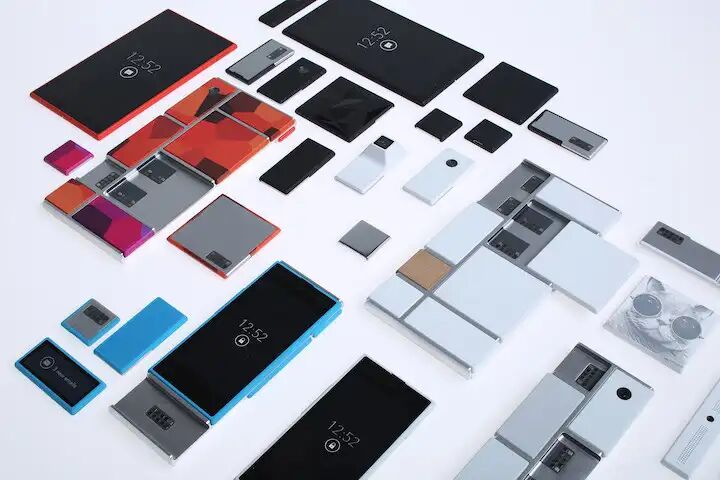
▲ Image | Android Authority
Project Ara was once regarded by many as a revolutionary product in the mobile phone industry. Google envisioned a base with an internal skeleton, and components such as telephoto lenses, batteries, and back panels could be assembled on the frame through magnets and contacts.
However, there is still a huge technological gap between the ideal and the reality.
Since each functional module requires independent packaging and data interfaces, the body of Project Ara was extremely bulky, and the problems of communication delay and power consumption between modules could never be perfectly solved.
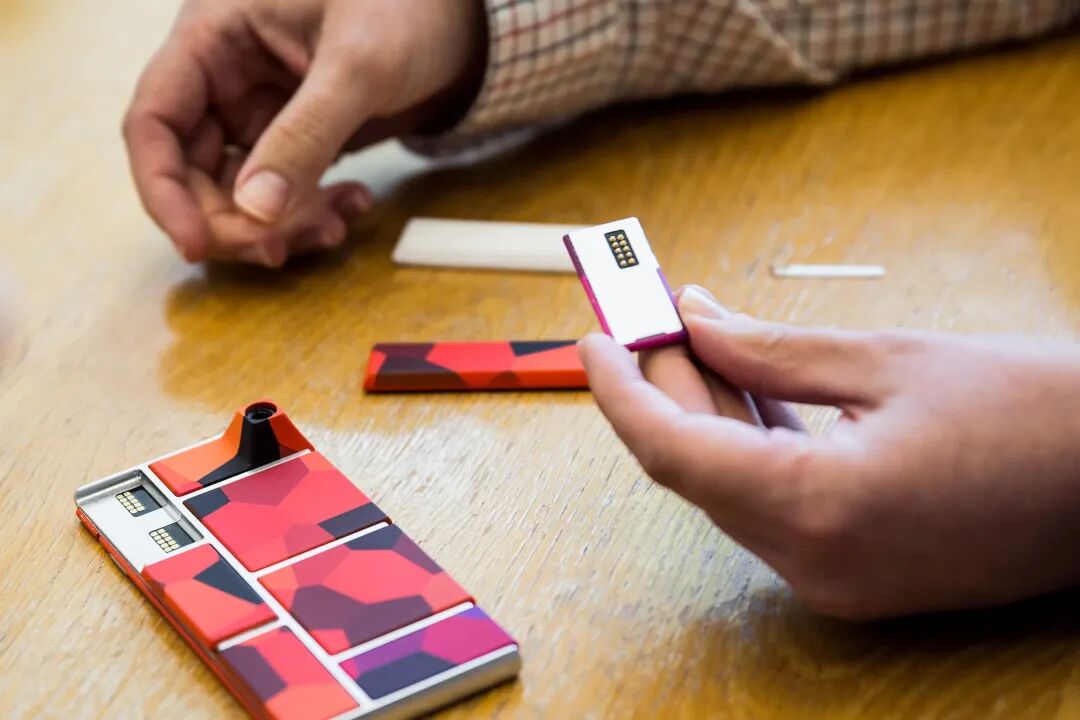
▲ Image | WIRED
Google finally put the project on indefinite hold in 2016, marking the end of the fully modular concept "before it even got off the ground" in the consumer electronics market.
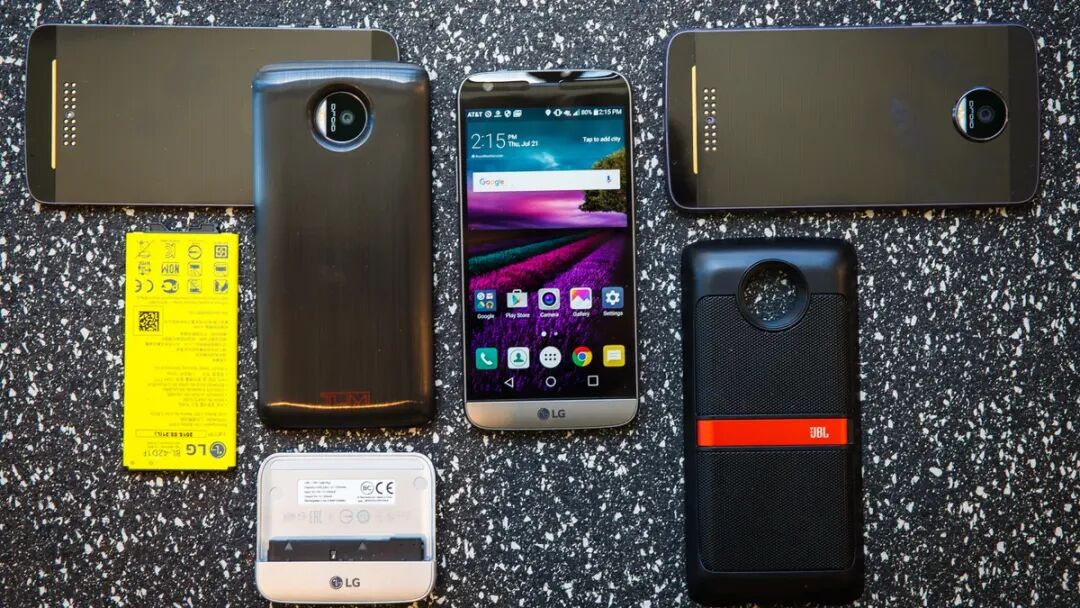
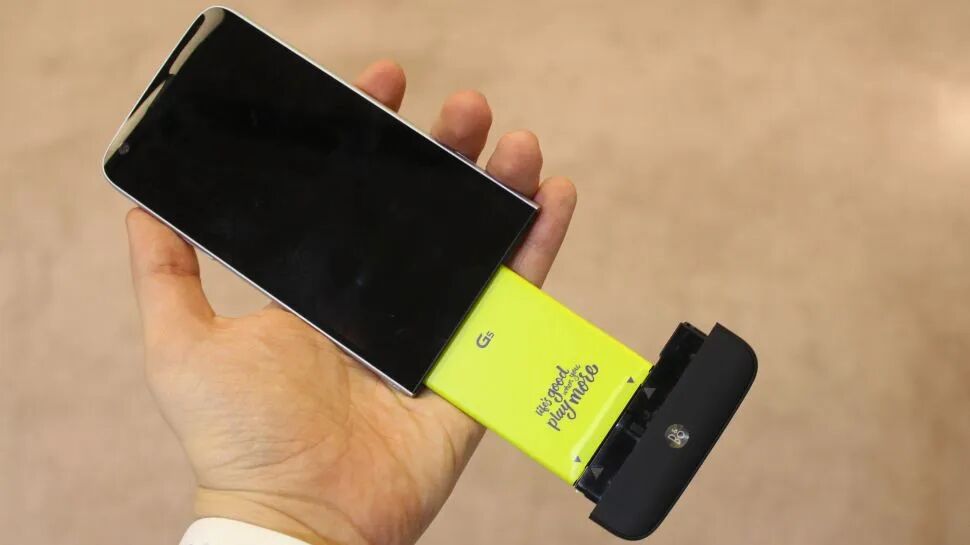
After Google, LG also tried to implement a modular design on the LG G5, but the modularity was not as thorough.
The LG G5 used a removable bottom slot, offering bases with different functions such as spare batteries, photography grips, and audio modules for users to choose according to their needs:
▲ Image | CNET
However, LG's talented engineers integrated this modular component with the phone's battery. As a result, no matter what functional module the user changed, even if it was just connecting a photography grip, the battery had to be removed and the phone restarted.
This absurd usage logic, combined with the limited types and high prices of the LG G5 modules, led to extremely cold feedback from consumers, ultimately contributing to LG's dismal sales.
▲ Image | Mobile Fun
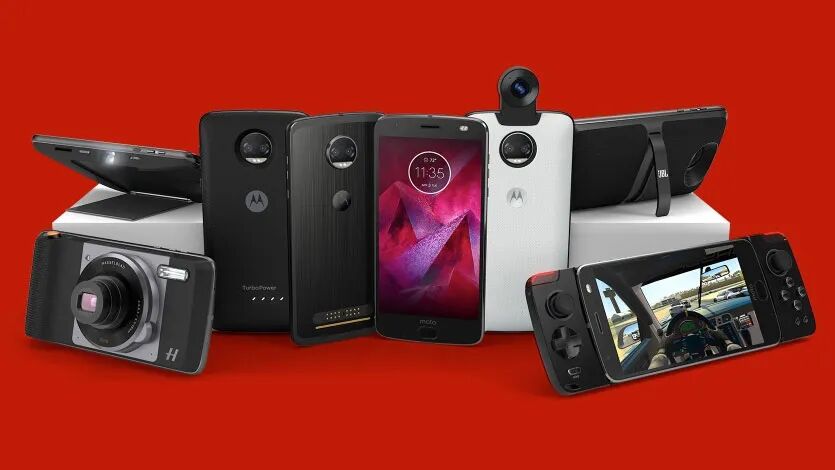
The closest example to success in history might be Motorola's Moto Mods solution.
Through the contacts on the back of the phone, the Moto Mods series spanned four generations of models from Moto Z to Moto Z4, giving birth to well - known products such as the Hasselblad camera module and the JBL Moto Sound module:

▲ Image | GSMArena
However, because the design of this "full - size module" restricted the iteration of the phone's appearance and also faced problems such as high prices and the inability to be used independently, Moto Mods ultimately couldn't escape the fate of being marginalized.
▲ Image | TechRadar
Ultimately, these failed modular cases jointly prove one thing:
In the modern smartphone supply chain system, consumers who pursue ultimate performance, thinness, and lightness will only increasingly tend towards hardware integration and are unlikely to pay for bulky and expensive single - function modules.
In other words, the situation of modular phones is a bit like that of small - screen flagship phones or Meizu phones -
There seem to be many fans and a high volume of online discussions, but few people actually buy them.
Looking at Transsion's modular concept demonstrated at the MWC, we can actually see a "less radical" modular approach.
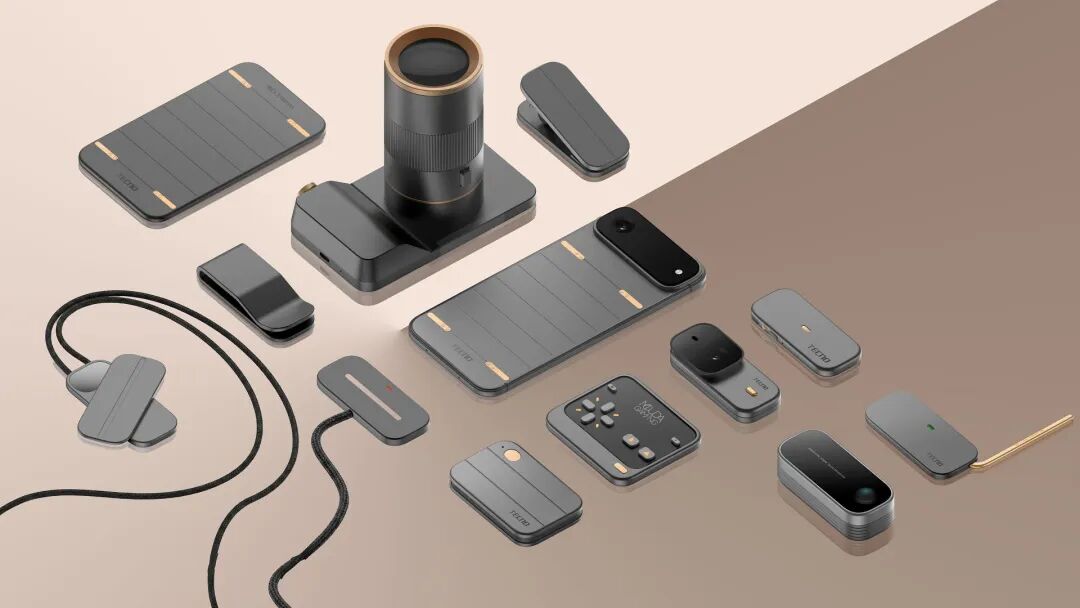
Different from the radical approach of directly splitting the underlying functions of smartphones like Project Ara, Transsion's