Brain-computer interface: Do you want to reshape your brain?
God Translation Bureau is a compilation team under 36Kr, focusing on fields such as technology, business, workplace, and life, and mainly introducing new foreign technologies, new ideas, and new trends.
Editor's note: In the future, when everyone wants to connect their brains to computers, doctors performing brain-computer interface surgeries will become extremely busy. In fact, brain-computer interface surgeries already exist today, but almost all of them are for treating diseases. This article is compiled based on the oral account of a brain-computer interface surgeon. For the brain-computer interface, the present is just the beginning. This article is from a compilation, hoping to inspire you.
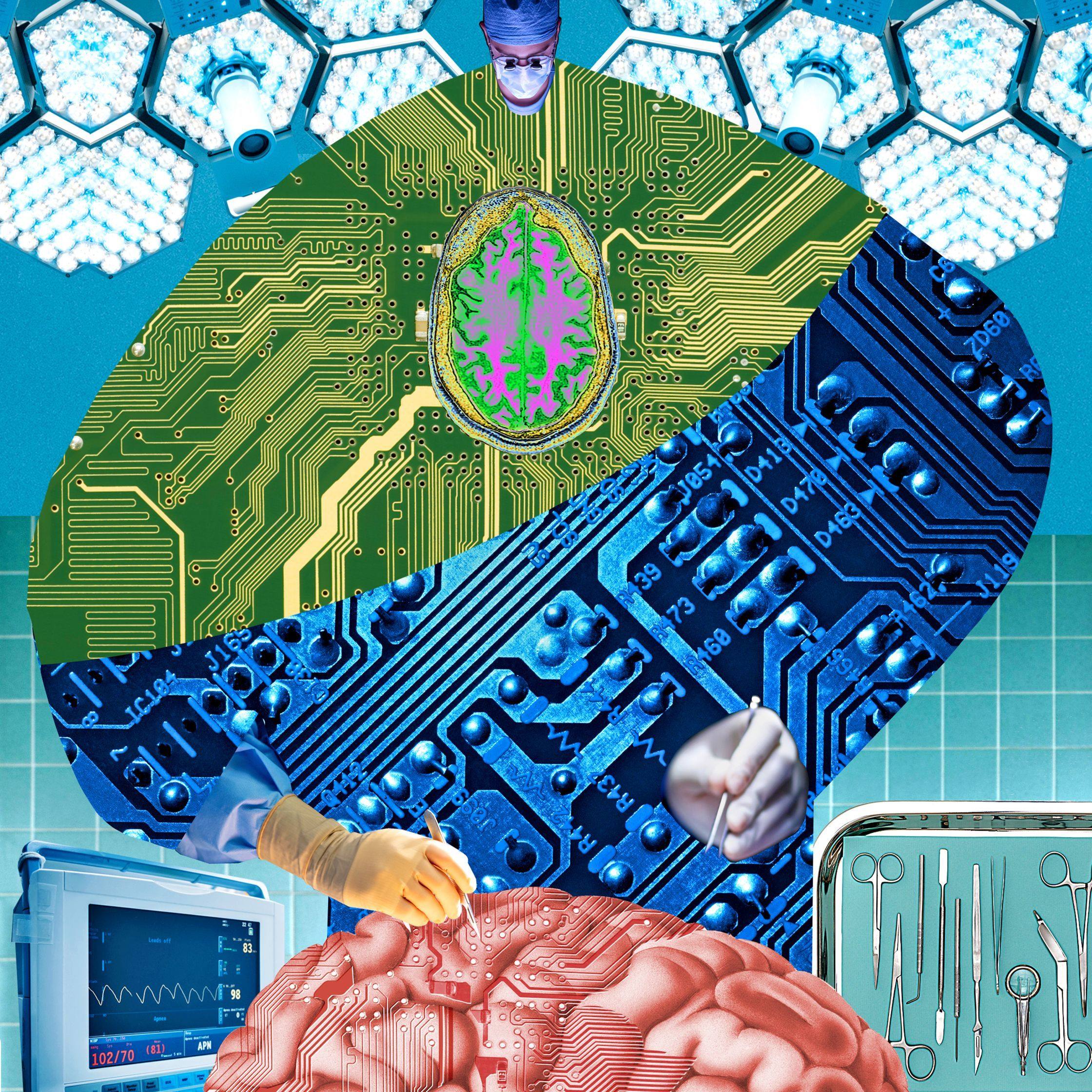
Image source: JOHANNA GOODMAN; GETTY IMAGES
The brain-computer interface (BCI), a device that sounds like something out of science fiction, can access your skull and convert neural signals into software instructions. There is so much to look forward to with it. Experimental brain-computer interfaces have already helped paralyzed patients communicate, surf the Internet, and control prosthetic limbs. In recent years, such devices have even become wireless. If computers that can read thoughts become a part of daily life, we will need doctors to install the tiny electrodes and transmitters that make the devices work. So, if you have a steady hand and don't mind a little blood, becoming a brain-computer interface surgeon might be a good fit for you.
Shahram Majidi, a neurosurgeon at Mount Sinai Hospital in New York, has been performing surgeries in a brain-computer interface clinical trial called Stentrode since 2022. The "stent" here refers to a tubular device often placed in veins or arteries. He told us about the near future when he will perform hundreds of similar surgeries each year.
Brain-computer interface technology has existed for decades, and there are now a variety of different implantable devices. Some devices have electrodes attached to the brain, with wires protruding from the head and connecting to a computer. I think it's great as a proof of concept, but it requires engineers to be on standby the whole time, and there has to be a large computer nearby. You can't just use it in your bedroom.
The advantage of the brain-computer interface like the Stentrode I'm involved with is that no parts are exposed. The electrodes are placed in the blood vessels next to the brain and are inserted through the patient's jugular vein; the receiver is buried under the skin of the chest and is connected via Bluetooth to a device that decodes brain signals. I think this is the future.
This is a minimally invasive surgery that doesn't require opening the skull or damaging the brain's anatomical structure. I've performed thousands of similar operations of placing stents in the brain's blood vessels in other surgeries, but this time, the device I'm inserting is to record specific signals emitted by specific areas of the brain. To make it work properly, I have to perform the most precise implantation operation to date. From entering the operating room to the end of the surgery and the completion of device testing, the whole process usually takes less than three hours.
The patients participating in these trials all have severe disabilities. They are paralyzed in bed due to diseases such as amyotrophic lateral sclerosis (ALS), and it's extremely difficult to even send them to the hospital. Therefore, I will visit them in person and explain the device and how it works to all brain-computer interface patients.
It's an exciting time for the patients and their families, but we also have to help them set reasonable expectations.
Compared with other surgeries I do as a neurosurgeon on a daily basis, the surgical planning for brain-computer interface implantation is much more complicated. Before the surgery, my team and I will practice on a model to ensure that we are familiar with all the steps and procedures. Without exaggeration, the margin for error is extremely small.
Neuralink is developing robots to install their brain-computer interfaces, but I'm not worried that robots will take my job. The development of this field and the implementation of high-precision surgeries will always rely on human surgeons and scientists.
I will regularly arrange postoperative follow-ups for patients, especially within the first few months after the surgery. I'm always present when they use the device for the first time. After two weeks of training, patients can operate independently. This is the first time for patients to connect with the outside world just by thought. They can send text messages and use their phones again. You'll see bright smiles on their faces at that time.
The patients are eager to promote the development of this science and help people like them in the next few years or even decades. Witnessing all this with my own eyes is truly awe-inspiring.
Since I completed my first surgery, my clinic has received consultation calls every week asking if patients can undergo brain-computer interface evaluations. There is an extremely large patient population that will benefit from this technology.
If we have a chance to sit down and talk again in ten years, I'll tell you: Yes, I've scheduled five brain-computer interface surgeries this week, and it's already become a regular routine.
Not every endovascular neurosurgeon will perform such surgeries, but I believe there will be several top-notch treatment centers. We'll start exploring the smaller blood vessels in the brain and try to interpret more brain functions, whether it's for treating intractable epilepsy, depression, mood disorders, or eating disorders.
The brain-computer interface devices ten years from now will be very different from those today.
This is just the beginning.
Translator: Teresa