Honor, a mobile phone company, enters the humanoid robot market, recruiting talents with an annual salary of one million. Its first product will be launched next week.
The domestic mobile phone manufacturer Honor is about to launch its first humanoid robot.
The release time is set for early March. Alongside it, a more “sci-fi” robot phone will also make its debut.
Actually, Honor's recruitment information revealed the company's plans earlier: a large number of humanoid robot positions were opened, and the company started recruiting with an annual salary of up to one million yuan.
It's really hot... The Spring Festival Gala with a high “robot content” has passed, but the popularity of robots shows no sign of subsiding.
As soon as 2026 began, when the public's attention was once again focused on humanoid robots, tens of billions of hot money couldn't wait to pour into this field.
Honor's Robot to Be Launched Soon, Recruiting with High Salaries
According to multiple sources, Honor will launch its first humanoid robot during the Mobile World Congress (MWC) 2026 in Barcelona, targeting the consumer market.
The MWC is hosted by the Global System for Mobile Communications Association (GSMA) and is one of the most influential industry events in the global mobile communication field.
Recently, Honor officially announced the start time of the relevant press conference - March 1st this year.
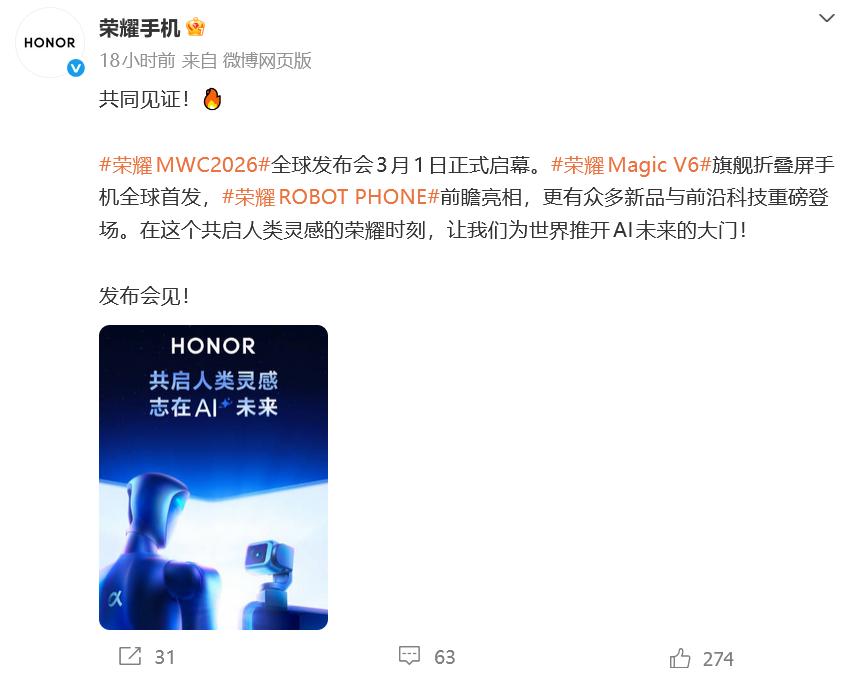
In the field of embodied intelligence, Honor is one of the few players entering the arena as a mobile phone manufacturer.
This is also the first time that Honor has been reported to have made significant progress in the development of its self - developed humanoid robots in terms of both software and hardware.
Regarding the robot field, Honor actually started to make arrangements last year. The first thing noticed by the outside world was the recruitment information:
Judging from the update dates of the existing positions, Honor started recruiting for robot - related positions as early as February last year. The recruitment locations mainly cover Beijing, Shanghai, and Shenzhen.
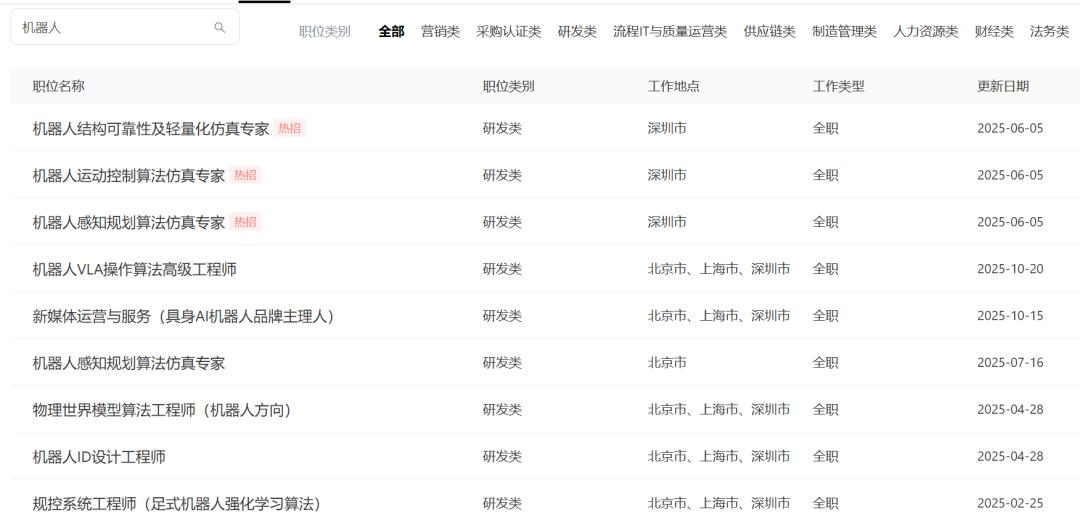
The positions include embodied AI architects, power system engineers, overall system engineers, hardware system engineers, dexterous hand design engineers, as well as experts in robot structural reliability and lightweight simulation, experts in robot motion control algorithms, experts in robot perception and planning algorithms, etc.
In terms of salary, the relevant positions on the Boss Zhipin platform show that the annual salary is approximately between 640,000 and 1.12 million yuan.

According to the information from an applicant on a job - hunting platform, taking the robot software system position in Honor's new industry incubation department as an example, the company's salary structure is (N + 4)·15.
According to industry practice, N represents years of work experience. That is to say, the annual salary of a senior engineer could easily reach the one - million - yuan level.
What's the level like?
Taking the “2025 Robot Industry Talent Development Report” released by Zhilian Recruitment as a reference:
In the first five months of 2025, the number of recruitment positions in the domestic robot industry increased by 6% year - on - year, and the number of job - seekers increased by 32% year - on - year, achieving a double increase in supply and demand. In the hottest humanoid robot field, the number of recruitment positions increased by 409% year - on - year, and the number of job - seekers increased by 396% year - on - year.
Among various robot positions, robot algorithm engineers have the highest average recruitment salary, reaching 25,368 yuan per month. For robot algorithm engineers with more than five years of work experience, the average recruitment salary reaches 33,665 yuan per month.
Making a rough comparison, Honor's recruitment conditions are quite sincere compared with the industry average salary.
Of course, recruitment is just part of the robot strategy. Honor has made far more preparations for the transformation than that.
Honor's Robot Layout
The acceleration of Honor's robot layout started in February 2025.
Before that, Honor had just undergone a “reshuffle”. The former CEO Zhao Ming resigned due to health reasons, and Li Jian, a former Huawei overseas business veteran, Honor's vice - chairman, and the president of the human resources department, took over.

Li Jian
After taking over Honor, Li Jian quickly adjusted the strategic layout.
At the 2025 Mobile World Congress in March last year, Honor released the Alpha Strategy (HONOR ALPHA PLAN) -
The company will transform from a smartphone manufacturer to a globally leading AI terminal ecosystem company and will invest more than 10 billion US dollars in building a global AI terminal ecosystem in the next five years.
Among them, AI and robots are the core development directions for Honor in the future.

One month later, Honor established a new industry incubation department for robot R & D, which has several laboratories, including the Embodied Intelligence Laboratory, the Embodied Data Laboratory, the Interaction Security Laboratory, the Powertrain Laboratory, and the Bionic Ontology Research Laboratory.
At the same time, Honor also began to cooperate deeply with leading robot companies, top universities, and research institutions.
At the launch event of the Honor 400 series in May last year, Li Jian made his first public appearance in China as the new CEO and announced that Honor was officially entering the robot business.

At the press conference, Li Jian also showed the latest progress of the robot by telling the story of employees' R & D work -
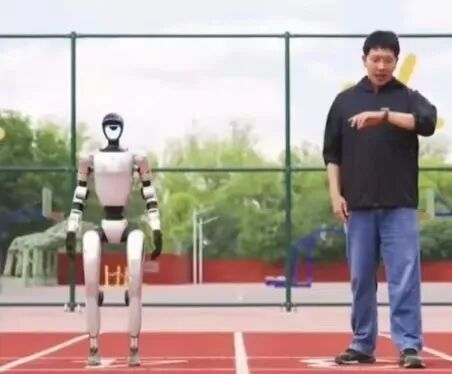
The robot using Honor's motion control algorithm has a running speed of 4 m/s, which is faster than the champion of the robot marathon at that time, breaking the industry record.
In an interview that night, Li Jian revealed that the AI era will reshape the form of terminal products. Honor will create second, third, and even more growth curves. The future R & D direction of the company's new industry incubation department will not be limited to AI agents and embodied intelligence but will also extend to more AI terminal scenarios.
Another example of an AI terminal is the industry's first “robot phone” - ROBOT PHONE, which will be launched together with the humanoid robot in March this year.
It is reported that this product integrates an AI mobile phone, embodied intelligence, and high - definition photography. It has a super - powerful AI brain, the mobility of a robot, and can also serve as a user's exclusive camera.
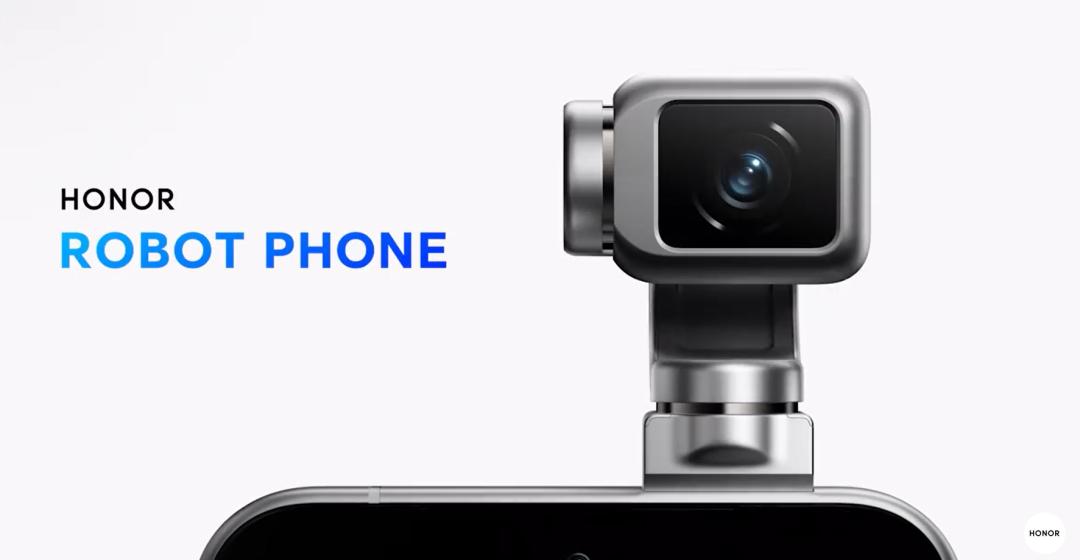
After sorting out the timeline, Honor's steps into the humanoid robot field become much clearer.
After taking a one - year break, Zhao Ming, who left Honor, joined Qianli Technology, a major player in the field of embodied intelligence, betting on “AI + automotive”.
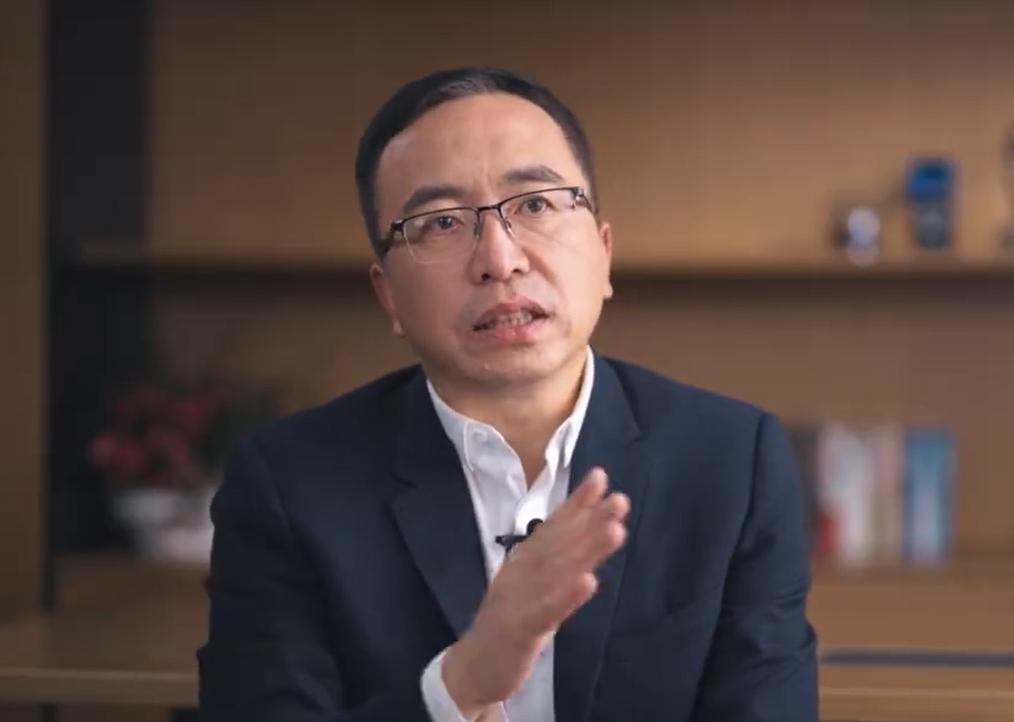
This may not be a coincidence.
At the Beginning of 2026, Billions of Hot Money Pour into Humanoid Robots
As the field of embodied intelligence continues to heat up, it is not uncommon for a large amount of talent and resources to pour in.
At the beginning of 2026, the industry was ignited by capital again. Take the several financing events this month as an example:
Daxiao Robotics, which was founded in July last year, recently completed its angel - round financing.
This round of financing was led by Ant Group, with follow - on investments from institutions such as Qiming Venture Partners, Jinjing Capital, Hony Capital, Lenovo Capital & Incubation Group, and the mother fund of Shanghai Jiao Tong University, Hanyuan Assets. The old shareholder SenseTime Guoxiang Capital continued to increase its investment.
Many well - known institutions quickly invested because the core team of this company is quite strong, and the two technical experts behind it are both among the top 5 Chinese computer scientists in the world.
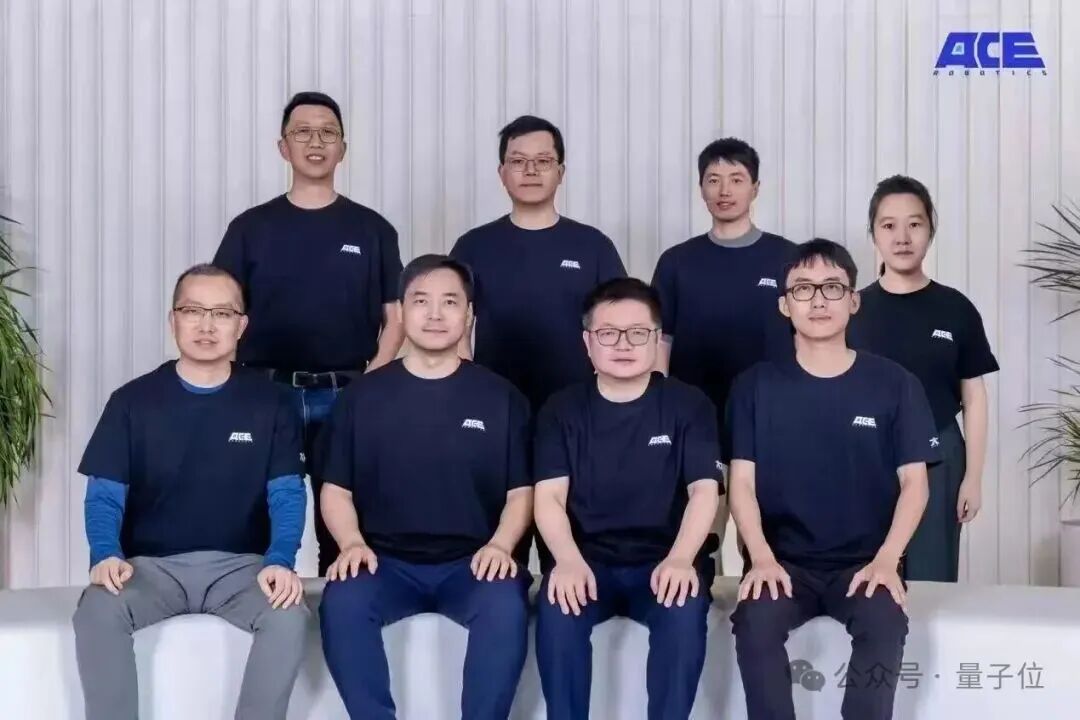
One is Wang Xiaogang, the chairman of Daxiao Robotics, who is probably well - known to everyone.
He is the co - founder and executive director of SenseTime and the president of SenseTime's Intelligent Transportation Business Group. He has been actively involved in the front - line of computer vision and autonomous driving industries for a long time.
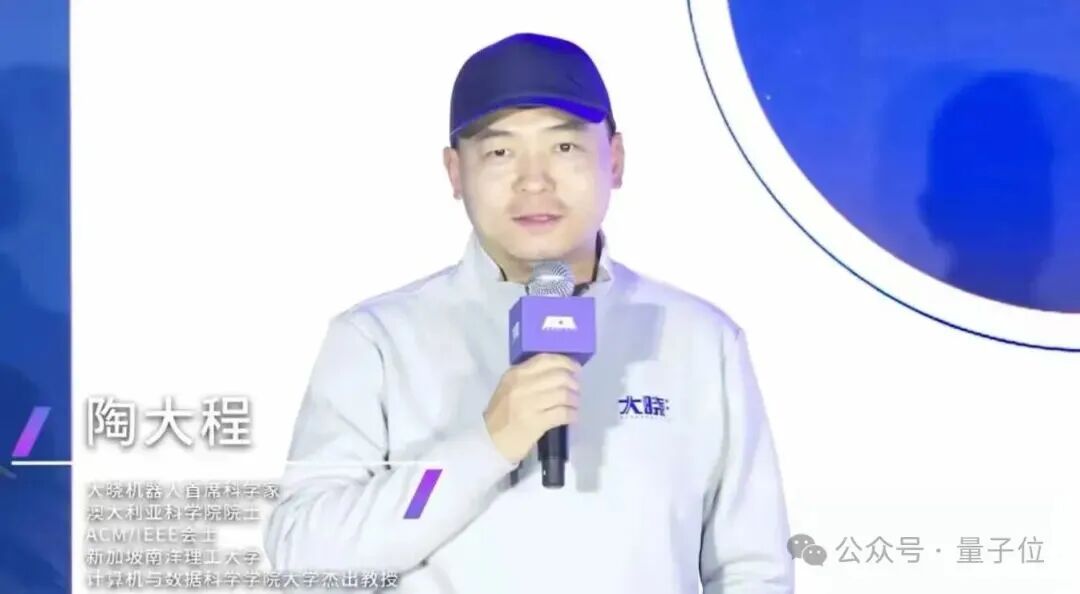
The other is Tao Dacheng, the chief scientist of Daxiao Robotics.
He is a distinguished university professor at the School of Computing and Data Science of Nanyang Technological University, Singapore. He is also a fellow of the Australian Academy of Science, a foreign fellow of the European Academy of Sciences, and has been elected as a fellow of many international authoritative societies such as IEEE, ACM, and AAAS.
For another example, Zhijian Dynamics, which was founded around the same time as Daxiao Robotics, is reported to have completed its fourth - round financing by January this year. The investors include Tencent Investment, Alibaba, Legend Capital, and Lanfeng Capital. Its current valuation is approaching that of a unicorn.
The founding team of Zhijian Dynamics is also familiar to everyone and comes from Li Auto -
The company's CEO is Jia Peng, the former head of autonomous driving technology R & D at Li Auto, and the chairman is Wang Kai, the former CTO of Li Auto.
There is also ZhiPingFang, which was founded in Shenzhen in 2023. It has just completed its Series B financing, with a financing scale of over 1 billion yuan, and its latest valuation has exceeded 10 billion yuan.
The founder, Guo Yandong, once worked in the core AI team at the Microsoft headquarters in the United States and later served as the chief scientist and R & D executive at XPeng Motors and OPPO.
The core teams of these companies basically have backgrounds in the autonomous driving field.
In addition, LinkX, a leading company in the dexterous hand market, has just completed a Series B financing of 1.5 billion yuan; Qianxun Intelligence has received investment from Yunfeng Capital, Sequoia China, and TCL Capital and recently completed a financing of nearly 2 billion yuan, with a valuation of over 10 billion yuan; Star Chart has also completed its Series B financing, with a scale of 1 billion yuan...
