Cook finally spoke about "retirement," but what worries him more is AI.
In recent years, with the surging internet public opinion, it seems to have become a foregone conclusion that Apple's current CEO, Tim Cook, is "about to retire" and that Apple is exploring more AI hardware product forms. However, Apple's external publicity has always centered around the upcoming Apple Intelligence in the first quarter of 2026, revealing very little about its future plans for AI hardware. This has made people even more curious and unable to confirm the attitudes of Apple's executives towards this matter.
This week, Apple CEO Tim Cook said in a meeting with company employees on Thursday that he is excited about "new product and service categories driven by AI."
When Tim Cook said the words "new product and service categories driven by AI," there was actually a rare sense of urgency in his tone. This is not quite like his style. Over the past few years, in the face of the outside world's "anxiety about the post-iPhone era," Cook has always responded with ease and never directly addressed the issue head-on.
But this time is different. He took the initiative to put the topic on the table.
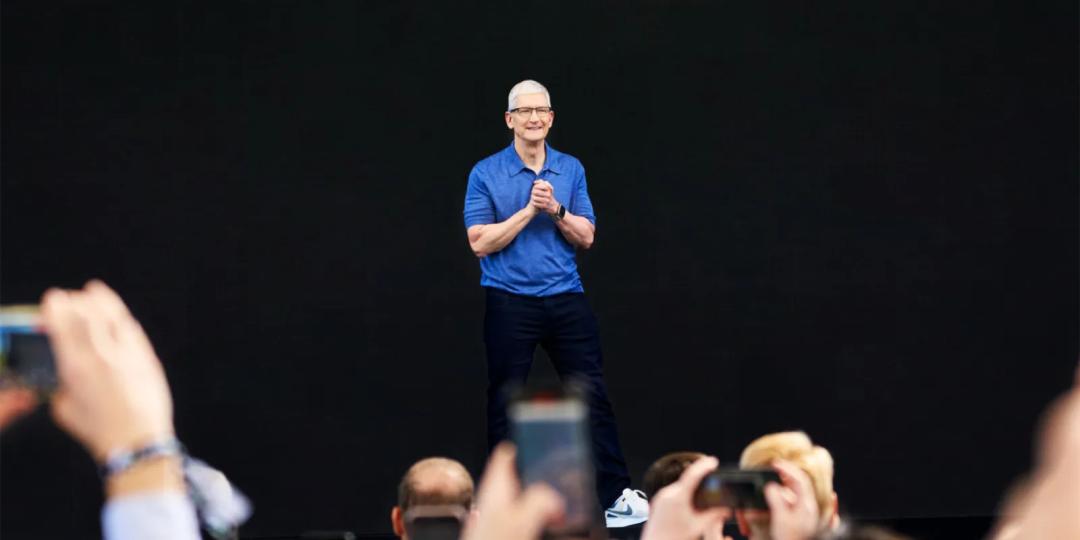
This statement contains a lot of information. It seems to be a response to the outside world's anxiety about the "post-iPhone era" and also like setting a more specific direction for Apple internally.
More importantly, Cook actually stated a fact that many people are well aware of but Apple has never publicly admitted:
The next-generation hardware entry point is about to emerge, but it depends on a prerequisite - Siri, or the current Apple Intelligence, must be redesigned first.
01 Apple Intelligence is good, but it can't support the "new product category"
Over the past year or so, we've observed Apple's progress in AI. To be honest, the company's approach is very "Apple": first integrate generative capabilities into existing devices and operating systems, and then talk about more radical new forms.
At WWDC in 2024, Apple launched Apple Intelligence, integrating generative models, privacy, and system experience. In October of the same year, Apple Intelligence began to be implemented on iPhones, iPads, and Macs. By March 2025, versions such as iOS 18.4 further expanded the functions to more regions and languages, including Simplified Chinese.
Does it sound like good progress? Indeed. But the "ceiling" of this approach is also very clear: Just doing writing polishing, photo editing, and notification summarization is difficult to support the "new product category" that Cook mentioned.
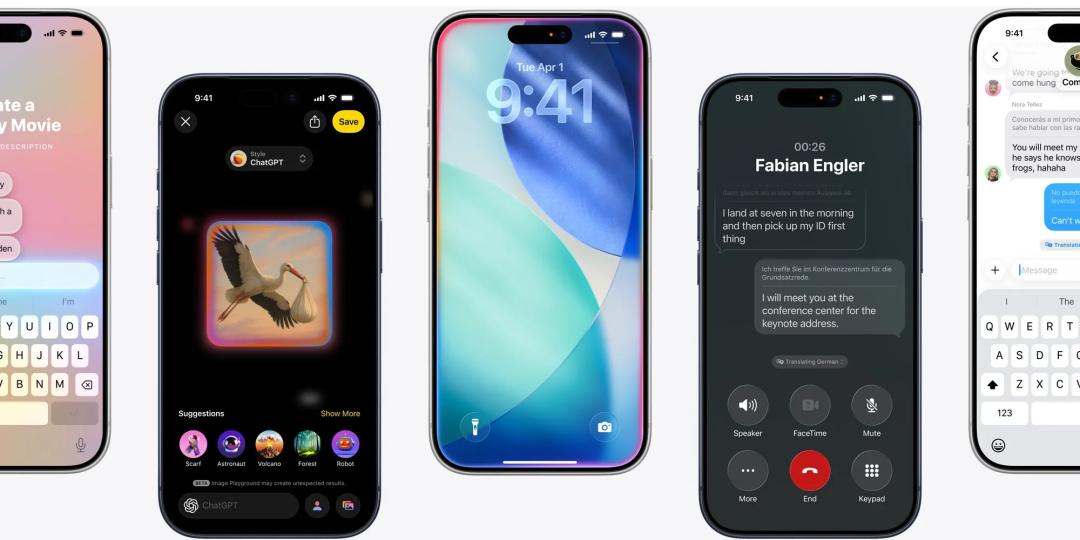
The existing Apple Intelligence still has a long way to go from the complete version envisioned by Apple | Image source: Apple
I've been using Apple Intelligence for more than half a year. It's really convenient - it helps me organize email summaries, modify the tone of my copy, and quickly cut out images. But to be honest, these are all "icing on the cake" functions, not "must-have" capabilities. If you turn it off, your life won't be substantially inconvenienced.
What really determines the success or failure of the new product category is still the upper limit of Siri's capabilities.
In 2024, Apple demonstrated a more "understanding" Siri that can understand personal context, recognize screen content, and perform actions on your behalf inside and outside apps. However, Apple later confirmed that these more advanced capabilities would be postponed until 2026. After entering 2025, Apple switched the naming of its operating systems to align with the year (iOS 26, etc.), which also makes it easier for the outside world to compare Siri's delivery schedule with the "version - time."
More importantly, Apple's redesign of Siri seems to be divided into "two phases."
The first phase is to complete what Apple promised at WWDC 2024, such as "personal context + cross - app execution," with the target window set for iOS 26.4 in the spring of 2026.
The second phase is to transform Siri into a system - level entry point more like a chatbot. Reuters quoted Bloomberg as saying that Apple is internally promoting a new version of Siri codenamed "Campos" as one of the core changes in the subsequent operating system updates in 2026, and it will be more deeply integrated into iPhones, iPads, and Macs.
During the same period, Reuters also reported that Apple had reached a multi - year agreement with Google to use the Gemini model in AI functions such as the new version of Siri; Apple did not comment on the relevant reports.
Connecting these clues, you'll find that Apple is performing a "comprehensive surgery" on Siri, and the success or failure of this surgery directly determines whether the "new AI product category" that Cook mentioned can stand on its own.
02 Two types of "low - risk wearables" are waiting for Siri to take the lead
Looking at the timeline, the "new AI product category" that Cook mentioned will probably start with two types of "low - risk wearables": smart glasses and AI Pins.
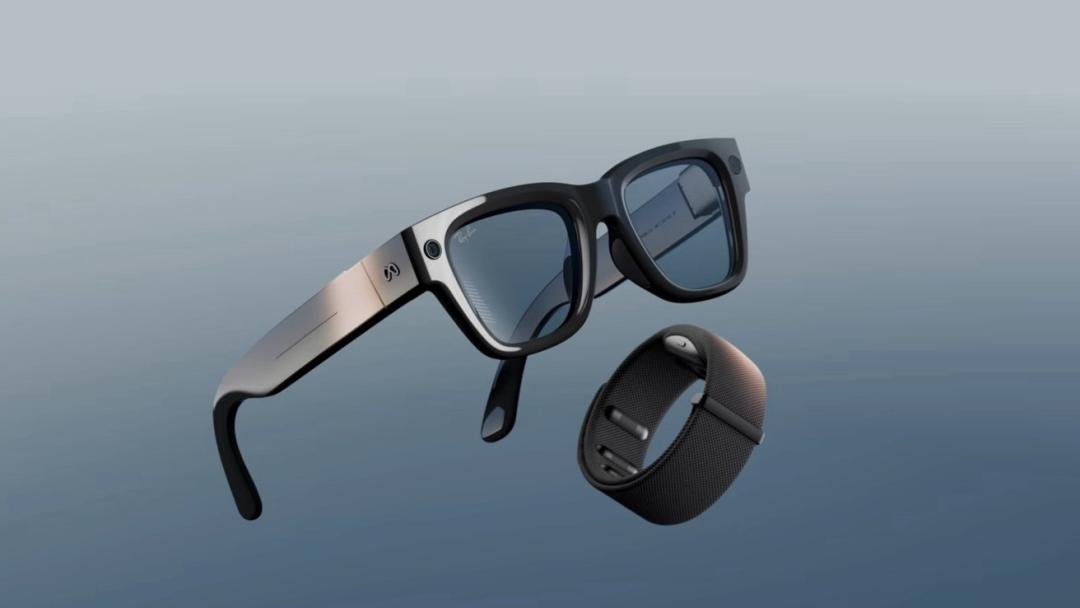
The common points of the two are very clear: the sensors and voice interaction are on the body, while the computing power and screen can still rely on the iPhone for a certain period. This can keep the engineering risks of the first - generation products within a more controllable range. After all, Apple is not a startup company, and it won't bet on a new hardware completely independent of the iPhone ecosystem - at least not in the first generation.
There is no doubt that the first type of product is AI glasses, with an annual single - product shipment approaching ten million and has been verified by major manufacturers such as Meta.
Bloomberg previously reported that Apple accelerated the development of the smart glasses project in 2025, while putting the more affordable Vision Pro plan at a lower priority and shifting some team resources to the glasses.
The existing rumors generally point to a two - generation strategy of "first without a screen, then with a screen": The first generation is more like a voice terminal with a camera, microphone, and speaker, providing capabilities such as calls, music, translation, and navigation; the mass - production time is more likely to be in 2027, and the subsequent version with display capabilities will come later.
The "first - principle" of the experience of this type of product is very harsh: users are willing to wear the glasses all day only if they can be summoned at any time, understand what they say, and perform tasks as required. Ultimately, it comes back to Siri.
At present, after I deeply experienced several "major - manufacturer - produced" AI glasses in 2025, including Meta's Ray - Ban Display. To be honest, the hardware has reached a level of 60 points, but the experience of the voice assistant is a disaster. When you talk to it, it either can't hear clearly, mishears, or understands but can't perform the task. After trying a few times, you won't want to use it anymore.
If Apple's smart glasses are still equipped with the current Siri, the difference between it and other products on the market may only be in the appearance design and price.
The second product form that Apple is also exploring is the AI Pin empowered with new Apple Intelligence capabilities.
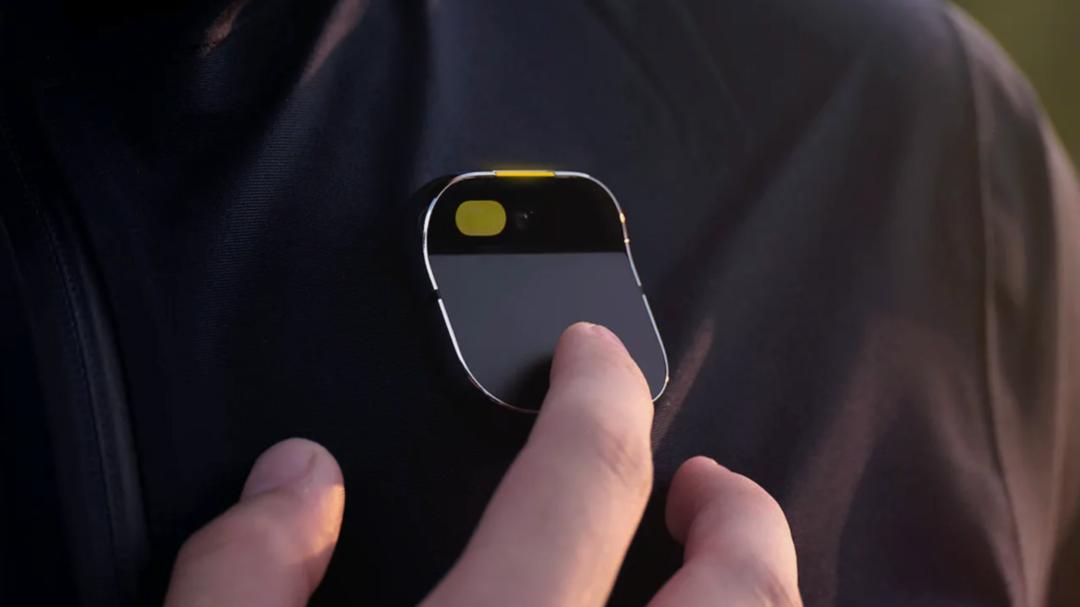
Although the AI Pin failed, the brooch - like product form appeared several times in 2025 and became one of the important forms of AI hardware | Image source: AI Pin
Recently, information from "The Information" has been re - reported by multiple media: Apple is actively developing a wearable device similar to a "pin," about the size of an AirTag, equipped with dual cameras and multiple microphones to sense the environment around the wearer; it may enter the market as early as 2027. Reuters also mentioned in the "Campos" report that Apple is also developing an AI wearable pin with multiple cameras.
This type of product also highly depends on a "capable voice assistant": When the interaction window is reduced to the collar or chest, any mis - trigger, mis - understanding, or halfway failure will turn the product from an "assistant" back into a "toy."
Humane's AI Pin is a lesson from the past. The hardware is very delicate, and the concept is also very advanced, but it ultimately failed due to the poor voice interaction experience. Users won't pay for the "sense of the future"; they only pay for "usefulness."
So, you can see that whether it's smart glasses or AI Pins, Apple is betting on the same thing: Whether Siri can become a truly "competent" voice assistant between 2026 and 2027. If it wins the bet, these new product categories will have a chance; if it loses, they may just be another batch of "concept products."
03 The iPhone remains the center, but Apple is preparing for the "handover"
Even if the "new AI product category" can really take off, the iPhone will still play a central role for a long time.
On the one hand, Apple's AI capabilities continue to expand at the system level: in September 2025, Apple continued to release new Apple Intelligence functions in system updates such as iOS 26 and announced future language coverage.
On the other hand, Apple is also preparing for structural adjustments to its iPhone product line in 2026. According to information and re - reports from media such as The Information, Apple may launch the first foldable iPhone and the Pro series in the second half of 2026, and postpone the standard version to the spring of 2027 to handle the more complex product portfolio.
For Apple, this change in rhythm itself is a statement: the so - called "post - iPhone era" won't come in one or two product generations. It's more like the iPhone leading the new terminals forward together.
But what's more interesting is the change at the organizational level.
Cook also talked about the context of succession and retirement in the internal meeting: he spends a lot of time thinking about the composition of the management team five, ten, or even fifteen years from now and considers this as part of leadership.
In the past six months, the top - level changes at Apple have accelerated significantly:
In July 2025, Apple announced the handover of the COO;
In December 2025, Apple announced a key handover plan for the policy and legal departments - Lisa Jackson will retire at the end of January 2026, Jennifer Newstead will take over as the new general counsel in March 2026, and the current general counsel Kate Adams plans to retire later in 2026.
Meanwhile, reports from Bloomberg and "The Financial Times" and other media interpret changes such as "the departure/reshuffle of the AI leader, the movement of the design team, and the expansion of the responsibilities of the hardware leader" as signals that Apple is strengthening its echelon for the era after Cook.
Putting these clues together, the signal that Cook sent at the beginning of 2026 becomes clearer: on the one hand, Apple needs to transform Apple Intelligence from a "function set" into an "executable system entry point"; on the other hand, it needs to prepare the conditions for the launch of two types of new terminals. At the organizational level, it is also making structural adjustments for a "smooth handover."
Externally, it responds to the narrative of "whether AI will replace the mobile phone"; internally, it's more like asking the team to make up for the shortcoming of Siri because the ticket to the new product category lies here.
Cook also mentioned that Apple, founded in 1976, will celebrate its 50th anniversary in April 2026.
From the "personal computer" to the "smartphone," Apple has always bet correctly on the interaction paradigm of the new entry point in each previous generation change. Around the 50th - anniversary node, Apple needs to set the tone for the entry - point story of the next decade.
Cook's words about the "new AI product category" are probably the opening remarks for this tone - setting. But whether it can continue to be successful depends on whether Siri can perform well.
After all, Apple is not betting on AI this time but on whether voice interaction can become the mainstream interface of the next era. Microsoft, Google, and Amazon have all placed bets on this, but so far, no one has truly won.
Will Apple be the exception?
We'll find out in 2027.
This article is from the WeChat official account "GeekPark" (ID: geekpark), author: Zhang Yongyi, published by 36Kr with authorization.