Apple is frustrated. The App Store has skyrocketed by 60%. Was it all written by "I think"?
Eighteen years after the launch of the iPhone, the App Store is experiencing a strange "reverse growth." The number of new app submissions has suddenly skyrocketed by 60%. This is not because programmers have doubled their efficiency, but because the act of "programming" is being completely reshaped by AI. When the sense of atmosphere replaces logic, a revolution of brute-force aesthetics by outsiders has officially taken over the battlefield.
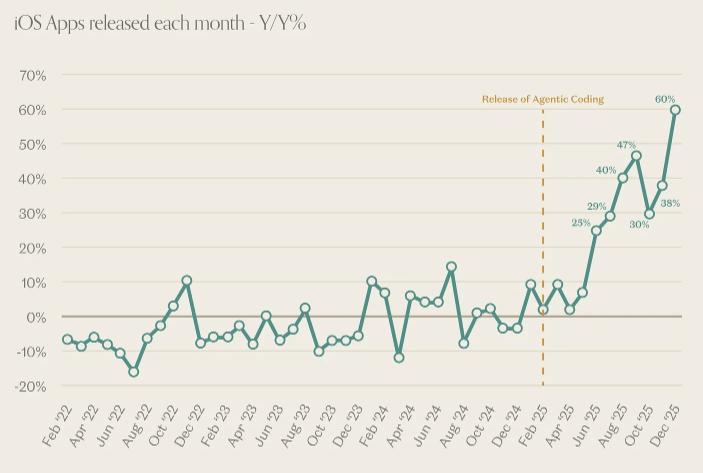
On the long-dormant curve of the App Store, there has suddenly appeared an astonishingly steep upward inflection point.
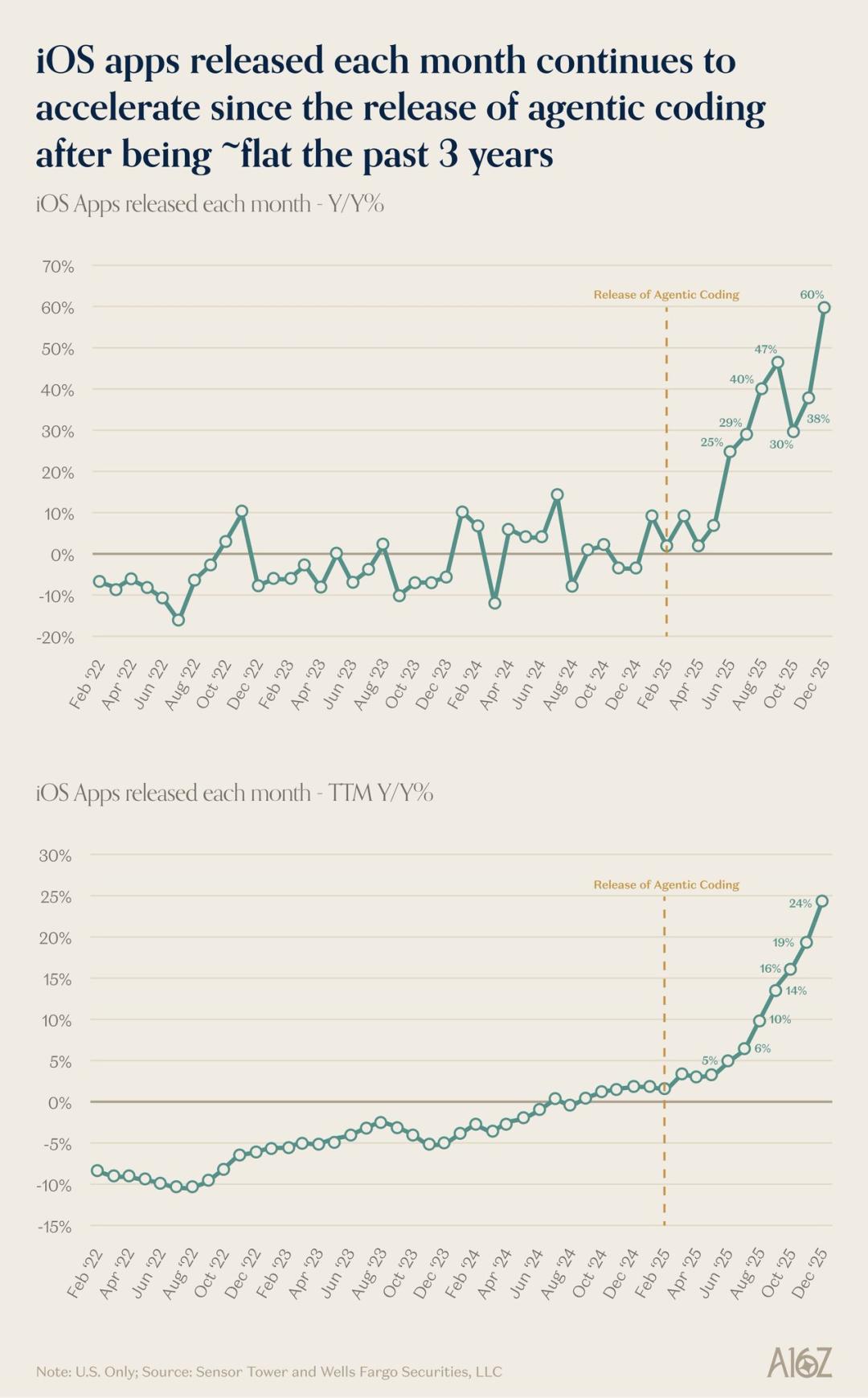
Since the second half of 2024, the number of new app submissions to the iOS App Store has soared from a long-term average of about 50,000 to 78,000, a staggering 60% increase.
The Apple review team is facing an unprecedented DDoS-level manpower battle. However, the primary driving force behind this surge is not the traditional programmers who are losing sleep and hair.
Andre Karpathy, the former AI director at Tesla, has given this strange practice a highly cybernetic name: Vibe Coding.
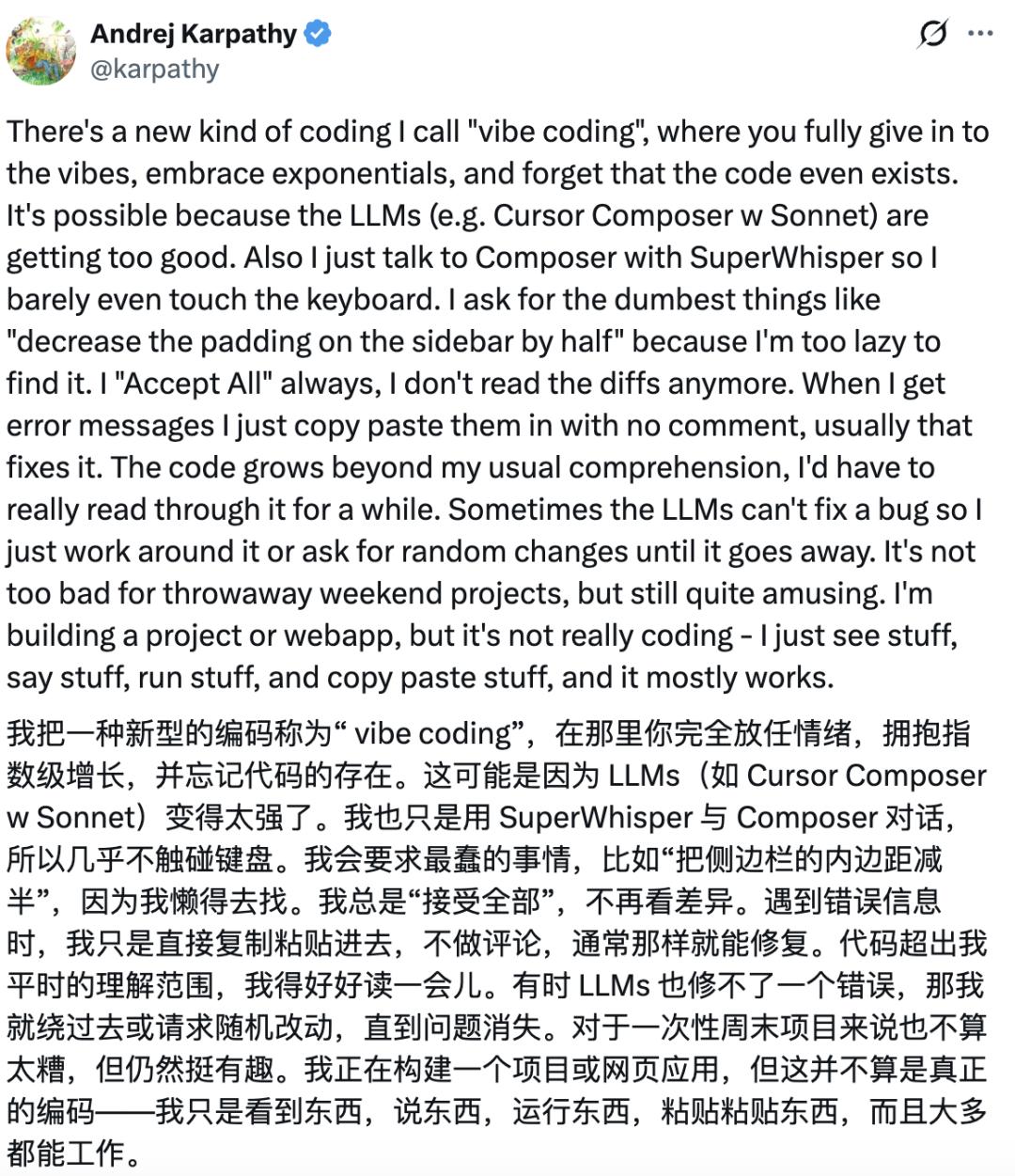
There's no need to understand multi-threading or Swift syntax. Just act like a client and input your intuitions into the Cursor command box.
The old gods of programming are crumbling, replaced by a kind of brute-force aesthetics that's almost like "speaking and the code follows."
The "Cambrian Explosion" Behind the Data: Who's Filling the App Store Like Crazy?
In the traditional model, it often takes a team consisting of product managers, UI designers, and front-end and back-end developers two to three months to develop and submit an iOS app of a certain scale for review.
In the Vibe Coding model, with the combination of Cursor + Claude 3.5 Sonnet, this cycle has been compressed to 24 hours.
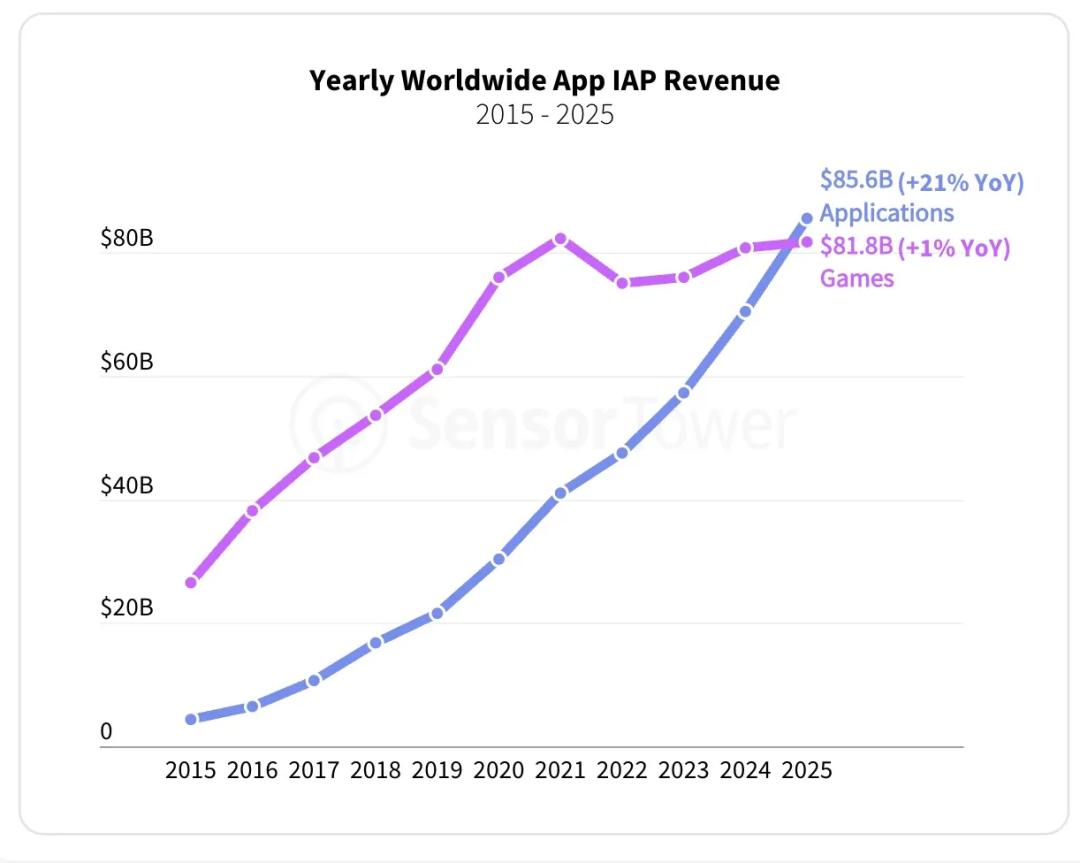
According to Sensor Tower's monitoring, in 2025, the revenue from non-game apps in the mobile market exceeded that of game apps for the first time, reaching $85.6 billion.
Behind this is the rise of countless "one-person companies." They're using AI to rapidly churn out a large number of minimalist tools, AI assistants, and niche lifestyle apps.
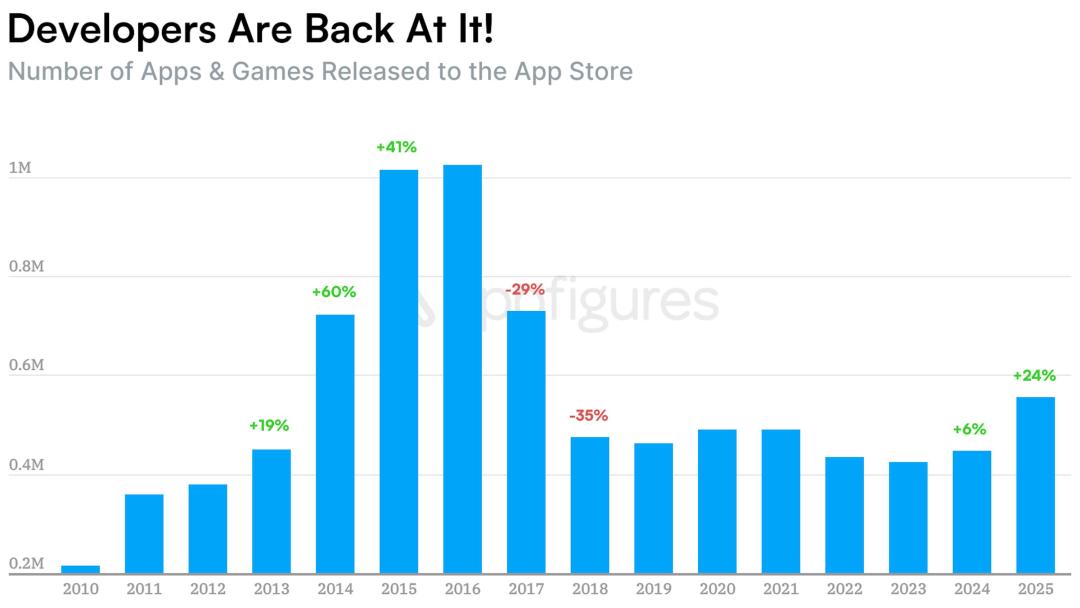
In 2025, the number of new app submissions to Apple's App Store reached 557,000, a 24% increase from 2024. This is the first substantial increase since the record 1 million apps in 2016.
For developers, the cost of failure is almost zero. If an app doesn't take off, they can launch another one within the next 24 hours.
Vibe Coding is going mainstream. After three years of flat growth, the number of new apps launched in December has jumped 60% year-on-year.
It's worth noting that the main force behind this growth isn't experienced coders.
Developers are no longer obsessed with the elegance of algorithms. Instead, they're betting on whether a certain type of interaction or a unique UI style can trigger users' dopamine in a short period.
Vibe Coding: The Brute-Force Aesthetics of Client-Style Programmers
In the context of Vibe Coding, code is no longer the bricks and mortar painstakingly crafted by developers. Instead, it's a layer of digital labor hidden behind a black box.
What developers need to do is use tools like Cursor to continuously convey a sense to the AI in natural language.
The core idea is this: You're no longer the builder of logic, but the validator of results. You input requirements, the AI renders the interface, and you only need to intuitively judge whether it's "right" or not, rather than getting into "because" and "therefore."
Traditional engineering thinking emphasizes robustness, readability, and logical consistency.
But the believers of Vibe Coding hold that if the AI can rewrite an entire block of logic in 10 seconds, then the readability of the code becomes meaningless.
Developers are no longer preoccupied with the paradigm design of databases. Instead, they're frantically testing whether the shadow of this button is sophisticated enough, or whether this minimalist layout conforms to Silicon Valley aesthetics.
Even more, developers can simply feed a screenshot of a competitor's app to Claude 3.5 Sonnet, add a prompt, and the AI can generate hundreds of lines of code and automatically deploy it within seconds.
Developers just need to stare at the screen and nod or shake their heads, just like a client accepting a project.
The speed of this "feedback loop" is 50 to 100 times that of manual coding by humans.
It's this terrifying iteration efficiency that has directly led to the additional 60% increase in app submissions to the App Store.
The Arsenal Game: Claude 3.5 is the Soul, DeepSeek is the Assassin
If Vibe Coding is a new type of tactic, then the current AI toolchain is the "nuclear arsenal" in this asymmetric war.
In the Vibe Coding community, Claude 3.5 Sonnet is playfully referred to by developers as the "Sonnet Coder."
Unlike GPT-4o, which is logically rigorous but sometimes rigid, Sonnet shows amazing flexibility in handling UI layouts, interaction details, and understanding vague instructions.
This flexibility directly reduces communication costs. Without the need for precise coordinates, it can produce almost perfect CSS.
Currently, the hottest programming IDE isn't the traditional VS Code plugin, but a native environment deeply integrated with AI.
Cursor: The industry leader. It recently integrated OpenAI's o3-mini-high model into its Pro plan and has a strong ability to understand large-scale codebases.
Windsurf: A highly threatening challenger. With its Agent interaction system and a killer monthly price of $15, it's rapidly attracting price-sensitive Vibe developers.
If Claude represents the premium of expensive computing power, then the domestic DeepSeek R1 has broken through the cost barrier with its extremely low price, becoming the preferred inference engine for individual developers.
By using DeepSeek R1 in conjunction with the Roo Code plugin, I can almost conduct an infinite number of Vibe attempts at a very low cost. In the past, this would have required paying a hefty API bill.
This extreme cost-effectiveness has reduced the cost of trial and error from hundreds of dollars to just a few dollars.
An independent developer once used AI tools to build a SaaS data tracking tool within 24 hours. His current daily output even exceeds the previous development efficiency of an entire team.
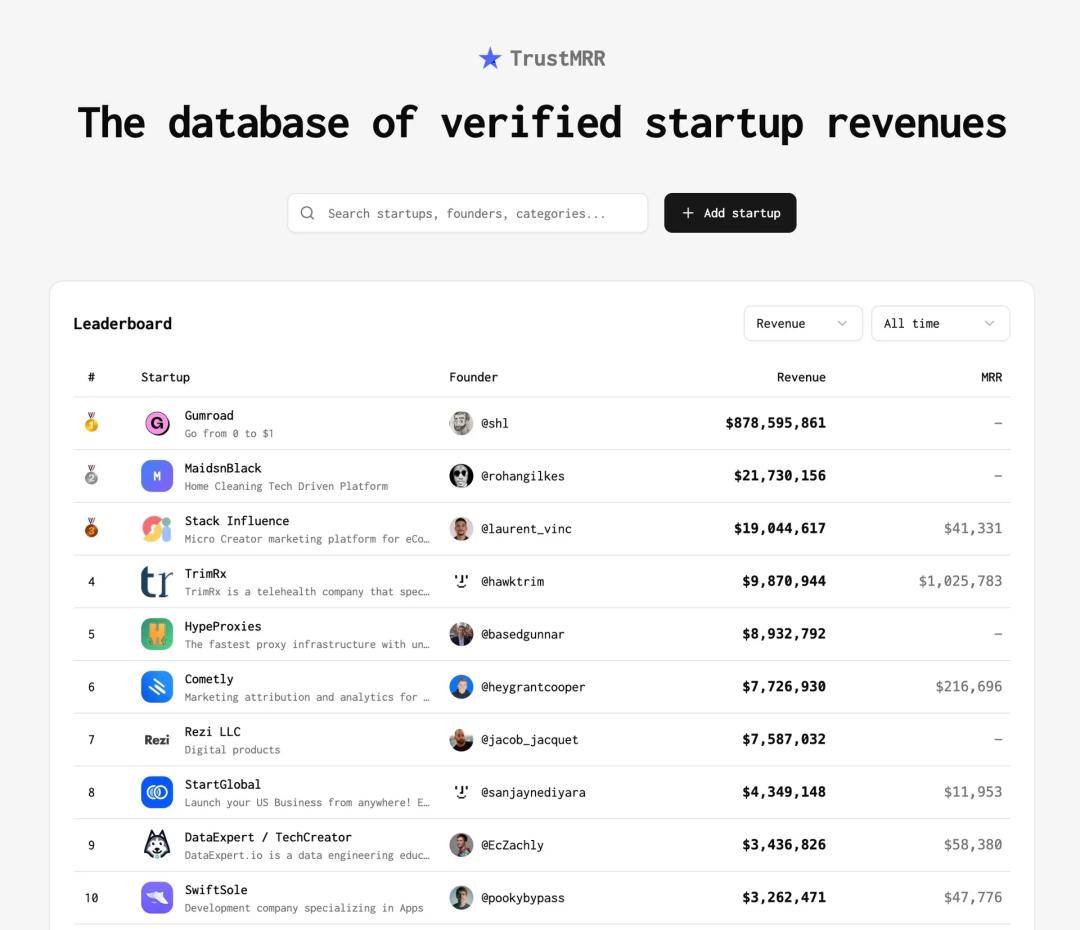
Marc Lou's data tracking tool
It's this combination of "soul (Claude/DeepSeek) + exoskeleton (Cursor/Windsurf)" that has turned app submission into an industrial assembly line.
The Twilight of the Elites: When Technical Debt Meets Dimensionality Reduction Strike
Not everyone is cheering. For senior software engineers who have spent a decade honing their skills, Vibe Coding seems more like a "digital alchemy" full of hidden dangers.
AI can generate well-functioning interfaces, but the underlying logic it produces is often spaghetti code lacking in architectural design.
When an app is pieced together in 24 hours through Vibe Coding, it also accumulates a huge amount of technical debt.
In response, senior developer Namanyay Goe issued a warning:
Vibe Coding is actually harmful. It encourages developers to abandon control over the codebase. Once the AI-generated code experiences a very subtle logical breakdown in the production environment, developers who only focus on the vibe won't have the ability to fix it.
In tools like Cursor, the most dangerous button is undoubtedly "Accept All Changes with One Click."
Traditional software engineering emphasizes that every line of code entering the repository must be reviewed by a human brain, but Vibe Coding is destroying this consensus.
A large number of newly arrived developers are skipping code reviews in pursuit of speed, resulting in a surge of apps filled with security vulnerabilities and redundant logic.
Interestingly, although Karpathy is the standard-bearer of Vibe Coding, his own approach is extremely rigorous.

Karpathy's experience sharing on vibe coding a complete web app. He clearly mentioned that vibe coding is suitable for local demos, but it's painful during deployment and requires a lot of manual intervention, configuration, and review.
He once publicly stated that even when using AI, he manually handles the refactoring of complex repositories and carefully monitors the code diffs.
I still spend a lot of time reviewing the code written by AI. If you click "Accept" without looking at the logic at all, that's not programming; that's a death wish.
For traditional coders, the most brutal dimensionality reduction strike is this: An algorithm you've painstakingly optimized for three days may be less popular in the market than an app tuned out by an outsider using AI.
In this paradigm, the correctness of logic takes a backseat to users' visual pleasure. This cognitive misalignment is triggering a drastic reshuffle within the software industry.
Tim Cook's Scythe: Apple Won't Allow a Garbage Invasion
While developers are indulging in the frenzy of Vibe Coding, Apple has quietly raised its scythe.
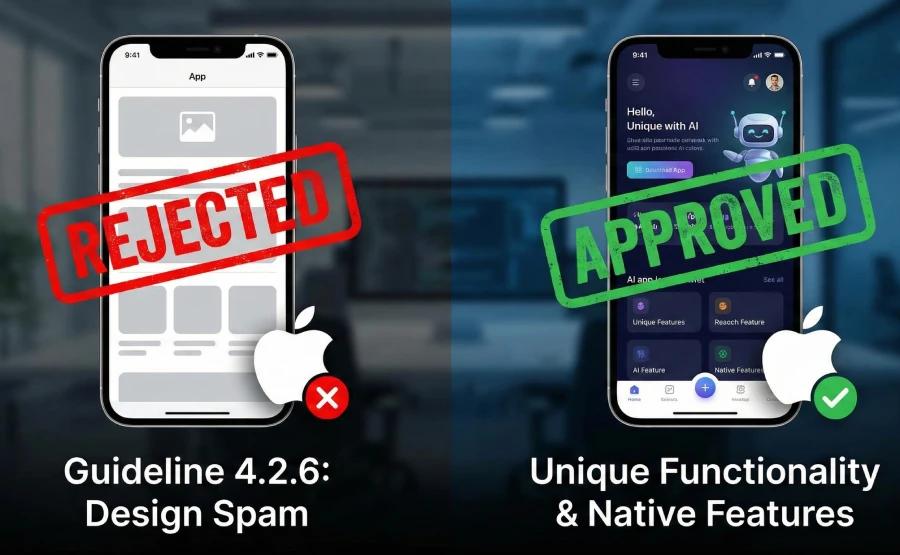
At the end of 2025, Apple updated its "App Store Review Guidelines" and introduced two deadly new rules:
4.1(c) Crack down on the practice of using AI to mass-produce "skin-changing apps" that are rip-offs.
5.1.2(i) Mandate that all data transfers involving third-party AI (such as the OpenAI API) must obtain explicit user authorization.
This means that any zombie apps that don't clearly disclose data flows or are just API wrappers will be considered in violation and removed on the spot.
Apple knows better than anyone that the 60% growth brought about by Vibe Coding is mixed with a large amount of industrial waste.
Those Vibe Apps that are quickly pieced together by AI and experience frame drops or UI glitches on high-performance devices are being removed in large numbers.
Historical experience tells us that the period of technological dividends is always short. When the ability to make code with just a command becomes a standard skill for all humanity, mediocre ideas will become worthless.
Stop asking how to learn programming, and stop being obsessed with the survivor bias of "creating a million-dollar project in