Outdoor brands are competing for the prime spots in high-end commercial areas. How did Kolon quietly break through?
In the past two years, there has been no shortage of "newly opened flagship stores" in cities.
Against the backdrop of e - commerce, instant retail, and short - video platforms continuously streamlining the consumption chain, offline spaces have not disappeared. Instead, they are being continuously invested in and replicated in a higher - end form.
This in itself indicates one thing: flagship stores are still needed, but the reasons for their existence are becoming increasingly demanding.
When products can be ordered at any time and delivered the next day, flagship stores are no longer just "places to buy things"; they are expected to offer more. They need to represent the brand image, lifestyle, value stance, and even a perceptible attitude.
However, problems have arisen. As more and more brands use similar display densities, lighting languages, and photo - taking spot designs to express their respective "lifestyles", the ways of expressing offline spaces are rapidly becoming homogeneous.
Thus, a new differentiation is emerging:
After being good - looking, enjoyable to visit, and photo - worthy have become standard features, what is truly scarce offline is a place where you can stop, without the urge to buy or leave in a hurry.
It is against this backdrop that retail flagship stores, especially those in first - tier cities, are being redefined.
Is there a new answer under the efficiency consensus of retail flagship stores?
The imaginative space that flagship stores can offer is shrinking.
"Efficiency first" has become an inevitable trend in the operating logic of flagship stores. This logic is not abstract. Most brands currently believe that flagship stores should shorten consumers' understanding path as much as possible, reduce the in - store stay and conversion time, and turn physical stores into quantifiable, reviewable, and evaluable data assets. Regardless of whether a brand emphasizes lifestyle, cultural narrative, or experience upgrade, it ultimately boils down to one question: Can a store generate clear returns within a reasonable period?
A survey conducted by the International Council of Shopping Centers (ICSC) showed that opening a physical store can bring a quantifiable online "halo effect" (online sales increase by 6.9% after opening a store and decrease by 11.5% after closing a store). In the Chinese retail chain, stores have been further transformed into reusable near - field fulfillment nodes, such as the recently emerging instant retail.
In the core business districts of first - tier cities, this efficiency - orientation is further amplified.
Flagship stores are often located in areas with the highest rent and the most intensive exposure. Brands hope to quickly transform the stores into high - frequency consumption entrances and brand icons through landmark spaces and strong visual expressions, and convey new products, core collections, and brand values in a concentrated manner within a limited time.
Therefore, flagship stores gradually undertake three highly stable tasks: enhancing product strength by presenting a more comprehensive and high - density product display to improve selection efficiency; creating social exposure by becoming a city - level node that can be photographed, shared, and discussed; and facilitating conversion by quickly turning in - store traffic into traceable sales data.
Among these three tasks, "conversion" is often placed at the core.
As a result, floor efficiency, single - store sales volume, and conversion rate have become key indicators that flagship stores cannot avoid, and they directly determine the priority of space allocation and layout design. To shorten the return cycle, more and more flagship stores adopt linear layouts, high - density displays, and strong sales - guidance logic to ensure that every square meter of space serves the transaction as much as possible.
This trend is also evident in the outdoor industry.
As outdoor activities have gradually evolved from professional sports to a more widespread urban lifestyle, brands' strategies for entering high - end business districts are becoming similar. The demand that stores need to meet is how to quickly convert the understood lifestyle into sales results. Many outdoor brands' flagship spaces are becoming more like a "short - path with pre - experience": the process of viewing, trying, and buying is compressed into a clear and efficient workflow, and the experience itself serves more for product conversion rather than building long - term relationships.
In this industry context, flagship stores are being turned into a "measurable and fast - return device": staying is not valuable; making a deal is. When all brands are streamlining the path, the real difference lies in who is still willing to allocate space for long - term relationships.
Amid this highly stable "efficiency - oriented flagship store consensus" that has almost become the default solution, KOLON SPORT's brand experience flagship store "KOLON ATLAS" in Beijing's China World Mall goes against the trend.
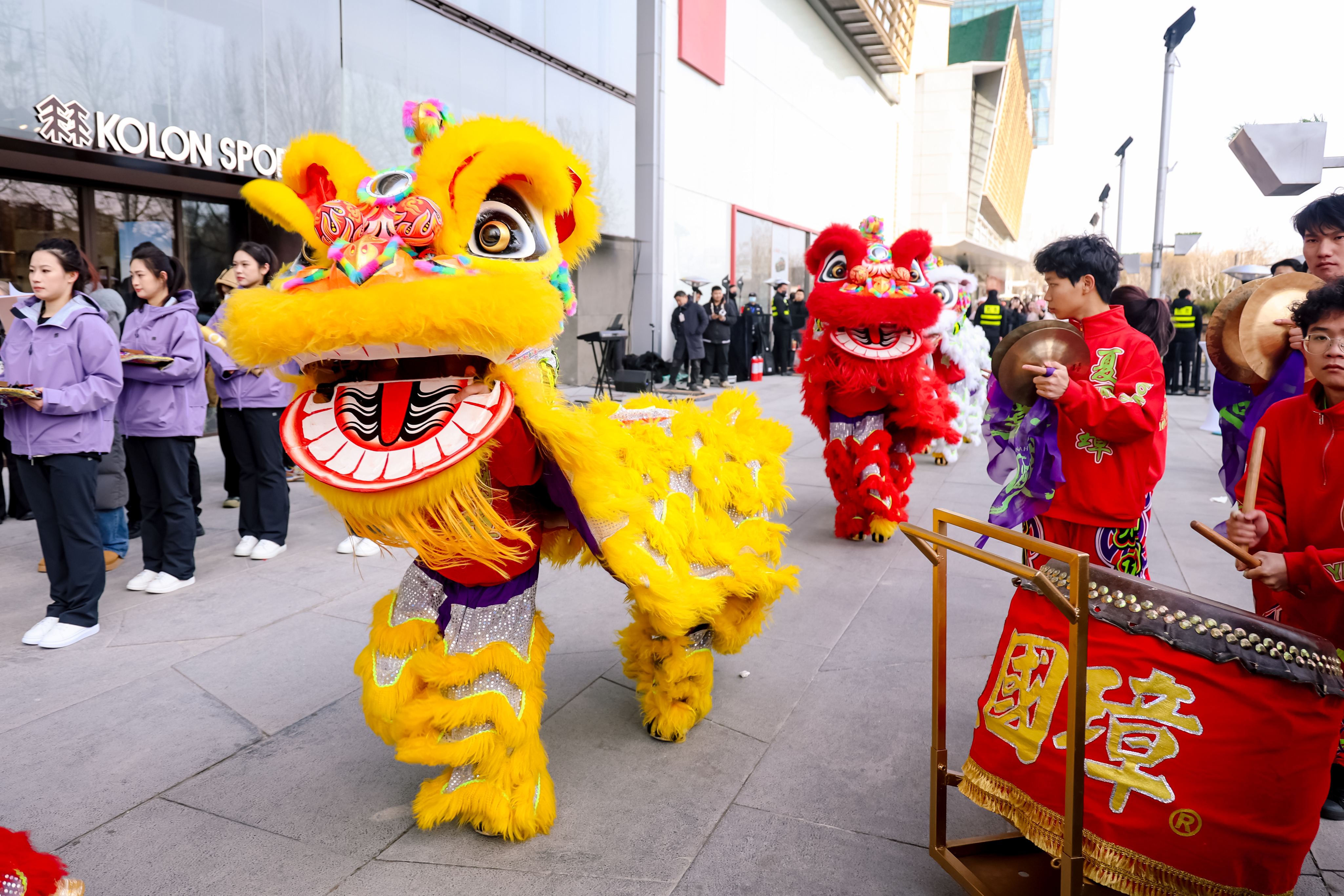
It does not maximize the display density, nor does it completely dedicate the core space to instant sales. Instead, it invests a large amount of cost and area in spaces and mechanisms that are difficult to quantify in the short term but can be used in the long run.
This is a prudent decision. In the prime business districts of first - tier cities where every inch of land is precious, KOLON SPORT views the store as a long - term operating infrastructure for maintaining continuous relationships with consumers, rather than just a tool for transactions. This choice is a response to the current efficiency consensus. It does not deny efficiency but refuses to make it the sole goal.
A reverse configuration: A quiet breakthrough in the flagship store
The differences presented by "KOLON ATLAS" can be understood as a concentrated manifestation based on the brand's own accumulation and stage assessment. It is not about the ostentation in form but a quieter and more systematic way of space configuration. It uses 'reading' to extend the stay, 'circulation' to create reasons for repeated visits, and 'community' to turn store visits into relationships.
When entering the store, you can find that KOLON SPORT does not use high - density displays or strong visual stimuli to quickly capture attention. Instead, it constructs the entire space as a "readable" natural map.
The store space is based on a rational and minimalist functional aesthetic. It is divided into three core scenarios - hiking (HIKE), camping (CAMP), and functional travel (E.D.O) - along the gradient of natural altitude. Consumers' movement in the space is not directly directed towards the purchase point. Instead, it is like flipping through a three - dimensional natural encyclopedia, allowing them to understand while walking.
This spatial logic highly echoes KOLON SPORT's long - standing naturalist values. As a brand with over fifty years of history in the professional outdoor field, KOLON SPORT has always emphasized that the relationship between humans and nature is not one of opposition but a symbiotic state that needs to be understood and respected.
In addition, as a brand that started with mountaineering, KOLON SPORT has sponsored Antarctic expedition teams and Antarctic research teams multiple times and has also been an Olympic Games sponsor. It has a profound professional gene in the outdoor and sports fields. Using altitude as a clue also fits the brand's professionalism.
Therefore, these values are integrated into the space structure, becoming an experiential path that consumers can personally perceive.
Only when the space itself becomes the content can the flagship store truly undertake the function of brand storytelling. In this sense, KOLON ATLAS is a place that requires time to experience and understand.
The same prudence is also reflected in the presentation of the sustainable concept.
In most high - end flagship stores, sustainability often appears in the form of exhibitions or labels, expressing an attitude of "being seen is enough". In KOLON ATLAS, sustainability is transformed into a clear, complete, and participatory practice path.
The "RE - CRAFT" area in the store clearly presents the process of old - clothing recycling, regeneration, and the feedback mechanism, allowing consumers to understand each step and actually participate. Here, sustainability is not just an attitude label but a repeatable in - store task chain: reservation - delivery - points - feedback. Sustainability becomes an action mechanism that can occur repeatedly, bringing the relationship between humans and nature back to daily life.
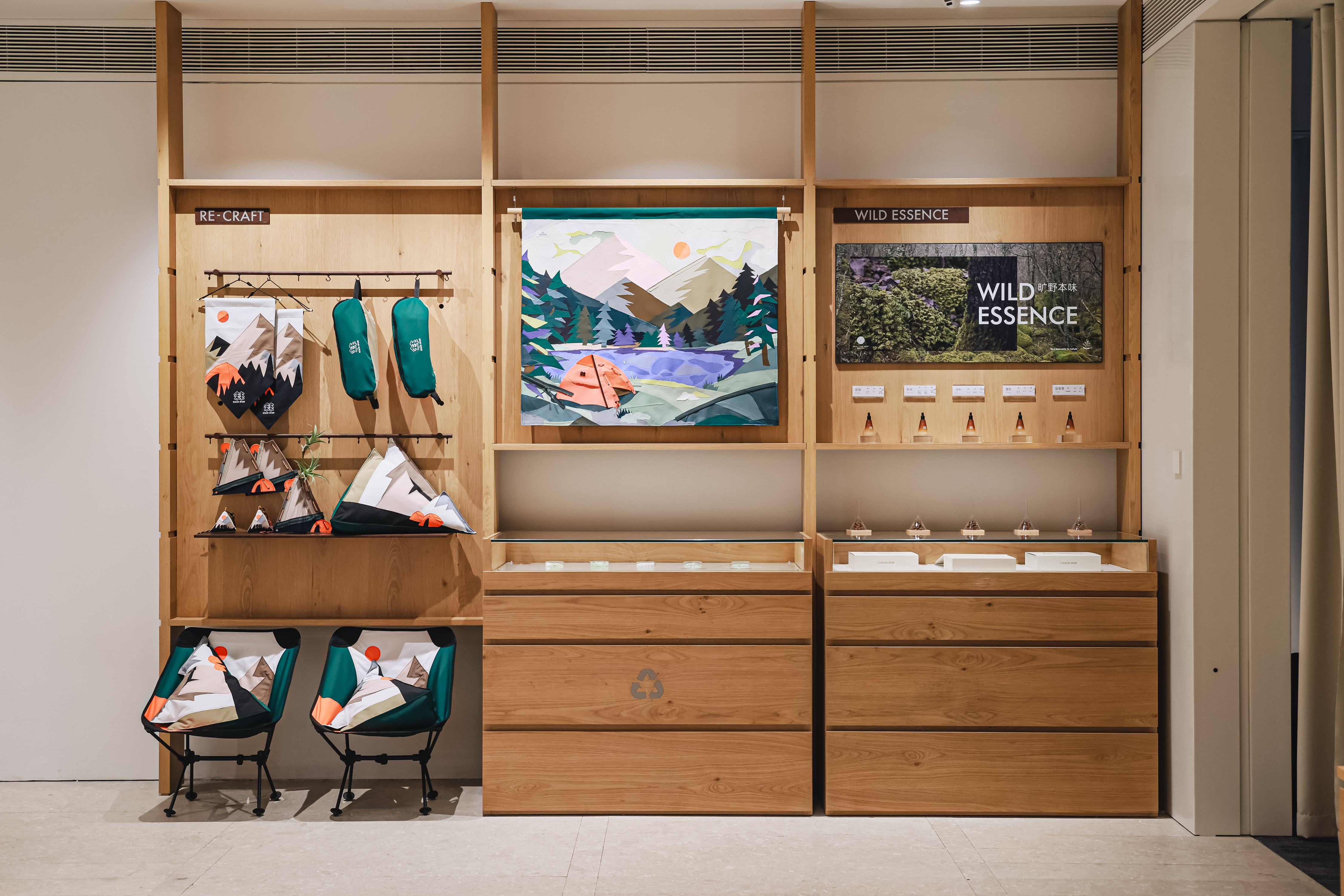
It is precisely because it is located in a high - end business district that it is more suitable to make sustainability the core content of the store. Consumers are not just buying products; they are also confirming the brand's value stance.
If the space structure is for understanding and the sustainable mechanism is for value practice, then the community space is the most "time - dimensional" configuration in KOLON ATLAS.
As KOLON SPORT's largest KOLON ROAD LAB community space in China, one side uses KOLON COFFEE and the community wall for daily communication, while the adjacent "RETREAT" space regularly hosts activities such as movie screenings, meditation experiences, and handicraft salons. Together, they form a relationship node that can be used repeatedly and updated continuously.
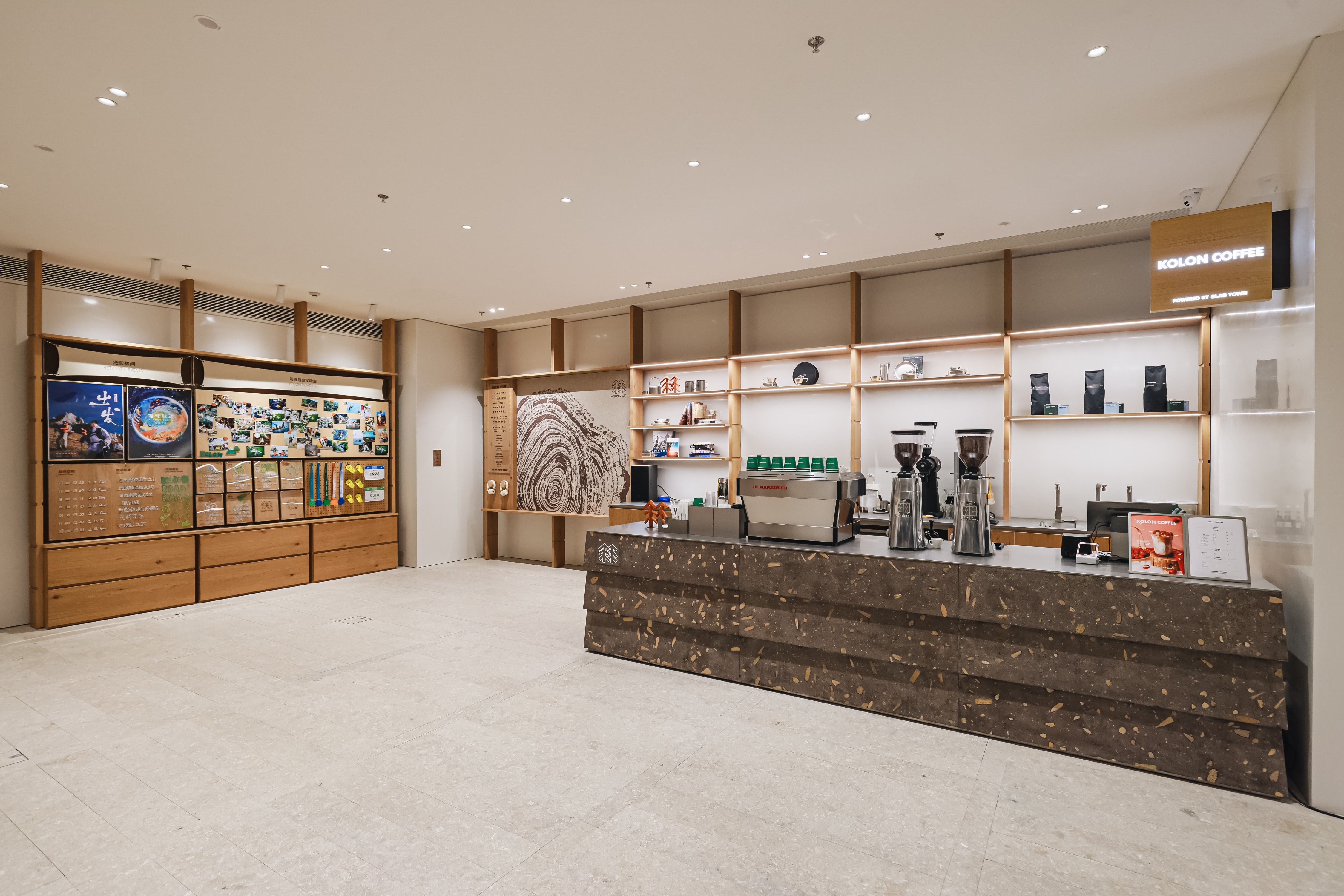
Through the stable existence of the space, the interaction between the brand and consumers gradually accumulates into familiarity and trust. Consumers can experience the process of exploration, rest, and communication with the brand during multiple visits.
Reserving a core position for such a "non - hasty - conversion" community space in the most high - end business district of a first - tier city is a clear decision: The store is not just a place for transactions but also a place where long - term relationships between the brand and users are formed, a "city camp" based on common understanding.
Looking at these configurations together, KOLON ATLAS presents a highly self - consistent choice.
The readable space, sustainable practice mechanism, and stable community area all point to one result: This flagship store is not eager to prove "how fast it can sell" but more concerned about "how far the relationship can go". It is designed as a brand stronghold that can be reused and continuously improved over time, rather than a one - time sales node.
This choice is highly consistent with KOLON SPORT's development path. From focusing on professional outdoor scenarios to continuously delving into community and sustainable issues, the brand has always regarded the long - term relationship between humans and nature as the core proposition. In a highly efficient business environment like China World Mall, adhering to this configuration method is not a matter of course but reflects the brand's confidence in its own rhythm, knowing where and how far it wants to go.
Betting on a different growth logic: How to continue the relationship after the identity is established
Breaking free from the involution of transaction efficiency and betting on the compound interest of relationships - this is the growth logic that KOLON SPORT is betting on. Rather than faster transaction efficiency, KOLON SPORT values a higher relationship reuse rate: turning a single store visit into the starting point of multiple connections. The so - called "anti - efficiency" essentially means not making single - time conversion the only KPI: the experience itself is brand equity.
As high - end consumption and outdoor lifestyles are increasingly integrated, the differentiation among brands is occurring at a more subtle and crucial level.
For a long time in the past, the core issues in industry competition were: who is more professional, who is more high - end, and who can better represent a lifestyle. At this stage, the competition was about symbols, narratives, and exposure. Whoever could occupy the mental high - ground first would gain attention.
However, as the market matures, this logic is changing.
When "high - end", "professional", and "lifestyle" are no longer scarce, the real question has shifted to another level: After the brand's identity has been confirmed, how can it maintain a continuous relationship with users?
This is not just an emotional question but more of an exploration of the growth proposition. Against the backdrop of the overall rationalization of high - end consumption, the changes in the outdoor industry are particularly obvious.
On the one hand, outdoor activities are no longer exclusive to niche circles and have gradually become a daily lifestyle for urban residents. On the other hand, as product functions are becoming standardized, it is increasingly difficult for products to differentiate brands. Consumers' choices of equipment and brands are shifting from "being initially impressed" to "worthiness for long - term companionship".
This means that the focus of growth is shifting. Instead of constantly creating stimuli through new products, collaborations, or marketing events, how to extend the lifecycle of user relationships is becoming a more decisive ability.
This is particularly crucial for outdoor brands. Since outdoor activities are not one - time consumption scenarios, people repeatedly walk, explore, use equipment, and interact with the same brand. In this structure, the relationship between the brand and users naturally has the potential to be prolonged and deepened.
The question is: Has the brand reserved enough space and mechanisms for this long - term relationship?
Looking back at KOLON SPORT's reverse configuration at the store level, its significance is not limited to the difference of a single flagship store but clearly points to a brand - level strategic orientation.
KOLON SPORT has actively sacrificed some short - term efficiency that the industry takes for granted. Although it seems to have reduced the certainty of instant conversion, it has gained a more durable connection method: allowing the relationship between the brand and users to occur repeatedly and accumulate over time. More importantly, this decision is not a one - time attempt. From the KOLON KRAFT flagship store in Chengdu's Taikoo Li, the KOLON KRAFT flagship store in Shenzhen's Luohu MixC to the brand experience flagship store in Beijing's China World Mall - "KOLON ATLAS", KOLON SPORT's space and function configuration of flagship stores have always revolved around the same main line, trying to verify whether this relationship - based configuration can be established in the long run.
In this sense, KOLON ATLAS is not just an upgrade of a flagship store but also an affirmation of an operating attitude.
It should be emphasized that focusing on long - term relationships does not mean giving up efficiency. For outdoor brands, this efficiency is not reflected in single - time transactions but in the relationship reuse rate.
Therefore, rather than saying that KOLON SPORT has made a "different choice", it has made a decision that is highly consistent with its own genes and the industry stage.
As a brand that has long been rooted in the professional outdoor field and emphasizes the relationship between humans and nature, KOLON SPORT does not need to prove its identity through more radical means. What really matters is how to go further with users after its identity is clear.
In a business system that highly pursues efficiency, what is truly scarce is often not a faster solution but the ability to pay short - term costs for long - term judgment. This may be where the competition among outdoor brands is quietly changing.
And KOLON SPORT is the first to take this path that requires more patience but also offers a broader vision.