Zhang Wei, Founder of Zhuji Dynamics: We don't follow the trend or get involved in the rat race. We're "creating new species."
In the past year of 2025, which sector was the hottest?
Undoubtedly, it was embodied intelligence.
According to data from Touzhong Jiachuan, throughout 2025, a total of 168 companies in the field of embodied intelligence received financing, with a total financing scale of 32.9 billion yuan, a year - on - year increase of 291%. The enthusiasm of capital carried over into 2026. In just the first month of the year, nearly 20 financing events were disclosed in the domestic embodied intelligence field, and it was not uncommon for the financing amount to reach hundreds of millions of yuan.
In 2025, as a future - oriented industry for forward - looking layout, "embodied intelligence" was written into the "15th Five - Year Plan" proposal, which clearly stated the goal of promoting embodied intelligence to become a new economic growth point. Recently, the Ministry of Industry and Information Technology stated that it would drive the development of the large - scale embodied intelligence industry with humanoid robots as a small entry point.
However, amidst the prosperous appearance, the "winter theory" and the "bubble theory" have quietly emerged. The technological routes have not converged, the commercial paths are difficult to close the loop, and the application scenarios are hard to find. Coupled with sky - high enterprise valuations... "The second half of 2026" has become the "winter of embodied intelligence" in the minds of many industry insiders.
Of course, there are exceptions.
"Of course not. How can this be a winter? I don't think 2026 is a winter at all. Instead, it is the first year for the implementation of embodied intelligence. This year, there will be POC (Proof of Concept) verifications in various segmented scenarios, and in 2027, the scale will start to increase," Zhang Wei, the founder of Zhujidongli, told 36Kr.
Yes, among all the startups in the field of embodied intelligence, Zhujidongli has always been a very special player.
At the beginning of the year, during the research trip of Li Qiang, the Standing Committee Member of the Political Bureau of the CPC Central Committee and the Premier of the State Council, to Guangdong, Zhujidongli was one of the invited enterprises. On - site, founder Zhang Wei demonstrated to Premier Li Qiang that their humanoid robot Oli could go up and down stairs, which intuitively reflected the underlying innovation of their "cerebellum basic model" and "cerebrum - cerebellum integration technology".
Less than two weeks later, Zhujidongli officially released this technology and named it the "Embodied Intelligent Agent System LimX COSA", which is an Agentic OS native to the physical world.
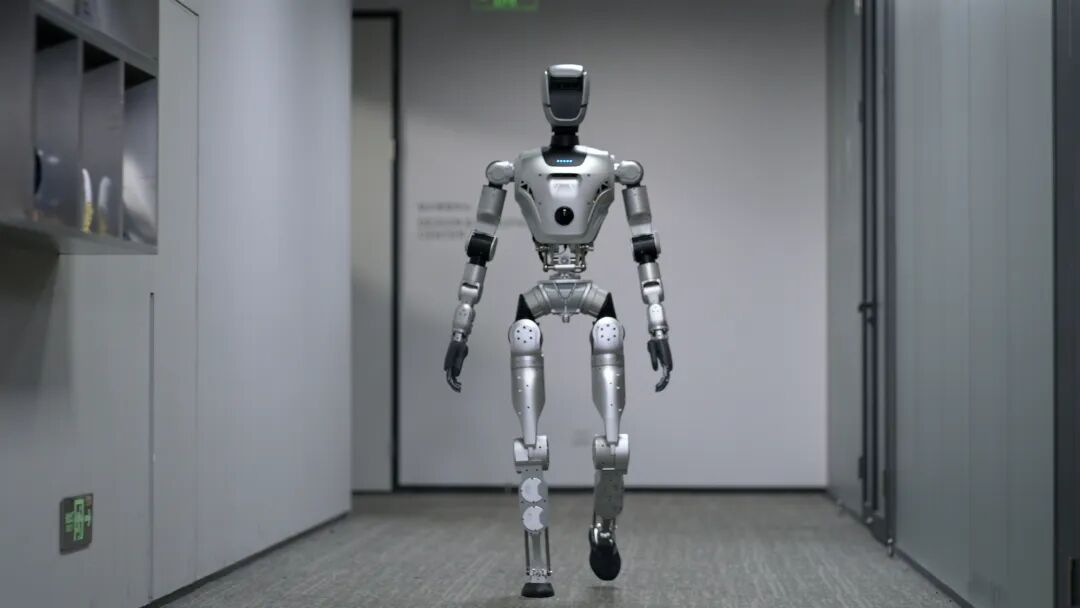
Zhujidongli's Embodied Intelligent Agent System LimX COSA
If we were to draw an analogy, COSA is equivalent to the "intelligent nervous system" of a humanoid robot. By integrating cognition and motion control, it enables the robot to think and act like a human.
Zhang Wei believes that "2026 is the first year for the implementation of humanoid scenarios without the use of a remote control, and the Agentic OS is the key." Moreover, he thinks that "the industry should shift its focus from single - model capabilities to Agentic system capabilities", and Zhujidongli has made original breakthroughs in this regard.
As eye - catching as COSA is the multi - form embodied robot TRON 2 released by Zhujidongli in December last year.
In the increasingly homogenized competition in the field of embodied intelligence, TRON 2 is special - it is almost different from all the robots on the market. Based on the same robot base, TRON 2 can quickly switch between three configurations: dual - arm, bipedal, and dual - wheeled bipedal, and supports the reconstruction of forms such as humanoid and quadrupedal. It maximizes the versatility of embodied intelligent robots, which can be described as "buy one get five free", greatly reducing the threshold for exploring the implementation of robot scenarios.

TRON 2 - Universal Base for Embodied Robots: One body, multiple forms
Many netizens said that this is a representative of Chinese original innovation in embodied intelligent robots.
From TRON 2 to COSA, from any perspective, Zhujidongli is a company with an almost paranoid pursuit of "original innovation". It is bold enough to engage in technological innovation that only a very small number of people dare to bet on, and has an extraordinary persistence in breaking boundaries, rejecting all "following the trend" and "involution".
This week, Zhujidongli just announced the completion of Series B financing, raising 200 million US dollars. Well - known institutions such as Stone Venture from the UAE, JD.com, and Orient Fortune Capital participated in the investment, and old shareholders such as SAIC, NIO Capital, and Mingshi Venture Capital continued to increase their stakes. This is the largest financing in the embodied intelligence industry since the beginning of 2026.
At this juncture, 36Kr had an in - depth exchange with Zhang Wei, the founder of Zhujidongli.
Different from the typical "professor - type founders" who usually rely heavily on technology, Zhang Wei has a profound understanding of the real business logic of the technology industry and has unique insights into products, competition, and the development trend of the industry. He is optimistic and humorous, and has an extraordinary persistence in "original innovation" and "changing the world" - this is also the underlying gene shared by the Zhujidongli team.
In this interview, Zhang Wei not only shared Zhujidongli's exploration of TRON 2 and COSA in the "general - purpose robot" sector and the latest breakthroughs in the cerebellum basic model and cerebrum - cerebellum integration technology, but also shared the two major embodied operation technology variables he is optimistic about in 2026 (first - person video data and post - training), and responded to many highly - concerned and controversial issues in the industry:
Whether 2026 is the "winter" of embodied intelligence; whether the "huge orders" in the industry can be sustained; where the moat of embodied intelligence lies; what is the most valuable thing for embodied robot companies to do, etc.
The following is the Q&A transcript of the interview (Q: 36Kr, A: Zhang Wei, founder of Zhujidongli).

"Redefining Robots"
Q: The newly released COSA by Zhujidongli is called the "intelligent agent system for humanoid robots". How is this concept defined?
A: The full name of COSA is Cognitive OS of Agents. It is an OS system for robots developed in an Agent - based way, which manages the models, skills, memories, and even emotions of the robot, enabling it to "think actively and work autonomously" in the real world.
Take the task of the humanoid robot Oli "fetching water" in our demonstration. After receiving the instruction, even if the action is interrupted by a new task, the robot can automatically determine the priority. After "thinking", it will first complete fetching water and then go to pick up the express delivery. With the combination of "cerebrum + cerebellum" capabilities, it can complete the task autonomously.
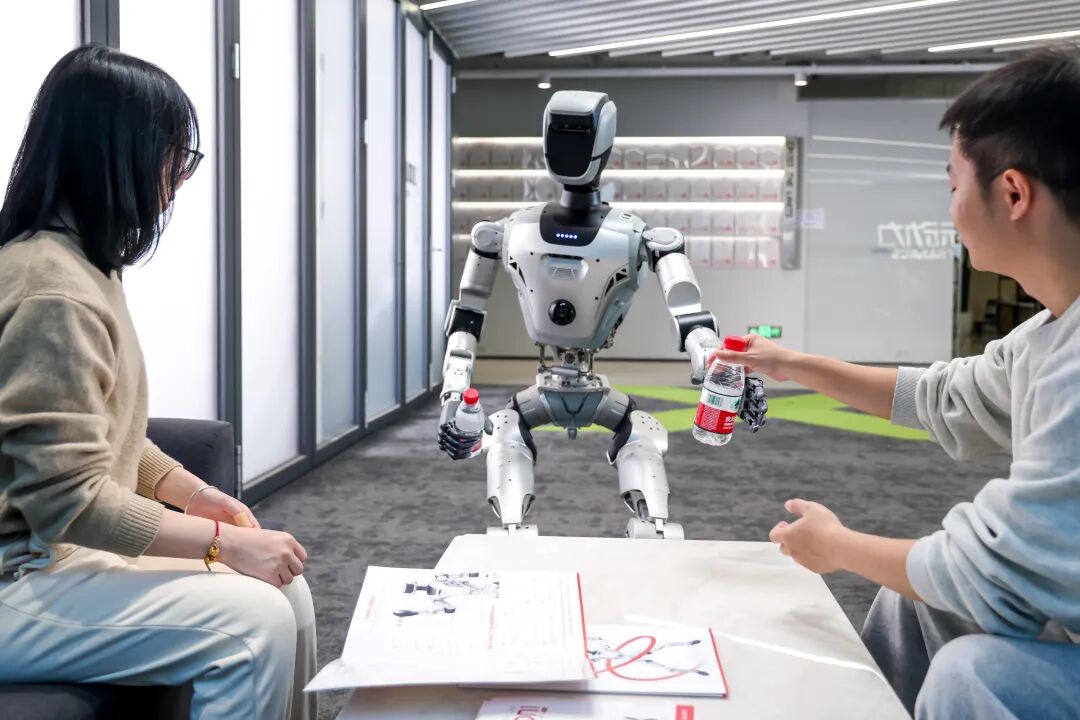
The full - size humanoid robot Oli equipped with COSA completes a mobile operation and hands two bottles of water to the guest
Q: What is the significance of an Agentic OS like COSA for the embodied intelligence industry?
A: In 2026, the industry will shift its focus from single - model capabilities to embodied Agentic system capabilities. This is a key step in the transformation from being technology - demo - led to being product - experience - led, and we were the first to take this step. I believe that future operating systems (including those of mobile phones and computers) will be upgraded to agentic ones, and the OS for humanoid robots must be Agentic - native. COSA is an Agentic OS designed for humanoid robots.
Q: What kind of technology stack is needed to develop COCA, and what are the barriers?
A: The cerebellum basic model, note that it is the "basic model", not individual policies. It cannot be a pre - programmed set of dance moves. Instead, it should be able to generate arbitrary full - body movements in real - time, which is the cornerstone of the entire system.
The high - level skill layer of cerebrum - cerebellum integration, which aligns complex behaviors such as navigation, obstacle avoidance, mobile operation, and going up and down stairs with the basic model of full - body motion control, truly enabling the capabilities of the cerebrum to reach the physical world. This is the bridge between motion intelligence and cognitive intelligence.
Embodied intelligent agent technology, which designs, schedules, integrates, and manages all models, skills, tools, memories, personalities, emotions, etc. based on the Agent - native concept to achieve autonomous thinking ability.
Q: What technologies do you mean by the "cerebellum basic model" and "cerebrum - cerebellum integration"?
A: The so - called cerebellum basic model is a model that can generate motion instructions in real - time. Currently, common motion control methods in the industry, such as dancing and somersaulting, usually rely on pre - programmed or pre - trained strategies, just like an actor who has memorized the lines by rote. Once interrupted, the entire action will fail. In contrast, the cerebellum basic model is a real - time motion generation system. You can command it to perform any action at any time, and the robot can execute it even if it has never "learned" that action before.
This is one of the most important capabilities for deploying VLA models on humanoid robots in the future. If VLA is to be used universally on humanoid robots, there must be a cerebellum basic model, and the motion cannot be pre - programmed. For example, if the cerebrum says it wants to grab a cup and this motion has never been seen before, and it has to be retrained, that definitely won't work. Whatever action the cerebrum wants, the cerebellum should be able to execute it in real - time.
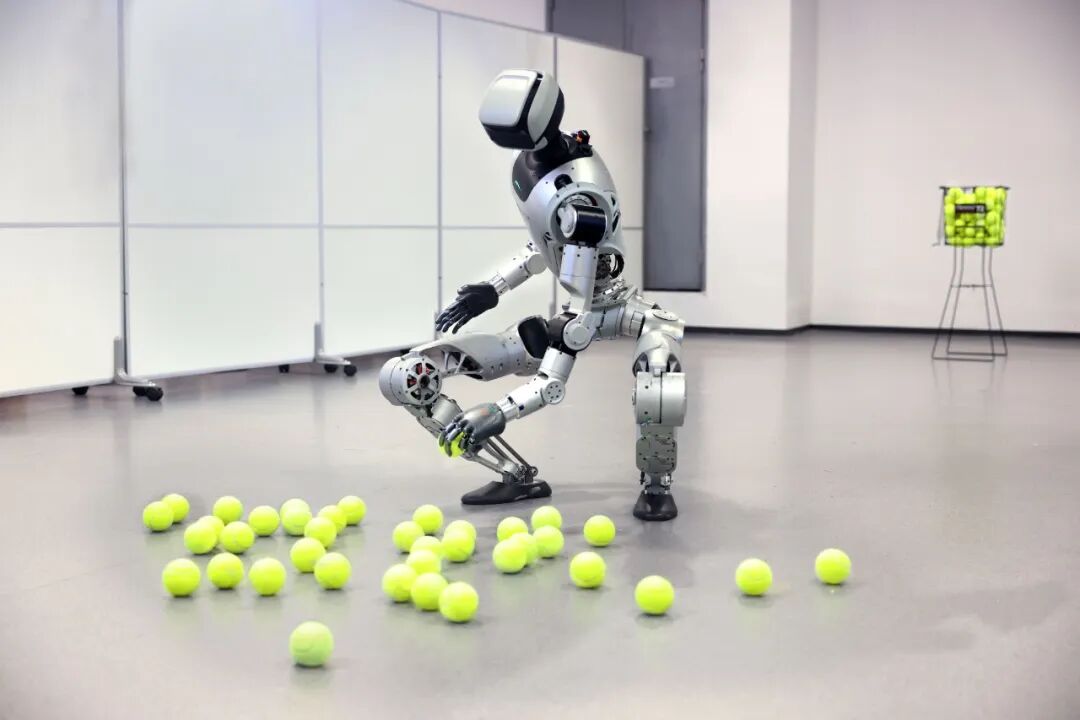
The full - size humanoid robot Oli autonomously picks up a tennis ball
Q: Recently, another robot of Zhujidongli, TRON 2, has also attracted a lot of attention. Its "base" form is very special. Why did you choose such a form?
A: If you look at the robots on the market, they are mostly wheeled, bipedal, robotic arms, or robotic dogs. TRON 2 is a brand - new category, like the basic model in the field of robots. You can call it a Foundation Robot. It can adapt to various scenarios: Do you need a single arm or double arms? Do you need a mobile chassis, legs, or wheels? As a universal base for embodied robots, it can be combined into the form you need by replacing different end - effectors.
After the release of TRON 2, there was a strong response both at home and abroad, and it even triggered discussions about the competitiveness between China and the United States. TRON 2 is very likely to be one of the very few new robot categories defined by a Chinese company.
Personally, I think that if you need robots of different forms, one base like TRON 2 can meet your needs.
Q: The design of TRON 2 looks different from the robots on the market. Why did you design it like this?
A: Because we want to solve a very practical problem - the cost of exploring scenarios is too high. Currently, everyone wants to find implementation scenarios for embodied intelligence. But to explore a scenario, you may have to buy a wheeled robot, a legged robot, and a robotic arm, which costs hundreds of thousands of yuan. After the test, if it doesn't work, the money is gone. The logic of TRON 2 is "one base, multiple forms". If you want to test logistics, install double arms; if you want to test complex terrains, change to legs; if you want to run fast, use wheeled legs. Although the forms are diverse, the core capabilities are reusable. You don't have to buy a whole new set every time. You can just assemble it to adapt to new scenarios. Moreover, it is not a prototype that can only be demonstrated. It has a large load capacity and can really do work. We hope it will become the "standard tool" for everyone to explore scenarios - with it, you can go to the real environment to verify scenarios.
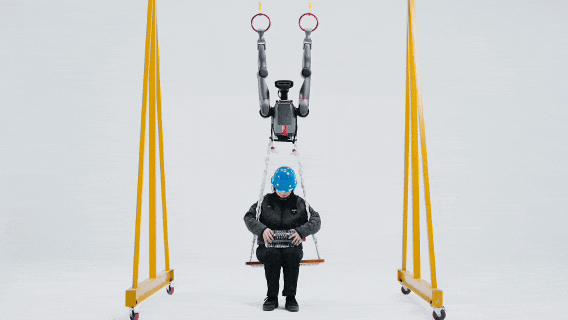
The super - high load capacity of TRON 2 in the double - arm form
Q: There are so many forms of robots in the industry. Is it really necessary to create a new one?
A: Instead of being obsessed with forms, we focus on "how to solve the problem". Currently, in the industry, many products look similar, and everyone is competing on parameters and prices. But we think that if China wants to truly lead in embodied intelligence, it can't always follow the paths of others. Someone has to define new things. TRON 2 is the product of this thinking. We didn't copy an existing category but started from actual needs and re - thought "what a robot should look like". The final product is indeed different from others.
For us, innovation is not for the sake of being different. It's because the old path doesn't work. China can't lead in this field by following the trend and engaging in involution. It needs to dare to do different things.

"You can't raise funds with just a PPT. That's not a winter; that's a return to normalcy"
Q: In 2