It's difficult for Shenzhen investors to enter the "DJI circle".
In early January 2026, the inno100 Smart Hardware Store in Shenzhen Nanshan Science and Technology Park was bustling with people.
The shelves were filled with “Shenzhen hits” that are popular overseas: exoskeleton robots, 3D printers, AI toys, drones... Some were created by former employees of giants like DJI, Xiaomi, and Huawei, while others were developed and iterated within a few days by the local supply chain. Each item was a representative work of this wave of “AI hardware” boom.
Xu Qing, an investor from a leading venture capital firm in Shenzhen, stood in front of a smart office chair named “Qingxian” and tried it out three times. The chair can automatically adjust the lumbar support, monitor sitting posture, and even remind users to get up and move through micro-vibrations. His eyes lit up. “We really want to invest in this product.”
But soon, his expression dimmed. “Hillhouse has just invested in them.” Xu Qing had been following this project for several months. As soon as the US dollar funds came in, he knew he had no chance. The valuation of the project had doubled in just a few months. “We weren't even on the due diligence list.”
In 2025, the smart hardware market in Shenzhen was like a high - speed star - making factory.
A large number of US dollar institutions flocked in, driving up the valuations of startups. The group of “DJI - affiliated” entrepreneurs emerged, and various types of hardware for niche scenarios emerged one after another. The Chinese smart hardware industry centered in Shenzhen was brewing a global category reshaping.
This was the first time that the “Shenzhen Speed” was so concretely reflected in the venture capital field. In the past few years, venture capital was not very active in Shenzhen. Well - known institutions and investors were more concentrated in Beijing and Shanghai. An FA (financial advisor) in Shenzhen mentioned that nowadays, for any startup team with a DJI background, it often takes only three or four months from the seed round to the Series B financing, and it's normal for the valuation to double.
Sequoia China was a representative institution in this round of investment in Shenzhen. For the projects Sequoia decided on the fastest, it only took two or three days from contacting the project to issuing the TS (term sheet). Some US dollar institutions could even make on - the - spot decisions and transfer the funds on the same day. Some market - oriented RMB institutions were also actively participating, and they had to invest in a “US dollar style”: higher valuations and faster decision - making efficiency.
Data from Tianyancha, an enterprise information query platform, shows that in 2025, a total of 77 smart and related smart hardware enterprises in Shenzhen completed 106 investments, with year - on - year increases of 51.0% and 79.7% respectively. The total disclosed investment amount was about 10.049 billion yuan, nearly seven times that of 2024, making it the most active area for smart hardware investment in China.
In this domestic capital feast, local Shenzhen institutions such as Shenzhen Capital Group and Shenzhen High - tech Investment Group were collectively absent. Although they had geographical advantages and government resources at their backs, they could only watch helplessly as foreign investors snapped up high - quality projects such as those related to the “DJI - affiliated” entrepreneurs, and they could only remain silent on the sidelines.
Wang Jiale, who works in a local state - owned investment institution in Shenzhen, went to visit a project. The founder directly said, “Your process is too slow. By the time you finish your internal meeting, I'll have completed my next round of financing.” For these local Shenzhen investors, there are currently two types of projects in the market. One type is snatched up by US dollar funds, and the other is what's left. They basically can only look at the latter.
On the other side of the story, in the past few years, the “presence” of US dollar institutions in the Chinese venture capital market has been continuously weakening. As early as 2021, many investment institutions stopped raising US dollar funds and turned to RMB investments. Data from IT Juzi, a venture capital data service provider, shows that in the past five years, the total investment amount of US dollar institutions has decreased by more than 84%, from 532.9 billion yuan in 2021 to 82.7 billion yuan in 2025. Meanwhile, the market share of RMB institutions has risen from about 64% to about 90%.
Behind this is a fundamental difference between the two types of capital in terms of genes and gameplay: US dollar institutions prefer C - end tracks with high growth and explosive potential; local institutions pay more attention to investment themes such as advanced manufacturing and domestic substitution. In the past few years, the investment directions of US dollar institutions have significantly narrowed. Many US dollar institutions have established RMB funds and even cooperated with government - guided funds for investment. The rise of consumer hardware in Shenzhen has allowed US dollar institutions to show vitality again.
The two investment forces are intertwined. From local hardware giants in Shenzhen, to the roadshow sites in Nanshan incubators, and then to the 24 - hour - running supply - chain factories, covenants and calculations are intertwined, and cooperation and games coexist.
The “Blitzkrieg” of Hardware Investment
At a dinner in late 2025, investor Li Yongming and his peers were toasting each other. A young investor from IDG Capital at the table became the focus - the smart hardware project he was in charge of had passed the review, and he was about to make his first investment in his career.
Everyone congratulated him, but a phone call ended the lively atmosphere. Li Yongming saw the young man's face turn pale instantly.
While the dinner was going on, an investor from another leading US dollar fund led a team straight to the project company. They directly increased the valuation by 20% on the basis of IDG's valuation and signed an exclusivity agreement on the spot.
The founder called to decline IDG's investment. For early - stage projects, the sincere offer of real money and lightning - fast decision - making efficiency are far more attractive than the promise of “passing the review but not yet transferring the funds.”
In the second half of 2025, several leading venture capital funds in the Shenzhen smart hardware market started a fierce competition.
In December, Li Yongming heard that a team that had left DJI planned to work on CNC (Computerized Numerical Control). With only a project proposal, they received a valuation subscription of 200 million yuan from a leading institution. In mid - January, he learned that the valuation of that project had been raised to 100 million US dollars by another institution, driving up the price significantly.
An investor from an RMB institution took a fancy to a consumer hardware project, but the founder had already received a TS from a leading US dollar institution. The investor had to increase the offer by 30% to get the investment quota. For another consumer hardware project he invested in, another institution directly increased the offer by 70% and finally persuaded the founder to add an additional round of financing.
The reason why valuations are constantly being pushed up is that consumer - grade smart hardware can finally tell “stories.”
Consumer hardware in Shenzhen was once equivalent to “no story” in the eyes of US dollar institutional investors. The ecosystem in Huaqiangbei was too strong - with an idea and a blueprint, a product could be disassembled, imitated, and mass - produced within three days. The thousands of “big sellers” on Amazon didn't focus on brands. They only competed in supply - chain efficiency and traffic operation, earning meager but stable profits in the global market with white - label products.
This was a “business” that could make money. However, for RMB funds, there were no technological thresholds or barriers, and it didn't belong to the areas strongly supported by the state. For US dollar funds, it was hard to tell a story about seizing traffic and the future. They could only calculate costs, gross margins, and shipment volumes, which left little room for imagination.
But after 2024, smart hardware in Shenzhen was different. The new - generation hardware is no longer a simple integration of functions but an “AI +” intelligent entity. The model of defining hardware with software has built a moat that is difficult to replicate in Huaqiangbei. Coupled with the focus on “going global,” these brands have achieved good profits in the overseas market.
Entrepreneurs are no longer grass - roots bosses but top engineers and product managers from DJI, Huawei, and Xiaomi. They not only understand technology but also have a global perspective, brand - building capabilities, and user - insight capabilities. They aim to create DTC (Direct - to - Consumer) brands rather than OEM products.
From an industry perspective, after the listing of Insta360, a smart imaging company, its market value reached 100 billion yuan. After six years of establishment, the valuation of Tiertime 3D, a 3D printing company, has exceeded 10 billion US dollars. The emergence of successful cases has provided plenty of room for imagination, and US dollar funds no longer hesitate.
“An AI hardware company can tell stories about user growth, data flywheels, subscription services, and even ecological synergy,” said Zhang Han, a partner at Sequoia China. In Shenzhen in 2025, Sequoia was one of the most active institutions in making investments.
Zhang Han didn't deny the competition in the market. As the person in charge of Sequoia's seed fund, their layout in this round focused on “locking in talent in advance and completing transactions quickly.” To quickly seize high - quality projects, they improved the decision - making speed for projects - the fastest project only took two or three days from contact to issuing the TS.
To avoid delaying project progress due to procedures, Sequoia also uses the “bridge loan” model. They first transfer a sum of money to the enterprise to enable the early - stage team in urgent need of funds to start product R & D. The formal investment funds will be transferred later.
Caixin interviewed several smart hardware entrepreneurs in Shenzhen. Most of them completed a round of financing transactions in the past two months, and new financing is on the way. They plan to complete two new rounds of financing in the first half of 2026.
This speed put Du Minghua under great pressure. The investment institution she works for is a powerful RMB fund in Shenzhen. The total amount of funds under management is not small, with both state - owned LPs (Limited Partners) and well - known enterprise LPs.
She started paying attention to consumer - grade smart hardware at the end of 2024. Even though she was in the local area, she didn't get an advantage.
Du Minghua told Caixin that Sequoia and Hillhouse could make decisions in one or two weeks (actually three days was enough), while it took at least a month for her institution to make a decision.
One month was already the fastest decision - making speed among local Shenzhen funds. The institution where Wang Jiale works takes four to six months to make an investment decision, which is a more common speed among RMB institutions.
In November 2025, DJI invested in a 3D printing company called “Intelligent Pie.” This made Tao Ye, the founder of Tiertime 3D and a former DJI employee, post a long message on his WeChat Moments, saying that this investment was more like a “fire attack” by his former employer on Tiertime 3D rather than a pure “value investment.” Intelligent Pie suddenly became popular, and the subsequent two rounds of financing were also put on the agenda.
Wang Jiale couldn't help but feel regretful. As early as six months ago, this project had passed the internal review in their institution when the valuation was still low, but they never pushed it forward.
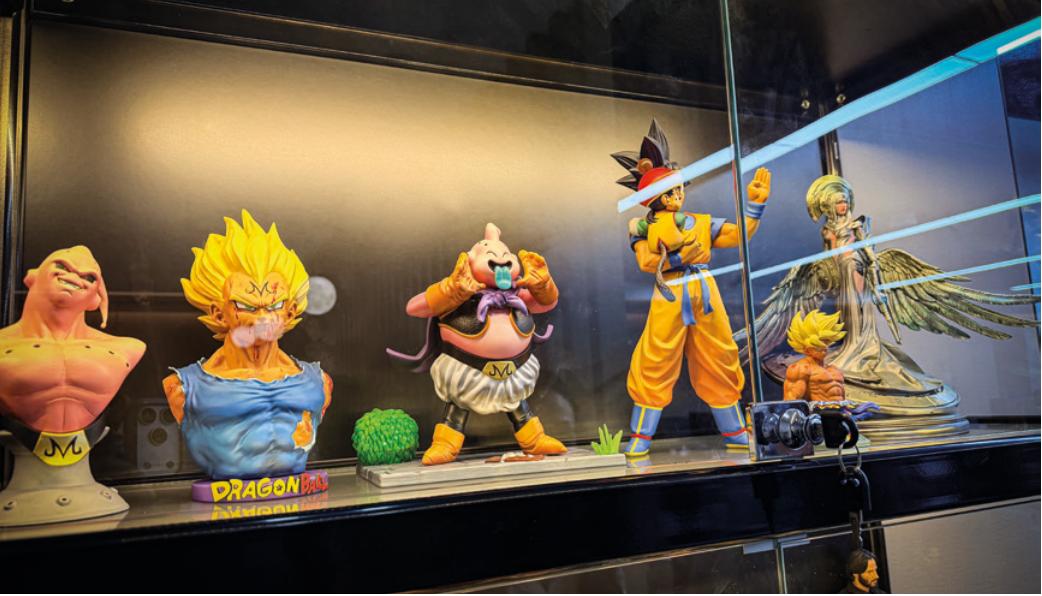
A figurine printed by the 3D printing company Intelligent Pie Photography/Liu Yiqin
The faster investment decision - making is also related to the characteristics of the consumer hardware industry. After consumer hardware products are mass - produced and launched on the market, if they have good sales, the company will have relatively stable cash flow, and the demand for financing will decrease. Tiertime 3D has been established for five years and only raised funds in two early rounds. Many investors are worried that if they miss the early “window period,” it will be very difficult to invest later. Therefore, they must invest in the early rounds.
The faster decision - making speed and earlier investment rounds have brought the competition among investment institutions “forward.” The earlier the stage, the more obvious the information gap is. The investment and financing of smart hardware in Shenzhen have become a “circle” game.
A Game in a “Small Circle”?
In this wave of investment boom in Shenzhen, investment institutions have been ranked. The first - tier institutions are Sequoia China and Hillhouse. The 1.5 - tier is Shunwei Capital. Well - known investment institutions such as IDG Capital, Matrix Partners China, GGV Capital, Meituan (Meituan Strategic Investment, Meituan Longzhu) have to be ranked lower.
Local venture capital institutions in Shenzhen seem to have collectively fallen silent in this boom. Du Minghua joked, “Our only advantage compared to them (US dollar funds) is that we don't need to take a plane.”
However, many investors from US dollar funds have moved to Shenzhen. In 2025, Zhang Han flew to Shenzhen dozens of times. An investor from another US dollar institution moved to Shenzhen in November 2025 and lived near DJI. In the past two months, he has invested in seven smart hardware startups.
Early - stage investment has the highest risk because it's impossible to verify whether the product will “sell like hotcakes.” In this scramble for smart hardware, talent has become the most crucial factor.
Leading large institutions will closely monitor key personnel in large companies, especially DJI. They believe that most of these talents have independently led complete product lines and have practical experience in supply - chain management and product definition, so the success rate of their entrepreneurship is higher. For example, Tao Ye of Tiertime 3D and Wang Lei of EcoFlow both come from DJI.
Investors will also screen potential entrepreneurs through introductions from senior executives of invested companies and connections from industry friends. They establish contact with these talents before they leave their jobs. When these talents have the intention to start a business due to corporate structure adjustments or external opportunities, investors can connect with them immediately and complete the seed - round investment “under the water.”
The aforementioned RMB institutional investor mentioned that they also use this “talent - tracking” method to find projects, but it's difficult for them to compete with Sequoia and Hillhouse, especially in the first round of financing. Just as investment institutions need to make quick decisions and transfer funds, entrepreneurs also need to make quick decisions in the first round of financing to get their companies up and running as soon as possible. When they are not familiar with the swarming investors, choosing a “well - known big brand” is the safest option. Moreover, most entrepreneurs don't choose to introduce too many investors in the first round of financing. “We can only communicate with entrepreneurs in the long run to make them choose us in subsequent rounds.”
His observation is that in the consumer hardware field in Shenzhen in 2025, in most cases, Sequoia and Hillhouse compete for the “lead investment” in the first round of financing. “Shunwei is also very aggressive, but some entrepreneurs are worried that Shunwei is backed by Xiaomi and there will be business competition in the future.” Sequoia and Hillhouse will increase the offer for one or two rounds but not more, “because almost no one can compete with them.”
Large institutions have their own networks, and FA (financial advisor) institutions also have their own ways.
Shanyu Capital began to actively penetrate the large - company circles as early as the beginning of 2023. In the attitude of “making friends,” they established connections with major product managers and business - line leaders within companies such as DJI. When a large number of entrepreneurs from DJI, Insta360, and Yunjing emerged in mid - 2025, Shanyu had already locked in a number of core projects in advance.
Zhou Huai, a business manager at Shanyu, told Caixin that they mainly send these types of projects only to about two or three dozen leading US dollar funds such as Sequoia, Hillhouse, IDG, and GGV. “The valuations of