36Kr Going Global Exclusive Interview | Talks in Japan: Electrification and Intelligence —— How Zhaotian Agricultural Technology Overtakes Competitors in the Japanese Agricultural Machinery Market
Text | JETRO Guangzhou Representative Office
Introduction
36Kr Going Global, in collaboration with JETRO Guangzhou Representative Office, has launched the "Talks on Going to Japan" series of articles, introducing cases and experiences of Chinese enterprises that have successfully established themselves in Japan. As a non - profit organization under the Japanese government, JETRO provides services to Chinese enterprises going to Japan in aspects such as market and industry information, introduction of service providers, temporary offices, and connection of relevant channels.
In this issue, we interviewed Qi Yajun, the co - founder of Guangdong Zhaotian Agricultural Technology Co., Ltd., to share his observations and insights on going to Japan.

Qi Yajun, co - founder of Guangdong Zhaotian Agricultural Technology Co., Ltd.
The following is the content of this exclusive interview (edited without changing the original meaning), where Q represents JETRO Guangzhou Representative Office and A represents Qi Yajun, co - founder of Zhaotian Agricultural Technology.
Interview Transcript
Q: Please briefly introduce Zhaotian's main business and development history.
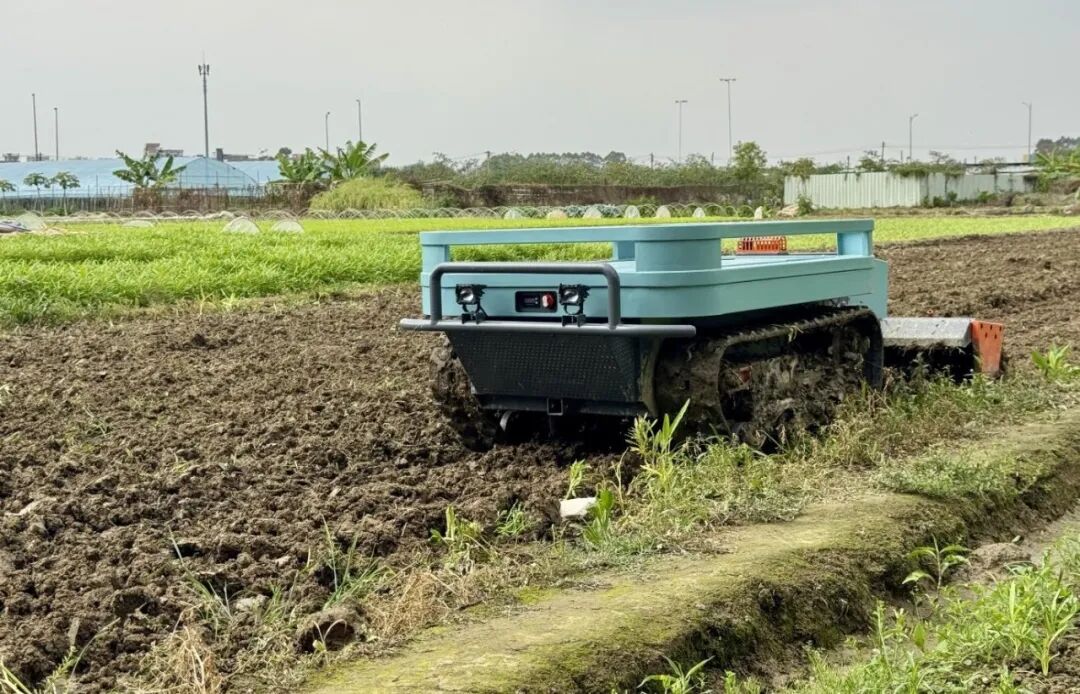
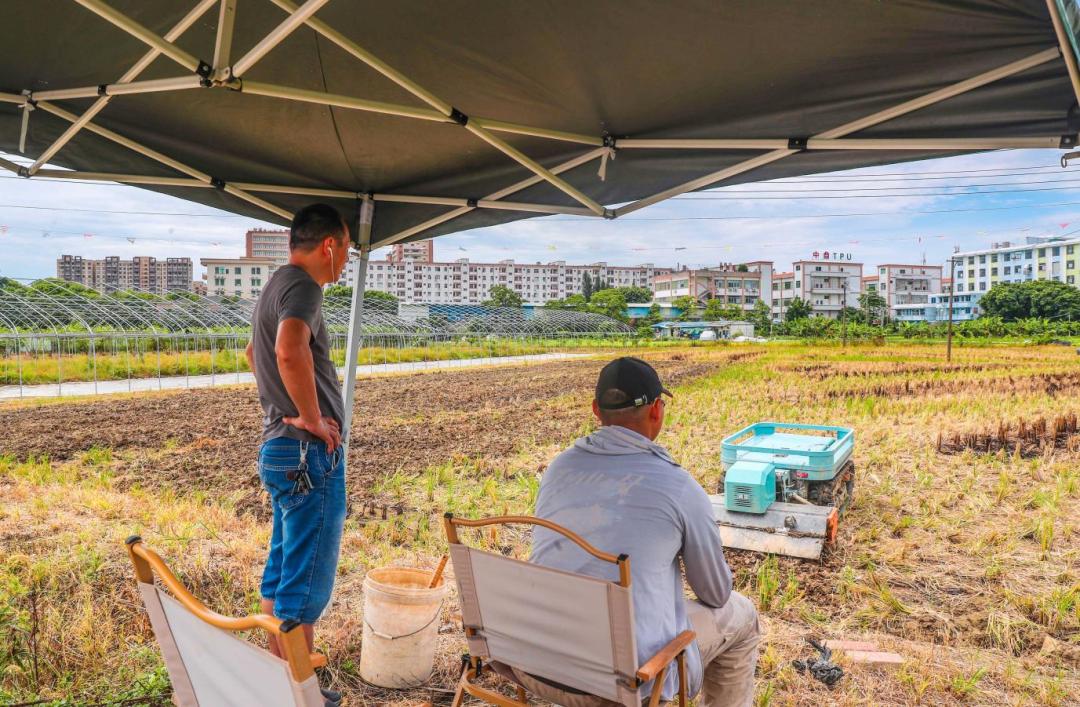
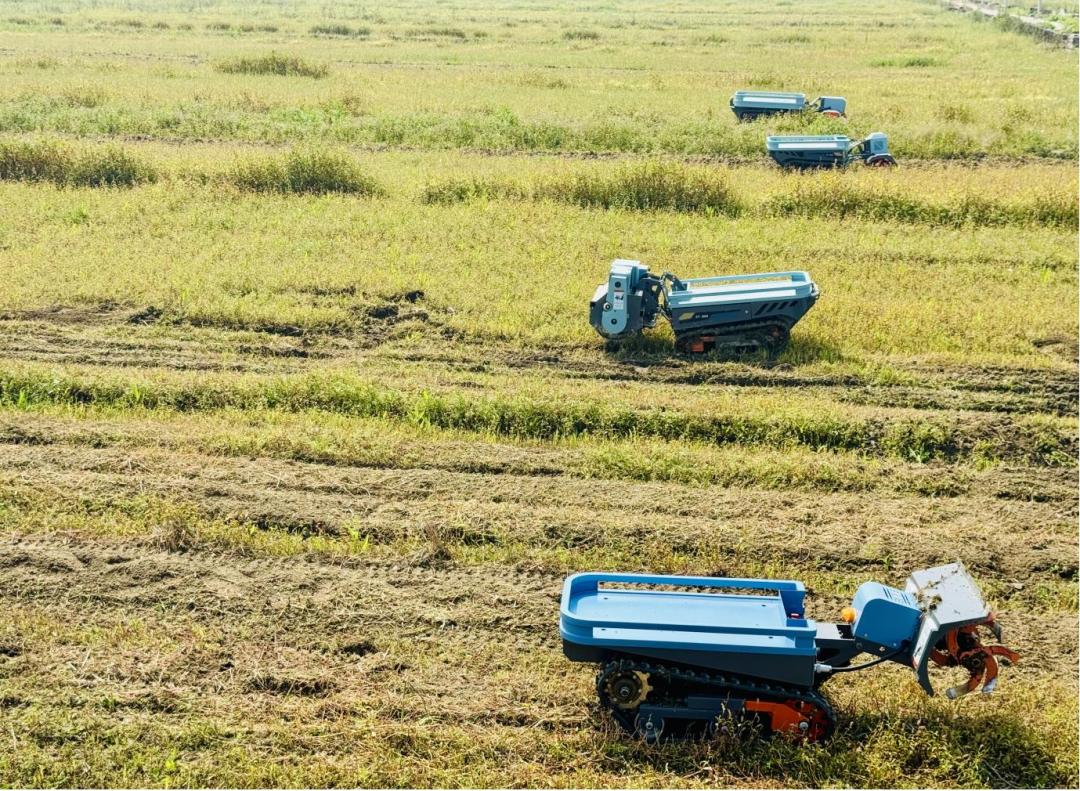
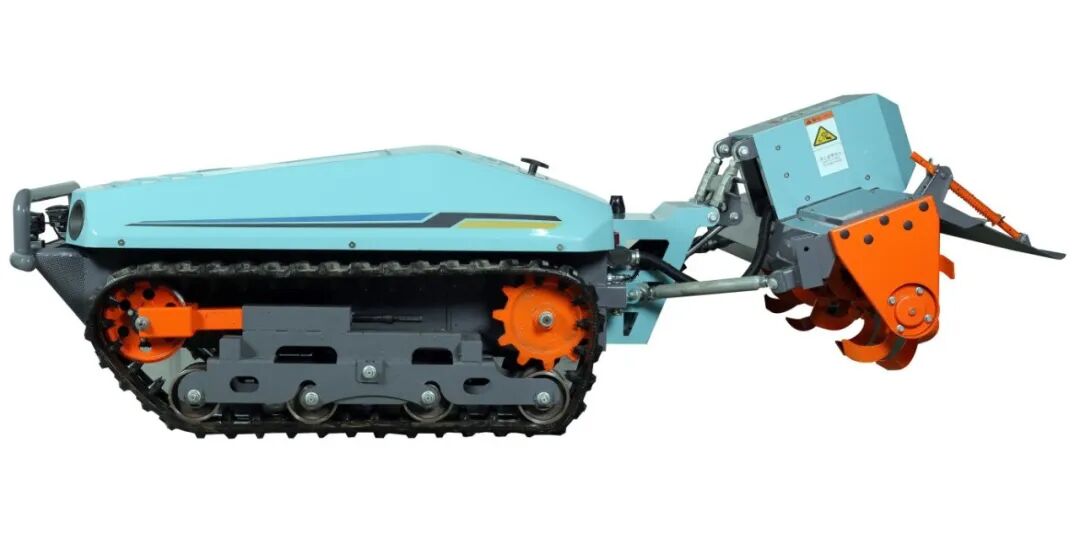
A: Zhaotian Agricultural Technology is a technology enterprise focusing on the R & D and manufacturing of new - energy intelligent agricultural robots. Our core directions are electrification, miniaturization, and intelligence, and we are committed to building a crawler - type robot platform covering multiple processes such as plowing, weeding, carrying, fertilizing, ditching, and ridging.
Our products are specially designed for complex terrains such as greenhouses, orchards, and hills, solving the problems of high noise and high emissions of traditional fuel - powered agricultural machinery. They feature long battery life, low maintenance, and easy operation.
In terms of market layout in Japan, we adopted a steady step - by - step strategy: in 2023, we initially explored the market through exhibitions and pilot tests; in 2024, with the introduction of JETRO Guangzhou Representative Office, we obtained valuable industry data and policy interpretations, accelerating the localization process; in 2025, we officially registered a legal entity "Zhaotian Co., Ltd." in Japan, with its headquarters in Chiba Prefecture. Currently, we have established service networks in areas such as Kansai and Kyushu, and cooperated with local agricultural associations and agricultural machinery enterprises. Our products have been applied in orchards and greenhouses in Hyogo, Nagasaki, Ibaraki and other places.
In the future, we plan to deepen local services, achieve a closed - loop of "R & D, production, sales, and service in Japan", and expand to other countries with Japanese - made products.
Q: Why did you choose to go to Japan? What's the current progress in the Japanese market?
A: The decision to enter the Japanese market is two - way and contradictory. Currently, our target is the new - energy small and medium - sized agricultural robot market. Japan has a huge advantage in the global small and medium - sized agricultural machinery industry and is highly recognized in the industry. Zhaotian's entry into Japan can not only meet market demand but also promote technological iteration after market application.
The market itself is not driven by a single factor but by the triple superposition of policies, demand, and market environment. In terms of policies, the Japanese government has vigorously promoted "smart agriculture" since 2024, providing subsidies of up to 30% - 50% for electric and intelligent agricultural machinery. According to our exhibitions and research, there are currently no practical application devices in the new - energy agricultural machinery market in Japan. For example, Kubota announced that it will achieve electrification by 2035, which creates a clear dividend window for us.
In terms of customer demand, the aging of the agricultural population in Japan is extremely serious, with the average age of farmers exceeding 67 years old. The shortage of labor makes "labor - saving" a rigid demand. Farmers do not simply pursue efficiency but hope to extend their farming years. In terms of the market environment, Japanese users have high requirements for quality and reliability, and competition focuses more on technological differentiation rather than price wars, which is in line with our R & D - oriented positioning.
In addition, JETRO provided crucial support in the early stage. For example, in 2024, through its Guangzhou office, we obtained detailed reports on the Japanese agricultural machinery market and crop distribution. The data clearly showed the potential of small electric agricultural machinery, which strengthened our determination to enter Japan. Therefore, the essence of the driving force is the precise matching of policies, demand, and a mature market.
Q: How do you understand the uniqueness of Japanese agriculture?
A: We believe that the uniqueness of Japanese agriculture stems from a "refined system under resource constraints".
First, in terms of population structure, the aging population not only means a labor gap but also implies the adaptation of operation habits. Elderly farmers prefer simple and intuitive interfaces. Therefore, our self - developed remote control abandons complex interfaces and dazzling buttons, and the intelligent version realizes autonomous planning and one - key autonomous operation, reducing the learning cost.
Second, in terms of business scale, more than 80% of farmers in Japan are small - scale farmers with an area of 1 - 2 hectares. The plots are fragmented, and there are many mountains and hills. This requires agricultural machinery to be lightweight and highly adaptable. For example, we optimized the body design to improve climbing and passing performance.
Third, in terms of culture, Japanese farmers attach great importance to the "craftsman spirit" and have extremely high requirements for details, such as operation accuracy and noise control. Trust is established slowly, but once recognized, the loyalty is very high. These unique features determine that we cannot copy Chinese products but must rethink and design from the bottom.
Q: What are the main differences between the core demands of the Japanese market for electric agricultural machinery and those of the Chinese market?
A: The differences are mainly reflected in demands, standards, and services.
- In terms of core demands, Chinese farmers pay more attention to "cost - reduction and efficiency - improvement", such as long battery life and low price; while Japanese farmers focus on refinement and small - scale farming, with the core being "labor - saving and convenience". They pursue simple operation, low maintenance, and low noise, and even regard agricultural machinery as a tool to extend farming years. They have a high acceptance of values such as technology and environmental protection rather than simply measuring by price.
- In terms of standards, Japanese certifications are extremely strict, such as JIS and PSE safety standards, which have mandatory requirements for noise, safety, etc.; Chinese standards are relatively loose and pay more attention to appraisal certificates.
- In terms of services, Japanese users regard after - sales service as a core competitiveness and require quick on - site service, while the Chinese market currently does not pay for the future service costs of enterprises.
Q: How did you find local partners at that time? What are the most important criteria?
A: We mainly found partners through industry exhibitions, JETRO's business matching activities, and recommendations from agricultural associations. For example, in 2024, participating in the Japanese exchange meeting organized by JETRO helped us connect with local governments and potential distributors. During this period, we met an agricultural enterprise providing agricultural plant protection machinery services in Hyogo Prefecture, which became our first potential partner for implementation.
In terms of selection criteria, we value three points the most:
- First, technical adaptation ability. Partners should have a local modification and testing team.
- Second, service system. They must have an after - sales network covering the region and be able to respond quickly.
- Third, value alignment. They should be enterprises with years of experience in the agricultural industry.
Generally speaking, partners are not simply sales channels but comrades - in - arms who jointly iterate products and serve customers.
Q: Did Zhaotian encounter any challenges in the process of promoting market development and legal entity establishment in Japan? How did you solve them?
A: The biggest challenges were concentrated in cultural communication and product standards. Japanese users make decisions slowly, pay attention to details, and express themselves implicitly. We often need a long time to understand each other and build trust. They have extremely high "internal standards" for details, such as strict requirements for noise control and operation accuracy. Therefore, we improved our production and manufacturing standards, and added shock - absorbing pads to the connection parts and computer - grade dust - proof nets in the cabin specifically for Japanese needs. Although this extended the cycle, it also forced product upgrading.
The establishment of the legal entity was relatively smooth. JETRO Guangzhou Office provided us with a lot of support. If there are introductions from institutions like JETRO or the addition of Japanese shareholders, the establishment of a local legal entity will be smoother.
Q: How do you view the future demand trend for products in the Japanese market? What are your plans and prospects for the Japanese market in the future?
A: We believe that the trend will accelerate towards intelligence and greenness. In terms of intelligence, it will shift from single - machine automation to "robot + data service", such as unmanned cluster operation and AI autonomous decision - making; in terms of greenness, it emphasizes carbon footprint tracking, and electric agricultural machinery may become an ESG plus.
Our plans are divided into two steps: in the short term (1 - 3 years), we will launch autonomous decision - making models for orchards and greenhouses and participate in the Japanese government's smart agriculture demonstration project; in the long term (3 - 5 years), we want to create an "agricultural machinery as a service" model, integrate data platforms, and reduce the use threshold for small - scale farmers through service models. The ultimate goal is to become a reliable partner for Japanese smart agriculture rather than simply selling equipment.
Q: What are the three most crucial suggestions for other agricultural machinery enterprises considering going to Japan?
A:
- First, compliance comes first. Never regard Japan as a "mini - China". The Japanese market has high certification barriers. It is recommended to connect with institutions such as JETRO at the early stage of R & D and integrate standards into the design to avoid later rectification.
- Second, in - depth localization. Get involved in the fields, especially in the early - stage research and later - stage training and services.
- Third, build trust with long - termism. The Japanese market does not believe in fast - paced marketing. Be prepared for a 3 - 5 - year investment. First, accumulate word - of - mouth through small closed - loops, and then gradually expand. In short, there is no shortcut for going global in the agricultural industry, and a sense of awe is the key.
About Japan External Trade Organization
JETRO is a government - established organization aiming to promote trade and investment between Japan and other countries. It provides information to Chinese enterprises and local governments, and conducts business to promote cooperation between Chinese and Japanese enterprises and support Chinese enterprises going to Japan. At the same time, through activities such as negotiation support, consulting services, market information, and dialogues with local governments on improving the business environment, it supports local Japanese - funded enterprises in carrying out business in China.
JETRO official website: https://www.jetro.go.jp/en/
Four Highlights of JETRO's Services
- Services provided by a government agency
As an official government agency, JETRO helps Chinese enterprises expand their business in Japan. JETRO can provide services unique to government agencies, such as the latest information on policy trends and introductions to central ministries and local governments.
- Extensive service network
Service contact points have been established in eight major cities such as Beijing, Shanghai, and Guangzhou. There are a total of 52 offices in Japan. Through the nearest JETRO office, real - time information and networks in various parts of Japan can be accessed and used anywhere in China.
- One - stop service
We provide one - stop services, including information on the Japanese industry and market, support for participating in exhibitions and other activities, introduction of potential customers and partners, legal/tax/labor consulting, and provision of temporary office spaces. We will provide support from the initial stage of planning to enter Japan to after landing in Japan.
- Free service
All the above services are provided free of charge (subject to screening based on investment intention and industry field before service use).
Service introduction website: https://www.jetro.go.jp/sc/invest/
If you have any questions, please feel free to contact JETRO Guangzhou Representative Office.
Phone: 86 - 20 - 8752 - 0060
Email: pcg@jetro.go.jp
Upcoming Events
"Dubai Business Forum · China" to Debut in Shenzhen in May, Registration Open
The Dubai Business Forum · China will be held in Shenzhen on May 14, 2026. With the theme of "Working Together for a New Economic Growth", the forum will introduce the diversified development opportunities brought by the Dubai Economic Agenda (D33) to the Chinese business community and explore new paths for bilateral cooperation and strategic investment. As a high - end platform promoting strategic economic cooperation between Chinese and Dubai business leaders, the Dubai Business Forum · China will gather core representatives of China's top multinational enterprises, unicorn companies, high - growth technology enterprises, venture capital institutions, and family businesses; a high - level delegation from Dubai will also participate. If you are interested in this Dubai Business Forum