A young man from Jiangxi owed millions of debts and was penniless three times. Now he has made a comeback and become a top figure in the industry.
Text by Tang Guo
Edited by Zheng Yawen
"At that moment, I felt that there was no hope in my life."
Recalling the night 21 years ago when his family moved from Jingdezhen, Jiangxi to Handan, Hebei overnight due to bankruptcy, Wei Jun still remembers the chill of the cold wind on his body. "The snow was up to my ankles, and there were still donkey carts on the road."
His identity as a newly graduated computer major was of no use in the face of millions of yuan in debt.
In 2007, in order to pay off the debt, he and his wife came to Zhejiang to start a business. They lived in the basement of a community in Yiwu. The house was dark and shabby. Someone told Wei Jun's fortune and said that he would not get rich until ten years later.
Wei Jun didn't believe in fate. More importantly, he had no way back. "With millions of yuan in debt, how could I pay it off by working?" For Wei Jun, starting a business was never a choice but an inescapable way out.
He loved writing codes and designing products in college. He believed in technology and originality in his bones. But in Yiwu at that time, there were stalls selling OEM products and counterfeits everywhere. Wei Jun, who insisted on doing original work, was called a "stubborn fool" by his peers.
Perhaps it was fate's trick. In the nearly ten years after starting his business in 2007, Wei Jun was in a penniless situation three times.
It wasn't until 2016 that Wei Jun welcomed the first hit product that took him out of the debt vortex. Before that, Wei Jun had fought more than thirty rights protection lawsuits and had also guarded the factory gate until late at night because of the supplier's cut - off of supplies.
Now, Wei Jun's products have been sold from Yiwu to nearly twenty countries around the world, and he has become a well - deserved top merchant in the industry. Actively embracing the digital and intelligent transformation, he has also become a benchmark merchant officially certified by DingTalk, sharing his entrepreneurial story and AI management experience with more people.
The Long Winter Night
In 2005, Wei Jun graduated from the computer major of Nanchang University. It was an era when China's Internet economy was about to take off. As a professional programmer, he should have had a smooth and bright path ahead of him.
However, fate took a sharp turn in the year he graduated.
His family went bankrupt. His father's factory, which failed to keep up with the changes of the times, collapsed in 2005, leaving the family with huge debts and a broken livelihood.
"There was no other way at that time. I could only stay with my father," Wei Jun recalled. To avoid debt collectors and to survive, the whole family left Jingdezhen, Jiangxi and went north to a mining town in Handan, Hebei.
It was a typical northern industrial town. Wei Jun still remembers the snow that winter. It was incredibly heavy, and the snowdrifts were above his ankles.
In that strange northern town, to pay off the debt, he and his father started by moving goods.
After doing hard labor for two years, in order to find a new way out, Wei Jun and his newly - married wife came to Yiwu to start a business. A Changan Star minivan was their only asset.
For Wei Jun, this was another battlefield.
Because they had no capital, they could only live in the basement. At that time, Wei Jun was introverted, not good at speaking, and didn't like socializing. This was almost a fatal shortcoming in the business world that emphasized "a sense of chivalry" and "human relationships." By chance, his wife found Taobao. After studying it for a while, they decided to open a Taobao store to do online business.
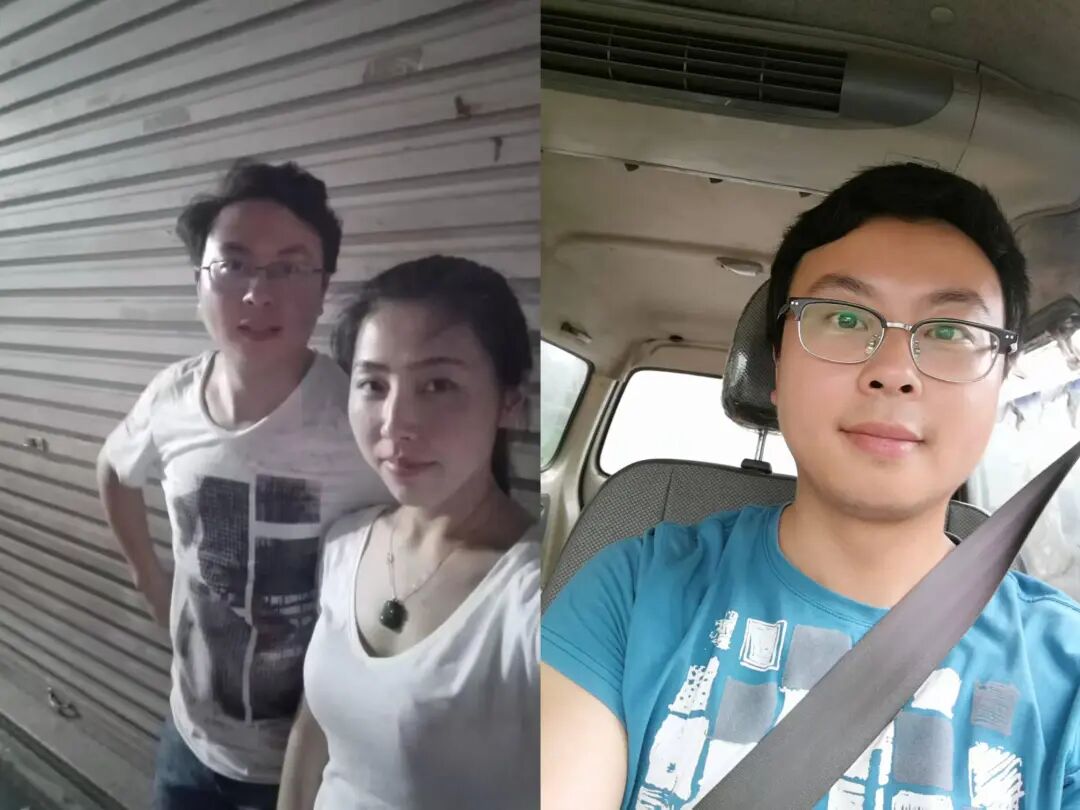
(Wei Jun and his wife Huang Xia in the early days of their entrepreneurship)
In this bustling commercial capital, Wei Jun and his wife Huang Xia were like two forgotten screws, huddled in the basement, polishing products and packing and shipping goods day after day.
As a native of Jingdezhen, Wei Jun had a natural affinity for ceramics in his bones. He tried to combine the ceramic craftsmanship of Jingdezhen with the attributes of small commodities in Yiwu. He embedded an LED light at the bottom of the cup. When powered on, the cup wall would transmit light. He designed a "glowing ceramic cup."
At that time, Wei Jun rode a second - hand electric bike, traveling back and forth between his residence, the vegetable market in Yiwu, and the logistics point every day. Fragile ceramic cups were tied to the back of the bike, and he rode very carefully. The most embarrassing thing was that the battery of the electric bike was aging and often ran out of power halfway.
"Every time the bike ran out of power halfway and I had to push it, I would think that if this cup sold well, even if the battery was expensive, I could buy a new one and ride all the way home."
In 2012, this cup sold 70,000 to 80,000 units in a year, with a revenue of over 200,000 yuan.
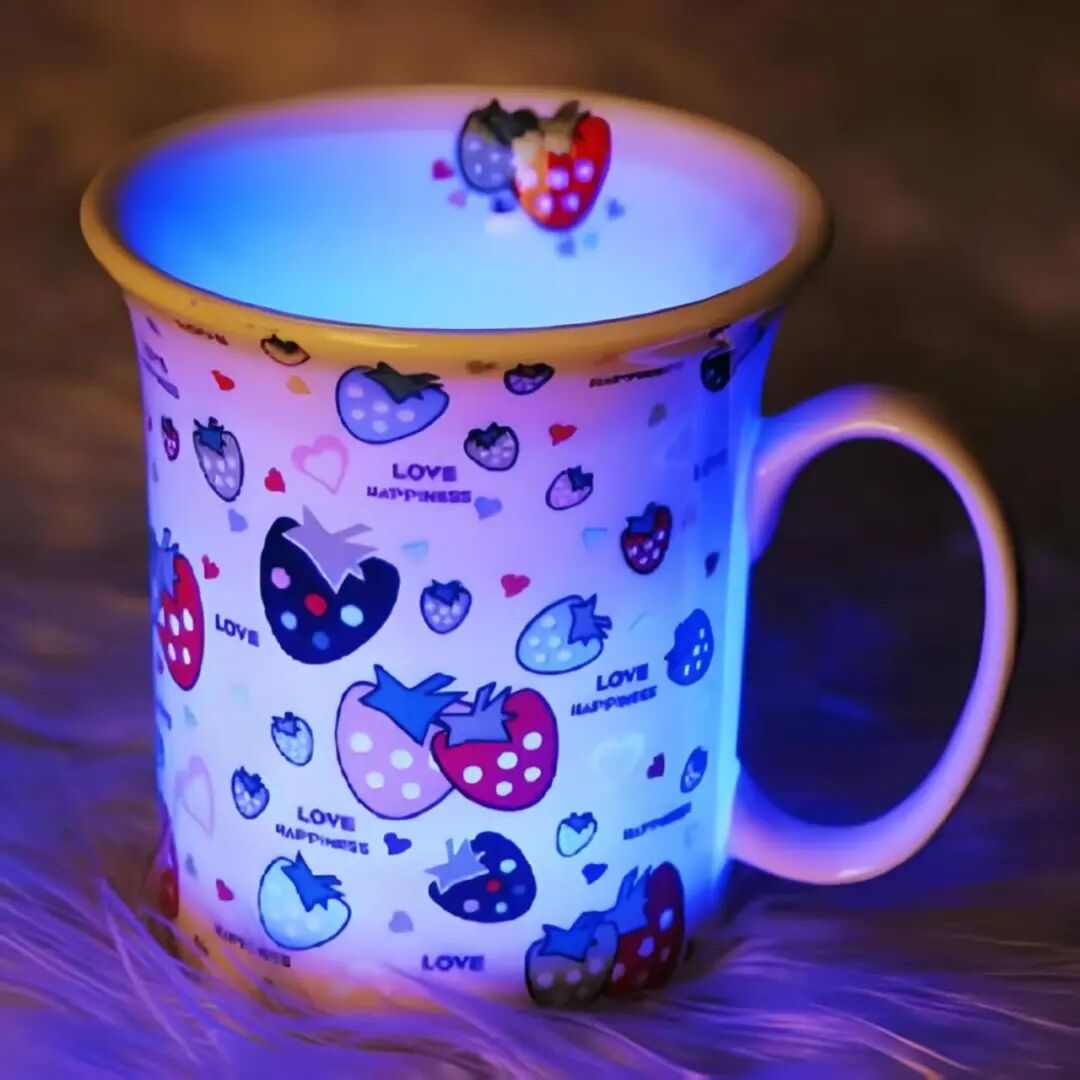
However, fate seemed to be still playing tricks on this young man. Although the ceramic cup sold well for a while, since the ceramic factory upstream in the supply chain went bankrupt and Wei Jun didn't have the funds to buy the factory, the project came to an abrupt end.
What pained him the most was not the failure of the business but the absence of family affection.
Because of the huge debt, he didn't even dare to tell others where he was from. When in the north, he said he was from Zhejiang, and when in Zhejiang, he said he was from Hebei. He was brought up by his grandmother. When his grandmother was seriously ill, he didn't dare to go back to his hometown because of the debt. By the time the news came, the funeral was already over.
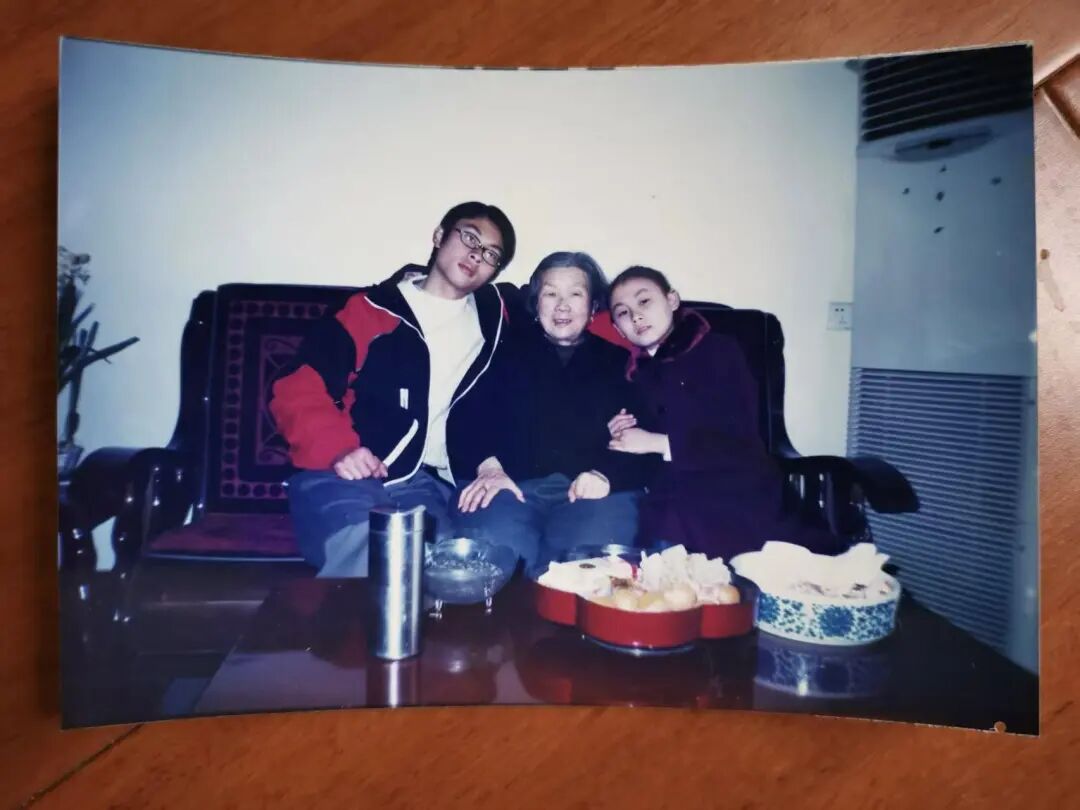
(A photo of Wei Jun and his grandmother when he was young)
This regret became the deepest thorn in Wei Jun's heart and also the motivation for him to persevere: "If I had succeeded earlier, I could have gone back to see her for the last time."
"There is no way back," Wei Jun said. "We can only persevere. Besides product research and development, I don't know where else I can go."
Creating His Own "Starry Sky"
After the ceramic cup product, Wei Jun focused the product development direction on the projection lamp category that his wife had initially favored more.
He insisted on originality. He taught himself circuit welding and structural design in the basement and bought a bunch of engraving machines and printing machines to figure out every process in the experiment. After developing the product, Wei Jun would drive his Changan Star minivan to the mold factory to supervise the workers making the molds. These self - developed projection lamp products were often copied as soon as they were launched.
Wei Jun, who always had the awareness of patent protection, was not willing to always have his business snatched away by counterfeits. He sued different merchants in court again and again. More than thirty rights protection lawsuits wore away his time and disrupted his business rhythm.
In 2016, Wei Jun was 32 years old, at the age when a man should stand on his own feet, but he only had one yuan in his pocket. The Changan Star minivan that had accompanied him for nine years had its engine overhauled several times. In the end, it couldn't even be sold for much when it was scrapped, and it was used to cover their daily expenses.
It was at this lowest point in his life that the rebound began.
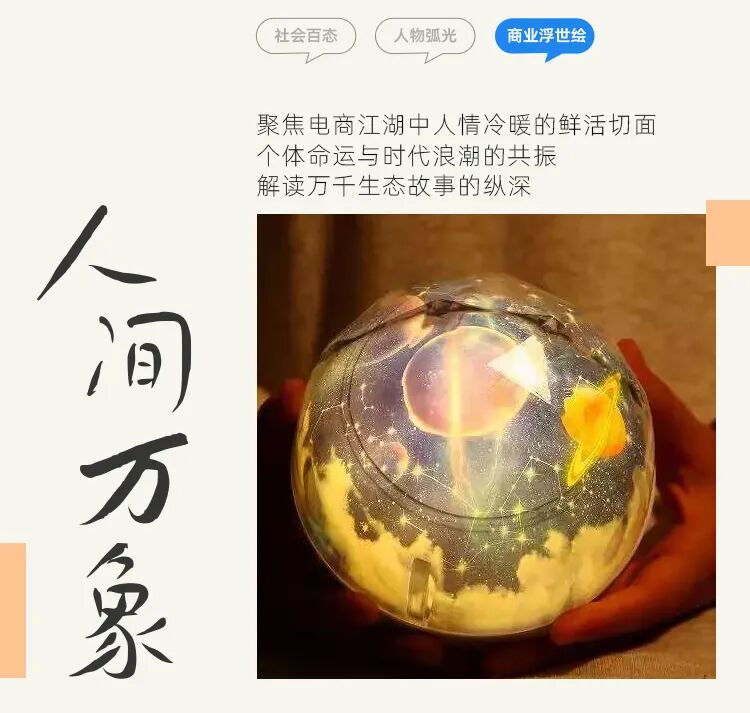
Based on the logical thinking of a programmer and the supply - chain experience accumulated from years of struggling in Yiwu, Wei Jun developed a projection lamp. Different from the black - and - white and shabby projection lamps on the market at that time, the lamp he designed could project a colorful and rotating starry sky and universe.
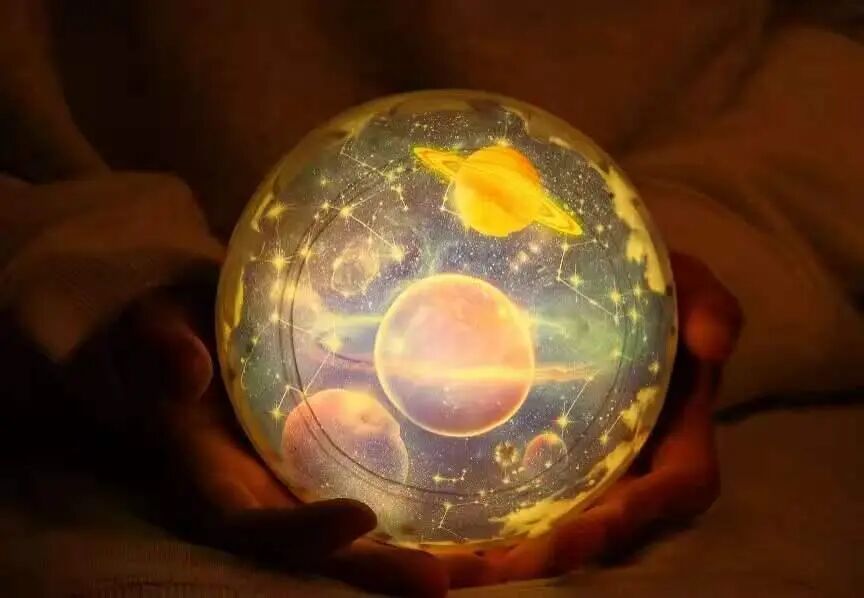
"I want to turn the whole room into a universe galaxy."
This product not only had visual innovation but also covered a technological dimensionality reduction strike. It was the result of Wei Jun's painstaking research in the basement for nearly three years. He designed a rotatable lampshade and a dual - mode appearance (both open and closed states were beautiful) for this product and applied for a utility model patent.
"Every buyer's order is my hope in life." After the product was launched, more and more people inquired in the background. Wei Jun, who was very sensitive to data, found that "the click - through rate of the Taobao store reached 9%, while the industry average was only 3%."
From the end of 2016 to 2017, this projection lamp continued to sell well, with 70,000 to 80,000 orders per month, and it was even sold overseas. With cash flow, the first thing Wei Jun did was to pay off the debt.
In 2018, after paying off all the family debts, during the Spring Festival that year, he finally took his family back to his hometown in Jingdezhen with dignity.

(Wei Jun returned home during the Spring Festival in 2018)
However, the business world in Yiwu never believes in "one trick fits all." When you prove that a category is profitable, countless imitators will come like sharks smelling blood.
In 2019, Wei Jun's projection lamp patent expired, and the technology entered the public domain. Counterfeits emerged overnight, and the price was pushed down from 80 yuan to 30 yuan. "Everyone thought we would lower the price to seize the market," he said. "But we made the opposite choice."
He didn't join the price war but turned to the brand licensing track. With the product quality and supply - chain capabilities accumulated over the years, he successively obtained the licensing rights of popular IPs such as "Disney," "Doraemon," and "Ultraman," combined the projection lamps with IP images, and maintained the price range of 50 - 80 yuan. "IP products have a natural premium, and consumers are willing to pay for emotions," he said.
This strategy allowed him to avoid the fierce competition in the red - ocean market.
Wei Jun's team ranked first in multiple niche categories with IP + original design. Wei Jun admitted: "Now, if we don't do brand licensing, we simply can't survive." At the same time, he began to implement systematic management. In the early years, because he trusted suppliers too much, he had encountered mold delays, delivery defaults, and even threats to his personal safety. Now, all cooperation must be signed with contracts, and major orders need to be reviewed by the legal department.
Wei Jun's company grew rapidly. The employees expanded from just the couple to more than twenty people. The office location moved from the basement to a regular office, and the shabby Changan Star was replaced by a Porsche.

But he still maintained a certain degree of vigilance, which was a sense of crisis stemming from the difficult years.
A New Direction
In 2026, Wei Jun has been on the entrepreneurial path for nearly 20 years.
Now, Wei Jun sits in a spacious office and has a 7,000 - square - meter factory. His company has become a top - level merchant in the niche market. Its products not only occupy the leading position in the domestic market but are also sold overseas, with annual sales far ahead in the industry.
But he is still anxious. "The current market is too competitive."
"As long as there is new technology, I will learn it." To cope with the fierce competition, Wei Jun, who has always been persistent in scientific research, made a decision - to fully embrace AI.
In Wei Jun's company, AI is not just a gimmick but has truly begun to penetrate into multiple work processes, including product appearance design, market research, promotion picture generation, and automated operation.
"In the past, it took at least two or three days to take pictures, edit them, and upload them to the background. Now, it's basically all AI - enabled," Wei Jun gave an example. The introduction of AI has increased efficiency several times. More importantly, it has made many detailed work decisions more data - driven and transparent.
In terms of product logic, Wei Jun believes that when AI technology becomes more common, product design should not become a cold data analysis.
"Consumers nowadays need comfort." Whether it's the design of warmer - colored lights or the AI - companion function that allows for dialogue, he is trying to establish a connection with the young people struggling alone in the city through his products, just like himself who yearned to see the starry sky in the basement back then.
"In the next five years, I will pay more attention to the combination of AI technology and the psychological needs of adults." Wei Jun hopes that his projection lamps can go beyond the simple function of an atmosphere lamp and provide "psychological massage" for consumers, using technology to soothe negative emotions such as anxiety and loneliness.
Years of entrepreneurial experience have made Wei Jun no longer a shy and introverted person. This former socially - anxious science student can now talk eloquently on various occasions.
In 2025, Wei Jun appeared on CCTV as a benchmark e - commerce merchant and was also invited to give a keynote speech at the AI Ding