Who can cross the "killing line" among the "internet-famous" electric vehicles?
Throughout the past year, dozens of new energy vehicles were launched every month. However, the public generally only focuses on two moments - the order figures after the press conference and the year - end sales ranking. These two sets of figures have woven most of the stories about "success" and "failure".
A large - scale press conference, a rock - bottom starting price, a parameter list full of high - performance features, or a catchy slogan is enough to create a "net - celebrity car" on social media.
However, when we zoom in and examine the monthly sales curves of each popular model in 2025, a more complex and realistic business narrative emerges. It means that a model needs to prove itself: after being on the market for half a year, a year, or even longer, when there are several "homogeneous" new options in the market, why would consumers still be willing to pay for it?
The Fate of "Net - Celebrity Cars"
Looking back at the beginning of 2026, we try to ask, in today's era when cars are launched as frequently as fast - moving consumer goods, which products can cross the cycle and become the representative "symbols" of an automaker? To this end, we selected the annual "sales champion" models from mainstream new - force automakers and independent new energy brands and tracked their annual sales trajectories.
Through the fluctuating curves, we try to clarify the underlying logic that supports the long - term popularity of a new energy vehicle product.
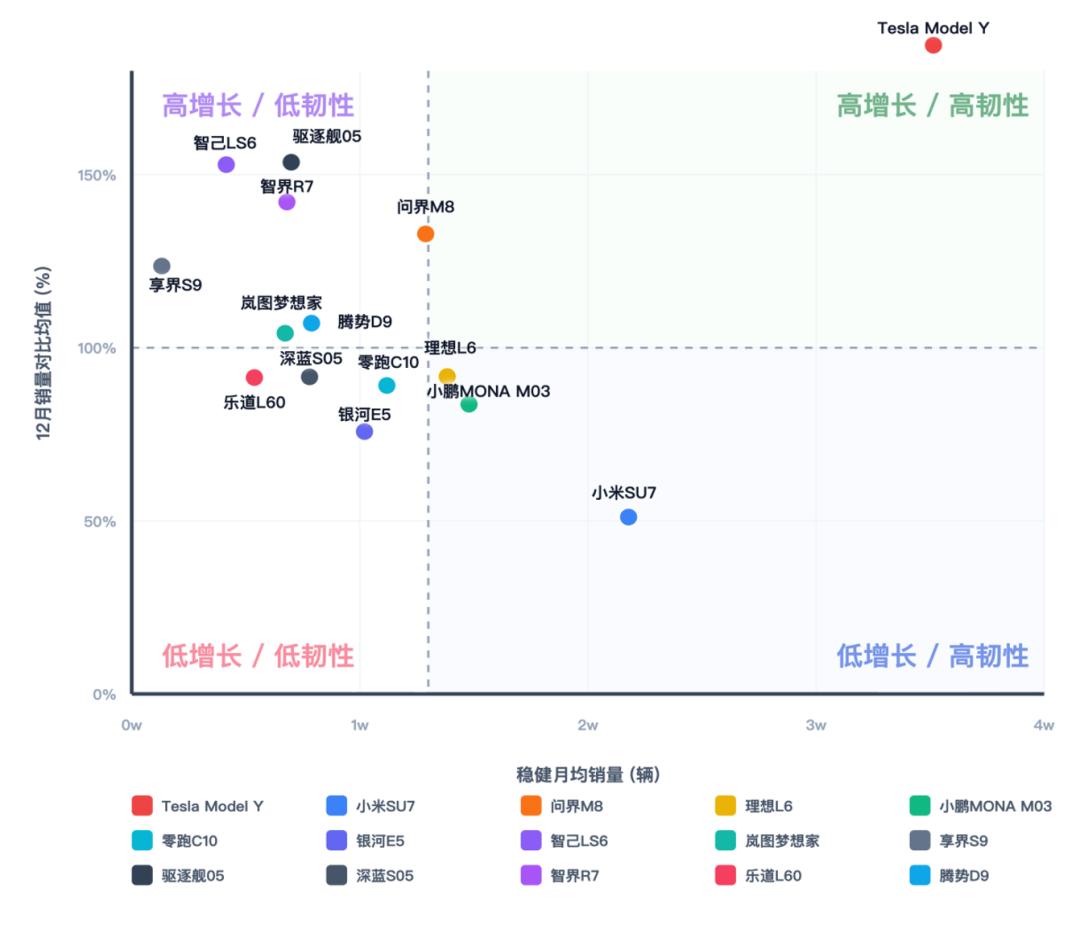
▲ Charting / MeiRen Auto
The sales curve of traditional "net - celebrity cars" is a parabola. It rises vertically during the launch period, reaches its peak in the third month, and then begins a long - term decline. This curve relies on the concentrated publicity, the accumulated order pool, and the irreplaceable product strength in the short term. Most star models from 2020 to 2022 followed this pattern.
Now, the new market has presented three new samples worthy of in - depth study.
· Xiaomi SU7: How to Be the New "Top Stream"
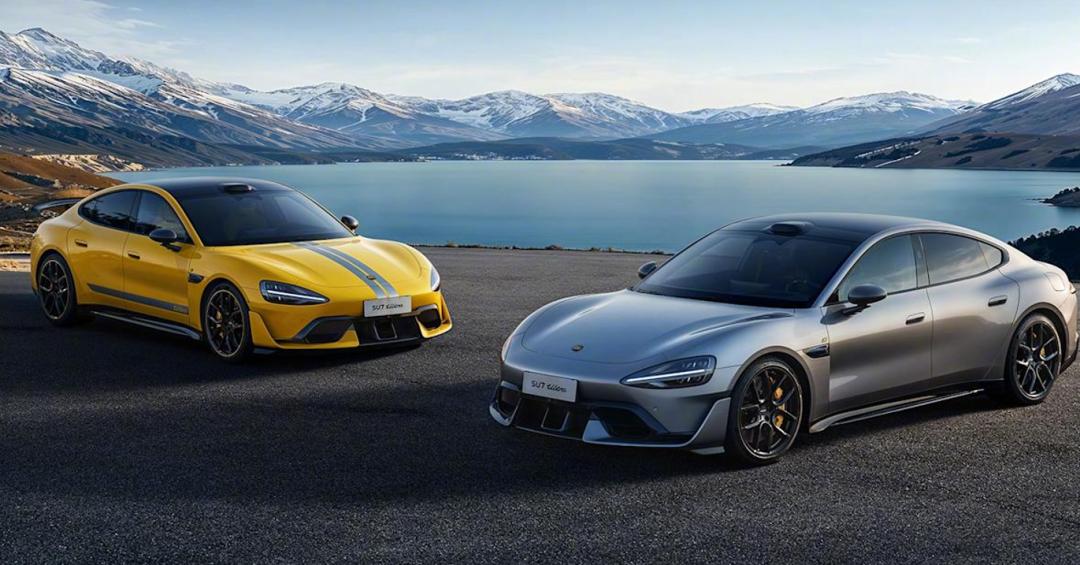
According to statistics from the China Automotive Data and Research Center, Xiaomi occupied two spots among the top 5 best - selling new - force models in 2025. Among them, the top - ranked Xiaomi SU7 presented a typical result: from 7,000 units in the first month in April 2024 to a peak of nearly 30,000 units in March 2025, and then steadily returned to a plateau of about 12,000 units at the end of the year.
This curve shows the whole process of a "top - stream" product from its explosive start to returning to normal. As a sports coupe, its target audience has always been considered smaller than that of SUVs. The key to supporting its sales peak is the consumer - electronics - like "fever" - Xiaomi injected its huge user base and efficient Internet marketing capabilities into the automotive field all at once.
The more crucial support came after the product was launched. Data shows that from the second half of 2024 to the beginning of 2025, the sales ranking of the SU7 remained stable in the top three of the "mid - large car" segment market for a long time and even ranked first many times. It took the largest share of the cake in a relatively niche field.
However, the market has also left a mandatory question for this new brand. When the fans' attention and the topic bonus are exhausted, what will Xiaomi rely on to support the next cycle? Xiaomi's answer is the ecosystem and iteration, but this needs time to be verified.
· XPeng MONA M03: The Technological Solution to the Price War
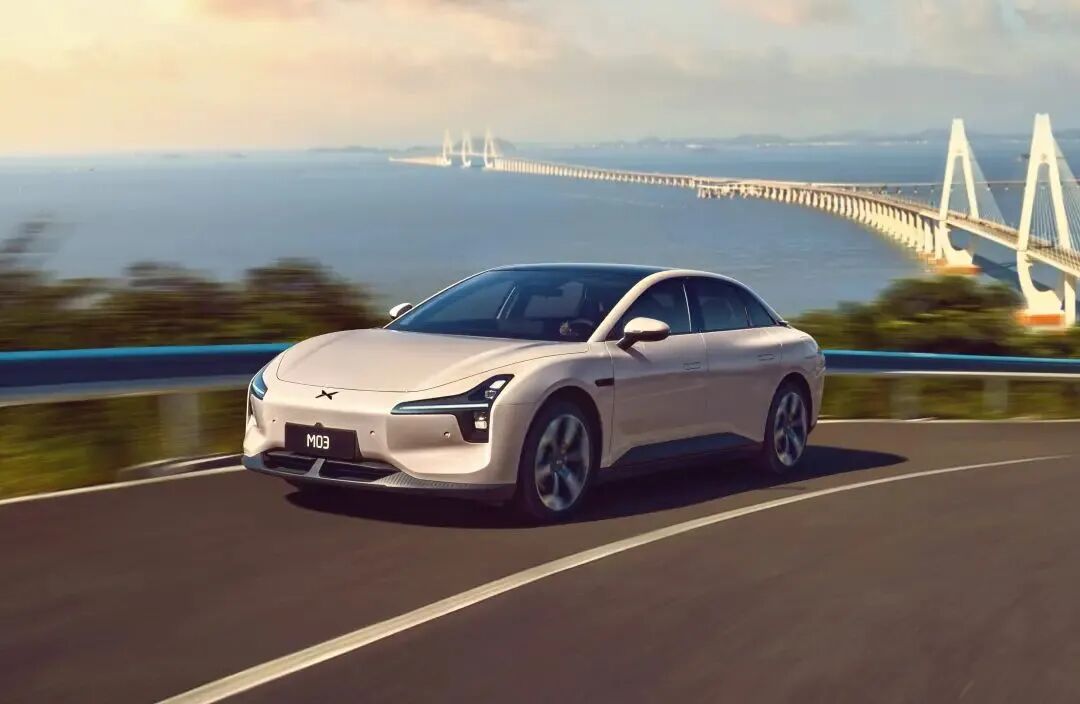
The market performance of the XPeng MONA M03 tells a story about "positioning". It only took one quarter from its launch in August 2024 to when its monthly sales exceeded 10,000 units, completing the "cold start".
For more than a year after that, its monthly sales remained stable between 10,000 and 16,000 units, and it achieved a total annual sales volume of more than 175,000 units in 2025.
Behind the stability is the precise targeting of the core market by the XPeng MONA M03. It firmly occupies the 100,000 - 150,000 - yuan budget range, which is the most core budget range for Chinese families when buying cars. It has transformed the high - level intelligent driving experience, which was previously exclusive to high - end models, into a reliable and available standard configuration for itself, achieving a dimensionality - reduction strike with "intelligent equality".
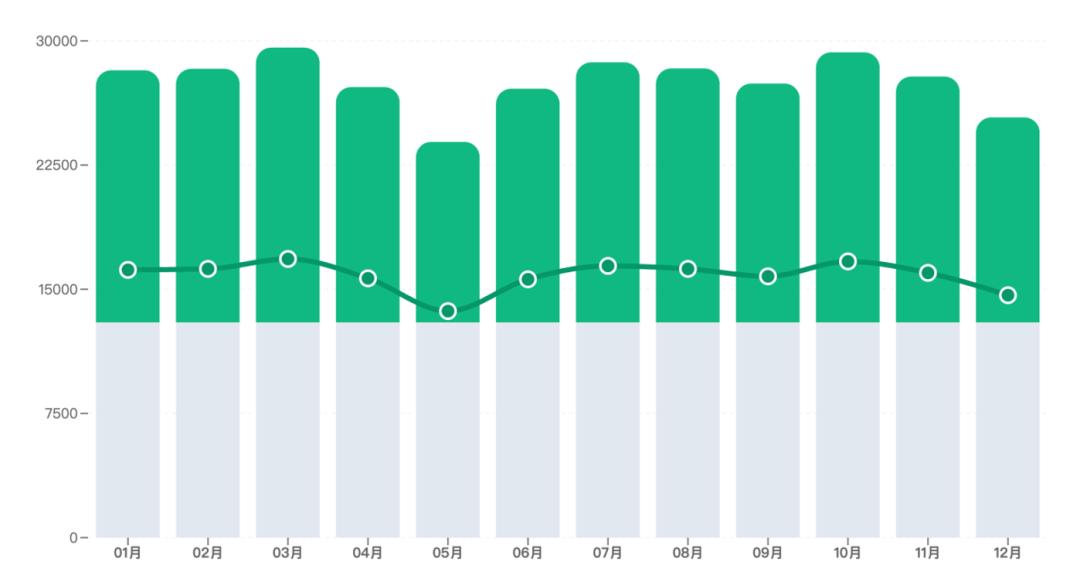
▲ Charting / MeiRen Auto
Data shows that this car has long contributed more than 40% of XPeng's sales, providing valuable sales support for the brand. However, on the other hand, when a 150,000 - yuan - level model becomes the "absolute main force" of the brand, how to make the market continue to recognize XPeng's innovation ability in higher - value fields has become a new challenge.
· Wenjie M8: The Art of Being the "Big Brother"
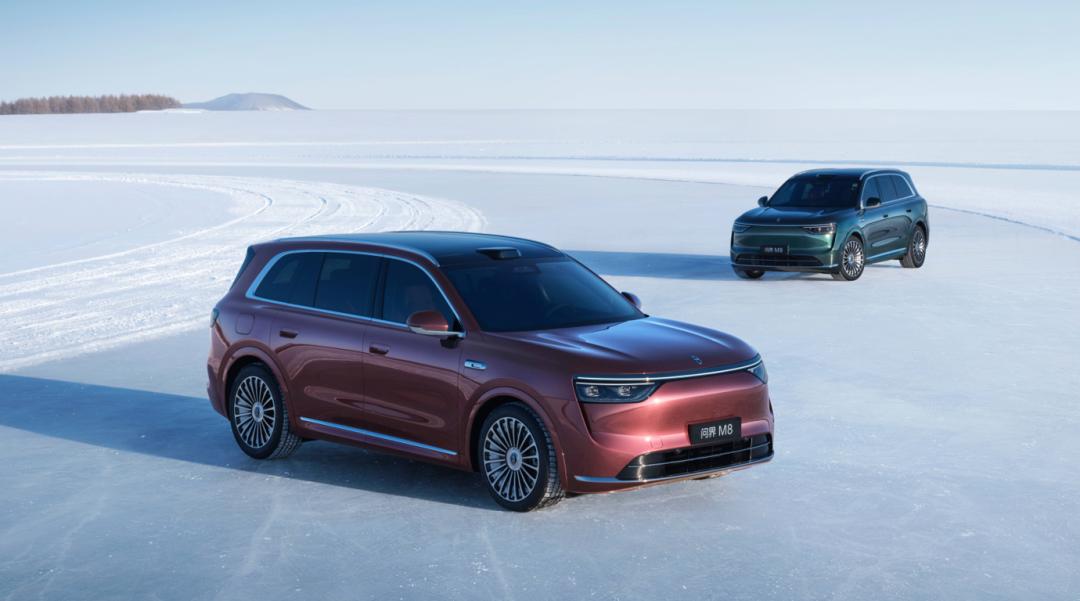
The curve of the Wenjie M8 is a typical "squat and jump". It experienced a climbing and waiting period in the early stage of its launch and then exploded in the summer of 2025, with monthly sales stabilizing above 20,000 units. Although there was a slight decline at the end of the year, it had firmly established its position in the high - end market.
The success of the M8 is the concentrated release of potential energy after the in - depth integration of Huawei's cutting - edge technology and Seres' manufacturing capabilities. It proves that in the high - end market, consumers are willing to pay a premium for a systematic top - level technological experience. This also leads to the most tense topic within the "Huawei - affiliated" group: why do Wenjie and other "Jie" models have such different fates despite sharing Huawei's technology?
The key to Wenjie's success lies in its first - mover advantage as the only mental entry point for "Huawei - empowered car - making". It first established recognition in the blue - ocean market of "family technology SUVs" with the M5/M7 and directly converted the brand trust accumulated by Huawei over decades into sales by fully entering Huawei's stores.
When other models such as Zhijie and Xiangjie were launched one after another, the market's freshness towards "Huawei - empowered" cars had begun to fade. They faced the dual squeeze of "internal competition" and the "external red - ocean market" - they had to compete with Wenjie for the limited in - store display space and users' attention in Huawei's stores and also had to compete with powerful opponents such as Tesla, Xiaomi, and BYD in the already highly competitive sedan or high - end market.
· Tesla Model Y: Why Is It a Benchmark?
Tesla Model Y's performance remained stable throughout the year.
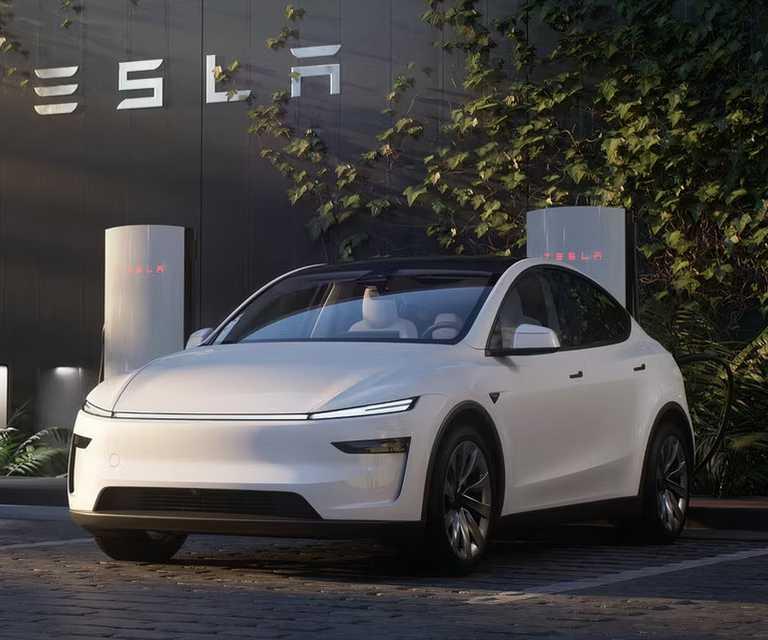
In the 250,000 - 350,000 - yuan SUV market, its benchmark position has remained unshaken. The long - term popularity of the Model Y relies on a combination that is difficult to replicate - a global brand symbol, an efficient three - electric system, a continuously iterative intelligent driving label, and an experience barrier built by the Supercharger network.
Even though competitors often "outperform" it in terms of parameters, the Model Y always represents a stable value expectation and a global product image. In an era of information overload, it is like a "standard answer", reducing consumers' decision - making costs. What it represents is a system trust based on global market verification that goes beyond parameter comparison.
When the Halo of "Blockbusters" Fades
When we compare the "endurance" of models with different price ranges and positioning, a core rule emerges: products that can cross the cycle have all established an indestructible "value anchor" in the hearts of users. It has nothing to do with whether they were once "net - celebrities" but with whether they have occupied the cognitive high - ground of a certain segmented demand.
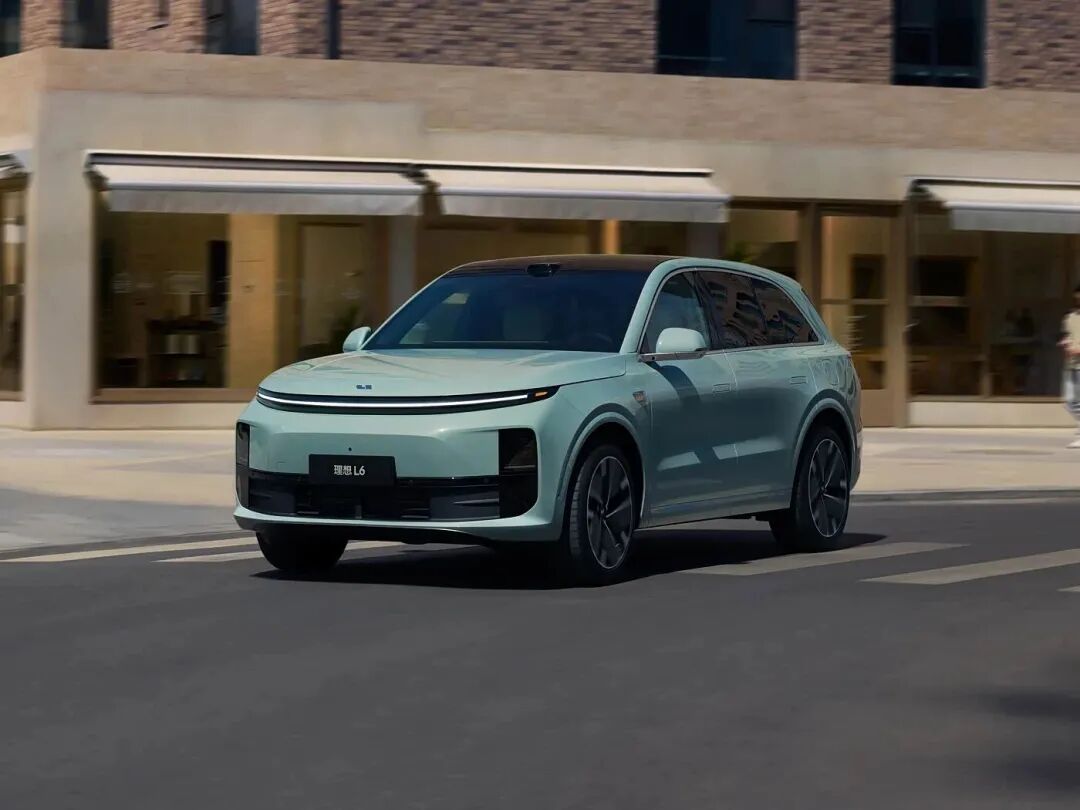
Take the Li L6 as an example. Its monthly sales gradually declined from a peak of 25,000 units per month in the second half of 2024 to about 10,000 units at the end of 2025. This result can be interpreted as growth fatigue in the face of numerous competitors.
However, even with a year - on - year decline, the L6 still ranks among the top in the single - product sales of new - force automakers, which in itself is proof of its strong user base. The "family car" scenario precisely defined by Li Auto in the early stage has a deep user foundation. The current challenge is that after "refrigerators, color TVs, and big sofas" have become standard in the industry, Li Auto needs to inject new and exclusive technological or experiential cores into the "family" label.
At the same time, some models trapped in the 200,000 - 300,000 - yuan "middle ground" are showing more struggles. This price range is the most fiercely competitive red - ocean market, with a global benchmark like the Tesla Model Y and facing pressure from products in the higher and lower price ranges.
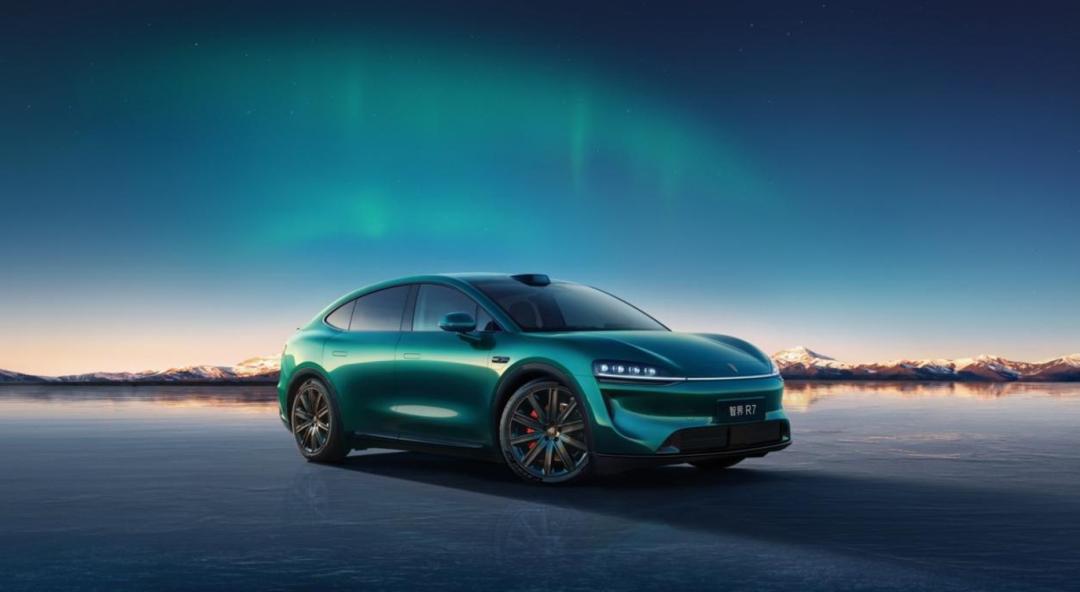
The sales curve of the Zhijie R7, which started high, then declined, and then hardly recovered, is a microcosm of this dilemma.
As a member of the Hongmeng Smart Mobility, it has the support of Huawei's technology and had an initial monthly sales volume of over 10,000 units. However, its subsequent decline and the difficult recovery until the end of the year reflect that under the dual pressures of overlapping positioning with the Wenjie series internally and numerous competitors at the same price range externally, it failed to establish a unique and clear product positioning and user recognition in a timely manner.
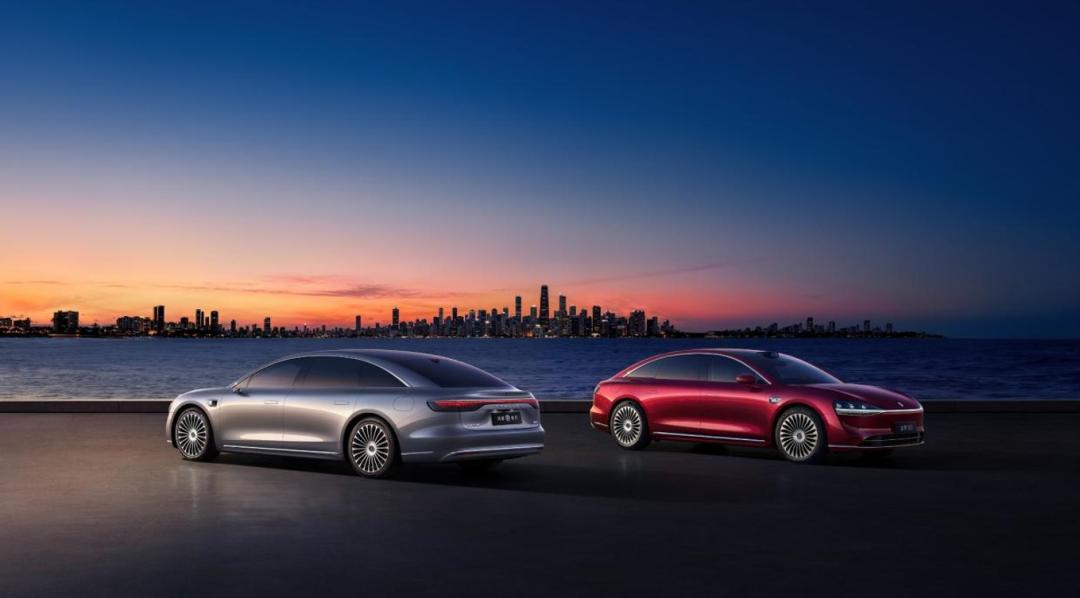
The Xiangjie S9, which is also facing challenges in the high - end market, has a similar situation. As a high - end sedan empowered by Huawei, its monthly sales gradually declined from a peak of more than 4,215 units to about 1,600 units at the end of 2025, failing to break through the cognitive barrier in the high - end sedan market. This reflects that even with technological endorsement, it still faces severe tests in brand building and user - mind capture.
No "Net - Celebrity" Destiny, but a "Long - Selling" Fortune
In addition to the star models in the spotlight, there is a group of "low - key long - distance runners" in the market. They may have never made it to the hot search lists, and their sales have never exceeded 30,000 units. However, with their precise positioning and balanced product strength, they have stood firm in the fierce competition and become the indispensable "backbone" of their brands.
The Leapmotor C10 is one of the representatives of such models.
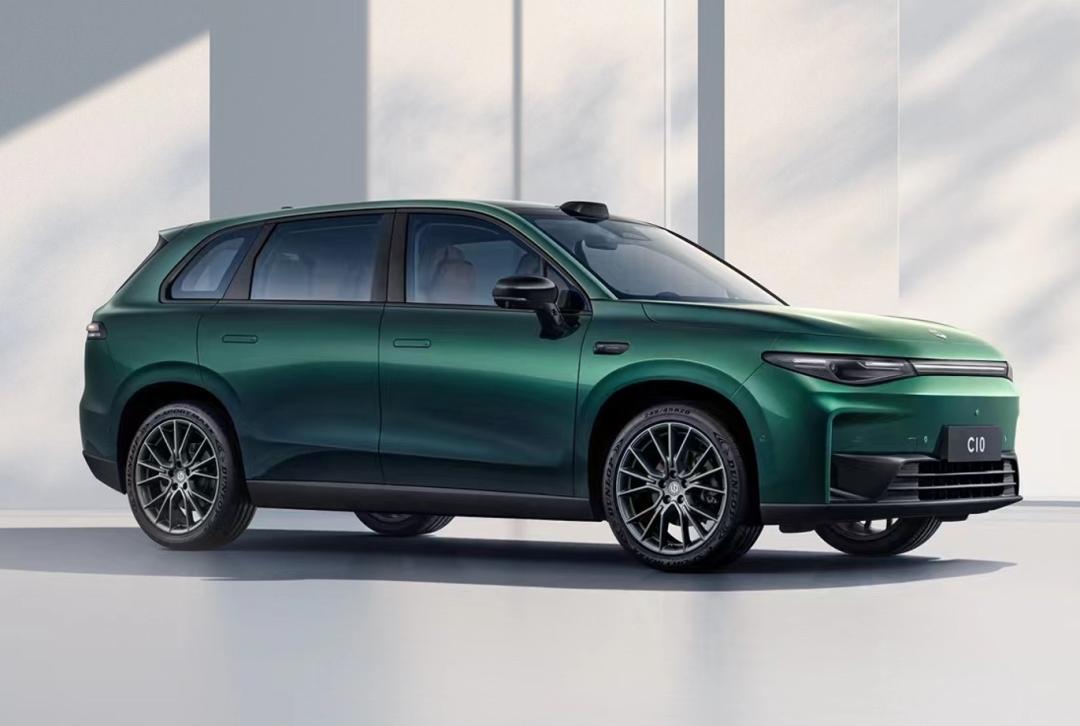
Its sales trajectory is a curve that slowly rises and then stabilizes. From less than 1,000 units at the beginning of 2024 to a stable range of 10,000 - 17,000 units in 2025. It doesn't have a dramatic explosion but has steadily captured the market share of 150,000 - 200,000 - yuan - level family SUVs, relying on the balanced experience of a "value - for - money all - rounder" car.
The Geely Galaxy E5 and Changan Shenlan S05 also have stable sales. The delivery volumes of both models fluctuate around 10,000 units, respectively consolidating Geely and Changan Shenlan's market positions in the mainstream pure - electric SUV market. Their task is not to break into new markets but to defend their existing ones.
