From overseas OEM manufacturing to building factories in Vietnam and then to cluster - style overseas investment, Petpal's 33 - year globalization journey | Global adventurers
At the end of December, Cambodia is in the coolest season of the year, but the temperature still hovers around 30°C, and the air is filled with a gentle moisture. In the industrial park of the Cambodia Boge Economic Special Zone at the foot of Bokor Mountain, workers are packing pet chew toys into trucks and sending them to Sihanoukville, 65 kilometers away. A few days later, these products will appear on the pet shelves of major supermarkets in the United States.
This is one of the largest overseas production bases of Juewei Food Co., Ltd. - a subsidiary of Petpal Animal Nutrition Technology Co., Ltd. in Cambodia (hereinafter referred to as "Petpal"). Petpal has also established 3 production bases in Vietnam and 2 in New Zealand.
Petpal was born in Shuitou, Pingyang, a town known for its leather industry in Wenzhou. In the early 1990s, after seeing the booming overseas pet market, the company decided to start OEM production of pet supplies, when most Chinese people hardly knew the concept of "pets".
Thirteen years ago, when the globalization process was in full swing, Petpal sensed the "crisis" and built a factory in Vietnam in advance, starting its journey of moving the supply chain overseas. This allowed the company to navigate smoothly through the subsequent global "trade war" storms.
It can be said that in the past 20 years, Petpal has grown from an OEM factory to a global listed company, hitting the right notes at every crucial step in line with the rhythm of the times.
1. Discovering the Blue Ocean in the Niche
In the early 1990s, there were more than 1,200 leather factories of various sizes in Pingyang County, Wenzhou. At that time, Chen Zhenbiao, the founder of Petpal, accidentally learned from a business partner that the scraps of pig and cow leather used for making shoes could be made into pet chew toys - a kind of "teething snack" for dogs, which were quite expensive on the shelves of American supermarkets.
At that time, the domestic pet economy had not yet emerged, while the pet economy in the United States was growing rapidly. There were few competitors in the market and the demand was high. Chen Zhenbiao rented two or three civilian houses in Pingyang and hired twenty or thirty employees to develop the first pet chew food in China - the "dog chew toy". The initial products mainly included basic models such as beef and pork chew toys that met the entry requirements of the US market.
As the market share and popularity gradually increased, Petpal continuously increased its R & D investment and produced customized chew toy products according to the different needs of dogs, such as plant - protein chew toys to enhance the pet's gastrointestinal function, dental chew toys to remove tartar, and functional chew toys to assist in improving the health condition.
With the continuous expansion of production capacity, Petpal began to seek a production method with lower costs and a more stable supply chain, thus launching the "going - global" strategy. In 2008, Petpal presided over the formulation of the first national standard for the Chinese pet industry, "Pet Food - Dog Chew Toys" (GB/T23185 - 2008).
In 2011, Petpal established a production base in Uzbekistan, where the price of animal hides was low, for the initial processing of upstream raw materials. Uzbekistan gradually became Petpal's core raw material supply base. This was also Petpal's first attempt at overseas layout, accumulating experience for the subsequent continuous expansion of the overseas market. In 2013, Petpal further expanded its supply chain overseas and opened a factory in Vietnam, which quickly developed into an important production base for Petpal. The export value of the overseas factory increased from 6 million yuan in 2014 to 180 million yuan in 2017. Also in 2017, Petpal was successfully listed on the Growth Enterprise Market of the Shenzhen Stock Exchange, becoming the first listed company in the pet food industry.
In 2018, Petpal continued to expand its overseas territory, selecting the Cambodia Boge Economic Special Zone as a new production base and also building a pet staple food production line in New Zealand in the same year. Since then, Petpal's overseas production capacity has gradually caught up with and exceeded that of its domestic production. By 2022, the overseas export scale reached about 940 million yuan, nearly twice the domestic export scale.
2. How to Make Vietnamese Workers Adapt to the "Chinese Rhythm"
"When Petpal first entered Vietnam in 2013, the local pet food and supplies industry was almost non - existent. There was no mention of relevant industry classifications, customs tariff numbers, and inspection standards," Ge Jianfeng, the deputy general manager of the Cambodia Boge Economic Special Zone, told us. Petpal spent a lot of effort communicating with the local business and customs systems, popularizing industry knowledge, and promoting the clear classification of pet food in Vietnam's regulatory system, from the import regulations of raw materials to the classification of finished product exports.
The greater challenge lay in the management system. "The local area in Vietnam generally adopts the hourly wage system. The piece - rate system initially implemented by Petpal was resisted by local workers, and nearly half of the employees left at one time," Ge Jianfeng recalled. Petpal's solution to this management crisis was to send experienced Chinese workers to Vietnam for production demonstrations. When local young employees saw that Chinese workers, who were twice their age, were more than twice as efficient as them, their ideas began to change, and they realized the benefits of the piece - rate system, where more work means more pay. "With the high - salary rewards, a competitive atmosphere has formed among the workers, and their work enthusiasm has become higher and higher," Ge Jianfeng said.
The piece - rate system also enables Petpal to show stronger production resilience in the face of market fluctuations. In recent years, in order to cope with frequently changing tariff policies, overseas customers sometimes place concentrated orders before the tariffs take effect, resulting in a sharp increase in the order volume in the short term. The piece - rate system allows workers to get higher pay for overtime work, thus rapidly increasing the production capacity in a short time and ensuring timely response to customer needs.
Petpal also regularly takes various incentive measures, such as organizing production capacity competitions. The top 100 employees in terms of efficiency have the opportunity to participate in a lottery and win prizes such as motorcycles, which are very popular among local young people. After long - term adaptation, currently, most of the 2,000 employees in Petpal's Vietnamese factory are locals, and there are only about 50 Chinese employees.

Year - end party lottery
3. Cultivating the Second Growth Curve
Entering the Boge Economic Special Zone, the first thing that catches the eye is a comprehensive office building. A four - meter - wide cement road stretches straight behind it, leading to two - story factories spread out horizontally. There are green belts on both sides of the road, and there are also living and entertainment facilities such as a canteen, a basketball court, and a volleyball court in the park.
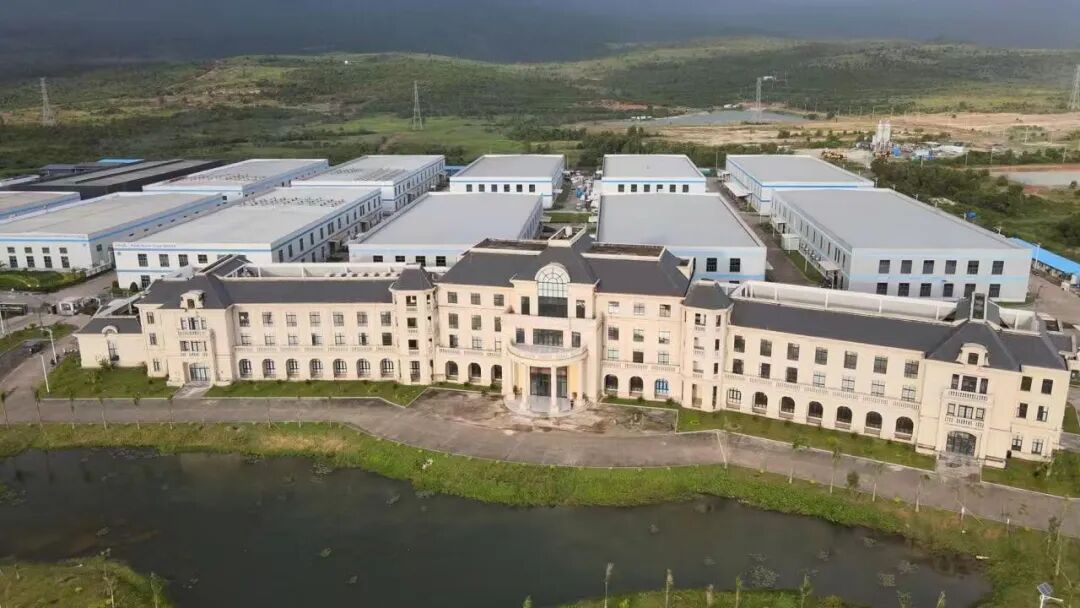
Cambodia Boge Economic Special Zone
Around 2018, when more and more Chinese factories flocked to Vietnam, Petpal started a new round of layout in other regions. "At that time, some American customers suggested that we build a new factory outside Vietnam to disperse the risks brought by the changing global trade environment. The local labor and land costs were also rising continuously," Ge Jianfeng said.
Finally, Petpal chose Cambodia. Firstly, the land price in Cambodia is only one - third of that in Vietnam, and the labor cost is also lower. Cambodia has long - standing friendly relations with China, with a relatively stable political situation and a safer investment environment. At the same time, enterprises can enjoy various tax incentives, such as a maximum of 9 - year exemption from income tax, zero value - added tax, and exemption from import and export taxes.
Secondly, Cambodia has a very loose foreign exchange control environment. The US dollar is its main currency, and the free circulation of the US dollar is allowed. You can directly use US dollars to open accounts, conduct transaction settlements, and even buy goods in supermarkets. Cross - border trade enterprises can reduce the risk of exchange - rate fluctuations, lower financial costs, and simplify operations.
Ge Jianfeng recalled that when they first came to Cambodia, the local infrastructure was very poor, and there was even no stable supply of electricity and water. For this reason, the Boge Economic Special Zone not only laid a dedicated power line through a sub - station but also built a reservoir with a capacity of 300,000 cubic meters, storing water in the rainy season and supplying water in the dry season to form its own water - circulation system. In addition to the dedicated power line and the reservoir, infrastructure such as a sewage treatment plant (with a capacity of 2,000 tons) has also been built in the special zone. There are also a commercial center, canteen dormitories, and a medical service center for the daily life of enterprise employees, and offices of the Council for the Development of Cambodia (CDC), customs, commodity inspection, and the Ministry of Commerce are specially set up.
Currently, the Boge Economic Special Zone is the only provincial - level overseas economic demonstration zone (in the industrial direction) in Cambodia established by Zhejiang Province and registered with the Ministry of Commerce of China. It covers an area of about 2,400 mu of land, of which nearly 300 mu is used by Petpal's Cambodian subsidiary. The rest is open for cooperation with Chinese and global enterprises, providing various settlement models such as land leasing, factory building leasing, and joint development. It focuses on attracting light - industry enterprises in pet food and supplies, plastic products, hardware furniture, clothing and bags, cultural and sports toys, auto parts, etc.
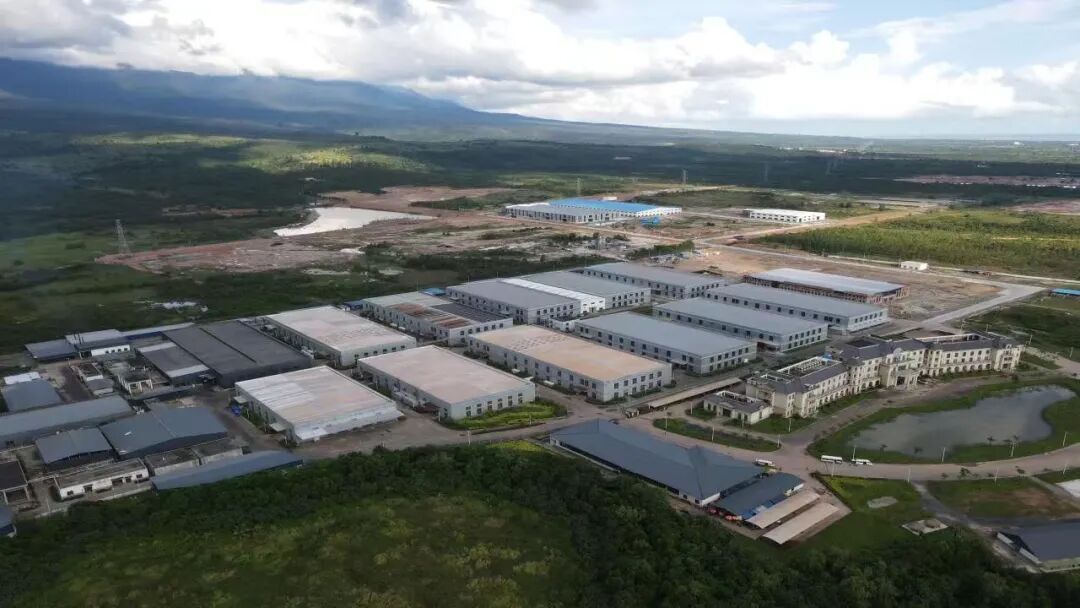
Cambodia Boge Economic Special Zone
Ge Jianfeng mentioned that the Boge Economic Special Zone will consciously screen upstream and downstream related enterprises during the investment - promotion process to form a complete industrial ecosystem. Only one representative enterprise will be introduced in each niche area to avoid unhealthy competition among enterprises.
In terms of supporting services, the special zone has established in - depth cooperation with many Chinese - funded banks such as the Bank of China to build various financing channels for enterprises in the zone and assist them in solving their capital needs. It has also cooperated with a local national - level security company to establish a special - zone human - resources center. With the support of local industry associations, trade unions, and government functional agencies, it helps enterprises in the zone with unified recruitment, employee training, and labor disputes. It also cooperates with domestic vocational and technical colleges to provide language and skills training for employees in the zone.
From initially relying on the cost and industrial - chain advantages in China for product exports, to actively transferring production capacity overseas to be closer to the market and avoid trade risks, and then to using the overseas industrial park as a carrier to drive upstream and downstream enterprises in the industrial chain to go global together, in more than 20 years of overseas expansion, Petpal has grown into a participant in connecting the industrial development between China and Southeast Asia, building service platforms, and promoting cluster - style investment. This evolution from "product going - global" to "production - capacity going - global" and then to "ecosystem going - global" is a typical path for Zhejiang and even Chinese manufacturing enterprises in the process of globalization.
(Authors: Feng Yaling, Yang Yuexin)