Secured 1.177 billion yuan in financing, new heavy truck players are accelerating their IPO processes.
There is never a shortage of hot money in a popular industry.
A unicorn in the large model field has just secured the largest single - round financing recently. In the field of autonomous driving, the largest financing at the beginning of the year has been directed towards DeepWay, a new - energy heavy - truck enterprise.
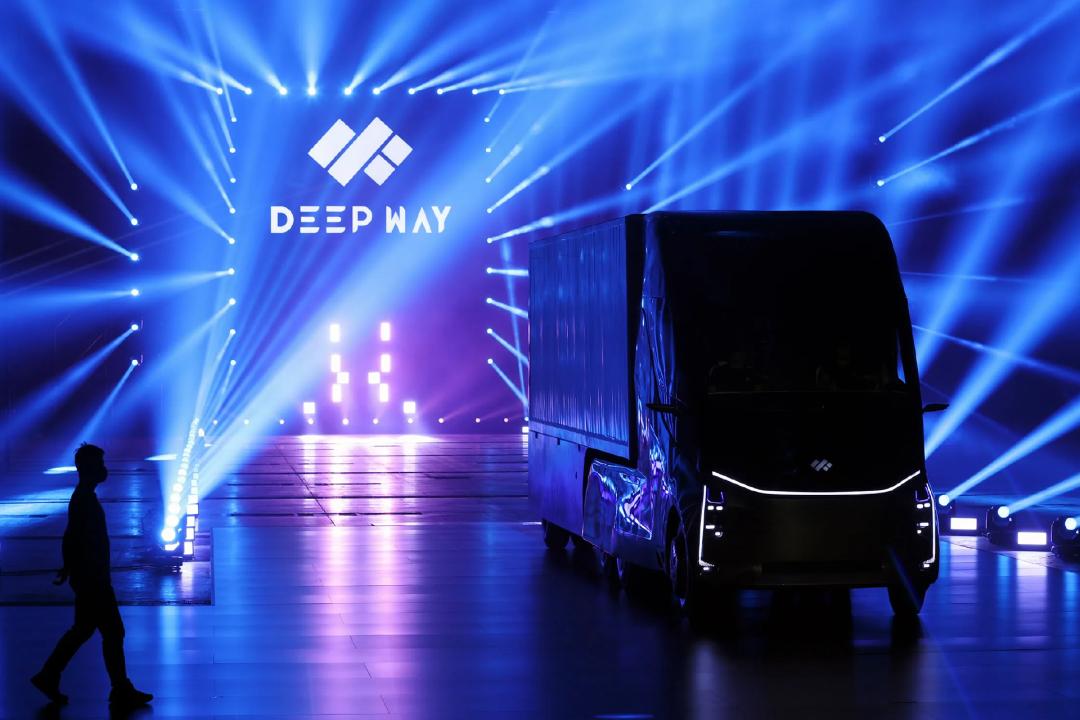
DeepWay announced the completion of a Pre - IPO round of financing worth 1.177 billion yuan. This new - energy heavy - truck enterprise submitted its prospectus to the Hong Kong Stock Exchange last November.
Although it is a new player, it has grown very rapidly, with only 5 years since its establishment. Reviewing DeepWay's growth history, a suitable technical route and reliable partners have been the foundation for its rapid development.
01 On the Verge of IPO
DeepWay, founded in 2020, has Wanjun, the founder of Lionbridge Group, a commercial vehicle logistics company, as its chairman and CEO. Its core shareholders and partners include Baidu.
Backed by these two giants, DeepWay has developed smoothly.
In September 2021, it held its first brand strategy press conference. In August 2022, it completed a Series A financing of 460 million yuan, setting a record for the largest - scale financing among new players in the intelligent new - energy truck manufacturing industry that year. In May 2023, it achieved the world's first batch delivery, becoming the first new - player heavy - truck enterprise in China to achieve mass production and delivery. It was the first to complete the closed - loop of "technology + manufacturing + operation", becoming a model for new - player heavy - truck companies that are closest to success in the eyes of capital.
Before this financing, the publicly disclosed financing rounds had reached 11. Among its investors are well - known institutions, industrial players, and local government investment entities, including Baidu, Weiqiao Group, Qiming Venture Partners, Lenovo Capital and Incubation Group, Guangyue Investment, Jianxin Trust, China Power Fund, and Bocom International.
It is not difficult to see that this autonomous heavy - truck enterprise is very popular in the capital market. Therefore, as the last large - scale financing round before DeepWay's official public stock offering (IPO), many "new players" are still choosing to catch the last train of DeepWay's listing during the window period.
The investors in this round of financing include Puhua Capital, ABC Impact, Sunwoda, Qianhai Haotian, Hantang Real Estate, Linyi Guoke, Changxing Chuangqiang Fund, Shandong State - owned Capital, and Hongshan Fund.
Of course, what really attracts capital is DeepWay's performance. The prospectus shows that in 2023, it started delivering the first - generation DeepWay Xingchen heavy trucks, and delivered more than 500 vehicles in the year ending December 31, 2023. As of December 31, 2024, it had delivered more than 3,000 vehicles.
From the delivery of its first new - energy heavy truck in 2023 to June 30, 2025, DeepWay had cumulatively delivered approximately 6,400 new - energy heavy trucks, covering 311 customers. Among them, 2,873 new - energy heavy trucks were delivered in the first half of last year, making it a well - deserved leading new - energy heavy - truck new player in China. In addition, it also has about 1,400 vehicles on order.
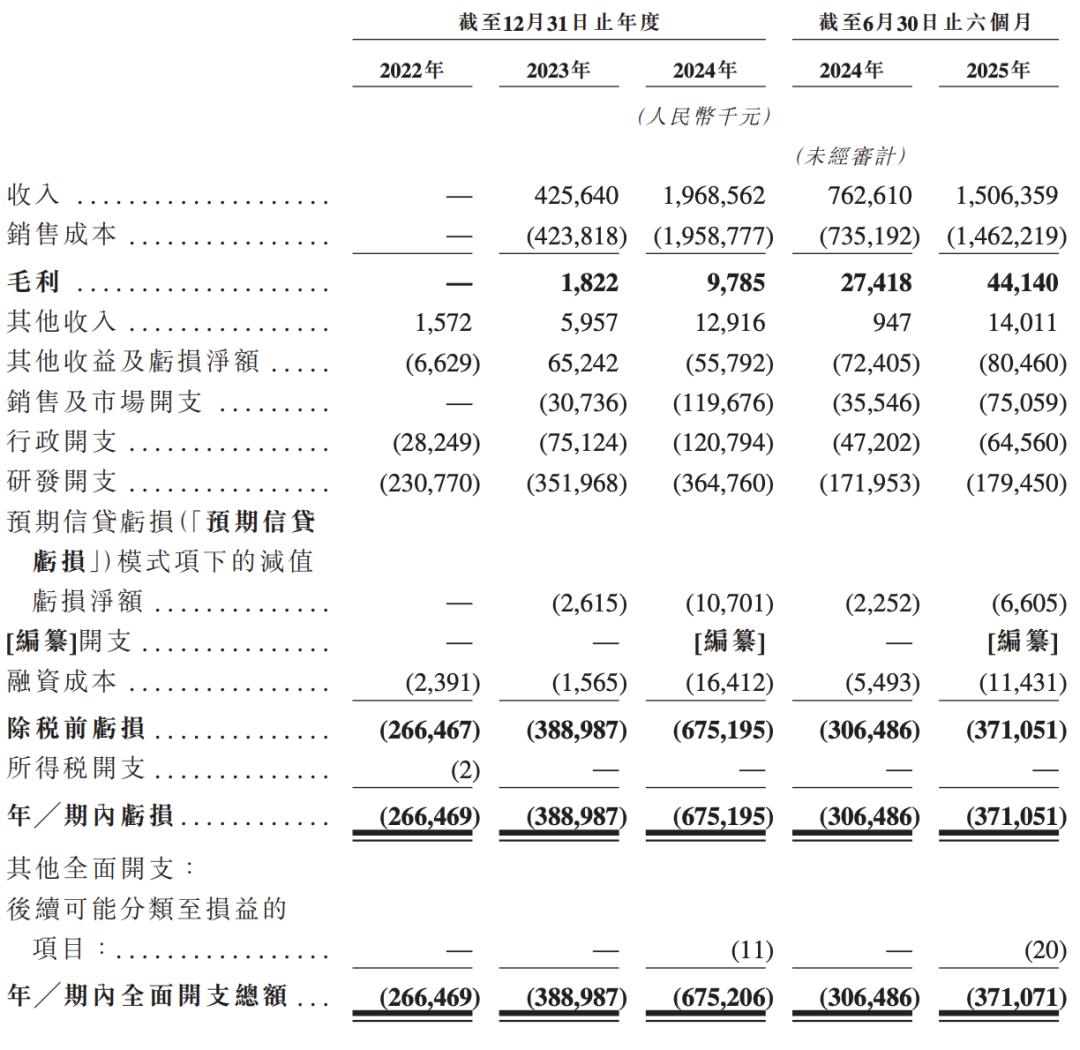
As delivery increases, DeepWay's revenue has also been growing. In 2023 and 2024, DeepWay's revenues were 426 million and 1.969 billion yuan respectively, with a year - on - year increase of 362.5%. In the first half of 2025, its revenue increased by 97.6% year - on - year to 1.506 billion yuan.
However, most of DeepWay's revenue comes from the sales of new - energy heavy trucks. According to the prospectus, the revenue from the sales of new - energy heavy trucks accounted for more than 99% in 2023, 2024, and the first half of 2025, while the sales of parts accounted for less than 1%.
In addition, its intelligent freight solutions have been provided for free and have not contributed to revenue, resulting in a situation of increasing revenue but not profit, with perennial losses.
The losses in 2022, 2023, and 2024 were 266 million, 389 million, and 675 million yuan respectively; the loss in the first half of last year was 371 million yuan.
However, this does not affect the capital market's favorable view of it. After all, in the current autonomous driving industry, products that are put into practice and viable business models are more popular, and a closed - loop business model is the "core strength".
02 Taking Off on the Shoulders of Giants
On the other hand, its technical path is quickly showing its value.
DeepWay has "stood on the shoulders of giants" since its establishment. According to the prospectus, Baidu is one of DeepWay's strategic shareholders, currently holding 17.28% of the shares. Baidu is not only an important shareholder, participating in multiple rounds of capital support, but also the core source of its autonomous driving technology. It can even be said that Baidu is directly involved.
At the beginning of its establishment, DeepWay obtained the authorization for Baidu's "white - box" autonomous driving technology, which is Baidu's only authorization in the commercial vehicle field. This cooperation allows DeepWay to directly utilize Baidu's investment and accumulation in the field of autonomous driving over the past decade.
Thanks to this, DeepWay released its first self - developed intelligent heavy truck, the Xingtu 1st generation, the following year and achieved the first batch delivery in 2023.
While technology is important, the path it has chosen is even more crucial. Different from the "radical" approach of aiming for L4 all at once, DeepWay has chosen a progressive route of "electrification - L2 assisted driving - intelligent platooning - single - vehicle unmanned driving".
Although this path has somewhat diluted its label as an autonomous driving company, Wanjun, the founder of DeepWay, has repeatedly stated that DeepWay firmly adheres to the progressive development route. That is, in the field of commercial vehicle autonomous driving, the first step is to free the driver's feet, the second step is to free the hands, and the third step is to make the driver a relaxed safety supervisor.
In the view of Wanjun, if DeepWay had chosen the L3 system at the beginning, it would not only have increased the hardware cost of each vehicle by more than 100,000 yuan, but also failed to save labor costs because the driver would still need to take over at any time. The input would not match the output. Therefore, DeepWay first focuses on L2, which can solve the core problems.
After all, for a heavy - truck driver, what is needed in long - distance driving is not showy technology, but reducing the workload and saving money.
DeepWay has chosen a "forward - looking definition" route. Different from the mainstream "converting fuel trucks to electric trucks" model in the industry, it adapts to the needs of electrification and intelligence from the design stage and also self - develops the three - electric systems (battery, electric motor, and electric control system).

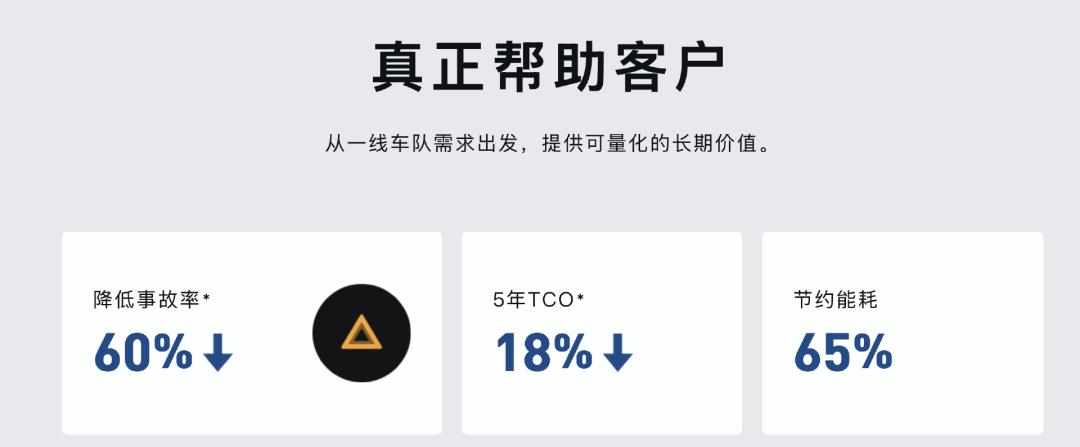
As a result, the integration of the battery and the chassis has expanded the cargo space. The innovative low - wind - resistance design has significantly reduced energy consumption. The coordinated operation of the three - electric systems has improved energy efficiency. In terms of the full - life - cycle cost, it saves 18.7% compared with traditional fuel heavy trucks and 4.9% compared with converted electric heavy trucks.
In addition, the L2 assisted - driving function can greatly reduce the driver's fatigue during long - distance driving, which also means an improvement in driving safety. Greater safety leads to lower cargo damage, lower accident losses, and lower insurance costs.
According to official data, the accident rate of customers has decreased by 60%, the driver's fatigue has been reduced by 30 - 60%, and the annual profit per vehicle has increased by 19,000 yuan.
As of now, DeepWay has accumulated more than 100 million kilometers of real - world L2 - level operating mileage, and the paid - subscription rate has exceeded 30%.
In the highly practical logistics industry of heavy trucks, a 30% paid - rate means that users not only recognize the advanced nature of the technology but also the value of cost - reduction and efficiency - improvement it brings, that is, a lower accident rate, energy consumption, and comprehensive operating cost.
Having achieved a closed - loop business model at the L2 level, DeepWay's next goal is to move towards L4 - unmanned platooning.
The specific model is that there is a driver in the lead vehicle of the platoon, followed by multiple unmanned trucks.
In actual operation, the following vehicles prioritize following the driving strategy of the leading vehicle. They will combine the input from the leading vehicle, conduct perception and decision - making based on their own capabilities, and complete driving tasks such as waiting for lane - changing of following vehicles, intelligent avoidance of vehicles crossing the lane line, and detouring around construction areas. This platooning - based cooperation improves the ability to handle complex scenarios.
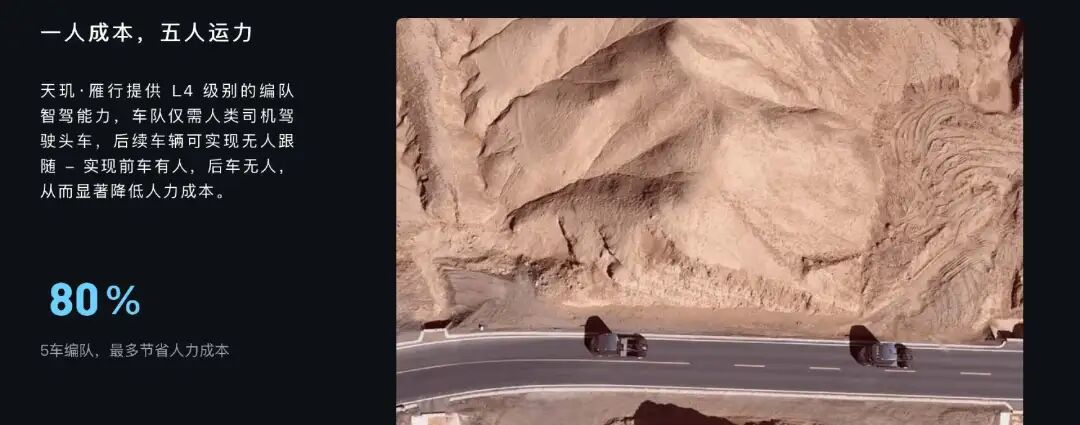
This model is also the implementation path that has gradually reached a consensus in the current autonomous - truck industry. For example, companies like Cal Dynamics also have a preference for the platooning model.
Compared with passenger cars, L4 still has many challenges to overcome. However, for heavy trucks, the commercial value of L4 has begun to be realized.
This article is from the WeChat official account “SuperEV - Lab”, author: Wang Lei. It is published by 36Kr with authorization.