1.177 billion in capital is betting on the leading player among the new forces in the truck industry, and the L2 upgrade path has been successfully implemented in commercial vehicles first.
In a hardcore sector recognized for its high technological barriers and significant commercialization challenges, there are always players capable of achieving counter - cyclical growth.
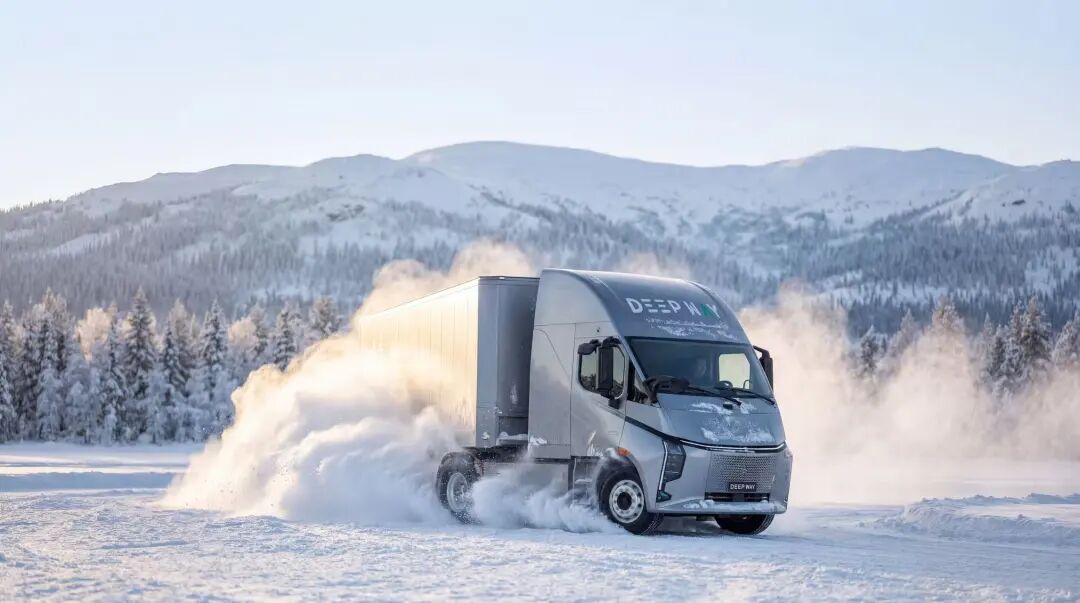
At the beginning of 2026, the first investment in the autonomous driving sector was finalized: DeepWay, a new player in the truck industry, officially announced the completion of its Pre - IPO round of financing, raising a total of 1.177 billion yuan.
DeepWay has only been established for 5 years, but it has been consistently favored and invested in by VCs and industrial investors. It has expanded its financing in multiple rounds during the Pre - IPO stage and is about to launch an IPO on the Hong Kong Stock Exchange.
It is reported that DeepWay has already exceeded the $1 billion valuation threshold of a "unicorn enterprise".

In the past 5 years, DeepWay has achieved annual revenues in the billions by selling new energy heavy trucks. The growth momentum is even more remarkable. In the just - past Q4 of 2025, the single - quarter delivery volume exceeded the total of 2024.
However, investors' optimism isn't solely based on the truck - selling performance. After all, this alone can't support the valuation and potential of DeepWay as the "first stock in autonomous trucks for public road scenarios".
DeepWay builds new energy heavy trucks with a forward - looking approach. It was the only authorized partner in Baidu's commercial vehicle sector to use Baidu Apollo technology, and it has self - developed the entire three - electric system of new energy heavy trucks... Looking beyond DeepWay's numerous labels, what exactly makes this autonomous truck player so attractive?
Who is "boarding" DeepWay at the Pre - IPO stage?
The investors in this round of financing include Puhua Capital, ABC Impact (an investment company under Temasek), Sunwoda, Qianhai Haotian, Hantang Real Estate, Linyi Guoke, Changxing Chuangqiang Fund, Shandong Guokong Capital, Lenovo Capital & Incubation Group, Greater Bay Area Fund, Guangyue Investment, and Hongshan Fund. State - owned capital, foreign capital, and industrial capital are all involved, seizing the opportunity to catch the last train of DeepWay's IPO.
It's normal for DeepWay to continuously "expand" its financing circle. For example, in the past 5 years, DeepWay had 5 rounds of financing in Series A and 3 rounds in Series B... The currently publicly available financing amount totals 1.98 billion yuan. Adding the 1.177 billion yuan from this round, the total has exceeded 3 billion yuan.
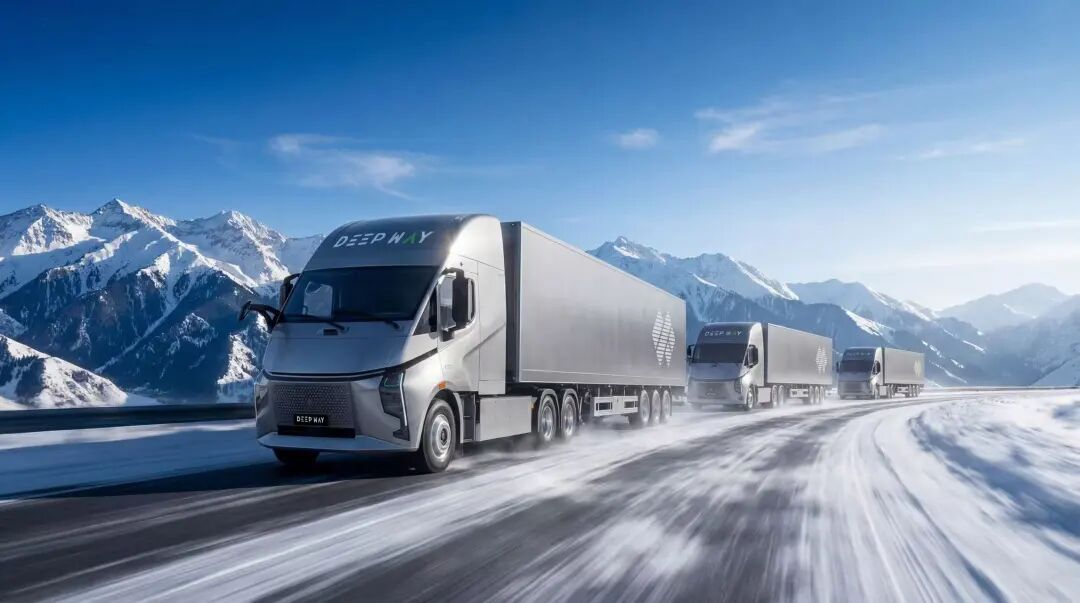
On one hand, this demonstrates the high demand for this autonomous truck company.
On the other hand, although DeepWay has remained silent about its "valuation", the outside world generally believes that its valuation has long exceeded the "unicorn" threshold.
The relatively high valuation still can't dampen investors' enthusiasm. The potential direct returns are undoubtedly one of the key factors driving investors to "board the ship" before the IPO.
On another level, while DeepWay is indeed the first new player to "stand out" in the truck industry and has long led in new energy heavy - truck deliveries, it rarely participates in discussions on hot topics in the sector, such as advanced algorithm paradigms and large - scale "driver - less" operations.
Even though it was the only authorized partner in Baidu's commercial vehicle sector to use Baidu's intelligent driving assistance technology, Apollo, at its inception.
So, what are the factors supporting DeepWay's growth prospects and making it a favored investment target?
Intuitive data: How is DeepWay performing in business?
The prospectus provides the most intuitive insights.
First, let's look at DeepWay's background. Founded in 2020 and headquartered in Hefei, it is a technology company specializing in new energy heavy trucks and intelligent road freight solutions. It is also the world's first new - force company to achieve large - scale deliveries of forward - defined heavy trucks:
It has completely self - developed new energy heavy - truck platforms, core three - electric systems, and autonomous driving technologies.
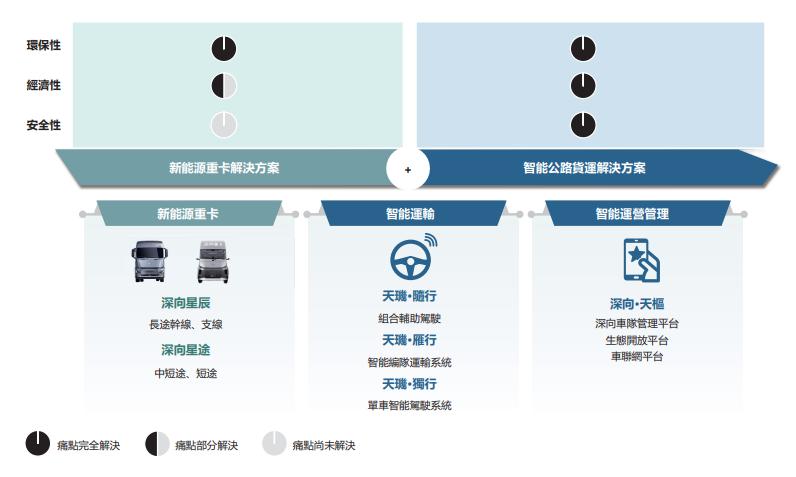
DeepWay's strategy is to reduce costs through self - development of three - electric systems and improve performance by standardizing L2 technology.
By selling L2 intelligent trucks, DeepWay earns its first pot of gold, which continuously fuels the R & D and implementation of higher - level autonomous driving technologies. Subsequently, it will gradually achieve the implementation of L4 platooning with human - machine co - driving and ultimately realize large - scale deliveries of single - vehicle L4 trucks.
How well is this strategy being implemented?
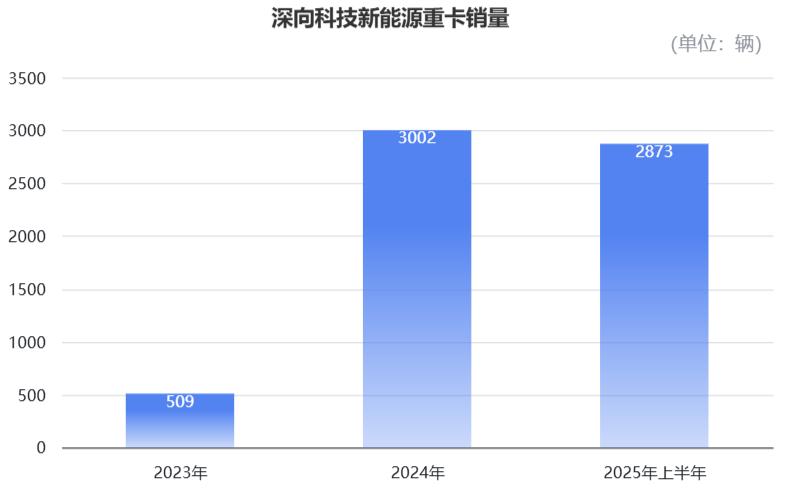
In terms of data, DeepWay's truck sales increased from 509 units in 2023 to 3,002 units in 2024, a year - on - year surge of 490%.
Even in the second half of 2025, the single - quarter delivery volume has already matched the total of 2024.
Judging from the growth in delivery volume, DeepWay is an undisputed leader in the new - force truck sector.
For the logistics industry, cost is the top priority. For any new product or business model to succeed in this sector, it must prove that it can offer better cost - effectiveness than previous solutions.
With the standard L2 system, the current focus is on safety performance, which reduces the overall accident rate and leads to lower costs in insurance, management, and accident - related losses.
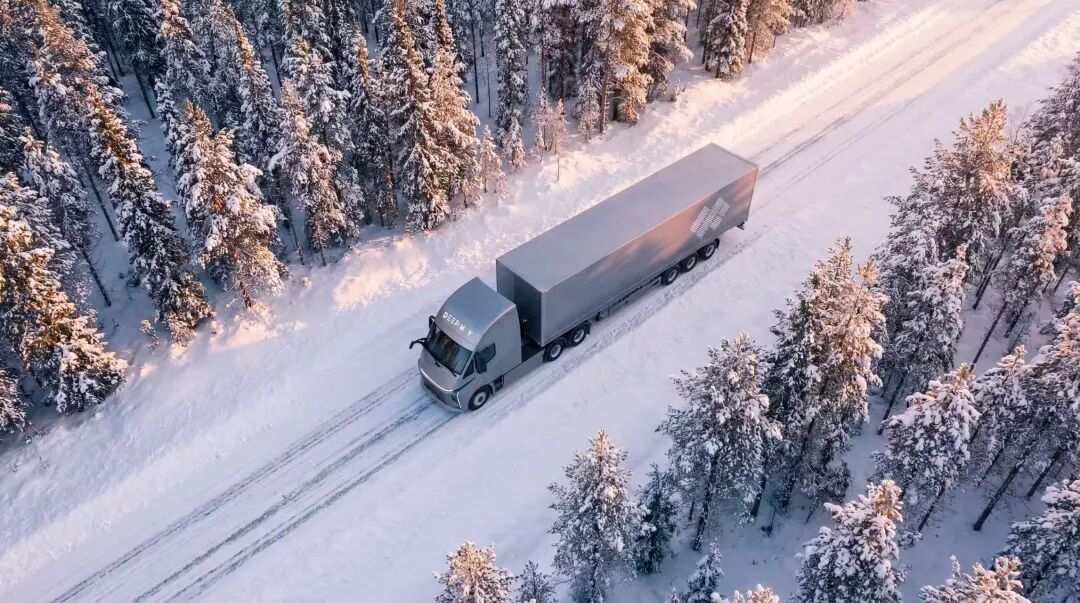
DeepWay's heavy trucks have cost advantages throughout their life cycle: the integration of the battery and chassis expands the cargo space, the innovative low - wind - resistance design significantly reduces energy consumption, and the coordinated operation of the three - electric systems improves energy efficiency... The total life - cycle cost of DeepWay's heavy trucks is 18.7% lower than that of traditional fuel - powered heavy trucks and 4.9% lower than that of converted electric - powered heavy trucks.
With annual deliveries of thousands of intelligent heavy trucks, here's a look at the corresponding business performance:
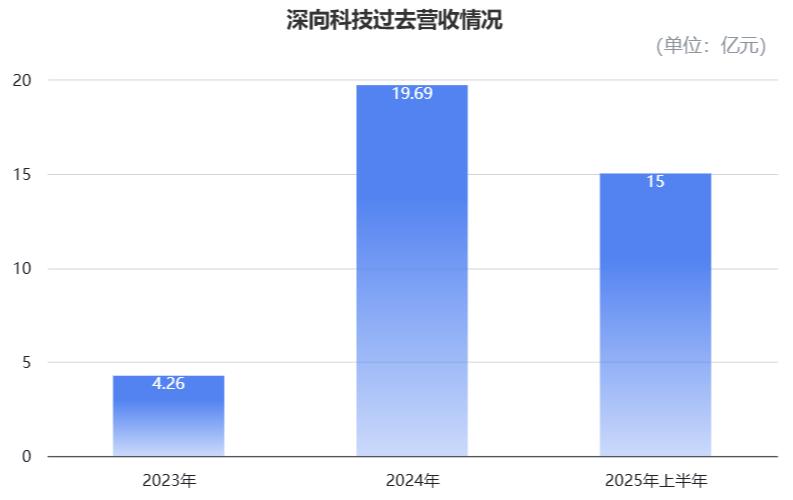
In 2023, the company's revenue was 426 million yuan. In 2024, it soared to 1.969 billion yuan, a year - on - year increase of 360%. In the first half of 2025, the company's revenue reached 1.5 billion yuan, a year - on - year increase of 97.6%.
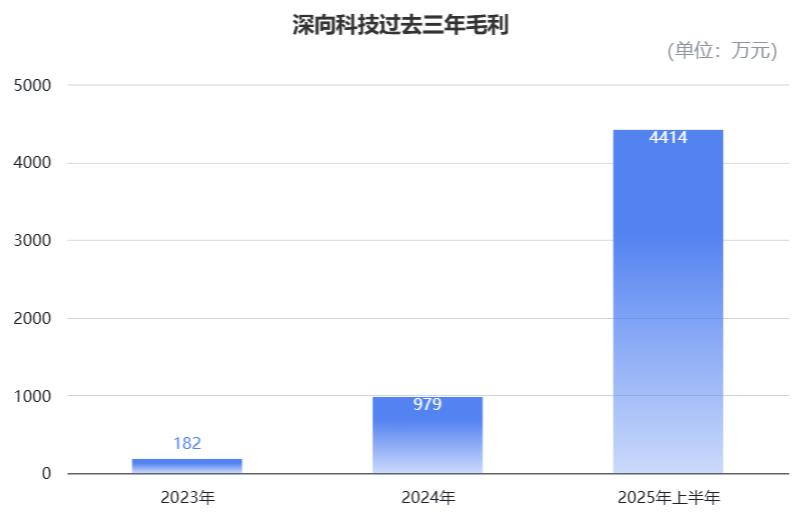
In terms of profit, DeepWay's gross profits in 2023, 2024, and the first half of this year were 1.82 million yuan, 9.79 million yuan, and 44.14 million yuan respectively.
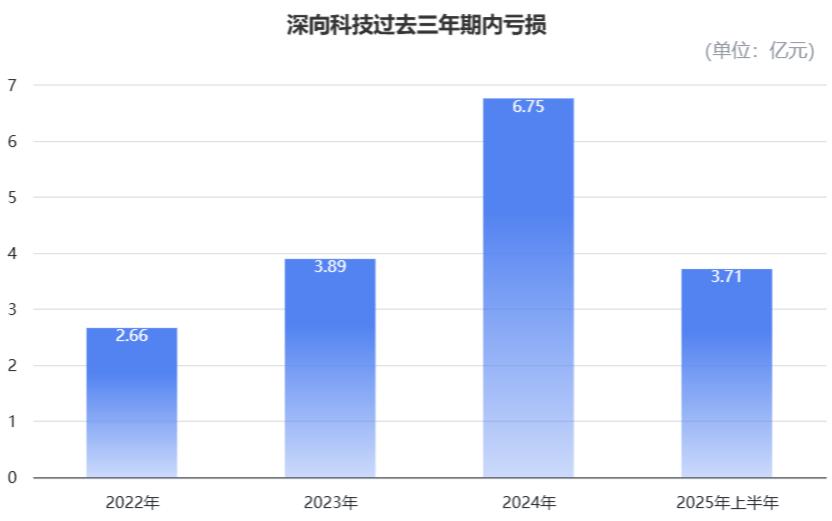
Meanwhile, the company is still in a loss - making state. The losses in 2022, 2023, and 2024 were 266 million yuan, 389 million yuan, and 675 million yuan respectively, and the loss in the first half of this year was 371 million yuan.
The main reason for the losses is the company's continuous and substantial investment in R & D.
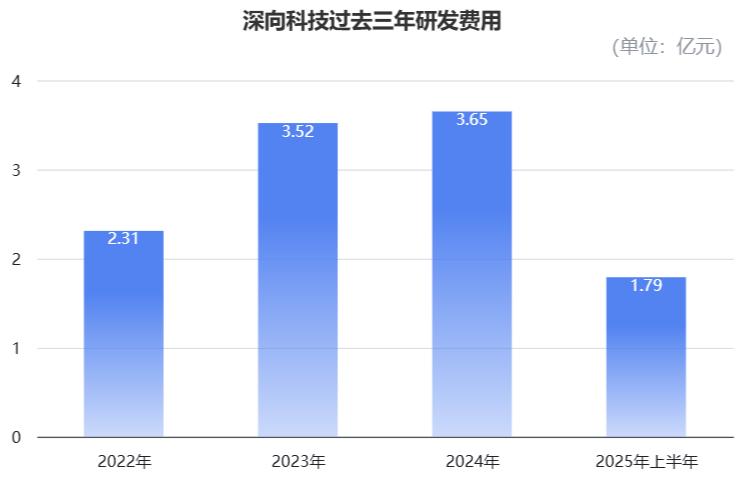
From 2022 to 2024, the company's R & D expenses were 231 million yuan, 352 million yuan, and 365 million yuan respectively. The R & D expenses in the first half of this year were 179 million yuan, which actually corresponds to the maturity and implementation of DeepWay's L2 solution and the rapid upgrade to platooning L4:
In summary, according to the prospectus, DeepWay is, first of all, the leading player among new - force truck companies. By self - developing the three - electric systems and standardizing L2 technology, it addresses the pain points of energy consumption and safety costs, and leads the sector in terms of delivery volume.
Secondly, based on the progressive development strategy of integrating self - owned vehicles and self - developed intelligent driving technologies, it chooses the path of upgrading from L2 to L4. The continuously growing revenue provides continuous support for technological R & D.
Finally, it's worth noting that DeepWay, which is about to go public, isn't in a desperate situation. On the contrary, with the continuous growth of sales volume, the gross profit is constantly improving, and a positive business cycle is expected.
Behind the data, what kind of autonomous driving company is DeepWay?
At its inception, DeepWay clearly defined its strategy of achieving unmanned driving through vehicle R & D. Self - developing heavy trucks is not the end goal but a means to achieve large - scale mass production of unmanned driving.
The reason goes straight to the first - principle: traditional trucks aren't designed for autonomous driving. Only forward - defined and software - hardware integrated solutions can fully unleash the potential of autonomous driving and achieve optimal performance at the lowest cost. Moreover, the efficiency of cooperation with traditional automakers is uncertain - this is why many autonomous truck players in North America have been held back.
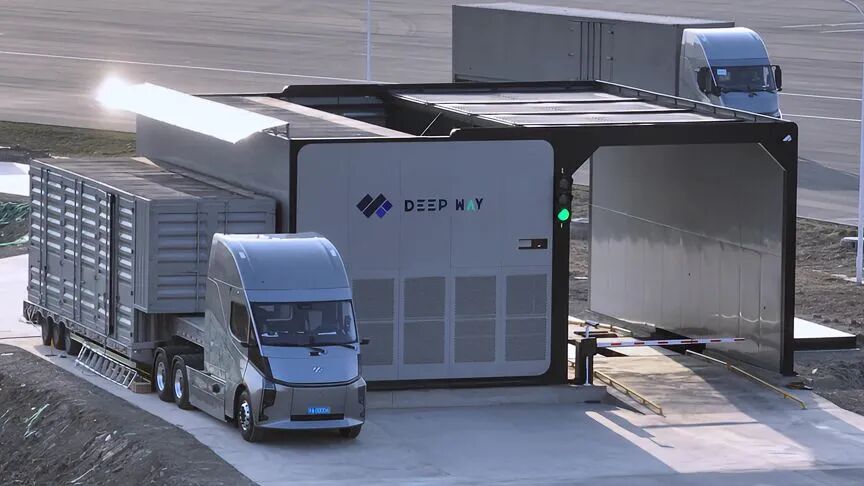
Therefore, to find a suitable platform for the implementation of autonomous driving technology, self - development became the best choice for DeepWay.
This approach is related to the underlying genes of DeepWay's founding team. The autonomous driving gene comes from CTO Tian Shan, who has long been in charge of Baidu's commercial vehicle autonomous driving projects. DeepWay is also the only authorized partner in Baidu's commercial vehicle sector to use its intelligent driving assistance technology, Apollo.
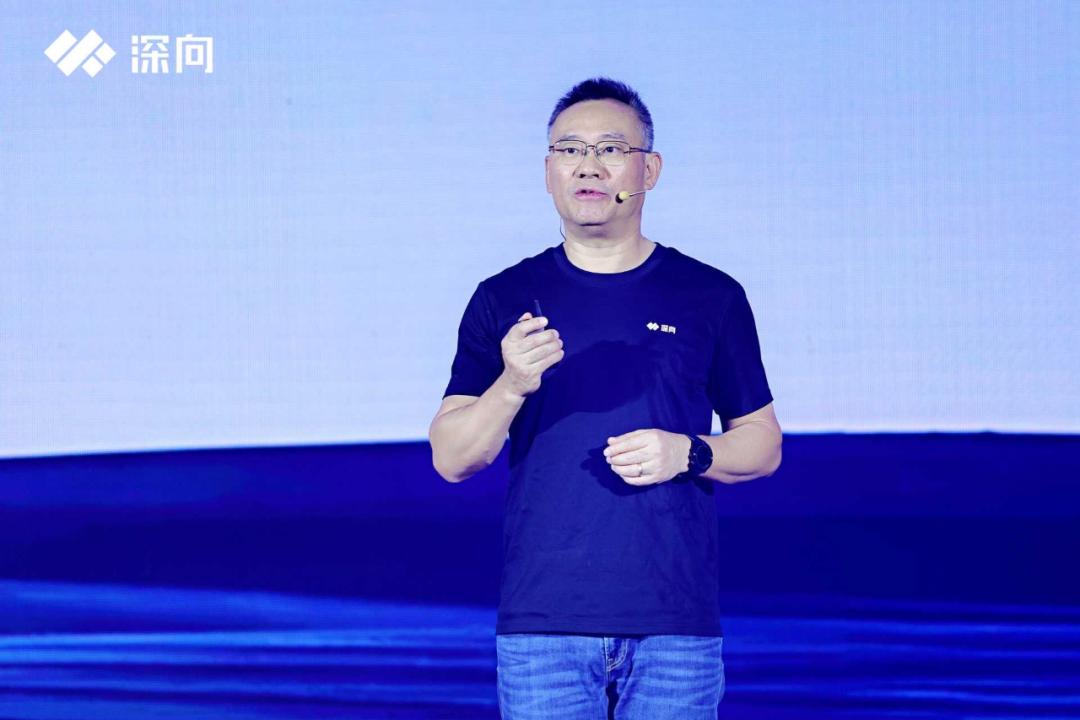
The engineering gene for implementing autonomous driving concepts through "vehicles" and the commercialization scenario gene come from the founder, chairman, and CEO Wan Jun, who has nearly 20 years of experience in the smart logistics and commercial vehicle industries.
This genetic advantage is most directly reflected in DeepWay's latest second - generation heavy trucks.
When the second - generation pure - electric heavy trucks were unveiled at a press conference last May, they had already received 1,400 large - scale orders. This year, they have become the mainstay of deliveries, driving DeepWay's total delivery volume to exceed 10,000 units.
The core of its popularity lies in the rapid value realization of the L2 + self - developed three - electric system:
The average freight rate is about 0.3 yuan per vehicle per kilometer. So, if a vehicle travels 10,000 kilometers per month, it can earn tens of thousands of yuan more per year through the difference in freight rates between fuel and electricity and the weight reduction of the three - electric system. This is quite significant for individual drivers and fleets.
Take "weight reduction" as an example. The CTB battery - chassis integration in the self - developed three - electric system reduces the weight of the entire battery pack by 300 kilograms