A post-90s CCTV female anchor starts a business to build spaceships. The cost of going to space is 3 million yuan per person, and some celebrities have already signed contracts.
Over 20 People Have Signed Up for Tickets Priced at $3 Million Each
On January 22nd, actor Huang Jingyu officially announced that he would become the 009th space tourist. He plans to take the interstellar Voyager commercial spacecraft in 2028 and fly to the Karman Line at an altitude of 100 kilometers.
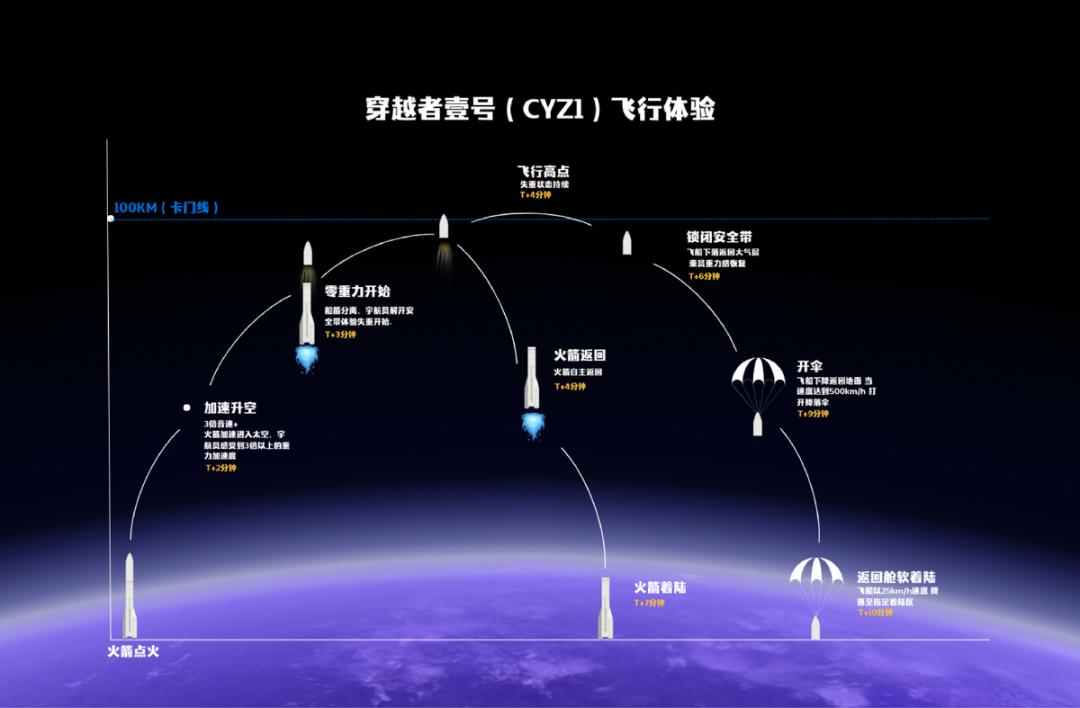
The Karman Line is the recognized boundary between space and the atmosphere. There, one can experience 3 to 6 minutes of weightlessness and float like an astronaut.
Through the porthole, one can also overlook the curvature of the Earth and the deep space, which not only satisfies the imagination of space but also does not require long - term separation from the ground.
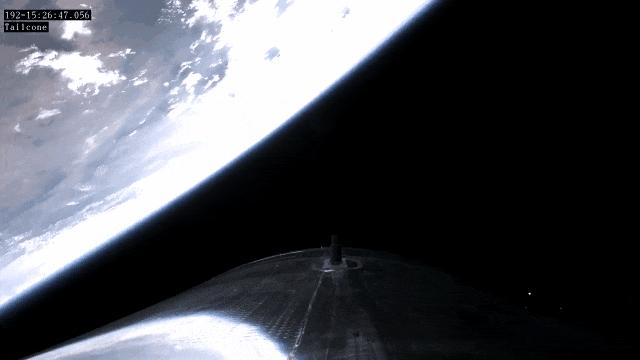
I also want to experience it, but I can't afford the ticket even if I sell everything I have. The single - ticket price for this sub - orbital tour is $3 million. Paying a 10% deposit, which is $300,000, can lock in the flight order.
Although the price seems scary, it is much cheaper than similar space tourism projects abroad, so many wealthy tycoons are interested.
On the day of the press conference, tickets for more than three Voyager spacecraft had been sold. More than 20 people in total have signed up, forming the first group of domestic commercial space tourists.
In addition to Huang Jingyu, there are also academic giants like Li Licheng, an academician of the Chinese Academy of Engineering, and business tycoons such as Qiu Heng, CMO of Zhiyuan Robotics, Wang Jing, founder of Toread, and Fu Zhekuan, chairman of Qifu Capital.
Even a special silicon - based member, the Zhongqing Robot PM01, has been included to test the impact of the space environment on mechanical equipment.
It's a pity that Liu Cixin is not on this list...

The Company Was Founded Only Three Years Ago, and Its Founder Is a Former CCTV Female Anchor
Behind this seemingly sci - fi journey, the operator is not an established aerospace enterprise but a startup that was founded just three years ago.
The full name of the company is Beijing Voyager Manned Space Technology Co., Ltd. It was registered in January 2023, and its headquarters is in Haidian, Beijing.
It is the first private aerospace company in China to build reusable spacecraft and operate space tourism. It has obtained the national - level commercial manned space project approval, starting at a much higher level than ordinary startups.
Riding on the wave of SpaceX, the company has raised funds in several rounds, including a seed - round financing of several million and a $30 - million angel - round investment from Qifu Capital.
Its core competitiveness comes from the self - developed "Voyager No. 1" spacecraft.
This is China's first commercial reusable manned spacecraft. On January 18th, the test of its landing buffer system was successfully completed.
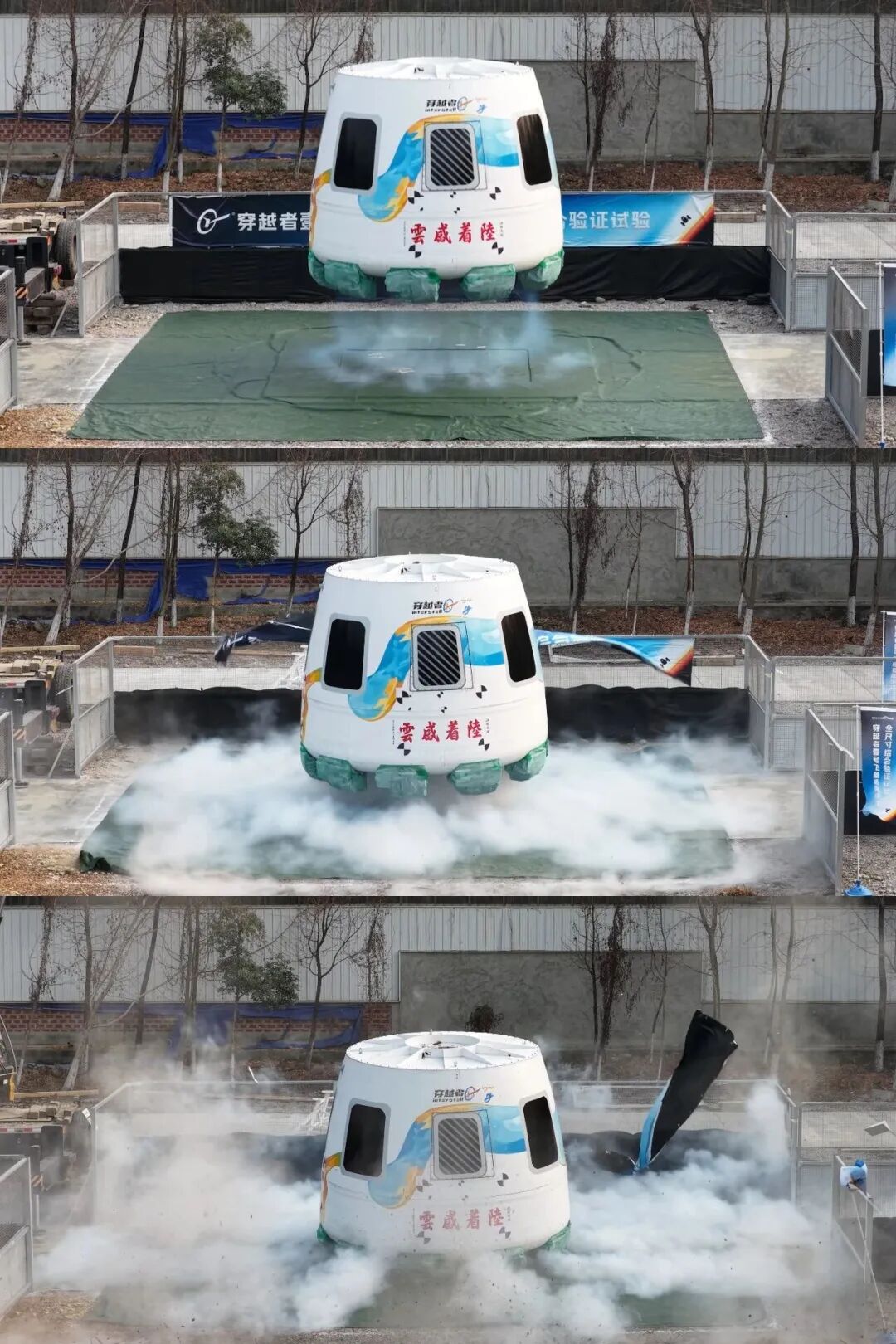
This also makes Voyager the third commercial aerospace company in the world to master this key technology. The first two are SpaceX of Elon Musk and Blue Origin of Jeff Bezos.
This spacecraft can accommodate up to 7 people. The cabin space is 25 cubic meters, and there is an oversized window measuring 1.2 meters by 1 meter.
However, the bigger "highlight" of this company is its founder, Lei Shiqing herself.
This girl from Hengyang, Hunan, born in 1994, has a very amazing resume: She majored in Journalism and Communication at Jinan University for her undergraduate degree and minored in Business Administration. She was an exchange student at Columbia University and later furthered her studies in acting at the Beijing Film Academy, all around the fields of media and art.
In 2017, she entered CCTV's Chinese International Channel under the stage name "Lei Qian" and hosted programs such as "Travel in China". Due to leading the production of the special report on commercial aerospace "Chasing Dreams in Space" and frequently interviewing aerospace experts, she planted the idea of starting a business.
To make up for the professional gap, Lei Shiqing started a counter - attack from liberal arts to science. Since 2021, she has been pursuing a master's degree in manned space ergonomics at Renmin University of China, under the tutelage of Academician Chen Shanguang.
In 2023, she founded the Voyager company and set a "three - step" plan: conduct sub - orbital flights in 2028, go to low - Earth orbit in 2032, and challenge lunar - orbit tourism in 2038. The goal is to reduce the ticket price from hundreds of millions to millions and then to $300,000 through high reuse rates, so that ordinary people can also go to space.

Such a big leap from journalism to aerospace has also attracted some controversies. After all, aerospace is a high - tech field that integrates mechanics, materials science, and engineering.
However, there are only two years left until 2028. We'll see what happens then.
Space Tourism Has Great Prospects
It has to be said that Lei Shiqing has a good eye. Space tourism is a very promising industry.
The American Space Foundation predicts that by 2040, the global space tourism market will exceed $800 billion, a huge market worth over 5.7 trillion yuan.
Among them, sub - orbital tourism is the hottest track now because the technology is relatively mature and the price is not so outrageous.
Many wealthy people around the world are willing to spend hundreds of thousands of dollars to go to space and experience weightlessness.
Currently, the global space tourism market is dominated by American companies. The top three account for nearly 70% of the market share.
SpaceX of Elon Musk is the leader, focusing on low - Earth orbit tourism. It uses the Dragon spacecraft to take tourists around the Earth for 3 to 10 days. A single ticket costs $50 million to $90 million, and spacewalks can also be arranged.
Blue Origin of Jeff Bezos specializes in sub - orbital tourism. It uses the "New Shepard" rocket for vertical launch, flying to an altitude of 100 kilometers to experience 3 minutes of weightlessness. The ticket price is about $800,000 to $1 million, and it has sent more than 150 people into space.
Sun Yuchen took its rocket to space.
Virgin Galactic uses a mother ship to carry the spaceship to a high altitude and then releases it. The whole journey takes 90 minutes, with 4 to 5 minutes of weightlessness. The ticket price is $600,000, which is suitable for people who are afraid of excessive acceleration.
Compared with these international giants, Voyager uses land soft - landing technology. Relying on the reverse - thrust engine and the bottom energy - absorbing structure, the impact force during landing can be controlled within 5g, providing better comfort.
The ticket price of $3 million is equivalent to $430,000, which is much lower than that of Virgin Galactic.
Of course, international giants have flown dozens of times, while Voyager plans its first flight in 2028. Its safety and reliability need to be verified by more tests.
Moreover, it currently does not have its own rocket and has to rely on third - party rockets for launch, so it cannot achieve the reuse of rockets and spacecraft together.
Let's wait and see if it can send Huang Jingyu and others into space as scheduled.
This article is from the WeChat public account "Technology Daily Push" (ID: apptoday). Author: Technology Daily Push. Republished by 36Kr with permission.