Headhunter Huang Renxun in 2025: Recruiting executives from industry giants and favoring Chinese entrepreneurial teams for work
Henry from Aofeisi, Liangziwei
It's already the world's number one in market value. How can it continue to grow?
The answer given by NVIDIA is simple: Poach talent, poach more talent.
In the past year of 2025, Jensen Huang expanded the management team on one hand and spent money to acquire teams on the other -
From poaching executives in the market, policy, and human resources fields to acquiring startups to bring in technology leaders in a "package deal", a typical "Huang-style talent poaching + Huang-style acquisition" strategy is taking shape.
Beyond chips, reshape the "second growth curve" through talent poaching
In fiscal year 2025, NVIDIA's revenue reached $130.5 billion, more than doubling compared to the previous fiscal year, becoming a growth miracle in the history of technology.
Meanwhile, NVIDIA is reshaping its "second growth curve" through talent poaching:
On one hand, it systematically "poaches talent" to fill the gaps in key capabilities such as market, policy, research, and organizational management.
On the other hand, it acquires startups to directly incorporate core technology leaders and software backbones into its system.
In terms of talent poaching, NVIDIA has introduced several new executives in the past year, covering key positions such as global market and brand, human resources, quantum computing research, and cybersecurity and policy.
Alison Wagonfeld
In the latest personnel move this year, NVIDIA extended its "talent poaching" efforts to Google.
It is reported that NVIDIA will hire Google Cloud veteran Alison Wagonfeld as the company's first Chief Marketing Officer (CMO).

Alison Wagonfeld
Wagonfeld officially took up her new position in February this year. She will integrate the relevant responsibilities previously scattered among multiple executives and be fully responsible for NVIDIA's marketing and communication work.
(Note: NVIDIA has never had a full-time CMO before. The heads of relevant teams usually reported to the vice president of marketing, rather than being unifiedly managed by a CMO.)
After taking office, all members of NVIDIA's marketing and communication team will report to Wagonfeld, and she will report directly to Jensen Huang.
Before joining NVIDIA, Wagonfeld served as the vice president of marketing at Google and the CMO of Google Cloud, a core business line at Google.
During her ten - year tenure at Google, she built Google Cloud from a promising startup project in 2016 into a mature business with an annualized revenue run - rate of $60 billion today.
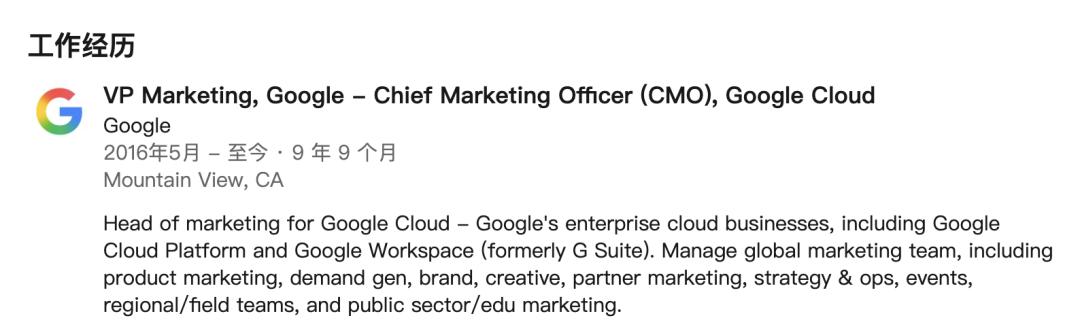
Alison Wagonfeld's work experience
This experience perfectly fits NVIDIA's current development stage of moving from "selling chips" to "selling systems and platforms".
According to relevant reports, Wagonfeld's task in joining NVIDIA is not only to handle external communication and relieve Jensen Huang's pressure but also to help the company establish a clearer and more sustainable market narrative among customers at all levels in the next - stage competition (from training to inference).
Kristin Major
In the field of human resources, NVIDIA chose a veteran from the traditional technology company system.
Kristin Major, a veteran from HPE, joined NVIDIA in February last year as the senior vice president of human resources and entered the executive leadership team directly led by Jensen Huang.
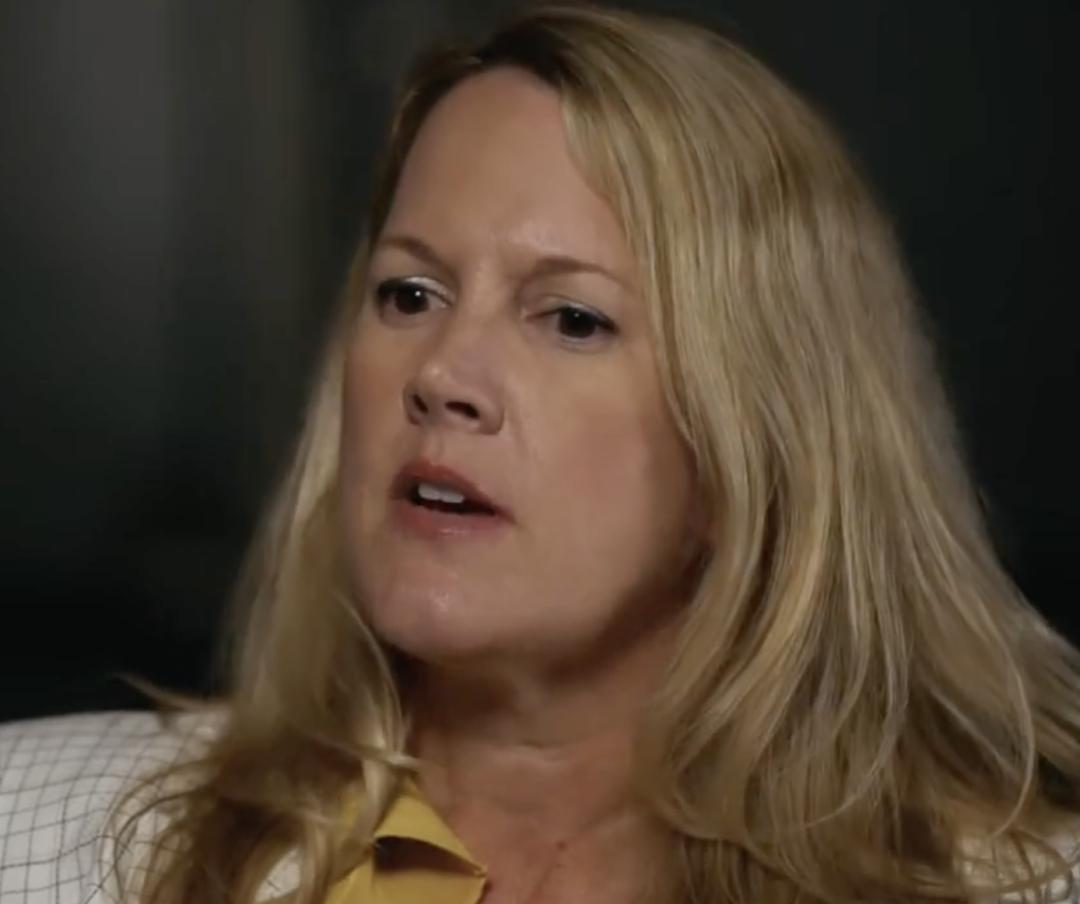
Kristin Major
In the field of human resources, Kristin Major is a real veteran.
Before joining NVIDIA, she worked at Hewlett Packard Enterprise (HPE) for more than 13 years, successively responsible for human resources and talent management - related affairs, and finally served as the executive vice president and chief talent officer.
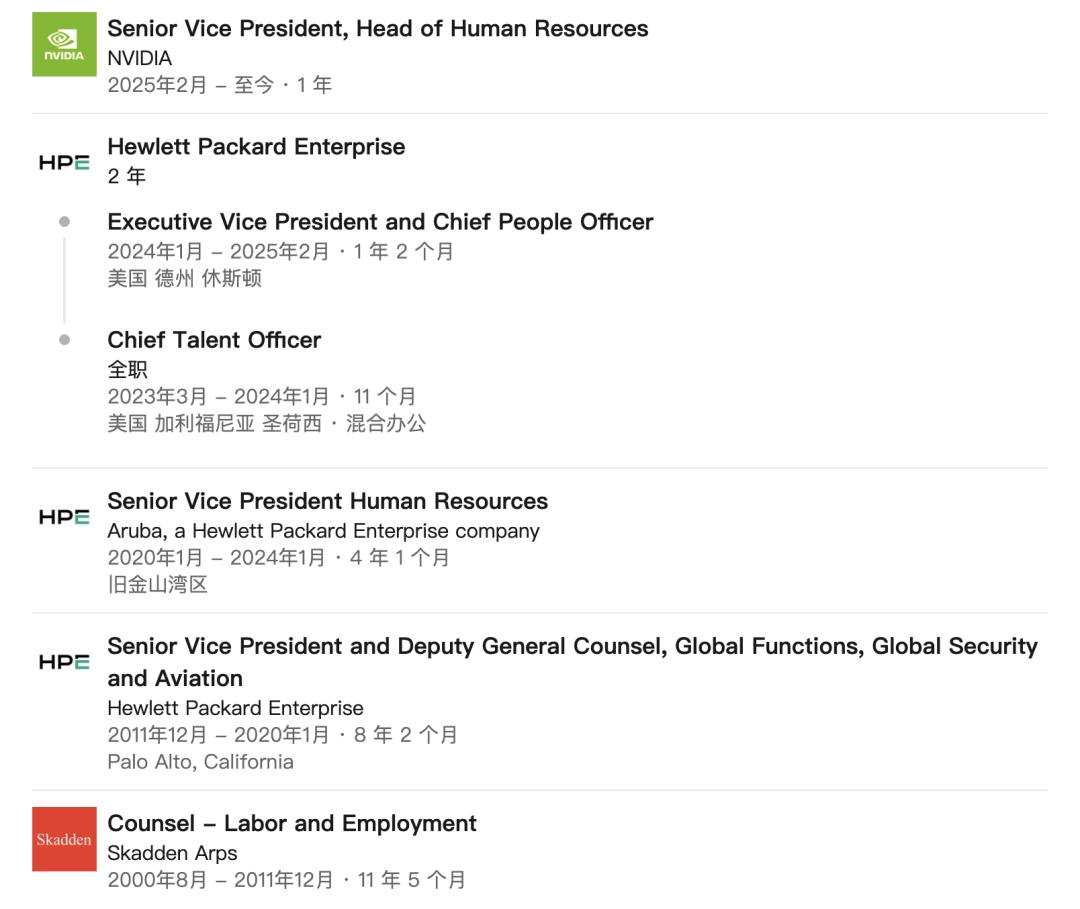
Kristin Major's work experience
At HPE, she was in charge of multiple core business units in human resources management for a long time, including GreenLake, Aruba Networking, and the HPE Transformation Office.
Krysta Svore
In the field of quantum computing, NVIDIA also set its "talent - poaching" sights on Microsoft.
In November last year, NVIDIA poached Krysta Svore, a core figure in the field of quantum computing, from Microsoft to serve as the vice president of applied research (in the field of quantum computing).

Krysta Svore
According to Krysta's LinkedIn profile, she will be responsible for applied research and engineering work covering the entire quantum technology stack, focusing on promoting quantum error correction, system architecture, and AI - accelerated quantum workflows to accelerate the maturity of the quantum computing ecosystem.
Before joining NVIDIA, she worked at Microsoft for nearly 20 years, serving as Technical Fellow and senior vice president of quantum R & D, and was one of the key leaders of Microsoft's quantum computing strategy.
Her leading work includes:
Connecting the first batch of quantum computers to the Azure platform
Promoting the cutting - edge development of quantum software and algorithms
Building an open - source quantum software technology stack
Designing a scalable quantum system architecture
Moreover, in 2024, in cooperation with Quantinuum and Atom Computing, she first demonstrated logical qubits with a lower error rate than physical qubits.
It can be said that poaching Krysta Svore from Microsoft coincides with NVIDIA's acceleration period of quantum layout.
On one hand, NVIDIA is building a quantum research center; on the other hand, it has started to promote the implementation of the open - source CUDA - Q platform in global quantum projects and cooperate with multiple quantum innovation institutions to try to connect the integration path between classical computing and quantum computing.
Mark Weatherford
Mark Weatherford joined NVIDIA in August 2025 as the head of cybersecurity policy and strategic cooperation.

Mark Weatherford
Before joining NVIDIA, he served as a cybersecurity executive in multiple public and private sectors.
He successively served as the chief information security officer of Colorado and California and as the vice president and chief security officer of the North American Electric Reliability Corporation (NERC), directly participating in the formulation and implementation of cybersecurity standards for critical infrastructure in the power industry.
In the private sector, he was also responsible for cybersecurity strategy and policy work at companies such as Booking Holdings, Coalfire, and The Chertoff Group. In recent years, he also held positions related to AI policy and standards at Gretel.
Of course, it's not just Jensen Huang who can poach others. Others can also poach from NVIDIA.
In 2025, several important executives left NVIDIA.
Among them, Dieter Fox, the former senior director of robotics research and the head of the Seattle laboratory at NVIDIA, left and joined Allen Institute for AI (Ai2) as the senior research director.
This position is currently taken over by Yash Narang, the robotics research manager at NVIDIA.
In the field of autonomous driving, Minwoo Park, the former vice president in charge of autonomous driving software and AI, switched to Hyundai Motor Group, serving as the head of the Advanced Vehicle Platform (AVP) department and the company's president, and also serving as the CEO of the autonomous driving subsidiary 42dot.
Jensen Huang's acquisition - based recruitment
In addition to recruiting senior executives from giants such as Google and Microsoft, another personnel mainline for Jensen Huang in 2025 is acquisition - based recruitment.
The so - called "acquisition - based recruitment" is to directly absorb the core team and key technologies of a startup through mergers and acquisitions, bringing back talents, products, and development routes to NVIDIA in one package.
Under this strategy, Jensen Huang prefers teams whose technologies have been proven and can be implemented in engineering but have not yet achieved large - scale development. A considerable number of them are from Chinese entrepreneurs.
Jiantao Jiao
First, let's look at a typical example of "acquisition - based recruitment" -
To strengthen its layout in the fields of AI agents, enterprise - generative AI, and efficient inference, NVIDIA completed the acquisition of Nexusflow in June last year.
Together with the transaction, core members such as the founder and CEO Jiantao Jiao, co - founder Banghua Zhu, and CTO Jian Zhang joined NVIDIA.
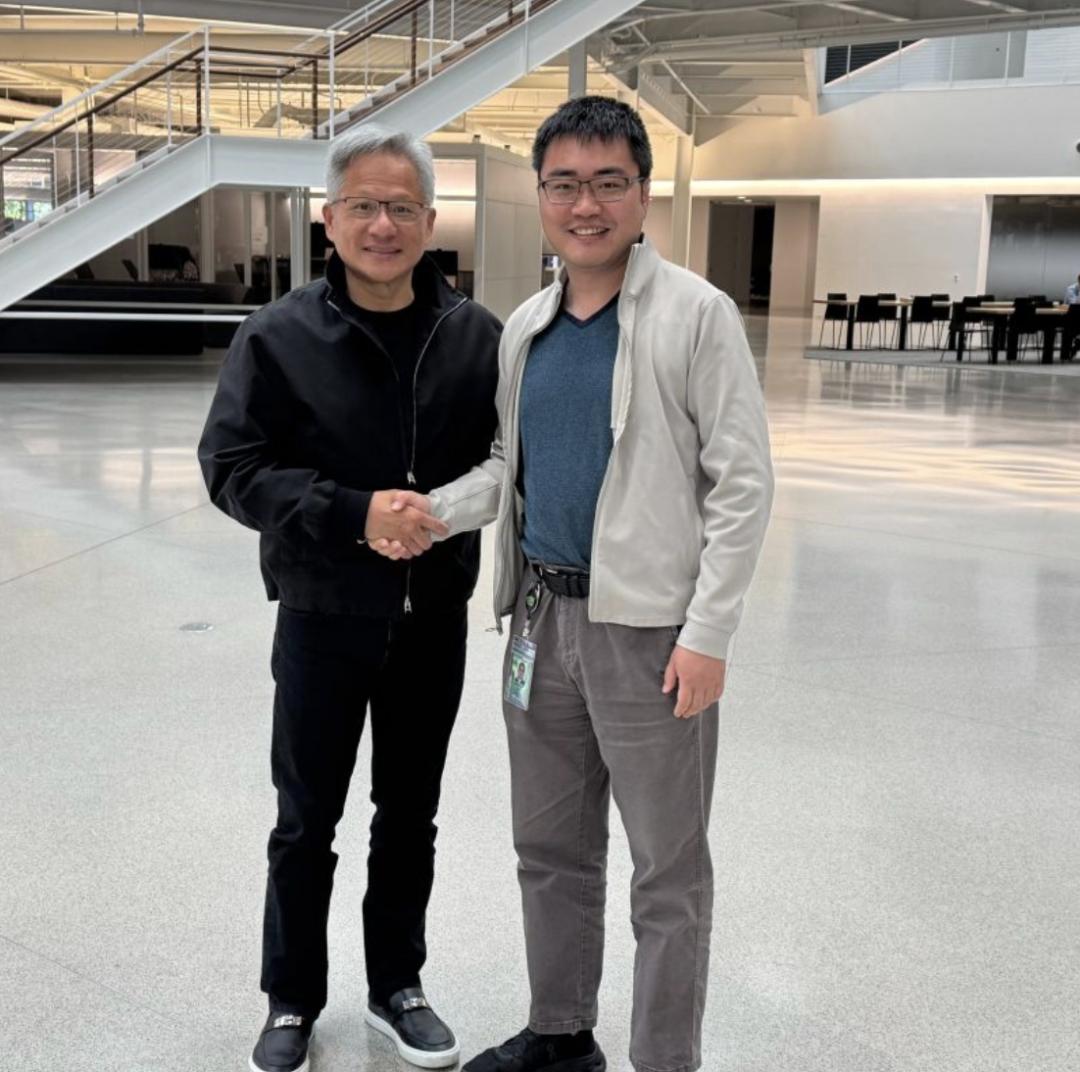
Jensen Huang and Jiantao Jiao
After the acquisition, Jiantao Jiao, an alumnus of Tsinghua University and the winner of the Undergraduate Special Award in 2011, became the director of research at NVIDIA, responsible for post - training AI, evaluation, agents, and related infrastructure.
Banghua Zhu, also from Tsinghua University, serves as a Principal Research Scientist, and CTO Jian Zhang serves as the director of applied research. The original technical core of Nexusflow has been fully integrated into NVIDIA.
Before being integrated into NVIDIA, Nexusflow completed a $10.6 million seed - round financing in September 2023, with a post - investment valuation of $53 million. Investors included Point72 Ventures and Fusion Fund. NVIDIA had strengthened cooperation through ecological connections such as Together AI.
Shang Wang
CentML was acquired at the same time as Nexusflow. This acquisition aims to strengthen the CUDA toolchain and model deployment efficiency, enabling developers to run models at a lower cost and higher efficiency.
CentML was finally acquired by Jensen Huang for a total price of more than $400 million. Like Nexusflow, this is also a typical "acquisition - based recruitment":
Four co - founders, including Shang Wang, a post - 1995 Chinese CTO, and more than 15 engineers were integrated into the NVIDIA system and directly entered its AI software and systems team.
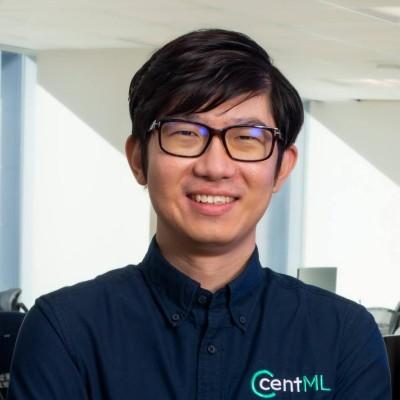
Shang Wang
Specifically, Gennady Pekhimenko, the former CEO of CentML, became the senior director of AI software at NVIDIA, and Akbar Nurlybayev, the former COO, serves as the senior manager of AI software.
Shang Wang is responsible for AI system software management, and Anand Jayarajan, the chief architect, also serves as the engineering manager. In addition, at least 18 technical personnel have been transferred.
CentML was founded in 2022 and is headquartered in Toronto. It focuses on AI model optimization software to help improve GPU utilization and reduce training/inference costs.
Its core technology is the Hidet compiler (tensor compiler), which can automatically fuse operators, optimize scheduling, and unleash the potential of GPUs through CUDA Graph, increasing the inference speed by up to 8 times and supporting the integration of PyTorch 2.0.
Yangqing Jia
In addition, to strengthen its layout in cloud computing power leasing, AI platforms, and vertical integration, NVIDIA completed the acquisition of the cloud service platform LeptonAI for hundreds of millions of dollars in April last year.
After the acquisition, Yangqing Jia, the founder of LeptonAI and the former vice president of Alibaba, joined NVIDIA as the vice president of system software (VP, System Software), responsible for coordinating the construction of the company's underlying system software and developer platform. Bai Junjie, the co - founder, also joined at the same time.
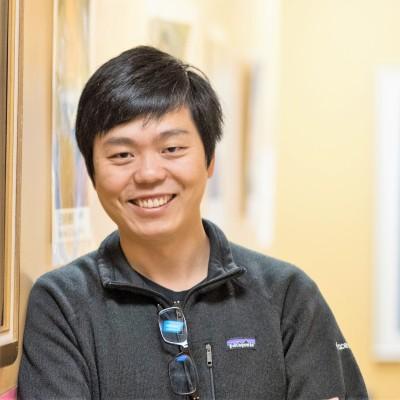
Yangqing Jia
Lepton AI was founded in 2