I went to the United States and tried the latest Tesla FSD + Grok. I was a bit shocked.
Readers who follow our automotive section should remember that Brother Neck went to the United States to test Tesla's FSD (Full-Self Driving) a long time ago.
At that time, Tesla had already started implementing end-to-end technology, while few domestic companies were doing so. Its FSD was truly impressive. When I went to the US to test Tesla's FSD, it really seemed to be far ahead...
Recently, taking advantage of a business trip to the US for CES, Brother Neck and Dan Buliduo from Chaping went to Tesla's Fremont factory in California. They tested the latest V14 version of FSD and Tesla's Robotaxi (driverless taxi).
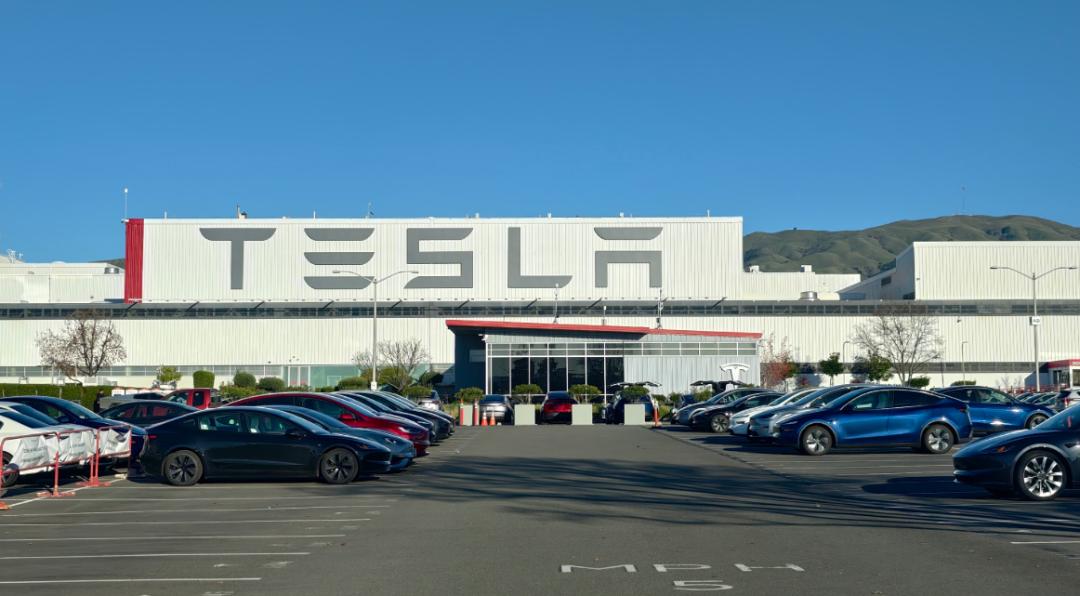
This V14 version has made significant changes compared to the previous one: The number of model parameters has increased by 10 times compared to V13. It has also integrated navigation and route planning into the neural network and can identify police cars and fire trucks through auditory and visual means, and actively avoid them.
It can be said that this is the biggest update Tesla has made since entering the end-to-end era.

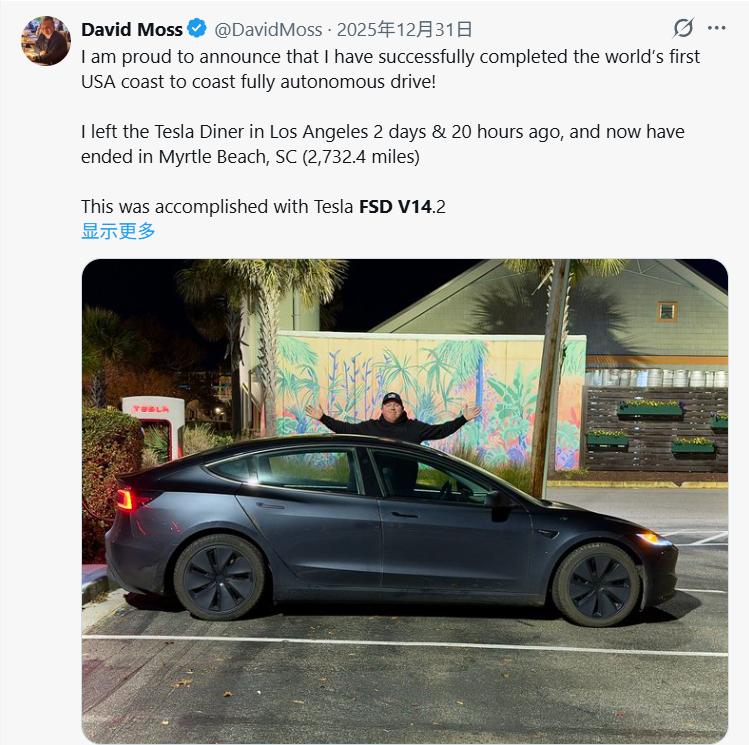
At the end of last month, a Tesla owner in the US made big news with FSD V14. He drove from Los Angeles to the East Coast, covering a distance of 4,400 kilometers in nearly three days without a single takeover. Even finding charging stations was done by the car itself.
So, how powerful is this version?
First, let's draw a conclusion. We only tested FSD in the rural areas of the San Francisco Bay Area where the overall journey difficulty was not high. FSD performed excellently, with smooth performance in details such as following vehicles, starting, and braking. The most pleasant surprise was that after adding the voice assistant Grok, Tesla's voice interaction experience was significantly improved.
Let's talk about it one by one.
As soon as I got in the car, I noticed that previously, to start FSD, you had to step on the brake and hold down the confirmation button. Now, with V14, you just need to press a button lightly to start, which is very seamless.
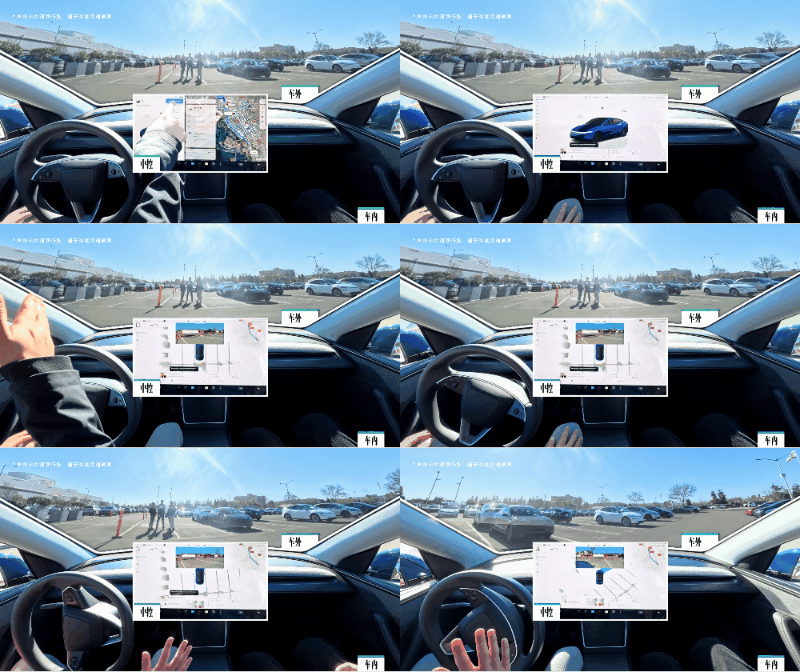
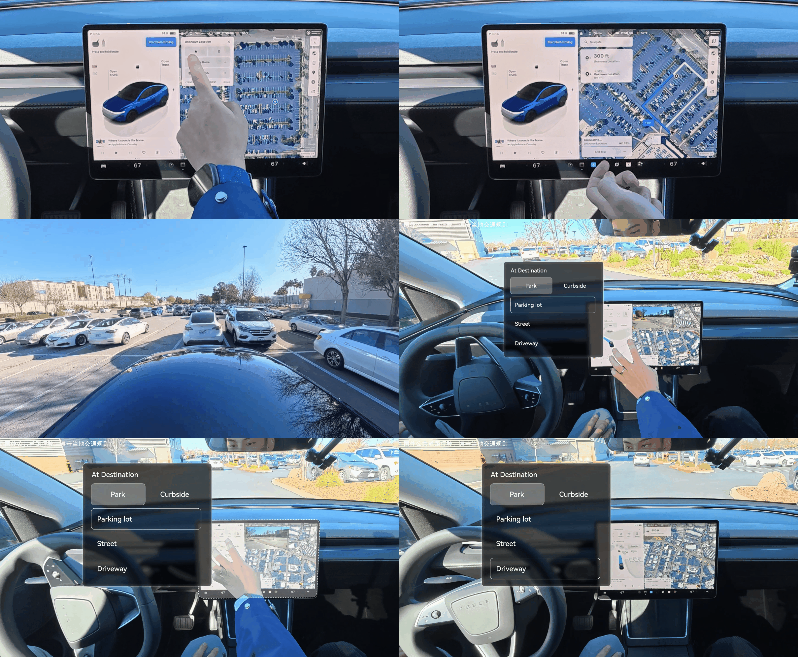
In terms of specific functions, the biggest improvement this time is the ability to go from parking space to parking space, solving the last 100-meter problem.
When you select a parking lot as the destination on the map, it will automatically find a parking space and park after reaching the vicinity. You can also choose to park by the roadside or in the lane. However, it currently does not support customizing parking spaces, and the official says it will be updated later.
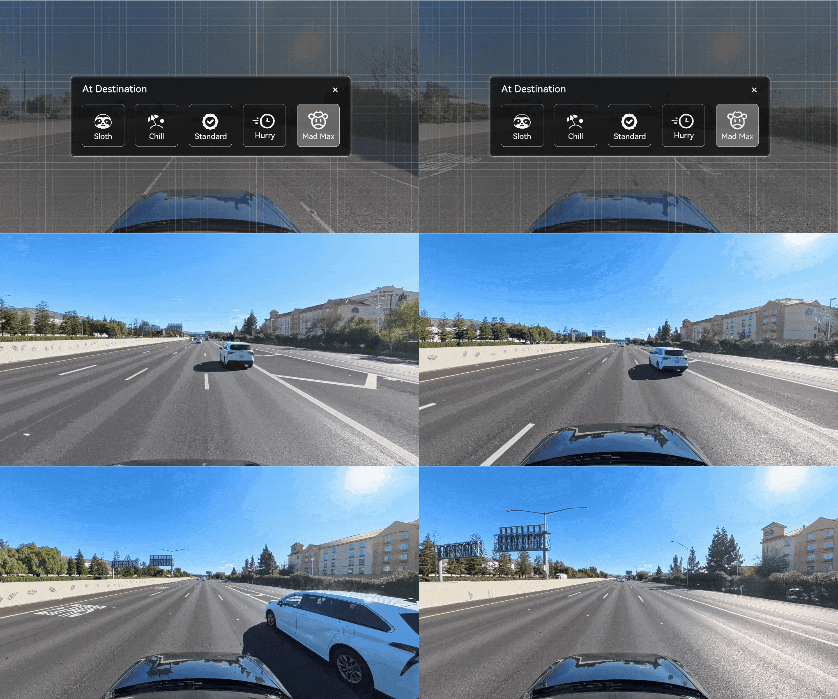
Most other cars' intelligent driving systems usually offer up to three overtaking strategies, while FSD V14 has as many as five, ranging from the slowest "Sloth" (with a sloth icon) to the most aggressive "Mad Max."
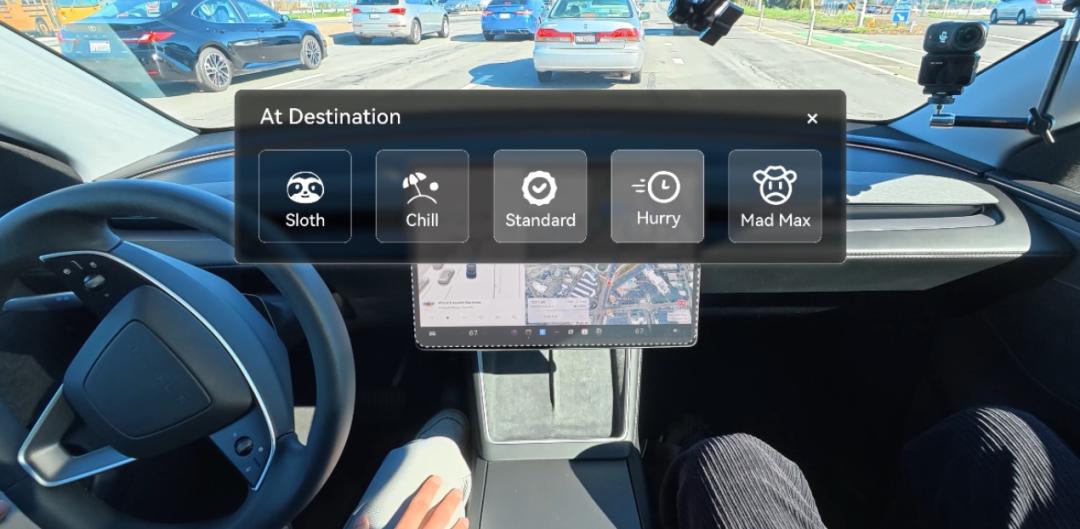
The differences between these modes are very obvious. Especially in the "Mad Max" mode, it will overtake slow-moving vehicles without hesitation.
It can recognize some speed bumps, but the recognition rate is not very high. It fails to detect some lower speed bumps. I also tested it on a bumpy road and found that it has difficulty recognizing small potholes.
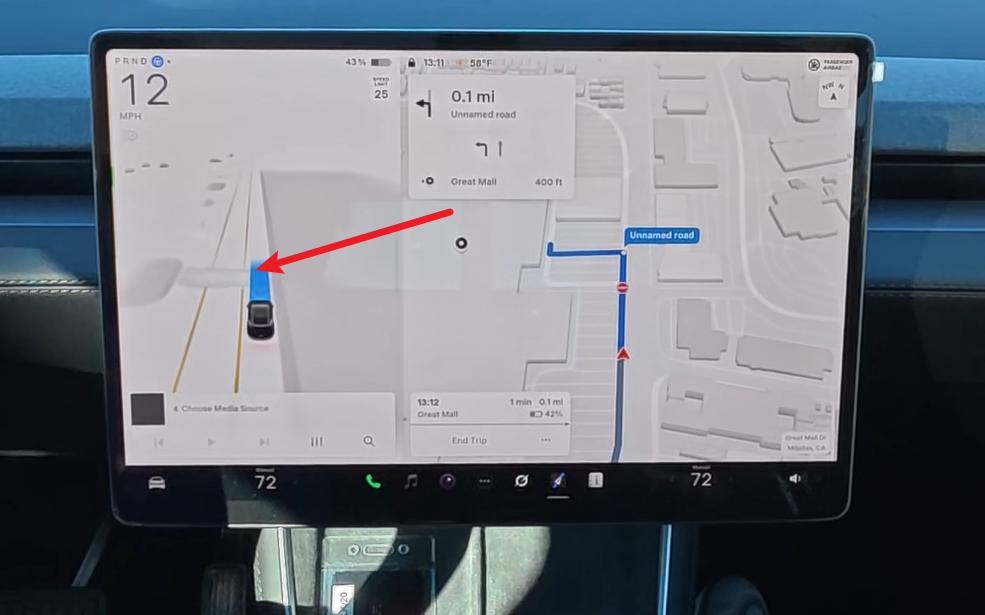
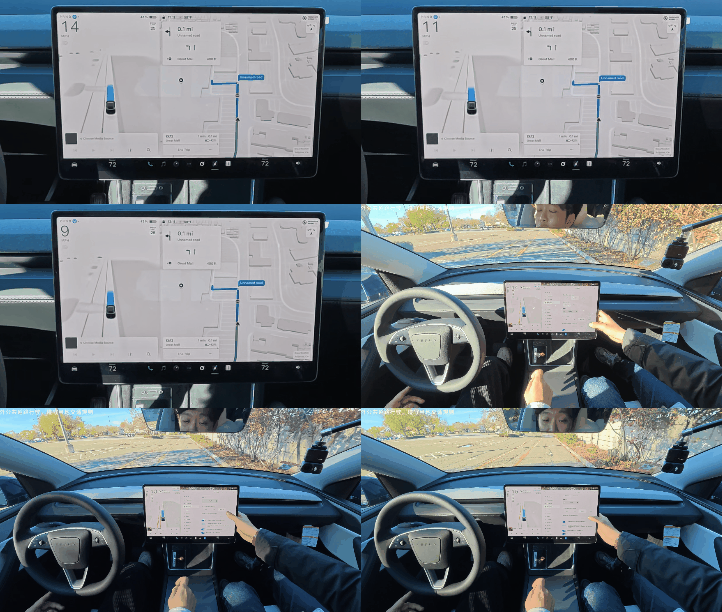
FSD drives very steadily overall. Even in the standard mode, it can reach a speed of 70 - 80 km/h when turning, which is very confident. Its driving styles are as skillful as a human's. For example, it may choose to turn left directly instead of turning right and then making a U-turn as the navigation suggests.
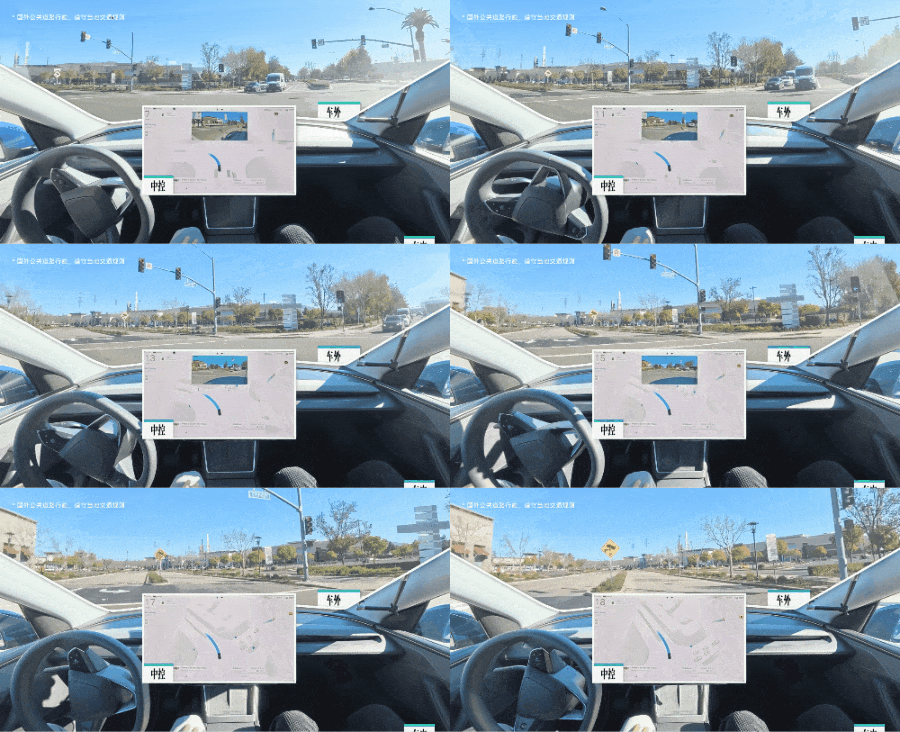
However, having too many ideas may not always be a good thing. I found that FSD often doesn't follow the navigation. Once, when we were driving on a main road, it suddenly drove into a small alley to take a shortcut. After going around, it found that it didn't work and then drove back to the main road.
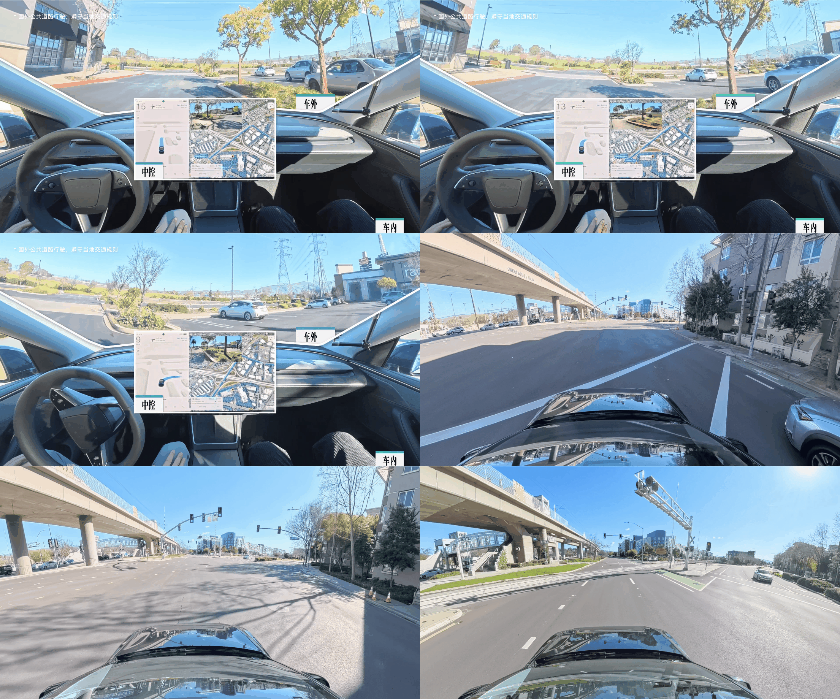
It has to be said that compared with the domestic situation, the road conditions in the US are much simpler. In these rural areas, there are no underground garages, and we didn't encounter any very difficult scenarios, so we couldn't really test its upper limit.
What impressed me the most this time was the linkage of Grok in the car's infotainment system.
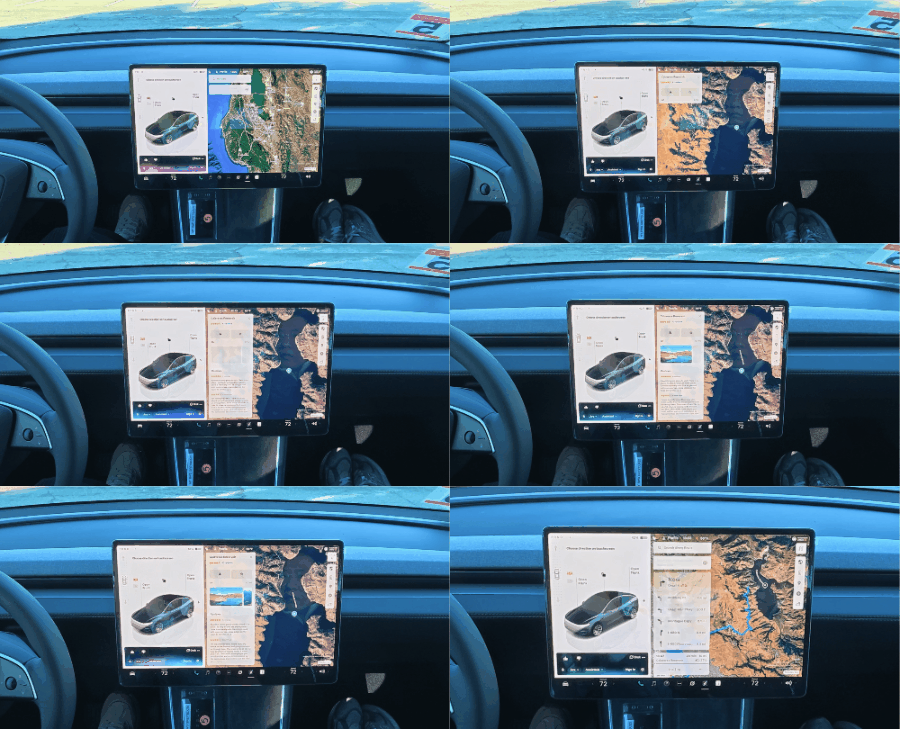
Grok has a very smart understanding of semantics. You can mention three or four places you want to go in a rather vague way, and it can still plan the correct route.
For example, when I said I wanted to drive to a lake for a stroll, after Grok found a lake, I said I wanted to go to the northeast corner of the lake. It told me that the east side of the lake was inaccessible by car and then automatically located and selected the west side. These are experiences we haven't had in other cars.
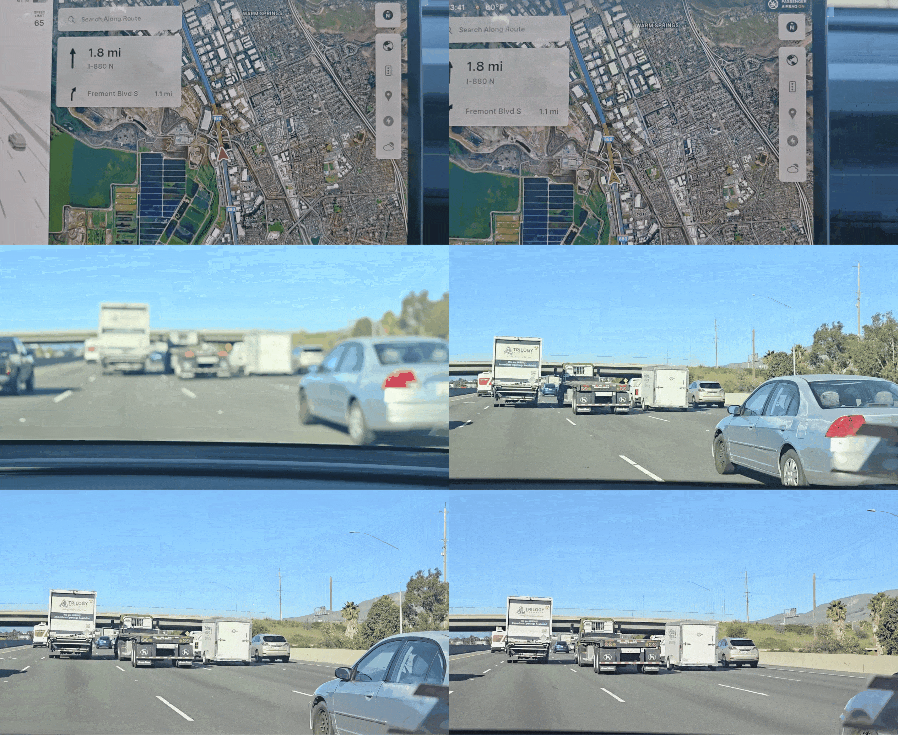
It can also tell you about road shoulder construction and congestion based on information retrieved from the Internet. However, the accuracy of the information is another matter. Anyway, we didn't see any construction.
If you're willing to have some fun, you can even ask it to act like a catgirl, hehehe...
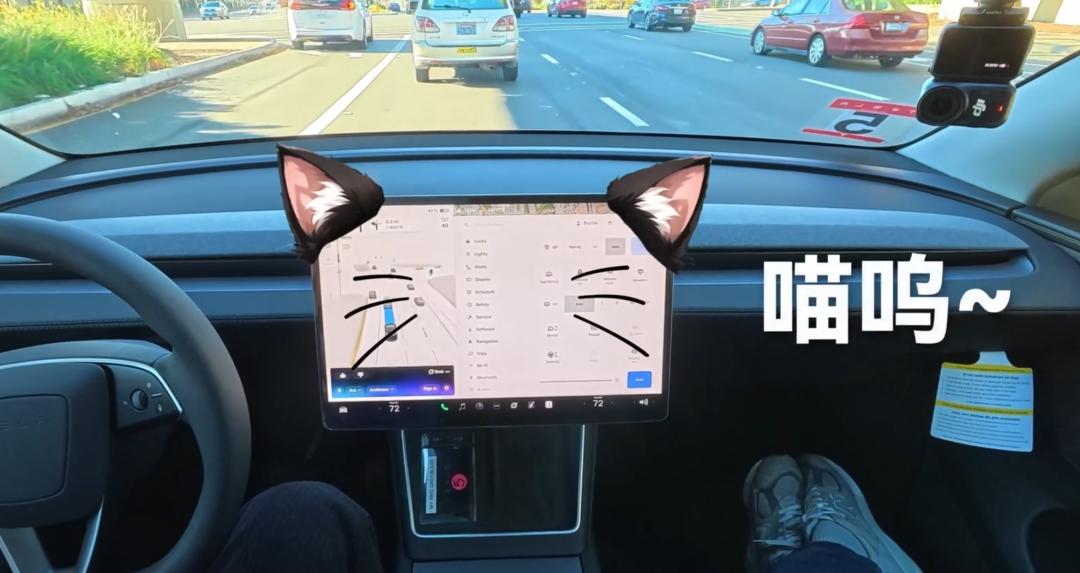
It has to be said that Grok has significantly enhanced Tesla's voice interaction. However, I think there are two aspects that can be optimized.
One is that Tesla still doesn't provide a wake-up word. You have to press the button to speak every time, which is very inconvenient for the passenger in the front passenger seat. The other is that Grok is only integrated with the navigation and not with the intelligent driving system. For example, functions such as lane changing and roadside parking that an ideal voice assistant should have are not yet available in Grok.
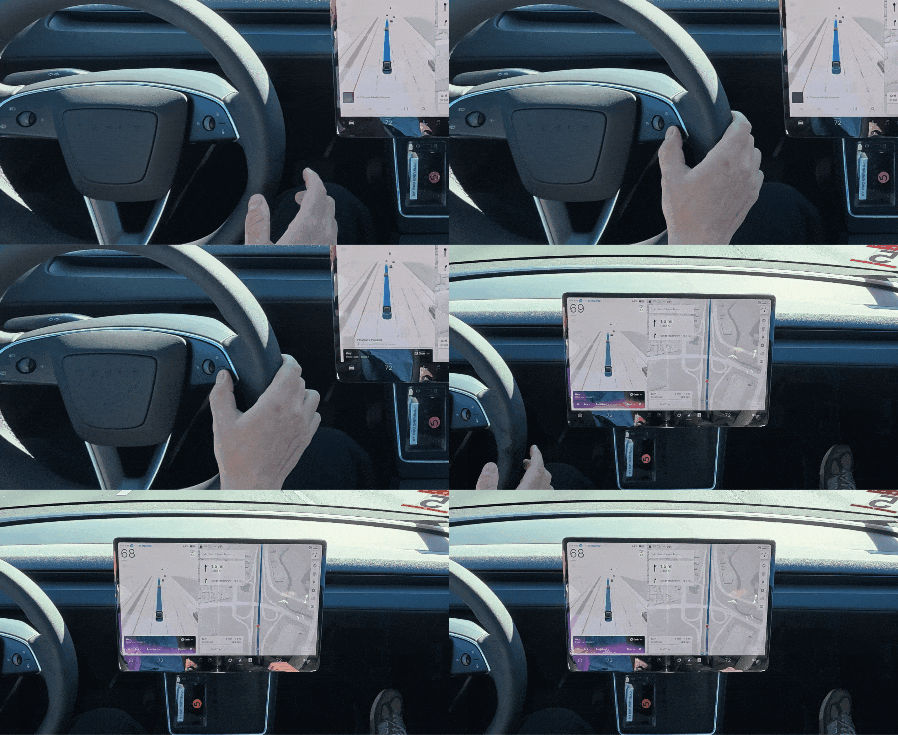
OK, let's take a look at Tesla's Robotaxi.
Tesla currently only operates Robotaxi in Austin, Texas, and the San Francisco Bay Area. In Austin, there are truly driverless cars, while in San Francisco, since it hasn't obtained a driverless license yet, there is a safety driver in the car.
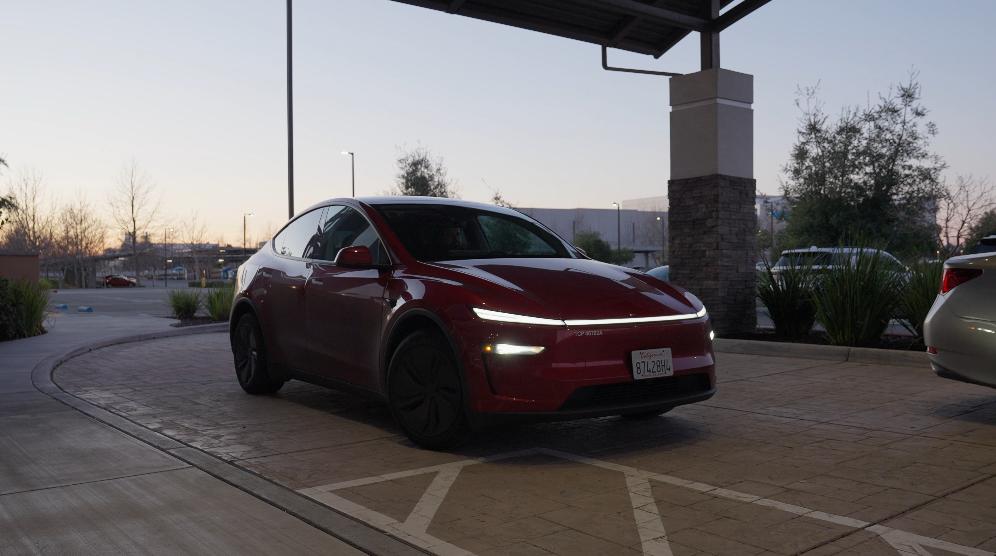
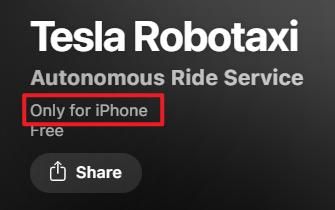
To take a taxi, you need to use the Tesla Robotaxi app. When we got there, we found that this app is only available on the Apple App Store and not on the Android Play Store. Serving only iPhone users, well, this is so "American."
Currently, Robotaxi operates 24 hours a day, but it's very difficult to get a ride in the suburbs. We tried to book a taxi two or three times but couldn't get one. The safety driver said it's easier in the urban area.
When you get in the car, you can see that the rear - seat interface is specially customized, with a welcome screen, a map, multimedia, etc., which is basically similar to other Robotaxi services.
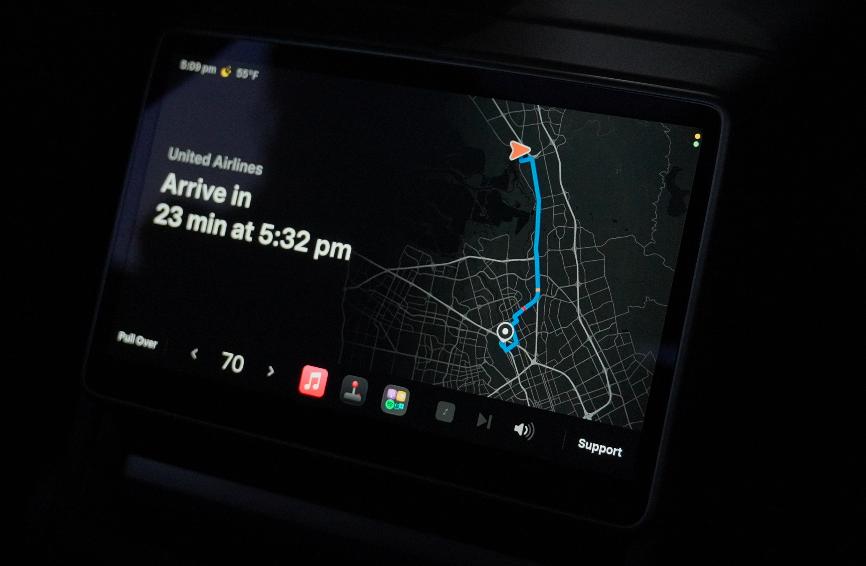
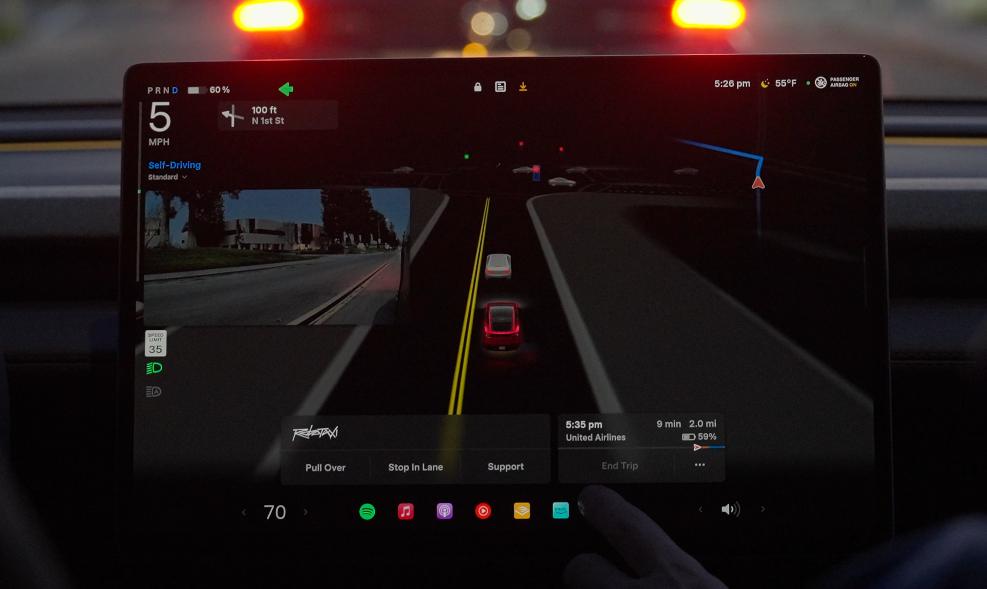
The front - seat area is much more familiar. The car's infotainment system looks no different from an ordinary Tesla, but the dock bar is all replaced with multimedia functions. You'll find that there is no vehicle settings section, so I couldn't see the version of this FSD.
However, judging from the page style, Robotaxi should be the FSD v14 version. After all, this version is also claimed to have the same architecture for mass - produced cars and Robotaxi.
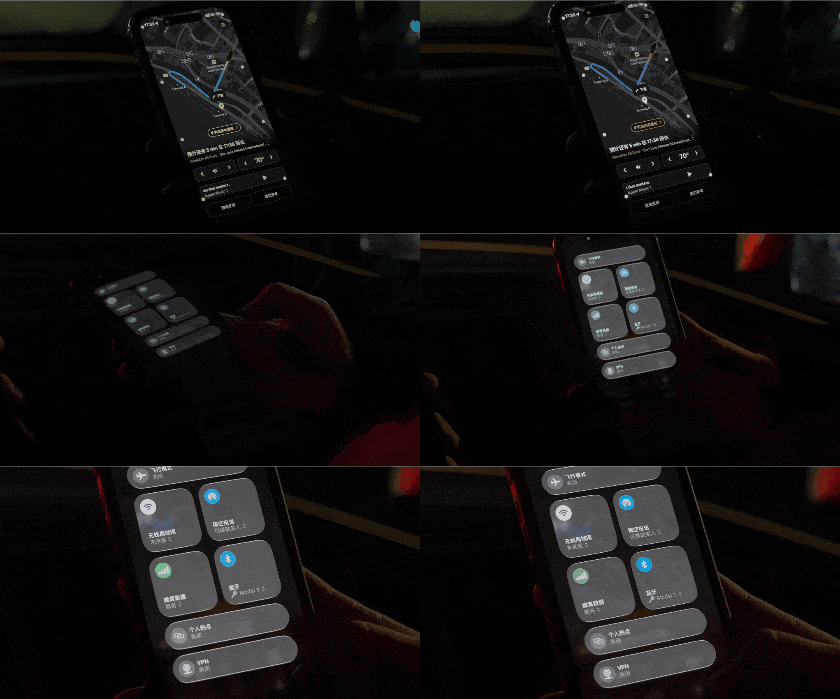
At the same time, I can control the music and air - conditioning through my phone app. An interesting detail is that after getting in the car, my phone automatically connected to the car via Bluetooth, so the response speed when I control the music is very fast. I've never seen this before.
The actual experience of riding in the Robotaxi is also good. Anyway, I couldn't feel the difference between riding in the Robotaxi and driving FSD myself. With a person in the driver's seat and it being a Model