In high-end residential communities where the middle class congregates, the property management staff have all been replaced by robots.
At 1:30 a.m., the background noise of the city has been turned down to the lowest.
On the main road in the residential area that leads from the garden to the garage entrance, you can hear a slight sound of a machine gliding over the road surface.
A half - meter - tall gray machine with a blue breathing light is gliding steadily past the residential buildings at night. After scanning the roadside shrubs and the express delivery cabinets in the community, it smoothly passes over the speed bumps in the underground garage. After eliminating potential safety hazards, it starts a new round of patrol.
Going back a year, the main force for night - time security in the community was still the security guards Lao Zhang and Xiao Li, who took turns to patrol. They walked around the same route every hour. But now, the main security force in the community has become this tireless new colleague.
This change is not an isolated case. From the "Future Communities" in new first - tier cities to the top luxury mansions in super first - tier cities, a silent "shift - change wave" is spreading.
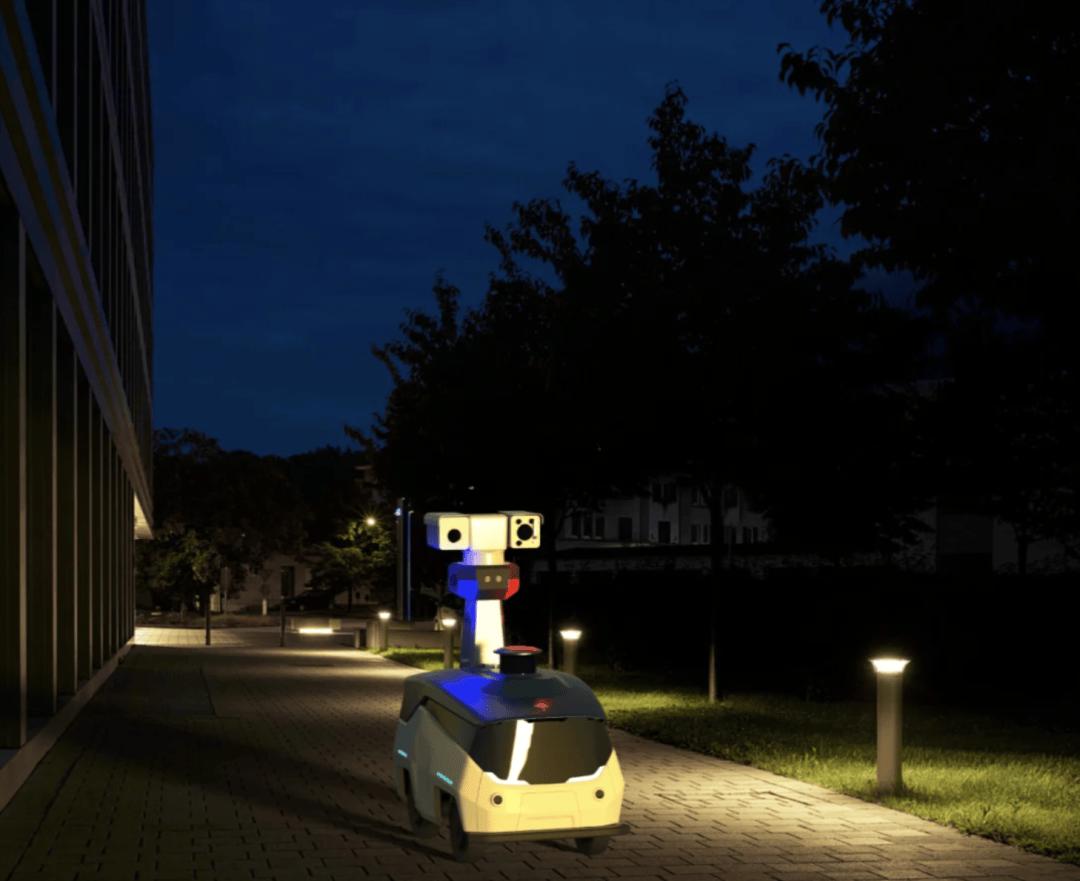
Combination of night - vision sensor, thermal imaging, and AI algorithm
For the property owners, the perceived changes start from the details.
There are square boxes in the elevators that can press the floor buttons by themselves. Automatic cleaning machines can often be seen in outdoor areas during the day, and the indoor public areas are also gradually being cleaned by robots.
Does it seem that life has entered a new chapter with the development of technology? Has a data - driven living revolution really arrived?
Robots employed in property management have become a necessity for the new life of property owners
Li Wei has lived in the same community for three years. Recently, he gave way to a robot at the elevator entrance for the first time. After noticing that there were several delivery robots in the community, he felt for the first time that his property management fee was well - spent.
There have always been machines providing services in the community where he lives. But to be fair, the white robot that only stands in the lobby to welcome guests and display details of the community can at best be regarded as a talking electronic mascot.
Even though they live in a mid - to high - end community, the residents generally feel that "it's difficult for property owners to order takeaways".
Whenever Li Wei orders a takeaway, he always has to haggle with the delivery rider.
The rider's electric bike can't enter the community. It takes a lot of time to deliver the food on foot back and forth. Li Wei, who has paid the delivery fee, is not willing to go to the entrance to pick up the takeaway. In the stalemate, Li Wei is always the first to give in.
In such high - end communities, in name, great attention is paid to the privacy and safety of property owners. There are access controls for entry and exit, and there are several shifts of security guards in suits changing duty every day. There is a calling device at the entrance of each unit, and outsiders have to go through multiple checks to enter.
Although these high - end communities seem to keep all safety hazards out, they also block a large number of takeaway and express deliveries from reaching the doorstep.
A high - end community in Huamu, Pudong, Shanghai was once blacklisted by delivery riders for similar reasons and has always ranked high on the "rejection list" in the city.
After seeing the delivery robots, Li Wei placed an order through the APP for both takeaway and express delivery pick - up when he got home. After paying thousands of yuan in property management fees over three years, he felt it was worth it when he received the delivery from the robot at home. He finally understood what the "human - robot symbiosis" era meant when one steps into the door of technology.
For a long time, there has been a natural contradiction between the "closed management" of mid - to high - end communities and the immediate needs of property owners. The development of technology is gradually narrowing the gap between them.
Robot services are becoming a necessary standard in new middle - class communities.
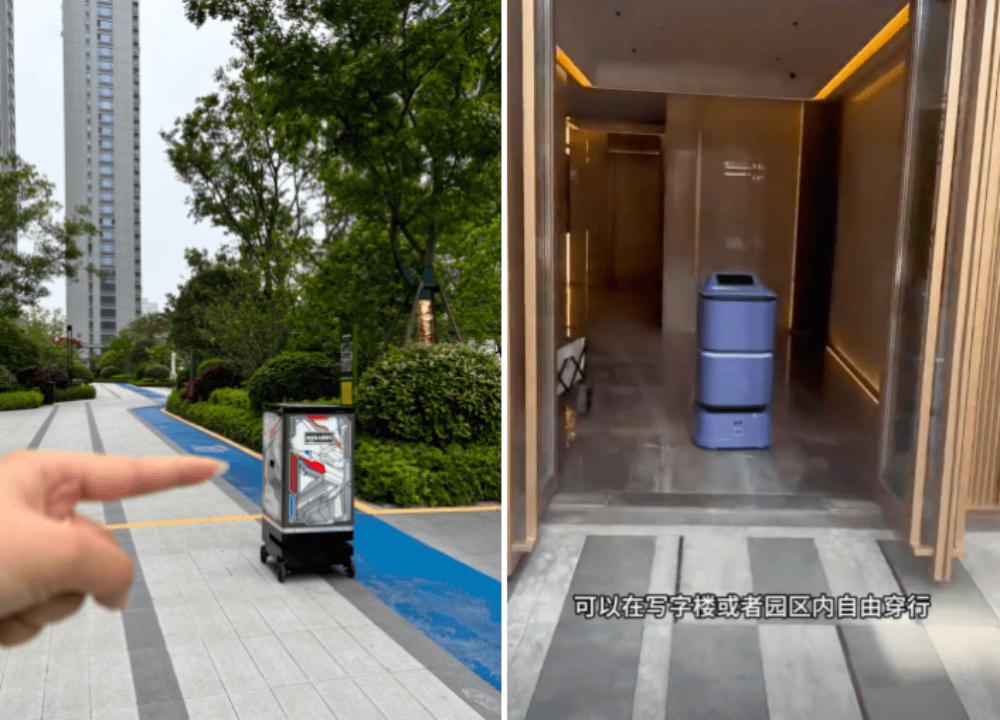
Delivery robots are starting to be applied in outdoor scenarios
The "2025 Global and Chinese Service Robot Industry Chain and Value Chain Analysis Report" mentions that in 2025, the global service robot market will exceed $120 billion, with China accounting for more than 35%, becoming the world's largest single market. The penetration rate of commercial scenarios will increase from 18% in 2021 to 42% in 2025.
Compared with simple delivery and consulting service robots, more communities are starting to introduce some more practical robots to help reduce costs and increase efficiency.
Among them, cleaning robots are less noticeable but more efficient. You can see robots working along fixed routes in underground garages, outdoor roads, doorsteps, and elevator halls.
The greatest advantage of cleaning robots is not entirely about quickly cleaning large areas. The real advantage of liberating human labor is that they can operate in temperatures that are not suitable for human work.
In the hot summer, in extremely exhausting working environments such as stuffy factories, new solutions have emerged with the intervention of robots.
A property manager of a mid - to high - end community revealed that a property robot can help the property management save an average of more than 20,000 yuan in operating costs per month.
"First of all, robots can work continuously 24 hours a day. Secondly, there will always be some areas overlooked during manual cleaning. We used to receive a lot of complaints from property owners, and it was also very troublesome for us to manage. Now, when property owners get off work, they can see the robots working, and they are much more satisfied."
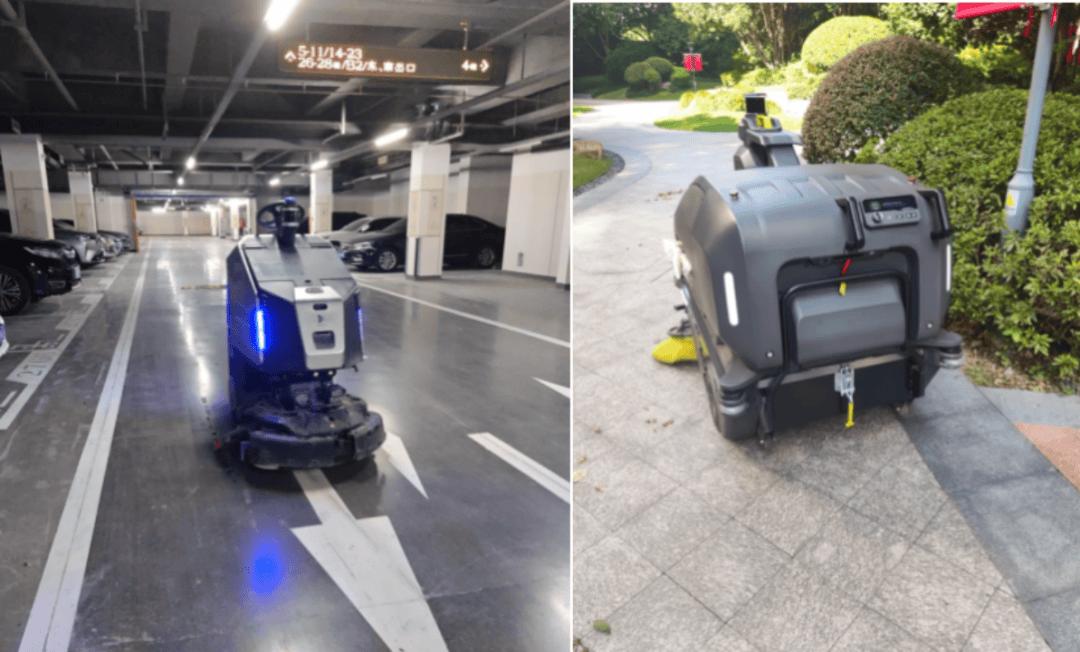
Unmanned operation has been applied in more property management companies
When technology penetrates into daily life, after the "human - robot symbiosis" model is launched, some practical cases of technological progress will stand out.
Security patrol robots are not as common as the previous two types, but they are also the eyes, nose, and mouth for community safety. Potential risks such as whether private cars are occupying the fire - fighting passages or whether there is flammable garbage piled up near the express delivery cabinets can all be accurately scanned during the patrol.
In Wuhan in May 2025, there was such an example. In a community that adopted security patrol robots, through patrol and thermal imaging functions, the robots helped an elderly lost person return home and helped a property owner find their lost 5 - year - old child.
The large - scale employment of robots in property management does not necessarily mean a lack of human touch. When there is a wedding in the community, the patrol robot can also act as a mascot. It plays the photos of the newlyweds on its screen and helps the wedding reception team pass through.
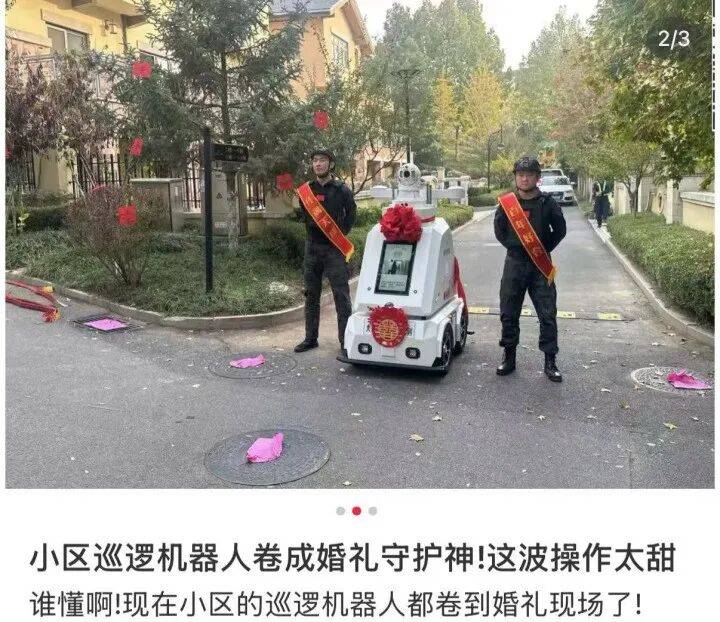
Service robots solve necessary problems
These new employees have proven with their silent actions that they are no longer just a gimmick but a necessity in life. They are gradually reshaping the boundaries of community services in the details of life.
"Human - robot symbiosis" has become a selling point in sales offices
After looking at houses for several months, Li Sha has basically figured out the selling points and tricks of the sales offices of these high - end communities.
"Enjoy peace and quiet" means a remote location; "Connect with the world" means being close to the airport; "Lake - view luxury house" means there are a few artificial ponds in the community; "Enjoy the greenery when you open the window" means there is a wasteland nearby.
Most notably, the concept of "future - sense technological private residences" has become popular recently. Sales offices are competing with each other in terms of robots. It is normal to have robots guiding the way and answering questions at the entrance, robots explaining in the sand - table area, and cleaning robots cleaning the public areas.
Some sales offices have even started to use robots to brew coffee on - site.
On Saturday morning, when Li Sha walked into a sales office with a huge advertisement of a "future - sense community" at the entrance, she saw a robot playing music and dancing during the process of making a deal and smashing the golden egg.
When introducing the property, the staff member who was in charge of receiving Li Sha specifically emphasized the concept of a "technological community". They claimed that using robots to welcome guests was just an appetizer, and the future community life would also have a comprehensive technological upgrade. They repeatedly guided Li Sha to ask the robot questions about the property.
Li Sha asked the robot: Since there will be a comprehensive technological upgrade and the property management's labor cost will be reduced, can the property management fee be relatively reduced?
The robot indeed showed a certain level of sophistication in dealing with human relationships. It paused for a few seconds and then replied to Li Sha, "I don't quite understand your question."
It has become a major trend for property management companies to use more robots to fill positions and manage with AI algorithms in the future. Moreover, more real - estate companies are using this as a selling point from the very beginning.
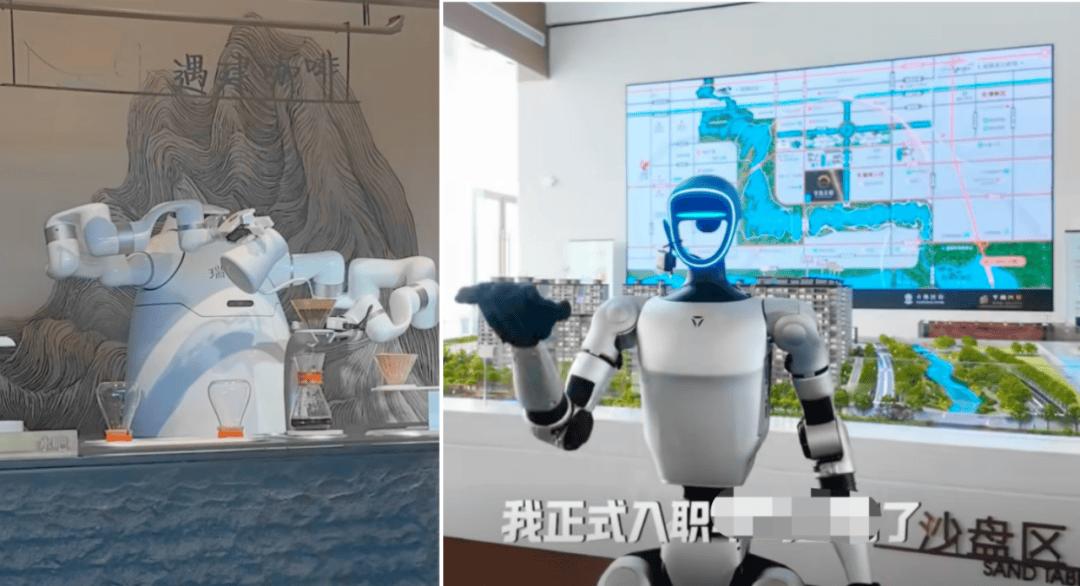
Communities are competing with each other by using robots in the property - selling process
In addition to property management companies that widely use robots, in recent years, leading property management enterprises have gone beyond simply purchasing and leasing robots. They have turned to the track of joint research and development or even independent research and development of robots. A silent battle for the future community has quietly begun.
In recent years, the real - estate market has been in a slump, and property management companies have also been struggling. The entire industry is facing the dilemma of rising labor costs and is looking for transformation. Robots, in the right form at the right time, have become a breakthrough for many property management companies.
Zhao Xiaoguang, the vice - president and chief technology officer of Country Garden Services, once said in an interview that he hopes robots can solve the 4D problems: dirty, tiring, dangerous, and boring jobs.
Country Garden has long started to use a large number of cleaning robots. By the end of 2025, 200 "Resident No. 0" robots had been put into use in more than 17 projects in cities such as Guangzhou and Shanghai.
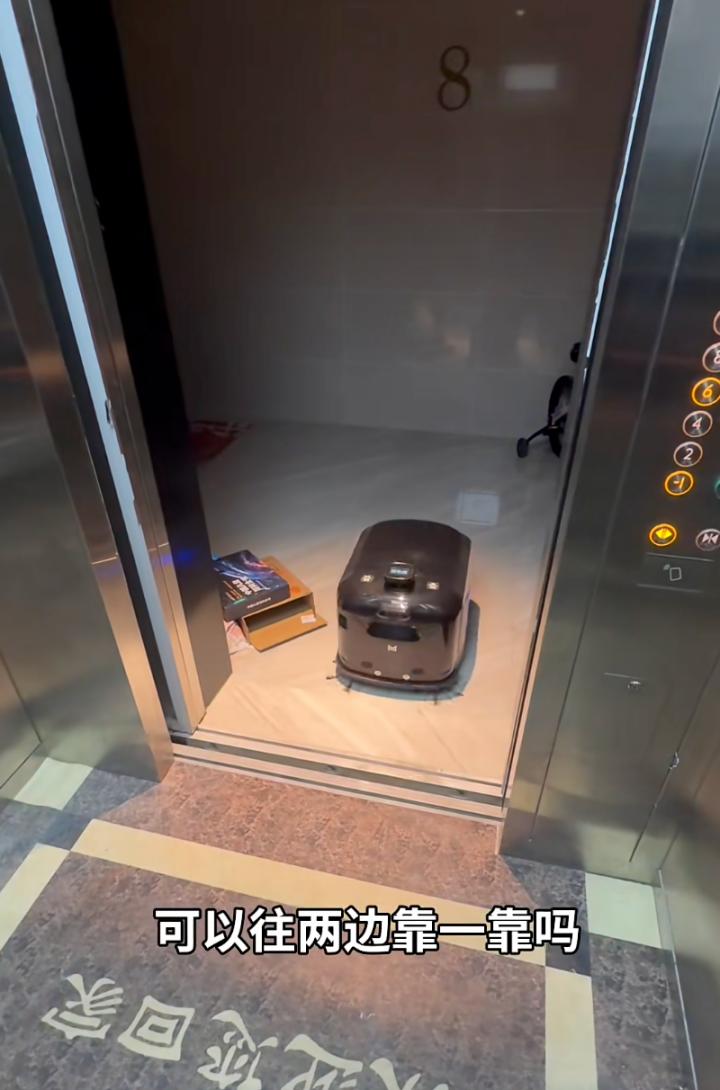
The "Resident No. 0" can also dynamically avoid obstacles and take the elevator independently
You can imagine a community as a huge robot training camp. Allowing robots to train and run tests in a rich variety of scenarios not only improves the service for property owners but also obtains data support through the tests. Then, through mass production, these robots can enter the property service market. Currently, Country Garden Services has a demand of about 30,000 cleaning robots, and the industry demand is more than one million. The cleaning robots are updated relatively quickly, and the industry is expected to reach a scale of hundreds of billions in the future.
The industry pioneers have transformed their service scenarios into a core advantage in the R & D sector, using their own resources to cultivate technological fruits that can be exported.
In the era of technology, property robots are being mass - produced
Industry changes often occur in pulses. Now is the era of explosive growth of robots, and even many property owners have noticed the changes in their lives.
In the past, the value of a property was determined by its location, the convenience of the surrounding area, and the hardware facilities of the community itself. Today, adding a contactless delivery robot that can take takeaways upstairs can win the praise of property owners as a "blessing for the lazy".
Property management companies are introducing a large number of robots into property management. On the one hand, it is to reduce costs, and on the other hand, it is to refine the details of living.
In winter, property owners don't have to go downstairs to pick up their express deliveries. The dirty corners that used to be unclean at the entrance are now cleaned spotlessly by the robots working at night. When getting off work at night and walking out of the underground garage or on the community roads, seeing the lights of the security patrol robots will give one more sense of security.
All of the above will be translated into the property owners' satisfaction with the property management, after all, the main profit - making model of many property management companies is still the property management fee.
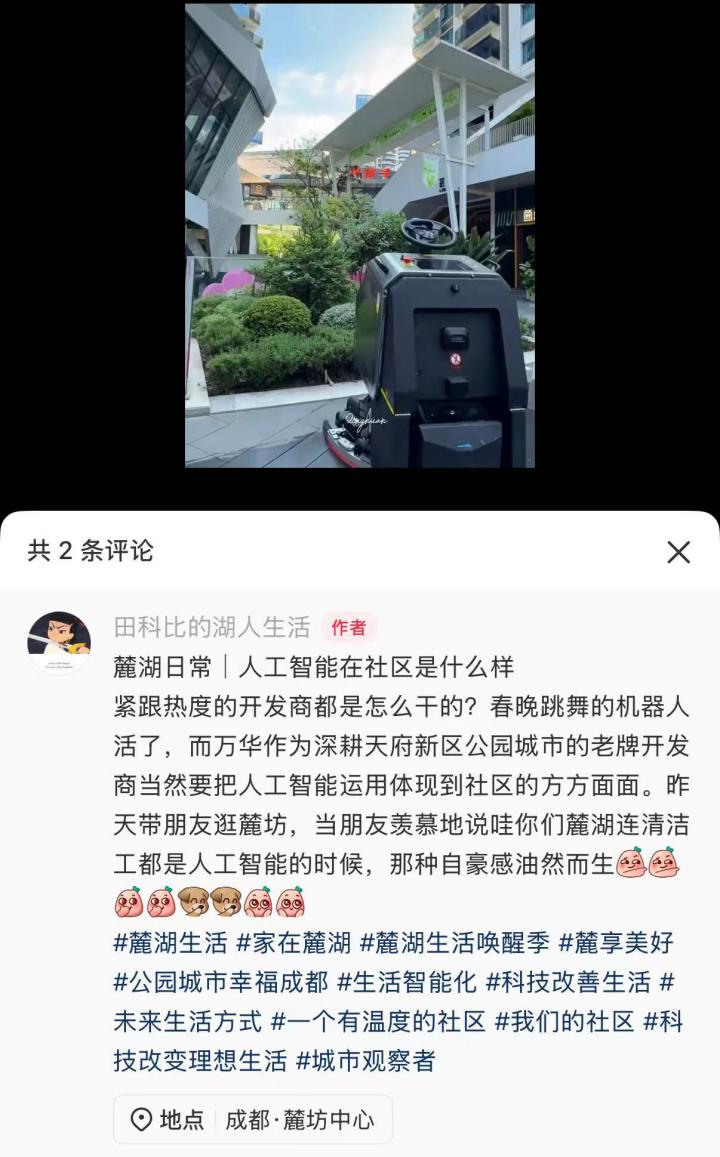
Artificial intelligence has created a new comparison chain in communities
With the increasing market demand and the rapid development of technology companies, there is a trend of competition among robots for employment.
Taking Country Garden as an example, it has actively participated in independent research and development, established a subsidiary, and worked hard to build the body and structure of robots. However, not all property management companies will choose the self - research route.
Wanke's Vanke Property Service, which is also in the first echelon of property management companies, has adopted a completely different strategy by cultivating the "brain" of robots. The Lingshi system is equivalent to an AI brain installed for real - estate. The purpose is to enable buildings to have the ability to perceive, think, and make independent decisions, just like smart cars.
For example, it can connect hardware such as cameras, air - conditioners, and access controls, and automatically mobilize common property management cleaning and patrol robots. Air - conditioners, elevators, and lighting can all be intelligently controlled. It can also build a micro - grid of energy storage, photovoltaics, and loads to achieve algorithm - based energy - saving and low - carbon management.
Moreover, the Lingshi system has designed an innovative leasing model. For property management companies that lease the AI brain, it is like having a new digital employee with a monthly salary of 18,