Personal trainers charging $100 an hour are being replaced in batches by AI hardware | Hardcore Krypton Directly Covers CES
Author | Ou Xue
Editor | Yuan Silai
Las Vegas has once again welcomed the largest number of Chinese enterprises in a year.
In the dry and cold air of the Nevada Desert, a subtle sense of competition pervades. In the 12 exhibition halls, companies have shown their most ambitious cards. You can see humanoid robots for housework, flying vacuum - cleaning robots, and mobile phones that can be folded into a Z - shape. Even if these products won't appear in your home within a decade, they are enough to stimulate a moment of exclamation.
The temperature of the hardware industry has approached the boiling point. All scenarios are airtight. Some niche sub - sectors in the past are now filled with competitors. Latecomers to the hardware industry may feel a bit desperate.
As a media deeply involved in the hardware industry, "Hard Krypton" has been continuously following CES. In the next few days, you will follow our perspective to capture the flow of attention and emotions and jointly witness the eve of the upheaval in the hardware industry in 2026.
At this year's CES, fitness enthusiasts may find that they no longer need human personal trainers.
Beyond the global wearable market worth over tens of billions of dollars, a new AI sports and health hardware ecosystem driven by technologies such as AI, robotics, and exoskeletons is rapidly taking shape. Sports and health hardware is no longer satisfied with just telling you how your heart rate changes. Instead, it directly intervenes in the sports process as "embodied intelligence."
These products can already replace human personal trainers to a certain extent. You can play tennis with Tenniix, the world's first AI tennis robot that can move autonomously and simulate real - life confrontation. You can play golf with a smart club equipped with sensors, and train on a foldable smart Pilates fitness machine and the SHOSABI brain - body coordination equipment. After fitness, you can also use an AI automatic massage roller for self - relaxation. If you want to go hiking, you can wear an exoskeleton device called XenRobo Nano1 that provides adaptive knee joint assistance for hikers.
Undoubtedly, the sports track has great potential for intelligentization. According to a report from Mordor Intelligence, the artificial intelligence sub - market in the global sports industry is growing at a high compound annual growth rate of approximately 28.7%, and its scale is expected to exceed $27 billion by 2030. Research and Markets predicts that the broader global sports technology market (including hardware, software, and services) will reach $41.8 billion in 2026.
The market is on the verge of an explosion, but the track is not empty. There are brands like Acemate, Pangbot, Veva, and Tenniix just in the field of tennis ball launchers.
On the stage of CES 2026, it is not difficult to see that the global AI sports and health hardware industry is at a critical node of transformation from quantitative to qualitative change. It is no longer a minor innovation in the existing market but aims to create a new incremental market that actively enhances human sports capabilities. The key to staying in the game is to find the most popular user needs.

Category Explosion
Previously, smartwatches, fitness bands, and heart rate monitors defined the boundaries of sports and health hardware. They tracked data and analyzed performance, but mostly stayed on the "periphery" of the sports process.
At CES 2026, we saw that the new generation of AI sports and health hardware is breaking through this barrier and evolving from a "peripheral recorder" to a "core participant."
In the fitness scenario, Japan's SHOSABI captures over one million 3D data points per second and then uses AI algorithms to evaluate the user's fitness coordination, stability, and left - right balance, and instantly generates a personalized training plan. In addition to optimizing sports performance, this product can also provide solutions to prevent musculoskeletal decline.
In the field of basketball training, Haoyi Xingchen launched the smart shooting training partner CARRY. Through an AI vision system, it can recognize the user's shooting motion and the flight trajectory of the basketball in real - time, helping trainers clearly understand whether the shot is stable, whether the throwing arc is reasonable, and the specific reasons for the fluctuation of the shooting percentage.
In the field of tennis robots, the function has also broken through the past of simply serving and retrieving balls. Tenniix has evolved the traditional ball - serving machine into an "intelligent training partner" that can simulate real rallies through a dual - vision system and voice interaction. Pangbot also brought its flagship product, the Pace S Pro smart tennis ball - serving machine, which can synchronize with the human body's movement rhythm and understand and respond to the player's actions in real - time.
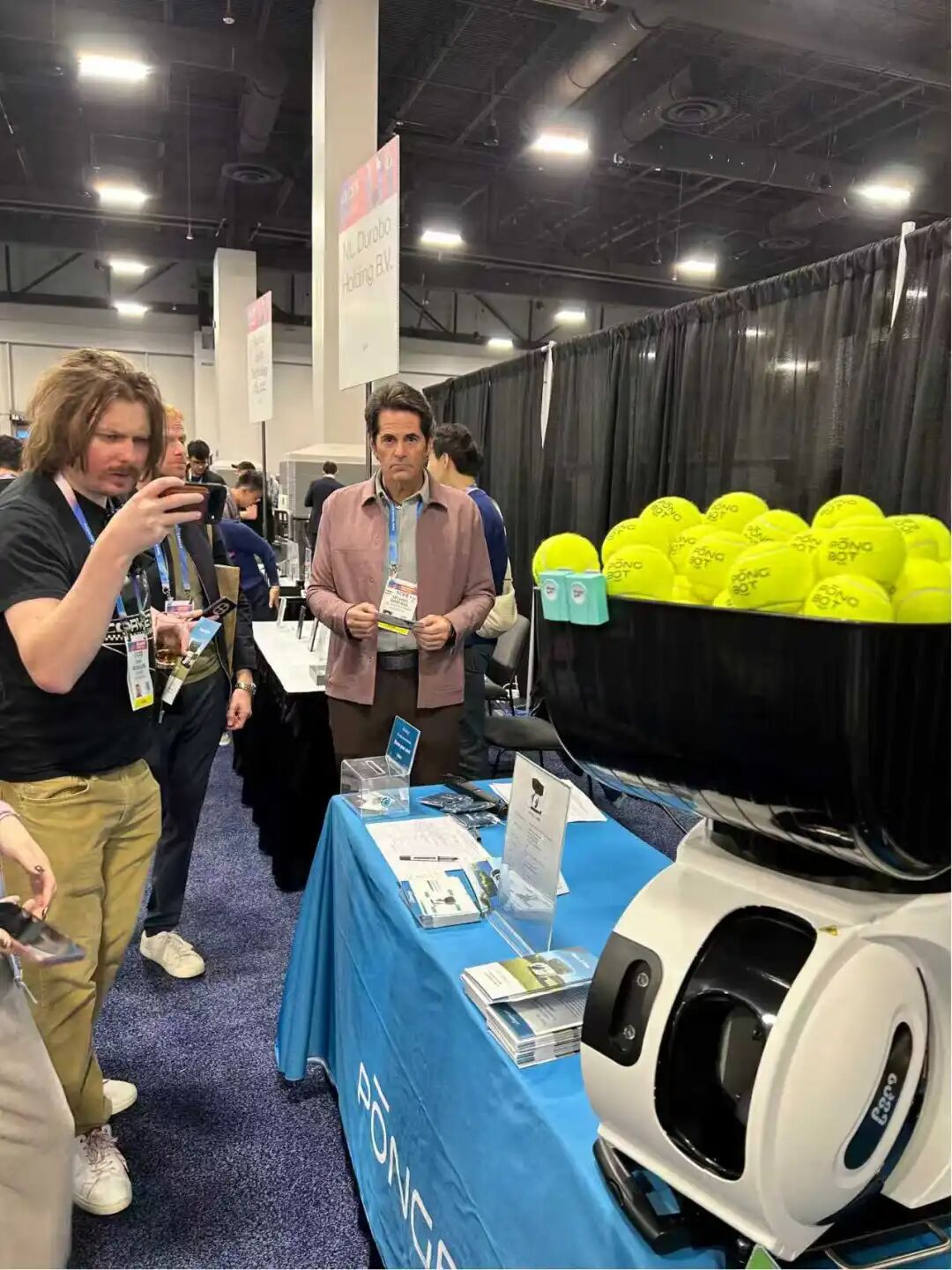
Pangbot showcases its smart tennis ball - serving machine at the CES site (Photo source/Enterprise)
In the fields of sports protection and recovery, with the maturity of AI technology, the experience brought by hardware has become more in - depth. XenRobo brought a knee exoskeleton for outdoor enthusiasts, using medical - grade sensing technology to achieve real - time adaptive joint assistance; RheoFit launched the world's first AI automatic massage roller, targeting the pain point of efficient post - exercise recovery.
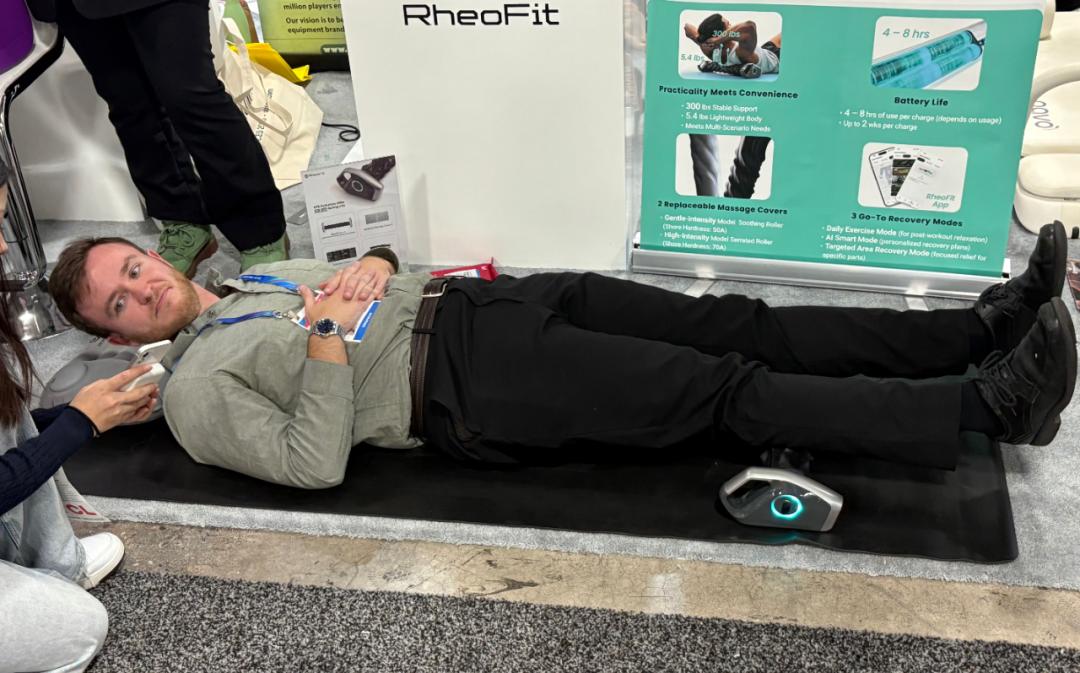
Visitors experience RheoFit's AI automatic massage roller at the CES site (Photo source/Enterprise)
In the data dimension, the tennis AI intelligent imaging system of Damao Intelligence and the AI racket sports intelligent imaging system of Siboweishi are no longer satisfied with simple recording. Instead, through real - time AI tracking and analysis, they automatically generate highlight reels and provide action guidance, upgrading traditional sports imaging equipment to "personal imaging coaches."
The explosion of these innovative hardware products actually comes from unmet needs.
In the European and American markets, the culture of professional sports training is booming, but high - quality coaching resources have been scarce for a long time due to high labor costs and geographical dispersion. This supply - demand contradiction has created a structural opportunity for intelligent and scalable solutions. Zhang Haibo, the founder of Pangbot, told Hard Krypton that in Europe and America, AI hardware replaces professional coaches with an hourly rate of over $100 or expensive rehabilitation services.
In addition, there have been some subtle changes in user psychology: sports and health hardware is taking on more of the color of "tech accessories." A relevant person in charge of XenRobo told Hard Krypton that, different from medical users who pursue the "invisibility" of the device, consumer - grade users, especially the younger generation, hope that the product is "cool and visible" to show their tech taste and lifestyle.
The critical point of the market explosion seems to be within reach. However, it is also difficult for enterprises to break through with one - dimensional products.

On the Eve of Implementation
If the explosion of categories shows the "breadth" of AI sports and health hardware, then under the spotlight of CES 2026, the "depth" of the industry's evolution is also becoming clearer.
A core change is that hardware is shifting from pursuing "complete functionality" to building a "closed - loop experience."
Whether it is the "single - player full - court rally" provided by Tenniix or the "seamless adaptive assistance" emphasized by XenRobo Nano1, the key to their success lies in that they are no longer isolated functional points but are committed to creating a complete, immersive, and hassle - free sports moment for users.
This requires enterprises to hide complex AI algorithms, precise sensing, and control technologies behind simple and user - friendly interactions.
A relevant person in charge of XenRobo said in an interview that the ultimate goal of the company's products is to make smart hardware "become a part of the body" so that users can focus on sports itself rather than just operating the device.
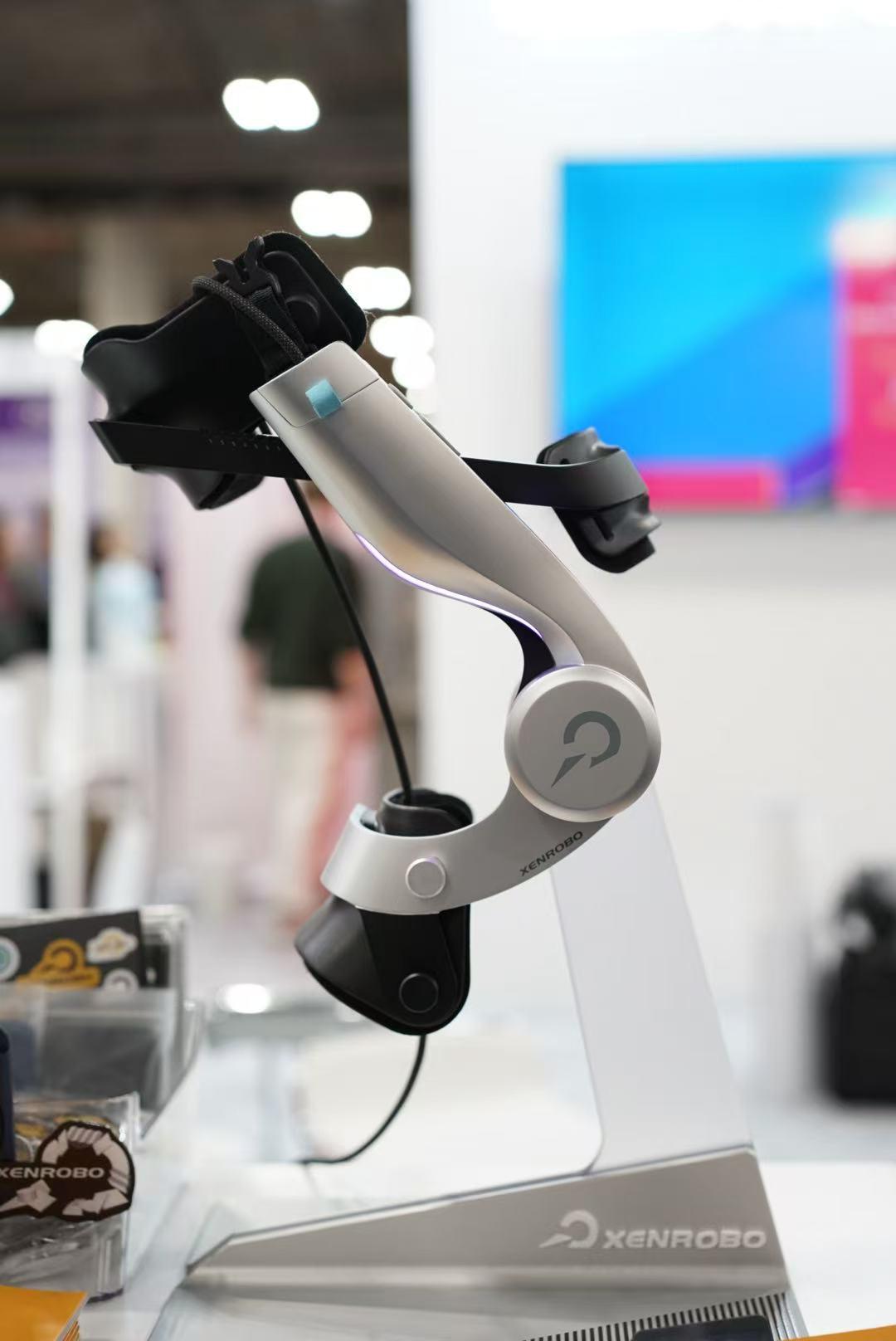
XenRobo Nano1 is showcased at the CES site (Photo source/Enterprise)
At the same time, a pragmatic wave of "demystifying AI" is also spreading among entrepreneurs. In the current era when AI concepts are everywhere, entrepreneurs in the AI sports and health hardware field are more willing to talk about the implementation of needs.
Sun Yingdong, the founder of RheoFit, told Hard Krypton that in his opinion, as AI technology develops, users' experience will definitely be greatly improved. However, the practical value of AI in most hardware may only account for 10% - 20%. For RheoFit, its significance lies in more efficiently solving specific pain points such as "how to provide more effective personalized massage solutions."
The boundaries of the market are also being redrawn. Currently, it has become a consensus for AI sports and health hardware to go global, and Europe and America are still the main battlefields for enterprises to build brands and achieve high customer - unit prices. However, some enterprises have also begun to find that the East Asian market (such as China, Japan, and South Korea), which combines culture and consumption power, can sometimes bring faster growth feedback and a smoother implementation path.
For high - unit - price products like XenRobo's knee exoskeleton device, its team is considering a "dual - track" market strategy: targeting the overseas market with a high - end brand and planning to launch a lighter and more popular product form in the domestic market through a sub - brand or specific channels.
All these explorations point to the transformation of the future business model of AI sports and health hardware.
When hardware becomes an intelligent terminal that continuously collects data and provides personalized services, a simple "one - time deal" no longer seems economical, and the business prospect of "hardware + service" is clearer.
For example, an AI tennis robot can push customized training plans as the user's level improves, and an AI massage roller can evolve into a "personal rehabilitation therapist" who understands the user better based on feedback. This not only means a continuous revenue stream but also builds real user loyalty and data barriers.
Although there is already category overlap, this track has not really reached the stage of involution.
"The incremental market space for AI sports and health hardware is still huge, and everything has just begun. We haven't even fully met the needs of existing users," Zhang Haibo told Hard Krypton.
However, it cannot be denied that in the more practical world outside the CES exhibition booths, investors will no longer simply pay for "stories." Products can only survive if they have self - generating blood capabilities. The story of AI sports and health hardware has gradually evolved from a narrative about the supply chain and cost - effectiveness to a comprehensive test of the company's technology integration, experience definition, and implementation capabilities.