Rather than being an automobile company, be a technology company. Tesla is constantly losing ground in its core markets.
1
The Global Electric Vehicle Sales Champion Changes Hands
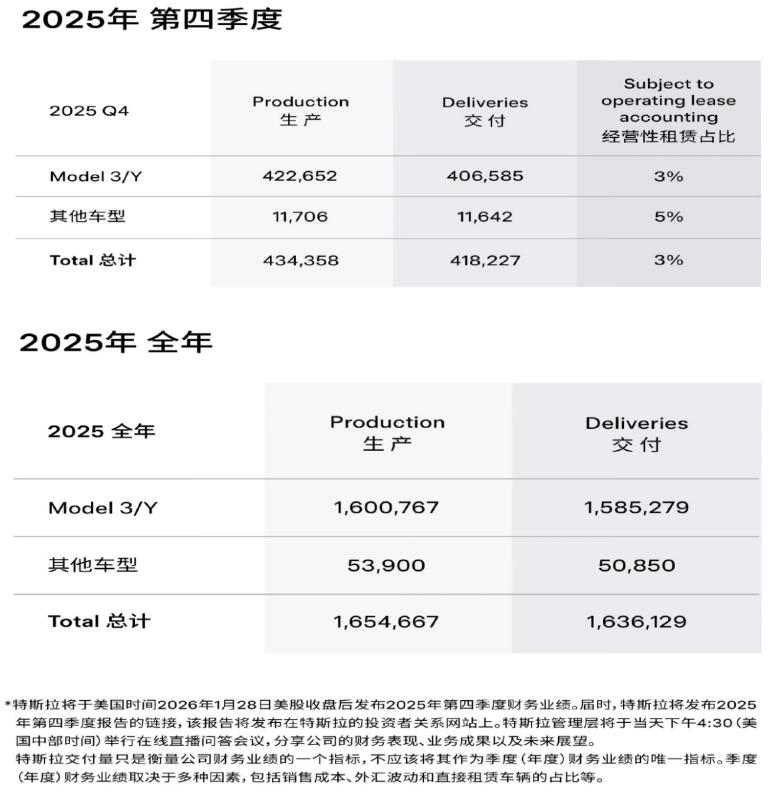
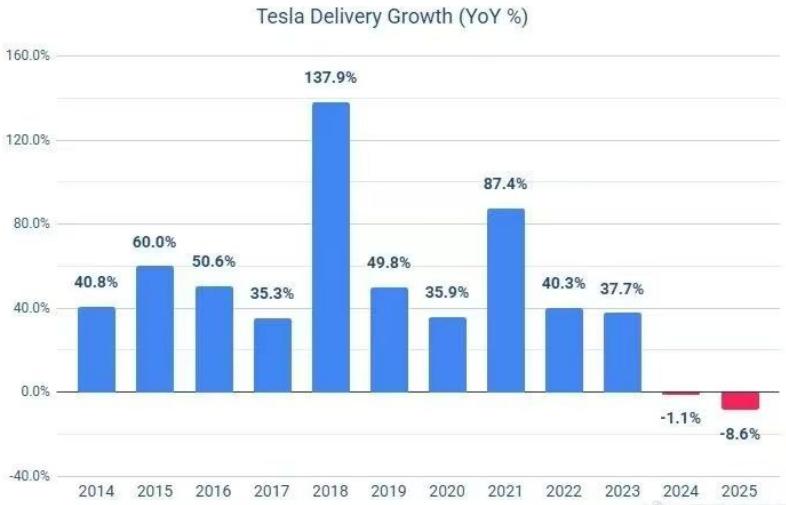
On January 2nd, Tesla released its vehicle delivery data for the fourth quarter and the whole year of 2025, both of which showed a significant decline. The data showed that in the fourth quarter of 2025, Tesla delivered 418,227 new vehicles, a year-on-year decrease of 16%. Looking at the whole year of 2025, Tesla delivered 1.636 million new vehicles, about 150,000 fewer than the same period in 2024 (1.789 million), a year-on-year decrease of 8.6%. This is also the second consecutive year that Tesla's new vehicle sales have declined year-on-year.
In terms of models, the annual production and delivery of Tesla's two main models, Model 3 and Model Y, in 2025 were 1,600,767 and 1,585,279 respectively, with sales down 7% year-on-year. The annual delivery of other models, including Model S and Model X, in 2025 was 53,900 and 50,850 respectively, a significant decline compared with the whole year of 2024 (production of 85,133 and delivery of 85,133).
According to the data released by BYD on January 1st, BYD sold 4.6 million new vehicles in 2025, of which the sales of pure electric vehicles reached 2.2567 million, a year-on-year increase of 28%, exceeding Tesla by about 620,000. So far, BYD's pure electric models have surpassed Tesla in annual sales for the first time and successfully topped the global pure electric vehicle sales list.
At the beginning of 2025, Tesla CEO Elon Musk predicted that the annual sales growth rate of new vehicles would be between 20% and 30%, but this target was far from being achieved. Among them, the negative public opinion caused by Musk's political involvement has become an important reason for the decline in Tesla's sales in Europe and the United States.
Since taking on a leadership role in the US Department of Government Efficiency (hereinafter referred to as "DOGE"), Musk has not only meddled in US politics but also made bold comments on European political affairs such as those in the UK on multiple occasions and publicly supported far-right political parties in Germany. Eventually, Tesla has faced rounds of boycotts from consumers in Europe and the United States, seriously damaging its reputation. The first-quarter earnings report data showed that in the first quarter of 2025, Tesla delivered 336,700 new vehicles, a year-on-year decrease of 13%, the worst quarterly performance since 2022. Among them, sales in the European market plunged 39%, and sales in the US market decreased by more than 10% year-on-year.
Meanwhile, European local brands such as Volkswagen are also actively seizing the pure electric market through strategies such as product strategy and cost control, putting further pressure on Tesla. The data showed that in the first half of 2025, Volkswagen Group sold 347,900 pure electric vehicles, a year-on-year surge of 89%, firmly ranking first in the European pure electric market.
Since Tesla's full financial report data will not be released until January 28th, it did not disclose detailed regional sales data for the whole year of 2025. However, according to the data released by the European Automobile Manufacturers Association (ACEA), in the first 11 months of 2025, Tesla's registrations in Europe decreased by 39%, while those of its competitor BYD increased by 240%. It is reported that the association's statistical data covers the EU as well as the UK, Iceland, Norway, Switzerland, and Liechtenstein, indicating that Tesla's defeat in the entire European market is a foregone conclusion.
According to the latest data, in 2025, BYD's new vehicle sales in Germany reached 23,306, a year-on-year increase of 706.2%, while Tesla's sales dropped to 19,390, a year-on-year decrease of 48.4%, almost halving. In the UK market, BYD's new vehicle sales reached 51,422, also exceeding Tesla's 45,513. So far, Tesla has been overtaken by BYD in the two largest electric vehicle markets in Europe.
2
The Strategy of "Trading Price for Volume" Fails to Work
In the US domestic market, Tesla has also encountered sales difficulties due to Musk's political stance, and there have even been arson incidents targeting Tesla cars. In the first quarter of 2025, Tesla delivered about 142,000 new vehicles in total, a year-on-year decrease of more than 10%. In the second quarter of 2025, Tesla's global new vehicle deliveries decreased by 14%, but it did not disclose US data separately.
In the third quarter of 2025, Tesla delivered 497,000 vehicles globally, a year-on-year increase of 7.4%, far exceeding market expectations. This was mainly due to the advance release of demand caused by the cancellation of electric vehicle tax incentives in the US market, but it also directly overdrawn the market demand in the fourth quarter.
According to the relevant provisions of the US "Big and Beautiful" Act, the US will terminate the $7,500 federal tax credit for the purchase or lease of new electric vehicles and the $4,000 credit for used electric vehicles. This measure officially took effect on September 30, 2025. Some analysts believe that with the end of this tax credit policy, Tesla's price competitiveness in the US market compared with traditional fuel vehicles will significantly decline.
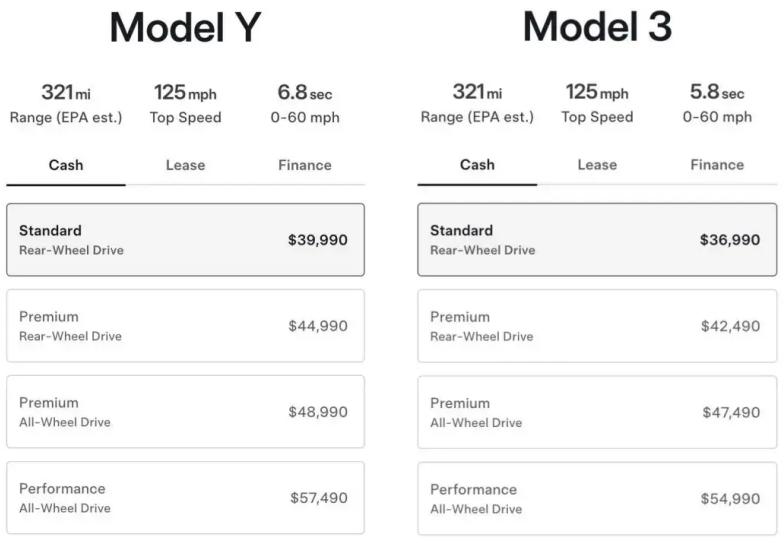
In order to boost new vehicle sales, Tesla launched a number of new vehicle preferential measures in the fourth quarter of 2025 and introduced low-cost versions of Model Y and Model 3. In October 2025, Tesla officially launched two new models, the standard version of Model Y and the standard version of Model 3. In terms of price, the standard versions of Model Y and Model 3 are priced at $39,990 and $36,990 respectively, about $5,000 and $5,500 lower than the premium versions, becoming the lowest-priced models in Tesla's history.
With the emergence of the standard version, Tesla also adjusted its naming system. Among them, the Standard version, as the most basic entry option, replaces the original standard-range version; the Premium version, in the middle tier, is renamed from the original Long Range version; and the Performance version maintains its top-level positioning, focusing on high-performance configurations.
The low-cost version of Model Y cancels the past through-type light bar and adopts a split-type headlight design. At the same time, the wheels are reduced from 19 inches to 18 inches and feature a closed design. In terms of interior, the low-cost version of Model Y changes the original power-folding side mirrors and power steering wheel adjustment to manual adjustment, and the seat material is downgraded from high-grade leather to pure synthetic leather or fabric.
In addition to the appearance and interior, the performance parameters of the new standard versions of Model Y and Model 3 have also been adjusted downwards. Among them, the range of the low-cost version of Model Y is reduced from 574 kilometers to 516 kilometers, and the range of the standard version of Model 3 under the EPA standard is reduced from 584 kilometers to 516 kilometers. At the same time, the 0-60 mph acceleration time is extended from 4.9 seconds to 5.8 seconds. However, the FSD (Full Self-Driving) function is still retained as an optional configuration, and consumers can pay $8,000 to install it.
Some analysts believe that the changes or cancellations of functions such as power-folding side mirrors, power steering wheel adjustment, front seat ventilation, and rear seat heating have significantly weakened the comfort and convenience of Tesla's new vehicles, far outweighing the $5,000 price cut. This has also led to the widespread spread of the joke that Tesla has been downgraded from a "shell apartment" to a "thatched cottage".
In fact, Tesla's move to lower the price of new vehicles by reducing configurations has been questioned by the market from the beginning. On the day the new vehicles were launched, Tesla's stock price in the US stock market fell by 4.45%, and its market value evaporated by about $65 billion.
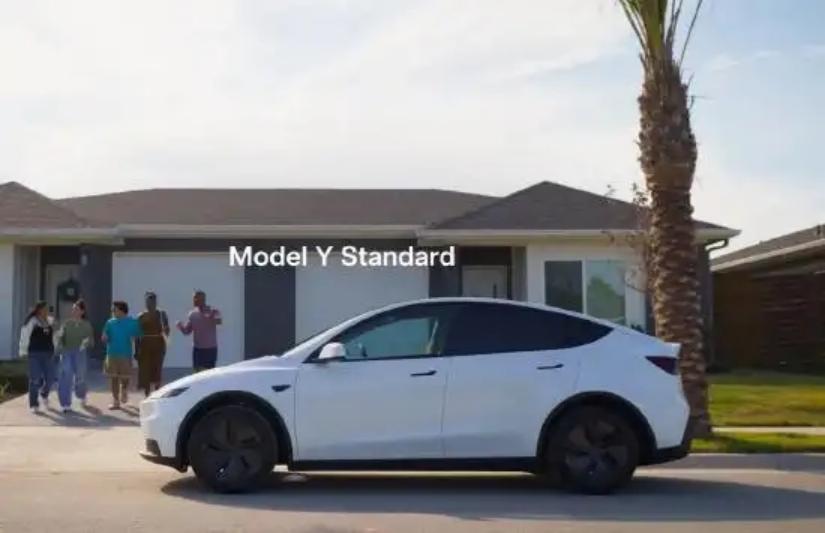
Affected by the expiration of the US federal electric vehicle tax credit policy, the secondary market had low expectations for Tesla's performance in the fourth quarter of 2025. According to estimates compiled by StreetAccount, Wall Street analysts expected Tesla to deliver 426,000 vehicles in the fourth quarter of 2025. However, the final result showed that Tesla delivered only 418,000 new vehicles in the fourth quarter, still lower than the previous market expectations, indicating that Tesla's strategy of "trading price for volume" has failed.
3
The Strategy of "Pumping up Valuation" May Not Be Sustainable
According to the sales data in 2021, BYD sold about 320,800 pure electric vehicles, while Tesla's total annual sales were about 936,200. BYD's pure electric sales were only about one-third of Tesla's. But just four years later, BYD has completely reversed the situation.
Twenty years ago, Tesla and BYD almost started their dreams of building new energy vehicles at the same time. But until 2019, BYD still had to rely on government subsidies and sell low-cost models to make ends meet, and the profit from new vehicle sales was very thin.
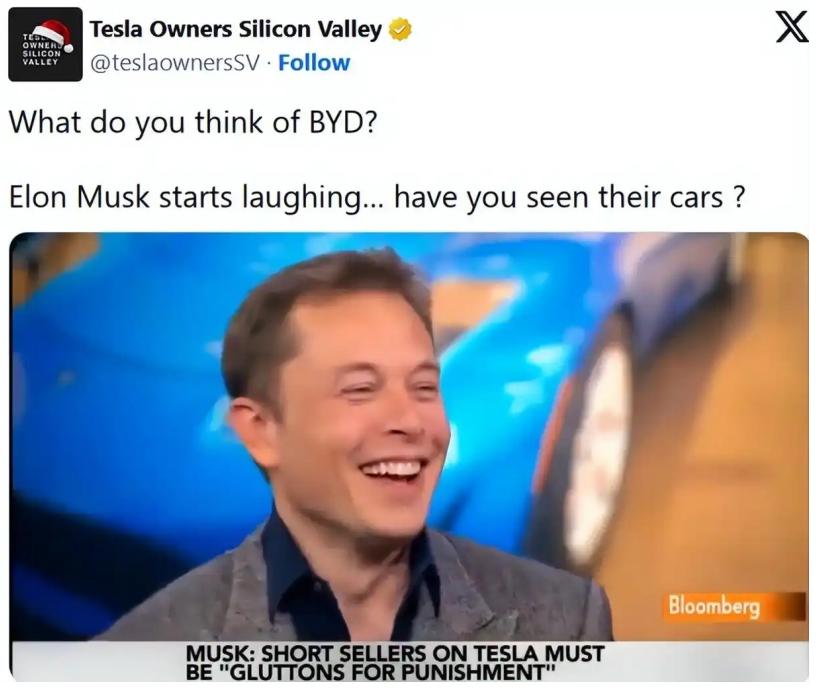
In October 2011, when Elon Musk was interviewed by Bloomberg and asked whether BYD could become a competitor to Tesla, Musk first laughed and then asked the reporter, "Have you seen their cars?" The contempt was palpable. When the reporter pressed further, Musk further clarified that he thought BYD's products were "not particularly attractive" and its technology was "not strong enough".
Facts have proved that Musk underestimated BYD's product iteration ability and technological strength. Since 2021, BYD has achieved double breakthroughs in the market and technology by fully applying blade batteries and DM hybrid technology. In 2022, BYD sold 1.8635 million new energy vehicles, a year-on-year increase of 208.64%, successfully overtaking Tesla (1.31 million).
In recent years, BYD's continuous innovation in core technology fields such as the e3.0 platform, Yunliang system, Xuanji architecture, and Tian Shen Zhi Yan has further built its technological advantage in the new energy vehicle industry.
In the product field, BYD has planned four brands: BYD, Denza, Fang Cheng Bao, and Yangwang. The main brand BYD has also built two sales networks: Dynasty Network and Ocean Network. Among them, the BYD Dynasty Network covers six product IPs: Xia, Qin, Han, Tang, Song, and Yuan. The Ocean Network covers four product IPs: Seal, Sea Lion, Dolphin, and Seagull. The Denza, Fang Cheng Bao, and Yangwang brands have also launched a series of mid - to high - end and luxury products such as D9/Z9, Leopard 8/Leopard 5, and U7/U8/U9 respectively.
In contrast, Tesla's product line is too single. In 2025, Tesla delivered 1.5853 million Model 3 and Model Y vehicles, accounting for 96.8% of the total delivery volume. The remaining models (including Cybertruck, S/X) only delivered 50,900 vehicles, and the new products have completely failed to shoulder the responsibility of growth. In addition, Tesla's Model 3 and Model Y have not been upgraded for many years, and consumers have long suffered from aesthetic fatigue, gradually showing their shortcomings in the homogeneous market competition.
In addition to BYD, a strong competitor, Tesla is also facing a "siege" from Chinese new - energy vehicle brands such as "Wei Xia Li". At present, Li Auto and Wenjie Auto have established a solid position in the mid - to high - end market above 250,000 yuan, posing a certain impact on Tesla. At the same time, a number of domestic pure electric SUVs such as ZEEKR 7X, LeDao L60, and Avatr 07 have emerged, clearly targeting Model Y directly, which further increases the competitive pressure on Tesla in the mid - to high - end SUV market, its main market.
The latest data shows that from January to November 2025, Tesla's registered sales in the Chinese market reached 531,900, a 7.37% decrease compared with 574,200 in the same period of the previous year. China remains its largest single market in the world. However, in the short term, without the launch of new models, Tesla will face increasing sales pressure in the Chinese market.
Although Tesla has encountered challenges in the three major global automobile markets of Europe, North America, and China at the same time, its stock price has not been significantly affected. Since April 2025, Tesla's stock price has generally maintained a volatile upward trend and reached a record high at the end of December 2025. Its total market value once exceeded $1.6 trillion, and the price - to - earnings ratio was close to 300 times, significantly higher than that of traditional automakers and most technology companies. Among them, the advancement of new businesses such as the autonomous taxi (Robotaxi) business, Optimus robot, and full self - driving (FSD) has become the biggest driving force for the rise of Tesla's stock price.
