36Kr Global - Exhibition | On-site at CES 2026: Beyond Sensors, PaXini Aims to Build the "Physical Perception Infrastructure" for Embodied Intelligence
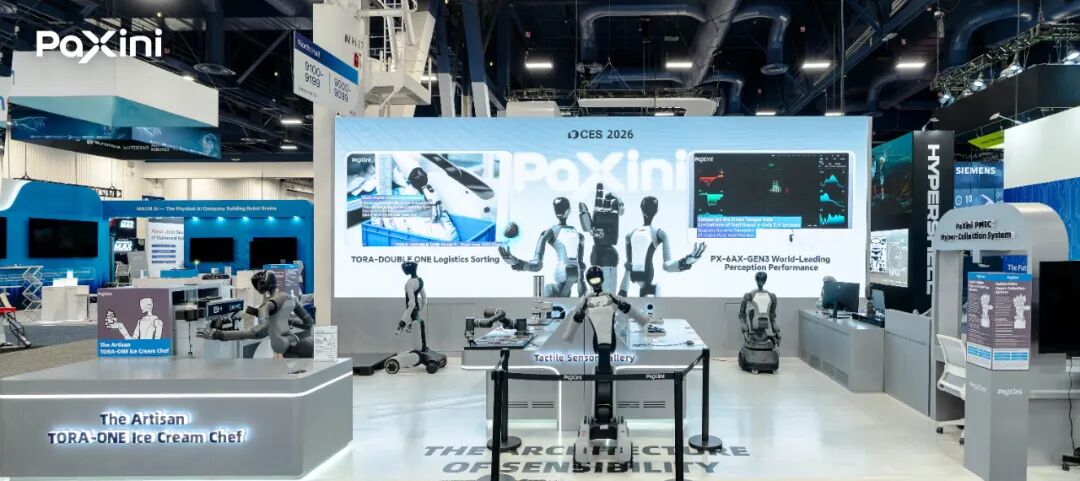
In the fields of artificial intelligence and robotics, there is a well - known "Moravec's Paradox": AI can easily master high - level human cognitive abilities (such as logical reasoning and playing chess), but it is extremely difficult for a robot to hold a screwdriver steadily and hand it to a companion like a human being.
At this year's CES in the United States, Chinese humanoid robots were still the most eye - catching. They carried coffee, made ice cream, and waved to greet people, attracting crowds to watch and take pictures. However, beyond the excitement, the industry's anxiety is also obvious: when the exhibition ends and the lights go out, how can robots move beyond the demo stage and truly enter factories, warehouses, and even households to become "useful" machines?
In response, PaXini Tech, a star enterprise in embodied intelligence that has attracted much attention for its globally leading tactile sensing technology, is trying to rescue embodied intelligence from this anxiety through a "full - stack infrastructure" approach.
From high - precision tactile sensors to "embodied intelligence infrastructure"
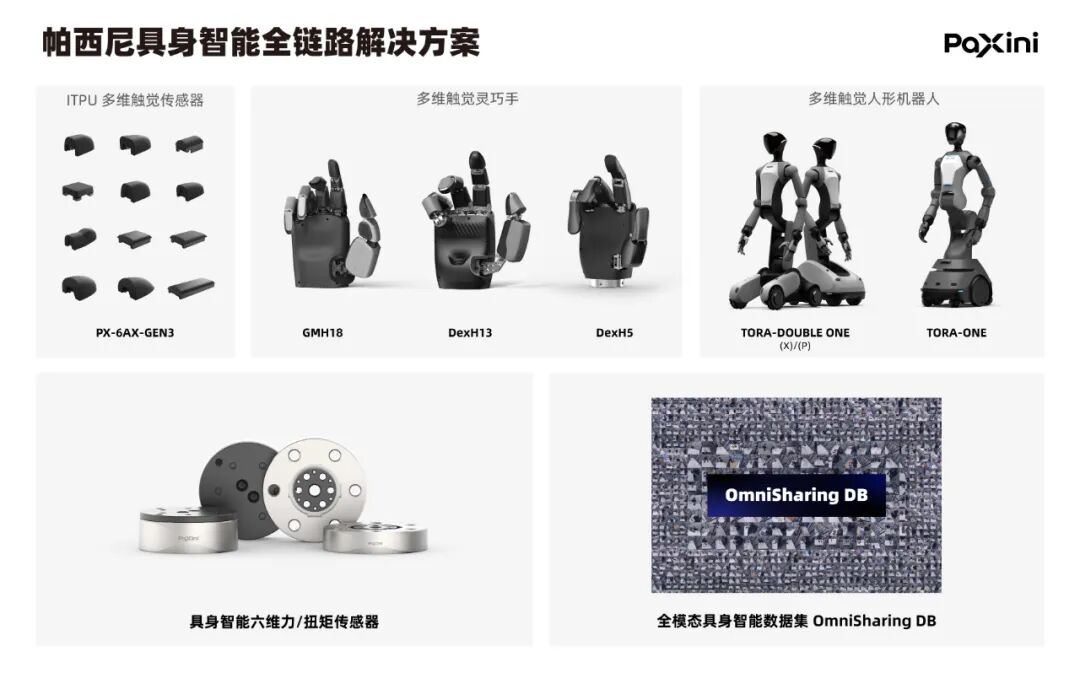
PaXini's full product matrix diagram. Source: Provided by the enterprise
PaXini was founded in 2021, and its founding team comes from the Sugano Laboratory at Waseda University in Japan, the birthplace of the world's first humanoid robot. Relying on the globally innovative 6D Hall array - type tactile sensing technology, the company's self - developed high - precision multi - dimensional tactile sensors can measure 15 rich perception dimensions, including six - dimensional force, texture, and rebound, endowing robots with tactile perception abilities comparable to those of human hands.
Dr. Hsu, the founder of PaXini, emphasized in an interview that the key to the implementation of robots is not only the ability to "see" and "plan", but also whether robots can make accurate judgments and immediate responses at the moment of physical interaction such as touching, grasping, being stressed, and slipping. By analyzing mechanical, texture, and motion data in real - time, robots can form an understanding of the essence of interaction. In other words, when robots can "learn" from contact and dynamically adjust their own behaviors to form a closed - loop, self - evolving "contact intelligence", embodied intelligence can truly transform from a laboratory concept into reliable and deployable productivity.
At this year's CES, PaXini almost completely presented its product matrix on the exhibition stand: from the multi - dimensional tactile sensor PX - 6AX series and tactile communication modules, six - dimensional force/torque sensors PX6D/PXTS, to complete machine products such as the dexterous hand and humanoid robots TORA - ONE and TORA - DOUBLE ONE. It was like laying out an embodied intelligence industrial chain in front of the audience after disassembling it.
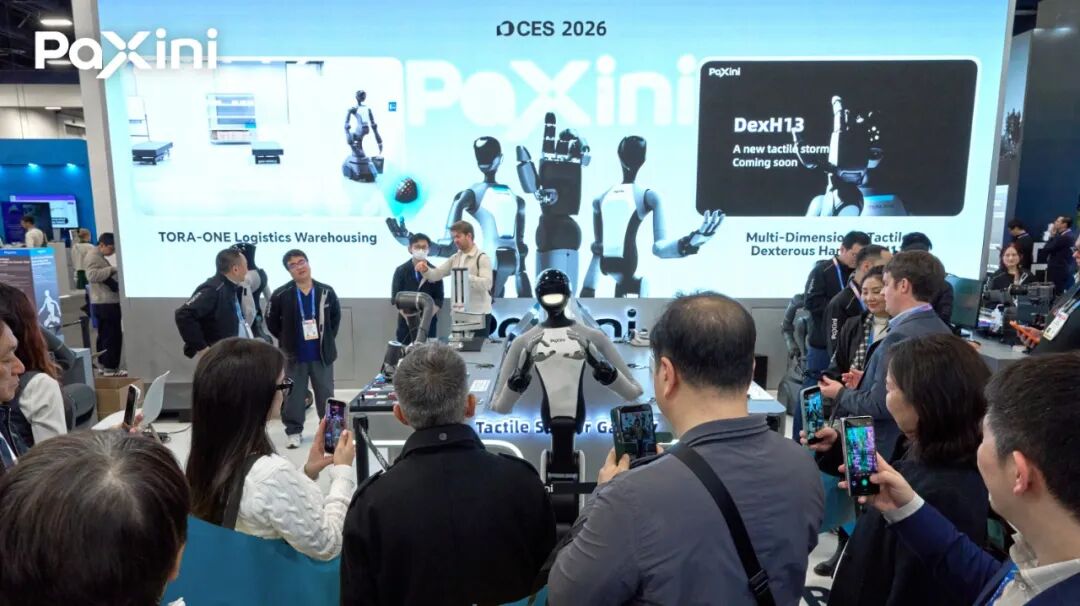
In the on - site demonstration, the visual - tactile dual - mode dexterous hand DexH13 equipped with 1140 ITPU multi - dimensional tactile sensors achieved precise and flexible grasping operations. On the other hand, the humanoid robot TORA - ONE, which has 53 degrees of freedom and a height that can be flexibly adjusted between 146 and 186 centimeters, demonstrated the whole process of making ice cream on site, vividly presenting dexterous operations comparable to those of humans, such as receiving cups, dispensing ingredients, and taking and placing cookies.
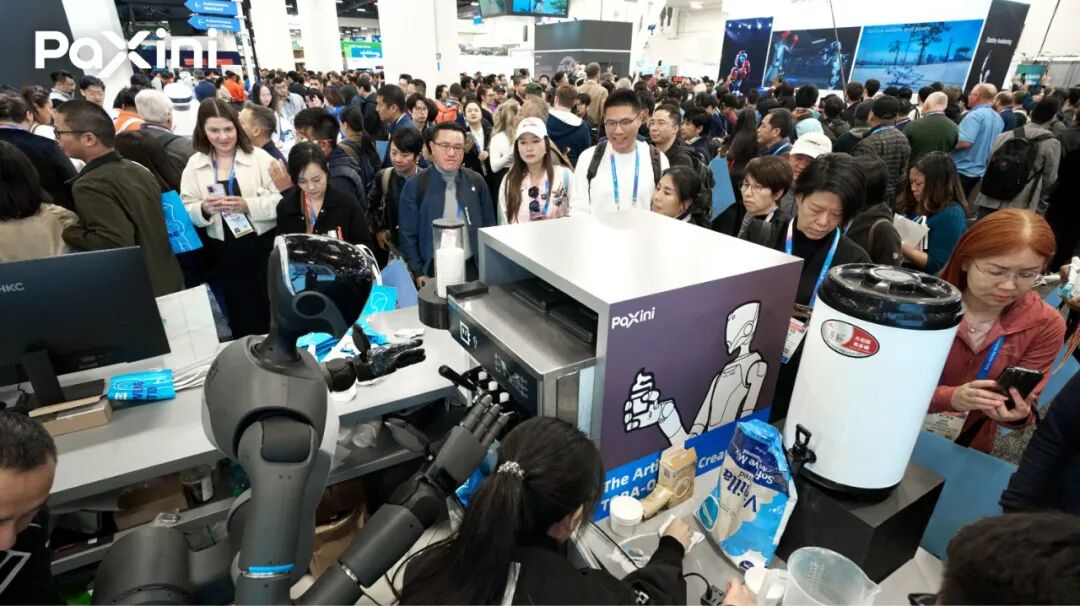
PaXini is demonstrating in the most understandable way that only when robots can perceive the real physical world, stably control the force, and perform various precise and complex tasks can they move from the laboratory to real - world scenarios.
However, Dr. Hsu does not position the company as a simple "tactile sensor manufacturer". In his view, sensors are just the entry point, and what is truly scarce is the high - quality tactile data generated by sensors that can be used for training and deployment. The difficulty lies in that visual data can be obtained on a large scale by cameras, and language data can be obtained from the Internet, but tactile and mechanical data must come from real contact, which has high acquisition costs, great collection difficulties, and is more difficult to form a unified standard.
"We are the ones who consolidate the 'foundation' for the development of embodied intelligence in the embodied intelligence industrial chain." He positions PaXini as a builder of embodied intelligence infrastructure, hoping to promote the industry to a more implementable stage with the full - stack capabilities of "tactile sensors - embodied data - intelligent models - robot bodies".
PaXini's closed - loop ecosystem stems from the accurate grasp of customers' full - cycle needs. Whether starting from hardware R & D and extending to data requirements, or starting from algorithm training and finally returning to hardware implementation, PaXini's full - stack product matrix can provide consistent support. While solving customers' phased pain points, it naturally promotes them to enter the next product stage, thus achieving a sustainable business cycle.
The embodied data factory is the long - term asset
Currently, PaXini has established the world's largest embodied intelligence data collection and model training base in Tianjin - the PaXini Super EID Factory. With a physical infrastructure of about 12,000 square meters, 15 + N core scenarios, and 150 standardized collection units, the factory will build an annual production of nearly 200 million full - mode embodied intelligence data sets, the OmniSharing DB, and will open to the global industrial ecosystem in the form of the world's first embodied intelligence data cloud mall. It is reported that this data cloud mall will be publicly unveiled in the near future.
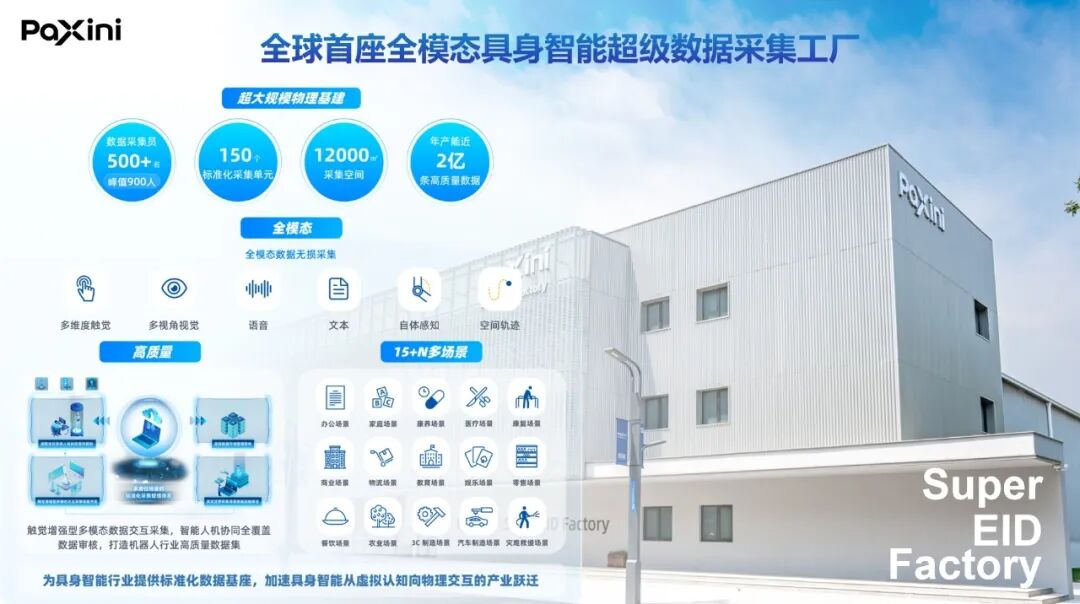
In Dr. Hsu's view, the long - term barrier built by PaXini does not come from the data scale, but from the three key attributes of its data assets: the generalization ability supported by high reusability, the continuous optimization closed - loop guaranteed by iterability, and the multi - dimensional information alignment achieved by full - mode coverage.
The common collection method in the current industry is teleoperation centered on robots: people manipulate robots to perform actions through controllers and record the trajectories and states from the robot bodies. However, the problem is that once the robots are iterated (changes in joint layout, degrees of freedom, and end - structure), the old data often needs to be mapped to continue to be used, which will lead to accuracy loss and a decrease in success rate, and the data assets will depreciate quickly. More realistically, many robot bodies used for collection are not fully equipped with mechanical and tactile sensors, resulting in the lack of real - time interaction information, and the data "seems a lot, but the density is not enough".
PaXini chooses to be "human - centered": let real people wear collection devices to generate highly available data through natural human actions. Since the human body configuration is stable for a long time (it won't "grow an extra joint" after a year of iteration), this kind of data is easier to form long - term assets and can be reused among different bodies. As the configuration of humanoid robots approaches that of the human body, the corresponding relationship between human body data and the robot control space is more natural, and the data availability will increase over time instead of depreciating.
According to its introduction, this collection method is closer to the speed of human daily actions, so the collection efficiency is higher; the cost is also significantly lower than the collection path that relies on expensive robot bodies.
In addition, PaXini put forward the view of "prioritizing upper - body data". Dr. Hsu said bluntly that in many work scenarios, more than 90% of the jobs are done in a sitting position or at a fixed workstation. The cost, power consumption, and stability problems brought by two - legged robots may not be worth it. Therefore, they focus more on upper - body operations, fine tactile and force - control abilities of hands, and invest resources in the parts that "truly determine the task success rate".
At the CES site, PaXini also set up a "data collection demonstration area": the staff wore PaXini's self - developed data collection device PMEC to perform tasks, and the task data was real - time mapped into robot data that could be used for training, allowing the audience to intuitively see how the data was produced.

Promote the "robot body" business in 2026
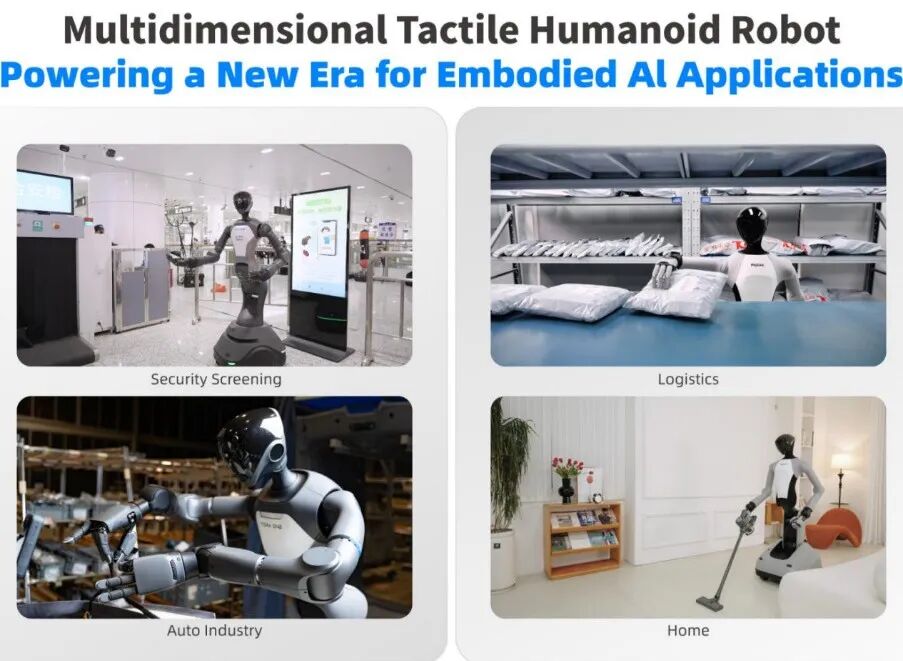
As a leading mass - producer in the global tactile sensor field, PaXini's early external image was centered on its sensor advantages. The team's exploration and accumulation of humanoid robot bodies started as early as the development of the sensor business.
Dr. Hsu said that the company incorporates the robot body as a key part of the "infrastructure closed - loop" system. The goal is to make the data drive the system more efficiently and make the model more stably implemented. In this closed - loop, the sensors and the robot body are deeply coordinated to form a complete technical chain from perception, decision - making to execution. Currently, the relevant humanoid robot bodies have been tested in real - world scenarios such as large - scale logistics warehouses and automobile manufacturing factories.
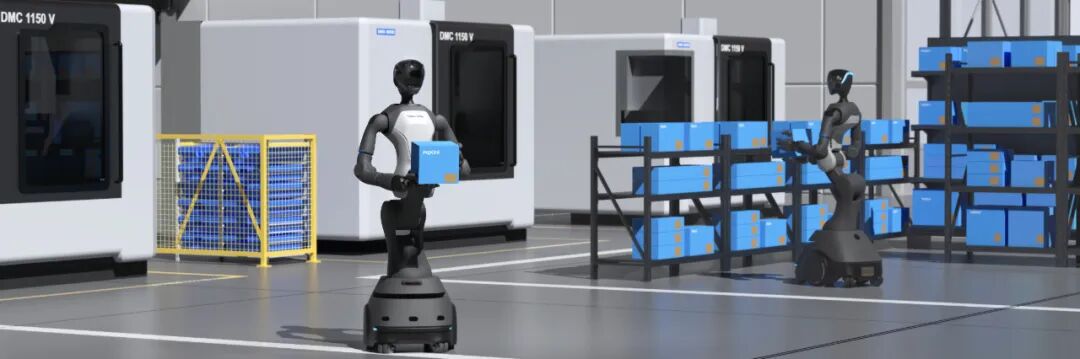
Globalization: Hardware first, then data and models
Showing its capabilities on the global stage of CES also reflects PaXini's determination for globalization. "China has the strongest capabilities in embodied intelligence infrastructure in the world. Our strategy is to penetrate deep into the 'bone marrow' of overseas markets," Dr. Hsu said bluntly.
PaXini's key markets are the United States, Europe, Japan, and South Korea. This is not simply based on market size, but on the differences in industrial structure and speed: China has strong supply - chain and rapid - iteration advantages; the United States is relatively weak in hardware and manufacturing infrastructure; Japan and South Korea have strong manufacturing industries but face aging populations and high costs, and large enterprises in these countries have a slower pace of innovation and may rely more on mature solutions. PaXini's path is "hardware first, then data and models": first embed sensors and key components into overseas customers' systems, and then promote the output of data services and model capabilities to truly help local customers complete automation upgrades.
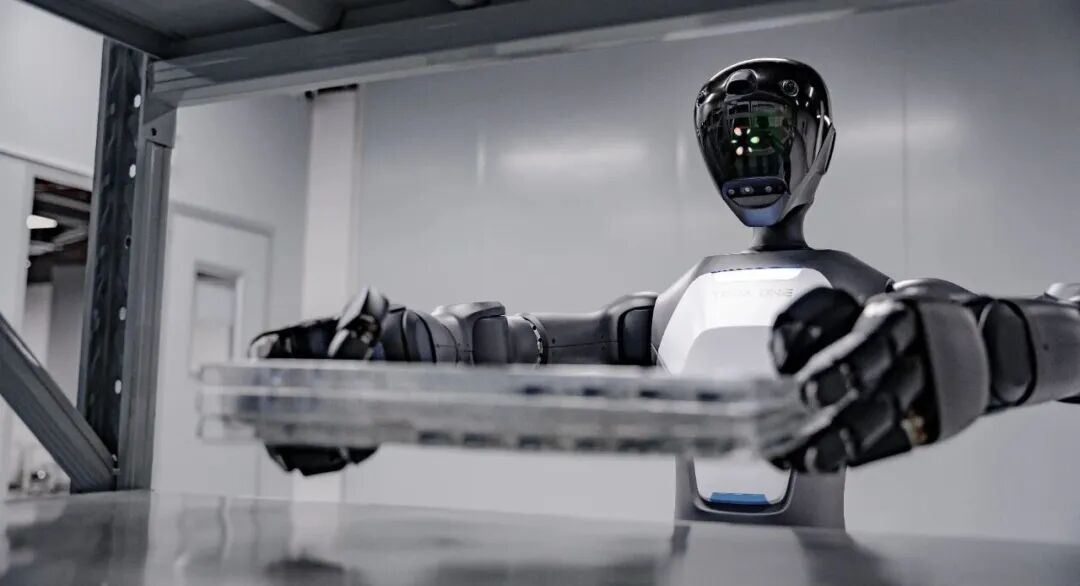
It is worth mentioning that Dr. Hsu is more optimistic about the future of embodied intelligence than many industry insiders: "A large number of robots will enter the real production process in two to three years."
When robots are no longer just performers on the exhibition stand but transform from demonstration products into reliable productivity in workshops and warehouses, the "physical contact mode infrastructure" that PaXini has bet on will truly show its value in reshaping the physical world.
Photo | Provided by the enterprise
Text | Wang Yingying

English service
Service | KrASIA launches a new English - language media service for Chinese companies going global
In the current complex global economic landscape, English - language reports are not only an important means of conveying value propositions to overseas customers and consumers but also a cognitive precipitation of enterprises worldwide. The English - language media KrASIA (kr - asia.com) is committed to introducing Chinese business and culture to the world. About 60% of the readers of its English - language website are business people from core Southeast Asian countries. Through excellent search - engine optimization, professional English - language content, a reliable social - media matrix, and external inclusion platforms such as the Bloomberg Terminal and Dow Jones Factiva, two global top - level information data platforms, KrASIA helps Chinese companies enhance their global brands. If your company has relevant needs for English - language communication or hopes to cooperate with KrASIA to provide going - global services, please scan the QR code below or click "here" to fill out the form and obtain the media service rate card of KrASIA and the contact information of the staff.
