Four students from Harbin Institute of Technology rang the gong on the Hong Kong Stock Exchange.
This morning, at the gong - ringing ceremony of the Hong Kong Stock Exchange, four post - 90s alumni from Harbin Institute of Technology (HIT) stepped onto the stage.
This scene overlapped with their green years long ago. In 2009, when they were still students at HIT, they went to Shenzhen for a university competition for the first time. They took a group photo of the four of them, which planted the seeds of entrepreneurship.
It wasn't until 2015 that Li Zhichen gathered with the others in Shenzhen, and Woan Robotics was born.
Now, Woan Robotics has successfully listed on the Hong Kong Stock Exchange, becoming the "first stock of AI embodied household robots". In this IPO, 7 cornerstone investors were introduced to subscribe for about HK$700 million worth of shares, accounting for more than 40% of the total funds raised. Hillhouse is the largest cornerstone investor. The IPO issue price is HK$73.8 per share, and the total market value exceeds HK$16 billion.
Over more than a decade, from the dormitories of HIT to the Hong Kong Stock Exchange, we have once again witnessed a model of entrepreneurship by the new generation of young people.
Post - 90s from HIT Jointly Create a Robot IPO
Let's go back to the starting point of Woan's story.
In 2009, four junior male students from HIT, including Li Zhichen and Pan Yang, flew more than a thousand kilometers south to Shenzhen to participate in the ADI Future Innovator University Design Competition. This was their first time in Shenzhen. Pan Yang, a northerner from Northeast China, even wore a sweater. As soon as he got off the plane, he was hit by the southern heat wave.
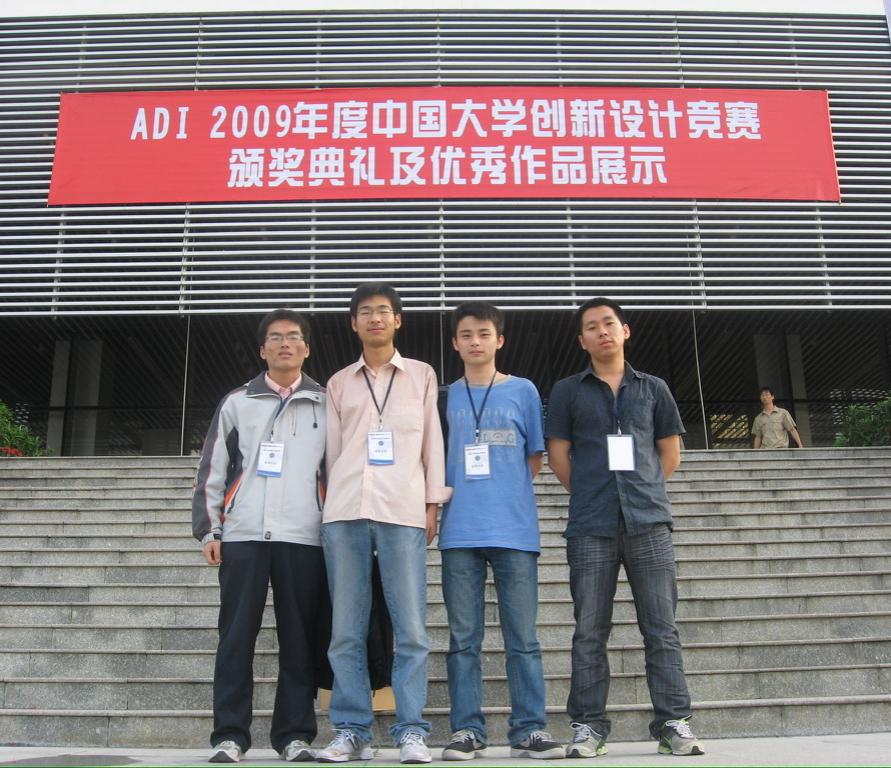
The founding team of Woan Robotics and their HIT classmates (second from the right, co - founder and CEO of Woan; first from the right, co - founder and CTO of Woan) took a photo in Shenzhen in 2009.
In that competition, the somewhat green young men won the national first prize. They were also the only undergraduate team on the field to win the first prize. When communicating with the investment circle, Li Zhichen still sighed when recalling this past event. He never expected that this trip to Shenzhen would change their life trajectories in the future.
Born in 1991, Li Zhichen, who skipped grades in middle school, was admitted to the Department of Electronic and Information Engineering at Harbin Institute of Technology at the age of 16. During his university years, he met fellow alumni such as Pan Yang in competitions, and they hit it off. The university motto "Be strict in standards and master the skills" during their college days quietly planted the seeds of their future joint entrepreneurship.
After graduating from HIT, they went their separate ways for a short time. Pan Yang stayed in China and became a hardware engineer. Li Zhichen went to Singapore to pursue a master's degree at Nanyang Technological University and then joined a local robotics company, frequently traveling between the manufacturing bases in Dongguan.
It was this experience of shuttling between Singapore and the Pearl River Delta that gave Li Zhichen a unique perspective. On one hand, he saw the huge consumption potential of the global middle class. On the other hand, he witnessed the amazing response speed and iterative ability of the Chinese manufacturing system's supply chain. A decade ago, when China was still talking about trading shirts for chips, few people realized that this land had quietly developed the strong potential to support the export of hardware products.
The flame of entrepreneurship was reignited. In 2015, Li Zhichen and Pan Yang gathered in Shenzhen and recalled their former HIT classmates. They officially established Woan Robotics. Among them, Li Zhichen served as the co - founder and CEO, and Pan Yang served as the co - founder and CTO.
The reason for entering the household robot market stems from Li Zhichen's keen insight: In the future home, robots will undertake repetitive and labor - consuming tasks, allowing people to have more time, energy, and companionship. Such needs are not limited to a small number of people; instead, they correspond to the current popular lifestyle. He summarized this state as "Woan" (lying in comfort).
As is well - known, the home is the most complex, non - standard, and error - intolerant application scenario for all robots. "PPT - style success" is not allowed here. Only long - term, stable, and unnoticeable operation is acceptable. To achieve the above vision, it is not possible with just one or two robot products. Instead, it requires building an entire robot home ecosystem.
This insight determines Woan's product path. The home environment is designed for humans. Instead of transforming the home, it is better to let robots learn to work like humans - "pull the curtains with hands and transport supplies with feet". There is no need to re - wire or replace household appliances, enabling in - situ upgrades.
Since 2017, Woan has successively launched a series of robot products that mimic the movements of human fingers, wrists, and feet. They are like invisible "mini - butlers", realizing the perception and control of household devices through AI vision and local control logic.
As of now, Woan Robotics covers scenarios such as intelligent control, housework, smart home management, and elderly care. Its products are sold in more than 90 countries and regions around the world, with Japan, Europe, and the United States being its key markets. From 2022 to 2024, its revenues were 275 million yuan, 457 million yuan, and 610 million yuan respectively, with a compound annual growth rate of 49%.
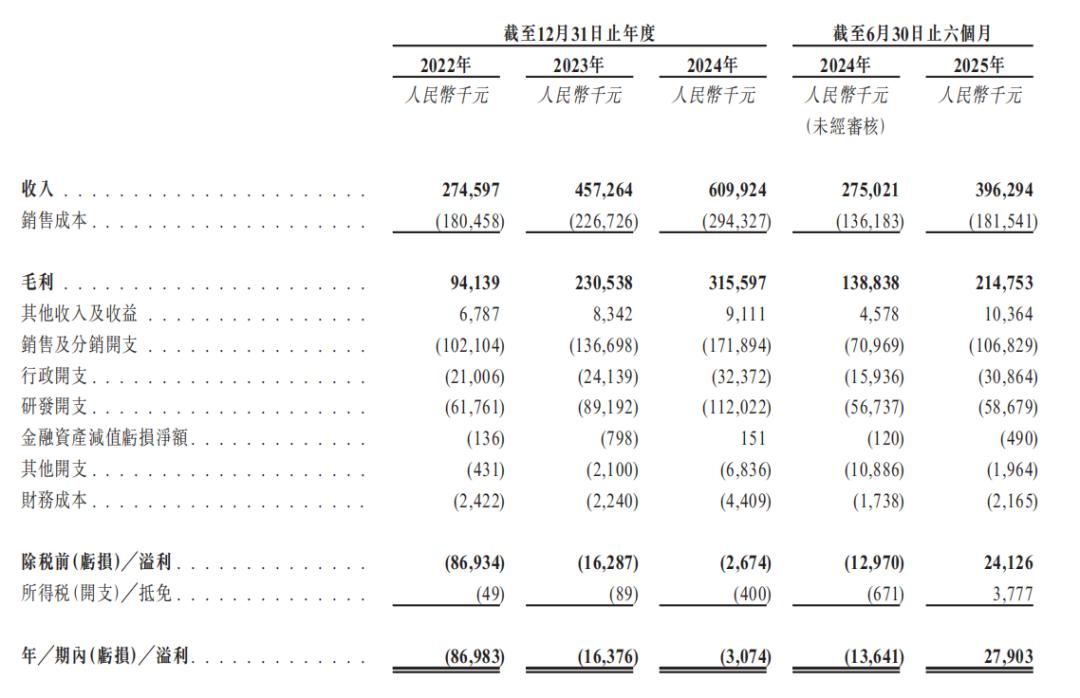
It can be said that, different from most embodied intelligence companies that still remain at the conceptual stage, Woan has chosen a path closer to the essence: being loyal only to scenarios and real needs. Behind the restraint in technology lies Li Zhichen's judgment: The key for embodied intelligence to reach the "GPT moment" lies in whether it can build a sustainable data closed - loop and verify its continuous generalization ability in real - life home scenarios.
From Shenzhen to Tokyo, from New York to Berlin, each Woan robot learns, calibrates, and evolves in its daily operation. Changes in light, movement of furniture, sudden intrusion of pets... These uncontrollable factors in real homes are the most precious training grounds. And all of this is precisely the most difficult to replicate.
When entering Woan's Shenzhen headquarters, one can see the tennis - playing robot Acemate that can return the ball, the AI pet robot Kata Friends that can recognize emotions and interact actively, and the humanoid nanny robot busy doing the laundry... Li Zhichen admitted that Woan is doing something more difficult: continuously verifying the complete closed - loop of AI embodied intelligence from perception, understanding to execution in a real - life home environment. This is a long - distance race verified by time.
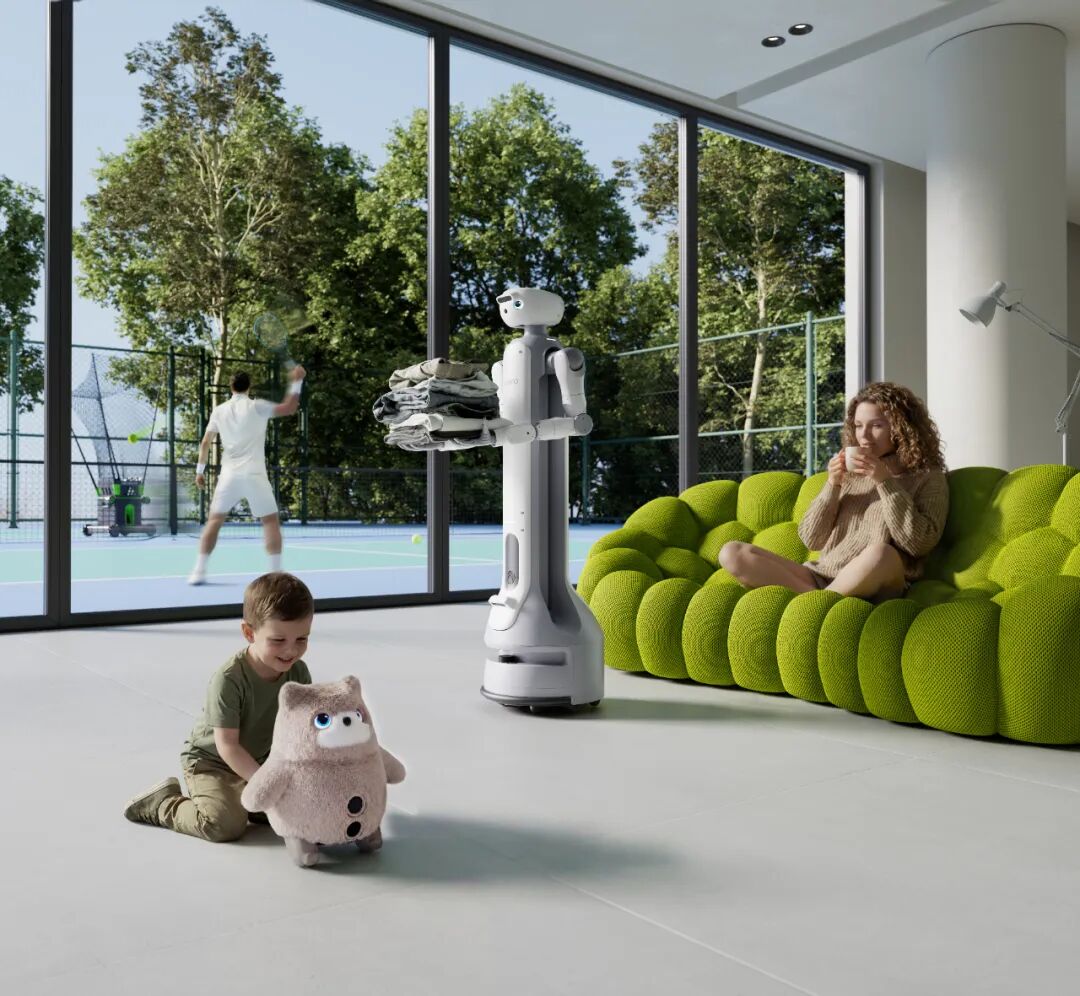
In Li Zhichen's impression, this entrepreneurial journey was not as difficult as he had imagined. One profound experience was that he always believed that the significance of technology lies not only in grand narratives but also in making people's lives a little easier.
Source Code Capital, Hillhouse, and Fortune Capital All Arrive: Decoding the Investment Story
Surprisingly, Woan has hardly ever publicly disclosed its financing information, but there is already a long list of investors behind it.
Tracing back, in 2017, Woan completed its angel - round financing and entered the XbotPark incubation system the following year. Since then, the financing has been proceeding at a breakneck pace, and it has successively welcomed shareholders such as Source Code Capital, Ventech China, Zero2IPO Group, Hillhouse, Fortune Capital, China Structural Reform Fund, and Brizan Ventures. Among them, early investors represented by Source Code Capital have increased their investment in multiple rounds. Professors Li Zexiang and Gao Bingqiang behind XbotPark have also continued to accompany the company.
Li Zhichen remembers vividly around 2021. At that time, with the rapid success in the Japanese market, the company had accumulated a large amount of cash on its books. For a startup, this is often the most vulnerable moment when the will is most likely to slacken. A voice even began to spread within the team: Since the company is already profitable, should we "stabilize" and increase the profit margin?
During a meeting, he talked about this confusion with Cao Yi, the founding partner of Source Code Capital. The latter straightforwardly asked a key question: "Do you think the proportion of the Japanese market will still be so high in two or three years?" Li Zhichen's answer at that time was also very firm - no, it was expected to drop to about 50%.
This is a prediction about the future, which means that Woan must step out of its comfort zone and replicate the successful methodology in Japan to other markets. The cost behind this is real - money investment: brand reshaping, local market research, and channel establishment - each of which increases costs and is difficult to yield returns in the short term.
Regarding this seemingly slower path, Cao Yi had a clear attitude at that time: "Don't stop. Invest in the future." The logic is simple: When users are no longer satisfied with a few functional requirements but expect robots to accompany them in playing tennis, recognize emotions, and even become a member of the family, today's investment will be tomorrow's moat.
This "reassurance pill" was very precious. After that, Woan began to focus on the European and North American markets. With an annual R & D expense ratio of about 20%, it accelerated the implementation of seemingly distant ideas - continuously researching and developing tennis - training robots, AI pet robots, and humanoid nanny robots. By 2024, the proportion of Woan's revenue from the Japanese market had decreased, and the European and American markets began to contribute stable growth.
For a startup seeking breakthroughs, the tolerance for mistakes given by early investors is crucial. Li Zhichen admitted that this is exactly his standard for a "good investor" - not to amplify the consensus during the smooth - sailing period, but to point out the next inevitable hurdle before the enterprise is cornered by data.
Until before the listing, Source Code Capital, which entered the company early, was still one of Woan's largest institutional shareholders. Few people outside know that Source Code Capital has been deploying in the entire robotics field since 2016, from household to industrial, from ToB to ToC. It has invested in more than a dozen star enterprises in the industry, such as Unitree, Galaxy Universal, Hai Robotics, Mech-Mind Robotics, Yunjing, LeDong Robotics, Accelerated Evolution, Standard Robots, and PuduTech, and has continued to empower and accompany them after investment, becoming a footnote in the era of AI + robotics.
Cold Thinking on the Booming Hardware Entrepreneurship in China
Looking back, Li Zhichen is glad that Woan chose to expand overseas from the very beginning.
This choice was not accidental. After they participated in the competition in Shenzhen that year, a senior HIT alumnus who received them took them to the company where he worked. The company was small, with only about 10 people, and its products were still in the R & D stage.
Later, when Li Zhichen was working in Singapore, he saw his foreign colleagues becoming fans of a Chinese - made drone. In just a few years, that little - known small company had become a global powerhouse - it was DJI. This deeply touched him. So after starting his business, he directly positioned his products for the global market, aiming to occupy the international market with innovation and technology. And the first stop of his entrepreneurship was in Shenzhen.
During their contact with Woan, many investors still remember the most impressive sentence: "Our generation of enterprises should be international from the very first day."
Li Zhichen believes that this requires everyone to make choices from a global perspective from the first day of entrepreneurship - the product definition should not only focus on the habits of one country; the compliance and quality systems should be built according to higher standards; the channels and partners should be designed based on the principle of "win - win" from the start; and the supply chain and delivery should also support cross - regional stability.
"If you don't go international from the first day, the cost is often 'path dependence'. That is, the product and the organization are locked in a single market. When you want to expand overseas, you will find that everything from the product experience to compliance to channel relationships has to start over. The cost is higher, the window of opportunity is smaller, and you may even miss the most critical early - stage users."
In recent years, the wave of hardware entrepreneurship in China has been surging. Most of their growth paths are similar: starting from independent websites or crowdfunding, they accumulate popularity overseas with their first - generation products and then quickly invest in product R & D, growing rapidly within three to five years. Almost without exception, they all come from Shenzhen.
The investment circle also reported this year that investors flocked to Shenzhen to search for investment opportunities. With the Sky City, the headquarters of DJI, as the center, good hardware startup projects can be found within a 10 - kilometer radius. An investor sighed: "The comprehensive improvement of China's supply - chain capabilities, engineer dividend, R & D dividend, product capabilities, and brand dividend has brought about such a huge opportunity."
As an insider, Li Zhichen has a more profound understanding of this situation. If in the past decade, the advantage of Chinese hardware companies lay in the speed of R & D iteration and manufacturing efficiency, mainly achieving large - scale expansion on the existing technological path; then in the next decade, companies like Woan are trying to answer the next question: At the stage where AI and embodied intelligence are starting simultaneously globally, can they transform a large number of real devices into reusable perception, decision - making, and execution capabilities, thus having the possibility of becoming global leaders?
This scene may inspire more Chinese hardware entrepreneurs.
When talking about the future of the industry, Li Zhichen has a firm judgment: Household robots will become the next - generation super - terminal after cars and mobile phones, and are expected to give rise to a number of companies worth hundreds of billions. However, regarding the implementation form of embodied intelligence, he gives a judgment different from the mainstream: In the future home, it will not be an all - powerful robot that takes care of everything, but the division of labor logic that has been formed in human society for a long time will continue.
In a real - life home, butlers, nannies, security guards, assistants, and pets each have their own duties. This division of labor is not the most efficient, but rather a common need for social development and the boundaries of security and emotion. Li Zhichen believes that a general - purpose robot is not technically impossible to achieve, but in the highly private and long - term co - living home scenario, it does not constitute the optimal form of human - robot relationship. Robots need to have clear role boundaries, knowing what to do and what not to do.
Beyond technology, he also reminds that the core challenge for current AI hardware companies going overseas lies in whether they can truly understand and respect the real needs of the overseas market. Simply put, the market is essentially driven by the demand side. Overseas - going enterprises need to get rid of the single supply - side logic and start more from the demand side to create sustainable business value.
In addition, if a company blindly pursues maximum efficiency and market share and overly squeezes the living space of local partners, it may cause the latter to lose the motivation to participate and even choose to "quit the game". "Going overseas is never a one - sided victory but a win - win situation. Everyone in the entire value chain should share the benefits; otherwise, such a business is not sustainable."
The clock of history sways, and those who pursue win - win situations will all succeed.