The intelligent wheels rolled by, leaving ten ruts in 2025.
2025 is almost over, and we may not have decided whether to miss it yet. But it doesn't matter. Input this question into large models, and they can provide answers from various perspectives.
During this year, AI has gradually become a part of daily life. A considerable proportion of the short - videos we brush are already generated by AI; in companies and schools, the default starting point for everyone is "let the large model handle the work first"; it's very difficult to find a real person on customer service calls. Although we are in the physical world, we are fully surrounded by AI, and it seems that everyone has adapted to this faster than expected.

This year, we have more strongly felt what it means that technological revolution is like a wheel, mercilessly rolling over everything. Some people have made a fortune through intelligence, while others start to hate AI for taking away their jobs; many technologies that seemed extremely advanced just a moment ago are quickly eliminated; it seems that as soon as we learn a new technology term, ten newer ones pop up. But intelligence doesn't care about these. It just keeps rolling forward. It is full of certainty and doesn't wait for anyone.
As usual, NeuroAI has summarized ten major events related to intelligence in 2025 for everyone. Following these ten ruts, we can clearly see where the wheel of intelligence is going next. Since the wheel of intelligence won't stop for us, let's anticipate its next stop. Go to the station in advance to wait for it, then get on the train and set off.
Let's meet in the intelligent world in 2026.
1
The Rise of DeepSeek
Who Cares About the Spring Festival Anymore?
For technology practitioners and everyone concerned about technology, 2025 started with a restless Spring Festival. In January, DeepSeek released the R1 large model. The low computing power and high generalization ability demonstrated by this version of the model subverted the industry's basic perception. Just 21 days after its launch, its daily active users soared to 22.15 million, and it was called the "DeepSeek Moment" by global media.
After being hyped by the media and social networks, DeepSeek became a well - deserved technological carnival. I remember during the Spring Festival, I saw a message in the comment section of a funny blogger, saying, "Why are you still doing funny things? Hurry up and talk about DeepSeek." A few months later, at a conference, a coal mine industry practitioner told me that they stopped their Spring Festival holiday urgently and got together to study DeepSeek day and night, which shows its amazing popularity.

But as we called for after the Spring Festival, there's no need to mythologize the impact of DeepSeek. Looking objectively after a year, DeepSeek's subsequent performance and its subversiveness to the AI industry can only be described as moderate. Although the envisioned revolutionary AI revolution won't come, the MoE large model it represents has indeed become the main R & D idea for a new generation of large models in 2025, and it directly promoted the global wave of open - source models, making technology giants re - evaluate the strategic value of open - source models.
Looking back at the rise of DeepSeek, perhaps what's more worthy of attention is the attitude of ordinary people when welcoming technological innovation. Maybe because there have been not enough underlying innovations from China in the digital and intelligent fields in the past, we are prone to have overly high expectations for similar events. Learning to accept technological innovations that are important but not earth - shattering might be a lesson we need to learn.
Also, sincerely hope that major technological releases can avoid the Spring Festival holiday in the future. Thanks.
2
Super - Nodes
Use a Heavy Hammer to Deal with the Chaotic Situation
If the most popular AI technology among the general public in 2025 was DeepSeek, then in the industrial field, it was undoubtedly super - nodes.
In April 2025, Huawei Cloud officially released the CloudMatrix 384 super - node. Through architectural innovation, it comprehensively surpassed previous super - nodes in terms of computing power, interconnection bandwidth, and memory bandwidth. The concept of super - nodes is not original to Huawei. Companies like NVIDIA and AMD have also made arrangements before. The core difference between super - nodes and previous AI computing clusters is that they can make numerous computing units form a logical whole, thus greatly improving the efficiency of AI computing power utilization. Huawei's breakthrough lies in significantly increasing the number of connectable computing units of super - nodes, thus meeting the key requirements for AI training and inference computing power.

In September, Huawei released the Atlas 950/960 super - nodes at the Connectivity Conference, which support the ten - thousand - card - level super - node architecture based on the Lingqu interconnection protocol. The successful R & D and market launch of these large - scale super - nodes mean that China has made important breakthroughs in AI computing clusters. The problems that have troubled the Chinese AI industry, such as insufficient single - chip capabilities and less advanced manufacturing processes, now have a solution of using quantity to overcome quality with super - nodes.
After the super - node solution was supported and recognized by all sectors of society, a large number of cloud computing and IT manufacturers began to follow Huawei's technical route and frequently released super - node - related solutions in 2025. Some of them still use the previous AI computing cluster architecture but insist on naming them super - nodes. An IT practitioner told me that now when clients meet, the first question is whether they have super - nodes. Without this name, it's hard to make a mark in the industry.
Behind the dazzling array of super - node releases, the more core significance is that China has found a way to break through the chip dilemma through centralized AI computing power. Since the situation of AI computing power supply is so chaotic, with supply one day and no supply the next, it's better to try something new. A chaotic situation calls for a heavy - handed approach.
In 2026, the industrial application of super - nodes will be a key point in China's AI development.
3
AI Agent
Youthful Vigor and Some Success
For several years, the AI industry has been discussing a topic: large models are just infrastructure, and what really matters are AI applications.
Based on the business inertia of the Internet era, everyone is looking forward to the emergence of AI applications. Among the many possibilities of AI applications, the most anticipated one is the AI agent. But looking back at the performance of AI agents in 2025, well, we can only say they showed youthful vigor and some success.

We can't say that the progress of AI agents this year was slow. A large number of industry - specific AI agents took up their positions this year. Many financial institutions and government departments have started a work mode of three humans paired with a dozen AI agents. The development cost of AI agents has also significantly decreased. It's no problem to develop an AI agent without any programming skills. And indeed, many AI agent companies have earned their first pot of gold. In the United States, a "four - person AI agent company" model has become popular. Usually, four roommates in the same dormitory keep developing a large number of AI agents. As long as one of them gets traffic, it can generate huge commercial value.
But behind these achievements, we also need to see that the business model of AI agents can't be copied from mobile apps. Their low development cost means a high abandonment rate and low commercial value. After the trend of trying out AI agents passes, how can developers obtain continuous commercial value through this new model? What is the underlying value logic of AI applications?
Now we can call on AI agents and throw these questions to 2026.
4
Intelligent Driving
Forced to Grow Up in Blood and Fire
In 2025, no technology has experienced as many twists and turns as intelligent driving.
At the beginning of the year, BYD launched the "Divine Eye" and advocated equal access to intelligent driving. Major car manufacturers have made intelligent driving a major selling point and packaged autonomous driving with all kinds of marketing slogans. Everything seemed to indicate that 2025 would surely be the starting point for the commercialization of intelligent driving.

But at the end of March, the Xiaomi SU7 accident in Tongling occurred. At the time of the accident, the vehicle was in the NOA intelligent assisted - driving state at a speed of 116 kilometers per hour. After this bloody tragedy, there was widespread doubt about the safety of intelligent driving from all sectors. Along with subsequent events such as drunk driving with intelligent driving and intelligent - driving collisions in parking lots, China introduced extremely strict safety regulations for intelligent driving. Under strict supervision, car manufacturers tightened their publicity standards, the access threshold for L2 intelligent driving was raised, and a large number of previously available intelligent - driving functions were urgently suspended.
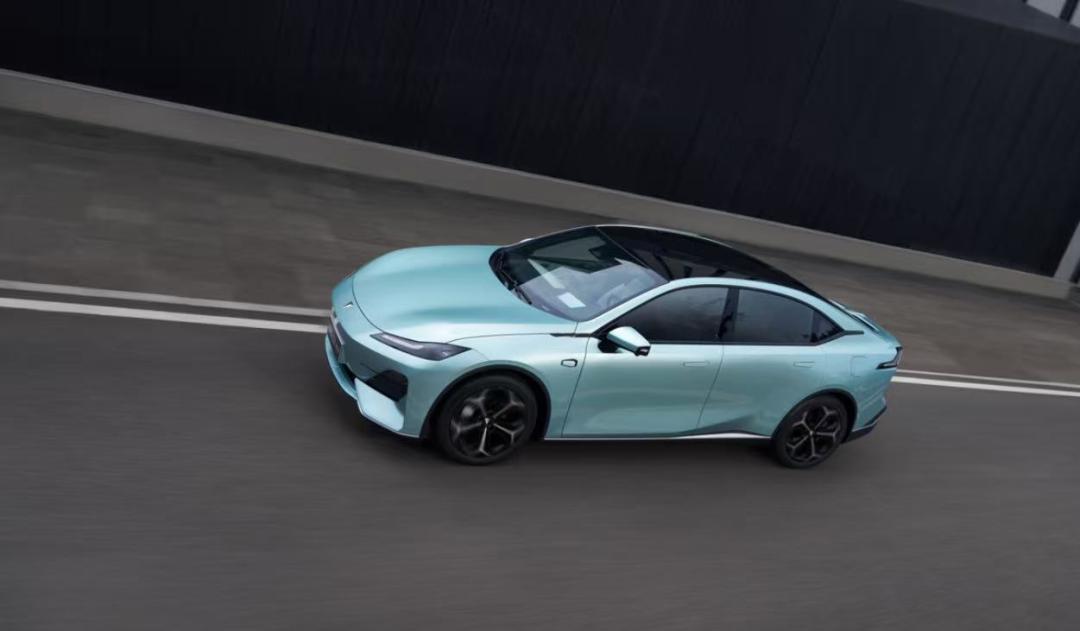
Just when we thought that intelligent driving was bound to have a dismal year, the technology took a turn for the better. At the end of 2025, the Ministry of Industry and Information Technology announced conditional permission for two L3 - level autonomous driving models, the Changan Shenlan SL03 and the BAIC ARCFOX Alpha S. Chongqing issued the first L3 - level autonomous driving special license plate "Yu AD0001Z", and L3 - level autonomous driving started road - testing pilots in designated areas of Chongqing and Beijing. China's L3 - level autonomous driving has reached a commercialization milestone.
After the over - hyped publicity and the bloodshed of accidents, China's autonomous driving has entered a transformative stage of growing under rules and supervision.
5
New - Generation Large Models
The Battle Cries Are Everywhere
In 2025, the competition among technology giants around large models continued and even became more intense.
Abroad (basically just the United States), this year Google made a comeback. The Gemini 3 released in November uses the MoE architecture with over a trillion parameters. It achieved extremely impressive results in inference ability and multi - modal tasks. Before that, the new - generation large models of Musk's xAI and OpenAI generally received reviews such as big talk but little substance, mediocre performance but excessive self - praise. Google, which was considered to be lagging behind, fought back strongly.

Domestically, the upgrade of large models and the construction of traffic entrances have reached a white - hot stage. ByteDance's Doubao and Alibaba's Qianwen have basically formed a two - way confrontation in the application of large models. Baidu updated its Wenxin 5.0 this year. To be honest, its model performance is quite good, but its commercialization and traffic seem less than ideal.
But all these are just the events that happened in 2025. Technology giants have clearly seen the underlying value and commercial potential of large models. The three - dimensional competition around the models themselves will be even more brutal and intense in the future.
Of course, this is basically good news for users.
6
Fellow AI Practitioners,
Let's Build the Physical Body!
Besides the intense competition in AI software, AI hardware has also been quite active this year. Based on the new interaction experience brought by large models, various AI hardware products have witnessed explosive growth this year.
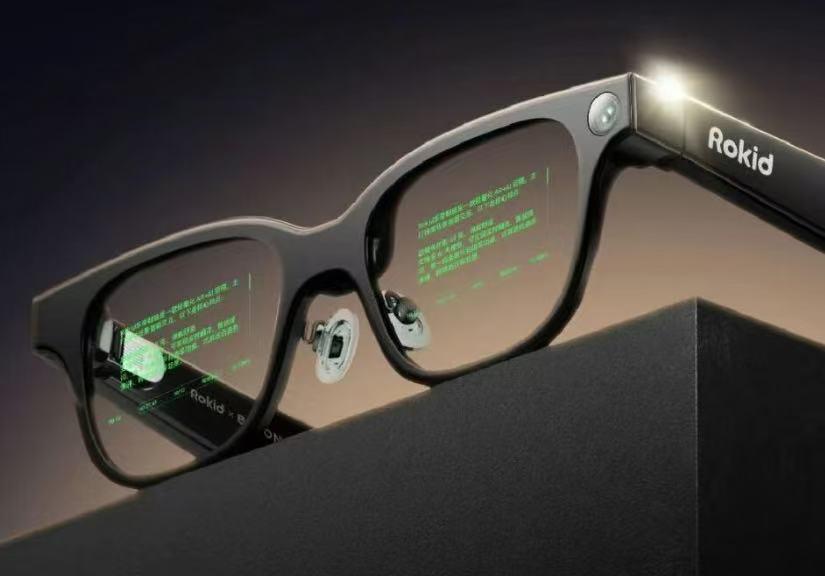
AI glasses first had a small boom. In addition to the layout of Baidu and Alibaba, technology manufacturers like Rokid, which focus on glasses, also developed rapidly. The price of AI glasses started to drop below 1,500 yuan. The basic functional form of AI glasses, which combines shooting and voice interaction, has been established.
Besides glasses, an unexpected category of AI hardware is toys. In 2025, the market size of China's AI toy market is expected to reach 29 billion yuan, with an annual compound growth rate of over 50%. Plush toys for companionship, AI learning robots with educational functions, and AI trendy toys for the adult market are growing like mushrooms after rain.

The AI mobile phone, the main battlefield of AI hardware development, was also busy this year. The Doubao mobile phone, which caused a stir at the end of the year, features the ability to complete multi - app operations with a single sentence through the system - level permissions of Doubao, which has sparked controversies over privacy and security and counter - measures from the Internet ecosystem.
Mobile phone manufacturers also continued to bet on AI this year. Honor, which has