The "Eight Pieces for Returning to Poverty" in 2025: Opening a store brings momentary pleasure, but it fails right before the peak season.
When the era abandons you, it's too late when it hits the trending list. Recently, the topic "Internet-famous bread shops are struggling to sell" trended on social media, bringing small business startups back into the public eye after a long absence. Some people complained, "It looks ordinary, is expensive and tastes bad. I haven't been there for a long time," which resonated with many.

It's not just internet-famous bread shops that are having a hard time. In the business battlefield of 2025, there are many "corpses" of small and medium-sized entrepreneurs. This year can be aptly described as "a world of ice and fire." On one hand, high-tech concepts such as AI and robots are being hotly pursued by capital. On the other hand, countless physical entrepreneurs are losing all their money, and the situation is dire. When I looked through the list of failed startups in 2025, I found that some industries that seem to have low entry barriers and high returns are actually "mass graves" for cutting leeks. There are many such cases. The once prosperous self-service gold shops suddenly closed down overnight. The milk tea shops that carried the literary dreams of their owners suddenly collapsed on the eve of the peak season. Even the automotive robot projects invested hundreds of millions by the second-generation rich couldn't escape a dismal ending. The cruelest thing in the business world is that you open a shop with passion, but reality buries you with the bills. Behind these bloody cases, the same fatal pattern repeats: Underestimating operations and overestimating the market.
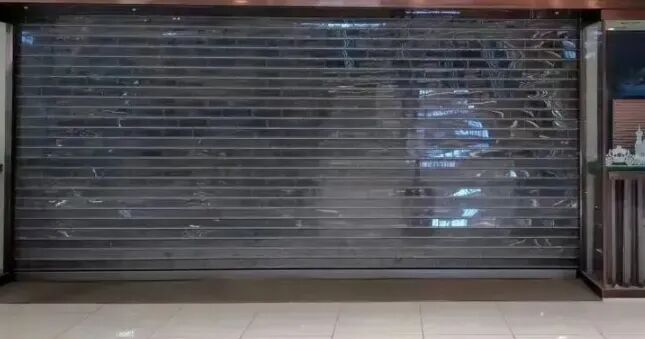
When someone decides on the startup direction based on "what I think," and when someone firmly believes that copying the routine of Mixue Bingcheng can lead to success, the outcome of this business game is already doomed.
01
The most "tragic" business:
Large restaurants are suffering a wave of closures
The old-fashioned large restaurants that once carried the memories of countless family gatherings are disappearing at an alarming rate. From 2023 to 2025, nearly 50,000 large restaurants across the country had abnormal operations. A number of time-honored brands closed down in batches, and even restaurants that had been in business for 30 years couldn't escape the bad luck.

The cliff-like decline in the wedding banquet market dealt the first heavy blow to large restaurants.
The number of marriage registrations has been declining for 8 consecutive years, reaching only 6.106 million couples in 2024. What's even more fatal is that young people no longer choose large restaurants for their weddings. Forest weddings, beach ceremonies, and McDonald's theme weddings have become the new favorites, and the "grand occasion" of traditional restaurants has become a burden instead. The double squeeze of soaring costs and a sharp decline in customer flow have pushed these large restaurants into a desperate situation. The rent for shops in a certain business district in Shenzhen has soared to 135 yuan per square meter, an 8.7% increase compared to 2024. The labor cost is even more astonishing. A comprehensive large restaurant usually has hundreds of employees, from chefs to waiters to logistics staff, and the total salary is extremely high. A restaurant owner calculated that as soon as he wakes up every day, there is a fixed cost of 45,000 yuan, not including other expenses.

The crisis of pre-made dishes became the last straw that broke the camel's back for large restaurants. It was reported that 70% of a 6,000-yuan wedding banquet was made up of pre-made dishes, and the raw material cost was less than 1,500 yuan. Consumers angrily complained, "Spending a high price to eat pre-made dishes is worse than a 19.9-yuan set meal in a convenience store!"
Facing the crisis, large restaurants have started to "transform." Xuji Seafood set up a marinated food stall, and Jingrong Grand Restaurant set up an affordable fast-food stall at the door. Five-star hotels have also joined the fray. A boss said bluntly, "Survival is more important than perseverance."

The real competitive barrier has never been the fancy bricks and mortar or the decoration, but the ability of an enterprise to continuously respond to market changes and reshape user value.
The collective closure of large restaurants has sounded the alarm for all traditional industries: in this rapidly changing era, you either strive for survival or leave in a sorry state.
02
The most "crazy" business:
The darling of big companies is in a mess
Once upon a time, unmanned supermarkets were highly anticipated, and major giants such as Alibaba and JD.com entered the market one after another. More than 200 stores were opened in a year, and unmanned shelves were often installed in 20,000 locations. However, in 2025, this industry became the "craziest failure." Amazon closed its last unmanned supermarket, and domestic unmanned retail brands fell one after another like dominoes. What was once a capital favorite valued at billions is now ignored.
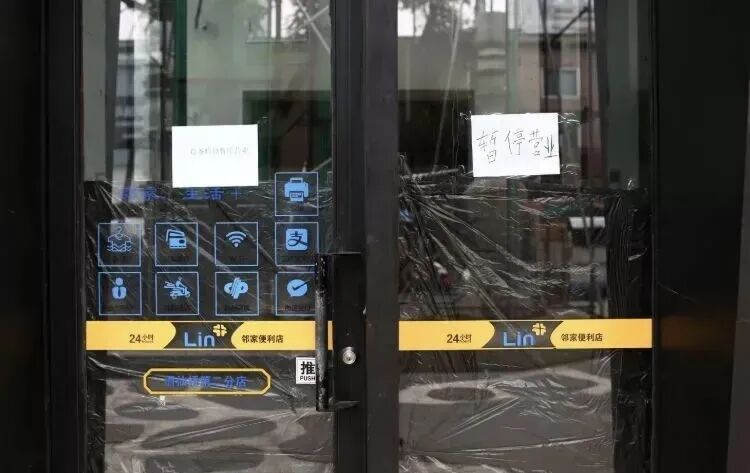
The first lie of unmanned retail is "cost reduction."
On the surface, unmanned stores cut out cashiers and stockers, but the technology cost has become a new "money-guzzler." For a 15-square-meter unmanned supermarket, hardware devices such as sensors, cameras, and automatic recognition devices need to be installed, and with the development of the background database and algorithms, the investment can be as high as tens of millions of yuan. Even more ironically, it was reported that behind the "unmanned" Amazon unmanned supermarket, there were actually 1,000 Indians remotely monitoring. The so-called "black technology" is just a technological illusion disguised by a human-wave strategy.
The second fatal flaw of unmanned retail is the test of human nature. In 2019, an unmanned convenience store had nearly 800 items stolen by the same person in 4 days, suffering heavy losses. Even for the simplest unmanned shelves, the loss rate can be as high as 30% - 50%. What's even more fatal is that when customers encounter problems, there is no one to turn to. They don't know who to ask when there are problems with checkout or where to consult about product quality issues. The cold machines cannot provide any emotional value.

Technological ideals cannot overcome real-world pain points. Unmanned retail cabinets face unimaginable operational challenges: frequent equipment failures, theft of goods, and untimely replenishment are just some of the problems that keep emerging.
What's even more cruel is that consumers are not buying it. Consumers quickly found that the prices of unmanned retail are not cheaper than those in convenience stores, but they have lost the warmth of interpersonal interaction. When the economy is in a downturn, price sensitivity increases and the demand for experience decreases, and the disadvantages of unmanned retail are magnified infinitely.

The wave of closures in the unmanned retail industry has taught the most painful lesson to all those who chase after trends.
Any technological application that cannot truly create value will eventually show its true colors in the cruel market test.
03
The most "pathetically closed" business:
Optical shops are being abandoned faster than you can turn a page
The once-profitable industry with brighter light boxes than restaurants is now disappearing in batches. There was a time when optical shops were one of the most profitable industries, and in some places, selling glasses became a local characteristic industry, and even several buildings had to make way for optical shops.

Now the number has decreased by about 70,000, making it one of the retail segments with the sharpest decline.
As e-commerce platforms offer cheaper eyewear services and the popularity of intelligent optometry equipment, the "information gap" advantage of traditional optical shops has disappeared. Consumers found that the online price of the same pair of frames is only one-third of the offline price. The cost pressure cannot be underestimated either. The rent and labor costs continue to rise, and as eyewear is a low-frequency consumer product, it is difficult to support the high operating expenses. An industry insider revealed, "Now opening an optical shop is more like working for the landlord."
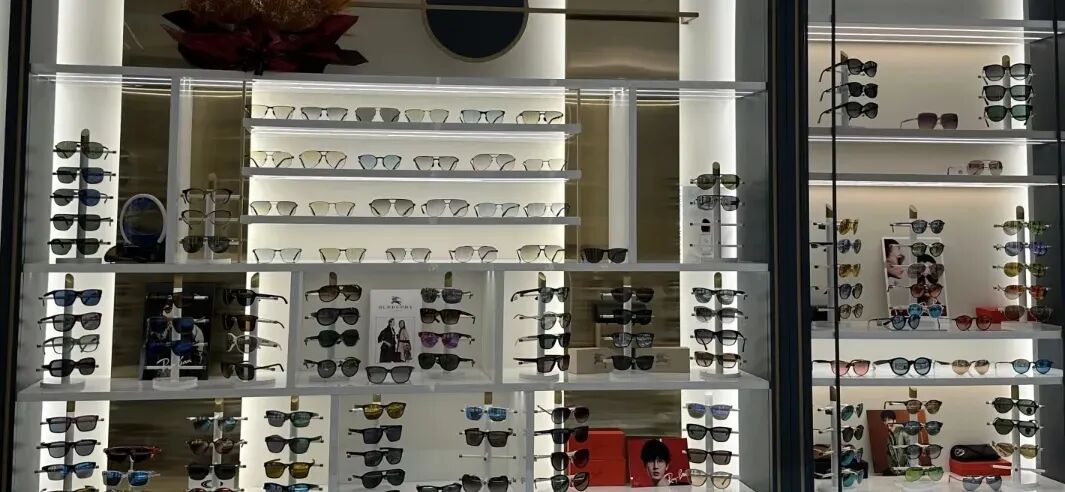
Some industry insiders also pointed out that the fundamental problem with optical shops lies in their outdated business models. In today's era of increasing personalized needs, traditional optical shops still stick to the old path of "optometry + eyewear fitting," lacking innovation in experience and service upgrades.

Behind the pathetic closures, is the industry's indifference to consumer changes. When young people can measure their eyesight at home and choose from hundreds of frames online, the value proposition of traditional optical shops has already collapsed.
The decline of optical shops from high-profit to low-profit is essentially the awakening of the consumer market. The model of making quick money by relying on information gaps is doomed to failure after the market becomes more transparent. In the future, optical shops will not compete on who can sell lenses at a higher price, but on who can better understand the needs of users. Either provide professional services, pursue extreme cost-effectiveness, or provide an excellent experience.
04
The most "money-burning" business:
Humanoid robots are brought down by 10,000 yuan
In 2025, the first batch of humanoid robot companies went bankrupt. Even in the AI boom, automotive robot projects that were born with a silver spoon in their mouths couldn't escape the bad luck in 2025. Several well-known projects announced their suspension. The Silicon Valley star company K-Scale Labs burned through its $4 million in financing. The founder sent an email to customers to refund the money and close the accounts, and was even unable to pay a 15,000-yuan labor arbitration fee, and finally was forced into bankruptcy liquidation.
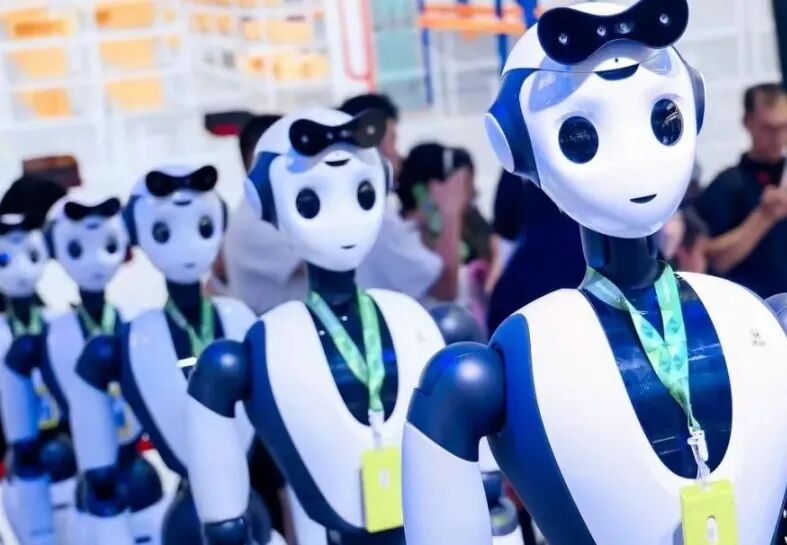
The withdrawal of capital is the first sign. In 2025, the survival rate of newly established AI companies was only 7%. When giants offered similar tools for free, the startup teams that had spent 120 million yuan on research and development had to disband. Technology companies lacking capital support are accelerating their transformation into ecological nutrients for technology giants. Take a well-known automotive robot project as an example. It had received hundreds of millions of yuan in financing in two rounds and released a cool product, but due to strategic overlap within the group, it was disbanded just 5 months after its establishment. Employees who hadn't even completed their probationary periods lost their jobs, and the office logo was removed overnight. The deeper problem is the unclear path of technology commercialization. Many automotive robot projects remain at the conceptual stage and cannot achieve large-scale mass production and commercial application. The more you invest, the more you lose, creating a vicious cycle.

The winter of automotive robots tells us that you can't build real... (The text seems incomplete here. I've translated based on what's provided.)