A voice recording card rewrites the hardware story of big manufacturers
The excitement in the AI hardware industry shows no sign of cooling down in the last month of 2025.
Since 2025, news in the AI industry has continuously stimulated the perceptions of investors, users, and even ordinary people. Open AI spent $6.5 billion to acquire io Products, a hardware company founded by Jony Ive, the former chief designer of Apple. In the middle of the year, Insta360 went public on the A - share market and was hailed as the "first stock in intelligent imaging", with its market value soaring to over 100 billion yuan at its peak. An early - stage primary market investment institution in Insta360 reaped a thousand - fold return.
This is a huge wave, comparable to a raging fire. According to 36Kr statistics, as of the first half of 2025, there were 114 investment and financing deals in the field of embodied intelligence and AI hardware in China, with a total financing amount exceeding 14.5 billion yuan. In May 2025 alone, more than half of all investment and financing funds flowed into AI hardware.
The prosperous bubble has emitted a strange and dazzling light. Some founders who left large companies can secure financing from top - tier funds based on their resumes and PPTs, even without a product demo. The entire industry is showing signs of being driven by FOMO (Fear of missing out) and irrational emotions. Many products can't even answer a basic question: Can they be implemented in a specific scenario?
Within a year, large companies such as Alibaba, ByteDance, and Meituan have successively launched their own hardware products. The entry of these giants marks that the Chinese AI hardware industry has officially entered the main battlefield, and an era of intense competition has begun.
On December 23rd, DingTalk held its second product launch event within half a year. At the event, DingTalk announced Agent OS and launched the hardware "AI's body", DingTalk Real, enabling AI Agents to safely and reliably perform tasks in the enterprise environment. So far, DingTalk has formed a complete AI system architecture, becoming the first to build a complete closed - loop with a large - scale model as the foundation, hardware as the entry point, and enterprise - level AI Agents as the exit. This is undoubtedly a long - awaited moment in the industry. DingTalk's first AI hardware product, DingTalk A1, has quickly become a dark horse among domestic AI hardware products and has remained at the top of the sales charts. In the AI era, DingTalk seems to be breaking the long - standing curse that Internet companies can't do well in hardware.

01
Breaking the Curse in 6 Months
In June 2025, in a secret meeting room on the third floor of the Alibaba campus, the 0.95 - inch screen on an unencapsulated DingTalk A1 circuit board on the table first lit up with a pale yellow light, and a cheer erupted in the office.
It is believed that this was an unforgettable milestone moment for the DingTalk A1 team members when they look back on their careers in the future. It may also be the clarion call for Alibaba to enter the AI hardware track.
In the past decade, attempts by large Internet companies in the hardware track have often ended in failure. Overseas, Microsoft's acquisition of Nokia has become a repeatedly criticized failure case in business history. In China, the integration of hardware businesses by large companies has mostly ended in closures. There is even a myth in the industry: Internet companies are inherently lacking in the genes for doing hardware.
However, the giants have never given up on this obsession because hardware is always the most crucial entry point for seizing traffic and has the highest conversion threshold. By reviewing their failures, some similar reasons can be found: the hardware and the existing software ecosystem are at odds, making it difficult to establish and stabilize large - scale implementation scenarios.
With the arrival of the AI wave, DingTalk A1 attempts to rewrite the narrative. Three months after its release, it topped the charts on multiple platforms during the Double 11 shopping festival, indicating the possibility of large - scale application implementation.
According to the product manager of DingTalk A1, in April 2025, when Wuzhao (a person's name) decided to develop AI hardware after his return, he quickly locked in the form of a recording card as the product within a week. The mission of this hardware is to fire the first shot for DingTalk's comprehensive transformation into AI and must succeed in terms of both user feedback and business returns.
AI hardware is different from general - purpose terminals such as mobile phones and has its own set of operating logic. In the AI era, hardware, empowered by large - scale models, inherently has the productive ability to delve into professional fields, which also means it may need to generate value to form a deep - seated bond with specific users.
There are already players with rapid growth in the recording card market. Plaud has basically captured the overseas market, with an annualized revenue of up to $250 million, and has started to enter the Chinese market. iFlytek, 360, and Mobvoi have all released similar lightweight recording pens. As for Huaqiangbei, it has already brought the price of Plaud - like products down to a hundred yuan.
In the highly competitive domestic market, the DingTalk team must figure out three questions: What are the characteristics of hardware in the AI era? What is the value of the data generated by the hardware? Why should users buy DingTalk's products?
Looking back at the product definition process, the DingTalk team showed a sense of balance. When choosing between charging and thickness, based on the usage habits of most domestic users, they adopted the general Type - C charging port, sacrificing the appearance thickness within 3mm. At the same time, to increase the certainty of interaction, they added a small screen on the surface, which later became an object of imitation for many similar products.
However, when DingTalk A1 was first released, it was criticized by some users as a "semi - finished product". Wuzhao also said at the product launch that when he took the product to meet the head of a hardware manufacturer, he was directly criticized for the product's poor usability at the beginning. The curse that "Internet companies can't do well in hardware" seemed to be confirmed again.
The pressure was passed on to the A1 team, and they had to launch a lightning - fast battle to reverse the product's reputation. All team members were on the front line. From the front - end and back - end of software development to hardware design and operation, they had to respond to users' relevant questions in the community within 20 minutes. The product team's scheduling rate for user feedback was higher than 95%, and basically all product problems reported by users were considered for updates. Since its release in August, DingTalk has maintained a version - iteration speed of once every two weeks, with a total of 160 optimizations.
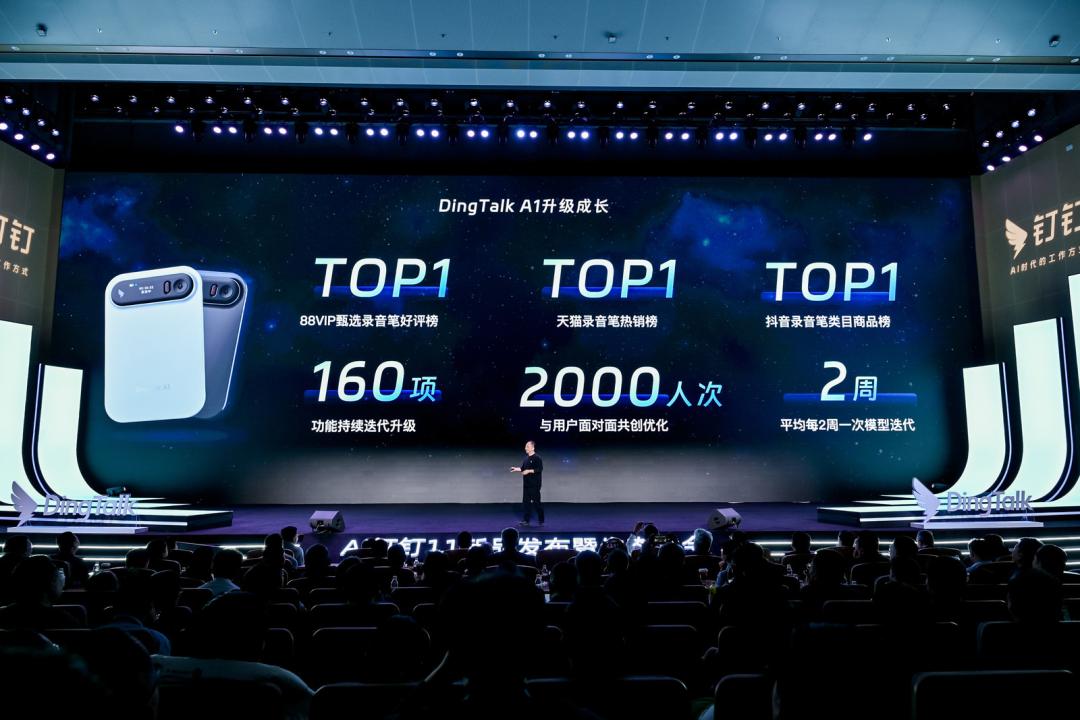
"In terms of user experience, we match or even surpass similar products by 80%. For the remaining 20%, we aim to comprehensively exceed them, and users should feel the difference strongly," the team leader told 36Kr.
The reason why traditional large companies have difficulty starting new growth engines is largely that they deliberately avoid the risks of transformation. However, many Silicon Valley tycoons believe in the creed of "fail fast, fail often". As a result, while the overall situation remains stable, a series of amazing new businesses are born.
Behind the rapid reversal of the product's reputation is also this entrepreneurial mindset that permeates the entire team. "We can't over - think because it will limit product innovation. We can only keep communicating with users and iterating quickly."
Product strength is a dynamic process of improving both software and hardware, just like Microsoft's operating system, which always has endless patches. A1 adopts a practical approach: it maximizes the performance of the unchangeable hardware and continuously iterates on the software side to quickly solve defects. By adjusting the strategy during the process, it finally finds a better path through rapid responses. The soaring sales have proven the feasibility of this tactical approach, and this is just the prelude to DingTalk's long - term battle.
02
Change: From Sunk Data to Flowing Assets
After the initial wild growth, AI hardware often falls into the trap of being a single - function "tool". Players in the market start to blindly stack configurations, inevitably leading to a vicious competition.
The result of this competitive situation is that in China, where the industrial chain is highly developed, most hardware products only have a short - lived boom period. If a unique value anchor point cannot be found, the product will be quickly replaced by later entrants.
From the very beginning, DingTalk A1 was not positioned as an isolated recording card but as the "sensory organ" of DingTalk's large - scale AI ecosystem. As a "data collector", it supplies continuous fuel to the AI system, which is then refined on the software side. Eventually, the data becomes an asset that continuously circulates and evolves in the workflow.
Wang Zhaoqi, the CEO of Xiaobangbang, shared at the launch forum: "The intelligence of AI is to build all the data collected by hardware on top of intelligence, ultimately bringing new growth possibilities to enterprises." Every recorded voice should ultimately become a productive support that enterprises can retrieve, call, and re - develop.
Taking the sales scenario as an example, the traditional CRM (Customer Relationship Management) system that enterprises have relied on in the past has significant limitations, and front - line data is often found to be inaccurate. On the other hand, this data is not intelligently processed and needs to be revitalized by enterprises themselves. However, many small and medium - sized enterprises lack in - house analysis experts and do not have the budget to hire expensive consulting agencies. "Enterprises have data, but this data has not formed real combat effectiveness," Wang Zhaoqi analyzed.
This deadlock has been broken. After enterprises introduce hardware devices like A1 to accurately collect front - end data, they can directly use AI to analyze orders and customers. Once a risk in customer follow - up is detected, AI will immediately mark it in red and even provide follow - up strategies. Enterprises can refer to this information, quickly allocate resources, and fill in the gaps. At the same time, AI can also summarize and refine the data performance of top salespeople, form a methodology in reverse, and directly precipitate it into the enterprise's training and combat system, which can be replicated and promoted.
In such practical cases, AI integrates into and reshapes the industry workflow. It can communicate with people, adapt to changing needs, and as a self - evolving organism, adapt to all industries, achieving a leap from "recording everything" to "understanding everything".
"Language has finally become a data asset that can be silently precipitated and automatically circulated. For an enterprise that continuously wants to grow, this ability is not just a bonus but a basic element of efficiency," Zhang Zhenhan, the general manager of Shandong Aosen RV Co., Ltd., commented.
03
0.54 Square Centimeters: A "Window" to Infinite Possibilities
There are two physical buttons on the front of DingTalk A1. The large circular button is about 0.54 square centimeters, which is a comfortable area for a finger to touch. When users get their hands on DingTalk A1, they may be confused about these two physical buttons. Many people may think that the extra button is a redundant design.
However, this is exactly the strategic window reserved by DingTalk for "One - Key AI".
DingTalk A1 is a phased victory for DingTalk's integration of software and hardware, but it is far from the end. The picture of AI - enabled office work is still vaguely outlined at present, but the goal has been set, which is what Microsoft CEO Satya Nadella predicted: "AI Agents will end all SaaS."
The reconstruction of the interaction paradigm is inevitable. Ultimately, the interaction between humans and AI will be with Agents. The services provided by current office software are mostly transitional forms. Eventually, users will skip the cumbersome intermediate - layer software and directly call the underlying Agent clusters on demand, which is the so - called "One - Key AI".
DingTalk is obviously preparing for this.
There are different entry points for people to access AI, but physical buttons are always the most direct and user - perceivable way, with irreplaceable significance.
When DingTalk A1 was first launched in August, the underlying AI Agent capabilities of DingTalk were still being refined. DingTalk adopted a more practical approach and defined this button as a "voice memo" as a transitional measure.
With this product launch, DingTalk's concept of a "One - Key Seamless Workflow" is fully revealed, which is a clear path for the integration of AI software and hardware: using a physical device to call the AI Agent ecosystem with one key, and the button will evolve into an entry point to call all applications.
For example, it can help users schedule meetings, reply to messages, generate reports, etc. As DingTalk's AI Agent ecosystem matures, the functions of this button will continue to expand. A simple click at this moment will initiate another revolution in DingTalk's applications. In essence, it opens up a "shortcut" to the AI Agent world outside of mobile phones and computers, offering users a ticket to enter the world of AI Agents.
This time, DingTalk also announced that third - party service providers can access A1 and develop exclusive AI Agents. When the valve of data fuel is opened, small and medium - sized SaaS developers will quickly pour in, launching vertical expert Agents in areas such as finance and human resources. This tiny "window" will open up infinite possibilities. These intelligent agents will continuously precipitate and evolve on the DingTalk platform. Eventually, they will not be isolated plug - ins but will organically interweave into an all - encompassing ecological office AI Agent OS.
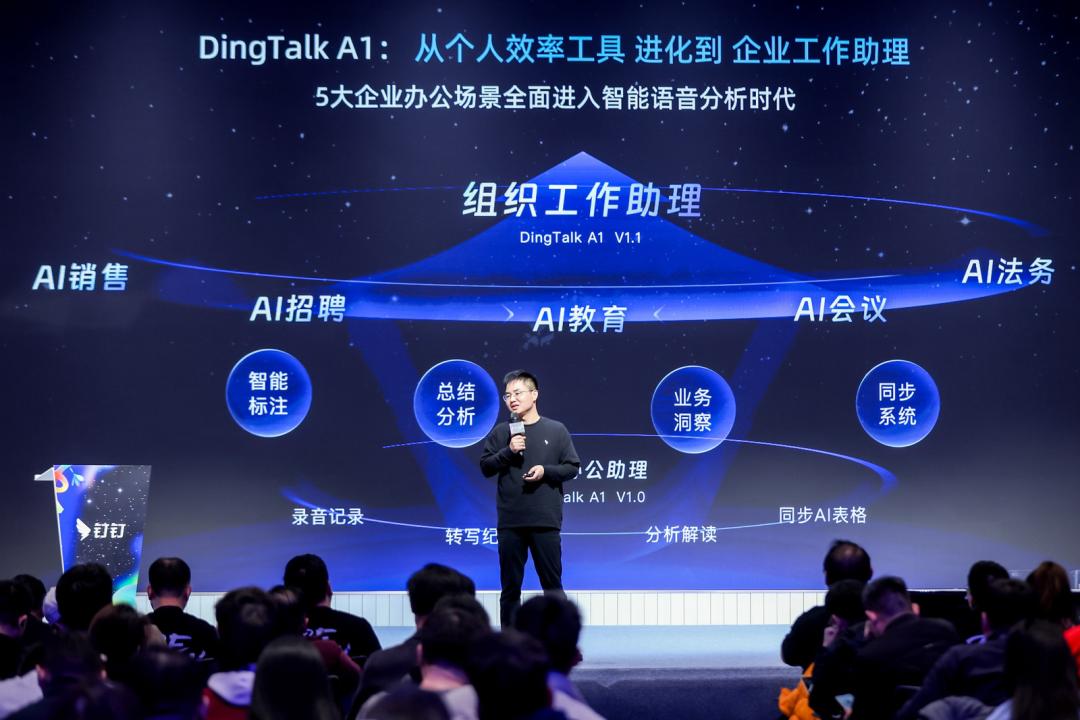
In this ecosystem, hardware is the sensory antenna, data is the flowing fuel, and Agents are the central nervous system for handling all affairs. At this time, the scenes that have appeared many times in science - fiction movies will become a reality. The office collaboration tools users have will be a digital life system that can self - grow and understand everything.
If this vision comes true, it will become an indestructible barrier for DingTalk - just like the iPhone, which has an unfathomable moat formed by a global ecosystem of more than 30 million developers.
In terms of current collaborative office work, as DingTalk goes further in the integration of software and hardware, the current industry may be reshuffled again. DingTalk A1 and subsequent office AI hardware will gradually change users' perceptions of AI - enabled office interaction. Simple and clear operations and a prosperous software ecosystem will win overwhelmingly, driving a large - scale migration of users during the technological transformation period and becoming the most solid foundation for enterprises.
DingTalk's attempt in AI hardware can also be regarded as a key move towards achieving the goal of "making AI accessible to everyone" in Alibaba's overall layout.
As early as the first half of 2025, according to a report by market research firm Frost & Sullivan, the daily total consumption of large - scale models in the Chinese enterprise - level market was 10.2 trillion Tokens. Among them, Alibaba's Tongyi model accounted for 17.7%, ranking first and becoming the most - chosen large - scale model by Chinese enterprises at present.
However, it should be noted that the vast majority of these model calls still come from large enterprises, and the penetration rate among small and medium - sized customers is not high. Through DingTalk A1 as a physical fulcrum and a new interaction method of "seamless workflow", DingTalk may draw countless small and medium - sized enterprises into the AI Agent ecosystem, increasing the frequency of AI Agent calls.
The era of dividing traffic through apps to win will soon pass. In the AI Agent era, whoever controls the scheduling power of AI Agents will control the definition power of office work and productivity. How to enable more users to call Tokens more effectively has become the most intense core battlefield in the all - out AI war among large companies.
Currently, it can be clearly observed that the pace of large companies entering the hardware track tends to be steady. When they make a move, they first choose product categories that match their advantageous businesses