The collapsed "prodrug" didn't lose.
The collapse of the "promising" Biotech company Janux has cast a shadow over the future of the "prodrug" field.
The so - called "prodrug", also known as a precursor drug, refers to a class of compounds that are either inactive or have very weak activity on their own. However, they can be transformed in the living body to generate metabolites or parent drugs with pharmacological activity or significantly enhanced pharmacological activity.
This is not a new concept. It was systematically proposed by British scientist Adrien Albert as early as 1958. Its essence is to use chemical modification to cloak active drug molecules in an "invisibility cloak", making them inactive or having extremely low activity. Only after entering the body and undergoing specific biological transformation can the parent drug with therapeutic effects be released.
Although the "prodrug" strategy has just suffered a setback, its important role in drug development cannot be concealed. Problems such as poor solubility, low stability, insufficient targeting, and significant toxic side effects are highly likely to be solved through the "prodrug" strategy. Especially for the highly promising PROTAC drugs, the "prodrug" strategy may be one of the answers.
01 The "Invisibility Cloak" of Drugs
The core value of "prodrugs" lies in their ability to "cloak" "vulnerable" molecules.
Based on differences in modification methods and activation mechanisms, prodrugs are mainly divided into three categories: Bioprecursor prodrugs are activated through in - vivo metabolism to generate the parent drug structure. For example, the anti - tumor drug cyclophosphamide needs to be activated by the cytochrome P450 enzyme system in the liver; Carrier prodrugs connect the drug molecule with a carrier through a cleavable chemical bond. Typical examples include amino acid ester - based prodrugs, which release the parent drug through the action of hydrolases; Co - drugs combine the active drug with a co - component (a non - toxic compound that can enhance efficacy or reduce toxicity) through a cleavable covalent bond. In the body, both components are released simultaneously through enzymatic or non - enzymatic actions to exert a synergistic therapeutic effect.
According to statistics from Nature drug discovery, the FDA has approved a total of 178 prodrugs, accounting for 9% of all approved small - molecule drugs. Among them, the largest indication category is anti - infective drugs (33%, 58 types), followed by chemotherapy drugs (18%, 32 types), antihypertensive drugs (14%, 25 types), and anti - inflammatory drugs (12%, 21 types).
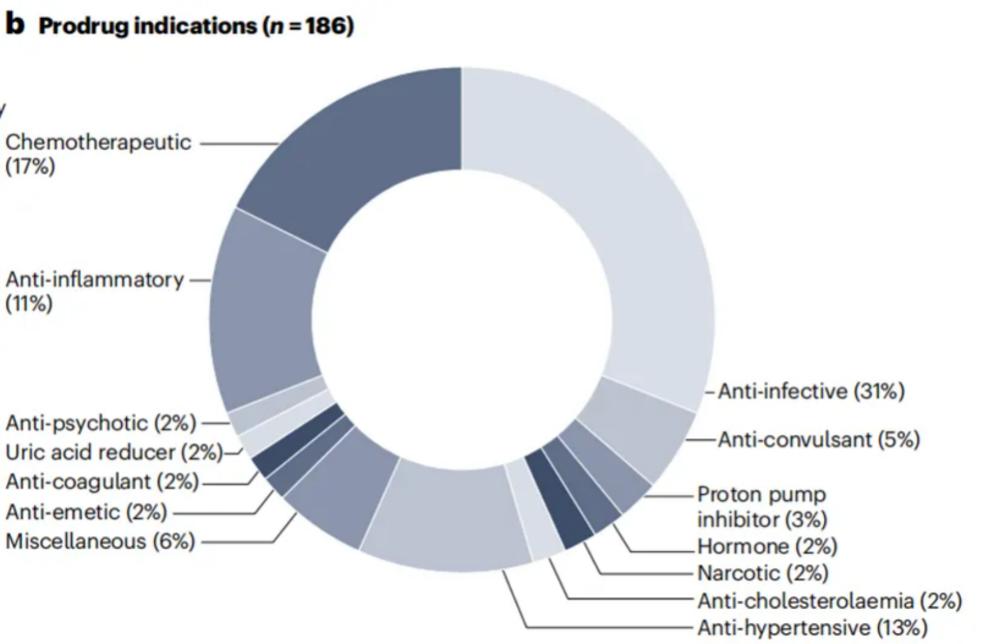
Figure: Prodrugs' indications, Source: Nature drug discovery
Compared with traditional drugs, the advantage of the prodrug strategy lies in its drug - forming ability. Many promising active compounds are buried due to low oral absorption rate, severe first - pass metabolism, unstable chemical properties, or significant toxic side effects. Prodrug modification can bypass these obstacles through ingenious design, such as improving drug water solubility, enhancing drug membrane permeability, and increasing drug stability. For example, sofosbuvir was shelved because its parent drug could not be developed into a drug, but through prodrug design, it has been clinically applied and has become a milestone drug in the treatment of hepatitis C; Aspirin reduces gastrointestinal irritation through acetylation modification and has become the most widely used antipyretic and analgesic drug globally.
The highly promising PROTAC technology was once regarded as a revolutionary technology in the field of biomedicine. However, limited by poor water solubility and low cell permeability, the pharmacokinetic (PK) properties of PROTAC molecules are poor, which in turn restricts the clinical application of PROTAC molecules. However, an article recently published in the ACS Omega journal shows that the prodrug strategy is expected to change the drug - forming dilemma of PROTAC.
With the development of prodrug technology, prodrugs are also used to improve drug targeting. Prodrugs can remain in an inactive form before reaching the target and release the active drug when they reach the target organ or tissue. This process mainly depends on specific enzymes that are over - expressed in diseased tissues. Janux's JANX007 is a prodrug antibody designed based on this principle. In addition, prodrug design can also be used to improve pharmacokinetic properties, such as extending the half - life to reduce the frequency of administration or changing the route of administration to improve patient compliance.
02 The Iteration History of Prodrugs
After more than sixty years of technological iteration and market verification, prodrug technology has shifted from an initial chemical modification technique to a systematic understanding and utilization of disease biology and the complex metabolic network of the human body. From simple esterification modification in the mid - 20th century to today's AI - driven precise design, prodrug technology has generally gone through three generations of leaps, and each leap means a revolutionary improvement in efficacy and safety.
The first - generation prodrug technology was in the simple esterification stage. For example, aspirin forms a prodrug through the acetylation modification of salicylic acid, which can reduce gastric irritation and improve drug stability. Although this type of design is simple and easy to implement, it lacks targeted control ability, and activation depends on ubiquitously expressed esterases, making it difficult to solve the problem of tissue selectivity.
The second - generation prodrug technology is marked by the design of guiding structures. By introducing guiding structures to connect drugs and functional groups, the design flexibility is significantly improved. In the field of antiviral drugs, the ProTide technology uses an aryl - amino acid ester composite structure to protect the phosphate group of nucleoside drugs. After the prodrug enters the cell, it is hydrolyzed by carboxylesterases and protease A, triggering intramolecular cyclization to release the active nucleoside monophosphate, which is finally phosphorylated to the triphosphate form to take effect. This design has not only saved compounds that were originally difficult to develop into drugs but also directly led to the development of sofosbuvir, an oral drug for curing hepatitis C.
Entering the 21st century, prodrug technology has entered the third generation, the microenvironment - triggered prodrugs. The innovation at this stage lies in the targeted chemical structure design using the disease microenvironment or specific enzyme metabolic pathways to achieve targeted and precise activation. For example, tenofovir alafenamide, a new - generation prodrug of tenofovir, realizes targeted delivery to hepatocytes/lymphocytes through prodrug technology. After administration, it is selectively activated in hepatocytes by carboxylesterase 1 (CES1) in hepatocytes and selectively activated in lymphocytes by protease A in lymphocytes, thereby improving the efficacy and reducing systemic exposure, especially reducing renal toxicity by 90% compared with the parent drug.
Today, prodrug technology has entered a new stage of "AI + prodrugs": AI models can accurately predict modification sites and activation pathways through deep - learning metabolic data, shortening the screening cycle of pre - clinical candidate compounds by more than half; Responsive prodrugs can achieve "on - demand activation" by recognizing pH differences and specific enzyme concentrations in the tumor microenvironment, avoiding damage to normal tissues; It is also deeply integrated with biological drugs such as ADCs and bispecific antibodies. For example, ADC drugs reduce off - target toxicity through toxin prodrug modification. Although JANX007 failed, its design of "tumor - specific enzyme activation + bispecific antibody" still represents an important direction for the extension of prodrugs to the field of biological drugs.
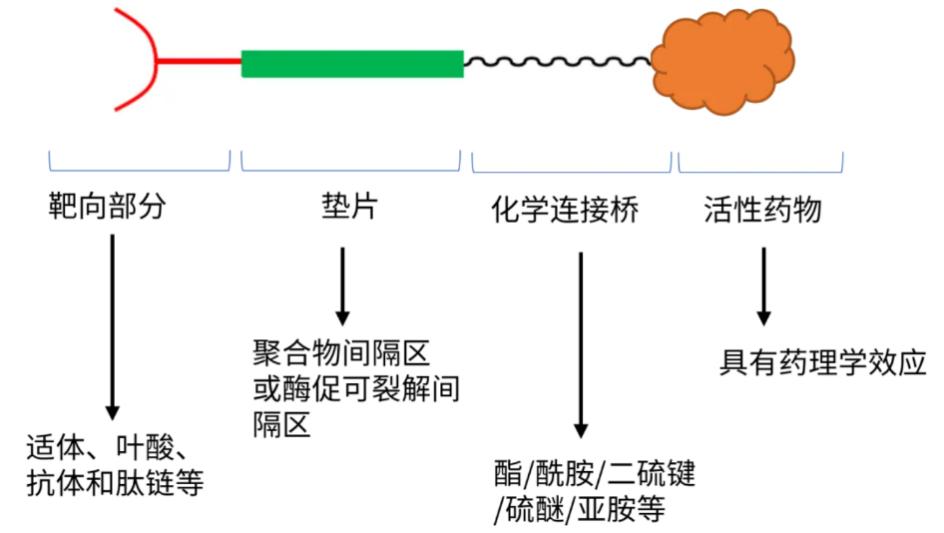
Figure: Prodrug design for targeted delivery to tumor cells, Source: WuXi AppTec
With technological iteration, prodrugs are no longer just tools for solving drug - forming problems. Their market value and strategic significance are becoming increasingly prominent, and they have become an important direction in global innovative drug R & D. Industry data shows that the global prodrug market size has been continuously rising. It is expected to grow from less than $20 billion in 2015 to approximately $35 billion in 2025, with a stable annual compound growth rate of around 6%.
This means that the prodrug strategy is transforming from a past "auxiliary improvement" role to one of the engines driving source innovation. Especially in the high - risk and high - investment R & D of tumor and central nervous system drugs, prodrug design is attracting more and more capital and R & D resources due to its potential to improve targeting and reduce systemic toxicity, and has become a breakthrough point for innovative pharmaceutical companies to build differentiated pipelines and improve clinical success rates.
03 The Future of Prodrugs
The continuous iteration of prodrug technology is attracting the attention of global pharmaceutical giants, and its future depends on whether it can achieve breakthroughs in unmet clinical needs and overcome technological bottlenecks.
In the field of anti - infective drugs, due to the continuous evolution of pathogens and the increasing drug resistance, the development of new and effective anti - infective drugs is urgent. Prodrugs can significantly improve antibacterial activity by optimizing the drug action time and intracellular concentration and bypassing the efflux pump mechanism of drug - resistant bacteria. For example, Orlynvah, the first oral penem antibiotic approved in October 2024, has improved drug stability and oral absorption through the prodrug strategy.
In the field of tumor treatment, combination - therapy prodrugs integrate multi - mechanism drugs into a single molecule to achieve multi - target synergistic attacks on tumor cells. If a chemotherapy drug and an immunomodulator are designed as a prodrug, the two drugs are released simultaneously at the tumor site, which not only kills tumor cells but also activates the body's immune response, improving the treatment effect; Double - targeted prodrugs can more precisely identify tumor cells and immune cells, further enhancing the specificity and effectiveness of immunotherapy. With technological iteration, activatable imaging prodrugs are also emerging. They integrate diagnostic and therapeutic functions and can monitor the drug efficacy in real - time, providing strong support for precise tumor treatment.
In the field of neurological diseases, more than 90% of small - molecule drugs cannot be effectively delivered due to the existence of the blood - brain barrier. Precise design of prodrug molecules provides a new way to break through this dilemma: Lipophilic modification of drugs targeting neurotransmitter receptors can enhance their ability to cross the blood - brain barrier. After entering the brain, the active ingredients are released to exert their effects; Targeted modification mediated by transferrin receptors or design responsive to the acidic microenvironment can achieve specific enrichment of drugs in the brain. In the treatment of brain tumors, this strategy can also achieve targeted delivery and reduce damage to normal brain tissue. With the deepening of understanding of disease mechanisms, the application prospects of the prodrug strategy in the field of Alzheimer's disease and other fields are also becoming broader.
However, the future development of prodrug technology still faces many challenges.
The first is the problem of individual metabolic differences. There are significant differences in the expression of metabolic enzymes among different individuals, resulting in the performance of prodrugs in the human body not meeting expectations. The failure case of JANX007 was precisely because the differences in enzyme activity in the tumor microenvironment could not be accurately predicted, resulting in a significant decline in efficacy after expanding the sample size.
Secondly, there is also heterogeneity in the tumor microenvironment. For example, there are differences in enzyme expression in hypoxic areas, and the expression of PSMA varies greatly in different lesions of the same patient. This makes it difficult to unify the activation conditions of prodrugs, affecting the overall efficacy of the drug. In addition, the regulatory approval requirements for prodrugs are higher, and a comprehensive investigation of degradation products is required, increasing the R & D difficulty and cost.
Facing opportunities and challenges, global pharmaceutical companies are rushing to make arrangements. Gilead's ProTide platform is continuously iterating, expanding from sofosbuvir to the fields of hepatitis B and HIV. In 2024, it launched the blockbuster prodrug lenacapavir, which showed 100% effectiveness in a key phase III clinical trial for preventing HIV infection in women, amazing the world.
Domestic companies are also catching up in the direction of differentiation. Changcheng Pharmaceutical, relying on the GIBP platform, has had its broad - spectrum anti - tumor prodrug POC101 approved for IND in China and the United States; Kejun Pharmaceutical's A - ProX™ AI prodrug platform integrates metabolic data and spatial chemical models, and its anti - platelet prodrug CG - 0255 has entered the phase III clinical trial in China and the United States simultaneously; Osaikang's cytokine prodrug technology platform SmartKine®, through engineering transformation, solves the drug - forming problems of cytokine drugs, and 2 innovative molecules have entered clinical trials.
In addition, pharmaceutical companies such as Hengrui Medicine, Innovent Biologics, and Hutchison China MediTech have also made frequent arrangements in the field of prodrugs and achieved breakthroughs in the fields of tumors, cardiovascular and cerebrovascular diseases, etc.
The ultimate mission of prodrug technology is to enable every drug molecule to pass through the fog of biological barriers and accurately reach where it is needed. The future of this "art of latency" belongs to the explorers who can master AI prediction, analyze individual differences, and cooperate with regulatory innovation. The "innovators" have written their own prologue.
This article is written based on publicly available information and is only for information exchange purposes and does not constitute any investment advice.
This article is from the WeChat public account "Medical Shine", author: Qingli. It is published by 36Kr with authorization.