Has the era of unpaid subsidies for new energy come to an end as 9.2 billion yuan in subsidies have been quickly credited to accounts?
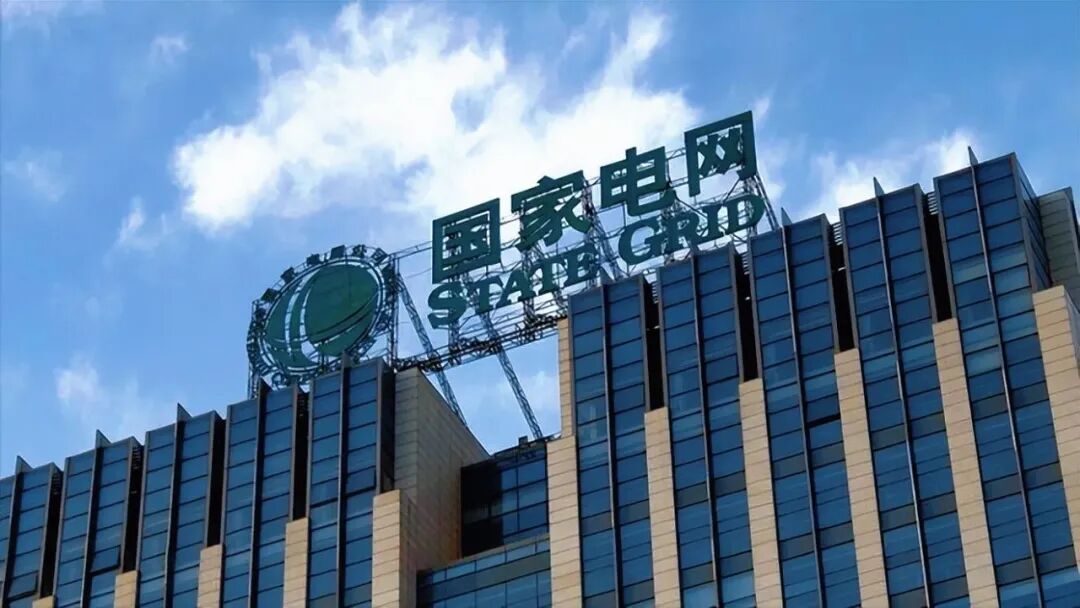
On December 12th, the State Grid New Energy Cloud released an announcement from the State Grid Corporation of China regarding the fourth transfer of renewable energy surcharge subsidies in 2025, showing that the State Grid has completed a subsidy transfer of 9.2 billion yuan. This is the fourth transfer this year, and the cumulative amount has exceeded 83.2 billion yuan. Subsidies are flowing into the accounts of new energy power station owners at an unprecedented speed. The huge backlog of subsidy arrears that started accumulating a decade ago once crushed many photovoltaic and wind power companies. Now, with the regular monthly subsidy distribution mechanism in place, does it mean that the "chronic subsidy problem" that has plagued the industry for a decade has finally been resolved?
The direct subsidy transfer mechanism improves fund utilization efficiency
A 50-megawatt wind power project in Yancheng, Jiangsu, once faced a typical dilemma. Two years after the project was connected to the grid, nearly 30 million yuan in receivable subsidies had not arrived in the account. Subsidy arrears were a common phenomenon in the industry at that time. According to statistics from the China Photovoltaic Industry Association, by the end of 2021, the cumulative arrears of renewable energy subsidies in the entire industry exceeded 400 billion yuan. A large amount of cash flow was frozen, and new energy companies had to rely on new loans to maintain their daily operations.
The turning point came in 2024. The regular application mechanism for renewable energy electricity price surcharge subsidies jointly established by the Ministry of Finance, the National Development and Reform Commission, and the National Energy Administration began to operate. Power grid enterprises report the progress of subsidy list reviews on a monthly basis, and the financial department reviews and approves the disbursement according to procedures. The subsidy payment cycle, which was previously calculated on an annual basis, has been greatly shortened. In the 9.2 billion yuan transferred this time, wind power accounts for 44.7%, photovoltaics 46.7%, and biomass 8.6%. This structure is basically in line with the current new energy installed capacity ratio. The special note in the announcement that "the data is consistent with the distribution in September 2025" is a clear signal of the stable operation of this new mechanism.
A deeper change is reflected in the budget management method. Subsidy funds are directly transferred from the central finance to the special accounts of power grid companies, ensuring earmarked use and full - process monitoring. This direct fund transfer mechanism effectively reduces intermediate links and significantly improves fund utilization efficiency. According to the operation data of the State Grid, since 2024, the subsidy funds have been distributed on a regular basis, completely changing the traditional model of "year - end centralized payment".
Improved cash flow reshapes the industry ecosystem
The timely arrival of subsidy funds first triggered a revaluation of power station asset values. In October 2024, the photovoltaic power station project included in the expanded assets of the first domestic new energy public REITs, "Huaxia Yuexiu Expressway REIT", was favored by the market due to the stability of its subsidy distribution. During the issuance period, the over - subscription multiple was nearly 15 times, reflecting the strong recognition of the capital market for new energy assets with stable cash flow. During the period of subsidy arrears, similar assets in the trading market usually had to be discounted by more than 30%.
Enterprises in the manufacturing sector have clearly felt the improvement of the downstream capital chain. The third - quarter financial report of LONGi Green Energy Technology Co., Ltd., a leading photovoltaic module enterprise, shows that its accounts receivable turnover days decreased from 86 days in the same period last year to 67 days. "The regular distribution of subsidies has significantly improved the payment ability of downstream customers," the financial report analyzed. The relief of cash flow pressure enables enterprises to invest more funds in R & D, and the industrialization process of high - efficiency battery technologies such as N - type TOPCon and heterojunction has been significantly accelerated.
However, the schedule for subsidy reduction remains unchanged. According to the established policy, after 2025, newly commissioned onshore wind and photovoltaic projects will fully implement parity grid - connected power generation. The original intention of the subsidy mechanism was to "help the industry get on its feet and give it a push". When this "crutch" is removed, the new energy industry must learn to walk independently. This means that the profitability of enterprises will completely depend on their technical level, operation and maintenance efficiency, and market competitiveness.
The real test in the post - subsidy era
Although the subsidy distribution mechanism has been streamlined, the deep - seated challenges faced by the new energy industry are just beginning. In the first three quarters of 2024, the national wind curtailment rate dropped to 4.1%, and the solar curtailment rate dropped to 3.2%. However, in regions rich in new energy such as the Northwest and North China, the pressure of power consumption remains significant. After the subsidy is cancelled, the revenue of power stations completely depends on the actual grid - connected power generation. The power grid's consumption capacity has become a key constraint on the economic benefits of projects.
The reform of the power market provides an institutional framework for this. After the basic establishment of the national unified power market system in 2025, new energy will obtain revenue by participating in the spot market and ancillary service market. However, due to its inherent characteristics of volatility and intermittency, new energy is at a natural disadvantage in market competition. Designing a market mechanism that suits the characteristics of new energy is a more complex systematic project than distributing subsidies.
Technological innovation has become the new rule for the industry's survival and development. In the photovoltaic base on the east bank of the Yellow River in Ningxia, the intelligent photovoltaic system predicts the power generation capacity through artificial intelligence algorithms, with an accuracy rate of 95% 15 minutes in advance, greatly enhancing the power station's ability to participate in power market transactions. The cost reduction and efficiency improvement brought about by technological progress are replacing subsidies as the primary driving force for the industry's development.
The investment logic is also undergoing a fundamental change. In the past, subsidies were the "safety cushion" for calculating project returns. Now, investors must conduct in - depth research on the power grid structure, load characteristics, and market rules of the project location. New energy investment is shifting from simple "resource - oriented" to complex "system - oriented", with significantly higher requirements for professional capabilities. The era when investment returns could be calculated based solely on subsidy policies is gone forever.
Yujian Energy believes that the rapid arrival of the 9.2 billion yuan subsidy marks the end of an era of relying on subsidies for development and foreshadows the beginning of a new era of market competition! When fiscal subsidies gradually withdraw, can the environmental value of green power be fully reflected through the market mechanism? When the proportion of volatile power sources continues to rise, how can the flexibility of power system operation be guaranteed? The answers to these questions will determine whether China's new energy industry can truly mature. The era of relying on subsidies to expand scale is over. Now, new energy must learn to stand independently in the market wave and continue to grow in technological competition. Perhaps, this industrial transformation is more important than receiving subsidies on time.
This article is from the WeChat public account "Yujian Energy", published by 36Kr with permission.