From "100,000 RPM" to "Truly Useful": The Second Half of the Hair Dryer Market in 2025 Has Begun
Have you noticed that hair dryers this year are starting to look more and more alike?
Of course, what I'm referring to here isn't just the appearance. After all, the form of hair dryers hasn't changed much since their inception. However, in terms of functionality, manufacturers seem to have a tacit understanding and have introduced various features such as starting at 100,000 revolutions per minute, temperature - controlled hair care, negative ions/plasma, magnetic nozzles, and foldable storage. Even the marketing copy is somewhat similar.
From the user's perspective, this is definitely a good thing, which means that the overall level of the hair dryer market is constantly rising, and we can buy better products at a lower price.
However, according to the online aggregated data from Aowei Cloud Network, the total retail sales of the hair dryer market in the first half of 2025 were approximately 4.35 billion yuan, showing a year - on - year decline of 10.5%. This set of data surprised me. Why is the market shrinking instead of growing when the overall performance of the market is on the rise?
The Hair Dryer Market is Redefining the Race Track
In the first half of the hair dryer's development, it was essentially a "speed race": manufacturers were all pursuing higher rotation speeds, greater air volume, and shorter hair - drying times. However, with the maturity of technology and the supply chain, most high - speed hair dryers on the market have a rotation speed of 100,000 revolutions per minute, which fully meets the needs of 99% of users. When the industry has reached the ceiling in terms of "speed", users' requirements for products are no longer limited to just drying their hair.
Therefore, in 2025, the hair dryer market began to show obvious bifurcations in terms of technological direction: some continue to push the limit of rotation speed, some turn to lightweight and scenario - based designs, and some focus on hair care, intelligence, and the closed - loop experience of "accessorization/multifunctionalization".
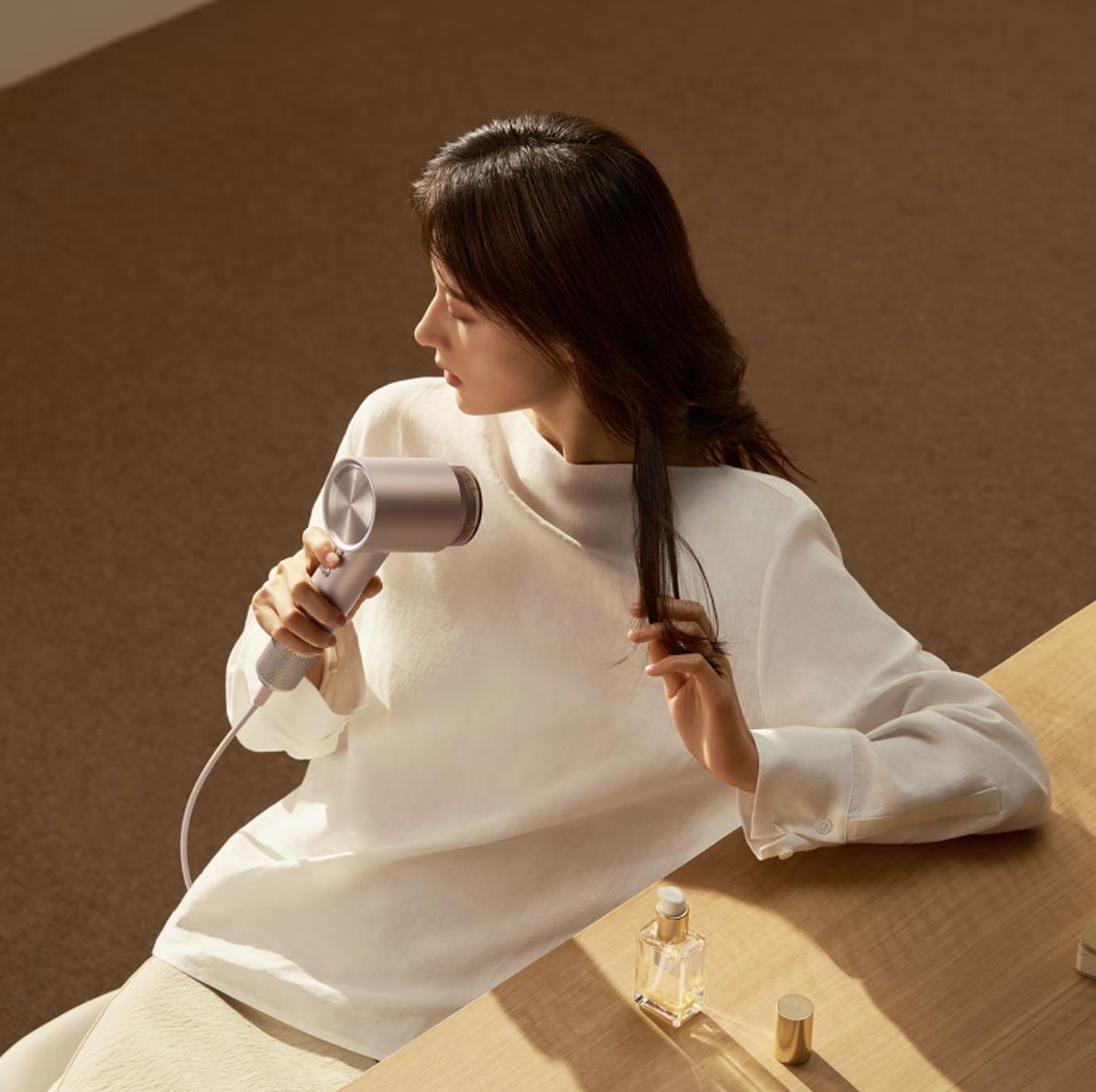
(Image source: Lafeng official)
First, let's talk about the measurement standard for high - speed hair dryers - rotation speed. It seems the most "hardcore" and is also the easiest to understand. Various indicators such as rotation speed, wind speed, air volume, noise, and temperature - control curves can all be presented in corresponding comparison charts.
However, the problem is that as these parameters reach their limits, it becomes increasingly difficult for ordinary people to perceive the differences in experience. For example, the rotation speed of ordinary hair dryers on the market currently ranges from 16,000 to 30,000 revolutions per minute, while high - speed hair dryers have a rotation speed of at least 100,000 revolutions per minute, a difference of 3.3 - 6.25 times. The difference between 100,000 and 140,000 revolutions per minute is only 29%. When converted into user experience, it's very difficult for users to feel the difference. Moreover, as long as the supply chain catches up, extreme parameterization can be easily replicated, and ultimately, it all comes down to price.
The second direction is portability and lightness. The key isn't "how fast the wind speed is or how powerful the motor is", but whether users are willing to take it with them when they go out. A typical example is the Pocket series of hair dryers from Dreame. Its biggest selling point is simple: it can be folded and is easy to store, and can be easily put into a backpack or a small - sized suitcase. This means that hair dryers are evolving from "household appliances" to "portable styling tools": the reason users are willing to pay for it is no longer "it can dry hair", but "it doesn't take up much space during travel and is good enough to use".
The third direction is hair - care functions and intelligence. In the past, when manufacturers talked about hair care, they mainly mentioned terms like negative ions/constant temperature, which "sounded very cool". Now, hair dryers are becoming more like "smart household appliances". For example, the Dreame Miracle Pro doesn't just aim to dry hair. Instead, it focuses on integrating hair care and nourishment into the hair - drying process, promoting an integrated "blow - care - nourish" solution. It also focuses on selling points such as atomized essence/essential oil atomization and temperature - control monitoring for "nourishing while blowing", perfectly meeting the needs of some high - end users.
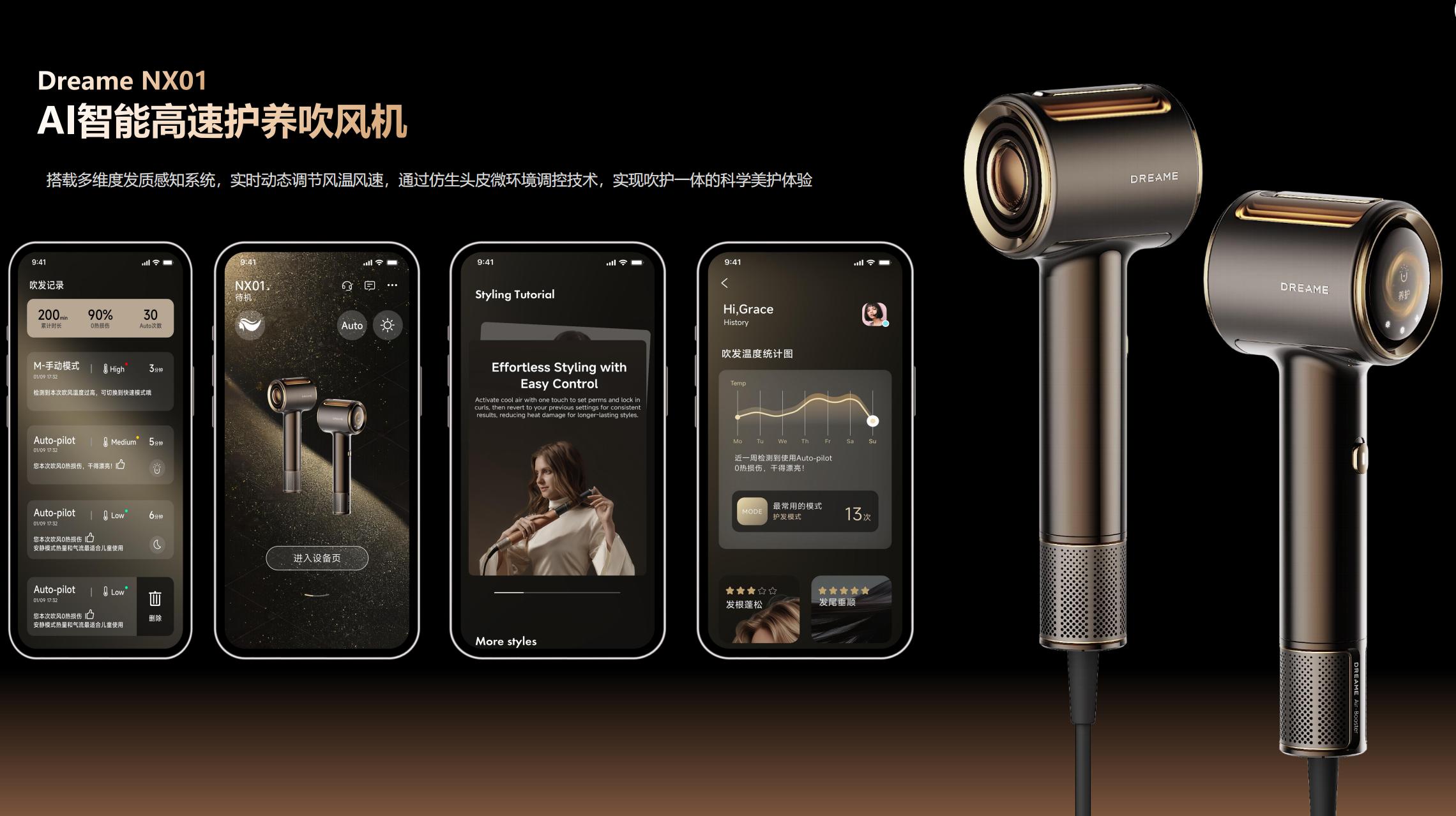
(Image source: Dreame official)
We can easily find that this type of product isn't answering "Can I dry hair faster", but rather "Can I make your hair look smoother, shinier, and less frizzy after drying?"
In terms of intelligence, Dreame has also launched the NX01 AI - intelligent high - speed hair - care dryer. The machine will make decisions for you on matters such as switching different nozzles, the appropriate distance from the scalp, the suitable mode for different hair types, how to adjust the temperature, and how to remember the settings.
But when it comes to the most significant change in 2025, I think it's accessorization and multifunctionalization.
In the past, the accessories of hair dryers were basically cheap "gifts", which were not only troublesome to replace but also not very useful. Now, more and more manufacturers are putting in effort in this area: different nozzles are designed for different hair types and styling needs, and they even determine your long - term loyalty to the machine. For example, the newly released Dyson Supersonic Co - anda 2x™ comes with six accessories. In addition to drying hair, it can also be paired with smart styling accessories with RFID, making the process of "changing accessories = changing the product" smoother.
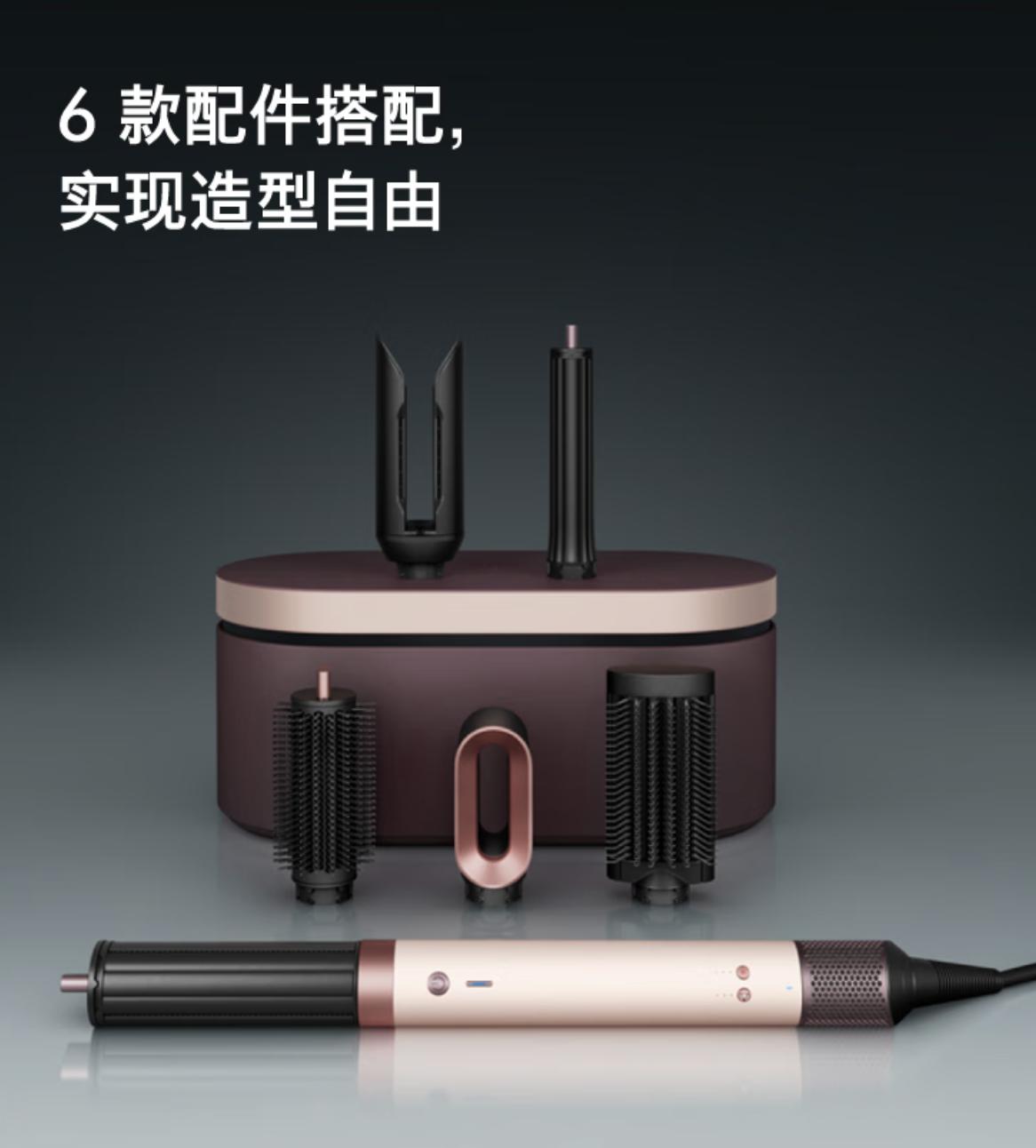
(Image source: Dyson official)
When accessories can determine the user experience, a hair dryer is no longer a one - time purchase but more like an expandable platform - you're not just buying a machine; you're buying a "more convenient styling process".
The last route is wireless technology, which has been repeatedly discussed but still hasn't been truly popularized.
From the user's perspective, it is indeed a necessity. Who likes to spend ten minutes drying their hair in a stuffy bathroom? However, from a technical perspective, it's very difficult: mainstream hair dryers often have a power of over 1600W. If they rely entirely on batteries, to achieve a usable battery life, the weight of the whole machine would be extremely exaggerated, which is completely contrary to the mainstream "portable" attribute.
Wireless hair dryers aren't impossible to make, but two things need to mature simultaneously: higher battery energy density and more efficient hair - drying solutions (such as more efficient heating and air duct designs). Before that, wireless technology is likely to be first implemented in "local scenarios", such as camping, baby and mother care, and pet grooming, where the power requirements aren't as extreme but the demand for freedom is higher.
The Race Track Bifurcates: Four "New Ways of Survival" for Hair Dryers
When high - speed motors have become the "standard configuration", the challenge for domestic brands has shifted from "making it" to "making a difference".
Early price wars could indeed bring good sales results for manufacturers, but in the long run, they're not conducive to market development. For example, the majority of hair dryer sales are still in the 300 - 500 yuan price range. If the selling point of mid - to - high - end products is still "fast drying speed", users definitely won't be willing to pay a few hundred more for it.
The Dreame Miracle Pro mentioned earlier is a good solution. It has changed the high - end selling point from "I'm faster" to "I make your hair look better", breaking the homogenization with a systematic selling point of hair care and nourishment. The significance of this type of product is that when high - speed becomes the standard, if manufacturers want to re - establish a premium, they must make users feel that "the extra money I spend is directly reflected in the quality and feel of my hair", rather than on the parameter list.
Therefore, what domestic brands need to do next is actually to split the hair dryer market into several "new markets":
Firstly, shift from "parameter value" to "customer - group value".
In the past, the main selling points of hair dryers were 100,000 revolutions per minute and a certain wind speed. In the future, it's more likely to be "how to make flat and oily hair look more voluminous", "how to prevent fine and thin hair from sticking to the scalp", and "how to reduce frizz in dyed and permed hair". If manufacturers can clearly explain the "differences in hair types" and provide solutions through nozzles, modes, and temperature - control strategies, they can get rid of the trouble of price wars.
Secondly, the male market needs to be taken seriously.
The core demands of male users are often simpler: fast, easy to manage, not too noisy, and not taking up much space. For them, they dislike complexity: they don't want to study different modes, don't want to change multiple tools, and don't want to blow their hair for a long time without seeing results. So for them, "fast + convenient + space - saving" is more important than "higher rotation speed". Whoever can make root volumizing, quick styling, smoothing short hair, and even detailing around the temples and beard more convenient is more likely to turn "occasional use" into "daily use".
Thirdly, there are growth points in new scenarios such as children and pets.
I simply checked the relevant products on e - commerce platforms and found that there aren't many manufacturers in this category, but the prices far exceeded my expectations. These scenarios don't require extreme wind speed but focus more on being gentle, low - noise, safe, and controllable: children are afraid of getting burned, and pets are afraid of noise. Traditional hair dryers are actually a "disaster" in these scenarios. Whoever can make low - temperature comfort, noise control, and gentle air volume strong selling points, and match them with more user - friendly accessories and usage instructions, has the opportunity to sell hair dryers as "practical grooming tools".
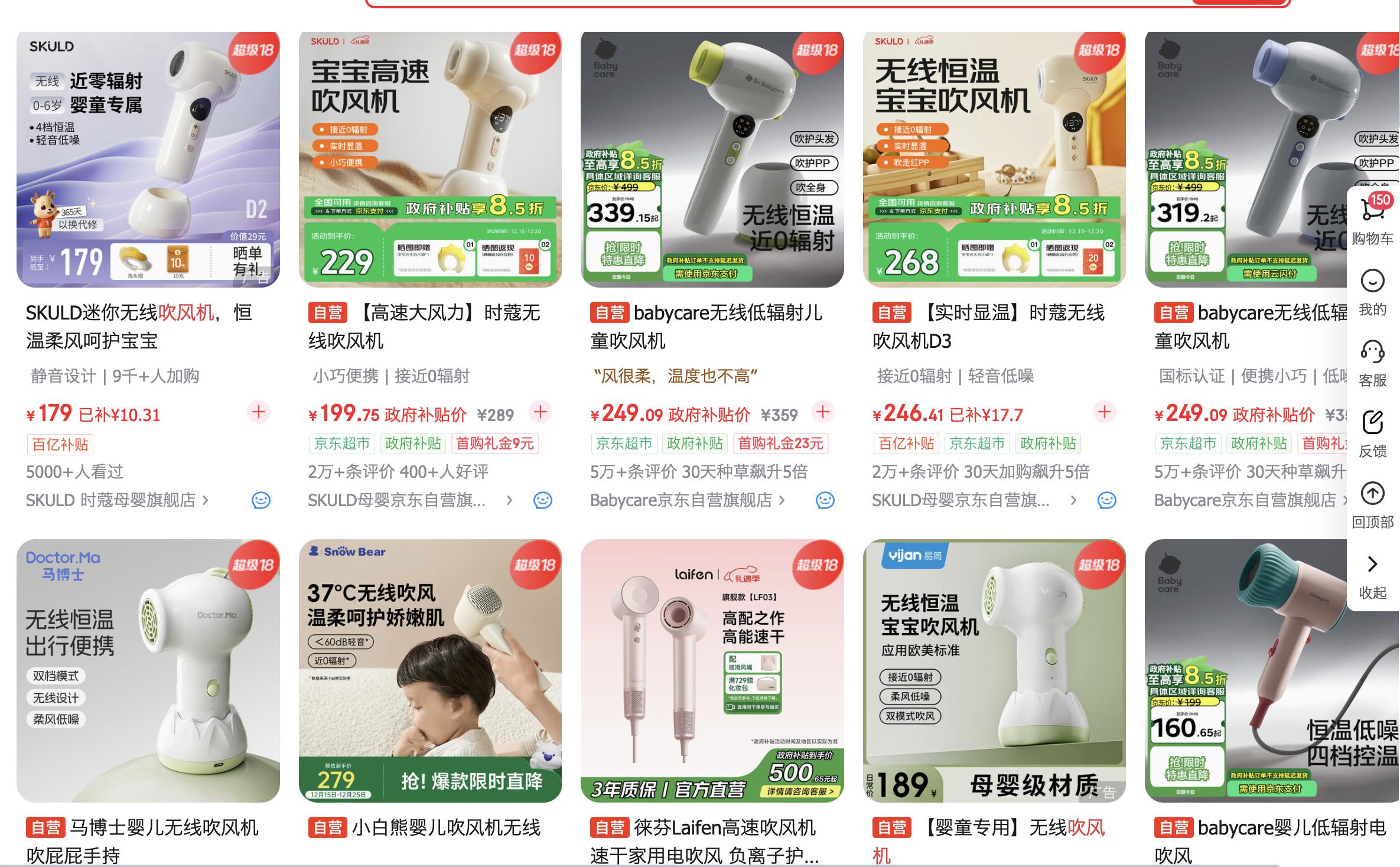
(Image source: JD official)
Fourthly, make the product more than just a single item.
Dyson, as one of the templates in the hair dryer market, is actually doing something very simple: through smarter accessory recognition and memory, it makes users more willing to change accessories and use different modes frequently. Domestic brands don't have to copy the high - end pricing to break the situation, but they can learn this "system thinking": use expandable accessories and sustainable upgradeable experiences to turn one - time transactions into long - term loyalty - this is the fundamental way to fight price wars.
Conclusion: Breaking the Deadlock Requires "Redefinition"
In 2025, although the high - speed hair dryer has completed market penetration and brought the category to a higher technical level, it has also pushed the competition into more brutal homogenization and price wars.
Next, if manufacturers want to break the deadlock, the answer probably doesn't lie in "being a little faster" but in three things. First, turn high - speed into a standard configuration and don't rely on it to support the premium. Second, segment users from "everyone" into multiple "specific groups": for example, business travelers, users with easily damaged hair, men, children, and pets. Each niche scenario is worth creating a more suitable product for. Third, upgrade the hair dryer from a "hardware" to a "system": accessories, modes, memory, hair - care strategies, and even subsequent services and content guidance. Whoever can streamline this chain can find new growth points in the highly competitive market.
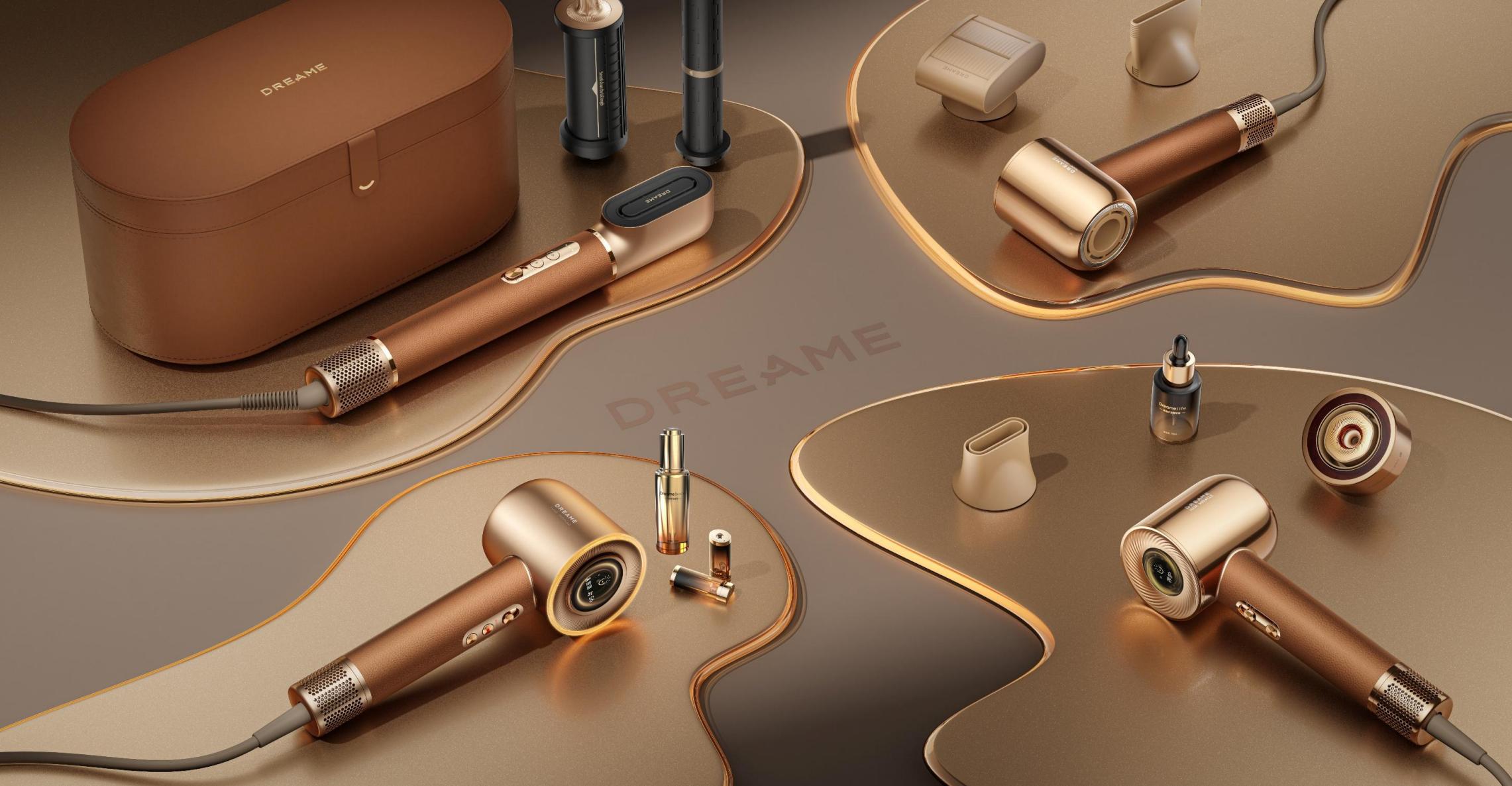
(Image source: Dreame official)
The popularization of high - speed hair dryers has changed the "standard answer" in the market, but what will truly determine the next - round market pattern is who can dig out more specific, long - term, and paying - worthy needs from the simple act of "drying hair".
As long as these needs are discovered, there won't be only price wars as a solution in the market.
This article is from the WeChat public account "Leikeji". Author: Leikeji AI Hardware Team. Republished with permission from 36Kr.