Palantir's Password: How a "Silicon Valley Company Against Silicon Valley" Conquers the Pentagon with Swarm Intelligence and Titless Management
In the venture capital myths of Silicon Valley, the success template has almost been solidified: identify the pain points of hundreds of millions of users, quickly capture the market with free or extremely low - cost products, monetize through advertising or value - added services, and ultimately become a platform - type giant with the boost of capital. From Google and Facebook to Uber and Airbnb, all are products of this "consumer Internet" logic.
However, there is a company that has chosen a completely opposite path. It doesn't target consumers. Its clients are the Pentagon, the Central Intelligence Agency, and intelligence agencies around the world. Its products don't aim for high daily or monthly active users. Instead, they are used to predict roadside bombs, track terrorists, and plan special operations. Its most well - known feat was using big data to locate the top terrorist Osama bin Laden and assisting the US government in killing him. Since its inception, it has been controversial, yet the capital market has given it a high valuation of nearly $50 billion. It is Palantir.
In the book Tech Republic, co - written by its co - founder Alexander Karp and executive Nicholas Zamiska, the "code" of its internal operations is systematically revealed for the first time. Palantir's success doesn't stem from following the mainstream culture of Silicon Valley. Instead, it lies in consciously building an "anti - Silicon Valley" organizational culture and engineering thinking.
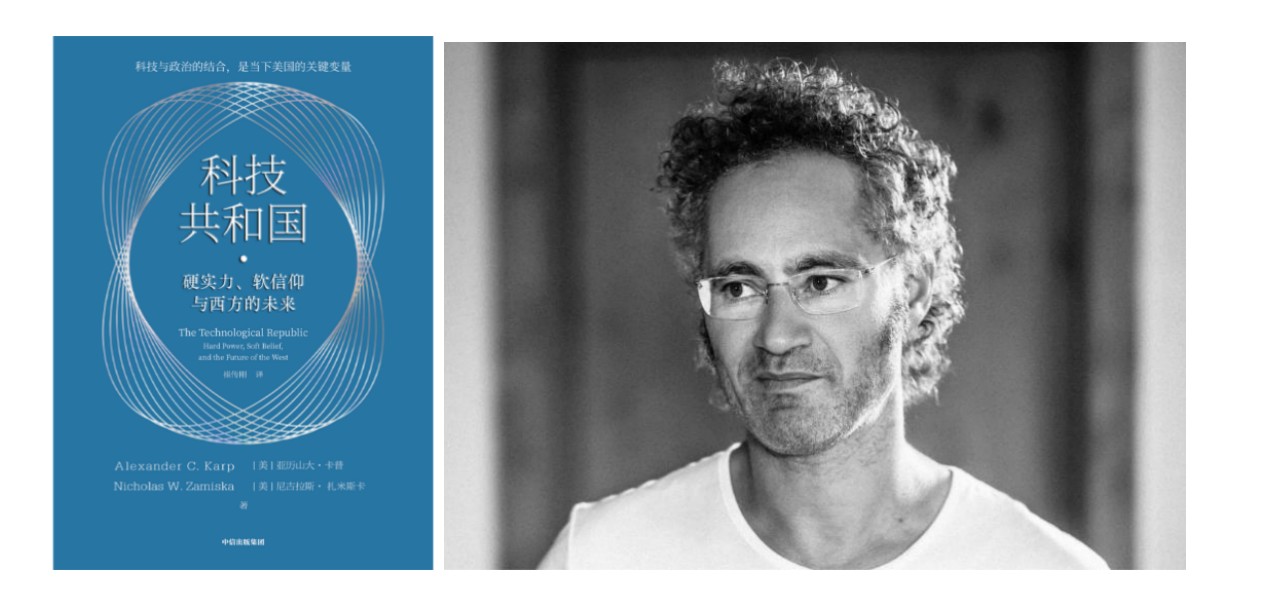
Left: Tech Republic Right: Alexander Karp, founder of Palantir
"Eck Swarm" Swarm Organization Model
Biologists have discovered that when a type of European bee is looking for a new hive location, there is a special activity pattern: generally, a group of special scout bees go out first to scout potential locations, then return to the swarm to report the results, and finally the whole group decides on the most ideal location and moves in together. This group often includes up to 20,000 - 30,000 bees.
Throughout the moving process, seamless collaboration among all individual bees is required. However, biologists haven't found any queen bee playing a leading and commanding role. All individuals act spontaneously. How do they successfully collaborate to complete this huge moving project?
Biologists point out that the social structure of bees shows "a spontaneous collaboration without central control." The behavior of bees inspired Karp. He believes that an ideal startup should be like a bee swarm. This kind of collaboration and action without excessive and unnecessary centralized control is precisely the core characteristic of the successful entrepreneurial and engineering culture in the United States.
Scout bees. These individuals on the edge of the group usually have the latest and most valuable information about the suitability of potential nests. They can make flexible adjustments according to environmental changes and express their suggestions to the group by dancing. The whole bee swarm will self - organize around the current problem to be solved.
Other species also show similar behavior patterns. For example, the mystery of how starlings quickly transmit information to each other and can move in the air like a single entity is similar to that of bees. The actions of a starling group are usually not decided by a pre - designated leader or commander. Instead, they are initiated by individuals on the edge of the group. These birds have the best view and can be the first to detect changes in predators or the external environment. Instructions about the moving direction of the flock are passed from one bird to another and quickly spread from the edge to the core of the flock. In less than 1 second, these instructions can be seamlessly shared among the whole group of hundreds of individuals.
In most human organizations, whether government agencies or large enterprises, a large amount of individuals' energy and talent are wasted on power struggles, taking credit, and shifting blame. The precious and scarce creativity of participants is often misdirected towards building self - serving hierarchical systems and getting entangled in issues like who should report to whom.
However, in a bee swarm, once a scout bee returns to the hive, the information it has collected is directly transmitted without any processing. When a starling sends a turning signal to its companions, it doesn't need to ask for instructions from any superior. There are no weekly reports submitted to middle - level managers, no presentations for senior leaders, and no need to hold an offline or online meeting to prepare for another meeting.
A bee swarm or a starling flock doesn't need a large number of vice - presidents and assistant vice - presidents to command small teams. There is no need to try to figure out the intentions of superiors. There is only the flock or the swarm itself. It is in this swirling collective movement that a kind of improvised and free wisdom is nurtured.
"High - ranking jackdaws are extremely arrogant towards their lower - ranking counterparts and even regard them as dust under their feet." Traditional enterprises also have this problem. Under their rigid internal culture, the complex hierarchical system seriously hinders the upward flow of ambition and creativity.
The deep - seated dilemma of traditional American corporate culture is that they often require the unity of a person's "actual status" and "assumed status," at least in the social organizational structure within the enterprise.
For example, a senior executive vice - president of a company must act like a "senior executive vice - president" in all occasions and affairs within the company. This relatively higher position requires him to take the initiative in all aspects, even if this dominance may not contribute to the achievement of organizational goals.
After World War II, the internal structure of American enterprises became increasingly rigid and hierarchical. For example, by the 1960s, the electronics manufacturer Philco, founded in 1892, had established a complex internal hierarchical system. They even formulated a supporting system manual that detailed what office furniture executives could enjoy according to their seniority. This rigid internal social structure is obviously far from the bee - swarm model observed by biologists.
We try to cultivate a culture within Palantir that regards "status" as a tool rather than an essential value. In other words, we regard "status" as a resource that can be used and mobilized in the real world to achieve other goals or intentions.
Here, almost everyone shares the title of "Forward Deployed Engineer (FDE)." There are no "supervisors," "vice - presidents," or "department managers," nor the unique titles in Silicon Valley such as "Chief Growth Officer (CGO)" or "Chief Product Officer (CPO)." As Peter Thiel expounded in Zero to One, once a clear title ladder is established within an organization, people will instinctively start to compete with each other for promotion, and finally dissipate their precious energy in internal political games, thus destroying real collaboration. It's better to cancel these labels and let everyone focus on the only goal: solving problems.
There is a major misunderstanding about the organizational culture of Palantir and many Silicon Valley companies. People generally think that these enterprises are flat or even non - hierarchical organizations.
In fact, all human institutions, including those Silicon Valley technology giants, have their own ways of organizing personnel, and this organizational structure usually means that some people are placed above others. The difference lies in the rigidity of these structures, that is, whether they can be quickly deconstructed or reorganized, and how much of the employees' creativity will be wasted on maintaining these structures and self - promotion.
There is undoubtedly a certain form of "shadow hierarchy" within Palantir, that is, a power structure that exists in reality but is not publicly announced. The lack of a clear organizational structure does come with some costs. For example, it increases the cognitive and communication costs of employees within the company, and also confuses external partners, making it difficult for them to figure out who the real person in charge is. But many people also ignore the fact that reducing the emphasis on internal signs and status symbols can actually free up a lot of space for thousands of employees.
For example, if there is no clear regulation within the organization about "who is responsible for the commercial sales in Scandinavia," it may not be a bad thing, because it means you also have the opportunity to be the person in charge. Or, why can't you be in charge of the business development work of state and local governments in the Midwest of the United States?
According to our experience, leaving some power vacuums or seemingly power vacuums within an organization often brings more benefits than drawbacks, because these vacuums are often filled by ambitious and capable leaders who take the initiative when they see an opportunity. However, in a traditional hierarchical organization system, these people may be timid and afraid to act for fear of encroaching on others' "territories."
Of course, an organization without "titles" still needs decision - making and management. What we adopt is not the traditional "decentralization" or "anarchic management," but an extremely flat + founder - controlled model. In the early days of the company, the organizational structure had only two levels: the founding team and front - line engineers. There were almost no traditional "middle - level managers" - no layers of approval, no reporting chains, and no "strategic planning meetings" led by senior executives. Front - line engineers can directly communicate with us, put forward their own ideas, and directly take decision - making responsibilities.
The secret of success in Silicon Valley doesn't only lie in recruiting the most outstanding and intelligent talents. It also lies in making the best use of their talents, fully giving them flexibility, freedom, and creative space. The most excellent software companies are more like communities of artists, filled with distinct and talented souls. Their most precious quality is often the instinct to refuse to follow the crowd and not to submit to authority.
Founder Model
More and more evidence shows that companies led by founders often perform better. This outstanding performance is because these founders attach importance to the aesthetic perspective and have the free space to voice their opinions and make decisions. For many people, this extraordinary economic performance is extremely counter - intuitive and even confusing. According to the traditional creed of the free market, enterprises managed by a committee with more supervision and control over management should be more efficient and competitive in the long run. However, the existing evidence shows that this is not the case.
Rüdiger Fahlenbrach, a finance professor at the Swiss Federal Institute of Technology in Lausanne, conducted a 10 - year follow - up survey on 2,327 US companies from 1992 to 2002. Among these thousands of enterprises, 361 were helmed by founders rather than professional managers or appointed CEOs. Fahlenbrach found that if one only invests in companies led by founders, the annualized excess return rate of this strategy can be as high as 10.7%. This is 4.4 percentage points higher on average than an investment portfolio that includes all companies (whether managed by founders or not). Even after controlling for multiple variables such as industry category and company age, the gap between the two is still significant. Researchers have also observed a similar high - growth phenomenon in family - owned enterprises. Fahlenbrach went a step further. He distinguished between companies controlled by a family but not directly managed and those led by family members. He found that there are also differences in the growth drivers of these two types of enterprises. He finally concluded that "the descendants of the founding family holding a large amount of equity" alone is not enough to increase the market value of an enterprise. It is the enterprises always led by founders that can truly maintain excellent market performance.
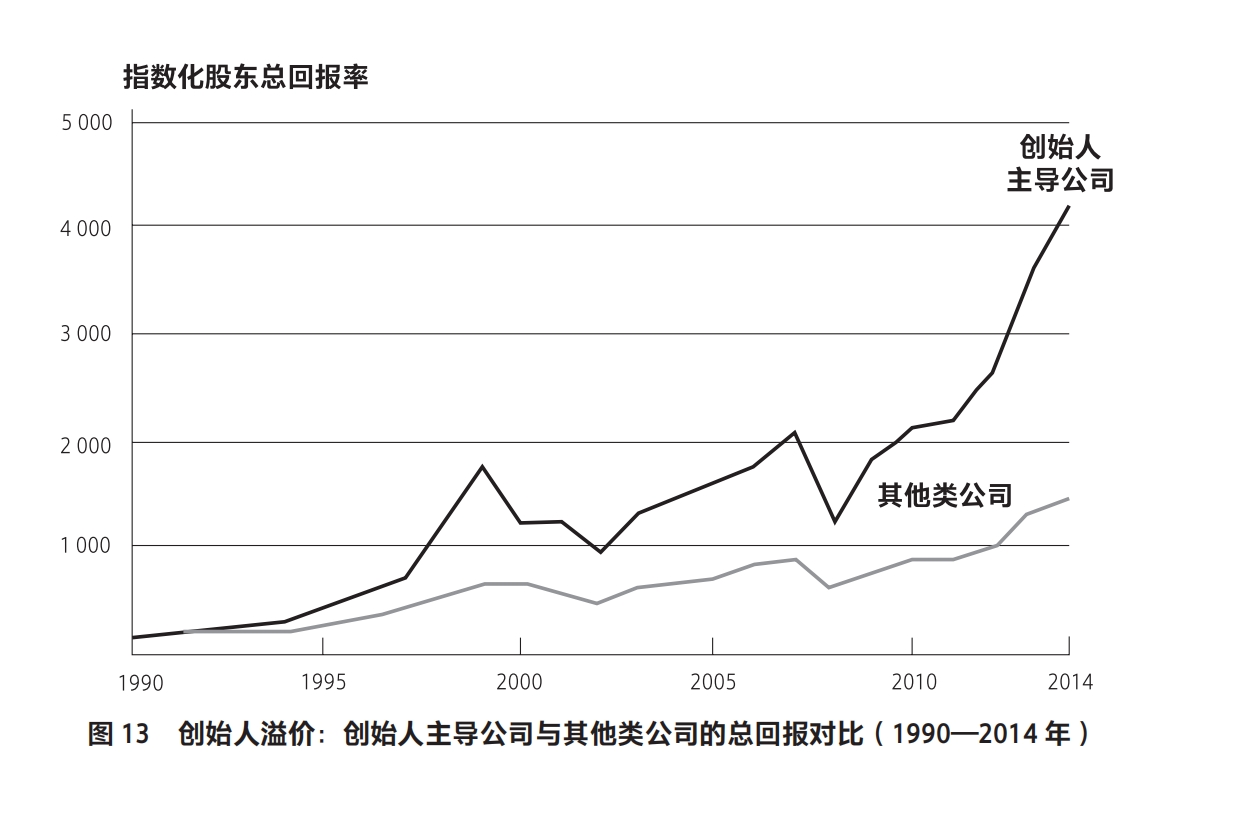
From 1993 to 2003, a group of researchers from Purdue University conducted a 10 - year follow - up survey on 500 enterprises in the S&P 500 index. This study used the number of widely cited patents as a measure to verify whether companies led by founders perform better in innovation. The researchers were not only concerned about the number of ordinary patent applications but also about important patents that were repeatedly cited in academic journals and other publications over time. The research team at Purdue University found that compared with enterprises led by professional managers, enterprises led by founders hold 31% more important patents.
Such excellent performance is by no means accidental. Combining the pursuit of innovation with the rigor of engineering execution requires a certain degree of isolation from the external environment to prevent the influence of market instinctive reactions and common misguides. If a company relies on committee - style decision - making, it is difficult to produce truly meaningful and long - lasting results. The challenge faced by the United States and the entire Western world is how to guide and utilize the creativity of this new generation of technological disruptors so that it goes beyond the narrow scope of personal interests and serves more ambitious goals and undertakings.
"Five Whys" Method
In the late 1970s, Taiichi Ohno, an executive of Toyota Motor, published a book that expounded the innovation of this Japanese automobile manufacturer in industrial manufacturing and proposed a method for analyzing the root cause. We adopted this method about 20 years ago and have been using it ever since. This exploratory method can help us penetrate the surface and find the root cause of the inevitable problems within the enterprise. On the surface, this method is very simple and straightforward: first, ask why the problem occurred, and then continue to ask why four more times. Therefore, we and other practitioners simply call this method the "Five Whys" method.
Taiichi Ohno gave an example in an industrial manufacturing scenario: a machine stopped running because the fuse was overloaded. After a series of inquiries, they found that this was actually caused by the damage of the pump body, and the root cause of the pump body damage was the wear of metal parts.
The core of the "Five Whys" method is to dig out the most fundamental engineering defects behind the surface problems. At Palantir, we have expanded this exploratory method and included the analysis and consideration of "human systems." These human systems are very important because they directly affect our software development.
For example, why wasn't an important update of an enterprise - level software platform delivered before the Friday deadline? Because the team only had two days to review the code draft. Why was there only two days for review? Because the team lost 6 software engineers during the budget review cycle at the end of the previous year. Then why was the budget cut? Because the team leader adjusted the task priority at the request of another team leader. Why was such a request for priority adjustment made? Because the company implemented a new compensation model that encouraged the priority expansion of certain specific businesses.
Of course, the questioning can continue. Why should one area be developed at the expense of others? Because there has been a long - term power struggle between two senior executives of the company.
In the above case, the root cause of the software system update not being launched on schedule is neither the negligence of a certain engineer nor the lack of foresight of the whole team. Instead, it stems from the escalating interpersonal conflict between senior executives of the company. For those who need to adapt to and endure the various uncertainties in modern enterprises, this kind of "enterprise - version butterfly effect" is not new at all.
But we have found that only those explorers who are willing to trace the causal chain and dare to get to the root of the problem can untie the knot that restricts the progress of the organization. This requires not only perseverance but also the determination to explore the core of the problem deeply. The personality traits and decision - making instincts of leaders within the enterprise are often at the core of the problem.
To make this method most effective, participants must resist the impulse to blame their colleagues for mistakes and instead focus on the structural and even interpersonal roots that cause the mistakes.
In the past 20 years, we have carried out thousands of "Five Whys" reviews and written detailed written reports, trying to record the systematic and fundamental causes of problems without blaming individuals. The causes of failures in any complex system, whether human - made or non - human factors, are often very difficult to identify. Because it takes a lot of hard work and great patience to navigate through the maze of the systems and incentive mechanisms we have built and sort out those interrelated and intertwined causal chains. Mistakes such as missing deadlines or failed product launches often have their roots deep in the complex interpersonal relationships within the organization.
This method is actually an extension of engineering culture. In the ideal state, this culture always pays attention to the advantages and loopholes of a mechanism. The real challenge is how we can cultivate an internal culture that is tolerant and gentle enough to encourage the most talented and honest people in the organization to take the initiative to expose problems instead of hiding them.
Most enterprises are full of people who are extremely afraid of losing their jobs. They are so worried about being fired that once there are any signs of dysfunction, they will quickly cover it up. Some people just want to quietly wait until retirement to avoid being found out that they are doing nothing. There are also many people who are continuously extracting the remaining value from the empires they founded but are now in decline, gradually selling off the embers of their former glory.