Behind the $4.5 billion valuation: Why has HSG bet on this "stealth" AI company three times in a row?
As AI models gradually become as ubiquitous as "water, electricity, and gas," what truly determines value is no longer who can build a better model, but who controls the valves of the supply network. In just three months, its valuation tripled. Fal.ai's valuation soared to $4.5 billion in its latest Series D financing round. Sequoia Capital led the investment, with Kleiner Perkins and NVIDIA following suit. More notable than the financing amount is the continuity - this is Sequoia's third investment in Fal this year.
This is not an investment in a product; it's an investment in a standard. The pricing power of AI is shifting from the model layer to the operation layer.
Why Sequoia Invested Three Consecutive Rounds: From Inference Optimization to an Operating Platform
Fal doesn't train foundational models, nor does it directly develop applications. It occupies a long - undervalued tier, providing hosting, inference, scheduling, and scaling capabilities for multimodal models such as those for images, videos, and audio. It packages GPU management, latency control, and stability issues into directly callable infrastructure.
In 2023, companies like this were often seen as "romanticists of infrastructure." But today, the situation has changed. Multimodal generation is moving from demos to real business flows: advertising materials, e - commerce product images, and content special effects are all entering a phase of high - frequency, real - time, and stable production. Once real - time performance becomes a hard constraint, those who can reduce latency, lower costs, and stabilize the system will start to gain real bargaining power.
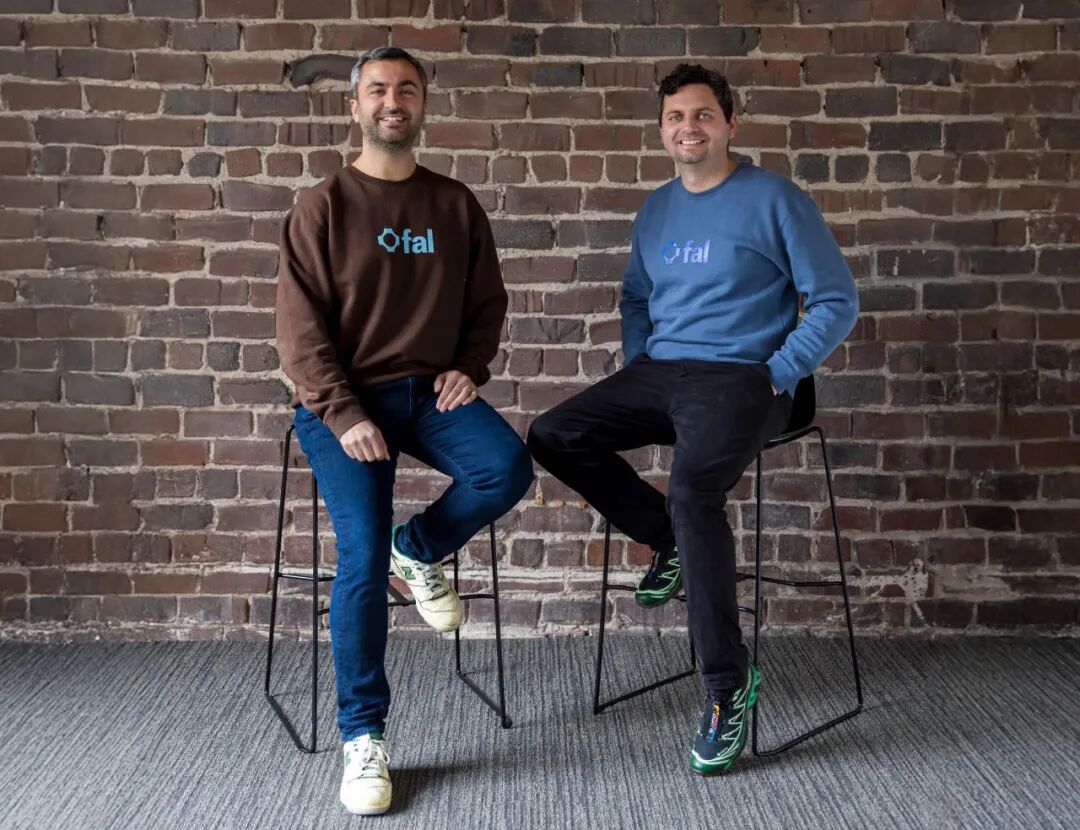
Burkay Gur, the co - founder of Fal, pointed out in an interview with a16z that as model capabilities improve rapidly, what restricts application implementation will no longer be the model itself, but inference efficiency and infrastructure stability. This judgment has propelled Fal to evolve from an inference optimization tool into a multimodal operating platform, which also forms the core logic behind Sequoia's consecutive investments.
The Key to the Valuation Surge: From "Telling Stories" to "Generating Revenue"
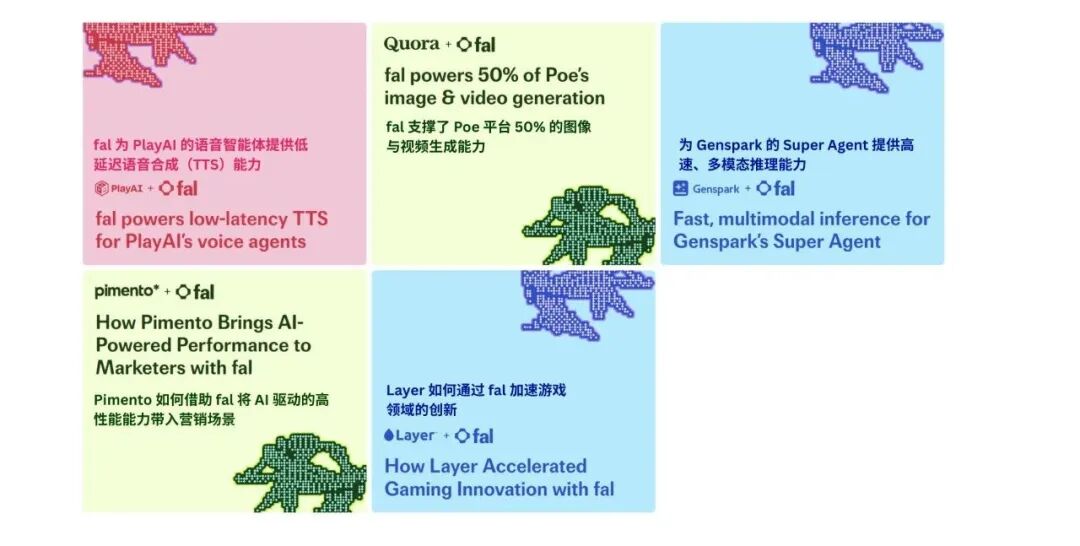
According to Bloomberg, Fal achieved an annualized revenue of over $200 million around October this year. Its clients include Adobe, Shopify, Canva, Quora, etc. This figure has pushed Fal from the realm of "future narratives" into the category of "market - verified" companies.
More importantly, it's about the deal structure: This round of financing not only includes $140 million in primary capital but also involves secondary transactions among existing shareholders. This usually happens at a point when growth certainty has been verified, and capital starts to re - allocate future revenue rights. This is not a financing to keep the company alive; it's a confirmation of its structural position.
Who Are Fal's Real Competitors?
Fal's competitors are not just similar startups.
The first category is the AI platforms of cloud providers, such as AWS Bedrock. They view AI as part of cloud resource consumption. Their advantages lie in customer relationships and compliance, but they don't prioritize ultimate inference efficiency as their core product goal.
The second category is similar inference platforms, such as Replicate and Fireworks. They offer hosting tools, while Fal further targets the high - frequency load scenarios of "multimodal + real - time + production - grade," directly integrating into real business flows.
The third category, and the most easily overlooked one, is in - house teams built by enterprises. While theoretically feasible, in reality, they have to bear the high - complexity costs of GPU procurement, top - tier engineering teams, and long - term operation and maintenance. Fal's value lies in outsourcing this complexity.
In a conversation with The New Stack Agents, Burkay Gur said bluntly: What enterprises really buy is not the model, but the ability to make the model run reliably in the real world. The complexity of the operation layer is often underestimated, yet it determines whether generative AI can enter core business.
The Real Insights for Enterprises
From an enterprise perspective, Fal's $4.5 billion valuation is not just a financing news item to be ignored; it's a clear signal.
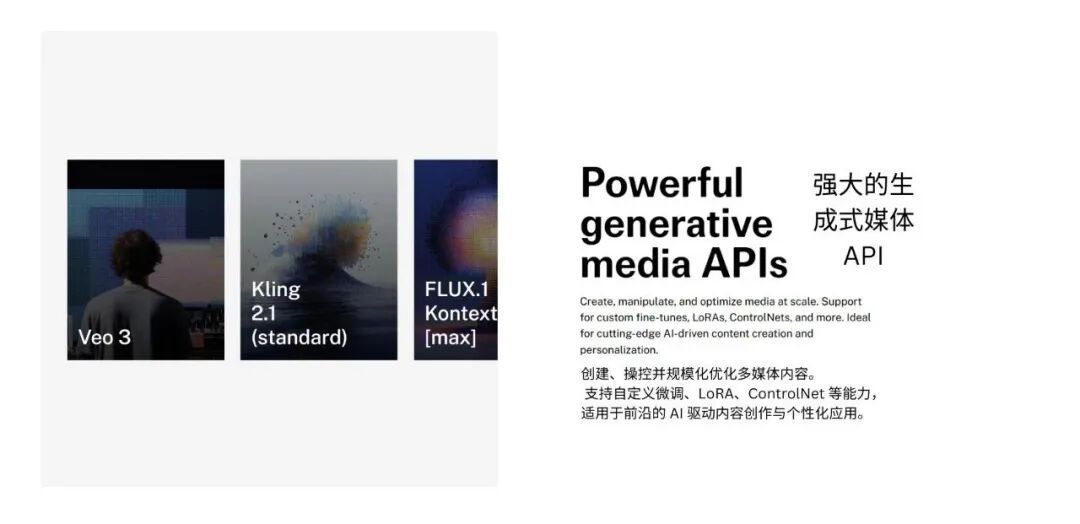
Firstly, multimodal AI has moved from innovation experiments to the candidate layer of infrastructure. When a platform can stably serve clients like Adobe and Shopify and generate revenues in the hundreds of millions of dollars, the question is no longer "whether to use it" but whether one will miss the de - facto standard.
Secondly, the decision - making framework for "whether to develop AI in - house" is changing. One can choose models and build applications in - house, but there's no need to reinvent the operation layer. Just as few enterprises build their own data centers today, in the future, there may be no need to build in - house multimodal inference systems.
Thirdly, organizational structures will be rewritten. Once generative capabilities are as stable and callable as APIs, the working methods of content, marketing, and design will shift from project - based to system - based, from human - resource bottlenecks to computing - power and throughput bottlenecks.
The Model Frenzy and the Pipeline Competition
Fal's $4.5 billion valuation is less an endorsement of a particular technology and more a pricing of a trend: As AI moves from demonstration to production, value will shift from "who builds better" to "who runs more stably." Sequoia's bet is not just on Fal as a company, but on the judgment that the operation layer will become one of the most robust business models in the AI era.
For enterprises, the real question is also changing: It's not about whether to use Fal, but rather - when the multimodal operation layer forms a standard, network effect, and ecological barrier outside of your company, will you still insist on doing it yourself?
History has repeatedly proven that in infrastructure - level competition, the cost of waiting is often higher than the cost of making the wrong choice.
This article is from the WeChat official account "Silicon Rabbit King" (ID: gh_1faae33d0655), written by Silicon Rabbit King, and published by 36Kr with authorization.