Autonomous vehicle company White Rhino completes another round of financing, with total annual funding exceeding $100 million | Exclusive from 36Kr
36Kr has exclusively learned that Bai Xiniu, an L4-level autonomous driving company, has recently completed a new round of financing. The shareholders in this round of financing include Jiukun Venture Capital, Qifu Capital, Yuanhe Houwang, Zhengjing Capital, etc.
This round of financing will be used to accelerate the large-scale mass production and market promotion of the vehicle-grade unmanned vehicle platform, enhance the core technology R & D capabilities of L4 autonomous driving, expand the operation of high-value scenarios such as instant delivery, and accelerate the layout in overseas markets.
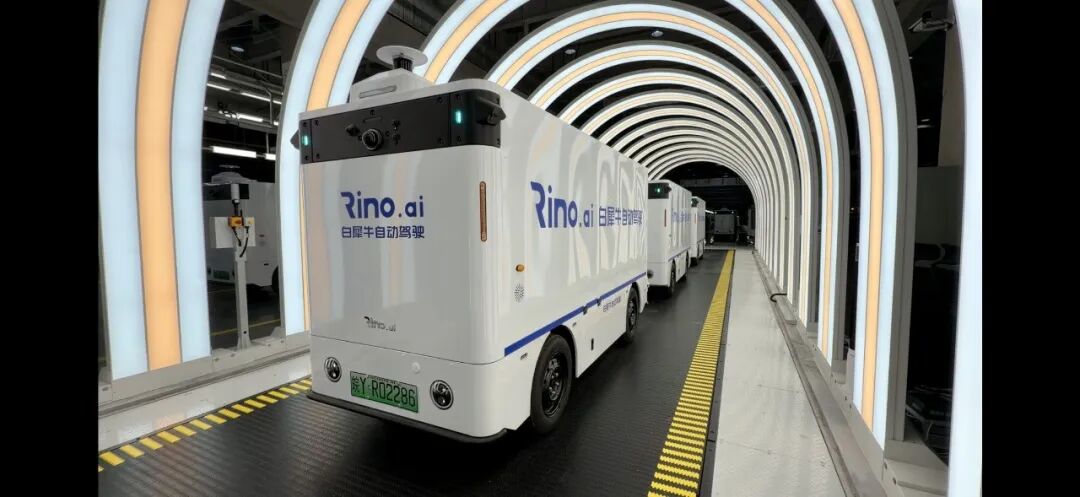
Bai Xiniu unmanned vehicle
Founded in April 2019 by Zhu Lei and Xia Tian, former members of Baidu's autonomous driving team, Bai Xiniu is an autonomous driving company dedicated to developing full-stack unmanned delivery solutions and providing regular operation of unmanned vehicles. In March this year, Bai Xiniu officially announced that Huang Gang, the former general manager of Dongfeng Commercial Vehicle Company, joined Bai Xiniu as the president.
So far, Bai Xiniu has completed three rounds of financing in 2025, with the total annual financing amount exceeding $100 million. Before that, SF Express, a courier company, had increased its investment in Bai Xiniu three times in a row within a year.
Behind multiple rounds of large-scale financing, Bai Xiniu's business has shown obvious growth. In December 2023, the number of active Bai Xiniu unmanned vehicles was about 100; it reached 200 in the first quarter of this year and 500 in the second quarter. As of December, the number of actively operating vehicles of Bai Xiniu has exceeded 2,000, and regular operations have been launched in more than 170 cities around the world, achieving a business growth of more than 20 times. In addition, Bai Xiniu has successfully won three major direct-sale key accounts in the express logistics industry and ranked first in the number of new orders, and has started large-scale deliveries.
The unmanned logistics field targeted by Bai Xiniu is also at the explosive node of large-scale implementation.
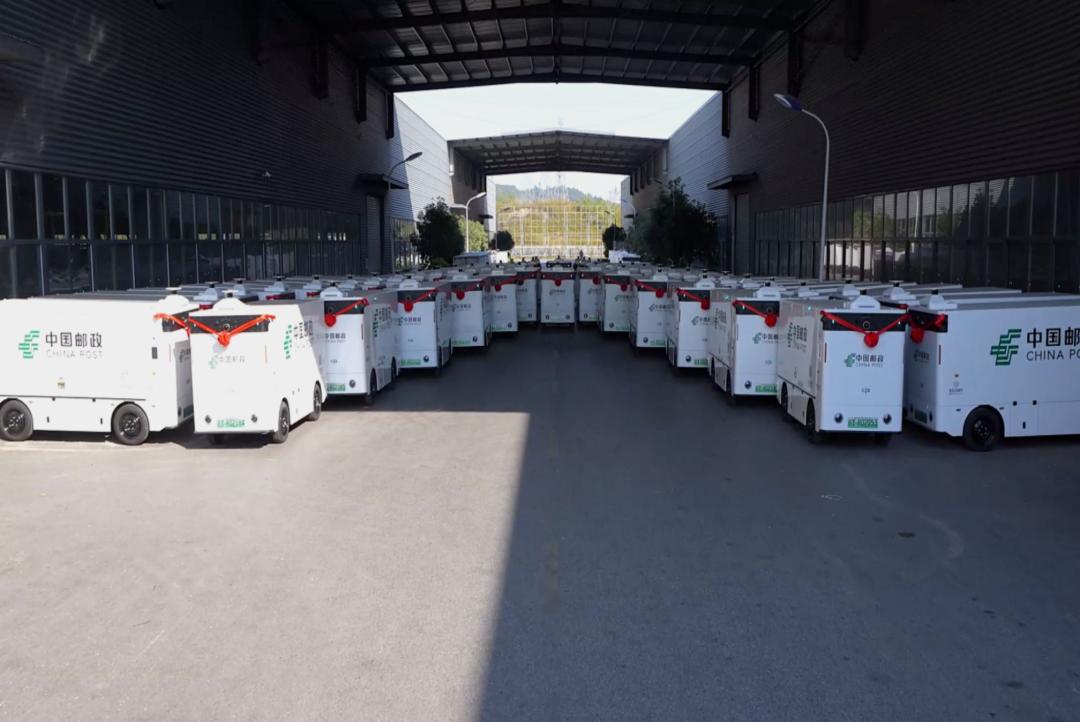
Bai Xiniu unmanned vehicle
The explosion of unmanned logistics vehicles: the large-scale competition has begun
Bai Xiniu's current main product is the R5 series of unmanned vehicles, with a cargo box volume of 5.5m³, capable of loading more than 500 packages, and a full-load cruising range of more than 120 kilometers on a single charge. The product serves leading logistics enterprises such as SF Express, ZTO Express, and China Post, and has been deployed in more than 170 cities across the country.
This product corresponds to the last-mile delivery scenario of "distribution center - delivery station" in the logistics chain. Inside the city, the distance between the "distribution center - delivery station" is usually within 10 kilometers, and the routes are relatively fixed. In the past, last-mile delivery highly relied on manually driven tricycles or micro trucks, with up to 4 - 5 round trips per day, resulting in problems such as efficiency bottlenecks and high labor costs.
However, for unmanned logistics vehicles, the short-distance fixed routes have simple road conditions, which reduces the technical difficulty, and the high-frequency usage can quickly spread the cost. At the same time, the booming development of assisted driving in passenger cars is also driving down the prices of key components of unmanned vehicles such as lidar.
With the maturity of technology, the reduction of costs, and the emergence of commercial demand, local governments are constantly promoting the development of the industry based on the principle of prudence and tolerance. Currently, more than 103 cities have opened road rights for unmanned delivery vehicles, and unmanned logistics vehicles have officially entered the explosive node of implementation.
Currently, Bai Xiniu has more than 2,000 actively operating vehicles and has launched regular operations in more than 170 cities around the world.
According to a McKinsey report, the global market size of unmanned logistics vehicles will reach 3.6 trillion yuan in 2030, with China accounting for about 40%, and the market size in China will be nearly one trillion yuan.
According to Bai Xiniu's operation data, its unmanned vehicles can help customers reduce the last-mile delivery cost by 30% - 50%. A courier franchisee customer of Bai Xiniu in Wuhan has reduced the single-package delivery cost from 0.2 yuan to 0.1 yuan after introducing Bai Xiniu's unmanned vehicles, taking into account the comprehensive measurement of vehicle costs, depreciation expenses, and electricity costs.
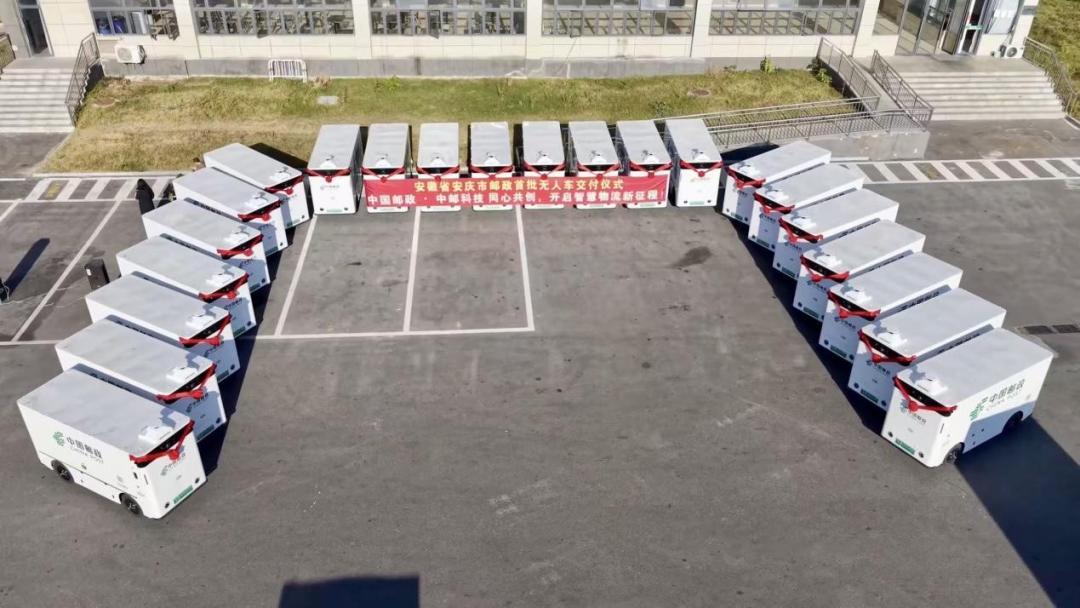
Bai Xiniu unmanned vehicle
In 2026, the industry moves towards vehicle-grade standards
As the industry moves towards an annual delivery scale of tens of thousands of units, the market demand for unmanned vehicles is shifting from "perceptual trial use" to lower full-life cycle costs, higher safety, and longer service life.
The fundamental driving force for the industry to develop vehicle-grade standards actually comes from customers' accurate accounting of the full-life cycle cost. Although non-vehicle-grade vehicles have low purchase costs, they frequently break down under high-frequency use, resulting in huge hidden costs for maintenance and transportation interruption. The accident shutdown of an unmanned vehicle may lead to a daily delivery loss of hundreds of orders, forcing enterprises to improve durability through vehicle-grade standards and extend the service life to the level of commercial vehicles, which is "8 years and 300,000 kilometers".
How to make unmanned logistics vehicles meet the "vehicle-grade" requirements has become a new anchor point that the industry is currently competing for.
The first difficulty is that unmanned delivery vehicles have not yet been included in the Ministry of Industry and Information Technology's motor vehicle catalog, and their legal status is between "vehicles" and "equipment". Laws, regulations, and standards for safety, testing, and liability determination are still being improved, and enterprises must define the standards independently. This standard will also become the key competitiveness of unmanned logistics vehicles in the next stage.
The second difficulty is the technical engineering threshold. Taking passenger cars as an example, some vehicle-grade components are required to be able to adapt to extreme temperature differences from -40°C to 85°C and work stably under extreme conditions such as electromagnetic interference. The reliability requirements from intelligent driving sensors to chassis components far exceed the standards of consumer electronic devices. This poses extremely high requirements for the supply chain integration and manufacturing processes of unmanned logistics vehicle enterprises.
Based on the V-process of passenger car development, Bai Xiniu has developed a vehicle-grade unmanned vehicle platform. This platform adopts a platform-based and modular design, which can quickly adapt to the needs of various scenarios such as logistics, cold chain, and industrial parks. Currently, the relevant products are in the countdown to market launch, and Bai Xiniu is expected to become the first domestic enterprise with the ability to mass-produce and deliver truly vehicle-grade L4 unmanned logistics vehicles.
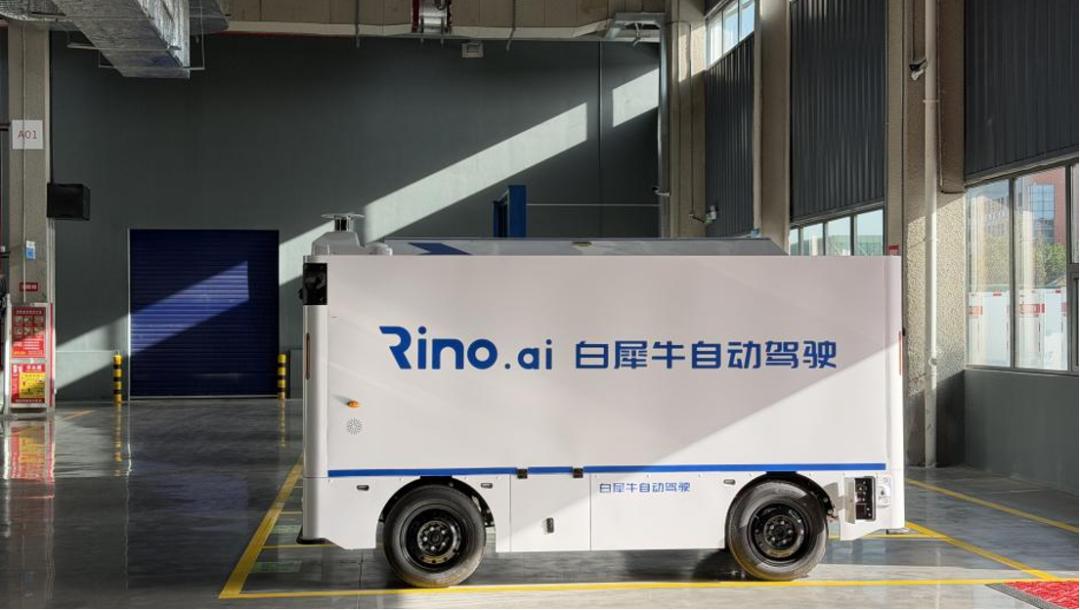
Bai Xiniu unmanned vehicle
From "technical testing", "large-scale commercial use" to "vehicle-grade breakthrough", the popularity of the unmanned logistics vehicle track indicates that L4-level autonomous driving has found the most feasible implementation scenario at present. Behind the heavy investment of capital and the active deployment of logistics giants, the industry has already crossed the initial verification period and entered the fast lane of large-scale commercial application.