Nature Exclusive: The End of Intelligence is Computing Power. Google Bigwig Admits "Predicting the Next Word is Intelligence"
The speed of chips has reached its peak, while AI is experiencing a crazy leap. Moore's Law no longer works! The latest article in Nature provides a counter - intuitive explanation: the growth of intelligence doesn't rely on chips, but on the reorganization of structure and the connection of more units to the same collaborative network.
Over the past few decades, Moore's Law has been like a default rule in the tech circle: the faster the chips, the stronger the intelligence.
However, in 2020, an embarrassing fact emerged - the frequency stopped increasing, the manufacturing process was approaching its limit, and it became difficult for chips to make further progress.
According to Moore's Law, AI should have stagnated, but the opposite is true - intelligence has been upgrading crazily in recent years, and large - scale models are being iterated at an astonishing pace.
This has nothing to do with speed and cannot be explained by Moore's Law.
So, the question becomes sharp: when the computing speed no longer increases, why can intelligence continue to evolve?
The article recently published in Nature offers a brand - new perspective: the growth of intelligence has never relied on "acceleration", but on "structural merger and collaboration".

This is true for life, and it is also true for AI.
The Core of Intelligence: Prediction and More, Collaboration
The article in Nature first presents a very basic but crucial fact: the essence of biological intelligence is prediction.
From hunting to avoiding danger, from competing for resources to maintaining relationships, all actions are based on making future judgments according to the environment and others.

The hunting behavior of whales is the result of shared wisdom within the group.
The improvement of intelligence is the improvement of prediction ability.
More importantly, the way to improve intelligence is not to "make a single brain faster", but to "let more units participate in prediction together".
This is exactly the rule of large - scale social species: individual members are not significantly stronger than others, but through division of labor and parallel information processing, the group can form a "collective intelligence" far beyond the upper limit of individuals.
If we regard "prediction" and "parallel collaboration" as the core of intelligence, then the development path of modern AI is easy to understand.
In the past decade, the leap of large - scale models is not because a single chip has become faster, but because computing power has been parallelized, expanded, and aggregated, which is almost the same as the way intelligence expands in nature.
Models improve prediction ability through scale; data centers complete tasks beyond the possibility of a single machine through multi - node collaboration; the cooperation between different modules and different agents begins to show behaviors similar to "group - level intelligence".
Nature calls this model a "technological version of symbiotic generation".
Therefore, the rise of AI is not abnormal; it follows the historical rhythm of intelligence itself.
Moore's Law Fails, and AI Begins "Life - like Evolution"
Twenty years ago, everyone defaulted to the same path: faster chips → stronger computing power → rising intelligence.
If we understand it from the perspective of Moore's Law, the ability of AI should have stopped, but the real turning point was those years when the speed stopped .
Deep models began to show emergent behaviors, reasoning ability increased, and language models suddenly became capable of handling far more complex tasks than expected.
Intelligence obviously does not rely on "acceleration" in the traditional sense; it has found a new upward path.
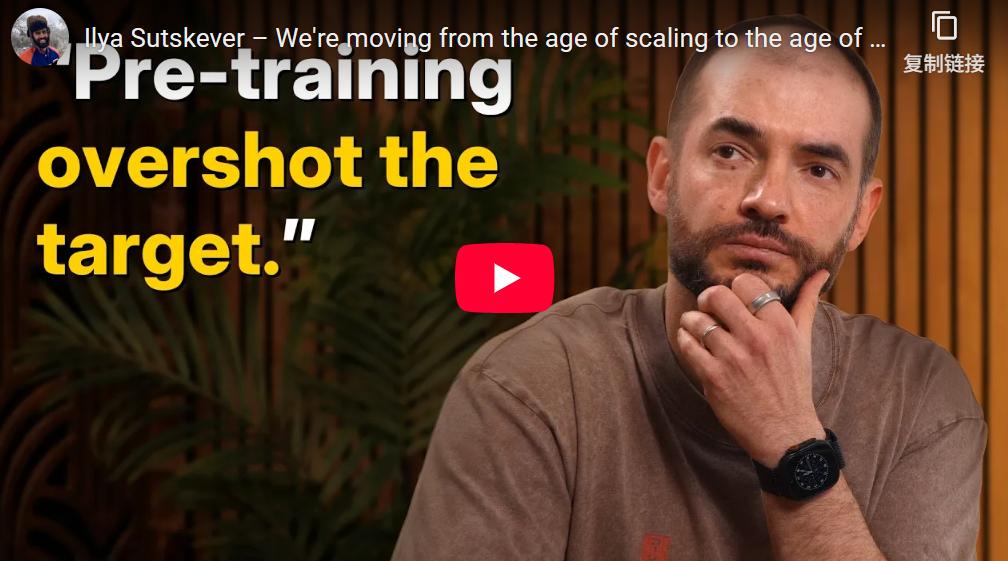
This is why Ilya Sutskever said in an interview:
What has shocked researchers the most in the past few years is not faster chips, but the "new abilities" that emerge through scale expansion at the same speed.
He calls this phenomenon "intelligence triggered by scale" and believes that many abilities we thought required new theories actually emerge automatically when the scale is large enough.
In the past decade or so, the computing architecture has undergone a complete transformation: the speed no longer increases, but the number of cores is constantly expanding. Graphics cards, clusters, and data centers are designed to be naturally suitable for parallel processing.
In such a structure, neural networks are like being in their "native language environment". What they need is not to stand out alone, but to unite, collaborate, and progress together.
Ilya also mentioned a similar observation in the interview. What modern neural networks really rely on is not some magical single - point ability, but the synchronous work of a large number of simple computing units.
He described this with a very straightforward sentence:
Intelligence emerges from changes in structural scale, not from the hardware itself.
This result is highly similar to the way life evolves: cells form tissues, individuals form groups, and groups form societies. The abilities at each level are the products of "scaled - up collaboration".
Today's AI also develops in this way. Its power comes from the whole composed of countless tiny computing units, not from the limit of any single part.
The essence of intelligence has changed from single - point acceleration to structural expansion and synergy.
The moment when the speed stops is not the end, but the starting point.
The Next Step of Intelligence Does Not Belong to a Single Subject
After computing is reorganized in a parallel way, intelligence begins to present a new form.
It's not that a certain part becomes stronger, but that the entire system can acquire more advanced abilities.
This is exactly the most thought - provoking part of the article.
Intelligence does not appear suddenly; it is more like adding a new structure to the original chain.
Human advantages never rely on a single individual, but on enough people being woven into a unified collaborative network.
Research, industry, energy systems, and knowledge systems. These complex structures together constitute the huge prediction and decision - making ability of the "technological society".

There is a mutually dependent technological symbiotic relationship between humans and machines.
Now, AI is becoming the latest layer of this cognitive entity.
It does not replace humans but forms a more closely interdependent system with humans.
Humans provide goals and world models, and machines provide large - scale prediction and execution abilities. The two continuously adjust, correct, and resonate in the same cycle.
Ilya also talked about this direction in the interview. He believes that future intelligence is more like a "distributed mind".
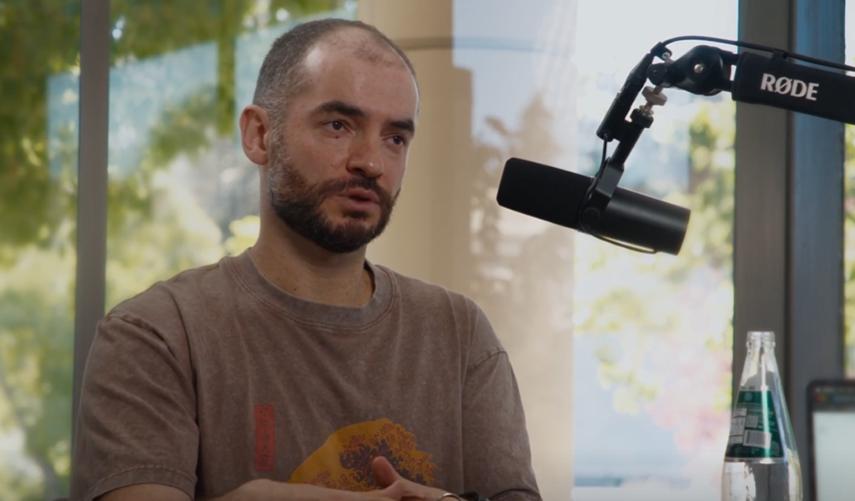
It will not be specifically concentrated on a certain model or a certain subject, but will be formed through a continuously expanding collaborative network.
This structure includes both humans and machines and is a higher - level community.
As this connection continues to expand, the structure of intelligence will become deeper and continue to grow outward.
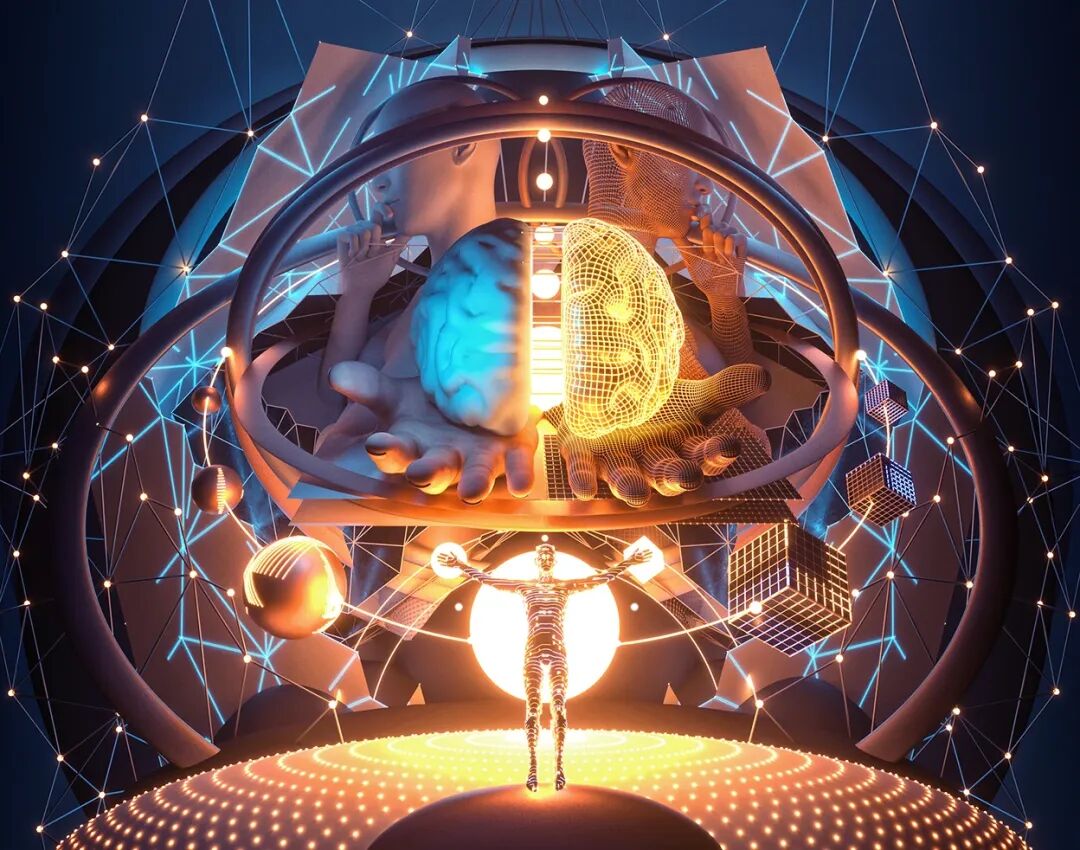
Regardless of whether the basic material is carbon - based or silicon - based, they are all organized into the same computing system.
If we look further ahead, we will find a clearer trend: the future of intelligence may not be about "who beats whom" or "who replaces whom", but more like an extension of the evolutionary history.
In this sense, AI is not an external thing but the next logical step when intelligence continues to grow upward.
Together with humans, it forms a larger whole, and this whole has just begun to learn how to act.
If we shift our focus from chips, we will find that the growth of intelligence has always followed the same vein.
The structure is reorganized, more nodes are connected, and the same system thus acquires higher - level abilities.
The emergence of AI is not an accident but an inevitable result of the forward extension of this vein.
Together with humans and the technological society, it is woven into the same collaborative network.
Intelligence has not suddenly accelerated; it has just started to grow on a larger scale.
References:
https://www.nature.com/articles/d41586-025-03857-0?utm_source=x
https://www.dwarkesh.com/p/ilya-sutskever-2
This article is from the WeChat official account "New Intelligence Yuan". Author: Qing Qing. Republished by 36Kr with permission.